Aug
3
What I Learned From Toastmasters, from Russ Sears
August 3, 2010 |
 One of the most common and one of the most intense irrational fears is the fear of public speaking. Even the best speaker can lose his cool giving a spontaneous speech in a high stress situation, say at job interview or meeting the in-laws for the first time (I believe they make movies about this one). On the other side however, one of the most common forms of self-destructive behavior is saying too much. I believe everybody has had an experience where they have said something in anger, spite, arrogance or some other irrational momentary emotion, destroying or badly damaging a valued relationship. Many of the most miserable people I have known are constantly spitting out acidic words, chipping away at others, often at those beaten down souls closest to them.
I've have been going to a Toastmasters club most weeks now for over a year to help me overcome my fear of public speaking. And while I believe that the Toastmasters meetings were helping me, perhaps I made my biggest breakthrough once I realized that for me, and perhaps for most people, the problem boiled down to one word. This word, which Aretha Franklin spells for us, is r-e-s-p-e-c-t. We all crave this in our relationships.
The reason that respect or acceptance and esteem can cause such irrationality is that we develop many of our conditioned responses when we are toddlers and kids. Our ideas of respect get greatly distorted as a kid. It is almost impossible for a kid to understand that their parents reactions may have nothing to do with them. Further given that parental/adult acceptance is seen by a kid as such a necessity for their survival, many distorted and warped views can develop.
Finally, much of what makes a child be held in high esteem is not the same things that make people admire an adult. Sometime they are even the opposite. Take for example our grading system and testing. We hold the kid that makes the fewest errors as the best and brightest. This training can cause several distortions in a kids view of acceptance. For example, kids may come to believe:
1. Mistakes are always bad. Overcoming errors is not possible. But as adults we find the most successful are those that failed and got back up. We admire those that overcame though odds and many failure
2. that they should only worry about what is tested. Curiosity beyond the known is not encouraged. But as adults we admire the discoverer, the explorer, those that do not accept the standard answer and therefore come up with a better one.
3. Excelling at the subjective is a waste of time. But as adults we admire the artist, the actors, the great orators.
4. Kids are to be seen but not heard or not to speak unless spoken to. But many of the highest paid jobs are for the salesman.
5. Respect adults and discount a child's understanding.
Many people are like me, they are fine talking if they are sitting down. But make them stand up and suddenly the primitive brain kicks in… and many of these distorted views from childhood on acceptance impulsively take over.
It seems to me that much of the Toastmaster's system is designed to get you to rethink and recondition much of that training you received as a child. Everything is critiqued, however, all suggestions for improvement are supposed to be sandwiched between praise. At each meeting everybody's grammar, filler words (such as "um", "ah" "and" or "so") are counted and everybody is timed. Roles are assigned to each element of the evaluation (timer, grammarian, wordsmith, etc.), and before each evaluation, they are to explain the goal in their critique.
 The speeches for the day each have a specific purpose to help the speaker improve. Usually this purpose is rather subjective, such as "vocal variety and quality" or "getting to the point". Every meeting has chances for impromptu speaking, standing up and giving a 1-2 minutes speech on the spur of the moment. Even the meetings themselves are critiqued.
The overwhelming implication to all this is that improvement is the most important thing, that any problems can be overcome, and to build on what you did well. I was seeing some improvement in my fear factor as I went to these meetings. However, I think for me the big breakthrough was realizing not just that these fears were irrational, but that they came from my distorted views of respect, acceptance and esteem developed as a child. Not that my parents meant to teach me this, but this is what often develops, within the simple mind of a child, trying to interpret the motivation and meaning of an adult's training.
Only once I started going through my fears one by one and seeing them as an adult did these fears dissipate. I think I stopped believing in these fears. Instead I saw them as "a" childhood interpretation of what I was taught, when there were really many, often much more valid possibilities than just that simple one sided interpretation. Often what I considered my parents "response", was simply AN interpretation, one of many, that I developed as a child.
Another interesting thing I learned at toastmasters concerns body language. For instance, for the impromptu speech, I have learned to listen closely and intently to those asking the question. I consciously direct my body language to suggest that I am hanging on their words. Then when I respond, I relax. I listened closely to them so I have "earned" their attention. I repeat their question, often putting it into my own words to show that I got the emotional part of the question they were conveying, not simply verbatim rote repetition. It shows I cared. Hence as equals they should listen to me. Why should I fear them being bored or inattentive?
It would appear that ramblings and shouting are also an effort to gain respect. General McChrystal spouted off to the journalist apparently because he felt slighted by Obama's "indifference". Understanding these triggers and detonating them before they explode can help control the tongue. For example, if you are in a heated argument standing up, try sitting down. Bring them in closer. If they are a loved one try holding their hand. In contrast, if you are confiding too much, stand up. Distance yourself from them. Of course seeing these situations for what they are in the moment rather than after the fact can be difficult. Yet, if these kinds of situations seem to occur too often, perhaps reconsider whether your motivation and view of respect and acceptance might be a simple child's interpretation and consider how it might affect the situation.
Likewise one speculates that such recurring problems in trading and investing could also be improved by reviewing your childhood understanding of how to gain respect and acceptance. One also speculates if standing to make a trade encourages one to be more aggressive, while sitting more passive, and whether other body postures could help. Say when you are closing a trade, try standing to be more aggressive.
George Parkanyi writes:
An aha moment for me about being self-conscious came in my early twenties at some point, when I realized that people are far more worried about what others think of them than what they happen to be thinking about you. Their pre-occupation with themselves is deep and permanent. Their pre-occupation with you highly transitory– especially in an arms-length engagement such as a public speech. Also, people will tend to be empathetic. If you slip up, most will not be thinking "what an idiot!" but rather "I'm glad it's not me up there".
Once in a while I'll see a guest on a business show that looks really nervous and is clearly struggling. I start to feel uncomfortable for that person, mentally cheering them on, thinking to myself "come on, get it out, get it out…"After that, for me public speaking was more about being prepared, and finding ways to keep the audience interested and engaged. If you do have to wing it, stories and anecdotes are a good way to come up with something on the spot. Usually you can relate something from your past to the current situation. People generally love to hear stories.
Craig Mee adds:
Also someone mentioned to me years ago, "just think you're talking to your best mate" But preparedness seems to help…Tim Ferriss is never far off the mark. His article Public Speaking: How I prepare Every Time is great.
Russ Sears responds:
 Yes, understanding the truth that people are not that focused on you because they are thinking about themselves helps. However, often when the fear is impulsive, simply knowing what is right is not enough. Think of some common phobias: fear of heights, germs, etc… most often the phobic knows the fear is irrational. People are great at holding two incompatible ideas in place and impulsively choosing the irrational one to act on.
What I am suggesting is that you kill the root of the impulse– your distorted belief that is causing the fear. I am suggesting you do this by re-interpreting your childish beliefs caused by a childish interpretation of the threat. To do this you have to dig deep and figure out what your fear is. Is it making a mistake, looking stupid, indifference or several other common fears?
Then you re-interpret that childish belief, for example, that adult esteem = survival, from the adults perspective. Once this is thoroughly done, what I found was what was once held as a "truth" is shown as an immature interpretation of the situation. Hence using both, killing the old belief and giving a new one in its place can end the impulsive fear.
Further, I am suggesting that using this dual method, can improve many areas of our life. Perhaps most if not all of the hubris in trading may stem from similar simplistic childhood misinterpretations of the situation.
Ken Drees writes:
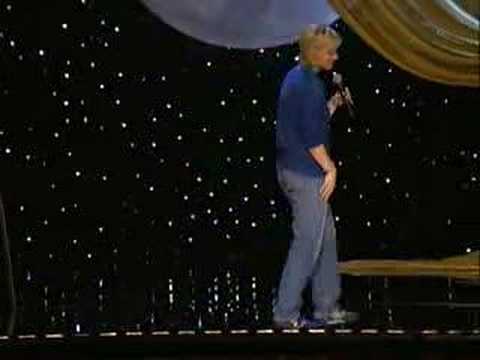 Taking a theater course or a stand-up comedy training seminar may help by pushing one's self into deeper water and then one could recede back and take a public speaking course to put structure around the process of public speaking. I am lucky to be gifted in public speaking, but scared of stand up comedy–which I think I could do but I am frightened of people not laughing, and thereby having no defenses against ridicule, or of an unloving crowd staring back at me and not laughing.
If I was to pursue it, I would do a lot of structure: rehearse, tape myself, fine tune, do small test groups, ask for feedback–seems like a job now.
I have a tendency to become red-faced when embarrassed or in some terrible stressful moment. If this happened during a routine –oh no. I would have to come up with some sort of routine if it happened–draw the audiences attention to the red face and use it somehow as a joke routine–turn the disaster into something funny.
I remember playing in a poker game for the first time in multi years (3-4 years ago). There was retired cop at the table (9 or 10 people) and I was bluffing in a showdown hand–I could feel the heat coming into my face and knew that I may get called because of it. The guy folded to me and the cop from the other side of the table said "you gotta do something about that red face of yours" then everybody stared at me and then everyone busted up laughing.
The cop said that in interrogation rooms he learned a lot about lying. Needless to say as time went on and practice makes one better, the red face doesn't appear at the table anymore.
Russ Sears replies:
Surprisingly, people say I am funny. I seem to have little problem coming up with a spontaneous humor during a speech. I have found that if the audience understands that you yourself are the biggest target for your jokes, that you do not take yourself too seriously, they are much more willing to give you liberties on almost anything and find it funny. As Ken implies making fun of yourself, almost always gets some attention, if not laughs.
As far as bombing goes, the best comics sometime threw in bad jokes on purpose, just so they could make fun of the hole they had dug themselves into. However, Toastmaster's club is doing a humorous speech contest and we will find out how funny I really am.
Brett Steebarger comments:
It's a very interesting topic. Where I might differ from Russ is that many of those irrational impulses are less the result of distorted beliefs and more related to emotional imprinting that bypasses critical, rational awareness. Edna Foa from U. Penn has done very interesting work in this area that is relevant for those engaging financial markets.
Russ Sears responds:
Brett,
One is impressed after reading about Edna Foa's work, in which significant change can be measured in Vets suffering from PTSD, in only 12 sessions, by getting them to focus on the emotional events and the trauma. How does this relate to much smaller "trauma" but perhaps, much more frequent conditioning. Say taking tests weekly at school, and the learned emotional implusive response about exactly how to please the teacher and parents.
Does focusing on the emotional take less time to "correct" the irrational impluse, because the "trauma" is not intense at all? Or does it take more effort because the conditioning was wide spread and reinforced often?
Further, what does such ingraining in children teach a parent to do? Make sure that the child knows that your esteem for them is based on a well rounded education with plenty of real life experiences?
What would you recommend for my girl who upon entering high school last year is showing clear signs of test anxiety, especially in Math?
Comments
Archives
- October 2026
- September 2026
- August 2026
- July 2026
- June 2026
- May 2026
- April 2026
- March 2026
- February 2026
- January 2026
- December 2025
- November 2025
- October 2025
- September 2025
- August 2025
- July 2025
- June 2025
- May 2025
- April 2025
- March 2025
- February 2025
- January 2025
- December 2024
- November 2024
- October 2024
- September 2024
- August 2024
- July 2024
- June 2024
- May 2024
- April 2024
- March 2024
- February 2024
- January 2024
- December 2023
- November 2023
- October 2023
- September 2023
- August 2023
- July 2023
- June 2023
- May 2023
- April 2023
- March 2023
- February 2023
- January 2023
- December 2022
- November 2022
- October 2022
- September 2022
- August 2022
- July 2022
- June 2022
- May 2022
- April 2022
- March 2022
- February 2022
- January 2022
- December 2021
- November 2021
- October 2021
- September 2021
- August 2021
- July 2021
- June 2021
- May 2021
- April 2021
- March 2021
- February 2021
- January 2021
- December 2020
- November 2020
- October 2020
- September 2020
- August 2020
- July 2020
- June 2020
- May 2020
- April 2020
- March 2020
- February 2020
- January 2020
- December 2019
- November 2019
- October 2019
- September 2019
- August 2019
- July 2019
- June 2019
- May 2019
- April 2019
- March 2019
- February 2019
- January 2019
- December 2018
- November 2018
- October 2018
- September 2018
- August 2018
- July 2018
- June 2018
- May 2018
- April 2018
- March 2018
- February 2018
- January 2018
- December 2017
- November 2017
- October 2017
- September 2017
- August 2017
- July 2017
- June 2017
- May 2017
- April 2017
- March 2017
- February 2017
- January 2017
- December 2016
- November 2016
- October 2016
- September 2016
- August 2016
- July 2016
- June 2016
- May 2016
- April 2016
- March 2016
- February 2016
- January 2016
- December 2015
- November 2015
- October 2015
- September 2015
- August 2015
- July 2015
- June 2015
- May 2015
- April 2015
- March 2015
- February 2015
- January 2015
- December 2014
- November 2014
- October 2014
- September 2014
- August 2014
- July 2014
- June 2014
- May 2014
- April 2014
- March 2014
- February 2014
- January 2014
- December 2013
- November 2013
- October 2013
- September 2013
- August 2013
- July 2013
- June 2013
- May 2013
- April 2013
- March 2013
- February 2013
- January 2013
- December 2012
- November 2012
- October 2012
- September 2012
- August 2012
- July 2012
- June 2012
- May 2012
- April 2012
- March 2012
- February 2012
- January 2012
- December 2011
- November 2011
- October 2011
- September 2011
- August 2011
- July 2011
- June 2011
- May 2011
- April 2011
- March 2011
- February 2011
- January 2011
- December 2010
- November 2010
- October 2010
- September 2010
- August 2010
- July 2010
- June 2010
- May 2010
- April 2010
- March 2010
- February 2010
- January 2010
- December 2009
- November 2009
- October 2009
- September 2009
- August 2009
- July 2009
- June 2009
- May 2009
- April 2009
- March 2009
- February 2009
- January 2009
- December 2008
- November 2008
- October 2008
- September 2008
- August 2008
- July 2008
- June 2008
- May 2008
- April 2008
- March 2008
- February 2008
- January 2008
- December 2007
- November 2007
- October 2007
- September 2007
- August 2007
- July 2007
- June 2007
- May 2007
- April 2007
- March 2007
- February 2007
- January 2007
- December 2006
- November 2006
- October 2006
- September 2006
- August 2006
- Older Archives
Resources & Links
- The Letters Prize
- Pre-2007 Victor Niederhoffer Posts
- Vic’s NYC Junto
- Reading List
- Programming in 60 Seconds
- The Objectivist Center
- Foundation for Economic Education
- Tigerchess
- Dick Sears' G.T. Index
- Pre-2007 Daily Speculations
- Laurel & Vics' Worldly Investor Articles
