Dec
29
Pulling Money from the Pit, from Jeff Watson
December 29, 2007 | Leave a Comment
 I probably have enough info gleaned from old-time pit traders to write a large book. I loved to hear the stories and teachings those old guys had to share, and sought out as much of it as they were willing to tell me. However, much of that information is anecdotal and it would be hard to apply the scientific method to most of it. I did learn a whole bag of tricks for extracting extra cash while trading in the pit, but most of the tricks are either mechanical in nature, or educated guesses (such as estimating how much wheat is for sale in the pit at any given time).
I did learn one slam-dunk way of pulling out money out of the pit. I worked hard at identifying new, inexperienced traders who were certain losers, and fading all their trades. This technique worked out very well for me. However, identifying certain losers is a skill in itself and takes time to develop. Pit traders can have a special insight/feel for the market, but only the net winners have that feel. A majority of those who step up to the plate to trade don't make money, and fade into oblivion.
Steve Leslie responds:
In poker, the professionals are sharks; they prey on the weak, in poker vernacular, the dead money. That is why they are called fishes or pigeons. Professionals avoid tangling with each other — it is far easier to exploit the weakness of the youthful or inexperienced rather than the wizened veteran. Therefore the professional uses time to his advantage by patiently waiting for the amateur to venture out into the waters and make a mistake. It is similar to the Highlander television show from some years back. For the Highlander to gain more power, he must kill his adversary by taking off his head. Same in poker, by destroying your opponent you assume his chips and as a result, his power.
Larry Williams extends:
While the gummint guys say, and rightfully so, "Past performance is no assurance of future success" there is one exception to this I have found and isolated: Advisors, funds, newsletters, etc., that have not done well in the past will not do well in the future. Jeff's pit wisdom does spill over to outside the pits as well.
Phil McDonnell adds:
I performed an analysis a year ago that showed that among mutual funds the worst performers were predictably among the worst in the next time period as well. The results were statistically significant for the worst group. However among the best performing funds there was no correlation. Superior performance did not persist probably because many people mimic the trading styles of the most successful traders of the last time period. It is a bit like the generals who are always fighting the last war.
Steve Leslie writes:
 I hope this complements Dr. McDonnell's work since I am sure he did some deep research on this. With respect to his comments a few points can be made.
First, I assume that he is talking about open-ended mutual funds. There are significant differences between open-ended funds and close-ended funds. And even open-ended funds who no longer accept new accounts but only money from existing shareholders. This is a very complex field, evaluating performance of mutual funds because there are so many variables that exist in the arena. Fund managers change, inflow of capital, hot markets such as large cap growth, value, international, etc. With respect to performance my first question would be how performance was measured. Was it against an index or against a peer group? For example if a fund were a midcap growth fund, was the evaluation against other midcap funds or against the Russell 1000, S&P, etc. In short, were these absolute performance or relative performance comparisons?
When I was a broker, I know that if a fund had exceptional performance the prior year, the sales rep for the company would come in and push performance. Then the brokers would take the literature and push it to the clients. Money would flow into the fund, making it more difficult for the manager to manage. Therefore the fund was a victim of its own success and performance would suffer. The most startling examples of this were in the late 1990s and 2000 when tech funds had great absolute numbers. Every sales rep who came into the office was pushing these funds. Dramatic amounts of money would flow into the funds thus putting tremendous pressure on the managers. All the clients wanted to buy were the hot funds. Nobody would buy value funds, which over the next several years would have been the proper investment.
Next is, what style does the manager employ, growth vs value, largecap vs midcap vs smallcap vs international? One year may be too short a time to evaluate superior performance of mutual funds — 3, 5, 10 year numbers are much better barometers of perfomance. Trends in the market can last longer than just one year. For example over the last 3-4 years international funds have had their day in the sun. I am confident the worm will turn and they will begin to tire. The next hot sector may be largecap U.S. growth, or other sectors. The jury is out on this. In fact, the Morningstar five-star ratings system is based on 3 year past performance. I believe the highest-rated Morningstar funds for the past three years tend to be worse absolute performers the next three. Conversely, the worst performers the last three years, the one stars, can be the best performance group. Once again the dynamics are in place for things to change.
Finally there are some fund managers who have withstood the test of time. Ralph Wanger, Kenneth Heebner, Bob Olstein, Bill Miller, to name a few, all have had stellar long term results but even they have had bad years.
Ken Smith remarks:
Performance in youth does not predict performance in aged. Performance in pre-marital bed does not predict marriage results. Performance in school does not predict performance at work. And so on.
Dr. McDonnell worked on performance of top mutual funds, found we can't predict future from present results. I have looked at charts for many years, in fact I began at age 22. Now just short of age 79. Of course there was a hiatus when charts were not available. Overall my experience determined a squiggle on a chart from five years ago will not correlate with a squiggle I will find when the market opens next year.
Marion Dreyfus agrees:
What Ken says in regard to former performance not being valid for future success should be received doctrine, and yet seems not to be. In terms of financial investments, people extrapolate out as if the law is concrete: If it returned 8% in the past 10 years, it will continue to run that way in the future. We take a lifetime to unlearn easy mistakes.
Dec
16
On the Juice, from Dan Grossman
December 16, 2007 | 5 Comments
 Given the remarkable performance of older players like Clemens and Pettitt, has anyone pointed out that perhaps one of the main thrusts of investigation should be whether there would be a beneficial effect for all of us in using moderate replacement quantities of substances like steroids and HGH that decline significantly with age?
I for one would like to know more and would appreciate article citations, book recommendations, and information on physicians specializing in the field.
Chris Cooper replies:
Such beneficial effects are apparent to anybody with an open mind. Nevertheless, the idea that a performance-enhancing drug might actually make you healthier is the kind of message that is not acceptable to the mainstream. Aging is not "normal", it is a disease, and should be attacked like any other disease, with an eye to minimizing the deleterious effects.
What you are referring to is often called hormone replacement therapy (HRT). The approach is to use drugs and nutrients to bring the body's hormonal balance back to what it was when you were a young man. Is it surprising that if you achieve this, you actually feel much more like a young man? Why does our culture consider this to be undesirable? My goal is not simply to be healthy as it is commonly defined, but to strive for optimal health, a very different concept.
A good book to start with was written by my doctor Philip Lee Miller, called Life Extension Revolution: The New Science of Growing Older without Aging. Dr. Miller is in the SF Bay area. Also I've heard good things about the Kronos Centre in Phoenix.
Janice Dorn writes:
One of the contributors to my just-released book is a world-renowned authority on optimal health. I took nine years of my life, and traveled 1.5 million miles outside of the United States to every country in the world (some many times) in search of life extension and radical wellness methods. Needless to say, it was an incredible journey, and it continues to this day.
Caveat Emptor. There are many charlatans out there, and we are in largely-uncharted waters. It is a passion for me, and I believe that the goal in this area of life is to delay, avoid and eventually reverse death.
Jim Sogi suggests:
 Perhaps a better way is hard effort. I still get out and surf 20 foot waves last week and take time to surf at least four times a week and train when there is no surf. No pill will keep you in shape without effort. Just the thought of a pill is enough to kill the will to motivate effort required to maintain and build strength, flexibility and stamina. It's like technical analysis, it offers an easy way without the work, and will lead to more harm than good. I see many men really going downhill. They don't stay active. Laird Hamilton says, "Keep Moving!" That is the best way to stay fit. I compete with the young guys everyday in a competitive lineup in the water for waves. I can't outperform them, but have other strengths which give advantage. It's hard work. It takes hours everyday to stay moderately fit, and more to build strength. That's the problem, most don't and won't take the time and effort to maintain and build strength and gradually lose it. Strength from a pill won't help without the agility, flexibility and stamina that are the other components of fitness. Don't worry about the pill, just get out and spend the hours everyday to stay fit.
Chris Cooper responds:
 Yes, a better way is hard effort. I have gotten more benefit from the sports that I train for than I have from the drugs that I take. The drugs are an incremental benefit, though, and I am certain that I am better off with them than without them. And you may find, as I do, that instead of being de-motivating, they actually increase one's desire to participate.As an example, suppose you are taking testosterone. If you are not exercising, it will do little to build muscle. You still get the other benefits, such as general feeling of wellbeing, increased libido, increased optimism. It enables you to build muscle faster, because that only happens if you put in the effort. It's not magic, you still have to do the work — but testosterone also makes it possible for older men to train as hard as they did when they were younger, because your body will recover more like it used to.
Larry Williams opines:
The flap about HGH in baseball is pure propaganda, based on my personal extensive testing of it. I concluded it was expensive and of little, if any help, in waging the war against old man age — a view that is now also backed up by science.
Ken Smith responds:
Studies are studies and not reports from individuals. I am an individual. The studies cited older people. I am an older people. My individual report differs from the studies as reported.
I can tell you resistence exercise will promote better body tissue and that the same exercise will tear tendons, ligiments, induce on-going pain. There came a time when the benefits diminished and the pain increased.
I am reminded of a story told by an author about his last visit with his grandmother. She was quite old, in her 90s As they conversed during her feeble days, on one of those days, her last it turned out, she asked him for a small glass of wine, told him there was a time for everything, sipped the wine, closed her eyes and passed on to the next dimension.
Russ Humbert remarks:
I would not be so quick to rule it out Growth Hormone for enhancement. The Chinese women seemed to have had much success with using it for distance running in the mid 90s. Several of the women were running times better than the men. However, they also ran extreme high mileage and were practically starved while setting several women's world records before their coaches where caught transporting drugs through customs before an international competition. Several of the stars went insane under such a regiment.
Charles Pennington enquires:
 I'm open-minded about this, and I went as far as to buy the book written by Chris's physician, who seems like a reasonable guy. But the Life Extension directory of doctors isn't re-assuring. There is just one doctor listed in Manhattan, Dr. Majid Ali, whose website is Fatigue.net. Featured there are "Hydrogen Peroxide Baths and Foot Soaks" "The Oxygen View of Pain Management," "Bowel Detox," "Water Therapy," and "Dr. Ali's Castor-cise."
I also checked for a practitioner nearby in Connecticut. Doctor Warren Levin, in Wilton CT, is at Medical-Library.net. The general garishness of the site, the endless list of specialties — "Magnetic Field Therapy," "Juice Fasting Therapy," "Auriculotherapy" — and even the Ron Paul promotion (Ron Paul == more permissive environment for quacktitioners [which is fine]) all leave me skeptical.
I wonder if Chris's physician could recommend someone in Manhattan who has a more rigorous, scientific approach than these guys.
Chris Cooper replies:
Perhaps these links will be more productive:
American Academy of Anti-Aging Medicine
The American College for Advancement in Medicine
Steve Leslie extends:
 I think back to the 1960s when the medical profession and the tobacco industry discounted the evidentiary link between lung cancer and smoking as anecdotal. And for 40 years after that the tobacco industry still fights in courts as to smoking and COPD, lung disease, heart disease and emphysema — long after they have paid billions of dollars to settle various class action lawsuits and agreements with attorneys generals throughout the country and have watched 450,000 American citizens die every year from smoking related illnesses.
I watched my father wither away and die as a result of a lifetime of smoking cigarettes.
Now some want to debate that the beneficial effects of steriods and HGH in adults outweigh the anecdotal risk. And I think of those in professional wrestling such as Chris Benoitk who committed multiple murders of his family and then suicide, professional footballers such as Lyle Alzado, dead from brain cancer, professional baseball players such as Ken Caminiti, dead and an avowed steroid abuser, high school boys by the tens of thousands who experiment and take steroids and commit ‘roid rage and suicide, and the untold thousands of recreational users who develop enlarged hearts and forms of cancer such as prostate cancer while juicing just to get bigger muscles.
Chris Cooper clarifies:
 There is no medically documented connection between suicide and anabolic steroids. The medical data also say, "Supraphysiological doses of testosterone, when administered to normal men in a controlled setting, do not increase angry behavior." 'Roid rage is a convenient media myth. Steroids may very well cause changes in feelings, but that is far from causing major behavioral changes like those suggested above.
Take Chris Benoit as an example. When doctors examined his brain they found that it resembled the brain of an 85 year-old Alzheimer's patient. It had suffered so much trauma and had so much dead tissue that normal function was not a possibility — while dangerous personality, behavior, and temperament changes were more than probable. During his time as a professional wrestler with the WWE, Benoit had subjected his body to head trauma hundreds of times, most notably with his signature "Flying Head Butt" as well as dozens of other highly flashy (and dangerous) moves.
Steroids are being unjustly demonized, just as marijuana was in Reefer Madness, followed by equivalent media behaviour regarding LSD, Ecstasy, and many other drugs. Certainly steroids have their downside, and just as with recreational drugs, should certainly not be used by minors. But perspective is not allowed in times like these, where fear is inflamed to further the objectives of those who will benefit.
Steve Leslie continues:
 I dispute Mr. Cooper’s assertion that the is no medical documentation connecting steroids and suicide or rage. That is ridiculous. At a Senate Caucus hearing Don Hooten testified that his son Taylor, while in high school, began using and abusing steroids and committed suicide.
Mr. Cooper furthermore claims that Chris Benoit murdered his family and then committed suicide because of years of suffering numerous concussions and possible dementia. Did he personally perform an autopsy on Mr. Benoit? Has he examined the autopsy report? Where does he draw his conclusions from? In short, what specific research does he quote? Furthermore, what are Mr. Cooper's qualifications in forensic pathology and/or psychiatry?
Mr. Cooper further argues that it is some sort of a myth, steroid usage and its association with massive mood swings and subsequent rage. He then compares steroids to marijuana and says that it is being demonized by an uninformed public. Not to stop there he equates such unfair demonizations with LSD and ecstacy and “other drugs.”
He diminishes the risks to an absurd level and I am severely shocked and alarmed.
Chris Cooper responds:
Don Hooten runs the Taylor Hooten Foundation, established after his son committed suicide. Now Mr. Hooten runs around the country telling everybody that it was because of steroids, when there is no evidence pointing to that. According to Steriod.com,
There had been no active anabolic steroids in Taylor's body for two months prior to his suicide (according to a report on the THF website) At 17, when he killed himself, his hormone levels had likely returned to completely normal, and only metabolites of nandrolone (not active compound) were still detectable.
And no, I didn't personally perform the autopsy. But here is a quote from the doctors who did, via SportsLegacy.org,
SLI's tests showed that Chris Benoit's brain had large amounts of abnormal Tau protein in the form of Neurofibrillary Tangles (NFTs) and Neuropil Threads (NTs). Multiple NFTs and NTs were distributed in all regions of the brain including the neocortex, the limbic cortex, subcortical ganglia and brainstem ganglia, and were accompanied by loss of brain cells, a condition for which no other neuropathological evidence for any chronic or acute disorder could be found.
Gordon Haave adds:
 It is silly to say that one can't quote the work of someone else. That is, one can't comment on an autopsy unless one performed it himself. If we took such an approach all of the time, there would be nothing to write about.
Furthermore, in the interest of scientific inquiry, providing anecdotal stories to a statement about a lack of research does not prove anything. I have no dog in this fight, but I admire people who challenge orthodoxy.
Dec
16
The Market Game, from James Sogi
December 16, 2007 | Leave a Comment
Victor Niederhoffer reviewed Luck, Logic & Whies Lies by Bewersdorf which discussed computational methods for optimal and pure strategies for various games based on simplified models. In the even/odd marble guessing game the optimal defense by the simpleton against the smart player to foil the advantage is to use a random choice. This is the basis of using a behaviorally optimal "mixed" strategy to foil the opposition who is guessing your strategy by alternating between two advantageous strategies.
The market could be modeled as a zero sum game with imperfect information. The goal is to find the pure strategies or behaviourly optimal strategies against opposing strategies than the ones already being used and by how much could the winning expectation be increased? The market modeled can be further simplified as a two person game in which one bids, one offers. The initial choice is whether to bid and offer. If the market goes up, bidder wins, if it goes down, bidder loses. If the market was random it would be a coin toss, but due to drift the odds favor the upside. This pure strategy conclusion is not trivial.
However there is more to the game. To profit one must exit. The next decision is when to exit. Analyzing the buy side of the decision tree to model the situation, buyer wins by selling before his opponent with a profit. If he waits too long or for too much, and seller sells before he sells, and price goes down, he loses. The balance is between time and profit. To find the optimal strategy Bewersdorff models an analogous poker betting situation on a decision tree. The optimal strategy requires some sort of mixed strategy for optimal results. He speaks of a realization plan using a sequential form of analysis. A way to solve this involved a linear optimization method developed to solve military procurement. The linear optimization was applied to the decision on what quantities of various products should be produced to maximize profit realization given a choice of resources. The limits of the resources and the limits of capacity or given by a series of inequality formula and are solved by looking at the largest profit distribution. This analysis might be applied to a trade by looking at the profit potential and probability of various time/profit target lags and solving for the optimal. Or it might be applied to leverage calculations. It is solved with the Simplex Algorithm. The method would be to choose two strategies say x period or y period, or x percent or y percent. But therein lies the rub. I have not tested these simplex solving tools.
Larry Williams replies:
Simplex ain't gonna work…
"Simplex is quite good for solving static, linear (and thus rather well-defined) problems."
… markets are not well defined. I suspect hold on to winners with trailing stops and ditch losers is much more elegant.
Dec
14
Intraday Path Length, from Kim Zussman
December 14, 2007 | 1 Comment
 The usual way to quantify intraday range is some comparison of high to low. But this misses another dimension - the length of the path traveled by price, which is related to speed of the market (since o-c time is constant, for the entire session market speed = path length). For example there could be two days, between 930-415 ET (405 min), both with H-L = 20pt (ES). One goes steadily from low at open to high at close, a path length of 20 pt and rate 20pt/405m = 0.05pt/min. The other is a wild day, with a 20 pt gain followed by a 20 pt loss (net unchanged). The wild day path length is (simplifying) 40 pt, which is a rate of [20 + 20]/405 = 0.1pt/min.
Considering just the constant open-close daily period, market speed = path length (a potentially potent area of study is the reaction to market speed in short time intervals, but I will leave that for later). Exact path length would require summing tick data for each day, but for a reasonable estimate here I use 5 minute closing prices and estimate path length as sum { abs(5min moves) } for each day from 930-415. Here are the largest o-c path lengths since 1/07, along with the o-c return (ES points):
date sum_abs oc
08/16/07 233.25 24.75
08/10/07 212.50 5
11/08/07 185.25 -7.75
08/01/07 185.25 12.25
11/20/07 176.50 9.5
07/26/07 175.75 -20.75
08/09/07 173.25 -20.75
11/02/07 161.50 -2.5
07/27/07 154.50 -31.5
08/17/07 151.00 -7
10/24/07 150.25 2.75
11/09/07 148.75 -3.25
08/15/07 148.25 -15.25
12/12/07 146.00 -22
Notice the big move yesterday is only 14th longest path length YTD. Since that path length is a form of volatility, I compared o-c return with contemporaneous path length and found the usual negative correlation:
Regression Analysis: oc versus sum abs
The regression equation is
oc = 4.49 - 0.0648 sum abs
Predictor Coef SE Coef T P
Constant 4.490 1.636 2.74 0.007
sum abs -0.0648 0.019 -3.27 0.001
S = 11.7078 R-Sq = 4.3% R-Sq(adj) = 3.9%
Gibbons Burke asks:
Do you consider in this calculation the distance from the previous day's close to the current period's open? If not, then a gap day's net price path sum won't include the overnight move in the path.
Larry Williams adds:
It is not just the range and such but which side is moving the market on that path. It is clear to me the gap from last night's close to today's opening is public activity, the path from today's open to the close much more professional activity; that's the key to the numbers as I see it.
Jim Sogi remarks:
I agree with Larry, but for different reasons. Rather than just pro/public, the night session is related to the global situation and large gaps seem to be a whole new area recently developing. Yet another new different unseen cycle.
Paolo Pezzutti suggests:
There are at least two dimensions in play: one is speed, which is somehow associated with concepts such as range and volatility. Another is related to directionality. According to different combinations of these two dimensions you could build a matrix of market behavior. The areas would be:
1. volatile; directional
2. non-volatile; non-directional
3. volatile; non-directional
4. non volatile; directional
The problem is related to indicators to be used to efficiently define these areas. How you identify the borders/lines of contact between areas? This classification can be useful when trying to identify the proper tools and techniques to use in each area. What kind of indicator could one use to take into account speed? What can we use to identify directionality?
Steve Ellison responds:
In his book "Trading and Exchanges", Larry Harris identifies two types of volatility. Fundamental volatility results from changes in fundamentals. Transitory volatility results from excesses of uninformed traders who move prices away from fundamental values. Price moves caused by transitory volatility are likely to reverse as informed traders take advantage of bargain prices to buy or rich prices to sell. Price moves caused by fundamental volatility are much less likely to reverse.
A hazard for a contrarian trader is falsely assuming volatility is transitory when it is in fact fundamental. Dealers and market makers protect themselves from this risk by widening spreads when the order book is one-sided.
I propose a 2×2 matrix of the actual type of volatility and the market's perception of the type of volatility:
.                     How most market participants
.                     perceive volatility
.                     Fundamental          Transitory
Actual
type of
volatility:
.                     Price quickly        Price trends
Fundamental           establishes a        as disbelievers
.                     new equilibrium      change their
.                                          minds one by
.                                          one
.
.                     Market reverses      Price quickly
Transitory            dramatically         reverts to
.                                          previous levels
For years, the trading literature was very heavily slanted toward trend following as the road to riches, which biased many traders toward assuming any volatility was fundamental. However, with much money having been yanked from trend following funds this year, the upper right quadrant is occurring with more frequency.
Dec
13
In Memory of Evel Knievel, from Larry Williams
December 13, 2007 | Leave a Comment
I played football against the then-named Bobby Knievel. Best story was barreling along a Montana freeway late at night — when there were no speed limits — at about 180 mph. My other 'Butte America' buddy, Billy Peoples (handball champion) told Evel we'd had enough, he could slow down.
Knievel replied, "Billy, at this speed you won't feel anything, anyway."
Nov
16
Bonds on Drugs, from Larry Williams
November 16, 2007 | 1 Comment
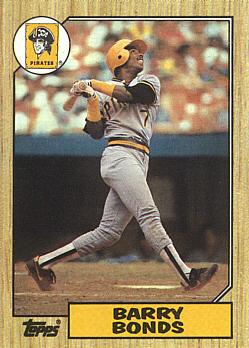 I read the entire indictment; Barry Bonds says he did not knowingly use steroids. I did not see any evidence to the contrary in the indictment. The indictment looks more like a football game of pile on; if he did lie notice how the charges are extended to obstruction, being evasive (duh, who would not be evasive under that conditions, you can bet his lawyers coached him on that — plus if you read his testimony, it does not appear evasive; he answered the questions put to him.) There is no contradicting testimony in the indictment. Will be interesting to see if the prosecutor can present factual evidence otherwise. Typical DOJ stuff.
Russ Humbert adds:
It seems to me that they are trying the "Martha Stewart" trap. They got one of his trainers or someone in the know in jail. They will tell him they broke him, hope he spills it to get even. But if he doesn't they will hope he lies about something. Since the ancient games politicians have a history of using athletes for personal gain, public villain or hero.
David Lamb remarks:
Why? I doubt it's the hallowed homerun hallowed mark. I think it's because Barry is rude to the media and to anyone who he doesn't want to sign autographs for. And what if he is rude? Matt Williams was just caught but he still couldn't hit and retired the next year. Perhaps Barry knowingly took the 'roids in order to break the homerun record. As if nobody else is trying to do the same thing on the same juice. He just can hit the ball and is extremely picky on what pitches to hit.
Nov
13
Practice, from Victor Niederhoffer
November 13, 2007 | Leave a Comment
 The importance of practice in music can't be overstated. There are hardly any musicians of great competence who took up their study after the teens, and most have been practicing intensively since the age of seven. The problem is that most people hate practice, stop at an early stage, and waste their time when they do this. Michelle Siteman in her magnificent book, "The Pleasure and Perils of Raising Young Musicians " has a chapter "Practice Makes Perfect " in which she gives 10 techniques for improving the quality and quantity of such practice.I have received completely positive feedback from musicians who have read this book that the techniques she suggests are ingenious and useful. I believe the have universal value, and I will try to apply the lessons from Ms. Siteman's chapter to improve the practice of trading with a few of my own practice techniques from racket sports thrown in. This is a subject that has received much too little attention as practice makes more perfect in every field including our own, And this would apply to any trader despite his natural proclivities and abilities. It is common to think that a quality for greatness in a field is to love to practice it. But Vladimir Horowitz, Glen Gould and many other musicians, including Beethoven, hated practice when they were young, but they were able to conquer their aversion, usually with the aid of a firm parent who applied some of these techniques. Presumably the head of a trading team should insist on practice regardless of the qualms or machismo of some of those whose recent track record is good, or believe they were to the manor born. Emulate Pablo Casals and Yehudi Menuhin, who practiced eight hours a day, every day of their lives.
It's not enough to say: practice trading. Most people don't know how to do it. And most are bored while practicing so there has to be something that makes it interesting. Musicians handle this by mixing in some easy beautiful pieces with the scales, finger exercises and and arpeggios.
1. Group activity. One universal technique for making practice more interesting is to make it part of a group activity. Somehow those who play instruments in orchestras stick with their instruments to a much greater extent than piano, and this is why many impartial observers suggest that orchestral instruments are better for a child to play than piano, because they stick with it. Practice sessions for traders should be in groups.
2. Money rewards. And what follows from this is that monetary rewards are a great motivator for musicians to practice. Some parents make their kids pay part of their lessons with their allowance money. This has a very salubrious impact on the efficacy of practice. Group trading practice should have monetary rewards. It's amazing how many of us will stoop down to pick up a $5 bill.
3. Record keeping. Record keeping is an important part of a good practice session. A systematic account of what has been learned and what the goals are is always helpful as a foundation. It's also helpful to be able to review the mistakes and winning forays that went into a successful trade.
4. Parental presence. All musicians find it boring to practice alone. Having a parent around to observe reduces boredom. If it's important enough for the parent to insist the child do it, then it's also important enough for a parent to take an interest. The same would apply to a trading manager, who all too often leaves the trading practice to the subordinates without taking an interest in it.
5. Proper logistics. Practice should be at a certain time, and a certain place and there should be good lighting. That way there's no chance that a session can be missed because of a conflict in schedule that arose because the child or trader didnt know that it was scheduled for that day and time. A proper environment without sibling or other traders squawking that they are hungry also improves results.
6. Consistency. Practice every day is essential. The markets are always changing, and after a day or two all the skills begin to detiorate. I once practiced squash every day, 365 days a year, for 10 years. A trader should practice trading each day, or if a hiatus ensues, should practice steadily for a number of days before entering into the fray.
7. Read books about the techniques that other great musicians used to improve their techniques. What worked for them probably would put you on a path that has at least been tested. Eschew the techniques of traders that were not successful, for example the boy trader.
I would be interested in ideas readers have on improving the training and practice of traders.
Larry Williams adds:
 I have always thought mastery is a largely the function of repetition.
Obviously you have to repeat the right things. Today's great home run hitters all have instant access in the dugout to videos of their last time at bat to review and repeat the right techniques and stop the wrong. Many scoff at paper trading — sure, it is not as emotional, but still provides valuable lessons.
Chris Ledoux won the world bareback riding championship with very few rides in actual rodeos. He was so banged up he practised on a bucking machine (also wrote a good song about it) to prevent further injury and shocked all the bettors who had never heard of him as he accomplished his gold belt-buckle dreams.
Jim Sogi suggests:
 My Karate teacher said, "What is the best practice and training for fighting? Fighting. You can run all day, you can do 1000 sit ups, 1000 push ups, 1000 sprints, and 1000 punches. But the best practice is fighting with an opponent. "My father once said, " The only difference between a small case and a large case is the number of zeros behind the 1."
You can read 1000 books about trading, study data for hours, but the best practice for trading is trading. Even if you do small size, which is best for practice, it keeps your wits sharp and emotions tough and keeps you in the game.
Keep a place set aside for only trading, always ready to go, 24 hours a day without having to clean up, scoot others away. Same with music practice. Have a set aside place or room for music with all the instruments just ready to walk in and pick up and play, even for 10 minutes before dinner. Pretty soon it becomes a habit.
Allen Gillespie takes it further:
Scales and etudes and pieces played with different bowings, speed, rhythm, etc. Breaking down a passage into shorter component parts. For example, if there is a long passage of quickly played 16th notes, first practice with separate bows for each note, then two on a bow, then three, etc. then change the rhythms from just 16ths notes, then just play the key notes from the scale so the ear hears where the passage is headed as many of the notes are fillers, understand and anticipate the pattern. Learn to play by ear. Finally, Always Play/Practice Musically (i.e. even when practicing the notes do not forget to include the crescendos, etc.)
For the trader,
1) Imagine as many scenarios as possible.
2) The distance between lows or highs or between lows and highs might give an indication as to the key
3) Some notes/days are more important than others
4) Trade smaller during times of practice
5) Test different combinations of variables - first separately then two, etc.
6) Despite all the practice, sometimes the best performances are not straight from the page
7) Finally, trading is an emotional game, so play with passion and remember there is always a low note and a high note and many notes in between.
Sam Marx reminisces:
Practice is important and in my sport in high school I practiced quite a bit but always felt that I had a limit because of physical limitations. I was 6 ft. tall but my hands were below average for my size. I couldn't get a good grip on a football or palm a basketball.
Once I was seated at a dinner table next to Bart Starr, former Green Bay QB. That man had huge hands. I have no doubt that enabled him to better control the football and made him a star. Another time I was in close proximity to Gil Hodges and I noticed that he also had huge hands. I believe he was a first baseman. I could just picture him with an oversize glove catching balls or scooping up grounders that would be missed by the average infielder.
A friend of mine was an excellent boxer. His arms were extremely long, also, his head was smaller than it should be for his size. He could just move around his opponent and jab him silly while keeping his head tucked behind his shoulders. Standing up with his arms dangling on his side I thought he looked like a chimpanzee. He had no desire to become a professional boxer but I've seen professionals in the ring with those characteristics. Kid Gavilan comes to mind.
On the options trading floor I noticed that some traders could hear trades from across the pit. Their hearing was acute.
Practice is important, but don't dismiss physical and mental ability, especially abilities in the 3 plus sigma range.
Don't tell your kid that he can accomplish anything if he practices enough. Offer this advice only when justified. Tell him he can greatly improve with practice but don't offer false hope of attaining the impossible. It can be frustrating if you're not in the 3 plus sigma range in the field you're practicing in.
Nigel Davies recalls:
David Bronstein once advised me to prepare for tournaments by studying chess at the exact times the games were scheduled. And I understand that Vladimir Kramnik took this concept one stage further by solving endgame studies (particularly demanding work) during the last hour of such studies. The last hour of a playing session is known to be the most critical, with most games being won or lost at this time. And it does seem that he got the better of Veselin Topalov at this point in the games.
Easan Katir mentions:
I spent one recent Saturday evening at the Hat and Hare Pub in the basement of the Magic Castle, with two accomplished card men, Aaron Fisher and Tony Picasso, discussing their art. Aaron instructed, "to improve, perform at any opportunity, for anyone." The club was full. He said, "C'mon, let's find you some people." So he rounded up a spontaneous audience comprised of three giggly young things, and gave this amateur the opportunity to perform modestly baffling illusions.
Live performing, live trading. No solo practice or paper trading like it. Mind sharp. Managing audience expectations, unexpected reactions and distractions. The joy of good execution. The thrill of conquest. The glow of accomplishment.
Much theoretical study, counting and practicing correctly precedes such moments. For trading I suppose the advice "perform at any opportunity" could be ambiguous enough to become a way to diminish one's capital, unless one adheres to tested guidelines for what constitutes an 'opportunity'. It works for me to transfer these skills to trading.
Evan McKeown writes:
 Practice is such an important topic. I have always believed that if you do what you love, and love what you do, then success will eventually come your way. Success itself means different things to different people.
I am a 5.0 tennis player, and love playing tennis. No matter how much I played, or practiced, I never was able to reach a level much higher. Notwithstanding my dedication or love for the game, I have enjoyed other success by meeting wonderful people that share my enthusiasm and we enjoy our weekly matches. John McEnroe once said he hated to practice, so, instead, he played in doubles tournaments. John had one of the best net games in tennis which is unusual today thanks to his devotion to being a doubles player as a substitute for practice.
I am a trader. Once again, I love what I do. Trading is not a job, it is a way of life, my passion. I trade every day, and practice every day. Practice for me, comes in many different forms. Just as in tennis, there is on the court, and off the court practice time. Off the court (or ticker screen) I stimulate my mind with financial literature. The best book I ever read, and the only book I ever read for a second time, is "The Education of a Speculator." This work of art should be required reading for any college finance class. Long before this book made me any money, it first saved me thousands. Years ago, when a perfect storm of events had collapsed my portfolio and nearly had me on the verge of ruin, I sent an email to Vic and Laurel for some word of encouragement after the market had crashed through a 200 day moving average, financial condition in the market that is not unlike the one we see today.
To my amazement, Vic and Laurel wrote me back with a few simple words that inspired confidence. Not so much advice, as it was knowledge on how to handle adversity. I not only made back the 50% that my portfolio had declined, I ended the year with a 27% gain. That email changed my life forever. Instead of placing a sell order and taking a loss of half my assets, I took the pearls of wisdom and made the most of the opportunity.
Thank you Vic and Laurel, for sharing your knowledge and experience of the markets, for being an inspiration for common everyday traders such as myself, and for taking a few moments and write such an inspiring email that changed my life forever!
Pitt Maner III says:
Many years ago I went for 3 days of tennis lessons at Nick Bollettieri's in Brandenton, Florida. An evaluation was done of each player's ability and then we were separated into groups and sent out to practice for about 5 hours each day (with a lunch break at mid-day to watch films of Agassi playing). Thank God it was not in the dead of summer, but at 80 or so degrees it was still quite brutal for moderately trained weekend warriors.
One of my teachers was a former Rhodesian paratrooper named Ian who picked up very quickly on my poor footwork (even for a 3.5 or 4.0 player) and tendency to "float" or not properly set my right foot when hitting a backhand. The school also emphasized the need to follow through on strokes and to keep hitting the ball deep and allowing for sufficient height of trajectory over the net. In other words give yourself a margin of error and don't try to hit winners all the time from the baseline–play it a bit safe and wear your opponent down.
The tendency of beginning tennis players love to hit winners even at the expense of hitting several poor shots and losing games was discussed. Players were taught to recognize the importance of swing points (ie. 40-30 or deuce or 30 all) and to be more aggressive at 40-0 or 40-15. At the pro level students were shown film of Agassi running Lendl and not finishing off points right away if Andre could get Lendl to "lunge" one more time and thus exert more energy. Tennis warfare by attrition.
Tennis at the highest levels was indeed a different game then what I imagined or had gathered from watching Borg and Conners on TV or reading about in Tennis magazine.
On the adjacent court one could watch the 10 year old Anna Kournikova practice with her coaches under the vigilant eyes of her Russian mother. The tennis school had a quite rigorous schedule for the kids–lots of running in the morning, tutoring–school, weightlifting, and hours and hours of hitting tennis balls. At the time Anna said she loved to play tennis and did not mind the practice. We watched as she played practice games in the afternoon against boys her age or slightly older.
At the end of 3 days my toenails were breaking off from my swollen feet (note to file–never come to a tennis camp with new tennis shoes!) I had experienced my first and only time with tachycardia after running side to side "suicides" on the court. My game had been broken down and I was now playing like a sorry 3.0 player and not able to incorporate or integrate all the intensive things that had been taught. There was a German banker who said he worked 60-70 hours a week at home and came to the camp for "relaxation"–masochism at its finest!
But the lessons were learned and not forgotten and months later my tennis game improved and my appreciation for the game greatly expanded.
Steve Scoles makes another point:
An important requirement of successful practice is getting proper feedback in a timely manner — touching a hot stove teaches you pretty quickly not to do it again. Markets, because of their probabilistic nature, are really horrible at given this kind of feedback. In investing and risk management, the short-term outcomes are often unrelated to the quality of your decisions and it may even take years to be proven "right" or "wrong". I don't think this is a new idea to the world of trading, but I have always found playing poker to be a good way of practicing dealing with the probabilistic nature of markets.
Poker has several similarities with investing with some key ones being:
- imperfect information
- probabilistic outcomes
- emotional involvement is in play as money is on the line and your failures and successes can be monitored & commented on by the other players.
The advantage of poker over the markets is that the decision-outcome relationship is usually more analytically simple to learn from and thus the feedback loop is a lot better than what you get from the markets.
Three things that I have found poker helps you develop that can be carried over to the markets are:
1) to learn and internalize how gains and losses are really probabilistic outcomes rather than successes or failures;
2) to improve your ability to evaluate decisions on a basis other than the outcome;
3) to improve your ability to maintain emotional stability through the various ups and downs.
Jim Sogi makes his second remark:
In Japan the Sumo wrestlers live a strict regimen of diet and training. They avoid emotional upset that might affect their appetite. This is like trading. It has to be approached as a competitive sport. Physical training, proper sleep, good food, avoiding drugs and alcohol are necessary during the trading week to be in top shape when in the fray. If something upsets me or I fall out of training, the trading can be affected.
Alan Millhone follows up:
I will speculate that the Sumo's do not watch much TV nor hear any negative news while in training ? Mental discipline in Sumo, trading, board games,etc. is critical. When I attend any Checker tournament I get my rest, eat properly, no TV when on the road. Mr. Sogi is correct that being upset is a big deterrent to functioning properly in any endeavor. Staying focused is Job # 1 and critical to proper performance. The avoidance of drugs and alcohol holds true in any event we pursue.
Nov
4
Fear as a Motivator, from Victor Niederhoffer
November 4, 2007 | 6 Comments
 A talk at the November 1 Junto by Robert Higgs on the importance of fear elicits many thoughts of relevance to markets. Higgs is best knows for his theory of the ratchet effect of crises on government activities. He shows in Crisis and Leviathan that during times of crisis, government powers are increased and that these powers are never reduced.
He started his talk by saying that he wished he had realized many years ago that fear is the foundation for all such increases and that fears are manufactured according to normal production curves subject to the laws of diminishing marginal productivity and depreciation.
He views fear as the key emotion. And believes that fears are invented to create an opportunity for the Leviathan to expand . He groups fears into categories: fear from government itself, fear of real dangers from which government protects us, and spurious fears which are invented so that power can be increased. Planks in his theory deal with the origin of governments in conquest, the alliance between church and state, the tactics of stationary bandits who exert power from a fixed position, the creation of an ideology of fear, the economics of fear, the growth of fear during wartime. He ends with the hope that we can conquer our fears and thus go about our normal humdrum activities in a more productive way.
 I was quite critical of his theories believing for example that many other motivations of human behavior are more important than fear, including the five levels of Maslow's motivations, starting with physiological, safety, love, esteem, and self actualization. Of these hierarchical levels, only the safety level could in any sense be related in part to fear. I felt that much of the support for his theory was based on anecdotal and isolated events such as King Canute's assassination for collecting high taxes. I also questioned whether there was any predictive value in his classification, whether his theories could ever be refuted, the absence of cost benefit calculations in his condemnation of any and all government actions, including its function of providing for internal and external defense, and how it could be differentiated from other theories of power and behavior. I also disagreed with his wholesale condemnation of the use of fear including his condemnation of the United States entering the First and Second World War, after what he decries as false propaganda concerning the evil intentions of our enemies.
 Higgs' current book Neither Liberty Nor Safety details many of these theories. And needless to say, he believes that the acts that followed 9-11 served mainly to legitimize a wish list of bureaucratic interventions that had been sitting on desks for 15 years, but never were able to see the ligth of day until crisis hit. He believes they did not increase our safety but took away our liberties, and never will vanish even when the need for extra patriotism recedes.
And yet, I found many parallels to the market's fears. There are 1.5 million conjunctions of fear and stock market on the search engines and many of them relate to maintaining the stock market citizen in a state of subjugation, and contribution to the upkeep even greater than that described by Higgs in his many anecdotes, and revision of his crisis and leviathan theory.
I would be interested in your ideas on the influence of fear on markets, the most recent being the fears of recession, the fear of no further rate cuts, the fear of the subprime crisis spreading, the fear of brokerage house bankruptcies and financial liquidations, the decline of the dollar, the spread of epidemics, the comparison to the crises of 1987 and 1998, the increase in volatility and what that portends, the declining earnings growth, et al., the role in fanning fear by former officials recently retired, as well as those who have long predicted Dow 5000 et al.
High on this list would be the typology of fears that have existed each year since the beginning of stock markets, and how this has engendered the 1 million % a century growth which Mr. Ellison has kindly updated here before.
Alston Mabry adds:
 In The Happiness Hypothesis, author John Haidt uses an interesting image our human brain which has developed over vast amounts of time to handle so many tasks: he likens the mind to a rider on an elephant. The rider is our conscious, rational, aware mind - our neocortex. The elephant is everything else and is trained to be pessimistic, defensive, status-conscious, and many other things that might contribute to survival and success, but not necessarily be conducive to happiness. The rider can see farther and is smarter than the elephant, but the elephant often decides where both will go. Haidt then argues that many ancient traditions understand this dichotomy and know that the brain must be disciplined and trained for happiness.
In trading, I find there is a basic division: analysis versus execution. Analysis can seem so sure and easy, when the market is closed and one is simply crunching numbers - the elephant is asleep, as it were, and the rider is alone with his thoughts. But as soon as the market is popping, and one must put real money on the table - as soon as there is *risk* - the elephant awakens. The mind actually changes, perceives and processes the same data differently from the night before.
Perhaps the discipline of the ancients is the answer. Would Lao Tzu, or Bodhidharma, or the Desert Fathers have been successful in the pits?
Phil McDonnell writes:
 An alternative approach to Maslow's Hierarchy might be to consider the hormonal make-up of human beings. The two powerful hormones adrenaline and nor-adrenaline control our fight or flight response to potentially dangerous situations.
However they are much more than that. They directly or indirectly influence our heart rate, breathing, blood pressure, serum glucose levels and even our memory. They are a significant factor in motivating us to action. For example researchers have found that after receiving adrenaline human test subjects were more likely to take action in contrived circumstances which potentially involved even physical violence. Humans cannot easily distinguish between true emotions and those induced by adrenaline.
Other research has shown that rats will develop stronger memories when adrenalin is administered. There appears to be a simple physiological basis for this in the neurons. In particular rats that lacked the particular receptor did not develop the stronger memories in the presence of adrenaline. The important point is that memories which are formed or reinforced in the presence of higher adrenaline levels are much stronger that those which are not.
Charles Darwin was the first to study the evolution of emotions in: The Expression of the Emotions in Man and Animals with Photographic and other Illustrations (J. Murray, London, 1872).
Emotions originally developed as a way of avoiding dangerous situations as well as signaling to others the state of a particular individual. For example when an individual is in an emotional state such as extreme anger others may be warned away and learn to avoid confrontation. But when the irrationality of anger is not present others may attempt to reason with the individual. In effect the perception of an emotional state signals to others how an individual might respond in a given situation.
As traders we can turn this knowledge around. Large movements in the markets can induce an emotional reaction in other traders. In particular these movements induce an adrenaline response associated with the fight or flight syndrome. In turn the adrenaline reinforces the memory of the particular gyration in the market. So the memory is stronger and has more immediacy and in a sense more recency. So when a similar event happens again the memory is stronger, generates more adrenaline and is reinforced again.
Each time the effect of the adrenaline is to predispose the trader to action. Traders are more likely to act and act irrationally. Trading volume tends to increase. In effect the market begins to control the emotional actions of traders causing them to think with the more primitive portions of their mind. In the logic of the primitive mind losing money is equated to loss of food and ultimately loss of life. Every drop in the market is met by selling at the worst possible time. Market rises are greeted with herd like buying after the rise has occurred. It is all an emotional dance orchestrated by our own chemistry. orchestrated by our own chemistry.
Micheal Cook remarks:
 It is commonplace to say that two principal drivers of the market are fear and greed. I agree that there are many other higher level motivators, such as Maslow's hierarchy of needs, but the market exhibits crowd behavior, and the crowd is the lowest common denominator of human emotions. The "masses" don't seem to have a hierarchy of needs.
In the context of the market there seem to be two basic fears: fear of loss, and fear of missing out. This latter fear is a form of greed, so maybe fear and greed are two sides of the same coin, the yin and yang of markets.
I heard a talk recently in which it was said that the market is driven by the irrational emotions of fear and greed, and that rationality consisted in finding the right balance. I found that amusing and ironic, the idea that rationality was finding the optimal mixture of two irrational emotions.
I also find that people seem to spend a lot of time worrying about things that in no way impact any current decision they might make. Things like "will there be a recession," "will the subprime crisis spread?" This strikes me as an expression of free floating anxiety, a channel, a displacement, a sublimation…
Russ Sears augments:
Perhaps the widest and the true foundation to build on is not "fear" but "pride". Pride that is turned into "us vs them".
Granted that this "patriotism" is often used to create fears to expand powers. When used with fear this can be the most evil and complete expansion.
However, pride or "we are smarter than them" also creates a very stable base to expand love/family to create a counterfeit charitable hand.
That is: the Maslow hierarchy is built upside down to expand government.
Self actualization: what separates "We" from "Them" is "we" are the only ones with a true "need to know" the truth. We here is defined broad, to include all but "them"
Esteem: "We are smart enough to rule everybody's life". "We" here is defined narrowly as those of "us" that are in the government. Everybody else should follow the yellow brick road to see the wizard.
Love/family: "It takes a village" government will replace the dysfunctional family, which is all of "them"
Finally, the expansion into safety: government will protect "us" from "them".
From this view fear is the roof, or exterior, not the foundation. The expansion of government occurs with each level, not simply fear.
This can of course can be seen as a clear pattern in doomsdayist prophecies. "We" are the only ones smart enough to seek the truth, at all cost. Tomorrow is bleak without "us" to warn you and turn bad on its head and into good.
It is a good exercise for the reader to read many of the recent credit crunch articles with this view, as current propaganda. This of course can be expanded beyond the markets and political readings, even into such areas as religion and popular pseudo science such as Dawkins for instance.
Tom Ryan enumerates:
The influence of fear:
1. The reliance on social proof rather than logic (looking to the herd for confirmation)
2. The tendency to extrapolate past events out into the future
3. The tendency to respond to contrasts more than absolutes
4. The tendency to non-linear weighting of probability (Kahneman & Tversky)
6. Emotional reaction to loss tends to exceed that of gain (Prospect Theory)
7. The tendency towards being consistent in one's behavior despite the financial pain in order to avoid the mental pain (fear of regret)
8. Overreaction to scarcity (scarcity programming - as one who has gone bust before I have this in full measure)
9. Strategic conventionality ("no one ever got fired for buying IBM")
Larry Williams contributes:
Fear is the greatest enemy of long term investors as it kicks them off track, off their game plan… that, coupled with short term 'gain-greed' seems to be why there are few truly long term investors.
Where does the fear come from?
Deep within our hearts and minds I postulate there is a fear mechanism—for our survival—but those fires are fanned, now, twenty four hours a day by media. Media= Negativity (fear)= Subscribers/Viewers.
Solution? Best I've heard comes from John Prine, "Blow up your TV, eat a lot of peaches, ya gotta find Jesus on your own"
Oct
30
Long Run Equilibrium, from Larry Williams
October 30, 2007 | 1 Comment
Marathon records are amazing. One fellow did one every day for a month — this is very hard! I used to do one on a Saturday and then one on Sunday — I cannot imagine a steady diet of 26 mile runs. A buddy does lots of 100 mile runs, all in the mountains, at elevation) I asked what was the most difficult part about it. He replied, "the second sunrise."
Oct
21
Oversold, from Paolo Pezzutti
October 21, 2007 | Leave a Comment
Suppose you bought any Friday where the stochastic indicator was oversold at the close. What is the percentage of winning trades, placing a sell limit order of c+x points for Monday? I checked in the past 10 years all the situations. If the order is not filled, you exit at Monday's close.
3 points 96%
5 points 86%
7 points 80%
9 points 70%
11 points 65%
15 points 63%
Larry Williams explains:
the problem is such an approach has massive equity drawdowns and small average profits per trade. The losses, when they come, are much bigger than the gains. Accuracy alone does not make for a good system or trader. Risk/reward trumps accuracy every time. Eventually large losses devour strings of wining trades.
To evaluate such an approach, look at the equity curve; not just the numbers.
Jim Sogi adds:
The equity curve Larry talks about is a thing of beauty. We all know what happened after 1987 as well. The survivors prospered. If you want to argue sample, only time will tell. History unfolds in mysterious ways and you can never know the future. If you always look at 1987, you'll never trade. One way to avoid annihilation in addition to money management is to stay nimble in addition to having deep pockets. Wall Street has deeper pockets than you.
Phil McDonnell writes:
 As an augmentation, the following discussion of the features of a normally distribued random walk with absorbing upside barriers should prove helpful. Naturally as traders this simply means using the theoretical distribution with an upside profit target.
Using a profit target will:
1. Double the probability of being at or above that target at the end of a fixed period of time.
2. Have no impact on your expected gain or loss.
3. Reduce your variance and standard deviation
4. Result in larger losses than gains
This result derives from the fact that the normal distribution is symmetric and self-similar. Thus it obeys a property called the Reflection Principle. Each price path has an equal and opposite mirror image. Each price point reached has a distribution of points past it and an equal and opposite distribution of points which were 'reflected back'. Elementery proofs for the analogous case of stops, using nothing more than high school algebra, are given in my book Optimal Portfolio Modeling.
It should be emphasized that this is the theoretical model. To the extent that one can find empirical evidence that the market does not conform to this, there may be something tradeable. But just because you can manipulate your distribution to double the probability of a winning trade does not mean that the average winnings will be any better My Motto: You need an edge — never let your money leave home without it.
Oct
4
Leverage, from Larry Williams
October 4, 2007 | 1 Comment
Not directly market related, but Wally Wallington will cause you think about how you think about things…
Sep
29
How Would You Feel? from Larry Williams
September 29, 2007 | 4 Comments
Breakup of Drug Ring Is Momentary Victory
By DUFF WILSON
Published: September 29, 2007
In 2005, Operation Gear Grinder, billed by the US D.E.A. as the largest steroid bust in history, led to the prosecution of eight other Mexican factories that supplied an estimated 82 percent of illegal steroids in the United States.
OK, now imagine if the DEA from, say, Iran, came to America and busted a bunch of no-goods. How would you feel? That your country was intruded upon, that your country kowtowed to the Ayatollah, or was impotent to handle such problems?
At the very least, would you not find it disturbing that your sovereignty was invaded or compromised by another power's entering your country and taking contol?
And you can buy most steroids legally in Mexico, without a script! So the Ayatollah comes to the States and busts someone selling wine, as it is illegal in Iran and gets smuggled there (I have had good American wine and even better Russian vodka in Tehran) — how would you feel?
Sep
13
Pink Sheets, a poem from Larry Williams
September 13, 2007 | Leave a Comment
pink sheet companies
issue red herrings
once they are in the green
to become blue chips
Sep
10
2012, from Larry Williams
September 10, 2007 | 3 Comments
The Mayans did not say the end of the world was 2012, but rather that a new cycle begins then. It was not an end-time prediction. Nor, based on what I have read and what I have been able to transcribe, was it a big deal — just a new cycle.
Their calander wheels are fascinating, as are the road systems they had, and the countless pyramids. Plunderers find the north point never has anything of value, while lots of goodies are available at the other points. Pyramid builders got all the way up to Wisconsin — some say Canada.
Sep
9
Luciano Pavarotti, from Adi Schnytzer
September 9, 2007 | Leave a Comment
I was saddened by the death of Luciano Pavarotti, not only because he was the greatest tenor of the past 50 plus years, but because I was fortunate enough to see and hear him at his very best. What makes him the greatest is simple: none of the other tenors is/was capable of singing bel canto and Verdi's Otello. An amazing voice.
A recent broadcast of Rossini's William Tell reminded me of Pavarotti's superb recording. This really puts his greatness into perspective: How many tenors have recorded (or performed) this opera or the main, brutal tenor arias and Otello? To the best of my knowledge no one has done this between Pavarotti and Tamagno! And Tamagno was the first Otello.
Larry Williams adds:
These words are from the wife of one of Pavarotti's competitors and fellow singers, retired now, whose name is legendary in opera circles. Many purists were not wild about Pavarotti — but here's as inside a look as you can get:
Luciano had a beautiful, clear voice, with an excellent technique, and a real connection to the Italian style. He did whatever he wanted. His control went beyond music and he understood his place and mission with no pretensions, unlike, say, Callas. I loved the individuality of his voice. You could never mistake him for anybody except himself. I loved the ease with which he sang and the joy he took in performing. He was an outsize personality that was able to spread the love of opera to many people, and for that the operatic world should be forever grateful. Operatic singers seem to be blander now, more cookie-cutter alike. I wonder if he would have made it in these times.
Eli Zabethan rues:
Despite having a parterre center box at the Met for many years, sadly I never got to hear the Maestro except on CDs. I was always traveling and missed his performances.
Sep
7
Intelligence, from Steve Ellison
September 7, 2007 | Leave a Comment
There are many types of intelligence. A short list would start with academic, creative, and practical intelligence. Academic intelligence is the easiest to measure and hence is over-emphasized. Similarly, the readily available American football statistics of yards gained and touchdowns scored provide no way to evaluate the linemen who never carry the ball, but are critical to team performance. My observation is that practical intelligence is a larger determinant of success than academic intelligence.
Larry Williams remarks:
I failed lots of classes — I was a goof-off and did not care one twit about most classes. I snuck into college on a football scholarship. Never had any idea I'd end up as a trader — I was an art student. Then I found my great intellectual love, and my life changed. But at 13, 15 18, 20 I was a was a wandering generality — just like most kids.
Shui Kage adds:
My first attempt at a British A level:
Maths... Grade F (fail)
Chemistry... Grade F (fail)
Physics... Grade U (unclassified)
Biology... Grade U (unclassified)
On my second attempt I managed to enter the University, with honours in Chemistry as a bonus. I know I am not intelligent, I just worked hard. Kids should never be deprived by a one-time exam result alone. In fact, besides academic exams there are more important traits kids must learn at schools: common sense, manners, honesty, integrity, social skills. Jeff Skilling was a Harvard grad. He might be intelligent but totally lacks integrity.
I did not learn as much at University as when I was at a poor local state school where I saw the reflection of society: single parents, the physically disabled, the talented, the poor, the affluent, gangs, the terminally ill. I learned how to respect others and get along with all.
Sep
6
One Night in Jail, from Larry Williams
September 6, 2007 | Leave a Comment
Hardly equitable: ruin a team, a school, kids' lives — and spend 24 hours in lockup. This defines travesty. How do the students regain themselves, hundreds of thousands of dollar in legal bills and a year or two of their lives? Very sick, but shows how the judges treat insiders. Disgusting.
Aug
27
Outliers, Randomness and Red Bandanas, from Larry Williams
August 27, 2007 | Leave a Comment
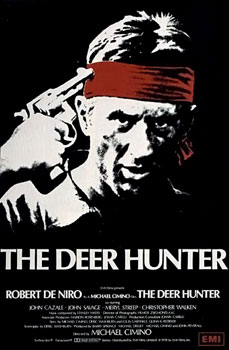 The best movie ever on outliers, randomness and red bandanas is The Deer Hunter.
I "have worn that red bandana of speculation" and late at night miss it –not unlike the Kingston Trio's refrain "once you hear the whistle blow, you can't come back."
Nothing is like the rush being long "too many contracts" whether they go with you or against you. Every second vibrates — it becomes a hundred yard dash and you are the fastest man on the planet, totally in the flow, winning or losing. An altered state.
In that state I encounter speculative Nirvana, and found it is a most dangerous place to visit, winning or losing, because it is so addictive. Either way the endorphins surge, mainlined into the larger vessels. Life is just one heartbeat. There is nothing else.
Not unlike your first bareback ride, getting in the chute, settling down on the horse, then giving that nod, the gate swings open and life begins or ends. Addicted to danger: what a great way to live and love.
Ken Smith replies:
I know that feeling. For three or four years I have not used realtime data, trading on marco information and end of day charts. Today I began using real time again and the experience brought me to life. Realtime boosted my spirits and the lift aroused my motivation to get to work. A good day to be alive.
Aug
27
A Great Guy to Fade, from Larry Williams
August 27, 2007 | 1 Comment
 Jim Jubak of MSN Money is the guy who never gets the chair when the music stops — he's a bottle of ketch-up. But Singapore has so much going for it: the meeting and banking point between China and India. Lots of action there and the best, by far, crab dinner in the world, Singapore Pepper Crab. To die for.
Aug
24
The Calendar, a Query from Jeff Rollert
August 24, 2007 | 1 Comment
What's the likelihood of folks' "painting the tape" on a very illiquid Friday 8/31? This applies less to liquid securities than equities or index futures. As an example, I have seen it done in high yield — or at least it appeared to have been done. Call reports and other mark-to-market/model issues will be interesting to watch, especially TRACE.
Larry Williams replies:
You believe in that? I never did. Suspect it's an old wives’ tail. But I’ve never been that close to the fire. If they paint the tape, buy to drive prices up, they have increased their longer term exposure for a momentary gain.
Aug
23
Newspapers, a Query from Monty Humbert
August 23, 2007 | 2 Comments
What newspapers and periodicals are helpful and useful from an investing and speculation perspective? My favorite reads include WSJ, Barrons, Economist, and Investors Business Daily.
Larry Williams replies:
Mother Jones, Foreign Affairs, National Enquirer.
And, never forget what Mark Twain said:
If you don't read newspapers you are uninformed. If you do read newspapers you are misinformed.
 Alan Millhone adds:
On a related topic, I have several newspaper stamps in my stamp collection, some of which will fill the palm of your hand. They were made in 1865 by the National Bank Note Company — there are eight of them and luckily I have all eight in my collection. In 1875 the size was greatly reduced and printing was done by the Continental Bank Note Company, the American Bank Note Company and then later by the Bureau of Printing and Engraving. The face value of each stamp runs from a few cents to sixty dollars, but as collectors' items they are obviously much more valuable now.
Aug
21
Wall of Worry, from James Sogi
August 21, 2007 | 2 Comments
 Worry is in the air. Concern over financial collapse is in the news. The sky is falling. Markets are down. The circle of life and markets needs a period of reconstruction, of regrowth. Thirty percent more bidders are joining the queue.
The year is positive. The market is almost six percent off its lows of last week. It is difficult to hold. Many worry whether the rally will last. What are the mechanics of the wall of worry? The Rose Garden Theory provides that markets are the social adjustment mechanism and prevent excess of politicians in upcoming election from giving clues as to timing. The idea that the market must provide for its own upkeep by the powers that be shows how knocking price down provides a profit by year end for the strong.
The timing during the summer holiday gives time for the process over several months and to accomplish the maximum haircut when players are out of the office and vulnerable. The current rally is the flip side of the "weak longs" bailing out. Only the strong are left to reap the harvest. As the markets rise additional players jump on board. As old highs approach, those that bailed try to get back on so as not to miss, but again at the wrong time, behind the form. The maximum pain trade, buying at point of maximum pain, seems to have been a reflection and antidote to the common natural reaction. Avoiding the herd down and up is always very hard for social creatures. It’s like walking up stairs during rush hour in the New York subway.
The formulae for Sharpe ratio, Black Scholes, Fed model have a risk-free factor keyed to the risk-free rates. The risk-free yields have dropped affecting the pricing of options, Sharpe ratio, and Fed model, all in favor of equities and giving equities a higher future expectation. What does all this subprime credit stuff have to do with equities anyway?
Larry Williams remarks:
"The quants froze" is what one of the most successful presidents of a hedgefund told me regarding what happened at his firm at the recent low. He had to step in for his traders — they just locked up. Great indicator!
Aug
15
Merv Griffin, from Larry Williams
August 15, 2007 | Leave a Comment
 One myth is that Hollywood song and dance men, actors, etc., are not all that smart or business-oriented.
The death of Merv Griffin reminded me of the substantial fortunes Merv, his good friend Clint Eastwood, Bob Hope, Michelle Pfeiffer and many other Tinseltown wonders have created.
In 1982 I was on Merv's show discussing my book How to Prosper in the Coming Good Years. Our pre-show green room chatter made clear Merv knew a lot more than I did! He was a superb long-term investor, accepted risk and paid great attention to details.
We both dated the same girl about then; that issue was not discussed!
Steve Leslie adds:
 I remember as a youth watching the Merv Griffin Show at 4pm. He was introduced by British actor Arthur Treacher, "And here is the dear boy himself, Mervyn." He waltzed out, smiled and waved to Mrs. Miller in the front row, and opened his Botany 500 sport coat to expose a garish lining, his trademark.
He worked as a talk show host for 25 years, then went on to syndicate the two most successful game shows in history, Jeopardy and Wheel of Fortune. He was also an incredibly successful real estate investor, part owner of Resorts International in Atlantic City and the former Atlantis resort in the Bahamas.
Quite an outstanding life for someone who began as a singer with the Freddy Martin big band.
Aug
15
Big Gap Down in S&P? from Larry Williams
August 15, 2007 | 1 Comment
If we gap down 15 points or more I'm a buyer. Such gaps, at times bonds are in an uptrend, are generally pretty good trades. Also, the Dollar Index ratio to S&P 500 is getting bullish for stocks.
Aug
13
Myth, Reality, and Markets, from Larry Williams
August 13, 2007 | 1 Comment
 I just spent a few days at Ularu, Ayers Rock, in the middle of Australia.
The reality is it’s a fascinating example of sedimentary layering followed my uplift in terms of geology. The myth is the original land owners say it was built by 'hands' and is sacred.
There are more market myths than reality. One I think is that the markets are pretty much always the same, supply and demand coupled with emotions.
I had a delightful dinner this week with the largest bookmaker in Australia (it's legal here). I asked if I wanted to crunch numbers through a computer to understand winning horses what would be the most important thing to look at?
His reply was oh, so telling. "Right now pace, that means more now than speed ratings".
He went on to explain how things have changed in racing (I thought it was just horses running around the same track as for the last 50 years). to his trained eye it all changes, all the time. Seems the markets and races have lots in common.
Jul
28
If there really were a Plunge Protection team why didn't they come save the world this week? Could it be there isn't one, as certainly this week they were needed?
Charles Pennington comments:
Government likes plunges because they provide an excuse to seize new powers and enlarge the government footprint. It certainly worked out that way during the plunge of the 1930s.
If there were a government Plunge Protection Team, the government would heavily publicize it and its heroic role in stopping plunges. The Hong Kong government openly stepped in to buy stocks in the midst of the 1998 Asian market collapse — the intervention was announced in August 1998 — and to my surprise, the announcement just about coincided with the market low.
My theory, then, is that governments relish plunges and would only intervene if done with great fanfare to take credit.
Kevin Eilian writes:
Sometimes "plunge protection" can take the form of a wink and a nod, like the 1998 Russian meltdown/LTC deal. The knight gathered together the biggies from all participating banks (so I understand) and "asked" them to "coordinate" a de facto bailout. Now with huge consolidation among world financials, this type of pp (reminds of me of JP's role in the 1900s) should be easier.
The government will use plunges to assume new power - if it lasts (i.e., the 30s or the late 60s/70s for example). Since most of the world's politicians do not really understand economics (growth causes inflation, static budget analysis, cap gains balance the budget, etc.) the attempt to gather more power in light of a prolonged plunge is worrisome ("double whammy" potential).
I think most politicians dislike the uncertainty and potential shorter term election implications of a typical plunge and/or dislocation, so they'll do what they can to bring in a plunger. To me, whether it’s explicit (like r*bin), informal (like the knight in 98) or just day to day (central bank coordination) they are around. We just need to be careful what we wish for!
David Wren-Hardin writes:
We're in just the first episode of a multi-episode drama. It's like in the comic books or cartoons where the evil overlord rises up, and a second tier superhero team from another country like Alpha-Flight or Justice League Europe tries to take him on, only to be crushed. Then the real superheroes come in.
We saw Plunge-Protection Team Europe take a swing. Bernanke is still ensconced in his Fortress of Solitude, waiting to call on the rest of PPT-USA.
Jul
25
Hunting, from Larry Williams
July 25, 2007 | Leave a Comment
 It's about having meat on the table for dinner.
I grew up on five deer a year, two antelope, and an occasional elk. As soon as the kids left home, Dad stopped hunting for the most part. Our family, like so many in Montana, depended on game to live. We did not go to exotic places, drove as few miles as possible to hunt, and made every bullet count, just as our neighbors did.
Assuredly some hunt for the bang of it all, but I think they are fewer in number.
Robert McAdams adds:
Every fall while growing up in Michigan I witnessed the mass exodus of auto workers from the big cities to the Upper Peninsula to deer hunt. These people made plenty of money to eat and usually came back with nothing. There is just something basic about getting out in the wild!
East Sider advises:
Always check that it's a real deer -
HUNGRY ZIMBABWEANS COOKED AND ATE A DOG
Harare (dpa) - With meat now in desperately short supply in Zimbabwe, a
group of men from the eastern city of Mutare is urging residents to try
eating dogs, a local newspaper reported Friday. In a case that has
shocked city residents, four men barbecued and ate a dog they had
stolen, the Manica Post reported. On being quizzed, the men first
claimed they were barbecuing a buck. But when a member of the family
that had lost its dog looked carefully at the meal, he was not
convinced. Bits of fur still on the meat matched those of the missing
canine, the newspaper said.
Jul
24
Sawtooth National Bank, from Larry Williams
July 24, 2007 | Leave a Comment
 I once learned a very costly lesson in the art of banking. Talk about alligators! It's a long story, but here is a very short version:
We bought the bank for no money down as a friend was effectively being kicked out of it by the regulators, the FDIC. So we took over not realizing how bad the bad loans were and then had a good loan turn bad on us. Local banks have to maintain cash ratio to loans and we were behind from the get-go.
About the only money we made was on a position in Long Island Light and Power bonds that were way below par with expiration coming soon. In an election year we bought a bunch of them; I did not think the government would let them default on the bonds and I was correct.
The FDIC flagged that as one more risky move on our part. More capital was called for, and it became clear they wanted us out of the business.
The good news was the bank was a small bank so we only lost 'small' — a few million.
Lesson learned: don't buy on margin, or if you do take just a small position. Also, best to stick to what you know with people you know.
Jul
14
Can You Do It vs. Can It Be Done, from Kim Zussman
July 14, 2007 | Leave a Comment
Here is a simple simulation about how easy it is to get lucky and rich trading futures. Continuous S&P 500 emini futures daily return 97-07 was used to find mean daily and standard deviation:
mean 0.126 pt
sd 13.452
count 2477 days
This mean and standard deviation were used to produce random series of daily changes (normally distributed), for 1000 days for each of 100 hypothetical traders (HTs). HTs don't have any skill predicting the market; they trade hypotheses in chat-rooms but buy and sell index futures at random. All the HTs start with $100,000 equity, and trade single emini contracts 1000 days until we check their performances. (This is about 0.75X leverage; $50 for 1 emini, less $6 vig for both sides of each trade. Effects of taxes, account fees, platform fees, research costs all = 0).
Of the 100 HTs trading just 1 emini at a time, the average final balance was $98,965; loss of about 1%. None went below $10,000 equity ("bust"); the lowest point for the worst trader was $41,500. The winner finished with $153,751; a gain of almost 54% (his hypotheses about markets was like Ayn's).
There was another group of 100 traders, the HRHTs (High-rolling-hypothetical-traders). This daring crew also started with $100,000 each, but traded five mini contracts each 1000 times (About 3.75X leverage; $250/pt, $30 vig round trip). The HRHTs average final balance was about $95,000, but this erroneously includes those with large negative equity at the end. Turns out 40/100 HRHTs busted somewhere along their 1000 trades (defined as equity < $10,000. OK they give up too easily, but if they were allowed to borrow from mom the worst HRHT would have ended with -$189,000). However the winner of the HRHT contest finished with $368,756!
Even without market prediction skill, leveraged trading in updrifting market can be profitable just by chance. And the more leverage used, the higher the possible return and risk of ruin.
Jun
19
A Bond Seasonal, from Larry Williams
June 19, 2007 | 3 Comments
On average, in the last 28 years bonds have begun a short-term rally on the 9th trading day of June (6/13 this year). This is a trade I have taught in seminars and taken for the last 10 years. I don't have a clue as to why this happens — maybe readers have some ideas. Perhaps it's just happenstance. But next year I will take it again just as I have in the past.
Kim Zussman replies:
I tested the suggestion of a bond rally from 9th trading day of June using TNX (10 yr bond yield) back to 1980. From the 9th day, holding for 5d, 10d, 20d, here are the results:
One-Sample T:
Variable N Mean StDev 95% CI T P
5d 27 0.0006 0.0239 (-0.009, 0.010) 0.13 0.899
10d 27 0.0041 0.0364 (-0.010, 0.019) 0.59 0.561
20d 27 -0.002 0.0500 (-0.021, 0.018) -0.19 0.849
Using TNX, there were not significant gains in 10yr bonds for the three holds. Note that TNX is yield, so increased bond price would be decreased TNX.
Here are the data:
Date 5d 10d 20d
6/13/2006 0.040 0.050 0.028
6/13/2005 0.002 -0.046 0.012
6/14/2004 -0.037 -0.027 -0.080
6/12/2003 0.054 0.114 0.148
6/13/2002 -0.031 -0.018 -0.059
6/13/2001 -0.011 -0.006 -0.006
6/13/2000 -0.015 -0.003 -0.003
6/11/1999 -0.030 0.002 -0.047
6/11/1998 0.011 0.006 -0.004
6/12/1997 -0.012 0.003 -0.037
6/13/1996 -0.006 -0.026 -0.024
6/13/1995 0.003 0.002 -0.005
6/13/1994 0.014 0.014 0.051
6/11/1993 0.000 -0.022 -0.037
6/11/1992 -0.019 -0.026 -0.055
6/13/1991 -0.005 -0.002 -0.010
6/13/1990 0.018 0.014 0.012
6/13/1989 0.007 -0.017 -0.030
6/13/1988 0.012 0.003 0.019
6/11/1987 -0.029 -0.032 -0.023
6/12/1986 -0.036 -0.070 -0.085
6/13/1985 -0.007 0.018 0.002
6/13/1984 0.016 0.024 -0.001
6/13/1983 0.005 0.033 0.062
6/11/1982 0.050 0.060 -0.004
6/11/1981 0.019 0.029 0.047
6/12/1980 0.003 0.036 0.079
Jeff Rollert remarks:
I'd suggest not using TNX, especially when there are auctions — it doesn't handle those well in the series. I use TNX only for checking on general levels when using my cellphone browser at school functions.
Larry Williams replies:
Dr. Zussman's comments on my bond seasonal trade were confusing to many readers, so here are the details: What I tested was buying bond futures on the open of the 9th trading day of June, using a $1,600 stop and exit on the first profitable opening plus two ticks. In the last 21 years there have been 20 winning trades. That's how I've traded it for the last 10 years. Dr. Zussman tested 10 year cash bonds; I trade 30 year nearby futures — apples and oranges. Hope this clarifies.
Larry Williams continues:
My tests, using nearby active contract in Genesis Data, with no stop, exit X days later:
5 days 52% wins + 3,270
10 63% + 6,926
15 79% + 8,301
20 63% +16,676
Jun
13
Kids’ Books, from Russell Sears
June 13, 2007 | 1 Comment
 I have been researching on the web how to teach children to dream. What is left out is how to develop a passion for life when dreams fail to develop. I suspect their father's example is the best teacher.
John Floyd writes:
I am looking for recommendations for children’s books. I would like to include the right mix of education, capitalism, logic, reason, imagination, and individuality among other things. A few books and stories that I have found, and the kids enjoy: Jonathan Livingston Seagull, Thidwick the Big Hearted Moose, An Airplane is Born, and The Little Prince.
Scott Brooks adds:
As much as we push education in our home, we've had a dickens of time getting our children to read outside of school. Finally last year, my oldest daughter got into reading the Goose Bumps series. She loves them and needs no prodding to read up on them.
My youngest son somehow got into reading the Star Wars books. He doesn't read them religiously, but will read outside of class if given a little reminder. Interestingly, I bought him a book on bullets at the Quality Deer Management Association national convention in Chattanooga last week and he's been perusing it almost everyday. He's 8 years old and it's way above his level, but he seems fascinated by it. He had his home school teacher read it with him and explain the more difficult parts to him.
For my 12-year-old, we've had to use a different tactic. He doesn't read unless we push him to do it. However, he's really into the markets and learning about investing. So he reads stuff on the net about companies he's thinking of buying and watches and reads investing information.
I guess the key is to immerse your kids in reading and let them find what they like. When I was kid, I'd read one or two Hardy Boys book's a week. I tried to get my kids into them, but to no avail. Keep searching to help your kids find something that they like. There have been a lot of good books recommended here (and I'm saving this thread for future reference for my kids and their home school).
Many of these books are important and are one's that I'll have the kids read as part of their school work assignments (whether they want to or not). But the biggest thing that I've searched for is, how do I instill in them a love for reading a thirst for knowledge? I can't do that by forcing books on them. Sure, I can help them to learn important lessons by requiring that they read certain books. But what I really want to see is them sitting down curled up with a book reading it because they want to. I believe that should be goal!
From Bill Humbert:
One of my children was a reading-avoider. My goal was to get the kid reading and I happened to see the movie League of Their Own in which the Madonna character teaches the non-literate character to read by using trashy novels. I believe the quote was something like, Who cares? She’s reading isn’t she? It’s a scene we always laugh at.
Well, I didn’t use trashy novels, but I did use comic books. We started with the superhero genre and then I gradually slipped in the newer version of the old Classic Comics. For certain works I also acquired Books on Tape, which is more useful than listening to the radio in the car and it gave the child a general understanding of the work.
Since the brain stores different types of input in different locations, this child had an advantage over the children who only had read say Homer’s Odyssey. The child had the pictures from the Classic Comics, the audio from Books on Tape and the printed word itself. After a while the child started to excel in those classes. And only then did the overall desire to read take over. I think it was like a pump that needed to be primed.
Get the child reading. "What" does not matter. If the child finds that useful and desired knowledge comes from reading, eventually that child will take to the books. But you have to prime the pump by starting with something that they want to read, which is not always what we want them to read.
Larry Williams adds:
When I wanted my kids to read a book I was reading I told them they probably should not read it — that it was too adult for them. A cheap trick, I know, but they pick up those books like a brown trout seeing a grasshopper in August.
Nat Stewart writes:
My parents did much to foster my love of reading. In early grade school I would go with my mother to the local library, where I was allowed to pick any books I wanted for that week. I quickly fell in love with the selection of children's books that focused on biographies of America's great heroes. My particular favorites where books on:
1. Thomas Jefferson
2. Thomas Edison
3. George Washington
4. Paul Revere
5. John Paul Jones
6. George Washington
7. Davey Crockett
8. Henry Ford
9. Daniel Boone
10. the Wright brothers
I loved these books! The children's books focus on a narrative of struggle, adventure, and heroism, ingenuity, and are often historically accurate enough to prove very educational. I remember reading them late into the night, hoping no one notice that I had my light on long past the official bed time.
My parents also spent a good deal of time reading to me. My favorites included books about King Author and Nights of the Round Table, "Little House on the Prairie" books, and The Chronicles of Narnia.
Let a kid explore the library and pick favorites. Provide enough options so that reading can become an adventure rather than a chore. Spend some time reading to them over summer vacation.
From Bill Rafter:
 We all remember our trips to the library. However that cannot be replicated today. The libraries simply cannot compete with television and the Internet either with content or "wow" factor. The answer to the problem will be in using the new technology not avoiding it. Television, even the good stuff like National Geographic or Ken Burn's "Civil War", is still second-rate because it's passive. The Internet is active, and thus has more potential as a learning tool.
Games can be very helpful. One that had particularly helped me (both myself and subsequently my children) was Scrabble. After a street game of "boxball" we would dig out the Scrabble board while we cooled down. Those games got very competitive to the extent that several of us kids started doing research on words by randomly reading the dictionary. Scrabble also required you use arithmetic to keep score.
My favorite Scrabble word was "ennui," as it cleaned out your collection of accumulated poor-value tiles. It also led to challenges, which led to another turn and more points. While researching through the dictionary I stumbled upon the word "eunuch", which also had good Scrabble possibilities. Being in 6th grade, I didn't care what it meant, but kept a mental file for future use.
Well somehow I got into a name-calling event in the schoolyard with a girl and called her a eunuch. She had no idea what it meant, but the teacher Sister Mary Hatchetface was in earshot and she most certainly knew. The next thing that happened was that I was in the principal's office (Sister Jane Battleaxe). My father was summoned. He was a Philadelphia policeman, and he happened to be in uniform.
So there I was in the Holy of Holies with the two nuns in their penguin uniforms and Dad in his, trying to learn what trashy literature I was reading. The revelation that it was the dictionary left them with no solution.
Ahhh, the ability to stick it to authority…priceless.
Jun
4
BBQ, from Clive Burlin
June 4, 2007 | Leave a Comment
 I've shared my other favorite BBQ. That's to make extra creamy coleslaw and put a ton of Old Bay or your favorite crab seasoning to spice it up. Yes! For almost two years, J.T's coleslaw has reigned supreme in this neck of the woods. For those who missed it:
Ingredients
1 head cabbage, grated fine
1/2 cup fine chop dill pickles
2 cups mayonnaise
1 teaspoon sugar
1 small onion, chopped fine
1 teaspoon pepper
Directions: Grate cabbage and let it sit in strainer about 20 minutes. Use paper towel to dry off excess moisture. Transfer cabbage to a bowl. Stir in remaining ingredients and refrigerate about 1 hour before serving. To those that wish to spice it up sprinkle Old Bay Seasoning when finished. You can also sprinkle Old Bay on those ears of corn when buttered up as well as on those Bloody Marys.
Hell, just put Old Bay on everything.
Larry Williams adds:
 Living in Australia has been great, but unable to find real BBQ and stuck in an apartment without Weber grills we were forced to improvise for our culinary survival. Sauces, of course are covered, but what to do if all you have is an oven?
Our tests finally produced an excellent technique to mimic the "real deal". Here it is:
Clean ribs; rub with your choice of rubs or seasonings, at least use salt and pepper, maybe Chili powder, etc.
Place in deep pan, wrap in foil, and pop in a 250-degree oven for 5-6 hours. Pop them out from time to time to lather with sauce. Remove foil for last 30-45 minutes.
The results are as close as you can get the south while not leaving your kitchen or striking a match. Good eating to all.
May
28
You Have to Advertise, from Larry Williams
May 28, 2007 | Leave a Comment
 I have no problem with advertising. It is essentially freedom of speech, a right. How else do people find out about a product or service?
Coke does it, Microsoft does it, Nike does it, I've done it. The larger issue is, does the sales message fairly present the proposition? Ken Smith has led the charges on this point.
Considering the large cost of advertising it is natural to try to get your ad cost back so a legitimate promoter will be as enticed to get a response as a huckster.
It is one thing for a money manager to advertise vs. a letter writer or educator. They have different markets to attend to. Some prefer writing to trading. A few trade and write. Then there is the running of a money management firm (that takes a very sharp business person as there are numerous areas of expertise needed beyond trading).
The aggressive promoters always have a back end. They want to sell you a book for next to nothing. Then a campaign steps up to a very expensive service or personal mentoring. That's the one they are doing now.
Several of these guys have approached me telling me how they 'step' people up from a free seminar to eventually getting $20,000 from them.
That galls me, as I'm sure it does most people. I'd rather trade or promote myself, (brag like hell of course if that's what's required) but have full disclosure and no hidden agendas.
Perhaps this will alert some to the mentoring hustle going on in the world of trading now.
May
24
The Future of Candlestick Charts, from Larry Williams
May 24, 2007 | 1 Comment
 It seems candle-charting technique may soon be of little value, if it ever was, due to the advent of electronic markets. I say that as the "seamless" markets we now have are losing a "true opening' as prices close in the pits, then open a few minutes later. Hence, there are no gaps between the close and opens as we once enjoyed.
Since candlesticks operate on the sole basis of the opening and the close, to form the body, the new electronic way of recording price movement totally redefines the spirit as well as the body of candlestick charting.
I guess Nisson, et al, will have to file a habeas corpus with the exchanges or devise some new glitzy charting technique.
David Goodboy writes:
Many intra-day traders use candlestick charting. In fact it's the default style on most software packages. I believe your idea applies to daily candles only, wherein the open and close of an intra-day candle are based on a chosen timeframe and not the exchanges.
Larry Williams replies:
I know many traders use candlesticks, intraday, but there are two problems there.
1) What time period is best in electronic markets where for hours nothing happens and then all four alarms go off? The solution is to not use time-based bars. But then what do the candles mean?
2) More important, when I test candlestick patterns most all of them have no predictive value. The sells are better as buys and the supposed best buy, engulfing bullish, is not even as good as a placebo pattern.
Since putting this view forward in an article in Futures Magazine 16 years ago, I still get the same answers in testing these patterns. They may be a great art form, an adjunct for trading to use in consideration of other factors. But my research does not support using them on their own. I am open-minded to all research of these patterns. There is some literature out there purporting they work. Read and test as I have, however, and I think you would disagree.
Brian J. Haag writes:
What time period is best in electronic markets where for hours nothing happens and then all 4 alarms go off. The solution is to not use time-based bars. But then what do the candles mean?
This has always been true to an extent. Those who only use time-based measures have been at a disadvantage. It's just that now it's getting worse.
May
20
FX Trading Results, from Larry Williams
May 20, 2007 | 1 Comment
 FX trading has become huge and very popular with the public, system sellers, and brokers. This report is from a dear friend.
I recently spoke to one of the largest Forex FCM's in the country, who has thousands of clients. He made a statement to me that is very telling. Out of the thousands of clients who have accounts with them, only about 60 - 80 are profitable this year so far. A majority are down significantly.
From Riz Din:
Welcome to my world. FX does not afford sufficient protection to the public, and unscrupulous brokers abound. I hear complaints of trading platforms freezing up around the big numbers (payrolls etc), of orders being slipped, and of stops not being honored. I will not question the validity of these complaints but I do not believe they lie at the heart of the problem. Instead, I attribute most retail level blow-ups to inadequate capital and excessive leverage — with just 10k the inexperienced retail investor can command up to 4m of underlying.
There is also a high level of price uncertainty due to the lack of an underlying marketplace (this is being addressed). Also, while the manipulative marketing by brokers and system sellers is worrying, I have faith in the development of the market over the long-term. Spreads have tightened considerably over the past five years, and banks are moving into the retail space, offering trading platforms with more credibility than the off-shore broker who sends marketing e-mails offering 'price guarantees,' 'no slippage,' etc.
Also, while this may be less relevant to the day trader, another factor that makes FX trading a tricky proposition is the absence of a clear upward drift. Individual exchange rates may appear to exhibit long-term trends. But at their core, we are just dealing in relative prices and there is no such thing as a built-in reward for the entrepreneur such as is found in the equity market. Banks are now launching various ETF-type products that claim to capture the exchange rate beta — incorporating strategies that have proved rewarding over the longer-term, such as the carry trade. But I believe this is far more questionable than equity beta.
I find the dynamics of this marketplace fascinating, but there is no doubt that it's a tough racket. Still, I am surprised by those numbers.
From Chris Cooper:
I, too, have been trading a lot of forex recently. I don't find it too hard to believe that there are very few profitable retail traders. Most retail brokers run operations designed to milk money from their customers. That, plus the leverage available, pretty much guarantees that few will profit. My commissions are not high, but since I trade fairly frequently (not scalping) I know that commissions alone cost me 50% of my equity annually. Slippage is even more costly. That's a pretty big nut to overcome.
There are retail brokers who are built with ECN technology, and these tend to give their customers a better deal. I would recommend either Interactive Brokers or EFX Group.
Once you move past the retail stage, I have noticed that another serious issue is liquidity. Because of the lack of a central exchange, you end up having to execute in multiple locations to find liquidity and that complicates the trading. Claims about forex being the biggest market in the world (trillions!) are so much hogwash. I can see that my trades have a brief but visible effect on the market occasionally, more than I see by trading index futures. It doesn't take much to buy the entire amount offered at the best ask.
I am optimistic about the industry, and one of the reasons is the big increase in numbers of small retail traders. They are certainly losing more than they have a right to lose, but the competition engendered for their accounts will ultimately better the experience for all customers.
Alan Millhone writes:
You all talk of 'slippage', lack of liquidity, costly commissions, retail brokers who milk their customers. Do all of you stay in the market as a challenge, make a living, just something to do to pass time?
In construction we also have 'fly by nights' who prey on the elderly and the unsuspecting and give the good builders a bad rap. Perhaps it is the same in any business. I have had plenty of experiences in the construction business where on the other end some people run out of money and simply will not pay you. Because the court always assumes the builder is making a fortune, 99% of the time it rules against the builder.
Chris Cooper replies:
To be fair, one must distinguish between the costs of doing business, which are simply features of the marketplace, and those which are borderline fraudulent.
Commissions, slippage, and lack of liquidity are all costs of trading which are fair in principle, and the magnitude is determined ultimately by competition among providers. Also, brokers in the forex markets artificially widen the spreads and take the difference for themselves, and trade against their customers. While perhaps not unethical, such practices don't enhance the perception of fairness that will ultimately lead to increased participation. Traders can educate themselves to avoid these brokers, but for now plenty do not.
From Yishen Kuik:
This brings to mind epidemic models. If account fatality rates are so high, should one assume that marketing is a key driver in this business (to renew the population of accounts)?
Vincent Andres adds:
My experience in the market is short. For what I understand from this retail market, I don't see that brokers need to do great marketing. In fact FX customers are too optimistic. They see what they want to see, e.g., "Mr. X won the FX contest with 1000%." They don't see what they should see, that 99% of participants loose their account.
I posit that some of the overconfidence may be due to the presumed knowledge each of us has about currencies, which seems simply better than what we have about stocks, etc. I believe I understand the Euro better than Merck & Co./Soybeans etc, simply because I practice/use/own them everyday.
The FX market is a closed finite market, with ten main currencies, 10×10 main vehicles. This may calm people, the liquidity meme, forgetting to look at the granularity of this liquidity. FX is de facto an oligopoly archetype, the guru. I understand nothing. But I rely on somebody who understands. In fact, the simili-pro is like one of Mr. Rafter's nice examples. The only thing the simili-pro understands is how to dupe his customers.
The reading of FX forums is a 4th dimension experience. The customer's innocence/ignorance/unwillingness to try to understand/learn/look seems without limits. At the retail level, there are few attempts to know the market, the brokers, who are the players, what is the leverage, the spread, etc. It seems like people want deliberately to play blindly. When they buy a piece of fish at the fish market, they will carefully compare, weigh, smell, touch, remember, etc. When they buy 10,000 euros with leverage 10, they will base it on two crossing lines from a surrealist Picasso like painting.
It is not so hard to quantitatively verify that a great part of the losses is not due to the market, but to the broker. People focus on the market (even completely wrongly), while the real play is not there. A great percent of trades/plays don't happen at the market level, but stay intra broker. (Hence, if you want to make money, you'll strongly have to make it from your broker, and not from the market. That's a rather different game.)
Despite all the above remarks, I found the FX a very nice teaching and training field. Since the broker's big obstacle, an oligopoly, etc, searching edges is quite hard. It's thus quite formidable. I do not pretend other markets are marshmallows, but the FX is specific.
May
11
Stocks and Commodities, from Larry Williams
May 11, 2007 | Leave a Comment
One would think commodities would have an ever upward drift in price (everything gets more expensive, right?). Yet, a quick check of historical charts show they are boom and bust; there is no upward drift as in stocks. Why?
My take on it is very basic. The first law of the universe is to survive, the second is to grow. Corporations must grow to survive. All organisms are driven by that basic tenet, unfortunately even government agencies.
Corporations are growing, expanding organisms that morph to change and adapt in their inherent drive to survive.
Commodities are not such an organism… just a price. There is no drive or motivation for an ear of corn to sell at a higher price, to take over the world or gain market share. This also should serve as a warning to commodity long-only index or basket funds. Again, look at those long term charts!
Stocks drift higher because the way of man is to improve, grow, get better. Nothing has been able to stop that; not dictators, nor Communists or Socialists. Stock prices will always advance long-term as corporations are in the business of expanding and taking advantage of opportunities.
It does help the averages that dying stocks are removed (there are only a handful of stocks in the Dow that were also there 20 years ago) yet growth and value are always there to be discovered.
Go forth and prosper is the motto of all corporations.
Gregory van Kipnis writes:
Your observation is correct. I saw the same thing when I analyzed the data 25 years ago. The arguments made then were:
- stocks rise because the have growing earnings; commodities have no earnings
- ceteris paribus inflation is offset by storage and financing costs
- quantity supplied grows along with demand growth, more or less, not so for individual stocks
- commodities are substituted when one becomes relatively too expensive
The long term indexes are usually geometric means of broad baskets of agricultural and industrial commodities. Over time there are substitutions, e.g., kerosene for whale oil.
Eli Zabethan adds:
One must consider carry when looking at futures. There is a world of difference between the non carry considered charts and those where carry is considered…
Greg Rehmke offers:
Commodities as “natural” resources goes down in price over the long term (only one resource, labor, goes up in price). As Julian Simon explained, man is The Ultimate Resource, and all others we call natural now were once just rocks.
Black gunk bubbling up in salt marches became oil after whales became scarce and people started looking around for substitutes. The early oil in Pennsylvania ran out quickly, and only after Rockefeller’s army of chemists discovered how to get the sulfur out of similar black gunk in Ohio did it become oil too.
Discovering resources requires reason, freedom, and hard work. Without these rocks stay rocks, tar sands stay buried and useless, penicillin stays mold, DDT stays banned.
Over recent decades more and more world oil and mineral supplies left the free world and fell into government hands. I am reading about Zambia in Robert Guest’s book “The Shackled Continent.” Copper production in Zambia peaked in 1969 at 825,000 tonnes a year. Then it was nationalized and production has since fallen by two-thirds.
Oil resources, nearly all discovered by free people in private firms, have been grabbed by governments around the world. (Oil reserves in Russia, during few years of relative freedom between Soviet control and Putin control, went up dramatically.)
The economic freedom finally reaching hundreds of millions in China and India is lifting wealth creation and the demand for natural resources. How fast entrepreneurs, engineers, and enterprises respond to higher prices with new discoveries, technologies, production, substitutes, and efficiency gains, is anyone’s guess.
But looking back at the inflation-adjusted prices for natural resources over the decades and centuries shows a steady trend.
Of course, as commodities are priced in dollars, it is not clear whether the genius of private industry in extracting natural resources from the earth will match the “genius” of governments in extracting value from fiat currencies.
May
9
Cheap No Longer? From Larry Williams
May 9, 2007 | Leave a Comment
 I was looking for bids to print some DVDs for my commodity trading course; tried the USA first, India second. They're cheaper in the USA, even before shipping! I would try China, but I'm concerned about quality control.
Nigel Davies adds:
I'd also be concerned about their making extra copies and selling them off on the cheap. This happened with one very nice Italian-Russian chess production which found its way into the suitcases of Russian chess players when they went to tournaments. You couldn't tell it from the real thing because it was the real thing — just half price or less. And when the Italian partner realised they couldn't sell many of the official copies they finally twigged what was happening. And not much chance of joy in the Russian courts…
Barry Quigley remarks:
A friend of mine outside the US has a very successful little business duplicating and printing CDs and DVDs. I tried the exact same business model in the US and could not compete. Competition was unbelievable. Only the biggest mass-producing companies can pay for advertising, charge the lowest prices, and still make a profit. I also suspect quality control in the US is the best.
May
8
E=mc2 and Trading, from David Lamb
May 8, 2007 | 2 Comments
 Einstein's groundbreaking theory has been proven in so many instances that I thought it would be interesting, in my very limited way, to try to adapt the theory to trading in the markets. It is my intent to change the name of the variables in the famous equation, E=mc2, into known trading variables and see if there is any possibility to there being constants in the world of trading. And I feel this would allow me to understand how to manipulate my collected data in order to achieve better results.
If E = energy (the amount of work a physical system can do on another), m = mass (the invariant mass is an observer-independent quantity that is synonymous with mass), and c = speed of light, where c is the constant. Speed of light is the absolute in this formula, and nothing that I am aware of can reach this speed.
A consequence of the theory of relativity is the inevitable relation between energy and mass. Mass and energy are equivalent, or one will affect the other (although a relatively small amount of mass is equivalent to a large amount of energy, I do not say that they are equal in volume, only in affect).
As energy is exuded to increase the speed of anything, the mass of that object is increased, making it more difficult for further speed increases, or a continuation of the same speed. This, in turn, disables any further mass/energy accumulation and, in all probability, the very essence of this state is that the event will lose energy/mass. It is my understanding that everything in the measured universe, from the macro to the micro levels, is in a constant state of progression or regression, never stagnation. Therefore, as regression is experienced the ability to attract more mass/energy is enhanced and the cycle starts all over again.
As my goal is to draw comparisons of the energy/mass equation to the trading world, with what variables can I substitute E=mc2? Perhaps trading volume and forward propulsion of price is equal in influence, or one propagates the other. For instance, as forward propulsion of a particular price direction increases, trading volume should increase. And this should make it harder for the market to experience an increase in perpetual forward propulsion.
If this is true then the market should experience exhaustion phases which, in turn, should lose some trading volume and forward propulsion. The expected weeding out the weak is now experienced. These exhaustion phases should immediately (time is relative, however) attract trading volume from the more astute traders, which then sets in motion the forward propulsion again. This would offer an explanation of how it is possible that the stock market has experienced overwhelming bullish forward propulsion coupled with momentary exhaustion phases throughout the last century.
If trading volume and forward propulsion of price can be equaled to the "e" and the "m" of the Einstein equation, then what can I use for the absolute, or the constant, in the trading equation? Some possibilities are as follows:
1. Time values are always the same (i.e. seconds, minutes, hours, days, etc.) Depending on what type of trader one is, the time value needs to remain constant to see continuities. Hence, different values of time series analysis. 2. Price increments or values. For instance, the minimum tick move for t-bonds is 1/32 and this never changes. For some futures contracts there are limits to how much that market is allowed to move in one day, three. For every seller there is a buyer, and the slew of possible definitions of this statement, just as long as it remains constant.
The most important absolute variable that any trader can plug into this formula totally depends on the type of data that they collect. The three examples I offer above are very elementary and subject to manipulation. There are, I am most sure, a high amount of possible "absolutes" that other traders will find more important to them, which is to be expected.
Although this idea is far from complete, I look forward to testing this hypothesis and I thank the readers for allowing me to use them as a sounding board in my never-ending search for understanding of how the markets work.
Larry Williams adds:
(E)motion in trading = (m)argin calls X number of (c)ontracts squared.
Apr
26
Oh My Darlings, from Larry Williams
April 26, 2007 | 1 Comment
Results for Darlings of the Dow selections from Oct. 2006:
Stock 10/30/06 Last Gain
Alcoa 28.3 35.1 24.0%
Home Depot 36.8 38.0 3.2%
Caterpillar 61.1 67.0 9.6%
Wal-Mart 49.2 47.6 -3.2%
Exxon 71.1 77.6 9.1%
Average: 8.5%
DJIA: 12049 12611 4.6%
Mar
29
Turtle Trader, from Sushil Kedia
March 29, 2007 | 2 Comments
Surfing the web today, I landed on Turtle Trader and noticed:
- The significant angst with which the author has latched onto the long-since-lost-its-value device of obtaining cheap popularity by attacking Dr. Niederhoffer's 1997 glitch.
- No mention of Steve Cohen. Noticeable because the author has compiled a pull-down menu of Top Traders, classifying them as Hall of Fame, Market Wizards, Turtle Traders & Trend Followers, and has SAC nowhere in that list. The author hasn't found a reason to classify this success anywhere?
Larry Williams replies:
Sushil has scratched a very dark surface here. Long story to this website; mostly negative, vile stuff about people that is not correct, and sets themselves out as the savior. Orignated by a guy who does not trade (so a real Turtle told me — who knows?) but the bitterness expressed towards others is the clue to the soul of these people.
I had a tiff with these guys a few years ago when they were putting me down. Where is their track record? Where is their heart? This is not how good thinking people treat others. There are many ways to make a good cup of market soup.. some like it hot, some like it cold, some like it in the pot, nine days old.
The site lists among its heroes a multi-year loser of clients' funds, and a mystic who (as I understand it) has not traded for years, just holds navel-gazing seminars sprinkled with platitudes. If I am wrong on this… I would sincerely like to know.
Mar
14
The Night Crew, from Larry Williams
March 14, 2007 | 1 Comment
I do not believe there is a night crew, specialists, floor traders, et al., going out after my stops or my positions.
I think that is a sophomoric concept. If you are getting stopped out a lot it simply means your stops are too close and market randomness is doing it to you — not some cabal that meets in secret prior to the opening every day.
Jay Pasch lauds:
Another gem from the Senator. One voice speaks of responsibility, ownership, and self-empowerment, the other voices, blame.
Mar
5
Candles, from Easan Katir
March 5, 2007 | Leave a Comment
 Japanese chart watchers would say 2/21 was a hanging man in the S&P, which portended lower prices, followed by a doji, which indicated indecision. The decision was made on 2/23, and it was let's go down. That's about all I see.
Larry Williams replies:
I do not look at candles. They just don't light my fire for some reason. Besides when I program them I can never get them to make money mechanically. I suggest you look at volume and open interest as well as price.
Feb
28
Counting the Carnage, from Jay Pasch
February 28, 2007 | 2 Comments
Measured yesterday's SPX closing price as a percentage decline of more than 4 standard deviations below the average one-day percentage change measured over the last 30 trading days. Examined the dates in history of like moves and the percentage-change T-days out. History shows a strong bounce averaging 4.3% by 2-days out, 9 of 10 winners and 1 no-change, t=3.2 at day-2.
Bernd Dittmann adds:
I continued Jay's counting, but instead of using confidence intervals, I looked at extreme values. Based on daily returns from Jan. 2, 1987 till today (4992 obs.), here are the left and right tails of the return distribution:
%return <-% obs normal >+% obs
0.5 1466 1865 1663
1 876 1337 1041
2 334 596 371
3 140 182 136
4 69 50 61
5 36 9 27
6 23 1 15
7 18 0 9
8 12 0 5
9 8 0 2
10 6 0 2
What is clearly striking is that declines of 3% or more have been observed more frequently than 3%+ percent increases. If one were to use a normal distribution to describe Hang Seng daily returns (which is rejected at any level of significance), one would clearly underestimate the frequency of extreme returns. Which distribution would thus fit Hang Seng returns, and also its asymmetry in extreme values?
Larry Williams remarks:
Traders should carefully note which stocks in the Dow were the least resistant to the selling pressures yesterday. An important subject, raised by Victor and Laurel a few weeks back.
Feb
15
Australia, from Larry Williams
February 15, 2007 | Leave a Comment
There are several things going on down under I thought Daily Spec readers might enjoy hearing about…
The first of course is the incredibly strong performance of the stock market. This is due in part to the fact that all Australians must pitch in part of their earnings to an investment program. It is privately managed, meaning a huge amount of money comes into their market month after month after month and keeps driving prices higher. Also, for the most part, their stocks are undervalued versus other stock markets in the world.
But all is not that well here…
At dinner the other night a friend told me he had a knee operation. I said, "Well that didn't cost anything; that must've been nice." His reply was, "It cost me quite a bit. I had to pay cash because in the publicly supported medical system it would've taken a couple of years to get an appointment." I confirmed that with a jogging buddy today, who said the same thing. There is a fast track for emergencies, for instance if you're in a car wreck. But for any significant discretionary operation you will wait a long time
His wife added that since there is no cost to go to a doctor, the doctors are flooded, as there is no disincentive to seek care.
This was the one that got me: After employing someone for 12 months it is mandatory to give him a one-month vacation. I've never had a one-month vacation in my life. Who would want one? You couldn't work. Nonetheless, when the worker gets that vacation he gets it with pay plus 19%. In other words, he earns 119% of his base salary on his off month. The thinking of the labor union leaders is that the vacation will cost him more money than staying at home. So he is entitled to more.
One of the big issues in the upcoming election will be free dental care. My dentist here doesn't do anything for free. I don't blame him, and we both wonder: who's going to pay for it? Obviously, it will be paid in some form of higher taxation, something politicians here and everywhere seem to enjoy. There is a 40% tax on wine made here, which means I can buy the same bottle of wine cheaper in America.
I could go on and on with other examples of the difficulty of running a business here.
It is a lovely country with great people and great future, but it seems to have been overrun by socialists and labor union leaders, which certainly will have an impact on the economy at some point.
Adi Schnytzer writes:
And just imagine, there are millions of people all over the world just wishing they could get a visa for Australia. Go figure!
Larry Williams replies:
Sure! Can't get fired for stealing, get a month's paid vacation at 119% of base after 12 months of lounging around, free stuff! Ya, man let's go!
My point is that business people have read Atlas Shrugged and see it taking place here.
Adi Schnytzer adds:
Larry, how many people die for lack of operations, medicines, and doctors in Australia? What is the per capita number in the U.S.? No health system is perfect and no economic system is perfect and, yes, there are some stupid taxes, but how many homeless have you tripped over lately? If you want to compare Australia with the U.S's, the former being too socialistic for some tastes, why not do it properly?
Larry Williams replies:
I see about 100 homeless people here every day. Some are real characters to talk with. Come on a walkabout with me. They are flagrant and stink like heck but are courteous. They are all over here, on every major street. I certainly see more homeless people here than in San Diego, a city very similar to Sydney.
I do not know how many people die for lack of operations, but I suspect it's the same as in the U.S or U.K.
If an employee is caught stealing from you, all you can do is write a letter. It is not until the third time you can fire him.
Virtually every older Aussie I know vents these same complaints. I am just the reporter here!
Feb
12
A Down Home Approach To Markets, by Victor Niederhoffer
February 12, 2007 | 2 Comments
 We are accustomed to reading short stories like Aces Up, or Inside Straight, where the action somehow relates to the sequence of bidding and uncertainty in various card games. Yes, life often imitates the bluffing, counting, bidding, random elements, path dependence, money management, reading, and choice inherent in a good poker game. And, of course, it will be no surprise to say that in many ways the market is like a poker game, with some of the cards hidden, some showing, and random factors to come.
Indeed, I have a dozen pages in Ed Spec on it (the most worthless in the book in my opinion) mainly because I am not an educated poker player, and all I've done is read books on how much I didn't know when I did play. Another approach to poker is to think of the cards coming into your hand, say on first, second, and third street, etc., in a five card stud hi-lo game with bidding after each card, as similar to the market moves each of the 5 days of the week. When should you bid, call, fold, or cash in?
Cashing in is always possible with the market mistress. Still, like the "doing business" which characterizes many such card games, the opponent may exercise a high price if you fold. Rite now the market has dealt three of a kind, with three down days in a row. Should you hold, raise, or fold? Readers of this humble site will know the Scarnesque, Malmudesque answer already and always have their canes at hand for such a deal.
If you are long, another player has the trips, and if you are short, you're holding them. Other common hands the market might deal you are the four card outside straight, if you're holding to Thursday, for example, and are long a call at 1450 with the options expiry on Friday, and the market now at 1439. Should you draw to that straight or 3 card flush or not?
Indeed, this seems to me a rather fruitful way of looking at things. On first, second, and third street, all the way up, a good card player knows what the correct play is depending on the cards that he is dealt and whether he's playing for low or high. Do market players have similar guidelines as to how to play the hand after sequential cards are dealt to all the players? We can answer such questions for many hands that the player is dealt during the week.
For example, after you've put up a big ante it might make sense to wait around for the big announcement that's going to cause great uncertainty, like the Humphrey Hawkins testimony on Wednesday. Or at least you shouldn't have called in the first place if you weren't ready to stay in, because you knew there would be a big raise after third street that you'd have to meet.
The question emerges as to what is the best way to simulate a 52-card deck with 13 numerical and face cards, and four suits. This will enable you to come up with rules of thumb as to when it pays to go for it based on expectations at various stages.
I would again propose using the five-card high-low as an analogy that, depending on whether you're long, short or straddling, you divide up the cards.
Since I know even less about poker than I know about trees or electronics or most of the other things I write about, besides the defunct game of hard ball squash, I had better leave this as an exercise for the reader. I'm not hubristic enough to give my own solution now knowing that so many better ones will come to the table. Subject to my admission of ignorance, however, if none comes I'll take a crack at it.
Steve Leslie adds:
 There was a time, when hold 'em was not the game of choice in poker rooms around America. In fact, if you were to speak to the old timers, many were totally unfamiliar with the game. It has only recently become a phenomenon, brought on by the technology of the 21st century and the ability to see the players' hole cards. Along with television came the great exposure of the World Series and as a result the game of choice today is no limit tournament style hold 'em.
Although the game is termed the Cadillac of poker, in the 90s the game I played was 7-card stud, or eight or better. I played this game for three years or so and I can honestly say that I consider myself to be one of the best stud players around. It plays into my skills very nicely as it is the most statistical of poker games. It also has the most information available as you get to see most of the cards. Players with have photographic memories and those who can think quickly have a great advantage.
This is a variation of the traditional 7-card stud, where the high hand and the low hand split the pot. In order to win the low hand, however, you have to have five cards out of seven that are no higher than an eight and the best possible hand is A, 2, 3, 4, 5. This is called a wheel. Straights and flushes do not count toward the low hand but they do for the high hand. Therefore, you can win both the low hand and the high hand at the same time.
Other than that 7-card stud, eight or better is very straightforward and there is very little bluffing. The true objective of the game is extreme patience and waiting for a starting hand that gives you the highest probability of success.
Here is the great secret to playing 7-card stud, 8 or better. Start out by playing only toward a low hand with an objective of also filling out your hand and winning both the high and the low. This is called sweeping the pot. In order to be profitable in this game you want to win one big pot an hour and sweeping is the best way to do so.
Therefore, you start out with three cards, two down and one up. The best starting hands are three cards that are in a row and of the same suit. A 3, 4, and 5, of spades for example. This constitutes the first round of betting. After that there will be four rounds remaining and one card at a time will be dealt to you and the last card will be dealt down.
If your first four cards are eight or less, then the likelihood that you will make a low is 80%. If you have four cards to a low after the fifth card is dealt, then your chance of success is 50%. There are two critical decisions that the stud player makes in the game. That is after third street and after fifth street. If by fifth street you don't have four low cards, you give up the hand. If you have four to a low by fifth street, you are committed to seeing it all the way to the end. It is really that simple. Properly played it is just beautiful. Poorly played it is absolutely brutal.
People get into trouble by playing high hands. The worst thing to have happen is to play a high hand only and come in second. This is very expensive, especially if someone makes her low and starts raising the pots as she should. And if the low also makes a high then the high is swimming against the current along the way.
The corollaries to a 5-day trading week are self evident. With respect to stocks, using William O'Neill's approach, your highest probability of success is by selecting stocks that have an eps rating of 80 or better and a Relative Share rating of 80 or better and investing in those. This will be your starting hand of three. If the stocks go down seven percent or more after investing in them, you let them go. This is the same as letting your hand go after 5th street as it just did not fill out as you have would liked.
Now I don't necessarily espouse the theory of the 7% rule, as I deem it as too tight for my tastes. It does not give the story time to play out. I rather have a more flexible stop loss level and do not overplay my hand. That is to say I do not chase cards. I do not commit too much of my capital to any one stock either. And if I feel I have a winning stock with good earnings, good relative strength, and in a good group, then I am willing to play it out to the end. Eventually, it will be recognized for its value. If I have an accommodating market on top of those variables chances increase to where I can get both the high and the low. This is where the great reward comes in. Once again, patience is the key. And having the earnings and the relative strength on you side helps provide the patience.

I hope this illustration is helpful. For a more in-depth discussion of the study of 7-card stud, eight or better see me offline.
Larry Williams writes:
"[R]esearch on strategic behavior in economic games has identified a wide range of situations in which thinking one step ahead of an opponent provides a decisive advantage. Research on behavior in markets shows that failing to think carefully about other participants' likely actions leads to adverse consequences, such as the ‘winner's curse’ (the tendency for auction winners to pay too much)."
From On Making the Right Choice : The Deliberation-Without-Attention Effect, by Ap Dijksterhuis, Maarten W. Bos, Loran F. Nordgren and Rick B. van Baaren Department of Psychology, University of Amsterdam
Feb
9
Depletable Commodities, by Larry Williams
February 9, 2007 | 6 Comments
 Perhaps another myth:
As prices go higher, new materials are used to substitute: fiber optics; plastic for cars rather than iron and steel; etc.
Global warming (if it exists, which I doubt) seems mostly bearish for most agrarian items. This is because it will mean longer growing seasons and production in areas now too cold, hence larger supply.
Reply from George Zachar:
This should be countable. Has planted acreage spread north? Are grain shipments up on Canada's railways? Is the mix of crops changing in ways consistent with warmer climes at higher latitudes?
Two of my "you're a moron" global warming refutations are the facts that Greenland was under the plow, not ice, 1000 years ago, and there were vineyards north of London several centuries ago.
From Steve Leslie:
For those of you who are interested in global warming and the debate surrounding it, I recommend you read Michael Creighton's State of Fear.
It has plenty of suspense and intrigue as well as discussion of the merits of the scientific studies of global warming. It is very much a scientific novel.
From Henry Gifford:
My understanding is that it is written by a fine writer who is not a scientist, and I'm not aware of any debate among scientists about what is causing global warming.
I have a copy of the Irish physisict John Tyndall's paper to The Royal Society wherin he identified CO2 as a greenhouse gas, which I understand was where the debate ended, over 150 years ago.
Stefan Jonanovich writes:
No one questions the increase in CO2 emissions as the result of human activity. What many scientists have questioned is, (1) whether CO2 is a significant contributor to the "greenhouse" mechanism as opposed to, for example, water vapor condensation triggered by increased gamma radiation, and (2) whether the recent observations of warming in some (but not all) parts of the globe have other and possibly more significant causes such as increased solar radiation.
These are reasonable questions. What is irrational is the extent to which discussion is being actively repressed even in the scientific community in the name of unanimity. What is shameful is that this global "emergency" has taken precedence over trivial matters like clean water for the million or so children who die every year of diarrhea, and cooking fuels other than wood fires for the millions of women whose lung functions are destroyed.
Feb
8
Negative Feedback and Trend Following, by Victor Niederhoffer
February 8, 2007 | Leave a Comment
 There has been entirely too little thought given to the mechanism, pathways and reasons that negative feedback works in markets. Perhaps the main reason is that the feeding web is based on a reasonable stability in what and how much is being eaten and recycled.
The people who consume and redistribute must maintain a ready and stable supply of those who produce. They develop mechanisms to keep everything going. One of them is the specialization and great efficiency in their activities. If markets deviate too much from the areas and levels within which the specialization has developed, then much waste and new effort and mechanisms will be necessary.
Aside from the grind that trend following causes (i.e. the losses in execution), and the negative feedback system of movements in the supply and demand schedules that equilibrate, which Marshall pioneered and are now standard in economics, and the numerous other reasons I've set forth (e.g. the fixed nature of the system and the flexibility to profit from it), this appears to me to be the main reason that trend following doesn't work.
Here are a few interesting articles on the subject:
How Great Traders Make Millions in Up or Down Markets
Does Trend Following Work On Stocks?
Interviews At RealWorld Trading
Bill Rafter writes:
Dr. Bruno had posed the idea of beating an index by deleting the worst performers. This is an area in which we have done considerable work. Please note that we do not consider this trend-following. The assets are not charted, just ranked.
Let us imagine an investor who is savvy enough to identify what is strong about an economy and invest in sectors representative of those areas, while avoiding sectors representing the weaker areas of the economy. Note that we are not requiring our investor to be prescient. He does not need to see what will be strong tomorrow, just what is strong and weak now, measured by performance over a recent period.
What is a market sector? The S&P does that work for us, and breaks down the overall market (that is, the S&P 500) into 10 Sectors. They further break it down into 24 Industry Groups, and further still into 60-plus Industries and 140-plus Sub-Industries. The number of the various groups and their constituents changes from time to time as the economy evolves, but essentially the 500 stocks can be grouped in a variety of ways, depending on the degree of focus desired. Some of the groupings are so narrow that only one company represents that group.
Our investor starts out looking at the 10 Sectors and ranks them according to their performance (such as their quarterly rate of change). He then invests in those ranked first through fourth (25 percent in each), and maintains those holdings until the rankings change. How does he do? Not bad, it turns out.
www.mathinvestdecisions.com/Best_4_of_10.gif
From 1990 through 2006, which encompasses several types of market conditions, the overall market managed an 8 percent compound annual rate of return. Our savvy investor achieved 10.77%. A less savvy investor who had the bad fortune to pick the worst six groups would have earned 7.23%. Those results are below. (Note, for comparison purposes, all results excluded dividends.)
www.mathinvestdecisions.com/Worst_6_of_10.gif
How can our savvy investor do better? By simply sharpening one's focus, major improvements can be achieved. If instead of ranking the top 4 of10 Sectors, our savvy investor invests in a similar number (say the top 4, 5 or 6) of the 24 Industry Groups, he achieves a 13.12% compoundedannual rate of return over the same period. Note that the same stocks are represented in the 10 Sectors and the 24 Industry Groups. At no time did he have to be prescient.
www.mathinvestdecisions.com/Going_to_24_groups.gif
One thing you will notice from the graphs above is that the equity curves of our savvy and unlucky investors mimic the rises and declines of the market index itself. Being savvy makes money but it does not insulate one from overall bad markets because the Sectors and even the Industry Groups are not significantly diversified from the overall market.
Why not keep going further out and rank all stocks individually? That clearly results in superior returns, but the volume of trading is such that it can only be accomplished effectively in a fund structure - not by the individual. And even ranking thousands of stocks will not insulate an investor from an overall market decline, if he is only invested in equities. The answer of course is diversification.
It is possible to rank debt and alternative investment sectors alongside equities, in the hope of letting their performances dictate what the investor should own. However the debt and commodities markets have different volatilities than the equities markets. Anyone ranking them must make adjustments for their inherent differences. That is, when ranking really diverse assets, one must rank them on a risk-adjusted basis for it to be a true comparison. However if we make those adjustments and rank treasury bonds (debt) against our 24 Industry Groups (equity) we can avoid some of the overall equity declines. We refer to this as a Strategic Overlay:
www.mathinvestdecisions.com/Strategic_diversification.gif
Adding this Strategic Overlay increases the returns slightly, but more important, diversifies the investor away from some periods of total equity market decline. We are not talking of a policy of running for cover every time the equities markets stall. In the long run, the investor must be in equities.
Invariably in ranking diverse assets such as equities, debt and commodities, our investor will be faced with a decision that he should be completely out of equities. It is likely that will occur during a period of high volatility for equities, but one that has also experienced great returns. Thus, our investor would be abandoning equities when his recent experience would suggest otherwise. And since timing can never be perfect, it is further likely that the equities he abandons will continue to outperform for some period. On an absolute basis, equities may rank best, but on a risk-adjusted basis, they may not. It is not uncommon for investors to ignore risk in such a situation, to their subsequent regret.
Ranking is not without its problems. For example, if you are selecting the top 4 groups of whatever category, there is a fair chance that at some time the assets ranked 4 and 5 will change places back and forth on a daily basis. This "flutter" can be easily solved by providing those who make the cut with a subsequent incumbency advantage. For a newcomer to replace a list member, it then must outrank the current assets on the selected list by the incumbency advantage. This is very similar to the manner in which thermostats work. We have found adding an incumbency advantage to be a profitable improvement without considering transactions costs. When one also considers the reduced transaction costs, the benefits increase even more.
Another important consideration is the "lookback" period. Above we used the example of our savvy investor ranking assets on the basis of their quarterly growth. Not surprisingly, the choice of a lookback period can have an effect on profitability. Since markets tend to fall more abruptly than they rise, lookback periods that perform best during rising markets are markedly different from those that perform best during falling markets. Determining whether a market is rising or falling can be problematic, as it can only be done with certainty in retrospect. However, another key factor influencing the choice of a lookback period is volatility, which can be determined concurrently. Thus an optimal lookback period can be automatically determined based on volatility.
There is certainly no question that a diligent investor can outperform the market. By outperforming the market we mean that he will achieve a greater average rate of return than the market, while limiting the maximum drawdown (or percentage equity decline) to less than that experienced by the market. But the average investor is generally not up to the diligence or persistence required.
In the research work illustrated above, all transactions were executed on the close of the day following a decision being made. Thus the strategy illustrated is certainly executable. Nothing required a forecast; all that was required was for the investor to recognize concurrently which assets have performed well over a recent period. It is not difficult, but requires daily monitoring.
www.mathinvestdecisions.com/about.htm
Charles Pennington writes:
Referring to the MathInvestor's plot:
www.mathinvestdecisions.com/Worst_6_of_10.gif :
At first glance it appears that the "Best" have been beating the "Worst" consistently.
In fact, however, all of the outperformance was from 1990 through 1995. From 1996 to present, it was approximately a tie.
Reading from the plot, I see that the "Best" portfolio was at about 2.1 at the start of 1996. It grew to about 5.5 at the end of the chart for a gain of about 160%. Over the same period, the "Worst" grew from 1.3 to 3.2, a gain of about 150%, essentially the same.
So for the past 11 years, this system had negligible outperformance.
One should also consider that the "Best" portfolio benefits in the study from stale pricing, which one could not capture in real trading. Furthermore, dividends were not included in the study. My guess is that the "Worst" portfolio would have had a higher dividend yield.
In order to improve this kind of study, I would recommend:
1.) Use instruments that can actually be traded, rather than S&P sectors, in order to eliminate the stale pricing concern.
2.) Plot the results on a semilog graph. That would have made it clear that all the outperformance happened before 1996.
3.) Finally, include dividends. The reported difference in compound annual returns (10.8% vs 8.0%) would be completely negated if the "Worst" portfolio had a yield 2.8% higher than the "Best".
Bill Rafter replies:
Gentlemen, please! The previously sent illustration of asset ranking is not a proposed "system," but simply an illustration that tilting one's portfolio away from dogs and toward previous performers can have a beneficial effect on the portfolio. The comparison between the 10 Sectors and the 24 Industry Groups illustrates the benefits of focus. That is, (1) don't buy previous dogs, and (2) sharpen your investment focus. Ignore these points and you will be leaving money on the table.
We have done this work with many different assets such as ETFs and even Fidelity funds (which require a 30-day holding period), both of which can be realistically traded. They are successful, but not overwhelmingly so. Strangely, one of the best asset groups to trade in this manner would be proprietarily-traded small-cap funds.
Unfortunately if you try trading those, your broker will disown you. I mention that example only to suggest that some assets truly do have "legs," or "tails" if you prefer. I think their success is attributed to the fact that some prop traders are better than others, and ranking them works. An asset group with which we have had no success is high-yield debt funds. I have no idea why.
A comment from Jerry Parker:
 I wrote an initial comment to you via your website [can be found under the comments link by the title of this post], disputing your point of view, which a friend of mine read, and sent me the following:
I read your comment on Niederhoffer's Daily Spec in response to his arguments against trend following. Personally, I don't think it boils down to intelligence, but rather to ego. Giving up control to an ego-less computer is not an easy task for someone who believes so strongly in the ability of the human mind. I have great respect for his work and his passion for self study, but of course disagree with his thoughts on trend following. On each trade, he is only able to profit if it "trends" in a favorable direction, whether the holding period is 1 minute or 1 year. Call it what you will, but he trades trends all day.
He's right. I was wrong. Trend following is THE enemy of the 'genius'. You and your friends can't even see how stupid your website is. You are blinded by your superior intelligence and arrogance.
Victor Niederhoffer responds:
Thanks much for your contributions to the debate. I will try to improve my understanding of this subject and my performance in the future so as not to be such an easy target for your critiques.
Ronald Weber writes:
When you think about it, most players in the financial industry are nothing but trend followers (or momentum-players). This includes analysts, advisors, relationship managers, and most fund or money managers. If there is any doubt, check the EE I function on Bloomberg, or the money flow/price functions of mutual funds.
The main reason may have more to do with career risk and the clients themselves. If you're on the right side while everyone is wrong, you will be rewarded; if you're on the wrong side like most of your peers you will be ok; and if you're wrong while everyone is right then you're in trouble!
In addition, most normal human beings (daily specs not included!) don't like ideas that deviate too much from the consensus. You are considered a total heretic if you try to explain why, for example, there is no link between the weak USD and the twin deficits. This is true, too, if you would have told anyone in 2002 that the Japanese banks will experience a dramatic rebound like the Scandinavian banks in the early '90s, and so on, or if you currently express any doubt on any commodity.
So go with the flow, and give them what they want! It makes life easier for everyone! If you can deal with your conscience of course!
The worse is that you tend to get marginalized when you express doubt on contagious thoughts. You force most people to think. You're the boring party spoiler! It's probably one reason why the most successful money managers or most creative research houses happen to be small organizations.
Jeremy Smith offers:
 Not arguing one way or the other here, but for any market or any stock that is making all time highs (measured for sake of argument in years) do we properly say about such markets and stocks that there is no trend?
Vincent Andres contributes:
I would distinguish/disambiguate drift and trend.
"Drift": Plentifully discussed here. "Trend": See arcsine, law of series, etc.
In 2D, the French author Jean-Paul Delahaye speaks about "effet rateau" (rake effect), here and here .

Basically, our tendency is to believe that random equals equiprobability everywhere (2D) or random equals equiprobability everytime (1D), and thus that nonequiprobability everywhere/everytime equals non random
In 1D, non equiprobability everytime means that the sequence -1 +1 -1 +1 -1 +1 -1 +1 is in fact the rare and a very non random sequence, while the sequences -1 +1 +1 +1 +1 +1 -1 +1 with a "trend" are in fact the truly random ones. By the way, this arcsine effect does certainly not explain 100% of all the observed trends. There may also be true ones. Mistress would be too simple. True drift may certainly produce some true trends, but certainly far less than believed by many.
Dylan Distasio adds:
For those who don't believe trend following can be a successful strategy, how would you explain the long-term performance of the No Load Fund X newsletter? Their system consists of a fairly simple relative strength mutual fund (and increasingly ETF) model where funds are held until they weaken enough in relative strength to swap out with new ones.
The results have been audited by Hulbert and consistently outperform the S&P 500 over a relatively long time frame (1980 onwards). I think their results make a trend following approach worth investigating…
Jerry Parker comments again:
All you are saying is that you're not smart enough to develop a trend following system that works. What do you say about the billions of dollars traded by trend following CTAs and their long term track records?
Steve Leslie writes:
If the Chair is not smart enough to figure out trend following, what does that bode for the rest of us?
There is a very old yet wise statement: Do not confuse brains with a bull market.
Case in point: prior to 2000 the great tech market run was being fueled by the hysteria surrounding Y2K. Remember that term? It is not around today but it was the cause for the greatest bull market seen in stocks ever. Dot.com stocks and new issues were being bought with reckless abandon.
New issues were priced overnight and would open 40-50 points higher the next trading day. Money managers had standing orders to buy any new issues. There was no need for dog-and-pony or road shows. It was an absolute classic and chaotic case of extraordinary delusion and crowd madness.
Due diligence was put on hold, or perhaps abandoned. A colleague of mine once owned enough stock in a dot.com that had he sold it at a propitious time, he would have had enough money to purchase a small Hatteras yacht. Today, like many contemporary dot.coms, that stock is essentially worthless. It would not buy a Mad magazine.
Corporations once had a virtual open-ended budget to upgrade their hardware and software to prepare for the upcoming potential disaster. This liquidity allowed service companies to cash in by charging exorbitant fees. Quarter to quarter earnings comparisons were beyond belief and companies did not just meet the numbers, they blew by them like rocket ships. What made it so easy to make money was that when one sold a stock, all they had to do was purchase another similar stock that also was accelerating. The thought processes where so limited. Forget value investing; nobody on the planet wanted to talk to those guys. The value managers had to scrape by for years while they saw their redemptions flow into tech, momentum, and micro cap funds. It became a Ponzi scheme, a game of musical chairs. The problem was timing.
The music stopped in March of 2000 when CIO's need for new technology dried up coincident with the free money, and the stock market went into the greatest decline since the great depression. The NASDAQ peaked around 5000. Today it hovers around 2500, roughly half what it was 7 years ago.
It was not as if there were no warning signs. Beginning in late 1999, the tech market began to thin out and leadership became concentrated in a few issues. Chief among the group were Cisco, Oracle, Qwest, and a handful of others. Every tech, momentum, and growth fund had those stocks in their portfolio. This was coincident with the smart money selling into the sectors. The money managers were showing their hands if only one could read between the lines. Their remarks were "these stocks are being priced to perfection." They could not find compelling reasons not to own any of these stocks. And so on and on it went.
After 9/11 markets and industries began to collapse. The travel industry became almost nonexistent. Even Las Vegas went on life support. People absolutely refused to fly. Furthermore, business in and around New York City was in deep peril. This forced the Fed to begin dramatically reducing interest rates to reignite the economy. It worked, as corporations began to refinance their debt and restructure loans, etc.
The coincident effect began to show up in the housing industry. Homeowners refinanced their mortgages (yours truly included) and took equity out of their homes. Home-buyers were thirsty for real estate and bought homes as if they would disappear off the earth. For $2000 one could buy an option on a new construction home that would not be finished for a year. "Flipping" became the term du jour. Buy a home in a hot market such as Florida for nothing down and sell it six months later at a much higher price. Real estate was white hot. Closing on real estate was set back weeks and weeks. Sellers had multiple offers on their homes many times in the same day. This came to a screeching halt recently with the gradual rise in interest rates and the mass overbuilding of homes, and the housing industry has slowed dramatically.
Houses for sale now sit on the blocks for nine months or more. Builders such as Toll, KB, and Centex have commented that this is the worst real estate market they have seen in decades. Expansion plans have all but stopped and individuals are walking away from their deposits rather than be upside down in their new home.
Now we have an ebullient stock market that has gone nearly 1000 days without so much as a 2% correction in a day. The longest such stretch in history. What does this portend? Time will tell. Margin debt is now at near all-time highs and confidence indicators are skewed. Yet we hear about trend followers and momentum traders and their success. I find this more than curious. One thing that they ever fail to mention is that momentum trading and trend following does not work very well in a trendless market. I never heard much about trend followers from June 2000 to October 2002. I am certain that this game of musical chairs will end, or at least be temporarily interrupted.
As always, it is the diligent speculator who will be prepared for the inevitable and capitalize upon this event. Santayana once said, "Those who cannot remember the past are condemned to repeat it."
From "A Student:"
Capitalism is the most successful economic system in the history of the world. Too often we put technology up as the main driving force behind capitalism. Although it is true that it has much to offer, there is another overlooked hero of capitalism. The cornerstone of capitalism is good marketing.
The trend following (TF) group of fund managers is a perfect example of good marketing. As most know, the group as a whole has managed to amass billions of investor money. The fund operators have managed to become wealthy through high fees. The key to this success is good marketing not performance. It is a tribute to capitalism.
The sports loving fund manger is a perfect example. All of his funds were negative for 2006 and all but one was negative over the last 3 years! So whether one looks at it from a short-term one year stand point or a three year perspective his investors have not made money. Despite this the manager still made money by the truckload during this period. Chalk it up to good marketing, it certainly was not performance.
The secret to this marketing success is intriguing. Normally hedge funds and CTAs cannot solicit investors nor even publicly tout their wares on an Internet site. The TF funds have found a way around this. There may be a web site which openly markets the 'concept' of TF but ostensibly not the funds. On this site the names of the high priests of TF are repeatedly uttered with near religious reverence. Thus this concept site surreptitiously drives the investors to the TF funds.
One of the brilliant marketing tactics used on the site is the continuous repetition of the open question, "Why are they (TF managers) so rich?" The question is offered as a sophist's response to the real world question as to whether TF makes money. The marketing brilliance lies in the fact that there is never a need to provide factual support or performance records. Thus the inconvenient poor performance of the TF funds over the last few years is swept under the carpet.
Also swept under the rug are the performance figures for once-great trend followers who no longer are among the great, i.e., those who didn't survive. Ditto for the non-surviving funds in this or that market from the surviving trend followers.
Another smart technique is how the group drives investor traffic to its concept site. Every few years a hagiographic book is written which idolizes the TF high priests. It ostensibly offers to reveal the hidden secrets of TF.
Yet after reading the book the investor is left with no usable information, merely a constant repetition of the marketing slogan: How come these guys are so rich? Obviously the answer is good marketing but the the book is moot on the subject. Presumably, the books are meant to be helpful and the authors are true believers without a tie-in in mind. But the invisible hand of self-interest often works in mysterious ways.
In the latest incarnation of the TF book the author is presented as an independent researcher and observer. Yet a few days after publication he assumes the role of Director of Marketing for the concept site. Even the least savvy observer must admit that it is extraordinary marketing when one can persuade the prospect to pay $30 to buy a copy of the marketing literature.
Jason Ruspini adds:
"I attribute much of the success of the selected bigs to being net long leveraged in fixed income and stocks during the relevant periods."
I humbly corroborate this point. If one eliminates long equity, long fixed income (and fx carry) positions, most trend-following returns evaporate.
Metals and energies have helped recently, after years of paying floor traders.
Victor replies:
I don't agree with all the points above. For example, the beauty of capitalism is not its puffery, but the efficiency of its marketing and distribution system as well as the information and incentives that the prices provide so as to fulfill the pitiless desires of the consumers. Also beautiful is in the mechanism that it provides for those with savings making low returns to invest in the projects of entrepreneurs with much higher returns in fields that are urgently desired by customers.
I have been the butt of abuse and scorn from the trend followers for many years. One such abusive letter apparently sparked the writer's note. Aside from my other limitations, the trend following followers apparently find my refusal to believe in the value of any fixed systems a negative. They also apparently don't like the serial correlation coefficients I periodically report that test the basic tenets of the trend following canon.
I believe that if there are trends, then the standard statistical methods for detecting same, i.e., correlograms, regressions, runs and turning point tests, arima estimates, variance ratio tests, and non-linear extensions of same will show them.
Such tests as I have run do not reveal any systematic departures from randomness. Nor if they did would I believe they were predictive, especially in the light of the principle of ever changing cycles about which I have written extensively.
Doubtless there is a drift in the overall level of stock prices. And certain fund managers who are biased in that direction should certainly be able to capture some of that drift to the extent that the times they are short or out of the market don't override it. However, this is not supportive of trend following in my book.
Similarly, there certainly has been over the last 30 years a strong upward movement in fixed income prices. To the extent that a person was long during this period, especially if on leverage, there is very good reason to believe that they would have made money, especially if they limited their shorts to a moiete.
Many of the criticisms of my views on trend following point to the great big boys who say they follow trends. To the extent that those big boys are not counterbalanced by others bigs who have lost, I attribute much of the success of the selected bigs to being net long leveraged in fixed income and stocks during the relevant periods.
I have no firm belief as to whether such things as trends in individual stocks exist. The statistical problem is too complex for me because of a paucity of independent data points, and the difficulties of maintaining an operational prospective file.
Neither do I have much conviction as to whether trends exist in commodities or foreign exchange. The overall negative returns to the public in such fields seem to be of so vast a magnitude that it would not be a fruitful line of inquiry.
If I found such trends through the normal statistical methods, I would suspect them as a lure of the invisible evil hand to bring in big money to follow trends after a little money has been made by following them, the same way human imposters work in other fields. I believe that such a tendency for trend followers to lose with relatively big money after making with smaller amounts is a feature of all fixed systems. And it's guaranteed to happen by the law of ever-changing cycles.
The main substantive objection to my views that I have found in the past, other than that trend followers know many people who make money following trends (a view which is self-reported and selective and non-systematic, and thus open to some of the objections of those of the letter-writer), is that they themselves follow trends and charts and make much money doing it. What is not seen by these in my views is what they would have made with their natural instincts if they did not use trend following as one of their planks. This is a difficult argument for them to understand or to confirm or deny.
My views on trend following are always open to new evidence, and new ways of looking at the subject. I solicit and will publish all views on this subject in the spirit of free inquiry and mutual education.
Jeff Sasmor writes:
Would you really call what FUNDX does trend following? Well, whatever they do works.
I used their system successfully in my retirement accounts and my kids' college UTMA's and am happy enough with it that I dumped about 25% of that money in their company's Mutual Funds which do the same process as the newsletter. The MFs are like an FOF approach. The added expense charges are worth it. IMO, anyway. Their fund universe is quite small compared to the totality of funds that exist, and they create classes of funds based on their measure of risk.
This is what they say is their process. When friends ask me what to buy I tell them to buy the FUNDX mutual fund if their time scale is long. No one has complained yet!
It ain't perfect (And what is? unless your aim is to prove that you're right) but it's better than me fumfering around trying to pick MFs from recommendations in Money Magazine, Forbes, or Morningstar.
I'm really not convinced that what they do is trend following though.
Dylan Distasio Adds:
For those who don't believe trend following can be a successful strategy, how would you explain the long-term performance of the No Load Fund X newsletter?
Michael Marchese writes:
In a recent post, Mr. Leslie finished his essay with, "I never heard much about trend followers from June 2000 to October 2002." This link shows the month-to-month performance of 13 trend followers during that period of time. It seems they did OK.
Hanny Saad writes:
Not only is trend following invalid statistically but, looking at the bigger picture, it has to be invalid logically without even running your unusual tests.
If wealth distribution is to remain in the range of 20 to 80, trend following cannot exist. In other words, if the majority followed the trend (hence the concept of trends), and if trend following is in fact profitable, the majority will become rich and the 20-80 distribution will collapse. This defeats logic and history. That said, there is the well-covered (by the Chair) general market upward drift that should also come as no surprise to the macro thinkers. The increase in the general population, wealth, and the entrepreneurial spirit over the long term will inevitably contribute to the upward drift of the general market indices as is very well demonstrated by the triumphal trio.
While all world markets did well over the last 100 yrs, you notice upon closer examination that the markets that outperformed were the US, Canada, Australia, and New Zealand. The one common denominator that these countries have is that they are all immigration countries. They attract people.
Contrary to what one hears about the negative effects of immigration, and how immigrants cause recessions, the people who leave their homelands looking for a better life generally have quite developed entrepreneurial spirits. As a result, they contribute to the steeper upward curve of the markets of these countries. When immigrants are allowed into these countries, with their life savings, home purchases, land development, saving and borrowing, immigration becomes a rudder against recession, or at least helps with soft landings. Immigration countries have that extra weapon called LAND.
So in brief, no - trends do not exists and can not exist either statistically or logically, with the exception of the forever upward drift of population and general markets with some curves steeper than others, those of the countries with the extra weapon called land and immigration.
A rereading of The Wealth And Poverty Of Nations, by Landes, and the triumph of the optimist may be in order.
Steve Ellison adds:
So Mr. Parker's real objective was simply to insult the Chair, not to provide any evidence of the merits of trend following that would enlighten us (anecdotes and tautologies that all traders can only profit from favorable trends prove nothing). I too lack the intelligence to develop a trend following system that works. When I test conditions that I naively believe to be indicative of trends, such as crossovers of moving averages, X-day highs and lows, and the direction of the most recent Y percent move, I usually find negative returns going forward.
Bacon summarized his entire book in a single sentence: "Always copper the public play!" My more detailed summary was, "When the public embraces a particular betting strategy, payoffs fall, and incentives (for favored horsemen) to win are diminished."
Trend Following — Cause, from James Sogi:
Generate a Brownian motion time series with drift in R
WN <-rnorm(1024);RW<-cumsum(WN);DELTAT<-1/252;
MU<-.15*DELTAT;SIG<-.2*sqrt(DELTAT);TIME<-(1:1024)/252 stock<-exp(SIG*RW+MU*TIME) ts.plot(stock)
Run it a few times. Shows lots of trends. Pick one. You might get lucky.
Trend Following v. Buy and Hold, from Yishen Kuik
The real price of pork bellies and wheat should fall over time as innovation drives down costs of production. Theoretically, however, the nominal price might still show drift if the inflation is high enough to overcome the falling real costs of production.
I've looked at the number of oranges, bacon, and tea a blue collar worker's weekly wages could have purchased in New York in 2000 versus London in the 1700s. All quantities showed a significant increase (i.e., become relatively cheaper), lending support to the idea that real costs of production for most basic foodstuffs fall over time.
Then again, according to Keynes, one should be able to earn a risk premium from speculating in commodity futures by normal backwardation, since one is providing an insurance service to commercial hedgers. So one doesn't necessarily need rising spot prices to earn this premium, according to Keynes.
Not All Deer are Five-Pointers, from Larry Williams
 What's frustrating to me about trading is having a view, as I sometimes do, that a market should be close to a short term sell, yet I have no entry. This betwixt and between is frustrating, wanting to sell but not seeing the precise entry point, and knowing I may miss the entry and then see the market decline.
So I wait. It's hard to learn not to pull the trigger at every deer you see. Not all are five-pointers… and some will be bagged by better hunters than I.
From Gregory van Kipnis:
 Back in the 70s a long-term study was done by the economic consulting firm of Townsend Greenspan (yes, Alan's firm) on a variety of raw material price indexes. It included the Journal of Commerce index, a government index of the geometric mean of raw materials and a few others. The study concluded that despite population growth and rapid industrialization since the Revolutionary War era, that supply, with a lag, kept up with demand, or substitutions (kerosene for whale blubber) would emerge, which net-net led to raw material prices being a zero sum game. Periods of specific commodity price rises were followed by periods of offsetting declining prices. That is, raw materials were not a systematic source of inflation independent of monetary phenomena.
It was important to the study to construct the indexes correctly and broadly, because there were always some commodities that had longer-term rising trends and would bias an index that gave them too much weight. Other commodities went into long-term decline and would get dropped by the commodity exchanges or the popular press. Just as in indexes of fund performance there can be survivor bias, so too with government measures of economic activity and inflation.
However, this is not to say there are no trends at the individual commodity level of detail. Trends are set up by changes in the supply/demand balance. If the supply/demand balance changes for a stock or a commodity, its price will break out. If it is a highly efficient market, the breakout will be swift and leave little opportunity for mechanical methods of exploitation. If it is not an efficient market (for example, you have a lock on information, the new reality is not fully understood, the spread of awareness is slow, or there is heavy disagreement, someone big has to protect a position against an adverse move) the adjustment may be slower to unfold and look like a classic trend. This more often is the case in commodities.
Conversely, if you find a breakout, look for supporting reasons in the supply/demand data before jumping in. But, you need to be fast. In today's more highly efficient markets the problem is best summarized by the paradox: "look before you leap; but he who hesitates is lost!"
Larry Williams adds:
I would posit there is no long-term drift to commodities and thus we have a huge difference in these vehicles.
The commodity index basket guys have a mantra that commodities will go higher - drift - but I can find no evidence that this is anything but a dream, piquant words of promotion that ring true but are not.
I anxiously stand to be corrected.
Marlowe Cassetti writes:
"Along a similar vein, why would anybody pay Powershares to do this kind of work when the tools to do it yourself are so readily available?"
The simple answer is if someone wishes to prescribe to P&F methodology investing, then an ETF is a convenient investment vehicle.
With that said, this would be an interesting experiment. Will the DWA ETF be another Value Line Mutual Fund that routinely fails to beat the market while their newsletter routinely scores high marks? There are other such examples, such as IBD's William O'Neal's aborted mutual fund that was suppose to beat the market with the fabulous CANSLIM system. We have talked about the great track record of No-Load Fund-X newsletter, and their mutual fund, FUNDX, has done quite well in both up and down markets (an exception to the above mentioned cases).
For full disclosure I have recently added three of their mutual funds to my portfolio FUNDX, HOTFX, and RELAX. Hey, I'm retired and have better things to do than do-it-yourself mutual fund building. With 35 acres, I have a lot of dead wood to convert into firewood. Did you know that on old, dead juniper tree turns into cast iron that dulls a chain saw in minutes? But it will splinter like glass when whacked with a sledgehammer.
Kim Zussman writes:
…about the great track record of No-Load Fund-X newsletter and their mutual fund FUNDX has done quite well in both up and down markets… (MC)
Curious about FUNDX, checked its daily returns against ETF SPY (essentially large stock benchmark).
Regression Analysis of FUNDX versus SPY since inception, 6/02 (the regression equation is FUNDX = 0.00039 + 0.158 SPY):
Predictor Coef SE Coef T P
Constant 0.00039 0.000264 1.48 0.14
SPY 0.15780 0.026720 5.91 0.00
S = 0.00901468 R-Sq = 2.9% R-Sq (adj) = 2.8%
The constant (alpha) is not quite significant, but it is positive, so FUNDX did out-perform SPY. Slope is significant and the coefficient is about 0.16, which means FUNDX was less volatile than SPY.
This is also shown by F-test for variance:
Test for Equal Variances: SPY, FUNDX
F-Test (normal distribution) Test statistic = 1.17, p-value = 0.009 (FUNDX<SPY)
But t-test for difference between daily returns shows no difference:
Two-sample T for SPY vs FUNDX
N Mean St Dev SE Mean
SPY 1169 0.00041 0.0099 0.00029
FUNDX 1169 0.00045 0.0091 0.00027 T=0.12
So it looks like FUNDX has been giving slight/insignificant out-performance with significantly less volatility; which makes sense since it is a fund of mutual funds and ETFs.
Even better is Dr Bruno's idea of beating the index by deleting the worst (or few worst) stocks (new additions?).
How about an equal-weighted SP500 (which out-performs when small stocks do), without the worst 50 and double-weighting the best 50.
Call it FUN-EX, in honor of the fun you had with your X that was all mooted in the end.
Alex Castaldo writes:
The results provided by Dr. Zussman are fascinating:
The fund has a Beta of only 0.157, incredibly low for a stock fund (unless they hold a lot of cash). Yet the standard deviation of 0.91468% per day is broadly consistent with stock investing (S&P has a standard deviation of 1%). How can we reconcile this? What would Scholes-Williams, Dimson, and Andy Lo think when they see such a low beta? Must be some kind of bias.
I regressed the FUNDX returns on current and lagged S&P returns a la Dimson (1979) with the following results:
Regression Statistics
Multiple R 0.6816
R Square 0.4646
Adjusted R Square 0.4627
Standard Error 0.0066
Observations 0.1166
ANOVA
df SS MS F Significance F
Regression 4 0.0444 0.0111 251.89 8.2E-156
Residual 1161 0.0511 4.4E-05
Total 1165 0.0955
Coefficients Standard Error t-Stat P-value
Intercept 8.17E-05 0.000194 0.4194 0.6749
SPX 0.18122 0.019696 9.2007 1.6E-19
SPX[-1] 0.60257 0.019719 30.5566 6E-151 SPX[-2] 0.08519 0.019692 4.3260 1.648E-05 SPX[-3] 0.04524 0.019656 2.3017 0.0215
Note the following:
(1) All four S&P coefficients are highly significant.
(2) The Dimson Beta is 0.914 (the sum of the 4 SPX coefficients). The mystery of the low beta has been solved.
(3) The evidence of price staleness, price smoothing, non-trading, whatever you want to call it is clear. Prof. Pennington touched on this the other day; an "efficiently priced" asset should not respond to past S&P price moves. Apparently though, FUNDX holds plenty of such assets (or else the prices of FUNDX itself, which I got from Yahoo, are stale).
S. Les writes:
Have to investigate the Fund X phenomenon. And look to see how it has done in last several years since it was post selected as good. Someone has to win a contest, but the beaten favorites are always my a priori choice except when so many others use that as a system the way they do in sports eye at the harness races, in which case waiting for two races or two days seems more apt a priori. VN
I went to the Fund X website to read up, and the information is quite sparse. It is a very attenuated website. I called the toll free number and chatted with the person on the other line. Information was OK, but, in my view, I had to ask the proper questions. One has several options here. One is to purchase the service and do the fund switching themselves based on the advice of their experts. The advisory service tracks funds that have the best relative strength performance and makes their recommendations from there, www.fundx.com.
Another is to purchase one of four funds available. They have varying levels of aggressiveness. Fund 3 appears to be the recommended one.
If one purchases the style 3 one will get a very broad based fund of funds. I went to yahoo to look up the holdings at www.finance.yahoo.com/q/hl?s=FUNDX.
Top ten holdings are 47.5% of the portfolio, apparently concentrated in emerging markets and international funds at this time.
In summary, if money were to be placed into the Fund X 3 portfolio, I believe it would be so broad based and diversified that returns would be very watered down. Along with risk you would certainly be getting a lot of funds. You won't set the world on fire with this concept, but you won't get blown up, either.
Larry Williams adds:
My 2002 book, Right Stock at the Right Time, explains such an approach in the Dow 30. The losers were the overvalued stocks in the Dow.It is a simple and elegant idea…forget looking for winners…just don't buy overvalued stocks and you beat the idex.
This notion was developed in 1997, when i began actually doing it, and written about in the book. This approach has continued to outperform the Dow, it is fully revealed.
Craig Cuyler writes:
Larry's comment on right stock right time is correct and can be used to shed a little bit of light on trend following. This argument is at the heart of fundamental indexation, which amongst other points argues that cap weighting systematically over-weights overvalued stocks and under-weights undervalued stocks in a portfolio.
Only 29% of the top 10 stocks outperformed the market average over a 10yr period (1964-2004) according to Research Affiliates (this is another subject). The concept of "right stock right time" might be expressed another way, as "right market right time." The point is that constant analysis needs to take place for insuring investment in the products that are most likely to give one a return.
The big error that the trend followers make, in my mind, is they apply a homogeneous methodology to a number of markets and these are usually the ones that are "hot" at the time that the funds are applied. The system is then left to its own devices and inevitably breaks down. Most funds will be invested at exactly the time when the commodity, currencies, etc., are at their most overvalued.
Some worthwhile questions are: How does one identify a trend? Why is it important that one identifies a trend? How is it that security trends allow me to make money? In what time frame must the trend take place and why? What exactly is a trend and how long must it last to be so labeled?
I think it is important to differentiate between speculation using leverage and investing in equities because, as Vic (and most specs on the list) point out, there is a drift factor in equities which, when using sound valuation principles, can make it easier to identify equities that have a high probability of trending. Trend followers don't wait for a security to be overvalued before taking profits. They wait for the trend to change before then trying to profit from the reversal.
Jeff Sasmor adds:
As a user of both the newsletter and the FUNDX mutual fund I'd like to comment that using the mutual fund removes the emotional component of me reading the newsletter and having to make the buys and sells. Perhaps not an issue for others, but I found myself not really able to follow the recommendations exactly - I tend to have an itchy trigger finger to sell things. This is not surprising since I do mostly short-term and day trades. That's my bias; I'm risk averse. So the mutual fund puts that all on autopilot. It more closely matches the performance of their model portfolio.
I don't know how to comment on the comparisons to Value Line Arithmetic Index (VAY). Does anyone follow that exactly as a portfolio?
My aim is to achieve reasonable returns and not perfection. I assume I don't know what's going to happen and that most likely any market opinion that I have is going to be wrong. Like Mentor of Arisia, I know that complete knowledge requires infinite time. That and beta blockers helps to remove the shame aspect of being wrong. But there's always an emotional component.
As someone who is not a financial professional, but who is asked what to buy by friends and acquaintances who know I trade daily (in my small and parasitical fashion), I have found that this whole subject of investing is opaque to most people. Sort of like how in the early days of computing almost no one knew anything about computers. Those who did were the gatekeepers, the high priests of the temple in a way. Most people nowadays still don't know what goes on inside the computer that they use every day. It's a black box - opaque. They rely on the Geek Squad and other professionals to help them out. It makes sense. Can't really expect most people to take the time to learn the subject or even want to. Should they care whether their SW runs on C++ or Python, or what the internal object-oriented class structure of Microsoft Excel is, or whether the website they are looking at is XHTML compliant? Heck no!
Similarly, most people don't know anything about markets; don't want to learn, don't want to take the time, don't have the interest. And maybe they shouldn't. But they are told they need to invest for retirement. As so-called retail investors they depend on financial consultants, fee-based planners, and such to tell them what to do. Often they get self-serving or become too loaded with fees (spec-listers who provide these services excepted).
So I think that the simple advice that I give, of buying broad-based index ETFs like SPY and IWM and something like FUNDX, while certainly less than perfect, and certainly less profitable than managing your own investments full-time, is really suitable for many people who don't really have the inclination, time, or ability to investigate the significant issues for themselves or sort out the multitudes of conflicting opinions put forth by the financial media.
You may not achieve the theoretical maximum returns (no one does), but you will benefit from the upward drift in prices and your blended costs will be reasonable. And it's better than the cash and CDs that a lot of people still have in their retirement accounts.
BTW: FOMA = Foma are harmless untruths, intended to comfort simple souls.
An example : "Prosperity is just around the corner."
I'm not out to defend FUNDX, I have nothing to do with them. I'm just happy with it.
Steve Ellison writes:
One might ask what the purpose of trends is in the market ecosystem. In the old days, trends occurred because information disseminated slowly from insiders to Wall Streeters to the general public, thus ensuring that the public lost more than it had a right to. Memes that capture the public imagination, such as Nasdaq in the 1990s, take years to work through the population, and introduce many opportunities for selling new investment products to the public.
Perhaps some amount of trending is needed from time to time in every market to keep the public interested and tossing chips into the market. I saw this statement at the FX Money Trends website on September 21, 2005: "[T]he head of institutional sales at one of the largest FX dealing rooms in the US … lamented that for the past 2 months trading volume had dried up for his firm dramatically because of the 'lack of trend' and that many 'system traders' had simply shut down to preserve capital."
I saw a similar dynamic recently at a craps table when shooters lost four or five consecutive points, triggering my stop loss so that I quit playing. About half the other players left the table at the same time. "The table's cold," said one.
To test whether a market might trend out of necessity to attract money, I used point and figure methodology with 1% boxes and one-box reversals on the S&P 500 futures. I found five instances in the past 18 months in which four consecutive reversals had occurred and tabulated the next four points after each of these instances (the last of which has only had three subsequent points so far). The results were highly non-predictive.
Starting Next 4 points
Date Continuations Reversals
01/03/06 3 1
05/23/06 1 3
06/29/06 2 2
08/15/06 2 2
01/12/07 1 2
—– —–
9 10
Anthony Tadlock writes:
I had intended to write a post or two on my recent two week trip to Cairo, Aswan, and Alexandria. There is nothing salient to trading but Egypt seems to have more Tourist Police and other guards armed with machine guns than tourists. It is a service economy with very few tourists or middle/upper classes to service. Virtually no westerners walk on the streets of Cairo or Alexandria. I did my best to ignore my investments and had closed all my highly speculative short-term trades before leaving for the trip.
While preparing for taxes I was looking over some of my trades for last year. Absolute worst trade was going long CVS and WAG too soon after WalMart announced $2 generic pricing. I had friends in town and wasn't able to spend my usual time watching and studying the market. I just watched them fall for two days and without looking at a chart, studying historical prices and determining how far they might fall, decided the market was being stupid and went long. Couldn't wait to tell my visitors how "smart" a trader I was and my expected profit. It was fun, until announcement after announcement by WalMart kept causing the stocks to keep falling. The result was panic selling near the bottom, even though I had told myself before the trade that I could happily buy and hold both. Basically, I followed all of Vic's rules on "How to Lose."
Trends: If only following a trend meant being able to draw a straight line or buy a system and buy green and sell red. The trend I wrote about several months ago about more babies being born of affluent parents still seems to be intact. I have recently seen pregnant moms pushing strollers again. Planes to Europe have been at capacity my last two trips and on both trips several crying toddlers made sleep difficult, in both directions. Are people with young children using their home as an ATM to fund a European trip? Are they racking up credit card debt that they can't afford? Depleting their savings? (Oh wait - Americans don't save anything.) If they are, then something fundamental has changed about how humans behave.
From James Sogi:
My daughter the PhD candidate at Berkeley in bio-chem is involved in some mind-boggling work. It's all very confidential, but she tried to explain to me some of her undergrad research in words less than 29 letters long. Molecules have shapes and fit together like keys. The right shape needs to fit in for a lock. Double helices of the DNA strand are a popular example, but it works with different shapes. There is competition to fit the missing piece. They talk to each other somehow. One of her favorite stories as a child was Shel Silverstein's Missing Piece. Maybe that's where her chemical background arose. Silverstein's imagery is how I picture it at my low level.
Looking at this past few months chart patterns it is impossible not to see the similarity in how the strands might try fit together missing pieces in Wykoffian functionality. The math and methods must be complicated, but might supply some ideas for how the ranges and strands in the market might fit together, and provide some predictive methods along the lines of biochemical probability theory. I'll need some assistance from the bio-chem section of the Spec-list to articulate this better.
From Kim Zussman:
Doing same as Alex Castaldo, using SPY daily change (cl-cl) as independent and FUNDX as dependent gave different resluts:
Regression Analysis: FUNDX versus SPY ret, SPY-1, SPY-2
The regression equation is FUNDX = 0.000383 + 0.188 SPY ret - 0.0502 SPY-1 - 0.0313 SPY-2
Predictor Coef SE Coef T P
Constant 0.000383 0.00029 1.35 0.179
SPY ret 0.187620 0.03120 6.01 0.000* SPY-1 -0.050180 0.03136 -1.60 0.110 SPY-2 -0.031250 0.03121 -1.00 0.317 *(contemporaneous)
S = 0.00970927 R-Sq = 3.2% R-Sq (adj) = 3.0%
Perhaps FUNDX vs a tradeable index is the explanation.
Dec
27
Hany Saad on Jesse Livermore and Benjamin Green in the New Millennium
December 27, 2006 | Leave a Comment
The two belonged to almost the same generation, and both witnessed the 1929 crash first hand. One became wiser and prospered as a result, and the other committed suicide.
 I always considered Livermore the ultimate mythical figure in markets, and not Benjamin Graham. If I had one criticism of Practical Speculation, it would be the exclusion of Livermore as the man who decimated the most ill founded wisdom about markets. I contribute that to the fact that his method was simple enough for the high school drop out to understand and apply, as well as to his colorful lifestyle and womanizing.
Livermore’s work can be summarized in very few words. Buy when stocks are going up and always buy at market, and do the opposite with down trending stocks. It is mind boggling how any logical person can believe that such an easy to follow system would make money over the long term.
I believe I had the same copy of How to Trade in Stocks that Victor has, and actually went out of my way to program the formula in red and blue at the back of the book into a simple computer program, before I realized that what he calls natural reactions of six dollars and more, according to the formula, mean that you should sit through decreases that will wipe out any margin you could have. He neglected to use percentage points, so according to him a six dollar reaction on a hundred dollar stock should be dealt with the same way as on a four hundred dollar stock.
In brief it is totally inapplicable in this day and age where computers execute millions and millions of dollars worth of trades at the click of a mouse, and where even arbitrage opportunities became obsolete in consequence. Its applicability to today’s markets is questionable even if you are sensible enough to change the numbers into percentages and apply it to the thousands of stocks that are under the hundred dollar mark. I even question its applicability at the turn of the last century when it was believed that Livermore prospered just by using this simple formula.
Yet, seemingly very smart people idealize Livermore, but probably more for his life style — his Yachts, his mistresses, his cigars and his mansions.
 I ended up selling the book to The C.E.O. of a brokerage firm for a few thousand dollars, it is a thin book of under 100 pages. Like Ben Green (not Ben Graham) I felt I made a very good trade given the useless content of the book, but left the new owner with the impression that he got a steal out of this little boy who probably does not even know who Livermore is.
Ben Green advises that you should never show anxiety to sell to the buyer. I dare say that unlike Livermore he would have never bought stocks at market.
Green also put a very high price on his horses to test the knowledge of the buyer. While Green’s techniques could be useful in today’s markets, some twists are appropriate if not necessary, as buyers now have more choices, and again at the click of a mouse can find out the prices of a product at a hundred different suppliers around the globe.
In fact today, sellers do the opposite and fake urgency and anxiety to sell a product, just to get the buyers foot in the door. Everything Must Go, be it due to bankruptcy, a new season’s merchandise, renovations, etc … Once the buyer gets into the store to take advantage of the seller’s urgency however, he/she finds out that the seller used Green’s second technique of setting the price too high to test the buyer’s real knowledge of a bargain.
GM. Nigel Davies responds:
My reading of Livermore is different.
When reading his two biographies it seemed to me that first and foremost he was an intuitive tape reader. What he was not was an educated man, so his attempts to systemise what he thought he was doing were pretty bad. Those looking for something similarly poorly organised and unscientific should take a look at Nimzowitsch’s My System or Hans Berliner’s The System. The latter in particular would seem to have little excuse as he is a professor of computer science at Carnegie Mellon University.
I would argue that given the size Livermore was trading he must have been rather remarkable to do as well as he did, and this may well be indicative of a substantial market edge, at least in his heyday. And inevitably he got wiped out when he was wrong, a simple case of wild money management.
Larry Williams comments:
I would argue that he was a market manipulator … the Reminiscences [Full PDF] book was not exclusively the life and times of Jesse, it was a composite that first appeared in the Saturday Evening Post.
The real life and times of the man links him to Joe Kennedy and lots of market “campaigns”. His personal life was a disaster — deep depressions, children shooting one another or their mother, I forget which.
His fortunes wane almost the instant the SEC came into power, but it is certainly a well written book that has captured the imagination of traders ever since.
Dec
22
The Bosporus, from Larry Williams
December 22, 2006 | Leave a Comment
The Bosporus can teach a lot about trading. It flows two ways; on the top the water flows out of the lake, on the lower levels it flows into the lake. Hence pilots of of old would lower parachute-like contraptions to the lower level to literally pull themselves upstream.


The surface of the water does not tell us what is lurking under.
Dec
12
Growth vs. Value, from Victor Niederhoffer and Tom Downing
December 12, 2006 | Leave a Comment
I have written extensively about my belief that growth beats value, because my experience with many hundreds of companies shows that you get paid for finding areas where capital has a high rate of return, and for doing innovative things. You don't get paid for using capital with low rates of return and imitative enterprises. I like to give the anecdotal example of Joe McNay, who took part of Yale's endowment from a few million to over $125 million in 20 years, as unobtrusive evidence supporting my view. Also, since 1960, Value Line has tried to find groups of low P/E and low P/B stocks that would beat their composite, but found that a dollar invested in their composite or their Group 1, rebalanced each month, grew at least 10 times faster than a dollar invested in value over the period.
There are some problems in this, in that the Value Line composite, is an equally weighted geometric average, (the return on portfolio at time t is equal to the nth root of the cumulative product of the relative returns P[t]/P[t-] of the n stocks), and the portfolio may be arithmetically averaged. In this case the average would always be greater for the arithmetic workings over the geometric workings for the same data.
Anyhow, I based my empirical conclusions on the Value Line findings, and pay no attention to the results of Fama-French and their followers, which are fatally flawed by data problems, retrospection, non-operational results, and data ending in 1999. Almost seven years have passed since 1999 and it is now time to update the prospective Value Line results.
% Returns
Year Value Line Low Market Low Price Low Price Low Price Comp Cap Earnings Book Sales
2000 -9 -24 -47 -33 -26
2001 -5 32 -19 10 22
2002 -29 -32 -50 -39 -29
2003 37 62 54 71 59
2004 12 6 4 14 16
2005 2 -9 -7 -7 -2
2006/Sep 3 30 14 26 3
Total -1 40 -63 4 38
We have in this data the unfortunate feature of a theory meeting a fact. The results show clearly that during this period low P/S was best and low P/E was worst. Low Market Cap was best of all by a thin margin, but because these stocks would have suffered from transaction and liquidity costs, they are only slightly more meaningful than the seriously flawed studies of my former colleagues alluded to above.
Professor Pennington offers:
 This is correct about the method used by Value Line to calculate the daily returns of their composite index. However, that's a very bizarre quantity to calculate, and it has no relation to a real portfolio that anyone could hold. Here are the problems:
- If any one stock goes to zero on day t, the entire portfolio would show a 100% decline! Surely that must have happened at some point over the last ~40 years of Value Line's existence, covering more than 1000 stocks. What did they do?
- They write that "This market benchmark assumes equally weighted positions in every stock covered in The Value Line Investment Survey. That is, it is presupposed that an equal dollar amount is invested in each and every stock.", but that's plainly not the case. Let's do a simple example involving just two stocks. One goes up 1% and the other goes down 90%. Value Line's formula would tell me to take the square root of 1.01*0.1, giving 0.32, corresponding to a 68% decline. An portfolio with an equal dollar amount invested in each stock would have declined about 44%.
- Not only are the weightings not equal, but also they can not be known in advance. You don't know the weightings that will be used until you know what the returns are.
- As Tom pointed out, and as illustrated in example 2 above, the calculated daily percentage changes using this method will always be less than the return of an equal weighted portfolio.
Here is text from the Value Line site.
Larry Williams replies:
I was always perplexed by Vic and Laurel's comments on growth vs. value, as my studies suggest that in the large blue chip stocks, DJIA, value outperforms growth hands down. The studies are backed up with actual performance from 1999 forward that beat the S&P and Dow.
Finally I reconciled it, in that Vic and Laurel are not looking at blue chippies, which have been my focus. There, growth is more difficult to come by, I suspect, so value leads the way. And I'm still learning about all of this.
Dr. Kim Zussman adds:
Out-of-sample testing should be powerful. However there are still fog issues with:
- Growth and value may go in-and-out of favor, and 00-06 (post-huge growth period) may partially attribute to this. Perhaps G > V over long periods, but sub-periods swing both ways.
- V.L.'s particular take on growth may be getting arbed out, with their publication of stock lists, F.V.L. closed end fund, and countless traders/funds using their data. i.e., the anomaly died.
Russell Sears mentions:
If the companies are reacting to incentive, it would make sense that they buy market share at the expense of profits, when growth is being rewarded in the markets, and do the opposite when value is being rewarded. Which comes first, and hence is predictive?
Steve Ellison adds:
Most companies are growth companies first and value companies later, after their industries mature and products become commoditized, or as a result of company-specific difficulties. Buying market share at the expense of profit actually heralds the end of growth, as it indicates the company is having difficulty differentiating its products from competitors' products.
From management's perspective, simply being in the value stock category is a slap that conveys an urgent need to improve profitability. One incentive is the possibility that management might be ousted in a takeover if the share price is low enough to attract a buyer. The generally high profit margins of growth companies provide incentives for competitors to enter the market.
Russ replies:
While this explains it on an individual company basis, I don't think it explains it on a total basis, as the graph Gordon sent suggest. What are the signs that this is happening at a macro level?
Dec
11
What Really Happened In Chile 30 Years Ago, From a Friend of Larry Williams
December 11, 2006 | Leave a Comment
Larry,
 He was good for the economy, but bad for the lower and middle class. My wife is not mourning, but some of her friends and family are. She was involved first hand on the streets of Santiago in the demonstrations and fighting that led to Allende’s overthrow. She was in her first year of University and was suddenly studying with many Cubans who didn’t open their books much. Of course, you know that Allende committed suicide on the runway with a machinegun given to him by Fidel Castro. This truly was a battle of left and right with landowner’s parcels being expropriated by a socialistically elected president who turned to communism.
Pinochet would be a hero today if he had done as promised and helped the return of the country to democracy in the two years he and the rest of the Junta promised. Instead he went on a campaign of terror and fist-tightening control for nearly 17 years. Anyway, I first lived in Chile in 1981. Then I knew Marco Antonio Pinochet (his youngest son) when I worked in Portillo in 1982. There is a long story here which I always wanted my wife to put down. Her father was with Pinochet — a longtime landowner/barone in Chile. Her mother, Swedish and French, was a second cousin to Allende. Interesting.
Take care, ######
Dec
11
Taxonomy of the Markets, from Jim Sogi
December 11, 2006 | Leave a Comment
The Eskimos have 26 names for snow. They live in it, are immersed in it, and die by it. Sailors have the Beaufort scale and dozens of names for the water, wind and weather conditions. Musicians have notation for pianissimo, crescendos, fortissimo, contrapuntal, waltzes, marches, for time signatures, keys, clefs, rhythms, shuffles, triplets, all as a way to record and communicate and create. It is a way to predict, to communicate, teach, understand. The market has different and changing conditions. We should create a better standard classification in terms for the market, a Taxonomy of the Market, a periodic table for the markets.There are the Opens, the mornings, the closes, pre-market, pre announcement, announcement, ranges, trend days, narrow ranged days, wide range days, no change days, pre holiday days, days of the week, quiet markets, slow markets, fast markets, panics, bull runs, expansion bars, gaps, closed markets, reversal bars, Z days. Each can be quantified or qualified in a manner of choosing, but rather than numbers, a good name is always good to have in mind, especially where survival is at stake, in order to know what equipment to bring, what techniques to use, how to avoid danger, how to communicate with each other, to teach, to learn. Any scientific discipline should have a good taxonomy. The process itself of classification gives insight and requires hard analysis and understanding. Seeing how the conditions change from one to the other, when, and how, are steps toward a more scientific approach to the markets rather than the typical hand waving we eschew. Please suggest other possible classifications.
Larry Williams mentions:
Price can open in one of four zones:
Open < prior low
Open > prior low < prior close
Open > prior close < prior high
Open > prior high
It does matter.
Dec
1
The Dollar… Any Specs Out There? from Craig Cuyler
December 1, 2006 | Leave a Comment
It is interesting that there is no comment on currencies with respect to the dollar. Are there any specs that trade currency?
For months the dollar vs. G7 has been at vol. lows with very little activity. Just as the so called “experts” like BCA and Goldmans for example, started putting forth dollar bullish views, and the COT data analysis started showing that specs were record long EUR and GBP … and just as technicians were pointing out that the Dollar Index was at 10 year lows and should bounce, and the fundamentalists were pointing out that with economic growth slowing around the world the dollar would strengthen because it is a counter-cyclical currency … just as all this evidence was on balance pointing to the probability of the dollar strengthening — it then breaks out, giving us the strongest move in years from the GBP, which is making 15yr highs.
I wonder if the much talked about central bank diversification is not taking place (United Arab Emirates for example still has 98% of its reserves in USD, yet has targeted a 50% USD holding), and if currencies like the GBP are quietly becoming the new safe havens.
With vol. picking up and the outlook for rate cuts in the US to begin in June, the carry traders must be feeling pretty uncomfortable. So too the ‘commercials’ who have been buying dollars since April this year. The Fed fund futures are now pricing in a 70% probability of three .25% rate cuts starting in June next year. One of the more interesting currencies right now is the CAD which is weakening along with the dollar. This has got to do with the US government’s decision to change the taxation policies on Canadian Trusts. This will manifest itself in CAD weakness, as billions will now flow back out of these trusts to wherever they came from.
Larry Williams answers:
I trade the dollar index as well as currencies. There have been several great plays in the current market. The easiest is to be long the Australian Dollar or British Pound against the Swiss Franc or Japanese Yen.
Commercial activity and seasonals have a heavy influence in these markets… at least that is how I see it.
Nov
27
Larry Williams on the Prestige
November 27, 2006 | Leave a Comment
 If you like your movies to twist and turn like switchback roads in Glacier Park, splashed with a twist of love affairs, intrigue and the mystery of Nicholas Telsa, this is a very good movie. Michael Cain, who seems to go from very bad movies to very good ones is in a good ‘un this time.
Steve Leslie comments:
I agree wholeheartedly. I particularly liked the time period, 1897, and the cinematography. very artistically done. Plus it was extraordinarily well written.
There were great set designs and the lighting and costumes should receive plenty of nominations.
Four stars acting for Michael Caine, three stars for David Bowie and Christian Bale, and maybe even the ever present Hugh Jackman. I believe the director is the same person who directed Batman Begins.
One cautionary note. Watch very closely or you will miss some very important clues to the Prestige.
Nov
27
In Search of a Trading Purpose, from Martin Lindkvist
November 27, 2006 | Leave a Comment
 I often ask myself what is the purpose of my trading. Yes, I know, I do it for the money, for the intellectual challenge, and all that. I also understand how the markets function by allocating capital and signaling value, etc., and how I am a small, small part of that. But I mean it from a different perspective. Having worked a lot with business planning (mostly with LOTS) in different companies, I often think of how I would characterize my reason for trading if I were to write it in a business plan format. If I sold some gadget for example, I would ask: What is the purpose of the selling of the gadget? Who benefits from it? What is the underlying reason that there will be a value gained from my selling the gadget, from which I can make a profit. I think that the same applies to trading. Furthermore, a good purpose should also function as a day to day rudder and make sure that I do not deviate from my niche. To do that, it should encapsulate what we should do, why and for whom. With a well thought out purpose, we should be guided both in our every day activities as well as our important long term decisions.
During the talk this year in Central Park, Mr. Wiz mentioned something that perhaps is not spelled out as a company or trading purpose, but which I nevertheless think was one of the best fitting purposes I have ever heard, as far as I understand the underlying thinking in the company. He said: “We provide the market with liquidity in fearful situations”. Well, it seems to have worked out quite nicely, and I think there is a lot to be gained by all traders from being very clear with what it is their niche is in the market, and spelling it out in a “trading purpose”.
Scott Brooks adds:
Providing the market with liquidity in fearful situations is tantamount to buying low. The flip side of this coin is providing the markets with liquidity during the great times, which is tantamount to selling high!
This is an investment philosophy that I invented years ago … it is called “Buy Low and Sell High” … (I know, you’re shocked, you did not know I was the inventor of “buy low and sell high”)
But seriously …
This was described to me by a college professor as the “good guy school of investing”. It works like this:
If someone wants to sell you something for far less than it is worth, be a good guy and buy it from them. Conversely, if someone wants to buy something from you for far more than its worth, be a good guy and sell it to them.
The “Good Guy School of Investing” is providing liquidity to the markets during fearful situations (and also providing liquidity when the party the market mistress is throwing is at its crescendo.)
In between, just take advantage of the long term positive drift!
Dr. Kim Zussman comments:
I recall Viktor Frankl’s Man’s Search for Meaning. His conclusion was that we are not in a position to ask life it’s meaning - life will ask you to determine it’s meaning.
Something like ‘what you get out of it is proportional to what you put into it.’ Even if you lose, or under-perform various benchmarks, you get to be ironic.
For some, trading has analogies in most aspects of the universe, and can become self-consuming. To others it is just money; and Buffett, Soros, Ken Smith, etc. all put on their pants one leg at a time and suffer the same frailties we all do.
Laurence Glazier contributes:
This brings to mind the great Armstrong lyrics:
If I never had a cent I’ll be as rich as Rockefeller Gold dust at my feet on the sunny side of the street [More]
So above all let us trade for the love of it! Trading is a two way process and equally important as our purpose is the realization that it shapes us, acting, like other arts, as a mirror.
GM Nigel Davies mentions:
Something I’ve noticed with many very strong chess players is that they don’t need to think about purpose, they are simply at one with the game. And one of the best ways to nobble a tournament leader is to congratulate him on his excellent play and ask what it is that he’s doing right (not that I’d use such a tactic myself).
Accordingly I suggest that one of the goals of mastery is get past the stage of awkward consciousness and discussions such as the present one. For a chess player it should be enough to say ‘I crush, therefore I am’, and the trading version would be ‘I’m profitable, therefore I am’. And the strategies required should be in one’s blood, things that are so well studied and deeply ingrained that one uses them as naturally as breathing.
Jim Sogi adds:
In Trading and Exchanges by Larry Harris of USC discusses why People Trade. People trade to invest, borrow, exchange assets, hedge risks, distribute risks, gamble, speculate, and deal. Understanding the reasons different people trade and the taxonomy of traders, including ourselves, allows understanding the opportunities that arise. Interestingly a smaller percentage of participants are true investors, and even fewer are speculators. Of those even fewer of what he terms informed speculators are the statistical arbitrageurs, of which we compose a small part. Oddly Many do not trade to profit but for other reasons. This is where the speculators purpose in the firmament comes in, and for which we are rewarded, to facilitate the other purposes of the other participants. They pay us for that privilege. Dealers are the ones who sell liquidity, not the speculators. The above does not answer the heart of Mr. Lindkvist’s query, but it does set the framework for the answer which must vary according to each of our purposes and which niche into which we fit in our respective operations.
Larry Williams mentions:
Years ago we did a personality profile at seminars asking traders to list the 3 primary reasons they traded.
None of them listed as the first reason to make money.
Answers were like, “Excitement, Challenge, to show my brother in law I’m smarter than him, etc”
Kim Zussman creates a masochist/self-loathing correlation matrix:
| Long Only | Bought | Hold | Sold |
| Too Soon | -$ | -$ | -$ |
| Too Late | -$ | -$ | -$ |
| Too Long | -$ | -$ | -$ |
| Long/Short | Short | Flat | Long |
| Market | Up | Up/Down | Down |
| Short Only | |
| 100 Year Return | -1,000,000% |
Steve Ellison comments:
There is a technique used in ISO certification called SIPOC. In this technique, an organization identifies its suppliers, inputs, processes, outputs, and customers (hence the acronym). The organization divides its processes into those that create value, triggers for value processes, and supporting activities that do not themselves create value for customers but facilitate value creation. This technique can help an organization articulate its value proposition and focus its processes on value creation.
Participating in a SIPOC exercise this week challenged me to consider how I might apply this technique to trading. A trader might create value in any of several ways, including providing liquidity, moving price closer to true value, assuming risk that others wish to avoid, and providing psychological relief by taking other traders’ losing positions off their hands.
Oct
30
Life’s Little Statistical Ironies, by Alston Mabry
October 30, 2006 | Leave a Comment
2004: St Louis Cardinals
Regular season: 105-57
Best record in baseball.
Playoff record: 7-8
World Series: swept by Boston
2006: St Louis Cardinals
Regular season: 83-78
Worst record of all playoff teams, requiring a last-game loss by Houston to Atlanta to get into the playoffs at all, and Houston lost that game by out-hitting Atlanta 9-3 but leaving 11 men on base. Playoff record: 11-5
World Series: beat Detroit in five games
There must be some market lessons in there somewhere. Probably about randomness.
Steve Leslie replies:
I am not sure as to the market lessons here. However I do know something about playoffs in baseball.
Baseball is unique from the other two sports. In baseball the regular season record is completely meaningless. Due to one major factor. In the other sports, home field advantage is critical to getting to the championship series. In baseball, it is all about qualifying for the playoffs. After that, anything can and does happen.
Basketball is the most critical for regular season success. Without home field advantage you are swimming upstream the whole way. There is perhaps no greater factor in predicting a winner than looking at who has the home field advantage.
In football, if you have the best record, you are rewarded in two ways. First you get a bye week to get well and rested (and after 20 games this goes a long way to making your team well) and secondly, you don’t have to travel at all. When the regular season concludes, you can be at home for 3 weeks and only have to play 2 games. Plus your team is usually designed with the type of home field you play on.
Winning baseball games in the postseason is all about two things: Pitching and momentum. If you pitching comes out strong, like Boston two years ago or the Tigers this year, you can get on a roll and continue on a roll. Anecdotally, the Tigers lost their momentum by having to wait a week for the Cardinals to conclude their long 7 game series with the Mets.
Furthermore in baseball you can win a series by having your #1 and #2 pitcher carry the series. Who can forget Schilling bleeding in his ankle and giving the pitching performance of a lifetime. Or Kenny Rogers coming out of nowhere and pitching an amazing number of scoreless innings.
So if there are corollaries to be made to stocks, I will submit these two suggestions:
Pitching = earnings. great stocks have great earnings. They get their earnings from a great product with great margins. Microsoft in the 1980’s. Xerox in the 1960’s and Resorts International in the late 1970’s. I find it interesting that GE wanted to be #1 or #2 in the fields that they chose to compete. They were not interested in filling out the roster for the sake of filling out the team. The moral is if you have a great franchise coupled with a great product line, this will translate to success in the stock.
Momentum = trends. Stocks once they get on a roll, stay on a roll for some time. Look on Taser a few years ago. Oil stocks for the last year. Stocks tend to take on a character all its own when they become in favor.
There a many more examples and I hope I have stimulated some thought for additional corollaries.
Allen Gillespie responds:
Having the pain of being a Braves fan, I can tell you what it is. The regular season is long, so a deep pitching rotation is more important than a lot of good bats as the weaker teams you will beat with either and the stronger teams may or may not be focused on a particular night. So, if you have a strong 3 or 4 pitcher, then you will likely win one of those two games giving you a solid record. In the play-offs, however, pitching rotations are shortened so the best guys get on the mound more. In fact, it has been demonstrated that two really good pitchers are about all you need in the play-offs. You need, however, bats that go at least 5 deep with some moderate production 6-8. The one year the braves had 6 decent bats, they won, the other years, check the record. Painful.
The lesson I think is that for long pull trading, statistics and time work for you, while in short term trading and series being able to score quickly is critical.
Larry Williams responds:
Baseball has more stats than stocks; some are just obvious: for example, teams that reach the playoffs can be quite different later in the year due to injuries and trades — good to great pitchers are added to the roster of teams headed for the playoffs so the team then has more “mound power”. Case in point this year was David Wells going to San Diego.
It’s not just all numbers…
Steve Leslie replies:
My points are not assertions not supported by anything. I am not sure what you want to have counted. However if you want to go into greater detail about sports betting, I can tell you that it is an interesting exercise and in all likelihood futile because I have never met anyone who had a successful career as a sports handicapper. There are countless books on the market that one can research on the subject. I can not reference any since I learned years ago that sports bettors are losers.
I can tell you that the Yankee offensive lineup was so lethal this year that everyone went in thinking that they would overpower their opponents. They were overwhelming favorites to win the series. Until the pitching took over. In 2004 Boston was down 3-0 and won the series against the Yankees and went on to win the World Series. Thus momentum took over.
It is a fact, that good pitching trumps good hitting. This has been proven I don’t know how many times. Look back to Arizona Diamondbacks beating the Yankees and The Florida Marlins last World Series championship. Their team was loaded with young and great “arms”
As far as stocks are concerned. William O’Neill proved overwhelmingly that stocks that are in the highest quintile in earnings growth and relative strength outperform all other stocks. so when you combine these two facets your chance of success goes way up. especially in the long run which as far as I am concerned is a minimum of 9 months and longer. Read his books
Read William O’Shaughnessy book How to retire rich. He has some great strategies for success in selecting stocks. Look at an extremely successful no load mutual fund the Cornerstone Growth Fund offered by Hennessy Funds. This is a quant fund. or Bernstein’s book Against the Gods. The remarkable story of risk.
Other than that I am not going to type endlessly in an exercise to convince one of anything. If one does not agree with my points so be it.
As they say “That’s what makes markets.”
Professor Charles Pennington replies:
It is always tempting to say that some particular field, in which one thinks he has a special understanding, can not be approached through counting, but it’s usually not true, and especially not here.
For the examples here:
In baseball the regular season record is completely meaningless.
A rudimentary, better-than-nothing way to test this would be to look at the playoff series for the past N seasons and count the fraction of them that was one by the time with the superior preseason record. If it’s not substantially bigger than 50%, then that would support the claim.
[In basketball] there is perhaps no greater factor in predicting a winner than looking at who has the home field advantage.
Here you could take all NBA games played over the past N seasons and count the fraction that were won by the home team. If it’s greater than 50%, that would show that playing at home is an advantage. But is there “no greater factor”? Hard to prove, but you could try to DIS-prove it by looking at some other factor that might be important. For example, it’s possible that knowing which team has the best record over the past 100 games is more important. That could be tested as well.
Winning baseball games in the postseason is all about two things: Pitching and momentum.
For pitching: The question, I guess is whether pitching is more important than hitting in the post-season. You could take the past N series and count the fraction that was won by the team that had the better ERA during the regular season. Then you could count the fraction that was won by the team that had the highest number of runs scored per game during the regular season.
For momentum: For each series, calculate the fraction of games won by a team for the full series, call that Y, then calculate the fraction of games that they won when they also won the previous game, and call that fraction X. Now calculate X/Y for each series over the past N years. If X/Y, averaged over the past N years, is much bigger than one, then that would support the momentum idea.
Chris Cooper replies:
In contradiction, I have a close friend who has made a nice living for 15 years exclusively from betting football in Las Vegas. He is not a “handicapper”, though. He applies a computerized, brute-force strategy to tournament-style contests.
Oct
30
All Bettors are Losers, By Larry Williams
October 30, 2006 | Leave a Comment
All bettors are losers…and baseball proves that past performance is meaningless…Yankee Fans were elated to get Kevin Brown. For what? $100 million? The top in that market! So many greatly paid athletes fall apart at their peak (that’s said with humor) and owners buy these guys when they could have picked up 10 equally good players for the same dollar amount.
My point is owners buy the highs in athletes…you’d think they would have learned by now.
Oct
27
Anthony Bordain on BBQ, by Larry Williams
October 27, 2006 | Leave a Comment
And that, finally, is perhaps the true glory of barbecue: No matter what barbecue you’ve eaten, someone will always tell you there’s better. No matter what “home of the original barbecue” you’ve visited, knowledgeable people will tell you it in fact lies elsewhere. “Best sauce,” most “authentic,” to rub or not to rub, baste with sauce or sauce-on-side - ultimately, who cares? To wander this country and this world looking for the best barbecue - and never actually finding it would be a life well spent, a delicious journey in which enlightenment comes with the search - not the arrival.
Oct
26
As Fonzie Would Say, “Sit on It”, by James Sogi
October 26, 2006 | Leave a Comment
My father told me the best way to invest was not with your head, but with your seat. “Just sit on the stocks.” During the last half of the 20th Century this was certainly good advice. Despite the aberrational volatility at the turn of the century, it almost seems like my father’s advice is still good today. Since the War started, we’ve been on a steady grind up with hardly a major pullback in this bull market, almost like in the old days as prices just grinded up and up and dividend checks came every quarter. As I get older I realize how much smarter my father has become.
Larry Williams counters:
But what if your drugs of choice were Intel, United Airlines, GM, Kodak, Polaroid, Albertsons, etc? All “great growth stocks” at one time, but now disasters.
James Sogi responds:
Diversification helps avoid total loss. I’m not a stock picker, but now we have ETFs. The Dow just made an all time high.
Oct
26
Learning from Losses, from Larry Williams
October 26, 2006 | Leave a Comment
This is real life stuff from someone I met a few years ago. It's a sad story of the downward spiral of a trader — but there are lessons here:
Dear Mr Williams,
Of course I don't know if you remember me. In 2003 we wrote some emails to each other. I'm the now nearly 28 year old man who wanted to raise a fund at that time. I was very passionate at that time and had a date with a special lawyer to take this initiative. He told me that this would take €120,000 to get it ready for real sales. Because I've not had this money I forgot the project and also forgot replying this to you.
Another result of our contact three years ago was that I bought your book "Right Stock at the Right Time" and was so convinced of the "Darlings of the Dow" system, that I bought the book another three times and presented it to people I like and recommended it much more often. Unfortunately I didn't follow the system, because I wanted to make "fast and more money" than 25% per year!
So I've lost and my portfolio has had a drawdown from €50,000 (much money for a 25 year old, I think now) at that time to now €30,000! I became a victim of banks and lost €10,000 with options. I wanted to make fast money and this try had to fail, I think now. The drawdown of the Turkish ISE Index two years ago cost me another €3,000. I invested €2,000 in two-day-individual-coaching by a top German trader who specialized in Fibonacci. If I had bought myself a good cigar and lit it with a bill I would have had a better return!
My last try to make fast, good money and maybe to live from my profits was, that I opened an account with a Swiss forex broker. In theory it worked, which means I ended the first two month with profits of 140% and 80% respectively. Unfortunately, this was a demo account! With maybe too much confidence in myself and the broker I opened a live account, and need I say that this Swiss broker plays customer tricks. So there is no comparison from demo to live! Although I thought I was prepared, well, this try failed too and I lost a further €5,000!
Now, I'm the disappointed owner of a €30,000 account and don't know what to do now. My goal is to live from my profits. In accordance to that I established contact with ###### (you probably know this Hong Kong system developer). He was so kind as to provide me with a performance report on one of his fully automated trading systems! Immediately I was convinced by a system which made 400% last year with a drawdown of only 10%.
In my opinion ###### is nice, but when I wanted to open a trading account with the only German broker who uses his strategy-runner, they warned me urgently. In their opinion he also plays tricks on customers. I phoned another German investor who bought one of ######'s systems and is trading a "big account" on it, and he also subscribed to the bad opinion of him.
Honestly I don't know whom to believe. I don't know what ######'s advantage would be, besides the leasing fee of $120 per contract per month, providing customers with non-working trading systems. All think that his systems are "optimized" on past data and will not be profitable with real money!
Sincerely, ###### ######
Mr. Albert replies:
This type of story is so prevalent in the day trading shops I've been in. Not having to listen to these anguished tales is the primary reason never to go back. I still blame myself for not shaking my friend as he froze and let a $5,000 loss turn into a $100,000 loss in the space of an afternoon in the fall of 1998. He lost his account — all funded on credit cards in his wife's name — and I never saw him again.
One lesson I've taken from my own recovery, and from watching too many guys lose much much more than they could afford to, is to have a back up non-trading plan and pick a loss number after which to stop trading for a while.
Of course, it seems like most successful traders have had at least one period of total ruin and several of massive loss. In fact there are very few great traders that I can think of who have had long term success without at least one total blowup. Often this story is the first chapter of a guy's figuring out a new method. If he can come back and find something that will work for him, then this first experience will be invaluable to him later on.
Ken Smith adds:
Thousands perhaps are in the backwaters of life because of the debacles in 1997 and 1998. These stories should be a lesson to those trading today, with the same systems enlivened with better kinds of flashing lights.
It was some kind of miracle that I took $25,000 and turned it into $115,000 back in the heydays. The market just went up and up and I could not pick a bad stock. I would make $10,000 in a few days.
Then the market turned and I did not recognize it, played the same game, did not change my style, kept reading web pages from the bulls. But the bears had taken over.
Then by the time I recognized my error the bulls had taken charge again and by that time I was listening to the bears. I lost both ways.
Oct
24
“The Zurich Axioms” by Max Gunther, Reviewed by Victor Niederhoffer
October 24, 2006 | 2 Comments
 The Zurich Axioms by Max Gunther is one of the worst books ever written. There are a dozen axioms about cutting losses and cutting profits. But either there’s momentum or there isn’t, and it has to be tested. He doesn’t know anything about modern portfolio theory and says that you should double down in such things as commodities when you think they’re good, or stocks, but doesn’t tell you how this affects the risk or return. And the problem is when things look good, they’re usually bad, and vice versa. Nothing is tested. Everything is secrets from his father, and he tells you always to take your profit too soon. But an equally anecdotal person, Peter Lynch, has just the opposite view that you should hold every investment till it becomes a 10 bagger. For stocks, especially meme-driven companies such as retailers, that have the ability to replicate, my tests tend to show that Lynch is right. Like most books, since nothing is tested or documented it’s impossible to tease out the good from the bad. So when he tells you such things as disregard the majority opinion, you don’t know when you should do it, if at all. He tells you not to plan, but that’s the only thing an investor should do, as his life cycle, and choices among consumption and saving, is the main thing he should take seriously as he plans how much of his wealth he should have in liquid and risky investments as his needs for current and future satisfactions changes. The book is replete with anecdotes that are available for every point, and he summarized things like the wisdom of Getty, and the difficulties of General Motors, with the focus of a dilettante who has never actually invested or traded. A totally worthless book.
GM Nigel Davies replies:
The book has many flaws, and I got the impression the author is a playboy who had a wealthy and clever father. But I did find a number of things that were useful, namely the insights, probably second-hand, about different psychological states in trading and investing. It’s very dangerous to underestimate the importance of psychology within this or any game, not least because most people’s brains turn to jelly under fire. I posted before about police in shoot-outs being unable to count things like the number of bullets they have fired, and I have no evidence that traders perform better under fire in the markets. Even if they don’t fall apart completely, their thinking can show bias in favor of the hoped-for outcome. Thus, countists can be biased in that they will hone in on patterns that show the positive whilst ignoring the negative, failing to falsify their hypotheses by selectively hypothesizing.
I found the first axiom, “Worry is not a sickness but a sign of health; if you are not worried, you are not risking enough,” useful because of its contradiction of the deeply-held cultural belief that life should somehow be about relaxation. It’s a good point that people will be more worried when they don’t have a clue what they’re doing. But even if they do, and have “everything quantified,” there’s always risk. If anyone was long in May and June and not worried, he either had some screws loose or became punch-drunk.
Many of the other axioms are similarly useful; for example, the one on mobility recalled Lasker. But the examples used to illustrate them and attempts at application are just rubbish because of the total lack of methodology and the author’s apparent inexperience with trading and investing. It seems Gunther is a natural at psychology and got some second-hand wisdom from his father, but neither of these qualifies him to write an investment book. But there are worse trading books. And if any countists believe they are immune from the psychological weaknesses described, they are in serious danger.
Larry Williams adds:
I thought “Axioms” was a very good read from which I took away some good lessons. It is not a book that will give you a key or formula to the treasures but I think there is some wisdom there, or at least it was there for me.
Sep
18
All Markets are Not the Same, from Larry Williams
September 18, 2006 | Leave a Comment
The S&P's sport a $20,000 margin, and Cattle $900. Do you think there is a difference between the players in these games?
Cattle, wheat, beans get delivered whereas there are no real deliveries in most financials. Does that matter? For sure.
There are huge fundamental difference between markets; $10 stocks or hot issues on the Vancouver exchange do not trade like blue chips that are fund driven. Seasonals, deliveries, protein content of KC wheat vs. Minneapolis or Chicago wheat.
I could go on… so I won't.
Aug
14
That’s How I See It, from Larry Williams
August 14, 2006 | Leave a Comment
It is not good to take another’s property.Not good spiritually. Not good in terms of the real world of Smith and Wesson and lawyers; it doesn’t work. There is a penalty to be paid.
All ultimately pay for violating others’ rights. Socialism sells itself as fair by taking property from one class and giving it to another. I grew up as poor as anyone but was shown, early on, that it is wrong to take — steal — my neighbor’s raspberries, simply because he had them and we didn’t. Why should his work reward me? Can you answer this in your doctrine of fairness? The raspberries were not mine, not of my work, and for me to take them injured my neighbor. That’s the key to socialism: injure someone to gain control over another group.
Is it fair to another person for me to use what he has built and not compensate him for it?
Is it fair that I come over to your house and take something you created and convert it to mine? Give me your address and tell me when you won’t be home and I’ll know how much of a socialist you really are.
Give me your address and I will only take what I want — like all good socialists. It is inherently wrong that you have things I do not have and the only way to correct this is for you to give them to the state to give to me, or give them directly to me.
The most important right of them all is the right to own property. Abridge that right at your expense. That’s how I see it.
« go back —Archives
- October 2026
- September 2026
- August 2026
- July 2026
- June 2026
- May 2026
- April 2026
- March 2026
- February 2026
- January 2026
- December 2025
- November 2025
- October 2025
- September 2025
- August 2025
- July 2025
- June 2025
- May 2025
- April 2025
- March 2025
- February 2025
- January 2025
- December 2024
- November 2024
- October 2024
- September 2024
- August 2024
- July 2024
- June 2024
- May 2024
- April 2024
- March 2024
- February 2024
- January 2024
- December 2023
- November 2023
- October 2023
- September 2023
- August 2023
- July 2023
- June 2023
- May 2023
- April 2023
- March 2023
- February 2023
- January 2023
- December 2022
- November 2022
- October 2022
- September 2022
- August 2022
- July 2022
- June 2022
- May 2022
- April 2022
- March 2022
- February 2022
- January 2022
- December 2021
- November 2021
- October 2021
- September 2021
- August 2021
- July 2021
- June 2021
- May 2021
- April 2021
- March 2021
- February 2021
- January 2021
- December 2020
- November 2020
- October 2020
- September 2020
- August 2020
- July 2020
- June 2020
- May 2020
- April 2020
- March 2020
- February 2020
- January 2020
- December 2019
- November 2019
- October 2019
- September 2019
- August 2019
- July 2019
- June 2019
- May 2019
- April 2019
- March 2019
- February 2019
- January 2019
- December 2018
- November 2018
- October 2018
- September 2018
- August 2018
- July 2018
- June 2018
- May 2018
- April 2018
- March 2018
- February 2018
- January 2018
- December 2017
- November 2017
- October 2017
- September 2017
- August 2017
- July 2017
- June 2017
- May 2017
- April 2017
- March 2017
- February 2017
- January 2017
- December 2016
- November 2016
- October 2016
- September 2016
- August 2016
- July 2016
- June 2016
- May 2016
- April 2016
- March 2016
- February 2016
- January 2016
- December 2015
- November 2015
- October 2015
- September 2015
- August 2015
- July 2015
- June 2015
- May 2015
- April 2015
- March 2015
- February 2015
- January 2015
- December 2014
- November 2014
- October 2014
- September 2014
- August 2014
- July 2014
- June 2014
- May 2014
- April 2014
- March 2014
- February 2014
- January 2014
- December 2013
- November 2013
- October 2013
- September 2013
- August 2013
- July 2013
- June 2013
- May 2013
- April 2013
- March 2013
- February 2013
- January 2013
- December 2012
- November 2012
- October 2012
- September 2012
- August 2012
- July 2012
- June 2012
- May 2012
- April 2012
- March 2012
- February 2012
- January 2012
- December 2011
- November 2011
- October 2011
- September 2011
- August 2011
- July 2011
- June 2011
- May 2011
- April 2011
- March 2011
- February 2011
- January 2011
- December 2010
- November 2010
- October 2010
- September 2010
- August 2010
- July 2010
- June 2010
- May 2010
- April 2010
- March 2010
- February 2010
- January 2010
- December 2009
- November 2009
- October 2009
- September 2009
- August 2009
- July 2009
- June 2009
- May 2009
- April 2009
- March 2009
- February 2009
- January 2009
- December 2008
- November 2008
- October 2008
- September 2008
- August 2008
- July 2008
- June 2008
- May 2008
- April 2008
- March 2008
- February 2008
- January 2008
- December 2007
- November 2007
- October 2007
- September 2007
- August 2007
- July 2007
- June 2007
- May 2007
- April 2007
- March 2007
- February 2007
- January 2007
- December 2006
- November 2006
- October 2006
- September 2006
- August 2006
- Older Archives
Resources & Links
- The Letters Prize
- Pre-2007 Victor Niederhoffer Posts
- Vic’s NYC Junto
- Reading List
- Programming in 60 Seconds
- The Objectivist Center
- Foundation for Economic Education
- Tigerchess
- Dick Sears' G.T. Index
- Pre-2007 Daily Speculations
- Laurel & Vics' Worldly Investor Articles
