Nov
1
Currency AR Pesos, from Zubin Al Genubi
November 1, 2018 | Leave a Comment
I'm in Argentina on the way back to Antarctica on a ski expedition. The dollar is 36 pesos which is a 450% increase from the official rate two years ago and 250% increase from the black market rate. Things are quite cheap in dollars: a cappuccino is $1.50 and a beer is $2!
I wonder what the effect is. Cash has depreciated. Imported goods inflated. What about real estate? Goods and assets held and debt is better than cash. Prices for food don't seem to have increased much so the core inflation doesn't seem to have jumped. Hotel was very cheap.
There are a lot of tourists, including the ubiquitous Chinese in buses. Formerly stalled building projects are completed. The government floated the peso which got rid of the black market and presumably enabled building loans to go forward.
I've never experienced an exchange rate change this extreme. It's an interesting study for a student of currencies. Our site has a currency martial arts expert and am curious on his take.
anonymous writes:
Scott Grannis posted an optimistic & compact article on Argentina last month: "If Macri and his new central bank leadership team can stay the course, the upside potential of this struggling emerging market economy is HUGE."
Not in the article:
- I think Argentina has the most usable shale oil of all South American states- Argentina was once the leading country in South America
- (if they can shake the socialism)
Oct
17
Canes, from Zubin Al Genubi
October 17, 2018 | Leave a Comment
 The hardest part is resting on your oars, but 58pts is a good time to ease off leverage. I think Ralph is right and there is more to go. Unlike RG I can't wait to learn patience.
Peter Pinkhasov writes:
Most of the close to close stats I'm seeing for such a decline are coming with the narrative that "but it has a potential to go lower" which I think takes away from being data and analytically driven to make decisions. I think with the large move in short term rates, it's better to use that as an independent variable for forecasting future returns given we have seen a new interplay in the last two weeks between stocks and bonds.
Ralph Vince writes:
The upmove in st rates is and has been exceedingly bullish here.
Aug
16
Making Stock Cheap Again, from anonymous
August 16, 2018 | 1 Comment
Arm waving aside, whenever they advocate about officials deciding about who should get what, I think of Czech or Hungarian limp bodies swinging from lamp posts.
Laborers don't want their good efforts expropriated. As do not those smart and industrious enough to create profitable systems in the first place.
There is a zero sum sense short-term, but the battle is positive sum and unending. The problem lies in subsidizing profiteering champions of your cause when you wind up on the wrong side.
Zubin Al Genobi writes:
Under capitalist theory, the purpose of capitalism is to use workers labor to provide a return to those whose capital is being utilized. Labor cannot really be levered, and is limited in a way that capital is not. I suppose productivity is a leverage of labor but does not grow exponentially in the way capital does. The worker does not reap the benefit of productivity. Capital has mobility. Labor is less mobile.
Stefan Jovanovich writes:
Discussing commerce using the academic Marxist term "capiatalism" is like listening to a former communist explain why freedom is a good idea. They mean well, but they never quite escape the notion that liberty has to have an underlying dialectic. It doesn't. Money is movable only in the abstract; in practice, it's owners have to go with it. If they don't keep an eye on where it is parked, both digitally and physically, it has a terrible likelihood of disappearing. Labor can be levered; that is precisely what enterprise is - the ability to get people and machines to work together better, faster, cheaper. And cheaper is measured by unit costs of outputs, not individual rewards. The reason American and most other progressive countries' labor laws outlaw payment by piece work is that it rewarded the people who could work faster and smarter. The unacknowledged part of U.S. labor history is the struggle between the home grown craft guilds and the mass unions promoted by the (mostly) German immigrant believers in syndicalist labor organization. Of course, workers reap the benefits of their greater skills and productivity. The question is whether the law, in the name of social justice, will allow them to do so. My Polish grandmother figured out in 6 weeks how to work two looms at once and more than doubled her wages (she said her work had better quality when she could follow the rhythm of 2 machines). She then learned how much of poverty is about people acting like crabs in a barrel and preventing anyone from being able to climb out. A Socialist comrade complained that Hedwiga was not showing proper solidarity and that was that.
Peter Ringel writes:
Stefan's great reply saves me from a rant. He checks all the boxes. Some additions (not well sorted):
- there are leverage winners and leverage losers. More or less a zero-sum game.
- leverage facilitates the animal spirits, which is an important driver of an economy (H/T G.Gekko)
- labor is leveraged
- I agree with ZAG & Stefan: productivity is a form of labor leverage, especially the work-time saving aspect.
- we are all highly specialized workers with specialized skills, standing on the shoulders of earlier generations.
- In my whole lifetime I could not build a machine, that brings you this email. I can not pump the oil to build a PC, and If I could, I can not build the wafer or the chips, and if I could, I can not build the undersea cable or the satellite, and so on, yet I produced this email in a few minutes.
- I see this accumulated knowledge as leverage.
- by many measures, my wealth is greater than the historical wealth of British royals. I have a car. They had a horse (or two)
- "they" call it capitalism. "We" call it freedom. It's about where to move and apply spare capital most efficiently.
- Smith's invisible hand moves the investor and the laborer (and the politician). Every laborer is also an investor.- the German immigrant communists in America were an embarrassment. Something is wrong with us. An analysis would bring us back to Kafka and his characters.
- Stefan's Polish grandmother is exemplary: I believe the urge for freedom of the Polish people where always stronger compared to the Germans. I grew up in East Germany. In the 1980s from an age of ~8 to 12 my father took me to Poland each Summer. It was the Poland of Solidarność and it was the land of freedom for me. My definition of freedom back then was: CocaCola, Pepsi and arcade Games. None of this existed at my home. This was all that counts.
Aug
16
The Worst Feeling in the World, from Zubin Al Genubi
August 16, 2018 | Leave a Comment
 The worst feeling in the world is the feeling of fear and anxiety in the pit of your stomach. I can ball up from discomfort into pain and nausea. It is the thing that can make trading so hard. It's the ugly side.
This bad feeling arises in many circumstances and I'm sure everyone has had it.
Different forms of training can help cope with the feeling, or alleviate it. Sports, yoga, practice, exercise might help. But its there, and sometimes its forces you out of a trade just to alleviate the pain. Having fixed criteria and contingency plans help avoid pain inducing situations, and help with decision making in times of crisis.
anonymous writes:
On my short term operations, that particular account I have blocked the account balance. This is a recent experiment that I am going to keep and turn into a habit. The amount of time just observing up's and down's was a waist and caused improper decisions at times.
The last two weeks I've done pretty well, and I have only a slight idea of the amount of my gains.
This account I don't hold positions over the weekend, and on Fridays I simply call my broker to double check if all my positions are closed.
Jul
27
The ROI for Going to College, from Zubin Al Genubi
July 27, 2018 | 1 Comment
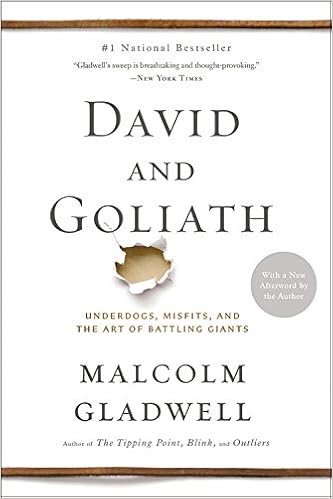 The top 10 of the lower tier colleges and grad schools make as much if not more than the bottom tier of the top ten schools. There are some reasons for this statistic. The competition is harder in the top ten schools so many smart people who can't make the top tier give up. They could have thrived in a less competitive institution. Or so says Malcolm Gladwell in his rambling book, David and Goliath.
Scott Brooks writes:
Isn't it fair to say that attending a top 10 school gets you into the "good old boy" network of those schools?
If you attend a lower tier school, you don't get that benefit. Even the alumni of your lower tier school don't care about the fact that you attended SEMO (Southeast Missouri State University), too.
I also find (anecdotal) that those that attend the lower tier schools that go on to be successful are "under the radar" with their success. They may live in a nice house, but it's rarely an ostentatious house, and for the most part it's a boring small town or located in a city in "flyover country".
They also have less glamorous businesses than those that went to a top tier school or work for a less glamorous company.
You'd be surprised how many people in flyover country that went to Mizzou, or Missouri Science and Technology (formerly the University of MO, Rolla) or to SEMO that have a successful small business or worked at Boeing for 30 years that are doing just fine.
Most of these people have no debt, they have a decent 2,500 sq. ft. home with a 1/4 acre lot, a two car garage that is paid off, and between their pensions and social security, they've $6k - $10k per month coming in each and every month. They live very comfortably on that and travel the world.
But they also have $1m - $5m in their investments that they rarely, if ever, even touch.
And let me tell you what…95% of these people are very happy and satisfied with their lives.
So I guess the definition of success depends a lot on where you live and how you've come to live your life.
anonymous writes:
"On the Payoff to Attending an Elite College":
"Students who attend colleges with higher average tuition costs or spending per student tend to earn higher incomes later on."
It's easy to imagine a selection bias there: Students who come from families that can afford expensive schools may already be networked into superior lifetime earning opportunities.
Regarding "Students who attended more selective colleges do not earn more than other students who were accepted and rejected by comparable schools but attended less selective colleges", this could be partly a legacy effect, i.e., children of alumni get, to some extent, preferential treatment and occupy spots in the incoming class that must then be denied to non-legacy students who may well be better prepared and more motivated. Those students get denied and then attend schools with lower requirements, where they excel.
Peter St. Andre writes:
The most exclusive schools can choose students with the highest standardized test scores, which measure general mental ability or GMA; and GMA is strongly correlated with career success and lifetime earnings. It's not the education at the exclusive schools that helps you, but the fact that you were smart to begin with.
Russ Sears writes:
I wonder if athlete or academic scholarship students have a different distribution of future earnings depending on "cost" versus "eliteness", and if so, what does this say about the education quality or the student's quality that they bring to the table before going to the college?
I believe Malcolm Gladwell argues in his book David and Goliath that you should choose to be a big fish in a small pond in youth so you will be brave enough to try something new.
I found this true in my case. I maybe one of those people in flyover country that fit Scott's retiree profile exactly. But I am interested in other opinions.
Jun
7
From hamsters to dogs to elephants to whales, the number of heartbeats per lifetime is nearly the same, namely about 1.5 billion
— Geoffrey West, Los Alamos National Laboratory, and the Santa Fe Institute
Zubin Al Genubi writes:
This sound a bit too deterministic. While genetic disposition is a large factor, conditioning, good diet, exercise, lifestyle must play a substantial part. Moderation must help.
Russ Sears writes:
While I cannot give the source because it been 35 years since I read it. This heart beat speculation was part of why doctors up until recently did not recommend running for health benefits. If g-d had designed us that way, why should we even test it with statistics.
It's only been since 80s women ran a marathon in the Olympic because of these types of simple reasoning.
The statistics speak volumes about the benefits of cardio exercise especially running. However that benefit declines the more you train and it's not surprising that one could design a study which shows overtraining can lower life expectancy. As I've aged the difference between training and over training has become much harder to draw a line… hence I suspect many of the negative life expectancies are from older endurance athletes over training.
And I suspect these shocking to unsuspecting readers are in much more demand too produce due to click-baiting of journalists than real science.
Also many of theses studies one can use a simple test if they are legitimately looking at the issues. If the study is look at average age at death or actually deaths to expected. Average age of death is heavily influenced by the start of running boom and early outlier deaths. It will take many more year before averaging age is valid In other words most serious endurance athletes are still living so their positive effects not seen in average age at death. Opposite of survival effect in stock market historical studies.
May
8
News and Trading, from Victor Niederhoffer
May 8, 2018 | 1 Comment
Betting odds on the 2pm decision by the pres?
Kim Zussman writes:
My bet is something other than complete abandonment. Trump has an upcoming heroic / legacy accomplishment possible with Kim, and won't want to give an example of US abrogating prior treaties.
Zubin Al Genubi writes:
Even if you knew ahead of time what the news will be, there is a theory that says it wouldn't help you trade what the market does.
Larry Williams writes:
Fully agree based on 565 years of looking at news and the markets.
Other than, if news is supposed to be bullish and prices sell off there is trouble ahead and vice versa.
Aug
17
Admitting Your Mistake, from Zubin Al Genubi
August 17, 2017 | Leave a Comment
 Admitting you are wrong is very difficult. I've noticed that almost no one can do it. I haven't seen or found any real studies of this behavior. It would be interesting to see how often people are wrong about something objective, why they are wrong, how they do or don't admit being wrong, and if they can change their opinion. Once a person make some declaration, there is some heuristic or bias that makes them cling to that even when they're obviously wrong. Often rather than admitting being wrong people will rationalize some external reason why their declaration is not right. People will actually change their memories to avoid being wrong. It's a powerful effect.
Traders need to be able to quickly admit being wrong and get out. It's one of the keys to successful trading. One needs to be able to reassess.
In expeditions and adventure travel, one needs to be able to change one's plans, admit a mistake, turn around, and give up goals. You need to have fall back plans. These are all techniques to alter one's mind, even if they fall a bit short of admitting one is wrong. I think this approach is a the way to work around the heuristic.
Another problem is the social reinforcement problem. Once a person makes a declaration of say, a trading position, it makes it harder to change. That's one of the reasons why Chair says, don't disclose your position or state your bias. Also, there is the social problem of who in the group wants to say the group is wrong. I'll call this the lemming effect. There is the expert effect, where no one in the group wants to contradict the self proclaimed expert. The effect can be more subtle, such as the first to speak in a group takes on a guru like Auro, making it hard to correct mistakes in a group.
Russ Sears writes:
Professor Haave has a law which I will paraphrase as "90% of people spend 90% of their time trying to prove that they are not wrong". I would add that most of this wasted effort is spent trying to blame someone else for things that go wrong, rather than simply admitting a bad decision and moving on. I try to be friends with those that can admit a mistake. I would add that this is paramount in picking a mate or a boss. Otherwise I am bound to be blamed for their problems. Besides wasting money on bad investment decisions. Time is wasted and perhaps the biggest cost to personal happiness can be wasted relationships and heart break.
An insight as I've aged is if I truly want to get close to and attach with my spouse, I must be willing to admit to to my spouse that much the lack of feeling attached is because of my insecurities rather than her problems or lack of compassion. It's a paradox that the compassion is only as deep as one allows themselves to admit being vulnerable to the other.
anonymous writes:
Ego exposed is certain to be defeated. It is the fastest and easiest way to do it. The resultant facts make the ego indefensible. The ego becomes unimportant to the individual. He or she is liberated of it.
It was the most valuable lesson the Senator ever taught me.
Aug
16
Roosevelt Can’t Win, from Stefan Jovanovich
August 16, 2017 | Leave a Comment
 The Literary Digest was once the microphone through which that mythical beast "public opinion" spoke to America
The mass media - newspapers, movies, radio - were careful not to offer political opinions on the sensible theory that favoring one party over another would cost them money. Political opinion was limited to print and, within print, almost entirely to magazines.
In 1927 the Literary Digest had 1 million subscribers; by 1938 it was gone.
It fascinates me how the formerly mass media are well on their way to becoming the voice of minority opinion because of their one-sided politics.
Zubin Al Genubi writes:
With 500 TV channels, and a thousand news sites, information and political views have become Balkanized. Will political parties soon follow and breakdown like the parliamentary systems in Europe.
Stefan Jovanovich replies:
The Parliamentary systems in Europe may have political deadlocks but they are hardly breaking down. Brussels has authority that was Napoleon's dream. There are not 500 channels if by TV you mean mass audiences similar to those held by the 4 networks in the U.S. Britain has 5 channels, France has 3. What I was trying to point out was the obvious. Netflix, Amazon Prime and hulu–none of which offers any political "news" - have become what the movies and radio were in the 1920s and early 1930s. The audience that elite opinion thought it had literally melted away, much as it is doing now. Trump is "unpopular" only if one believes the modern Literary Digest audience represents a clear majority of the American electorate.
« go back —Archives
- October 2026
- September 2026
- August 2026
- July 2026
- June 2026
- May 2026
- April 2026
- March 2026
- February 2026
- January 2026
- December 2025
- November 2025
- October 2025
- September 2025
- August 2025
- July 2025
- June 2025
- May 2025
- April 2025
- March 2025
- February 2025
- January 2025
- December 2024
- November 2024
- October 2024
- September 2024
- August 2024
- July 2024
- June 2024
- May 2024
- April 2024
- March 2024
- February 2024
- January 2024
- December 2023
- November 2023
- October 2023
- September 2023
- August 2023
- July 2023
- June 2023
- May 2023
- April 2023
- March 2023
- February 2023
- January 2023
- December 2022
- November 2022
- October 2022
- September 2022
- August 2022
- July 2022
- June 2022
- May 2022
- April 2022
- March 2022
- February 2022
- January 2022
- December 2021
- November 2021
- October 2021
- September 2021
- August 2021
- July 2021
- June 2021
- May 2021
- April 2021
- March 2021
- February 2021
- January 2021
- December 2020
- November 2020
- October 2020
- September 2020
- August 2020
- July 2020
- June 2020
- May 2020
- April 2020
- March 2020
- February 2020
- January 2020
- December 2019
- November 2019
- October 2019
- September 2019
- August 2019
- July 2019
- June 2019
- May 2019
- April 2019
- March 2019
- February 2019
- January 2019
- December 2018
- November 2018
- October 2018
- September 2018
- August 2018
- July 2018
- June 2018
- May 2018
- April 2018
- March 2018
- February 2018
- January 2018
- December 2017
- November 2017
- October 2017
- September 2017
- August 2017
- July 2017
- June 2017
- May 2017
- April 2017
- March 2017
- February 2017
- January 2017
- December 2016
- November 2016
- October 2016
- September 2016
- August 2016
- July 2016
- June 2016
- May 2016
- April 2016
- March 2016
- February 2016
- January 2016
- December 2015
- November 2015
- October 2015
- September 2015
- August 2015
- July 2015
- June 2015
- May 2015
- April 2015
- March 2015
- February 2015
- January 2015
- December 2014
- November 2014
- October 2014
- September 2014
- August 2014
- July 2014
- June 2014
- May 2014
- April 2014
- March 2014
- February 2014
- January 2014
- December 2013
- November 2013
- October 2013
- September 2013
- August 2013
- July 2013
- June 2013
- May 2013
- April 2013
- March 2013
- February 2013
- January 2013
- December 2012
- November 2012
- October 2012
- September 2012
- August 2012
- July 2012
- June 2012
- May 2012
- April 2012
- March 2012
- February 2012
- January 2012
- December 2011
- November 2011
- October 2011
- September 2011
- August 2011
- July 2011
- June 2011
- May 2011
- April 2011
- March 2011
- February 2011
- January 2011
- December 2010
- November 2010
- October 2010
- September 2010
- August 2010
- July 2010
- June 2010
- May 2010
- April 2010
- March 2010
- February 2010
- January 2010
- December 2009
- November 2009
- October 2009
- September 2009
- August 2009
- July 2009
- June 2009
- May 2009
- April 2009
- March 2009
- February 2009
- January 2009
- December 2008
- November 2008
- October 2008
- September 2008
- August 2008
- July 2008
- June 2008
- May 2008
- April 2008
- March 2008
- February 2008
- January 2008
- December 2007
- November 2007
- October 2007
- September 2007
- August 2007
- July 2007
- June 2007
- May 2007
- April 2007
- March 2007
- February 2007
- January 2007
- December 2006
- November 2006
- October 2006
- September 2006
- August 2006
- Older Archives
Resources & Links
- The Letters Prize
- Pre-2007 Victor Niederhoffer Posts
- Vic’s NYC Junto
- Reading List
- Programming in 60 Seconds
- The Objectivist Center
- Foundation for Economic Education
- Tigerchess
- Dick Sears' G.T. Index
- Pre-2007 Daily Speculations
- Laurel & Vics' Worldly Investor Articles
