Jul
13
Government Default, Jobs, etc, from Duncan Coker
July 13, 2011 | Leave a Comment
I believe the 10/30 year bond market right now price in no principal default, possibly a few late interest payments and no major deficit reduction plan. If they reach some type of real deficit reduction plan (unlikely), then 10 and 30 year rally. The real bear scenario would be if there were actual principal defaults. But this is also unlikely to happen. They raise the debt limit on August 4th and all go on summer vacation.
Regarding all the models, CAPM, EFT, Black Scholes and others depend on a risk free rate but substituting a nearly risk free is probably good enough. They are all just models and even Fama admits the EFT has too many exception to really work. The IRR and NPV that companies uses for capital projects usually use a cost of capital or corporate bond rate.
I think politicians are definitely watching the market and not the other way around, and no real deficit change will occur until 10/30 year yields are much higher. It is just to cheap and easy to keep running deficits for now. The bond market will drive the policy and for now rates are amazingly sanguine.
Jul
4
Mystic Seaport, from Duncan Coker
July 4, 2011 | Leave a Comment
 Our family visited Mystic historic seaport this weekend. Though most of the day was spent chasing a rambunctious toddler across the village square, we did manage to board a few of the Tall Ships and Schooners on display. One interesting fact is some of the 100 foot schooners were working long line fishing vessels up into the 1950s. The advantages of sail and maneuverability severed them well into the modern age. They would fish the Grand Banks off Newfoundland and would stay at sea for up to a month if they were salting fish, versus icing them which allowed only for shorter trips. It is impressive to see a design that functioned so well for over 100 years. Looking at any of these old boats at port one can almost sense their pining for the distant seas again.
Happy 4th to all,
Duncan
May
9
Rough Winds, from Duncan Coker
May 9, 2011 | Leave a Comment
Rough winds do shake the darling buds of May
And summers lease hath all too short a date;
 Given the dramatic move in crude this May and the dramatic day in stocks almost exactly one year earlier, I decided to see if the Bard offered any predictive forecasts, May being "windy" and summer being "short".
Not much to offer for trading but the Sonnet if recited at the right time is guaranteed to foster a Spring romance.
2006 to 2011
Not much to offer for trading but the Sonnet if recited at the right time is guaranteed to foster a Spring romance.
SP500 Day Range >50 points
Month N
1 3
2 1
3 1
4 0
5 1
6 0
7 0
8 1
9 4
10 17
11 8
12 3
Crude Daily Range >$5.00
Month N
1 2
2 0
3 2
4 1
5 2
6 8
7 6
8 4
9 6
10 5
11 3
12 2
SP500 average day June, July and August= -.25 point
SP500 average day not June, July or August= .09 point
Crude average day June, July and August= $-.06
Crude average day not June, July, or August $.01
Mar
20
A Fishing Analogy, from Duncan Coker
March 20, 2011 | Leave a Comment
 One could compare hedge fund managers and fish, since in fishing much depends on the conditions of the river and environment. During the higher flows the fish spread out. There is more oxygenated water, seams, pockets and pools to reside in. If weather cooperates there will be insect hatches and good feeding for all in various and abundant places.
However, during the lower flows the options decrease. There are fewer pools and the fish stack up, competing for aerated water and access to a seam where a bug might coming down the current for a meal. In some cases larger trout will even feed upon smaller ones of the same species. Other predators, like anglers, can easily spot the schools during these lean times which add to their vulnerability.
The schooling affect does not lead to success, but is a by product of their collectively looking to be in the best spot given the circumstances around them. Or take a surfing example, a line up is not a result of surfers interested in paddling collectively, but a desire by each to be near the crest of the next nice swell.
Feb
28
Sardines for Trading, from Rocky Humbert
February 28, 2011 | Leave a Comment
 A couple of weeks ago, The Chair discussed a dinner he had with Dimson — and that Dimson noted the "long term rate of return for everything other than stocks" is around 2.8%."
This morning, Steve Landsburg articulately expanded upon one of my points regarding utility value– demonstrating that headline numbers regarding long-term returns can be horribly misleading. In particular, he addressed James Glassman's recent WSJ op-ed where he admits that his Dow 36,000 call was wrong. But importantly, Glassman's mea culpa was wrong for the wrong reasons.
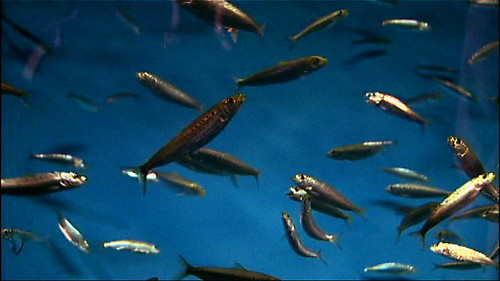
Landsburg's essay reminds me of the adage: "There are sardines for trading. And there are sardines for eating.
Duncan Coker writes:
I have known a number of developers as friends from having once lived in a resort town. During the go years when they would sometimes present a deal to me for a small share, I would point out the implicit 5 to 10 times leverage, or the large share of sweat equity they usually wanted. They would always look at me like I was an uneducated amateur who did not understand the main unspoken premise of building. Build it and they will come is always the motto, and you do have to admire their optimism.
Kim Zussman writes:
"The truth is that stocks appreciate faster than houses precisely because a house does not just sit there; it provides shelter, warmth, and closet space every single day that you own it. Stocks need to appreciate faster to compensate for the fact that they don't provide any comparable stream of services. If stocks and real estate appreciated at the same rate (counting the dividends as part of the appreciation, as Glassman does), nobody would own stocks."
Margin issues notwithstanding, very few would choose homelessness to be in the stock market. A better comparison would be a rental house held as an investment - where the shelter utility is capitalized - vs (initially equivalent value) investment held in stock(s):
Over time, stock will pay dividends (or reinvest earnings, etc), and the investment will grow by capital appreciation + dividends Over time an investment house will pay rental income, and the investment will grow by appreciation + rental income - upkeep
The Case-Shiller home price index shows real house prices approximately flat (with considerable variability) over the past century, whereas the stock market is up. It would be interesting to compare rental property - including rental income - to stocks over the same period. In theory rentals should go up more, to pay for the aggravation of being a landlord.
Henry Gifford writes:
An important factor usually left out of such discussions is that houses can be bought on 80% or 90% "margin," with fixed interest rates, in effect, being a giant option on the US dollar, favorable to the real estate owner in times of inflation, when real interest rates can be negative.I think this is how most people who make money on real estate make money on real estate, although few talk about it this way.
Feb
23
My 1 or 2 Cents, from Duncan Coker
February 23, 2011 | 2 Comments
One flexion activity is creating an artificially steep yield curve. This translates to the high bank margins which are created not by the value they add as in other businesses but by the friends they keep at the fed and treasury. I heard Hugh McColl speak several years ago, (a non flexion man of respect) founder of NCNB now Nations Bank, sum up banking activity as "renters" of money. The rents are artificially high. And those rubes that have to save for a rainy day like myself write checks every month for privilege of doing.
Jan
28
Nice Run, from Duncan Coker
January 28, 2011 | Leave a Comment
Glancing over the GDP numbers it is comforting to know that, in the era of belt tightening and austerity, real non-defense government spending has increased 15 out of the last 16 quarters and a healthy 3.7% most recently. Real estate and job growth in the Potomac area looks strong.
Jan
27
Thought of the Day, from Duncan Coker
January 27, 2011 | Leave a Comment
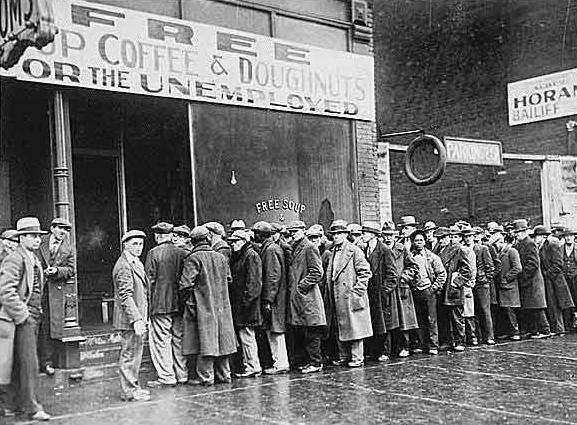
It's interesting how the continent is so fearful of inflation and the colonies so fearful of unemployment. Both worries are rooted deeply in history, and the result has been playing out over the last several weeks in currency.

Dec
30
Memory, from Duncan Coker
December 30, 2010 | 3 Comments
 The Chair offers a meal in the ideas of forgetting and trying to start fresh in trading every day, week, month. In my case I tend to remember and overweight the large losses and not the average gains. This leads to trading too infrequently and then being subject to adverse selection. Sometimes forgetting is a good thing. This past year it would be hard to forget the intra hour move of 10% in May, or intra month move of 25% in Oct 2008. Though they deserve some consideration, their likelihood of occurring again is probably overweighted for me. I am reading a book called Waves where it documents a 1700 foot wave that hit Lituya Bay Alaska in 1958. How many fishermen would ever venture out if they dwelled on the past too much? I have found in tennis, I often play better after a period of not playing, as I forget my bad habits. For some reason I manage to remember the core fundamentals. This affect unfortunately wears off when the dreaded reversion to the mean takes hold.
Ralph Vince comments:
Interesting observation Duncan. I am of a similar mindset, have been working with the idea the past 12 months and have drawn the conclusion therefrom that "expectation," the probability-weighted sum of possible outcomes, aka "Mathematical Expectation," of what might happen, is not only NOT how human beings asses risk-opportunities, and rightly so. If we did, the analogy I like to use is, we would never board a flight.
But we DO board a flight, knowing there is an incredibly small probability of never arriving at our destination. Why? Because we "expect" to arrive at our destination.
In fact, the notion of Mathematical expectation is really a mere proxy (and a poor one at that) for assessing risk-opportunities compared to what we should use.
Thinking about writing a book on this. The problem is it ties into everything else I have ever worked on, and a lot of it would be redundant.
George Coyle writes:
I too suffer from this problem. This is obviously tough for those trading with casino logic which requires the "house" to play all games (subject to size limits). There is a concept in psychology known as systematic desensitization (http://en.wikipedia.org/wiki/Systematic_desensitization) which attempts to stop responses to fear and anxiety. It might be useful for trading, but presumably one would have to incur many losses to get the benefit. Also, if we check the opposite end of the spectrum (the bank traders who take large risk because they can just jump ship and move to the firm across the street if they lose) it would appear having nothing to lose personally, and thus an asymmetric risk profile, would also result in eventual disaster. So there must be some optimal level of fear/greed/caring/indifference, the efficient frontier of trading emotions. It is difficult to think of how it might be measured and then used.
Craig Mee comments:
This seems to be a catch twenty two here, how individuals receive risk, and how the market does.. As everyone is boarding different flights at different times, surely fear and greed , or lack of …fifo's each other out.
Ralph Vince adds:
Put another way, what the casino "expects," and what you, the solitary individual "expects," are not mirror images of each other.
George Coyle adds:
The casino expects a slight positive expected return over the course of time (by virtue of the odds of the games). The only real exception is blackjack in which a player has an edge provided s/he can split aces and double down on split aces. The speculator using a casino approach would expect the same. Basically the central limit theorem says that over a large enough sample the distribution of outcomes will be approximately normal. In this instance both speculators and casinos using this logic assume a slightly positive mean (expectation) to the distribution. So they do expect the same, a profit over time by virtue of the laws above. The amount of said profit varies as markets are not governed by the statistical laws of casino games. So they aren't mirrored, but they have the same trajectory. Both experience runs against the expectation, the goal is to manage emotions such that a big loss does not prevent a speculator from playing the next game which may cause the positive average to be realized. The casino does have the benefit of odds remaining in their favor over infinite time.
Dec
6
Local Commodity Report, from Duncan Coker
December 6, 2010 | 2 Comments
 The lowly heating oil front month futures contract now at a year high at last weeks close. As earlier discussed will this mark a top in all dollar denominated markets. I am waiting to lock in on a price for my winter oil supply for my home. But I have a hedge of a large supply of wood in my back yard and potential for a wood burning stove. I also learned this weekend that as predicted by the Chair the specialization of labor much more efficient when it comes to cutting, splitting and moving fire woods. At $95 a cord there is just no way I can compete. Though I had a fine afternoon splitting wood.
Nov
22
Chainsaw Economics, from Duncan Coker
November 22, 2010 | 1 Comment
 The economics of buying a chainsaw highlights some of the ideas on how to value time. How do I calculate, cost, benefits and lost opportunity and what should I consider as leisure, exercise, entertainment time versus labor? For the issue at hand, there is a forest abutting my back yard, and with the recent wind storms a few downed trees. They could lay there for a few more years, but on the other hand they present and eye sore in the other wise organized forest. Second, winter in coming and I am down to around 1/2 cord of fire wood and will need roughly another 1/2 cord to make it through. Market price around here for a full cord delivered is $180 give or take. The chain saw I want is a sparkling new Husqvarna 40cc for around $350. Not considering labor it is a 2-year pay back on the wood alone.
There are other factors though. For one, I like doing yard work and spending time in the woods. Being outside, throwing on the coveralls and getting muddy is definitely a benefit. Running a chain saw is fun as well, (positive marginal utility), though I am sure I would feel differently if I was a full time lumberjack (downward sloping utility curve). Lets assume it is safe and I am somewhat skilled. The exercise involved is fairly high, probably 8 to 10 hours to cut, move, split ½ cord. So I list this as a benefit. Then there the satisfaction part afterward of looking at the neatly pilled wood stack and the peaceful spot in the woods where the dead tree no loner resides.
Opportunity wise, I could always be doing more research as a trader, or spending time with my family, the later being the most important. So there are costs there, but time in nature has benefits as well, like long walks, swimming, rowing.
Add it all up I am leaning strongly toward making the purchase and heading out to the woods this holiday. If anyone has any good arguments for or against let me know.
Craig Mee writes:
Chainsaws and markets… mmm!
This reminds me of a young broker years ago who went on his first interstate trip. On arriving in Melbourne, Australia, he went to take a bank client out to lunch. The client says "let's forget lunch, and hit the hardware store for a spot of shopping" ! Well he promptly got the young guy, who didn't know any better, to buy him the latest chainsaw with his company Amex…and once the client's boss at the bank found out, the client promptly got fired!
Oct
14
The Dollar, from Duncan Coker
October 14, 2010 | 1 Comment
 With the dollar being so despised and the revulsion to owning green backs, with Aussie near parity, Euro at 1.4, gold, silver, corn, wheat, sp ,etc all at or near extremes, I wonder when the vigilantes will get around to the bond market. That too is dollar denominated, and of course you can't fight the fed on the short end of the curve, but the long end once was held in check. It reminds me of Ed Spec when every one wanted goods and no one wants to hold cash, then a speculator obliges.
Oct
4
Market Order, from Duncan Coker
October 4, 2010 | 3 Comments
It would be interesting to know which broker and clearing house accepted an order to sell 75,000 emini sp in apparently some sort of staged (GMTFO) market order that lead to the 5/6 event. 10% slippage I guess was acceptable, and had it been in just one stock no one would have noticed, but to move a whole market is different. The order only represented 3% of the daily volume. I wonder had it been placed closer to the more liquid open would it have had the same affect. Or did someone come back from lunch, see the market down 1% or so on a $10b fund, and have a change or heart. I don't think the HFT boys made on this, many smaller players margined out at the lows, brokers made their commission, customer filled his order, but hard to find much of a conspiracy other than a sloppy trade and a sloppy execution.
Vince Fulco writes:
The official line was it was a staged order supposed to make prints along with ~9% of the volume. Either we have extremely sophisticated HFT sniffers in our midst in ES or someone has a fat mouth. Once WR's actions were known, it was just a matter of other parties getting ahead thereby turning it into a 1987 portfolio insurance like scenario, the lower it goes the faster WR needed to sell.
Sep
11
Come Back Contango, from Duncan Coker
September 11, 2010 | Leave a Comment
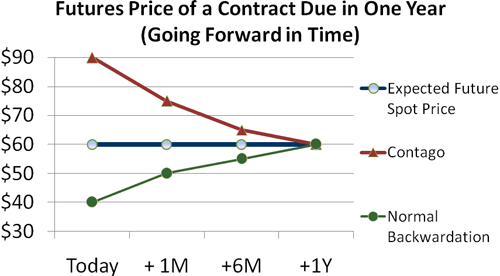 As we mark another backward roll day for the equity futures, I long those good old contango days. It just does not feel right marking down the distant month. Aren't things supposed to be better in the future. Of course I understand the arbitrage with the cash market, dividend and interest rate, as proxy for the fed model. And for some a positive carry is great. Maybe I am just jealous because I can't borrow at 25bps, cost me more like 500 or so.
Sep
8
Risk and Reward, from Duncan Coker
September 8, 2010 | Leave a Comment
 A small example of risk and reward played out this morning. I live near the ocean and woke near sunrise to surf. There was a gentle rain but not a problem. As I get to the water I look out to glassy waves and a light rain, but far out on the horizon is a storm, which will probably not reach here, but a storm none the less. Then, there was a large lightening bolt that lit up the sky to the horizon and thunder. Do I surf or head home? The getting up early, driving here, getting ready, are all sunk costs, and irrelevant. I do a quick analysis of the risk/reward, but have no real data to back it up. What are the odds of being struck by lightening in the water within 10 miles of a storm? I guess, probably over 1 in a million. Does this increase with more time in the water?, My estimation is yes. Is it dark and intimidating looking? Yes, but probably irrelevant. So I decide to risk it. I catch just a few waves then head in after maybe 30 minutes. Was it just a bit more exhilarating because of the pending storm then just a normal day surfing. I will admit it probably was.
Stefan Jovanovich comments:
According to the wife of his old colleague Croker, the Duke of Wellington had his own discipline of risk-opportunity analysis. "All the business of war ", he told Mrs. Croker, "and indeed all the business of life is to endeavor to find out what you do not know from what you do." Wellington's phrase for it was elegantly simple: "guessing what was at the other side of the hill". (Arthur Wellesley's genius was to use terrain to spare his troops from the murder of the French cannon; he had his troops lie down during bombardments on the reverse slope of hills, where the spotters could not see them. This "cowardly" tactic was ridiculed by Napoleon - himself a gunner, but it was soon copied by the more intelligent French generals. That is the further implication of the Duke's maxim: your wise opponents will steal your best ideas.)
Ralph Vince comments:
Duncan,
What you have hit upon is the peephole to an entire discipline I call "Risk-Opportunity Analysis."
It explains, say, why we will get onto an airplane even though there is a (very small) probability that it will kill us. It explains, mathematically, why we do such things, and shows the mathematical reasoning for such. It can be extended then to trading, how much to risk, etc.
The conventional notions of assessing risks do NOT address this, and, in my opinion, as proved through the tenets of Risk-Opportunity analysis, are just plain wrong.
Incidentally, and forgive my plug here, but if anyone is interested in this, I am having a 2 day course in Tampa and in Tokyo in the next two months, and you can learn more at ralphvince.com
Pitt T. Maner III writes:
Would one change actions if more information or warning was available? How does real time information play in and can one truly interprit it properly and realize the statistical significance. 1:1 million odds can change when the strikes per minute count starts to climb. These alarms can be pretty unnerving.
Normally in the health and safety field if one sees a strike then you wait about 30-40 minutes and continue work if no other strikes are seen in that time interval— its a real rough rule of thumb and hardly perfect. Some go with a 6 mile radius for the detectors. Lightning risks are considered higher if they go within that radius.
For the alert-based systems though there are a lot of factors to think about.
By the way, that Tampa area is considered the "Lightning capital of the world"
I have heard of projects being shut down over there when lightning was detected by multiple detectors within a 20 mile area because the storms can move so quickly and/or the bolts generated can cover that distance too. So it can be difficult to work outside in Florida in the summer when following a strict lightning policy.
But in South Florida we get these too— out of clear sky.
Rocky Humbert writes:
There is a huge corpus of literature that shows people's instinctive assessment of risk and reward often have little to do with the HISTORICAL probabilities. Charlie Munger gave a long-winded speech at Harvard in 1995 on the "Psychology of Human Misjudgment." And as Ralph knows, "Risk-Opportunity Analysis" is not just about trading. It encompasses everything from physical System Fault Tolerance/Reliability (my dissertation topic) to classical economic utility theory to government/regulatory policy. And don't forget Pascal's Wager either!
Most people live (and die) in the middle of the curve. And the rest live (and die) in the tails. I'd argue that the wise man should try to make decisions which maximize his eternal happiness, and ignore the statisticians and meteorologists…or as Ed Seykota supposed said "Everyone gets what they want out of the markets."
Ralph Vince responds:
Pitt,
Yes, with new information, you have a new starting point from which things can change with given probabilities. The things that might happen, and their probabilities may be the same, but you have a new frame of reference, a new starting point. Think of a horse race, where you can change your bet at the first turn.
Rocky,
Very true, and that corpus is very interesting for a host of various reasons.Usually, we find, there is an often not-so-obvious logic to people's choices even though they appear inconsistent with historical probabilities.
But what I am alluding to — the inescapable conclusions I have found myself in — there is a lot more to it than that, and it;s a big can to open up here. In retrospect, it's all very obvious, and I can look at it and say to myself, "Yes, of course, this is obvious to me now."But it isn't obvious in the main, and frankly, from the polling of people I have been doing, not obvoius to anyone at all, which is the MOST peculiar thing about all of this.
Kim Zussman adds:
As is often the case, some answers can be evaluating using limiting cases. For example, you will never die in a bicycle accident if you never ride a bicycle (approximately).
As health care provider, I note frequently patients express regrets about having done something (or not doing something). The nature of regret seems to include a miscalculation of what consequences will actually feel like were they to occur. ie, the vague consciousness that you might crash your bike feels different than thoughts about the future while traction is decompressing your spinal cord.
Part of the intellectual maturation process is the effort to improve estimation of the experience of untoward consequences.
Jim Sogi replies:
Duncan, I've surfed in gnarly thunder lightning storms and wondered the same. The surf tends to be good and uncrowded as the storm cold front pushes, and lifts the wind towards the sea making the winds offshore for a while which is good for shaping the waves. In addition, the storm front may be pushing a wind wave front. What I've since found out is that the lightning can travel over the surface of the water until it finds something grounded. Not good. I've read about mountaineers stuck on the mountain during a thunderstorm. They describe some weird effects where their tools turn blue and their hair stands on end. The lighting can travel over ungrounded surfaces looking for ground. I think in the water if there was a nearby hit, I'd hold my breath and go underwater and allow the bolt to go above me. Also, I would NOT sit the furthest out to sea. In general, if the storm is isolated, the risk reward would be good. I try to take that approach trading as well. Similar but different analysis for sharks. I'll post about that later.
There is usually a time window. Before Hurricane Iwa hit here in 82, just before the storm hit, there were 20 foot waves, with offshore winds early that morning. Only a few spot were able to hold the swell. There were only 3 guys out. At about 10 am the wind turned and things got ugly. We hunkered down but were happy to have taken the risk and rode epic waves I still talk about to this day.
Sep
8
Elephants, Ants and Trees, shared by Pitt T Maner III
September 8, 2010 | Leave a Comment
 A fascinating article on how ants protect their trees in the savanna from elephants:
"It really is a David and Goliath story, where these little ants are up against these huge herbivores, protecting trees and having a major impact on the ecosystems in which they live," Palmer said. "Swarming groups of ants that weigh about 5 milligrams each can and do protect trees from animals that are about a billion times more massive."
Sep
3
Bull and Bear Biases, from Duncan Coker
September 3, 2010 | 2 Comments
 Just scanning the headlines on any given day it is easy to see the biases built and if you had to put the pundits in one camp or the other with regard to view on the stock market, the academics are universally bearish, business CEOs bullish, government officials try to appear bullish but in their actions are bearish, financial journalist are bearish, mutual fund managers are bullish, hedgefund managers bearish, bond fund managers bearish on everything and real estate developers are always bullish down their last penny. So in reading them maybe those times when they go against their natural biases is when to really pay attention.
Vince Fulco adds:
To support what you say, the latest results of CFO mag/Duke survey (July/August) of 1,102 CFOs indicates the top three concerns about macro are 1) consumer demand, 2) fed govt policies, 3) price pressures.
Within their own co's: 1) ability to maintain margins, 2) ability to forecast results, 3) maintaining morale. Geographic breakdown was 535-US, 139-EU, 219-Asia ex. China, 209-China.
When asked how one would characterize company's market position, 47% said cautiously pursuing growth and 26% aggressively.
Rocky Humbert comments:
Mr. Coker makes an excellent observation. Trying to refine this a bit more, I note that the "pundits" seem to be represented by a recurring small group of quotees.
Academics: I've previously demonstrated a reverse correlation between stock prices and google hits on "Nouriel Roubini." Should Wharton's Siegel ever turn bearish, it will be an all-in buy signal for stocks, and the day when Roubini turns bullish, the opposite will be true.
CEO's: There's a corpus of studies which show that one can be well-served by watching insider buying. "Watch what they do, not what they say."
Financial Journalists: "Man bites dog" sells newspapers and "The consensus is always wrong," sells newspapers. The latter ignores the fact that "the sun will rise tomorrow" is a consensus opinion that has been (so far) correct, and no one should pay much heed to a guy who bites his cocker spaniel anyway. Notably, long-term bear and high-IQ Jim Grant turned publically bullish on US stocks and bearish on US bonds in March, 2010 and has been bullish on Japanese stocks for the last decade. In fairness, he's been bullish on gold since 1981.
Mutual Fund Managers: They are always bullish. But it's not a good idea to ask one's barber if one needs a haircut. Most importantly, there are NO mutual fund managers who have outperformed their benchmark over an entire career. Two came close, but Peter Lynch retired too early, and Bill Miller retired too late.
Hedge Fund Managers: Byron Biggs (who is Druckenmiller's Father-in-law) has been consistently bullish for the past three years, except for an afternoon on June 30th (which was an excellent buy signal.) The consistently profitable hedge fund managers rarely talk to the press (on the record) for obvious reasons.
Bond Fund Managers: One wonders how Bill Gross can spend so much time in front of the camera and still run his portfolio. Yet he uttered seriously bearish bond comments in March 2010, and the rally which followed was breathtaking. This is an brilliant example of Duncan's point.
Real Estate Developers: Donald Trump's casino properties have filed for bankruptcy three times. A hat-trick of this magnitude rivals Wayne Gretzky. If one includes mutual fund investors, Trump may have lost money for more investors than any other real estate promoter. Truly the "great one."
Government Officials: I question whether anyone listens to them at all.
Here are three more observations:
1) University Endowment managers believe that they are all above average investors, and "you can be too."
2) "Value investors" believe that anytime a price moves up a lot, it's a bubble.
3) At any cocktail party, there is always one guy who owned a stock that rose 1000% during the previous month.
4) Baby boomers who rode the Nasdaq/S&P bubble in the late 1990's are almost always bearish about the economic prospects for the USA.
Aug
10
Looks like the SEC is following the hedge fund model in their new Whistler Fund with a straight 30% over a $1mm hurdle going to the most talented moles. Nice to see big gov finally embracing an incentive structure. I wonder if you turn yourself in if you can still collect on the reward, or how they handled that in the old West.
Jun
21
Hoodoos, from Victor Niederhoffer
June 21, 2010 | Leave a Comment
 One was recently asked, how do you spot a hoodoo when you are in or dangerously close to their presence? I would say that their past record of failures is a good starting point. As is their ability to talk a much better game than they play. Also, their attempt to impress you with the trappings of success, ( a conference call with their five principals is a usual gambit). Not to be disregarded is their locus of operations, often from a ephemerally built recreational area where permanent lodgings and such things as pianos are not availalbe. The inclination to befriend you and flatter you is also a clue. But how can this be quantified, and how can we learn to avoid them? What should you do when you've met a hoodoo? I've always taken to burning my shirts, especially if they've hugged me as they ofen do. Dare I ask the question of whether there are such things as hoodoos or is it a figment of random numbers? No, that would be too mind boggling. But please help with your insights.
Alan Millhone writes:
Some years ago my late father and me were enlisted by Banque Worms to take over a failing condo project in our area.
The developer met us and after I shook his hand I could smell his pungent cologne on my hand for the rest of the day. He had a lady friend assistant who wore a see through dress with precious little underneath if the sunlight caught her profile just right. When I first met him I could see " carpetbagger " across his forehead.
He was a genuine "slicky boy" right out of South of the 38th Parallel.
People like him wear a lot of bling and cheap after shave. Usually have a woman at their side as a distraction.
They are long gone. Our crew finished the job.
Stay vigilant and wide eyed.
Pitt T. Maner II adds:
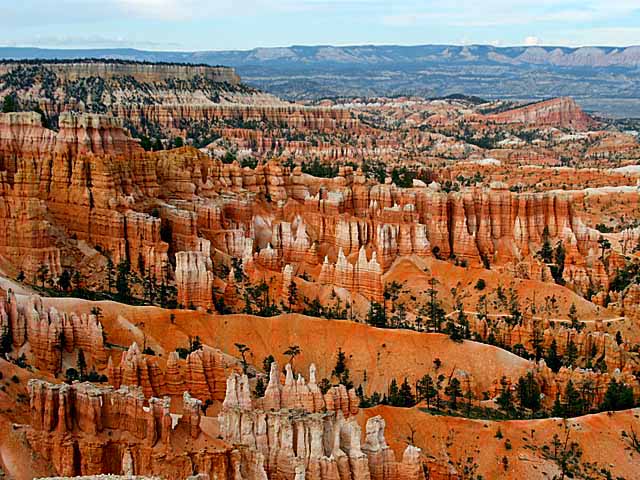 Fortunately, I associate the word "hoodoos" with the past leader of my university (UF) geology field camp, Professor of Geomorphology, Dr. Robert Lindquist, who was an expert on the formation of hoodoos in the magnificent Bryce Canyon in Utah and knew of the locations of many wonders in the West–original survey markers left by Powell, dinosaur bone and gastrolith graveyards, amazonite on Crystal Peak and ancient lahars in South Park, Co. A geologist's geologist who looked like he had stepped out of the 1800s.
As for the other definition, there was a person who once recommended Enron, Freddie and Fannie, and several other long ago bankrupt companies and who was so consistently wrong for awhile that it was almost uncanny. If one had just done the opposite. It was a good education to lose money at an early age though on hoodoo picks. Better to lose and learn using your own thought processes–at least there is a sliver of hope for improvement.
Russ Herrold writes:
I might add that to view a person's bookshelves (even ones only in public areas) or even books in the process of being read on a table, or to note the absence of such, in each case provide a window into the mind of that personis to me a 'tell'.
Alston Mabry writes:
To see something clearly, it can be helpful to study its opposite. Recent list discussion included one of my favorite anti-hoodoos, Richard Feynman– intelligence, curiosity, enthusiasm, creativity, generosity, joie de vivre.
Russ Herrold adds:
This certainly may work for when to exit or what to avoid. My brother also seemed to have a uncanny ability to leave the party, when things were getting hot… too hot… right before the cops came and arrested everyone. His friends started following him. However, the same may not be true with when to start a party. As a kid I remember people would fight for a seat next to me during a math test. If I did not like them I would pull a Goldman synthetic and write down some wrong answers, to be corrected latter in secret. It has been my experience in investing that the surest sign of a Hoodoo is willingness to copy someone elses system or trade and yet have no idea why they should expect it to work. There seems to be floating around hundreds of billions par value of formerly AAA paper that now only worth hundreds of millions that seems to prove that these Hoodoos are extremely common, if not the most common Hoodoo around.
Nick White writes:
Perhaps the most difficult aspect of detecting hoodoo-ery is to discern the difference between the genuine actions of the bona-fide dealer versus the pretense of the hoodoo (who - come to think of it– may well be bonda fide, too, but just cursed. Let's call these poor souls benign hoodoos versus their more malignant bretheren).
I think the sure tell of a malignant hoodoo is that their most effective lies will be those very closest to the truth…yet there lies their very advantage over us, and requires some street smarts to know the difference. Perhaps the foil is to know and experience for ourselves the difference between ambition and aspiration. The Stoics made this sort of distinction to help them in their quest against self-hoodooery: Ambition was vulgar, akin to avarice, full of scheming and accompanied by a very lowbrow, keeping-up-with-the-jones mentality. These sorts of feelings were to be put to death in oneself moment-by-moment through Stoic practice. Aspiration, on the other hand, was considered more noble, civic and had the connotation of dilligence, discipline and a bent toward giving a world-class performance simply for the sake of excellence as a way of life. Therefore, perhaps we might say this kind of vulgar ambition is the giveaway quality of malignant hoodoo-ery? Applying this little rule-of-thumb might constitute the foundation of an early warning system.
However, before any of us jump on the moral high horse and consider themselves "aspriational", the Stoics further stipulated that it required very great self-knowledge to even know the difference between these two values, let alone to declare oneself in one camp or the other. Even then, the Pyrrhic victory was assured– if you felt yourself to be truly humble and aspirational, you were most likely hopelessly ambitious and required greater training to cure the very need to make such statements about oneself.
Jeff Watson adds:
Nick, you made the most erudite explanation of hoodooism I've come across in a long time. One might wish to consider the partial hoodoo which affects 95% of the population. With the exception of a few good trades and the ability to be a good father, I'm a world class hoodoo, among the best. I won.t deny this because that would be a folly, and total lie as I can make money but my personal life is a train-wreck. I won't get into the Faustian aspects of all of this, but it is there. Hoodooism comes in many ways, shapes, and forms and I've seen and done them all. Hoodooism is like the old adage that history doesn't repeat itself but it always rhymes. The hoodoo that the chair describes isn't enough, the one you have to watch out for is the one that makes money on a regular basis, he's the danger.. He might steer you onto something good, but there is always a price to be paid, and the price is not always what you expect and not the currency you wish to pay..
George Parkanyi writes:
This whole notion of hoodoos frankly I find rather uncharitable, and burning one's shirt after a tainted hug smacks far more of superstition than science.
Now not hanging around negative people I understand. Some just wear you down with their negativity, and you do have to cut your losses at some point. But to classify those who have tried and failed into their own undesirable caste is unfair and a vast oversimplification. People run into difficulty for many reasons– failed relationships, health problems, sometimes just honest mistakes. My experience has been that people have far more to offer than what appears on the surface– regardless of their circumstances.
I wander past homeless people– ostensibly life's greatest "losers"– sometimes as I go to work, and when I really think about, I'm awestruck at how they have managed to survive all this long– with absolutely nothing, through harsh winter conditions. How do they do it? Clearly, they have skills that I don't. One time I gave a not only homeless but also legless man $10. He didn't ask for it. I just walked over and gave it to him. Here he was on the front lines at the very edge of humanity, representing on my behalf one of the worst possible circumstances that I could even imagine for myself and somehow I was drawn to him. When I gave him the money, he beamed at me with this smile of pure joy, looked me straight in the eye, and cried "God bless you!" To this day I will never forget that blessing, because at that moment there was a seismic shift– I actually physically felt it– in my understanding.
In the lands of the dispossessed, I don't see hoo-doos at all. I see potential teachers.
As for people who befriend you only because they want something from you, the best I think you can do is make your own decisions on to what extent and level you wish to engage. If you enjoy their company or there is something about them that you like, go with it, but don't take risks that would seriously jeapordize your business, family, and other relationships. Not everyone is genuine, yet not everyone's on the make either– and some people are absolute gems. To be completely distrustful will cut off a lot of wonderful experiences. To expect too much of people or to be overly trusting will set you up for disappointment, or worse.
It's like trading really. If you diversify your relationships you have less risk and less volatility. If you concentrate your relationships, you have more risk and more volatility, but perhaps a bigger payoff in the intensity of love and friendship. You have to figure out the right mix for you. The interesting thing about relationships is that that while you're investing in others, they're also investing in you. The more relationship value you create, the more relationship value you (and others) will also accrue. I can't quantify it, but I think there is a real multiplier at work there.
Last point. If you're not confident enough to engage or deal with a "hoo-doo" without fearing harm to yourself, then perhaps you should worry less about the "hoo-doo" and examine your own fears. What difference should it make to you if have a conversation, dinner, or even a business deal with such a person (however defined)? In what sense would that make you a lesser person or cause you harm? It may or may not, but I think its a good question to ask.
Jeff Watson comments:
George, it would behoove you to read up exactly a hoodoo is before writing such an elegant, misguided essay. The essay was great, almost fantastic, but missed the point. I can say this because I'm a hoodoo and proud to admit it. Not all hoodoos lose money in the market and in life and divorce. Some lose through gambling drugs, going for long odds, begin too easy with short odds. I lose my money by staking unreasonable ventures, loose women, and bad ventures. Not a lot of misadventures but enough to affect 11% of my bottom line. Add that to my losing trades, my 30 dependents, and I have a big nut to make every month. Nothing like the Chair, but still significant. There should be a place in the hall of fame foe us grinders who knock it out every month for years…That's gotta count for something.
Duncan Coker writes:
On the topic of hoodoos, when I am performing a task others can either help me perform better, have no impact, or lead me to perform worse. A hoodoo would would reside in that last category. I am not so concerned about their motivation or intent, just their impact. With my favorite fishing comrade, we actual raise the level of our game so to speak, so an inverse hoodoo. We share information on the flies that are working, fish caught, good spots on the rivers, ( after a small bit of subterfuge of course for good measure). We have a good rhythm of leap frogging each other up the river, alternating the good stretches, not spoiling the water ahead for the other. Plus the general level of conversation or lack of it fits well with the day allowing us to focus on the river and landscape around us. In a pinch we can count on one another. I recall one day I slipped and snapped my fishing rod while at the same time managed to lose my fly box and all flies and watched it float away into the fast current. My friend saw it all and after a few jibes, offered to share his set up, and we took turns the rest of the day. We landed my rainbows that day.
But I have fished with hoodoos as well. One guy we nicked named Trigger. He was so nervous and jerky casting and moving around the river we thought he had an itchy trigger finger and thus the name. He could destroy a beautiful fish laden stretch of river faster than anyone I have seen, with sloppy casts, poor retrieves and a general disharmony with the environment. And he liked to talk, talked way too much. So just being around the guy brought my fishing down and took away my rhythm. Plus, he had the very real affect of spooking any fish near us. They must have known he was a hoodoo as well. One day was enough with Trigger.
Nick White comments:
Actually, I wonder if the null hypothesis is that we're all natively hoodoos…with only will, practice and a life record to help us refute it?
Thoughts?
George Parkanyi responds:
Humanity in the aggregate, and individuals all, are - maybe flawed isn't the best term - let's say limited, at any given point, by the sum total of our experiences and our genetically born underlying capabilities and pre-dispositions. Most of us I would think have far more potential than we ever actualize. As infants and children, we start out gang-busters, absorbing everything - especially information and ability most pertinent to our survival. It is primarily a world of exploration for us at that time, underwritten by the support of those that take care of us in the early years. We're all about curiosity and imagination. As our thirst for knowledge and experience leads us to new experiences, we also begin to develop routines and habits, which enhance efficiency and conserve energy, but also help us re-experience that which we have enjoyed or that have worked in our favour before. The filtering begins, and the type and nature of recurring experiences that we seek increases. Habits take form, even at a young age. The continuously developing habits, I believe, progressively and increasingly compete with our desire and ability to pursue new experiences. At certain points in life, we even choose massively pre-packaged experiential templates (e.g. marriage, career) as well, which hugely filter and channel our future experiences. Ultimately, we (not all of us, but a large portion) reach a point where there is no further desire to seek new experiences that are outside our past experiences. Our habits completely define us. As we age, we also begin to lose the resources, particularly health and energy, with which to pursue and expand our overall life experience.
Perhaps a hoo-doo is simply a person that can or will not go to the next level, and finally settles for habit being the determinant of his/her future experiences. Perhaps they give up on the pursuit, or are ultimately distracted away from seeing or imaging that next level of experience beyond the point that they have already reached (which point would be different for each person), and never even think to look toward the horizon of their life again. All I know is that habit is a very powerful force, and ultimately I think it overwhelms us.
John Holley comments:
"Amen, JT. Sorry I made you burn a shirt that time I hugged you at the Mets game, Vic!" KD
Just to show I put my actions where my mouth is, I will share with the list that I recently have read two very important books that have shaped my life thus far. Both are shared favorites, highly insightful, and forever giving and common amongst the Spec Listers:
1) Memoires of a Superfluous Man - A.J.N. (via Vic)
2) Five Lessons: The Modern Fundamentals of Golf - Ben Hogan (via my Dad, also Kevin Depew's fav golfing book)
These books are on my top ten list. If you haven't read them then do it. In fact read them over and over again.
Other than G-man's speech in Atlas, the 1 thing I hang onto that Lack shared recently in a post regarding his Father that would get you out of being a Hoodoo is appropriately going to be number twenty six.
26) “If you saw Atlas, the giant who holds the world on his shoulders, if you saw that he stood, blood running down his chest, his knees buckling, his arms trembling but still trying to hold the world aloft with the last of his strength, and the greater his effort the heavier the world bore down on his shoulders—what would you tell him to do?” " To Shrug." Shrug, bare more. Your mind can handle it.
Apr
29
Sideshow, from Duncan Coker
April 29, 2010 | Leave a Comment

As another benign FOMC day passes, the spread between Fed funds and 10 year Treasury stays at 350 basis points. I would propose that on average the spread is around 150 bp and probably where it should be now given the inflation cycle. So that extra 200 bp, multiplied times all the money market funds, demand deposits and cash, gets seamlessly and efficiently transferred to the deserving parties. While one branch of government puts on a side show, another takes care of important issues.
Apr
5
Aftermath of the Emploment News, from Duncan Coker
April 5, 2010 | Leave a Comment
 I will be interested to see how the employment news is digested so to speak as the futures markets had 45 minutes on Friday and now some 12 plus hours since Sunday open to react. While the cash market has not traded. Is it "old news" and already absorbed as efficient markets would have dictated or does the cash market have something to say about it?
I have a small wager on the answer.
Mar
31
Happy Days, from Duncan Coker
March 31, 2010 | 1 Comment

I have been doing some counting. This month we had very few down days, 4 to today and if the last day of the month is down [Ed.: as was the case] that will make 5. Looking at SP Futures last 12 years, ending 2009 (sorry, slight gap in the data to present) here is the distribution of number of down days starting with close of last day of the month and looking back 21 days including last day.
Number of down days
Frequency
1 0
2 0
3 0
4 1
5 1
6 5
7 5
8 20
9 33
10 24
11 30
12 11
13 9
14 8
none above 14
The average down days per month is 9.9, but looking at the extremes…what happens one month out? Nothing earth shattering, but definitely not bearish after a bullish month and trend followers may continue to have their day. Of course much activity goes on within the month that this does not pick up.
Speaking of counting, my 2 year old likes to count. While at the beach one time she asked if we would count the waves, at night to count the stars. The wonder of children.
Feb
15
Hands Forward, from Duncan Coker
February 15, 2010 | Leave a Comment
 The two sports I am somewhat qualified to teach are fly fishing and skiing, and this weekend I took my 2-1/2 year old to a snowy hill nearby for some lessons. How many instructions can you really give a toddler? So I know I can only offer one maybe two comments that might stick with her and give some help.
In the case with skiing I can say that all my experience of 30+ years skiing, watching races, free skiing, and teaching others, can be distilled and put into two words that can really help. "Hands forward." It works. With hands forward, extended out in front, it puts your body weight forward, centers your balance over your skis, focuses your vision ahead of you, relaxes your upper body and puts you in the ideal stance.
Also, as you advance, "hands forward" will coordinate pole plants, help your rhythm in turning, direct your skis down the fall line, plus a hundred other small elements, and just plain looks graceful and in balance. I was delighted when I heard an interview with Hannah Kearney after her incredible gold winning moguls run describing her turning… "I was just thinking about keep my hands out front here…" That was all she had time to think about.
Jan
31
Nobody Asked Me, But… from Victor Niederhoffer
January 31, 2010 | 8 Comments
 The reaction to recent events where something devoutly to be wished actually happened and sadness and disappointment and revulsion occurs is part of a general syndrome related to the dissipation of the sex cells. Time and time again, a company reports good earnings above expectations and a terrible decline ensues. Time and time, an important link in the totality is confirmed a la Bernanke today, and the market drops an immediate 1%. Time and time, a bill that everbody wants, like the stimulus bill, or the Massachusetts election results, occurs, and the market drops an immediate 1% the way it did last Tuesday. What is the reason for this? Is it a variant of 'buy the rumor, sell the news', or is it insiders selling on the news? Or is it related to the general apathy that results when the discharge has occurred? Can it be predicted, and acted upon?
A friend writes in that the ensenble of comovements between bonds and stocks posted on our web site always reminds him of Leo Goodman's classic article "Movements and Comovements between M Dependent Time Series" that Doc Castaldo has kindly sent hundreds of copies out to far sighted researchers in previous glory days. It is good to honor and create a visual model and real life exampe of such important dependcies. And perhaps this will be a prelude to providing statistics on this site that will be at least as informative by half as the average sports statistics contained in such fine publications as The Post or Sporting News under "Stat City". The desire to provide a league standings tabulation is keen.
I am reading several books on animal partnerships and the partnership between the ostrich, which has good eyes, and the zebra, which has good hearing, reminds me of the partnership between many markets. One or the other, whether it's silver or the omniscient one, are there to alert to possible danger. One feels the pain of the CEOs who were at a dinner at the Oval last Wednesday, and learned about the Volcker plan only at 9 pm that night an hour after the dinner and just 12 hours before the 6% decline started. "That's not squash," as my friend from New Zealand used to say when I mixed in a volley or two. Heard at the Olympic Club at 10 pm: "You might want to play an all court game tomorrow, mate."
Of course there is a higher purpose to the recent decline of 6%. First the move must shake out all the weak longs who were buying it based on their hopes for the January baromoter. Next, it has to set all the public behind the form so that they will sell out in disgust at the three-month lows. Finally, it must engender a Dow below 10000 to create the kind of newspaper headlines and fear that will shake out the remaining weak longs before a rally occurs.
Paolo Pezzutti comments:
After you have finished your succulent second plate of spaghetti "all'amatriciana" and you are offered one more, can you eat it? After a long uptrend when earnings have beaten repeatedly expectations for a year, can you really expect more surprises? Some take profits, others go short. It seems that the news release is the trigger to execute actions that were long planned.
I found on CXOAG this post that addresses the issues raised: Earnings Surprises and Future Stock Market Returns. The post reports about the study Aggregate Market Reaction to Earnings Announcements.
The authors investigate the relationship between earnings announcement surprises and market returns on the days surrounding earnings news. The analysis identifies a negative relation between earnings news and market return that persists beyond the immediate announcement period, suggesting that market participants do not immediately fully impound these future market return implications of aggregate earnings news. There may be a considerable degree of inefficiency in the market’s processing of aggregate earnings information. Consistent with this interpretation they find that Treasury bond rates and implied future inflation expectations respond directly to earnings news.
George Parkanyi writes:
Definitely, the same type of news after a few months loses its power to move the market (true for both the down side and the up). At a certain point you stop listening, you’re on auto-pilot. Markets respond to surprises –- the something new, the something different, or the something possible. This is very much a human characteristic.
A related example was the Internet bubble. Everyone was buying the companies that had no earnings – because while they had no earnings the potential for earnings was unlimited. As soon as companies started to report any kind of a profit, they were crushed. For now someone had put a limitation on all that “potential”. I was highly amused at the time how earnings for an Internet company was the kiss of death.
Kim Zussman writes:
If it were as simple as "up on good news", Galleon and others trading on inside information would immediately overtake the solar system –like a hadron-collider black hole. This evidences supernatural laws which prevent even cheating determinists from commandeering supreme mating rights.
Years ago at a Stephen Hawking lecture on time travel, he "discussed" (the lecture spun from his laptop) various paradoxes produced if one could go back in time. For example, if you killed your parents in the past how could you have been born in the future to go back to kill them? One theory was that when you pulled the trigger, the bullet would "diffract"; somehow splitting before hitting it's target — in compliance with rules keeping the universe in logical order. (whose logic?)
Another theory was parallel universes — one in which your parents died, another they lived and you were allowed to develop.
The questioners were kind to Stephen, because of his illness, but after the show he sat helpless in his wheel-chair in a van outside with the dome light shining on his contorted face like an involuntary spot light. A crowd hovered outside to see the great man, like at the zoo.
On a different note, Pfizer's run-up to the Massachusetts Miracle is typical. Removal of near-certain health care reform and promised payoff by pharma met with big decline. Would you have sold knowing the election results before hand? The upside is that if you can be at peace with the way market treats your logic, you will understand how to be a ladies man.
Duncan Coker writes:
 I would like to pick up on Messr Parkanyi's comment regarding "the markets respond to surprises, something new, somthing different or the something possible…this is a human characteristic." I agree. Related to this, I attended a showing of the film Poliwood last night where the director Barry Levinson was there for a Q and A session. It is a documentary about the triangle of media, celebrity and politics and how the lines between reality and theater, entertainment and substance, are becoming more and more blurred. Politicians become celebrities and celebrities become politicians. Media fosters celebrity and celebrity feeds the media. Politicians need the media for promotion and the media needs them for content. One of the ways to get high ratings in news television is to present conflict in a dialogue. That is why guests are always at the extremes of a position. It allows for more yelling, arguing and better entertainment for the viewers. Polarization is more interesting television. Informed and moderate discussions is just boring to watch.
I wonder if this carries over into the market. Stagnant markets are boring, wild swings make for better entertainment. Also, who benefits from wilder markets, financial media has something to write about, brokers and exchanges have more commissions and fees, money managers can justify their services. It allows politicians something to regulate, gives floor trades movement to scalp, hedge funds can fire up the algorithms. The causality works in both directions as well. Last week the politicians spiced up the boring upward move of the past 2 weeks. When a fund is rumored to be weak or going under another spike. The media does all it can to create excitement and volatility around the market. When traders over-trade and the line between entertainment and substance can get blurred. Also, like the television example, conflict is more interesting. In the case of the bulls and bears it is most interesting at the extremes, so the market follow this type of cycle.
Ken Drees adds:
This fits here with financial television as of late. The big question or overall theme being is this just another dip for the market or something more? Hopefully capturing viewers by keeping this nail biting question front and center–having two view points and the ensuing debates roll on out.
Off the bottom it was "is this a sucker's rally or a setup for another drop?"; now its "is this just a little dip and the start of a sideways consolidation, or the start of a substantial 5 -10 % correction?"
It seems like these times of opposing question of market direction after extreme linear moves should be watched closely for reversal. I find it interesting that the choice not talked about much off the march low was this: Or is this the start of a nice 50% multi month rally from oversold conditions not witnessed since 2001?
Today the choice missing would be this: Or is this the start of a 50 to 70% drop, retracing most of the gains of 2009?
TV — usually it's what they don't say or its the opposite of what they scream into your face — making great TV but bad advice.
Jan
11
An Angler’s Check List, from Duncan Coker
January 11, 2010 | 1 Comment
 From the angler's desk, a check list/prep list for a day on a river:
Pre-fishing
Is my equipment working, waders leak free, new laces on the boots, reel clean?
Did I bring a backup rod and reel in case I slip a break it when wading down stream?
What is the steam flow? 100-400 cfs is good, above 1000 and I can’t cross the river.
How is the weather? Partly overcast is perfect, but I can adjust. A lot of sun you can see the fish early but they will spook fast, so means longer casts and lighter tippet. Heavy wind means bringing a short faster casting rod.
What is the hatch for that day and when, do I have the right flies dry and wet? I need a new leader each day, right length and thickness.
Do I have my topographical map, especially if it is new water?
Do I have drinking water, a bite for lunch and some chewing tobacco for when the fishing is slow and to change the luck?
Near the river
How many cars did I see within five miles of my spot?
If I see a heavily fished area do I stop to see the action, pick up some clues on the fishing before moving on?
How does the river look — clarity, flow?
Are there any fish rising or lounging near the banks?
How should I rig up this morning, dry fly, nymphs, strike indicators or no? I always rig up away from the car as closing doors like to break rod tips.
Will I fish wading upstream, (preferred) or downstream? Where is my buddy fishing and which water will he cover before me?
On the river
Where are the seams, the riffles, and pools I want to fish?
How can I best approach?
I always test cast for a few minutes. How is the cast and rigging working? Is the line releasing the way I want?
Is the presentation right?
Where are the obstacles, rock and submerged logs that trip you while wading? Always look behind you when casting the first time. That is where you buddy will be standing or a bush to tangle your line.
How will I land a fish, where is the best spot, how can I get him to shore?
Afterwards
Practice your misinformation on what they were biting and where you were fishing to throw off fellow anglers. Anything with a Stony is good for location (e.g. Stony creek, brook, bend) For fictional flies added a “double” or “jumper” to normal selections. A double hairs ear, or wooly jumper fly. Also, work on your translations of fiction from other anglers, “a little slow” means not a fish all day. “Saw a few rising” means saw a couple of darting shadows. Of course, the fishing spots suspiciously not mentioned are the ones to go to. And write some stories both to record the day and for you own enjoyment.
Along these lines here is a book by a fishing friend of mine, due out in May. The title says it all: The Little Red Book of Fly Fishing.
Jan
11
Oh To Be A Banker, from Duncan Coker
January 11, 2010 | 3 Comments
Could there be a better industry to be in than the banks at present? With the yield curve its steepest in years, a bank can borrow from one branch of the government at close to zero via the discount window and lend to another branch of the government at 3.5% buying Treasuries, for a risk free 3% profit margin. Leverage that at a very conservative 10x (meaning 10% reserves, versus required 3%), and a risk fee 30% ROR. Plus a big chunk of the competition is out of business and your biggest client, the government again is churning out fees and commissions at a record pace via Treasury auctions and the like. Sounds like the best business model going.
Dec
19
Reformers, from Duncan Coker
December 19, 2009 | 1 Comment
 Reformers, in their efforts, prefer to focus on the supply side of the equation — ignoring almost completely the demand side. In the financial arena there is much finger-pointing at the sell side of such products as CDOs, and the riches that were made. Not a whole lot of attention paid to the largest buyers — long acronyms — that enabled the transactions. On trade much attention is paid to foreign suppliers who take jobs, not to the benefits derived from on the demand side for the array of products at lower prices. Perhaps supply is just easier to regulate. The same holds true in health care. It is hard to change supersized demand mentality and fitness avoidance — the suppliers are just easier targets.
Dec
4
A Chance to Quote Falstaff, from Duncan Coker
December 4, 2009 | 1 Comment
 Productivity is one area where of the economy that can not be compelled to improve by those royal powers above. Or as Falstaff once said to Prince Harry over a cup of sack:
"What, upon compulsion? 'Zounds, an I were at the strappado, or all the racks in the world, I would not tell you on compulsion. Give you a reason on compulsion! If reasons were as plentiful as blackberries, I would give no man a reason upon compulsion, I."
So Q/Q annualized rate of 8.1% does give me a sense of optimism as that and innovation account for our improved standard of living, wealth and many positive things over the last century.
I looked ahead to SPY performance 1 and 2 quarters later, but the results are not noteworthy in fact there is a negative relationship:
1 month ahead SPY quarter predicted by Prod, correl -.11, slope -.27, intercept .82, rsq .012
2 months ahead SPY quarter predicted by Prod, correl -.04, slope -.12,intercept .41, rsq .002
Serial correl of quarterly Prod -.15, Average annualized rate 2.7%
Serial correl of quarterly SPY .30, Average quarter .3%
Data 1999-2009
Still it is a big headline number, fourth largest over the period, though productivity never gets the same attention that employment will get tomorrow.
Dec
1
Heyne and Purpose, from Duncan Coker
December 1, 2009 | Leave a Comment
 What is my purpose in life, or more accurately what is my comparative advantage?
I am half way through reading Heyne's Economic Way of Thinking which has been on my list for a while and it has sparked some thoughts about economics but also some thoughts on the bigger questions in life. There is no doubt in my mind that in markets and societies the rules of economics, competition, comparative advantage, low transaction costs, and free exchange all lead to the greatest good for the greatest number of people. But the question I pose is can these same rules be applied to ourselves to answer the big questions we face in life like, what should I pursue as a career, where should I live, should I marry and if so whom, how should I spend my time and doing what, what is my purpose,and where will I be at the end of it all?
As we go through life making decisions and choosing different paths the concept of opportunity cost is ever present, whether we acknowledge it or not. For each road we go down there is another forgone. If we chose to go to Harvard, we give up a chance at going to Yale. If we spend our time trading we give up maybe a job in sales, or time surfing or skiing. We chose what brings the most economic value or perceived wealth. There is a simple but deep definition of wealth in the book, and that is "that which we value." So wealth is a very personal thing, certainly not just money.
Another concept in life and economics that we encounter every day is that of scarcity. Examples of scarcity are everywhere; apartments in New York, school admissions for one's toddler, jobs in trading or openings at a college. Scarcity leads to competition as we vie with others to obtain the things we value. We spend time searching for apartments, studying to be better students and competing to be the best at our careers. But other things in our life are scarce too. The aesthetic things we value are scarce — a sunset over the ocean, the view of the mountains, dinner with your family or friends, reading a non-trading book, watching a fire crackle, time outside. These aesthetic things all have a time scarcity associated with them. Indeed time itself is ultimately our scarcest resource.
Can the economics concepts of scarcity, opportunity cost, competition and comparative advantage which I know to be the best as applied to markets and allocating resources, also help me the individual lead the best, happiest, fullest life I can? When I chose a career I balance the wealth this brings me against the opportunity costs, not only of other jobs, but of the value I place on leisure time as well as those aesthetic things mentioned before. So I suppose the richest among us will be those that get the most of what they value most. If this is a lot of money, so be it. But if you place high value on say fishing or taking walks with your wife and two year old, spending time doing that will make you a wealthy person. We all have to "pay the light bill," but with any luck there is time left over to pursue those things we value most. So I think economics can help in answering those big question mentioned earlier. Also it helps me to prioritize. Once you know what it is you really value it makes going about getting it easier.
Laurence Glazier comments:
A moment of futurology:
As we get deeper into the era where useful things can be produced ever more automatically and cheaply, unsubsidized jobs may become rare, even if shared out part-time. Passage to such a changed society is unlikely to be calm, however it will give people the chance to develop their creativity, an essence-ial part of us all which education quells until, if one remembers, retirement. And those who have jobs would consider it an immense privilege.
It is a future I look forward to (indeed there is no need to wait). Yet, as a chess master once said, "Between the opening and the endgame the gods have placed the middlegame." And society will resist being dragged by the wind of technology to this endgame, as surely as the artist, alone in the studio, resists looking in the pitiless mirror.
Laurence Glazier is a British musician, artist, philosopher, chessplayer and speculator.
Nov
2
Moving Averages, a query from Duncan Coker
November 2, 2009 | 2 Comments
 I don't want to touch off a quant vs tech battle, but was interested in thoughts about the use of moving averages. The claims are seen so often in the media for example as 50m/a has crossed the 200m/a as bullish or bearish. As quant this is easily testable, but is there some fallacy built into the assumption, checking once premise. As an average of levels over some period is this overly sensitive to a large event that may have happened at the beginning of the period, or as new data are added and taken away from 200 days ago. This seems a drawback. So on an unchanged day the 50m/a could cross the 200m/a, so it is a lagging measure. I have not used them much but interested in testing and what the merits might be if any. I am prepared to buy a round if venturing too far from our charter.
Craig Mee comments:
Normally people use exponential moving averages which put more weight on the most recent numbers, however it must be noted when looking at technicals from any of the major houses, one day they may be looking at the 50 day exp m/a, the next day the 20 day exp m/a, next day 16 and so on. There seems to be little uniformity and who's to say the market's in a 50 day cycle or 20 or whatever, no doubt this will change at any rate, it must be proven, as to the reason it's used , and this is never done. 200 day just constitutes a longer term trend number. Could be 167 or 198 for the purpose. They may have more of a chance to perform some sort of return in a slower moving stock or short-end rate market, but for futures markets, there is way too much given away on the turn (i.e. consolidating flat markets forever paying away the spread to get in and out.) It's much the same in running a moving average over your profit and loss on a trading system as a filter , normally what you'll find is that the major gains are made on the swing, for that's when markets are extending, and if you're not in then you're not in!
Victor Niederhoffer comments :
Not to mention that it is extremely spurious and dangerous to your wallet to see cycles in moving averages.This is due to the Slutsky-Yule effect, a consequence of regression to the mean, creating false cycles.
Anatoly Veltman suggests:
The best M/A use I know of has nothing to do with crossovers, or even with price charts' current levels vis-a-vis averages. It has to do with current slope of all averages in an optimized pitch-fork of three averages. The method was originally described by Stan Weinstein, as applied to longer-term stock strategies. I’ve had positive results applying the general overriding idea; and over the years, I’ve worked with people who did optimization and chose a pitch-fork of 14-, 30- and 50- day pivot simple M/As. Furthermore, a few effective signals were developed: dubbed Moving-Average Fake-Out Trade and Moving-Average-Divergence Trade, at the time…
Sep
25
A Day on the River, from Duncan Coker
September 25, 2009 | 5 Comments
 I took a day to fish the Farmington River recently, not far from where I live in Connecticut. It is a beautiful river, wide and easy for casting, varied in structure, with a flow perfect for wading this time of year. The Fall colors are just starting, and a blue sky lights the clear river water. It is my favorite time of year to fish. A large portion of the river runs through a state park, so the access is surrounded by an old growth forest. It is a nice walk from the car to the water, a transition and a time to think. I always like to rig up on the water, not by the car. Standing in the river, I can listen, watch and plan.
The Farmington, besides being one of the more beautiful rivers I have fished, is also one of the most popular among anglers and gets pressure. But, there are plenty of large rainbows, browns and brook trout to make up for this. At the fly shop on the last trip a guide showed me a picture of a 30 inch brown he had caught earlier that day. This is the type of thing that keeps one coming back. Here they allow bait fishing as well as fly fishing. Fly fishermen and bait fishermen often have to tolerate each other but rarely do they enjoy the other's company. It is sort of like snowboarders and skiers, sailors and power boaters. They have a fly fisherman only section, but today I venture out to the open waters to see what the day brings.
 I drive up-river higher than last trip, park the car and begin walking through the forest. I enjoy this part, listening to the forest and river. I am looking for clues, the insects, water color, flow, structure of the river. I scan below the water for signs of fish. Though I pass only a few anglers, I decided that today I need to do things a little differently to be successful. These fish see many anglers over the season and the learn the lures and flies. To start with, I find a spot which is hard to access, down a step embankment. Then instead of the smooth glassy water, I look for the rocky, fast water. This will rule out the bait fishermen who can only fish the deep pools. Most fly fishermen won't wade the rocky water to risk slipping and losing gear. Plus, the trout like this aerated water with plenty of food. The rocks below provide a nice spot to relax after a meal. I call it "pocket water". I see some small insects flying around, but decide to put on a large attractor fly to see if I get a reaction. After a few casts I hook into a nice brown trout, 16 inches. My day is already a success.
 Upriver I see a deep pool where earlier a fellow angler was casting without success. I know this area gets fished often, but for good reason as it holds large rainbows deep below. I walk up and try a few casts. Shortly after I see a fish rising across the current. As a general rule, the largest fish will be in the most difficult areas to reach. It is the survivorship bias as played out in nature. In this case the fish is just on the edge of a swift current, which would sweep a fly line away before it could reach the fish. I move up ahead and scramble out on some rocks for better position and wait. Sometimes the best thing to do while fishing is to stop and wait. He rises again for a small insect. I find that the largest fish tend to eat the smallest bugs. I think they like to challenge the angler; smaller flys are harder to cast and difficult to see on the water.
I scan my fly box for a selection and decide to go with an even smaller bug than normal. I throw several casts over the current into the seam when he is feeding. I try to vary each cast, different lengths, changing the speed or angle. Sure enough, a quick splash and he takes the bug, a beautiful 18 inch rainbow. I tighten up the line and feel the tug on the other end. I focus on keeping the pressure on him and steer him towards the shore as I move off the rocks. A fish quickly landed is much easier to return to the river. I land him a few minutes later. I take a mental picture for the winter months ahead, the red, blue and green colors on his back, his wide oval shape, strong tail slapping on the water, the bright reflection of the sun off his scales. A great day!
I did catch a few more here and there over the course of the day. Doing things just a little bit differently turned the day into a big success.
Sep
12
When to Give Up? Anvil Movie Review, by Gordon Haave
September 12, 2009 | 12 Comments
 On Friday I saw Anvil: The Story of Anvil.
It was the most interesting movie I have seen in a long time. It is an independent film I saw at the Oklahoma City Museum of Art. Anvil was an up-and-coming heavy metal band in the early 1980s. I vaguely recalled the name… I myself was an Iron Maiden and Judas Priest fan. Anyway, unlike Maiden, the Priest, Scorpions, and others, Anvil never made it big time.
The lead two member of Anvil, however, never gave up, and they have been playing together for thirty years. They are broke and work regular jobs, yet they still think that one day they will have a hit album and become world-wide rock stars.
The film is a documentary about Anvil, and their quixotic quest to become world-renowned stars. At first it is amusing – almost like watching Spinal Tap as the lead singer and guitarist "Lips" lives in his fantasy rock and roll world. As they movie progresses, it becomes a bit depressing. The third part is the culmination of their attempt to launch a new album with a new producer, and an attempt to get a contract with a major label. The last scene is fantastic, but I will not tell the readers how it ends.
I spent most of my time thinking about my own life, and the lives of others that I know. When is the appropriate time to give up? Most second rate metal bands from the 80s gave up a long time ago. Are they better off for it? Or should they have kept living the dream? The same could easily be applied to traders and money managers. I for one gave up trading last year. Should I have? How long should I have kept at it before quitting?
This is of course an unanswerable question.
Duncan Coker recalls:
When I was 18 I had dreams of forming and being a part of the next Allman Brothers band and pursed this the first few years of college — much to the detriment of my GPA and class attendance. That dream ended in my early 20s. But I still play and enjoy guitar to this day and my musical friends of earlier days are still among my closest. So I will always be a guitarist, but never a rock star.
GM Nigel Davies analyzes:
There is an answer, but it requires thinking in terms of the journey rather than the perceived destination. As long as someone experiences personal growth as a result of his endeavours (and this manifests itself in a feeling of passion) then the activity is worth continuing. But when it becomes all about destinations (ambition, money, power) then the odds are high that an accident will happen.
Sep
11
Life Before Mesa Verde, from Duncan Coker
September 11, 2009 | Leave a Comment
 I have been thinking about my current modern civilized lifestyle versus a more primitive lifestyle of the hunter-gatherer or pastoral nomad. It started on a recent visit to Mesa Verde in southwest Colorado. Here with my sister and nieces we visited early villages built into the rocks dated around 1100-1300. They are beautiful to see both as a wonderful reminder of the past and their incredible setting high in the cliffs with views 50 miles out onto the plateau. But in reading the history these relics are just the very last remainders of a very ancient culture they call the Ancestral Puebloans. The earlier people had no structures and were nomadic. They moved in rhythm with the seasons and were hunter-gatherers. Their life was much different than the agriculturalists who built the cliff dwellings. The early people had more time away from the fields of labor for one thing. Mobility was also an important part of the older culture, though it took more land to support this. I can see many advantages, more time for culture and family, less work, plenty of movement and variety, fewer possessions to maintain, better physical health. But I believe there was one main disadvantage that led them away from this lifestyle — risk. These people had to live day to day, week to week with great uncertainty. There was no store of grains to support them should supplies dry up or if the hunt was poor, no fallback position. They ate what they could kill and gather. This was a cost for the lifestyle they preferred. The hunter-gatherer still exists somewhere within me today, the desire for simplicity, movement, physical agility, more time for family, and a sense of living in the present. All very positive things.
Aug
12
A Tapestry, from Duncan Coker
August 12, 2009 | 4 Comments
 My bride and I recently returned from a visit to a musical Caribbean location, the name of which rhymes with a large brass musical instrument. It was quite an eye opener. Among other things it reaffirmed the importance of so many of the ideals spoken about on this site, like personal freedoms, private property rights, freedom of movement and employment. How dramatically life changes if even one is taken away! Simple tasks like booking travel in country are simply impossible or involve many black-market channels and considerable risk. An unauthorized drive in a car can result in jail time for a local. Blue and green clad officials adorn nearly every street corner in the capital city. There is no ownership or credit. Cars and houses are grandfathered from 50 years ago. There are shortages for everything.
But in front of all this and in the streets is the constant sound of music, and a tapestry of movement and life. Rhythm and art are woven into this culture and they do thrive. Creative methods to circumvent the system are adopted by all as well. The small businessman is emerging. Private dinner clubs, hotels and other services are allowed in limited numbers and are the best-paying enterprises. There are plenty of unlicensed businesses as well who take on even more risk in order to be entrepreneurs. The health and education are very good for those who have practical access. But afterward there are no opportunities to apply those skills. So you have PhD Botanists giving rainforest walking tours, microbiologists explaining historic sights, doctors and scientists arranging travel plans. The government jobs surprisingly are the worst place to work, with very low pay. So no one wants to work there. One does not sense government corruption but rather paranoia and massive inefficiency. A 50th anniversary passes with barely a notice. Signs of a famous Argentine are ubiquitous. But movement and desires of the populous is admirable. There is no island mentality here and things do get done despite the handicaps. There is desire for change on all fronts.
Aug
4
Progress on the High Frequency Front, from Duncan Coker
August 4, 2009 | 9 Comments
 It is reassuring that the secret high frequency algorithms have been secured and are back in safekeeping. As the government prosecutor said, in the wrong hands these algorithms could be used for evil purposes like "market manipulation." I will feel much better when they are back in the hands of the trading desk investment bankers who designed them so they can be utilized in their altruistic way.
Vin Humbert writes:
It is good to know that at all times one is playing against a robot that pays 1/100 of the commissions and gets paid for its orders, and gets to see your orders before putting on its trades, and is always two computers and a geographic distance of light ahead of you. As Willie Sutton said when the Dodgers lost, it makes you feel so bad you want to turn yourself in to headquarters.
Jul
3
Sailing Ships, from Duncan Coker
July 3, 2009 | Leave a Comment
Lately I have been reading several books about sea travel in the 1600-1800's, one about the whaling community in Nantucket, one about the Dutch early traders and one concerning the Mayflower voyage. An interesting aspect of sea travel at the time was the use of leverage in the context of sail and mast relative to the boat hull size. The trade off was simple, a large mast with much sail was faster, however during storms the large sails could cause a "knockdown". This occurred when strong winds pushed the ship over horizontal to the sea. The wind and sail acted as a lever and lifted the much heavier hull of the boat. It was a trade-off the captains had too make, deciding on a balance between the amount of sail to raise and the chance of a storm. It would often take hours to adjust the square rigged sails, so when a squall came it was already to late. But managing this type of leverage was part of being a ship captain.
Jeff Rollert adds:
When one looks at boats of that time, they had high bows and sterns, but lower mid sections. This was fine unless water/waves came in to the middle area, where they could quickly find a way thru doors/hatches into the boat.
Square rigged boats can't turn into the wind/waves quickly, as the sails were mostly centered on the boat. If you saw a huge wave coming, you had to take it at a relatively broad angle, otherwise you would loose steerage and go backwards/broach. The sails had to be removed as quickly as possible as soon as the wind picked up - hence the old sailors lines "You reef before you need to / If you think you may need to reef, do it immediately."
Lastly, for those who have not gone up a mast, it can get scary quickly. On the boat I race, a one inch change in the deck is a movement at the top of five feet…in wind those old whalers/freighters could have guys in the rigging when their location was moving forty feet, side to side, while they bundled sails up and tied them down.
Also, they were ballast boats, which meant they had stones (literally) in the bottom to offset the weight and leverage of the mast. The bottoms were flat/ to slightly rounded, so in big waves a 90 degree movement from side to side was common. At 120 degrees, the boats rolled over and sank quickly. This is a reason few sailors then learned to swim. It was moot, the boats sank so quickly.
As a sailor complement, those guys had balls, but with a 60% fatality rate.
May
28
Cut Your Losses, from Duncan Coker
May 28, 2009 | 3 Comments
 I have been giving some thought to the adage "cut your losses and let your profits run." It has always rung hollow to me. Maybe I am missing something, but it seems retrospective and such decisions can only be made after the fact and not prospectively. It ignores all those unrealized profits and losses that often reverse over the course of a trade. All those winners that were supposed to run that turn into losers and all those losers that we are told to cut, that turn into winners. To argue the other side, I suppose one could just set a stop loss exit on all trades and no stop on the upside. This would reduce risk and profits, as one would expect, no great pearl of wisdom. I believe the adage should be reworded to "allow your winners to become losers, but don't allow your losers to become winners," or "realize your losses and make less money." Very catchy.
May
13
Buy the News, from Duncan Coker
May 13, 2009 | 1 Comment
 I don't trade many individual stocks, but I have one long-term holding, which is a sleepy consumer products company with a low beta. I saw it drop for no particular reason about 10% the last two days. Then this morning the news of a downgrade from buy to hold by an analyst. Guess a few people knew about it beforehand. Classic Wall Street. Only good news is, it should rally from here.
An Anonymous Commenter comments:
The secretary of the interior and his colleagues allowed the news of the land sales last month to leak before the number or anything? Makes you wish to turn yourself in a la Willie Sutton to the authorities after the Dodgers lost.
.
May
11
Market Memory, from Duncan Coker
May 11, 2009 | 3 Comments
 Efficient market proponents argue the market has no memory, that every day is independent of the previous, like each roll of the roulette ball. I believe the market does have a memory based on the cumulative memory all the current market participants. My memory seems to focus on all my losing trades which I can recall with intense detail. The '87 crash is probably in the market's memory since many now trading lived through that first-hand. Maybe the 1970s bear market is part of its memory, but I doubt the '29 crash or the 1930s or 1907 panics are in its memory. The last six months will be remembered by the market for a long time. This will add some risk premium for those who like to trade from the long side.
I have always like this quote from William Faulkner: “Memory believes before knowing remembers. Believes longer than recollects, longer than knowing even wonders.”
Like a lot of Faulkner, the meaning shifts every time you read it. It takes us a long time to understand our past.
Vince Fulco writes:
It is tough to imagine the older worker ants represented by the baby boomers gravitating back to equity markets after being burned so badly twice in a decade. Particularly since in this downleg, perceptions have grown that contractual obligations have weakened so dramatically. Thinking about the creditworthiness of long term disability and life insurers specifically. Perhaps some of the 'fool me once, shame on you…' mentality will creep in too.
Apr
21
When to Sell, by Duncan Coker
April 21, 2009 | 1 Comment
There is a simple rule one can apply when looking at long term assets like houses or core stock holdings. If you are a seller, imagine you have cash and no house. What is the most you would be willing to pay for that house? That price should equal your selling price. Subtracting transactions fees, this is your personal clearing price. In reverse if you are a buyer, imagine you owned a house and ask yourself: what would be the least I would sell this house for? That should be your buying price. The beauty is everyone has different answers to these questions and this is what allows trade to take place. "Armchair Economist" by Steven Landsburg is a good resource for these questions.
Feb
5
Salary Caps, from Duncan Coker
February 5, 2009 | 10 Comments
 I won't argue if the salary caps are warranted or not, as this is a political issue. But what I believe to be factual in economics is that caps on prices leads to supply/demand imbalances, econ 101. For example, capping gasoline at say $1.00 a gallon would cause consumers to demand more, oil companies to produce less and the result is shortages. For executive labor in the banking sector, this will be the case too, shortages of talent. It is possible there could be a massive supply curve shift where all these executives are will to take lower pay. More likely I think is that they decide to go somewhere else, and that place where ever it is, would be an interesting place to invest in.
Kevin Depew is skeptical:
Agreed, the economics of salary caps seems clear, but, to paraphrase Jon Stewart, these banks have lost hundreds of billions of dollars. Just what "executive talent" is being lost?
Jan
19
New Players in the Global Economy, from Paolo Pezzutti
January 19, 2009 | 7 Comments
 The financial crisis has a number of causes including weaknesses and gaps in regulation and supervision. However, the idea of a growing government as a solution to problems created by greedy capitalists and bankers around the world looks too simplistic and has a bit of populism in it. There may be results in the short term, but in the longer term the issues will likely be more than the benefits with an expensive bill for the next generation of taxpayers and citizens. I am not referring specifically to the US, but also to Europe to some extent.
Real change would be first to understand weaknesses and challenges of our industrial, financial and social systems. The world is changing. There are new players in the game. And the relative importance and power of countries is changing with time, and accelerating. We should recognize this fact. This has consequences on our present and future ability to be innovative and competitive, on the possibility to maintain the same lifestyle in the future, the same welfare. This crisis has shown that the US is still vital and fundamental for the good of the world's economy, but it has also dramatically shown the increasing difficulties of the US in maintaining this leadership, which is not only economic, but also intellectual and political. After this crisis we cannot go back to business as usual and our countries will end up with more debt on their shoulders. We cannot solve the crisis just pumping government money in a model that is not working without doing anything to change it. We will only have crisis after crisis if we do not eliminate the roots of the problem. And the problem is that new players in the global economy produce goods cheaper than we do, that they are learning fast how to make high tech products and services, that they sell more than they buy. This is causing a fundamental imbalance in the global system that market forces should solve within a proper framework and set of rules provided by governments. Also we should probably all realize that may be we are living a standard that we cannot afford any more.
From a WSJ article:
One memorable moment in "Atlas" occurs near the very end, when the economy has been rendered comatose by all the great economic minds in Washington. Finally, and out of desperation, the politicians come to the heroic businessman John Galt (who has resisted their assault on capitalism) and beg him to help them get the economy back on track. The discussion sounds much like what would happen today: Galt: "You want me to be Economic Dictator?" Mr. Thompson: "Yes!" "And you'll obey any order I give?" "Implicitly!" "Then start by abolishing all income taxes." "Oh no!" screamed Mr. Thompson, leaping to his feet. "We couldn't do that . . . How would we pay government employees?" "Fire your government employees." "Oh, no!" Abolishing the income tax. Now that really would be a genuine economic stimulus. But Mr. Obama and the Democrats in Washington want to do the opposite: to raise the income tax "for purposes of fairness" as Barack Obama puts it.
Riz Din writes:
Not so long ago, I heard a pundit commenting on recent economic policy responses saying something along the lines of when the fires are raging, the first priority is to put them out, and to deal with the longer term implications later. Personally, I think it is better to sometimes let things burn and let nature take its course.
I agree that we are living a standard we cannot afford any more, but only in the sense that we may have 'brought forward' living standards by a few years and that we may have to contend with tougher times before the wheels of progress start spinning again. Indeed, while a part of me worries that all this policy meddling risks damaging the natural checks and balances of a free system, I am reminded of the old adage 'necessity is the mother of invention', and look forward to new discoveries being born from a period of relative hardship.
Duncan Coker adds:
Looking to history, in the 1930s all the programs rolled out by FDR did little to solve the Depression. There was even a mini Roosevelt depression within a Depression in 1937-38, four years after all the government action. What did get people back to work was arming for potential conflict, which added three million jobs in 1939-40 and continued through the horrible conflict to follow. All the FDR structural reforms played a bigger role a decade later, after the war, when security and arguably a more transparent system allowed for exponential growth for middle class incomes, housing and standards of living. I believe it will be the small businessman and entrepreneur that paves the way this time, really the only ones that can "create" jobs.
Jan
19
Bears on the River, from Duncan Coker
January 19, 2009 | 1 Comment
 I spent 10 days in South Central Alaska floating a river last summer. I was with three other friends in two rafts floating down a 50 mile stretch of river, fishing (trout and salmon), hunting (mainly for grouse) and taking it all in. The bears were a big part of the experience. On the river banks where we would pull over there were always tracks, some the size of dinners plates. Each day, more or less, we would see a few or them, large brown bears, Grizzly. It was usually from a distance and they look like large moving boulders across the tundra. On one occasion we came up on a single male along a river bend. We were both startled, but he quickly turned and disappeared into the woods. I was rowing and my friend up front got the closest look, maybe 20 feet away.
The nights we took precautions, but knew that anything we did would matter little if an aggressive bear wanted to get into a tent. But as the days went on we became less concerned and grew more comfortable with the surroundings and the dangers always present. I think during long periods of time outside in nature, the mind and spirit slow down to become part of the natural order. And as the days passed, I felt less like the enemy or prey of a bear and more like a fellow creature in the wild. I think the more a bear senses you belong here, the less likely he is to view you as a threat. In any case for those 10 days we lived in a harmony with the bears, rivers, mountains and trees. I felt I had found balance with the wilds, which maybe can be applied in many places.
Jan
6
January, from Duncan Coker
January 6, 2009 | Leave a Comment
 Here's one for the guaranteed to happen file:
Last January we had three down days in S&P futures leading up to the end of the year and followed by another five down days more or less (one slight up of 0.3 in there). This year we had five up days leading into the year end followed by two more up days so far. Of the eight most recent examples of up two day moves at year start, the results are mixed for rest of month.
Dec
20
History and Context, from Duncan Coker
December 20, 2008 | Leave a Comment
 I am reading Freedom from Fear, by David Kennedy, an excellent recount of the '29 Crash and Depression years of the 30s up to 1945. It is long, 900 plus pages, and I am only up to the year 1934. For me it was striking to compare the context of events between then and now. For example, one of the big issues of the 30s was the gold standard and strict adherence. Hoover shaped much of his policy around this. So he was restrictive on monetary policy, and fiscally wanted a balance budget. He proposed raising taxes in addition to cutting spending to add confidence to the system. FDR was different and informally went off the gold standard trying to inflate assets prices, a major policy shift. Another big issue was the roll of agriculture at that time. It made up around thirty percent of GPD, and FDR shaped many programs to support the farmers. He thought the farmers and their purchasing power were the key to getting the economy inflated again. FDR was also very concerned with over-production, so came up with a myriad of alphabet soup programs to centrally plan various industries. The world was much less open to free trade at that time. Most nations opted to go it alone. The ideas of Keynes were just being disseminated into the public forum. Labor unions were in their infancy.
My take away is that though they did have a banking crisis, and a credit crisis, and massive deflation of assets, the context was far different. Today there is no gold standard, much smaller agricultural affects, little concern with overproduction, open trade, more sophisticated economics and labor unions in decline. Regarding government and business responses, they did what they could given the tools they had, but their policies seem unrelated to today and somewhat misguided looking back in retrospect. I believe the next five year will not resemble five years during the mid 30's and see little of predictive value. I do enjoy reading about the period though. Beside an interest in history for its own sake, it makes me realize how much better off we are all today than 70 years ago. And whatever we are going through now, it is nothing compared to the hardships of those times. We have have advanced as a nation even after years like this one and that is a reason for optimism.
Jul
24
How to Get Better, from Duncan Coker
July 24, 2008 | Leave a Comment
 I just finished Better: A Surgeon's Notes on Performance by Atul Gawande, mentioned by James Sogi. The five points the author makes at the end of the book are good recommendations. These are: Ask unscripted questions, Don't complain, Count Something, Write Something, Change. The balance of the book is also very good. His theme is ways to improve performance in various fields, but specifically medicine. Diligence, ingenuity and doing right (sounds ethics) are the pillars of his approach. These are all good ideas, but the interesting part of the book is in the details and the examples he presents.
He starts with with diligence, and presents a case of infections in hospitals. Each year 2 million patients acquire and infection like Staph or Enterococcus while in the hospital. Ninety thousand will die of the infection. I found this staggering. The main cause of this is the doctors themselves through patient contact and not executing a very simple procedure, washing their hands. There are reasons for this, time being the biggest. To properly wash ones hands it takes about a minute. If a doctor sees 30 patients in an hours, that is 30 minutes an hour just washing hands. The best hospitals have come up with solutions for this, including antiseptic jells, greater use of gloves, greater awareness of the problem, better access to washing areas. But it comes ultimately back to the doctors to be diligent in such a simple area. It reminds me of the Coach Wooden's simple advice to players about how to tie their shoes before games.
Another chapter focuses on the eradication of Polio. This is a great success story, but diligence continues. When a half dozen cases are found in places like India, the World Health Organization and others, mobilize a staff to inoculate 4 million children. It takes them 3 days. There are great costs, but millions of children have been spared the horrors of polio through this diligence.
The chapter on ingenuity discusses the comparative advances in specific areas of disease prevention. I found the chapter on cystic fibrosis compelling. Using a rating system patients can identify the best hospitals for treatment. The top hospital nationally is in Minneapolis and has survival/longevity rates well above their peers. They achieve this by designing, testing and implementing aggressive treatments well before peers accept this as the standard. The director here invented tools like a duel stereo stethoscope to better identify lung sounds and a mechanized chest-thumping vest to allow better clearing of fluids. The entire treatment regime is carefully monitored and adapted to patients. It shows results. Life expectancy with CF nationally is around 33 years, at Minneapolis it is 47.
The chapters on doing good (ethics) deal in the gray areas of medicine. He looks at issues like compensation, involvement in state executions, and where to draw the line on fighting for an apparently terminal patient. I would recommend the book to all. There are definitely ideas to improve trading, but also the book is a glimpse into the medical field and the challenges they face as they try to improve and save lives.
Arman Agdaian remarks:
How to get better? In order to get better in anything you have to be humbled and punished many times over to never repeat the same mistakes. In my years of brokering and trading in the commodity markets, I will be the first to admit, I have learned you have to be willing to be wrong to be right. Life is about the sweet and the sour. How do you know how sweet something is if you never been soured?
Apr
21
The Long Term, from Duncan Coker
April 21, 2008 | 7 Comments
 I am right now in the process of setting up a 529 plan for my daughter. For those not familiar, it is a college savings plan where the growth of contributions is tax free if applied to education. It is a very good deal. But the main point is that she is 9 months old now, so at earliest this is a 17 year investment, by far the longest I have ever entered. Interesting to think where the developed markets will be in 17 years. All the crises, euphorias, recessions, recoveries, bubbles and busts we will see. But ultimately all those moves will look like rings on an evergreen tree against the backdrop of time. And I also planted a few young spruce trees in the back yard to chronicle the occasion.
Apr
15
As the Market Goes Back and Forth, from Victor Niederhoffer
April 15, 2008 | 9 Comments
As the market goes back and forth, trying to scare out the longs and then the shorts in one market or the other, stocks, bonds, et. al., and a call for more barbecue appears on this web site, one thinks of Beethoven's meeting with Rossini, when Rossini came to pay honor to the downtrodden, overlooked Beethoven in 1814 while he was in eclipse to the popular Italian operas. "Give us more Barber" Beethoven said, "and whatever you do, stick to comic opera."
What we need is more square dancing. The market going back and forth, in its very civil way, around unchanged, it's like a do si do. We need more square dancing insights (and other dancing insights) into markets.
Art Cooper replies:
It reminds me of a merengue, the partners circling each other slowly and majestically (although the tempo of the music might become frantic), sometimes twisting their handholds into intricate pretzels, sometimes separating completely while remaining "tied" to each other, their steps remaining small, each partner suggesting actions which are never quite realized.
Jim Sogi adds:
In ballroom dancing you have the basic box step, a square pattern, then after a few of those, a line step. I'm not sure what they call it, but when you dance forward or back and cover some ground. Like the market did last week, then down. Now box step, then… In country dancing, a move is sometimes punctuated by swinging your partner around in a spin. It all has a nice rhythm and feel to it with a lot of back and forth motion and various patterns set to a cadence. Our markets sure have a nicer feel to it now than the head banging mosh pit earlier this year.
Recently, The Sunbaked Spec gave me an Indo Board to play with. Its lots of fun. It's a board on a single roller and you have to balance on it, and roll it back and forth. At first I couldn't understand why he gave it to me, but now I do. It's the perfect physical demonstration of how the markets have this tendency to roll quickly to one side or the other. Like Friday with the down volume multiples of up, or today slamming the other direction up, and Monday and Tuesday balanced in the middle. Its fun, but you have to watch out because if you are off balance, you will fall on your butt. Kind of like trading.
Duncan Coker comments:
This market of late is definitely a Quick Step, one of the fastest and most complex of the Ballroom dances. It is full of syncopated steps, explosive running and hopping moves with lots of rotation and momentum. It has some similarities to a waltz but is a dance in 4/4 time. But many of the step are 1/8th note duration and very fast. It was most popular during the Jazz Age, when the wire houses, pools and syndicates moved the markets, when fortunes were made and lost at the bucket shops and curbs.
Apr
11
Brief Notes, from Duncan Coker
April 11, 2008 | 3 Comments
So often of late I hear the phrase "commodity X posts another record gain, on weakness of the dollar." Is there any true arbitrage that would cause a drop in the dollar versus euro, yen or another currency to translate into a rise in some global commodity, particularly oil? Or is this just another thing to say when no other explanation is apparent? I suspect the later, though it makes intuitive sense that a weaker dollar would be inflationary for global type products.
Heard another good definition of a bull market recently, as those times when all are waiting for the final shoe to drop. Which of course it never does.
I predict the Fed makes a tidy profit on the loans to Bear Stearns, when they are finally sold off, plus interest. Like Doc Greenspan back in the S&L days. Wonder if Bernanke was taking notes back then.
Mar
15
The Panic of ‘07, from Duncan Coker
March 15, 2008 | 11 Comments
 I am sure JP would be proud to see his legacy coming in to restore confidence — though I doubt the all-night meeting was as dramatic as lining up the Trusts in his library and passing around the subscription pad until it was full, back in '07. I am checking the wire for any gold shipments from London, maybe Tuesday. And the Curb rates still below triple digits last time I looked, so that's a help. Commodity corner still holding up fine, and I've seen no lines at the Knickerbocker. All in all an unchanged week.
James Sogi adds:
The mob should be satisfied with the sacrifice of the Governor and a major brokerage. Just as after Charles Barney went down, they had to stop the carnage somewhere. The Panic of 1907 by Robert F. Bruner and Sean D. Carr is a good recount. See especially page 133 on what happened Monday morning after the brokerage credit crisis was relieved.
Stefan Jovanovich replies:
"The mob"? The Governor was such a pathetic amateur as a criminal that he managed to trigger the most basic surveillance mechanism in the Federal banking system by repeatedly splitting cash transactions to keep them under the $10,000 limit so that they do not require reporting. If he'd had had the gumption to walk into the bank and ask for $50,000 all at once and filled out the form and put the cash in a safe deposit box, no one would have been the wiser.
Feb
22
Vol Anniversary, from Duncan Coker
February 22, 2008 | 4 Comments
In addition to the birthday of my better half tomorrow, another important date comes next week. No, not PPI or GDP. Rather, Feb 27th will mark the one year anniversary of Vol. I remember it well. We met after four down days and a nice down open, I throwing all caution to the wind. Then came the worst day since 2001, down some 58 S&P — and still no worse day since then, despite some perilous moves. Vol has never really looked back since then. The trigger that day was not subprime, credit, bank losses, the Fed, or housing. Merely a big down open in China after some huge gains. And what a year it has been for Vol. After nearly a 60% increase on that day alone, it went on to triple over the summer and fall, and now settle around double where it was a year ago. I would like to raise a toast to our good friend or fierce enemy, Vol. What a year it has been. Can't wait to see where we will be a year from now!
Wil Kenney remarks:
I for one know my brow sweats a little more as Vol increases, and from time to time that can be frightening.
James Bitumen replies:
There is nothing wrong with Vol, nor is it to be feared. It is what it is. There is nothing wrong with a rising market, nor is there anything wrong with a declining market. Change outside of a rather longstanding pattern is only that, change.
The market is no different today than what it was a year or two ago. It's simply removing levels of leverage one level at a time — we are at the exactly same spot. There are more levels to be removed. The key to trading the market is identifying where and when these levels will be removed from the system.
We are in the process of a credit bubble unwind. An institution owns an asset — no debt. Global rates at historic lows following the late-90s equity bubble deflation, 9/11, recession. They borrow against the asset at very low rates (just like the housing nightmare we are seeing not just in the US, but UK, Spain, etc.), and toss the free money into various asset classes all over the place — emerging market equities, Google, hedgefunds. What is considered equity to the asset manager is simply borrowed money. Borrowed money on top of borrowed money. The problem: economic growth never before has been so tied to asset price growth (housing primarily — ~30% of US workforce is tied to real estate). This is why the Fed has been so fiercely content to hit the ease button: They need to pump in liquidity in order to support asset prices, which they hope will protect bank balance sheets that have ballooned.
Jan
10
Briefly Speaking, from Victor Niederhoffer
January 10, 2008 | 5 Comments
 A few shocking anomalist notes in honor of yet another virtuoso performance:
Once again the Nikkei predicted it, going up 0.3% after the US market declined 1.5%, its first such rise in seven days.
Tremendous negativism with the S&P index up 19 to 1409 but the futures up a mere 14.6 at 1411.6 for a 2.6 basis, about 1/3 of a percent prediction to down side.
The Dow went down to 12502 intradaym a nice 1000 since christmas and a continuous 1250 from 12/10 when it closed 13727. Same corresponding stuff for S&P, a run of eight open to close without a rise in S&P futures comes to an end with a measly up 13.
VIX finally goes above 25 on January 8 and gives a bullish signal sort of consistent with what the Spec Duo said in Daily Spec that it's bullish when above 25. Of course one had to wait five years, but during that time, continuous buying of futures would have lost money.
Bonds at a nice 1 1/2 year high at 119 making the total wealth of those who borrow trillions constant with the 10% decline in stocks offset by a 10% rise in bonds.
The terrible moves in last hour and the move to 1375 in the index and 1385 in futures, enough to wipe out gains of last 1 1/4 or 1 1/2 years .
Countrywide around 5 acting like other stocks in possible final stages below 5, with the market swinging from its signals as if it was the only stock even though it represents a 1/10 of 1% or so part of pie.
Ample opportunity for those who issued bearish recommendations to cover their shorts and reestablish positions in bellwethers like Intel and City. And so many other things; feel free to add some.
James Sogi adds:
A 32 point up handle to match the 39 point down afternoon handle of prior day.
Duncan Coker writes:
I hypothesize many fixed systems took a beating this first month of the year; mine certainly did. Perhaps another good reason not to use them. Improvisation comes to mind. Even after the two up days, we have had the worst start of the the year in last decade. How things can change, was it the employment number and a 35 point decline, or New Years' resolutions never to buy stocks again. Ranges of 34, 31, 45, 21, 25, 25 recently giving ample room for market to sweep all the chips off the table. Or the market saying it needs 2% wiggle room to decide where it want to reprice itself. It certainly makes for interesting trading.
Oct
21
Blackbeard the Pirate, from Duncan Coker
October 21, 2007 | Leave a Comment
 While spending some time in the Outer Banks of North Carolina I had a chance to read "Blackbeard the Pirate" by Robert Lee, published 1974. Blackbeard often sailed in this area and met his bloody end in Ocacoke inlet at the southern end of the Outer Banks. Born as Edward Teach, he was from Bristol, England, and perhaps from an educated family. He quickly went to sea on an "expedition" to the West Indies. The author argues that at this time in history most sea adventures were mainly plunder activities, which lasted for several years and were often hugely profitable. For example a century earlier, Francis Drake's famous three-year expedition earned 1.5m pounds. In Blackbeard's time, around the turn of the 18th century, ventures would routinely bring back 200,000-800,000 pounds. This alone would be strong incentive to go to sea to seek fortune. In addition, England was constantly at war with either Spain or France and often employed privateers to disrupt enemy shipping. This distinction gave private ships a license to plunder at will enemy ships abroad. Pirates would do the same, though without license, so technically illegal.
The Bahamas at that time was under the authority of the England, but had no rule of law to speak of other than that of the pirate and privateers. They had a semi-democratic system of government, though most disputes were settled by one of the captains, at the tip of a sword. The formed a loose Alliance and called themselves the Brethren of the Coast. While at sea, the Brethren would never attack one another. Outsiders like Spanish or French trading ships were fair game. On land the pirates broke few laws other than drunkenness and small arguments. Blackbeard apprenticed here under another captain and showed all the core traits for a successful pirate. Highest among these was an excellent knowledge of the sea, navigation, and naval combat. He was also ruthless, violent and aggressive in his pursuit of "prizes." After several years, Blackbeard took over one of the captured sloops and command of a crew of 50 men.
Blackbeard cultivated his reputation and was feared across the sea. Many under attack would surrender before shots were ever fired. He was tall, did indeed have a long black beard, carried two pistols and a cutlass, the pirate sword of the day. He would, oddly, burn rolls of hemp strung from his hair to add to the image. Blackbeard enjoyed a decade of successful plundering during the early 1700s. One of his boldest acts was a blockade of the city of Charleston, which he held for ransom. At that time he had four ships under his command. It goes to show how defenseless and lawless the early colonies were. No one was killed in this blockade, and he collected only a small ransom of medical supplies, which apparently were highly valued at the time.
 Often when ships would approach at sea they would fly false colors to confuse the other ship. Most ships carried at least six flags. So it was a dance as they would approach, each knowing the other was trying to deceive and each changing flags as they got closer. Usually it was only within shouting distance that they could identify the other party and know his intentions. For Blackbeard it was an ultimatum: surrender and he would grant quarter; resist and all would be killed.
On land, many of the local economies were based around the pirate trade. Brokers thrived by trading the riches pirates had obtained, often bought at a huge discount. The taverns, brothels and inns catered to pirates. Piracy was accepted as a business activity of the time by the locals, though still not legal. Blackbeard, when on land, was very popular with the fair sex. He was a softy with women and would many times marry as he left port, thought maybe never see his new wife again. He was married sixteen times. Often when a war would end in Europe, the Crown would offer clemency to existing pirates, if they swore an oath to stop their ways.
Blackbeard is believed to have gone into semi-retirement around this time in 1716, near the town of Bath in North Carolina. Though he still took small prizes in his local waters, his major ventures into the West Indies came to an end. However, after several years even these small conquests were noticed by authorities. As a result the governing authority of Virginia sailed south and came into battle with Blackbeard in Ocracoke inlet. After a bloody day, Blackbeard was killed, taking five bullets and dozens of sword wounds. Blackbeard died as he had lived. Virginia took 2200 pounds from his ship. But his real treasure, many times greater, was believed to be buried elsewhere, and is searched for to this day. His reputation and place in history were welled earned. He is deservedly the most famous and successful pirate of his time.
Alan Millhone writes:
In 1985 my late father took my younger brother and me to Normandy to see all the landing points of the D-Day Invasion that our father was a part of in the Signal Corps. One day we took a catamaran from France to Jersey. On the approach, our boat guide told us the fortress we saw ahead at the tip of Jersey was once inhabited by Blackbeard and later by Sir Walter Raleigh as the island's governor. Both men literally lost their heads in their later days.
Jul
19
Parameter: the Dow cash closes above a 1,000x round number for the first time in last 20 days.
1997-2007
n=41
avg=-20.47
stdev=87.5
z=-1.50
percent positive: 46.34
But recently this has been bullish, (the last 10 following day moves are listed below):
2,34,25,31,58,2,0,30,0,-9,15 Dow points.
Jul
9
Talk Like a Stock Market Operator, from Duncan Coker
July 9, 2007 | 1 Comment
Sources listed at end
Agents/Foghorns: The propaganda which accompanies the moves in the leading stocks may be supplemented by sending agents to dozens of brokerage houses to talk loudly of moves in the less prominent stocks. This policy may be a negligible factor in a move, but a "foghorn can walk into an office where there are 20 customers and several employees of the firm, buy 100 shares to back his statements and influence customers to buy. (Hickernell)
Agitation: It is only when misgovernment grows extreme enough to produce a revolutionary agitation among the shareholders that any change can be effected. (Spencer)
Army of Speculators: The army of speculators who form their battalions and charge up and down the field of the stock market is a motley crowd, and like the army of Xerxes, includes representatives from many nations — Americans from all sections of the Republic, Englishmen, Scotchmen, Welshmen, Irishmen, Germans, Frenchmen, Spaniards, Italians, Russians, Norwegians, Danes, Hungarians, Hebrews, Greeks and Ethiopians, masquerading under the guise of bulls and bears, swell the host and rush together in hostile combat. (Fowler)
Ballooning: To work up a stock far beyond its intrinsic worth by favorable stories, fictitious sales, or other cognate means. (Munsey's Magazine)
Bear Brigade: The old gentleman took an omnibus up town, with a serene smile playing on his venerable features at the thought of his Pittsburg. J.F. passed down William Street with the air of a man who had inflicted, or was about to inflict, a terrible revenge on his old enemy Pittsburg, and joined a group of sad but determined looking men who belonged to the bear brigade and used to stand in front of the office of D. Groesbeck & Co. During the two weeks then next ensuing, it was amusing to watch the goings, comings and general looks of the bear brigade. Every pleasant morning they could be seen roosting on the iron railings in William Street, and sunning themselves, or standing around like lay figures the inside entrance to the regular board. First they were loud-mouthed in their predictions that the market was just on the eve of panic. Then, as the prices rose, they grew stiller, and finally subsided into a sulky silence. (Fowler)
Bear Operators: Several years ago, during a general market reaction, practically all active stocks were attacked by bear operators. Nash Motors held at 52. The money to buy Nash at 52 in unlimited amounts may have been provided by officers of the company engaged in Factory Activities. (Hickernell)
Behind the Market: A laggard pool hopes to sell out to investors who have the habit of selling something which has advanced sharply and then looking around to buy something which is "behind the market." (Hickernell)
Blackingless: No one who has entered the precincts of the stock exchange will have failed to notice certain nondescripts who constantly frequent the market. They are men who have seen better days, but having dropped their money in the street, come there every day as if they hoped to find it in the same place. These characters are the ghosts of the market, fixing their lackluster eyes upon it, and pointing their skinny fingers at it, as if they would say, "Thou hast done this! They flit about the doorways, and haunt the vestibules of the exchange, seedy of coat, blackingless of boot, unkempt, unwashed, unshorn, wearing on their worn and haggard faces a smile more melancholy than tears. (Fowler)
Body Blow: (From Bernard Baruch?s testimony before Congress regarding the shorting of Steel Common in December 1916.)
Baruch: The next day I covered a third of the stocks I was short on.
Q. What did you do in Steel on December 13th?
A. I sold 23,400 shares starting early in the day.
Q. Why?
A. I think the reason should be apparent to everyone. When I read the German Chancellor's speech, which, after the greatest war, was a declaration of peace, I realized what this meant to business and finance. My mind worked to the conclusion that a man of intelligence would act quickly and sell securities. The technical position was bad and this speech was a body blow. Peace would open an era of other activities but would raise trouble with the stock market. (Hickernell)
Carried; Booming Usually: A "foghorn" is not paid a salary. He is "carried" for 100 shares or more of the stock he is booming by the operators who give him instructions. (Hickernell)
Carrying Stock: To hold stock with the expectation of selling it at an advance .(Munsey's Magazine)
Caught on the Rallies: Every man with a dollar's interest in the market was broke, tied up or disgusted. The large traders, who made money on the way down, got the big-head, over-sold, and were caught on the rallies. ("A Specialist in Panics")
Chiseler: The pool manager of a stock little known will also pay money to the chiseler. The chiseler claims to have contacts which will enable him to publish propaganda in the right places, to introduce the pool manager to the right people, to arrange with financial editors of certain newspapers to comment favorably upon the stock, and to develop a public interest in the other ways. Money need not be paid to the chiseler unless he fulfills his bargain. (Hickernell)
Clique: A combination of operators controlling vast capital in order to expand or break down the market. (Munsey's Magazine)
Constitutional Bear: Somehow, the market is never more than 'barely steady' to the constitutional bear. When it is dull, he quotes it 'soft,' which, in his vocabulary, means declining, or in a condition suitable to be depressed. When it is rampant, then it is 'just on the verge of a severe break,' and when its tendency is upwards, it is only 'barely steady.' (Fowler)
Conversational Activity: Just before the unloading begins, the pool manager may send lieutenants to numerous brokerage houses to inquire whether they know of any large blocks for sale, 10,000 shares or more. They remark: "We offer a commission to anyone who can acquire such a large block. The stock is wanted by a capitalist who is keen to make an investment in the company, but who does not wish to push up the price in the open market." This offer becomes gossip in each brokerage house. Presently the whole country hears that the stock is good in the course of conversational activity at lunch clubs, dinner parties, hotels, golf clubs and other places where people congregate, and if only 500 people buy 100 shares each, the pool has sold 50,000 shares. (Hickernell)
Corners: The history of the Street, for the past thirty-five years, is one constant succession of these "corners," in which great fortunes have risen and fallen like the waves on a stormy sea. Among the more remarkable of these corners may be mentioned that in Canton, 1834 and 1835, when it sold up, from 60, its par value, to 300; that in Harlem, in 1864, which carried the price to 285, and that in Prairie du Chien, in 1865, which sold in three months, from 40 to 250. (Fowler)
Cover: A favorable day is selected when everything looks bright and sunny in the financial world, a plausible report relative to the prospects of the Railroad Company whose stock is under the control of the ring is noised abroad, and different brokers are employed to bid up the price in the market in order to frighten the bears, and at the same time they are notified to deliver the stock which they have borrowed of the ring. Thus, the bears are compelled to cover, that is, to close their contracts by buying and delivering the stock, which the ring alone can sell them. (Fowler)
Cross Currents: It is desirable not to have a fixed idea regarding the duration of pool cycles or the longer swings which are influenced by the business cycle. There are cross currents in every business cycle which prolong or shorten the prosperity period. (Hickernell)
Crowd; Sponsors: It is impossible to judge the daily ripples. Floor traders, the old Waldorf crowd, the new Palm Beach crowd and professionals generally are daily testing the market to ascertain whether sponsors are supporting stocks or retreating. (Hickernell)
Delmonico's: Hear them talk, and you would suppose they lived on hope, rather than on those delicious ragouts and choice wines which Delmonico, or Schedler, or some of the other famed restaurateurs furnish them.
Disquieted: The public was disquieted to see the Australian Agricultural Company run through all its capital of 41,900,000, with nothing to show for it. (Train)
Favoring Conditions of the Hour, The: In the commercial world it sometimes happens that injudicious purchases result in disaster; but this is also induced by excessive timidity or by slowness to seize upon the favoring conditions of the hour, which wait upon the convenience of no one. (Stock Exchange Investments)
Financial Writers You have walked through New Street: That is the common name for the Hall of Delusions. Retracing your steps, you will notice that all buildings, new and old, stand with their rear elevations to New Street. From that circumstance it derives a sort of privacy and other advantages, and is the more suitably devoted to the uses of brokers, traders, put-and-call dealers, financial writers, failures, touts, tipsters, moribund speculators, men of mercurial fortunes, and all the other accidental human phenomena of a great marketplace where wealth is continually changing hands. (Garrett)
Full Figures: 'I made the orders at 1/8 above the even marks, having noticed that in violent breaks the bottom prices were usually at full figures.' ("A Specialist in Panics")
Gilded Speculator: Let not the hard-working lawyer, the burdened and anxious merchant, or the hardy sons of manual labor, envy the gilded speculator, though he recline on silken couches, and dally with the daintiest of viands, and sip wines of the vintage of Waterloo, out of Bohemian glass. And yet…beneath his frontal sinuses, amid the convolutions of his brain, the vulture passions are at work, led on by their generals, ambition and avarice. Pining envy, fear of an evil which always impends, rage over injuries inflicted by others, or by his own weakness and incapacity, jealousy and hatred of successful rivals, all hold carnival in the space of an hour, and are kept active and sleepless by hope which quickens them with her enchanted wings."
Gunning a Stock: To use every art to produce a break when it is known that a certain house is heavily supplied and would be unable to resist an attack. (Munsey's Magazine)
Hammering: If a group of operators believe a decline is in order and think they can break the market, they first gently sell moderate amounts short at top prices. They put out short lines over a period of weeks. Hammering tactics do not begin until they are short of large amounts. Then stocks are hammered. (Hickernell)
Harrowing Career of a Speculator: One day he is lifted to dizzy heights, the next, plunged into black depths. He is hurried through dark labyrinths through paths where a single step is destruction. He climbs on the edge of a sword to a fool's paradise, where he tastes joys brief as a dream, and in an hour is abased to the earth where he drinks the full cup of humiliation and want. Blacksmiths' sparks flicker before his eyes. His blood regurgitates to his heart, which beats on his ribs like a trip-hammer. Paralysis, apoplexy and aneurysm are watching for their prey. Not long since, a great man of the "street lay for weeks in the clutches of this last disease, and the muffled door-bell told the results of this harrowing career of a speculator. When he died, they said he left four millions. But he had paid for this colossal fortune with a life worn out in middle age by the weary burdens and sharp vicissitudes of the stock market. (Fowler)
Heavy: It is remarkable how many stocks react 50% from the crest of each wave. A stock which reacts more than 50% is considered "heavy It may be desirable to shift from those which are "heavy into those which react only 10% or 20%, or not at all. (Hickernell)
Inferior Securities: In 1931 Washington believed that Wall Street had sold out control of America's gold to Europe in exchange for inferior securities. (Hickernell)
Insiders: It looked like a trade war, so I began to study these securities with a view to buying the best among them when these new-blown balloons busted. They were grossly over-capitalized, and their reports were made as glowing as possible so that insiders could make a market for the shares. ("A Specialist in Panics")
It Might Have Been: Those saddest words of tongue or pen, "It might have been, enter largely into the thoughts and conversation of the thoroughbred speculator. If and but are the most frequent conjunctions in his vocabulary. His whole life is a series of regrets, and strange to say, these regrets are more often for what he might have made, but did not, than for what he has actually lost. (Fowler, p. 34)
Kite Flying: Expanding one's credit beyond his limits. (Munsey's Magazine)
Learned a Valuable Lesson: Stock operator code for a sizable loss. (Tom Ryan, 12/29/04)
Magnanimous Proclamations: The prices which had been galloping up for ten days now closed the heat with a rush. When Pittsburg was struck on the morning call, Morse jumped into the center of the crowd and yelled at the top of his voice, 'I'll give 105 for the whole capital stock, or any part.' He bluffed the whole board. No one took him up on his liberal offers. But while he was holding up the market price by making these magnanimous propositions, his agents were busily at work selling Pittsburgh on every side. (Fowler, p. 234)
Mania for Speculation: He presented a singular psychological phenomenon — a distinct phase of the mania for speculation. He had got to look upon the market as a live thing — a fantastic monster. He spoke of it as of the feminine gender. 'She rises.' 'She falls.' He seemed to think of it as a debtor which owed him money. It was a question of revenge, however, with him, more than money. He hungered for revenge for his losses. His operations were undertaken in a spirit of vindictiveness against every stock in which he had lost. When he made a lucky hit, he would flourish certified checks, and boast like an Indian brave over the scalps which he had taken from an enemy. (Fowler)
Margin: Why do brokers' faces look black when their customers' margins have nearly run out? When stocks begin to break, they often quietly sell their customers' stocks. Then, after prices have declined so far as to leave little apparent margin on the account, the customer, quite unconscious that his stocks have been sold at a much higher price, finds himself subjected to various influences to induce him to give the order to sell. His broker looks glum, and talks of tight money, and the dangerous condition of the market. If the customer gives the order to sell, of course the broker puts into his own pocket the difference between the higher price at which he sold his customer's stock, and the order to sell given under the pressure of those glum looks and bear talk. We do not allege that all brokers are in the habit of doing this, but it is certainly one of the ways by which the public are fleeced."
Milking the Street: The act of cliques or great operators who hold certain stocks so well in hand that they cause any fluctuations they please. By alternating lifting and depressing shares they take all the floating money in the market. (Munsey's Magazine)
Mushroom Millionaires: The stock market began to fairly sizzle. All kinds of new industrials were floated and boomed. The Waldorf was thronged with mushroom millionaires. ("A Specialist in Panics")
Nameless Graves: As for the rabble of the unsuccessful, they cling to their illusions, till want or decrepitude, or both, drive them into obscurity, to ruminate over a misspent life, and be laid finally in nameless graves, by the hand of charity. (Fowler)
Nondescripts: No one who has entered the precincts of the stock exchange will have failed to notice certain nondescripts, who who constantly frequent the market. They are men who have seen better days, but having dropped their money on the street, come there every day as if they hoped to find it in the same place. (Fowler)
One Word Plastics: A phrase used to describe why seasoned portfolio managers own the latest high flying technology stock even if it conflicts with their investment style. (Tom Ryan, 12/29/04)
Operators: If a group of operators believe a decline is in order and think they can break the market, they first gently sell moderate amounts short at top prices. They put out short lines over a period of weeks. Hammering tactics do not begin until they are short of large amounts. Then stocks are hammered. (Hickernell)
Perturbations: The perturbations to which prices have been subjected on the New York Stock Exchange during the past year have naturally caused revulsions of feeling among those who have suffered from them, and much questioning of the wisdom of some of the recent operations of prominent American financiers. (Conant)
Pine Box: When they have once entered the street, they never leave it except in a pine box or a rosewood case, according to circumstances. (Fowler)
Plantigrade Bear: J.F. was the most plantigrade of bears. The panic of 1857 had changed him from an operator for a rise, into an operator for a fall. [OED: flat-footed.] (Fowler)
Pool Cycle: A business cycle, however, may cover a period of three years or more, while a pool cycle may last only three to six months. There may be five or six pool cycles in one business cycle. (Hickernell)
Pool Manager: If the pool manager of XYZ moves the stock upward, the floor traders will buy large blocks of XYZ if they think the move is just beginning. But the pool manager does not want to give these floor traders an opportunity to make a large profit. He changes his plans and breaks the stock down several points. This frightens the floor traders, and they sell out promptly at a loss, or when the stock recovers to the purchase levels. (Hickernell)
Post-Divestiture Flourish: Refers to the tendency for a security price to accelerate its move in the direction of one's position but only after one has exited the position leaving one with the regret that one could have doubled the profit if one had held on for only another hour/day/week. (Tom Ryan, 12/29/04)
Prodigious Oscillations: Nearly all those prodigious oscillations in the stock market which have startled the public for the past seven years have been due to the influence of those powerful combinations which have obtained control of certain stocks and made them dance up in long erratic jumps, or have hurled them down still more swiftly and strangely. Hardly a week goes by without a recurrence of these singular phenomena. Sometimes it has been Pacific Mail, sometimes Erie, or Old Southern, or Pittsburg, or Reading. (Fowler)
Proposition: Gates was in bed but in a mood to negotiate. He said to the Morgan partner, 'I will sell my L & N shares for ten million more than they cost me.' The proposition was accepted. (Hickernell)
Reaction: A trader who refuses to buy a stock at 70 when the market is dull, will buy on a reaction after the stock has risen to 82 and dropped to 76. (Hickernell)
Quotations: The public often seems to forget that quotations in Wall Street are only the mirror of their own estimate of the value of securities.
Rigging: The great and rapid development of railways in America has brought many securities on the English market. The powers exercised by presidents, with enormous salaries and with opportunities for making money out of contracts and by rigging the share market, are perilous to the interests of shareholders. Political influence is largely exerted, and politics form a lucrative trade with unprincipled adventurers in America. (Stock Exchange Investments)
To Sell Out a Man: To sell down a stock which another is carrying so low that he is compelled to quit his hold and perhaps to fail. (Munsey's Magazine)
Semi-Scientific: The swings of the pool cycles may have little relation to fundamentals or earnings. For this reason the semi-scientific study of price, action, top formations, resistance points and of other indicators of technical position is necessary. Even if the study of price formations and resistance points will never yield perfect conclusions and will never be an exact science, it is also true the manipulated swings in the market will always be in evidence and must be interpreted. (Hickernell)
Semi-Strong Form: An adjective used by financial academics when the currently accepted theory is obviously wrong but as yet no alternative hypothesis has been proposed. (Tom Ryan, 12/29/04)
Settled Investment: Some persons prefer a settled investment, such as Consols, or corporation stock, or railway debentures, from which a small but fixed income is derivable. Of late years the market prices of such securities have risen, and they yield only about 3 per cent, or even less. The tendency is toward yet higher prices, with a corresponding diminution in the return. It seems to be becoming ?fine by degrees and beautiful less,? until it threatens to reach the vanishing point. As a result, persons of this description spend their lives and resources in what Cowper describes as the profitless toil: Of dropping buckets into empty wells, And growing old in drawing nothing up. (Stock Exchange Investments)
Sick Market: When brokers very generally hesitate to buy. Usually consequent upon previous over-speculation. (Munsey's Magazine)
Solid Merchants; The Western Blizzard: A name applied by an ironical Wall Street to the panic of '57 - howled and blustered down that narrow lane on October 13th. Blowing a clean swath through the nation's top-lofty credit, it upended banks and solid merchants. (Davis, p. 93.)
Specter of Panic: Above him hovers, day and night, a vast, dark formless shape, threatening ruin and penury. This is the specter of panic. (Fowler)
Squeezed Out; Figure of Importance: [Jacob Little's] final failure was due to being right too soon. In 1856 he sold 100,000 shares of Erie short. The Erie crowd calculated how high they would need to push the stock to squeeze him and Little's brokers were forced to buy back 100,000 Erie at a high price. He never revived his fortune to a figure of importance after that. (Hickernell)
Spilling Stock: When great quantities of a stock are thrown upon the market, sometimes from necessity, often in order to break the price. (Munsey's Magazine)
Trifling Commission: One-eighth of one percent equals $12.50 on a transaction in a hundred shares of stock worth $10,000. Yet there are students of Wall Street who charge to this trifling commission all the losses of speculation. If, say these theorists, the speculator neither wins nor loses on his investments he will be a bankrupt after a brief experience, because all his money will be employed in paying commissions. (Munsey's Magazine)
Trinity Church: The 'whipsaw' market offered no rest and recuperation to the traders who wanted to get their money back where they dropped it, nor to the bankers who looked wearily up toward Trinity Church, expecting to see its green lawn extended through Wall and Broad streets. ("A Specialist in Panics")
Twist: When the stock price has risen from 20 to 40 per cent, it suddenly grows scarce. The bears find themselves troubled to make their deliveries. Now the ring prepare to "twist" their antagonists. (Fowler)
Unloading: Just before the unloading begins, the pool manager may send lieutenants to numerous brokerage houses to inquire whether they know of any large blocks for sale, 10,000 shares or more. They remark: We offer a commission to anyone who can acquire such a large block. The stock is wanted by a capitalist who is keen to make an investment in the company, but who does not wish to push up the price in the open market.? This offer becomes gossip in each brokerage house. Presently the whole country hears that the stock is good in the course of conversational activity at lunch clubs, dinner parties, hotels, golf clubs and other places where people congregate, and if only 500 people buy 100 shares each, the pool has sold 50,000 shares. (Hickernell)
Wall Street: It dates back, the antiquarians tell us, to the year 1653, for its first survey was in the palmy days of Petrus Stuyvesant when Schouts Burgomasters and Schepens lorded it over the little colony of New Amsterdam. Its name (one of the few remaining landmarks of the early Dutch possession) was derived from the wall built of palisades and earth on the northern line of the street to ward off the aborigines. But what contrasts has the light of two hundred years painted between the mimic life of New Amsterdam and this great, roaring, serious, tragic Babylon of today. No sign now of the quaint, peaked roofs covered with Dutch tiles, the fort flying the blue lions of Holland, the old stockade and half moon embankment at its lower end. But the ancient name of Wall Street still remains. Its name is something more than a shadow, too, for it is in fact Wall Street, still lined with a succession of fortresses, behind whose bastions are garrisons well disciplined and alert, guarding the treasures, if not the lives of a nation. Within its casements and vaults lie piles of coin enough to excite the cupidity of ten West India companies, or to lade a hundred Spanish galleons. Here the forces of commerce silently gather and equip themselves for distant expeditions from which they return again with the spoils of Ormus and of Ind. In these strongholds terms are dictated to the vanquished, and treaties made. Towering over all stands old Trinity, like a giant sentry, day and night, clashing out in peals and chimes of bells from his watch-tower, 'All's well.' (Fowler)
Weakly Margined People: It wasn't what you could call a panic; it was one of those ten- or twenty-point declines that come along every now and then, shaking out weakly margined people and badly scaring those provided with big margins. ("A Specialist in Panics")
Sources
Charles A. Conant, Wall Street and the Country (New York: G.P. Putnam's Sons, 1904)
Forrest Davis, Solid Merchants: What Price Wall Street? (New York: Goodwin Publishers, 1932)
William Worthington Fowler, Ten Years on Wall Street; or, Revelations of Inside Life and Experience on 'Change (Hartford, Conn.: Worthington, Duston & Co, 1870)
Garet Garrett, Where the Money Grows, first published 1911.
Walter Hickernell, What Makes Stock Market Prices, originally published 1932.
Edward G. Riggs, "A Wall Street Vocabulary: A simple guide to the technical terms of stock speculation," Munsey's Magazine, Vol. X, No. 4 (January 1894)
Herbert Spencer, "Railway Morals and Railway Policy (Edinburgh Review, 1854)
George Francis Train, "Young America in Wall-Street (London: Sampson, Low, Son & Co., 1857)
Stock Exchange Investments, Universal Stock Exchange, Ltd., 1897.
A Specialist in Panics, from Fourteen Methods of Operating in the Stock Marketing (Magazine of Wall Street, 1909, reprinted by Fraser Publishing Co., 1968)
"Wall Street, Munsey's Magazine, January 1894
Tom Ryan (A D'Spec Contributor): originals from the Sunbaked Speculator
Feb
21
Venezuela, from Duncan Coker
February 21, 2007 | Leave a Comment
 Now on a visit to Venezuela, I thought I would share some highlights on what's happening here from a ground view. Though I am mainly at resort type areas away from the city, the spirit or how things are done here or not done can still seen.
The black market for dollars in very active, changing daily and at a 30-40% premium to the stated bank rate. It is actually very difficult to change the local currency, Bolivares (B) to dollars, other than through the black market. The spread on the exchange is about 10%. So going the other way and changing $200 for a week's expense in B's garners a nice profit for the locals. Unfortunately the black market is used mostly by the wealthy and connected here as a vehicle to siphon funds. It work like this: the government will exchange B's for dollars at the fictional rate of 2150 B/$ for certain business. They have to justify a "need" to buy imported goods and then can get the very favorable and fictional bank rate. These exchange rights are given to government cronies for big infrastructure projects, of which there are many.
The dollars are then sold back on the black markets at 3300B/$, and they just used domestic suppliers. I imagine this is funded by oil profits that bring in dollars to the treasury, but amount to a heavy indirect tax on the country. Gasoline, however, is government controlled and incredibly cheap, about 40 cents a gallon. There are shortages for other goods caused by price controls, mostly on food distributors who have no incentive to supply at capped prices. It varies from week to week. Sometimes chicken, sometimes meats, dairy, or other. There is very little regulation or laws on ownership for property or vehicles. One of the locals tells me, regarding cars, "If you have the key, you own it." Chevys and Jeeps are very popular here and made in the country. Land titles are slightly more organized but involve much greasing of the wheels.
On a more uplifting note, I saw some incredible bird life while on the island of Los Roques, where pelicans in particular are abundant. When they are feeding they have a signaling element for the local fisherman. Like the seagulls in the Northeast showing the way to the bluefish, the pelicans feeding on bait fish are usually followed by tarpon and red snapper. The feeding skills of these predatorily birds are incredible.
Related to this is my pursuit of bonefish and tarpon. With a fly fishing rod, I'm always honing proficiency. While casting I have been thinking about the steps that lead to the best casts. It is a series of counterintuitive things. You start with creating line speed by swinging loops in the line with the rod. You try to maintain a tight loop, to keep the line loaded. In other words you prefer a v-like line to a u-like line up in the air and taught at all times.
But the most important step is then abruptly and dramatically to stop the movement of the rod. The line continues in the desired direction towards the fish you have your eye on. But the stopping is the key and the difficult part. You have to move the rod tip away from the fish in order to get the line to the target. The closest example I can think of is the action of cracking a whip.
I have been thinking about what stopping techniques are used in trading. If the stopping is the entry of a trade, then I view it as getting in with confidence and size, not limping in afterward. Chasing the trade afterwards is like dropping the rod tip, losing line speed. Another part is to allowing the line to reach its target. It is better to set wide perimeters for profits, not to take quick ones.
Basically, let the line reach its target. The best casts are unforced, combining patience and timing. Sometimes you have to force yourself to relax even in the face of a fast-approaching school of bonefish that will be quickly past you. Relax, but be quick; generate speed, but then stop. It is a combination of counterintuitive actions, much like trading.
Sep
20
Duncan Coker reviews The Island at the Centre of the World
September 20, 2006 | 1 Comment

I recently finished reading the Island in the Center of the World, by Russell Shorto. I enjoyed the book very much and it contains many Daily Speculations type themes, notably, trading, speculating, sea adventure, Wall Street, markets and New York City. The book is about the origins and development of the first Dutch settlement of the New World, New Amsterdam, circa 1650-1670, which would later become New York.
The book is fascinating on many levels. It is non-fiction but written in a narrative style, telling the story of three characters of history. They are Peter Stuyvesant the strict military ruler, Adriaen Van der Donck the visionary pioneer, and the fledgling colony itself, part military outpost, part trading company, part lawless village, part gateway to the continent. At that time New Amsterdam was just one of many settlements along the eastern seaboard including those of the English, Swedish and French. The way the New Amsterdam came to succeed and dominate all the others and eventually shape the whole country is the subject of this book.
The authors generalizes and makes a bold claim that it was the Dutch not the British that would lay the foundation for the city and the country we know today. I think he supports this claim well throughout the book. The themes of tolerance, inclusiveness, free trade, and incentives were Dutch ideas. Though shaped in Europe, they were first put into practice as governing ideas in New Amsterdam.
The author describes the period in great detail and allows you to imagine how the island must have looked to those first Dutch traders. Hudson was commissioned by the Dutch to search the area for what he thought was a quicker route to India. It was a commercial venture of the East India Trading Company. They found no route, but instead a land rich with forests, wild life, vegetation, fish, and abundance of all kinds. All this was set in the most perfect natural harbor imaginable with a river leading north to a boundless continent. In short order the trading company recognized the value of this area, claimed it and set up their first outpost in the New World. A settlement based on commerce, but with military backing just in case.
The book describes the progress of the early traders and how they negotiated their deals with the local Indians. They learned the many languages in the area, and competed with the French for better trade deals. The Indians were good negotiators despite the legend of Manhattan being bought for 50 beads. In fact the local Indians got much more including full use of Manhattan whenever and however they wanted, an alliance with the Dutch against local enemies, and trade concession for their thriving fur business. Later as trade expanded the village became a major port for merchants and privateers. (The distinction between pirate and privateer was small, the privateer being legitimate due to an 80 year war against Spain.) In all, it is a description of a vibrant and wild place, rich with commerce and a truly international setting.
The author goes on to describe how the village begins to convert itself from an "ad hoc collection of soldiers, fur traders, and whores" to an independent city with rights and laws based on the liberal European thinkers of the time. The ideas of self government, free speech, open assembly, representation, tolerance, were all somewhat new ideas at the time. It was through the clash of two large personalities that this all came to be, Stuyvesant the military commander and Van der Donck, the lawyer activist. The book outlines their various alliances and battles as the city forms around them.
Beside an informative history it is full of interesting factoids, for example: Yonkers is actually a Dutch term for "gentleman" and was an area granted to Van der Donck for his farm. Breuckelen is also a Dutch name for the small village across the river. There were four accepted currencies at the time beaver pelts, polished sea-shells, Spanish pieces of eight and the Dutch guilders. There was of course a wall along Wall Street, and it marked the northern the edge of the original village. It was there primarily to keep the English out as they began to encroach their way over from Long Island.
The lasting impression I have from the book is the credit we should give to our Dutch forefathers for their bravado in taking on the venture that would become New York. The vibrant, multi-cultural, open community that is New York is due in large part to their example. Though the Dutch would eventually lose the city to the British in the late 1600's, by then New York had already secured its own identity and its place as the center of commerce and culture in the world.
« go back —Archives
- October 2026
- September 2026
- August 2026
- July 2026
- June 2026
- May 2026
- April 2026
- March 2026
- February 2026
- January 2026
- December 2025
- November 2025
- October 2025
- September 2025
- August 2025
- July 2025
- June 2025
- May 2025
- April 2025
- March 2025
- February 2025
- January 2025
- December 2024
- November 2024
- October 2024
- September 2024
- August 2024
- July 2024
- June 2024
- May 2024
- April 2024
- March 2024
- February 2024
- January 2024
- December 2023
- November 2023
- October 2023
- September 2023
- August 2023
- July 2023
- June 2023
- May 2023
- April 2023
- March 2023
- February 2023
- January 2023
- December 2022
- November 2022
- October 2022
- September 2022
- August 2022
- July 2022
- June 2022
- May 2022
- April 2022
- March 2022
- February 2022
- January 2022
- December 2021
- November 2021
- October 2021
- September 2021
- August 2021
- July 2021
- June 2021
- May 2021
- April 2021
- March 2021
- February 2021
- January 2021
- December 2020
- November 2020
- October 2020
- September 2020
- August 2020
- July 2020
- June 2020
- May 2020
- April 2020
- March 2020
- February 2020
- January 2020
- December 2019
- November 2019
- October 2019
- September 2019
- August 2019
- July 2019
- June 2019
- May 2019
- April 2019
- March 2019
- February 2019
- January 2019
- December 2018
- November 2018
- October 2018
- September 2018
- August 2018
- July 2018
- June 2018
- May 2018
- April 2018
- March 2018
- February 2018
- January 2018
- December 2017
- November 2017
- October 2017
- September 2017
- August 2017
- July 2017
- June 2017
- May 2017
- April 2017
- March 2017
- February 2017
- January 2017
- December 2016
- November 2016
- October 2016
- September 2016
- August 2016
- July 2016
- June 2016
- May 2016
- April 2016
- March 2016
- February 2016
- January 2016
- December 2015
- November 2015
- October 2015
- September 2015
- August 2015
- July 2015
- June 2015
- May 2015
- April 2015
- March 2015
- February 2015
- January 2015
- December 2014
- November 2014
- October 2014
- September 2014
- August 2014
- July 2014
- June 2014
- May 2014
- April 2014
- March 2014
- February 2014
- January 2014
- December 2013
- November 2013
- October 2013
- September 2013
- August 2013
- July 2013
- June 2013
- May 2013
- April 2013
- March 2013
- February 2013
- January 2013
- December 2012
- November 2012
- October 2012
- September 2012
- August 2012
- July 2012
- June 2012
- May 2012
- April 2012
- March 2012
- February 2012
- January 2012
- December 2011
- November 2011
- October 2011
- September 2011
- August 2011
- July 2011
- June 2011
- May 2011
- April 2011
- March 2011
- February 2011
- January 2011
- December 2010
- November 2010
- October 2010
- September 2010
- August 2010
- July 2010
- June 2010
- May 2010
- April 2010
- March 2010
- February 2010
- January 2010
- December 2009
- November 2009
- October 2009
- September 2009
- August 2009
- July 2009
- June 2009
- May 2009
- April 2009
- March 2009
- February 2009
- January 2009
- December 2008
- November 2008
- October 2008
- September 2008
- August 2008
- July 2008
- June 2008
- May 2008
- April 2008
- March 2008
- February 2008
- January 2008
- December 2007
- November 2007
- October 2007
- September 2007
- August 2007
- July 2007
- June 2007
- May 2007
- April 2007
- March 2007
- February 2007
- January 2007
- December 2006
- November 2006
- October 2006
- September 2006
- August 2006
- Older Archives
Resources & Links
- The Letters Prize
- Pre-2007 Victor Niederhoffer Posts
- Vic’s NYC Junto
- Reading List
- Programming in 60 Seconds
- The Objectivist Center
- Foundation for Economic Education
- Tigerchess
- Dick Sears' G.T. Index
- Pre-2007 Daily Speculations
- Laurel & Vics' Worldly Investor Articles
