Sep
11
Friday’s Move, from Victor Niederhoffer
September 11, 2011 | Leave a Comment
Friday's move brings to mind several things.
The threat is worse than the execution.
Thursday and Friday this week were eerily similar to last week's.
There were 13 visits to new lows so far using 10 minute prices the Euro at a minimum on Thursday presaged the decline.
The European markets are down from 4.5 to 5%. Overnight Israel market which closed 1500 GMT on Thursday, September 15 was down only 1 % and did not presage the decline in US and Europe, but Japan did close near its low of the day and last 10 days. Canes on Friday do not work beyond a certain magnitude of decline in retrospect.
There were several timely announcements during the day at propitious times that acted as ephemeral fingers in the dike.
One can always tell that there has been a big decline in the market in New York by unobtrusive indicators such as quietude and lack of traffic, and of course restaurant traffic at high ends and the movement of high priced wines is much reduced.
It is terrible to see such a decline as it hurts everyone's wealth and it causes all sorts of wealth effects on consumption around the webs that connect us. One was with a flexion on Oct 19th, 1997 and he made the biggest fortune in bonds ever by anyone that day but he was totally dismayed and sorrowful: "I don't like to make money that way". His feelings were emotional as those described by one of our most astute and poignant operatives were and the loss of wealth and love and life are terrible to contemplate.
Anatoly Veltman writes:
Memories awakened: what disturbed me the most that October 27th, 1997 was how the U.S. equity traders haven't positioned for it. The Hang Sang pattern was desperate to extreme, well in advance of the 27th — but S&P was still hanging inexplicably tough until the very day. I was careful not to go over 100% Short on statements, so that not to raise clearing house flags. For the life of me, I couldn't understand why U.S. players were not aggressively shorting. That morning, I doubled my intra-day Short — and Chicago finally caved in. I didn't even get a chance to pare back, as futures locked at second limit-down… And yes, I also felt uneasy in my own way about the speed/dimension of the decline. So after the limit-down re-open next day, I reversed to light Long. The mood improved so quickly, that I never got a chance to add any Longs — there were no offers. A genuine Bull was born literally overnight, out of total adversity.
Aug
29
HPQ Pinned, from Kim Zussman
August 29, 2011 | Leave a Comment
Though stocks rose steadily through the day, Hewlett-Packard rose in the morning then was pinned at or near 26 for 3 hours before floating up a bit more in the last hour.
Anatoly Veltman writes:
A very unusual chart indeed! HPQ was noted among Paulson's holdings. One might guess that other "size people" that Paulson talks to MAY well be stuck with it as well. We're in the era when HFT's sit ahead of any offer they've sniffed — so getting out is problematic…
Aug
29
A Funny Thing Happened on the Way to the Moscow Stock Exchange, from Anatoly Veltman
August 29, 2011 | 1 Comment
 I was reminded of a funny story the other day. Back in the "open outcry trading" 1998-2000 years, I was running Foreign Broker desk for Refco in Moscow, and got Moscow Stock Exchange interested in Dow futures. So they started trading a daily-settled contract, based on what price the Dow will end up in NY. The funny part was that their closing bell would basically coincide with NY opening bell. So my open arbline to CBT Dow futures pit would do so much business in early Chicago trade, that it was setting tone to NYSE open!! It was so hilarious to listen to CNBC anchors calling the 9.30am opening direction, adding fair value, etc - while I was fully aware that I just liquidated a few hundred lots "at the market" in thin Chicago pre-open, on behalf of a hapless Russian daytrader due to his Russian clearing house end-of-day margin call…
Aug
22
Sunday, from Victor Niederhoffer
August 22, 2011 | 8 Comments
 One would imagine the Sunday open to close in Israel might be predictive of the open in the US on Sunday night, and possibly the open to close of us on Sunday. By Israel open on Sunday, the US has already passed Friday close. And Israel would be catching. Of course the US Open is not a predictive thing since it can't be acted upon, but a descriptive one. The whole subject of the influence of Indian, European, Asian, and mideast markets on the US is an interesting one and calls for much counting, correlation, and finesse.
Anatoly Veltman writes:
I'd be the first one to stress the equities "rolling wave" over the timezones, as well as inter-market influences (as in currency-gold-stocks-bonds-oil, etc). Being said, there are two clear new ingredients that make historical statistics less than meaningful: central meddling and modern algos.
1. What can possibly be the use of percentile correlations and sequences observed over any historical duration, if current market interventions and near-global ZIRP are unprecedented.
2. Modern algos thrive on constant change/adjustments. To paraphrase Jim Simons: what feeds "our" fascination is that our former immersion into discoveries (within pure science) would eventually yield an ever-lasting law or theorem — while (market) discoveries we achieve today will only live a blip of time, and so you have to journey on (almost daily) to your next discovery and implementation.
So in consideration of the above major influences, my current MO would be: do not rely on hard stats. Do rely on your instincts, understanding of the new world financial order and good occasional privileged information — and trade discretionary.
Chris Cooper adds:
I can accept Anatoly's "two clear new ingredients" but reach different conclusions. My conclusions are:
1) Trade at a higher frequency so that you can get enough recent stats to be meaningful.
2) Trade fully automated, not discretionary, so that you don't fool yourself about your alpha. Also, it's the only sensible way to trade at a higher frequency.
"Relying on your instincts and understanding the new world financial order" are important only at the meta-level.
Paolo Pezzutti adds:
I think:
1. Cycles are ever changing. Today it is because of ZIRP, tomorrow it will be because of new rules or products coming on that influence market structure. I don't know if cycles will be shorter or longer. You trade them until they work. Counting still works.
2. Frequency depends very much on commissions. Some regularities at shorter time frames cannot be traded if your commissions are too high. Frequency depends also on technology you have available. Also, one should trade a frequency where you have less competition.
3. New cycles means new patterns to come up and old patterns to die. Keeping track of ongoing patterns is important and also establishing criteria to determine a pattern has stopped working. Early discovery of new patterns is vital for your performance. But how much data and evidence do you need to validate a new pattern? More importantly on the tech side is how you implement the search of new patterns. A continuously running search can scan the data according to certain criteria and propose pattern to be evaluated further.
4. Trading should be fully automated to trade higher frequencies, more markets simultaneously, and decrease stress.
Newton Linchen writes:
Dear Paolo,
You said: "Keeping track of ongoing patterns is important and also establishing criteria to determine a pattern has stopped working."
I once asked this question (how to measure the "death" of a trading strategy) to the List, and the answers were disappointingly vague. ("They work until they don't anymore", and such kind of answers).
To my knowledge, this is a vital question.
Recently, I backtested a strategy a colleague was trading, to discover that in the last 6 years you would lose your entire wealth trading it. But he kept trading it, due to an anchoring with an event when "it worked", plus a kind of empirical testing of only few months.
This means he was caught by the siren song of a series of "lucky strikes" within a larger distribution of years of losses.
This behavioral concept ("anchoring") is quite interesting, and we smile at the poor guy who don't count.
But what concerns me is that we can behave the same way, (although counting), when we face a regime shift (ever-changing cycles) and keep trading the defunct strategy… Until when?
Perhaps a rough answer would be to establish a drawdown metric related to the maximum historical drawdown? (i.e., we trade it until a drawdown x% larger than the greatest historical, and then quit?)
Or maybe the reason to trade a strategy must be quantitative whether the reason not to trade it anymore should be qualitative? (i.e., acknowledgement of the regime shift…)
A final thought would be a strategy based on market microstructure — in the way it is present in ALL regimes.
Any thoughts?
Newton.
Aug
22
Sprott Says Beware of Bias, from Anatoly Veltman
August 22, 2011 | Leave a Comment
 In 2007, I think, I heard the Chair dismissing commodities in favor of stocks. That was based on hundred(s) years of past market performance.
We now get Sprott and half of analytical community preaching the reverse, following current decade's results. Both biases, in my view, were due to best (or most simple) assumption of everything staying constant.
What fascinates me: the FED's recent decision to try and keep ZERP constant next two years. This decision alone threw a monkey ranch into my regular logic and MO — and caused me to postpone my bearishness on Gold by additional 10% and a couple of weeks.
But really: how can capitalism adopt to the kind of interest rates meant by the supernatural canons alone! Don't permanent zero rates cause t in all market formulas peg to zero, thus rendering most market algebra dormant? Time has no value? This can't sustain, can it…
I dare hypothesize what may sustain it: baby-boomers. I notice that it's the countries most touched by baby-boomer economic cycle that mostly embark on zero-time-value course at this point in history. Who knew…
Aug
18
The Writing’s on the Wall, from Victor Niederhoffer
August 18, 2011 | 3 Comments
 One has found that when companies pay up like this it is the handwriting on the wall.
Anatoly Veltman comments:
True. I wonder, in addition, if the new world order means that Gold also looked at that.
Mr. X. writes:
One notes that the target of this transaction was Motorola rather than a certain Canadian smartphone manufacturer who gained a certain personage's attention based on similarly superficial and glib generalizations.
One wonders what this personage's knee-jerk reaction to the deal would have been — had the CEO of the acquiror been a god-fearing male Democrat-leaning Yalie, over the age of 65, who cheats on his wife, plays golf on Sundays with government officials, and tennis on Tuesdays with other prominent financiers…. Might that have taken the writing off the wall?
Importantly, one notes that Bloomberg is reporting that the Google agreed to pay a shockingly high $2.5 Billion breakup fee if the deal doesn't close (an amount more than 6 times the typical amount). This is bizarre and hardly subtle — so the buyer is either an idiot or he knows something that we don't know. Before rushing to judgment, one is inclined to believe that there is more than meets the eye here — and some elucidation may be provided in the soon-to-be-filed merger proxy statement.
Dylan Distasio writes:
I think at the end of the day, when all is said and done, assuming this deal goes through, the price will appear to have been a bargain. Google has had phenomenal success with Android, and as a result is in the crosshairs of both Apple vis a vis their patent battle with HTC, and with Oracle who in typical Ellison fashion picked clean the bones of the once mighty Sun, and let loose the lawyers of war. Oracle is going after the core of Android by claiming infringment on their acquired Java portfolio. With 17,000 patents just added to the Google portfolio, give or take, a cross licensing agreement with either opponent is much more likely as a worse case scenario for Google, IMO.
Motorola, despite their tarnished reputation compared to their go go days, also brings a hardware design and manufacturing ability that Google is sorely lacking in house. They took a gamble on Android, and were there with the original Droid which with the help of Verizon's heavy advertising really did more than anything to bring Android to the forefront. Google will now be able to realize their vision of what a flagship Android phone should look like with more success than they had with the ill-fated Nexus launch. They will have the capability to leverage the hardware to the hilt with the guys and gals writing the drivers in house.
The one area they will have to be careful about is alienating other major Android players like HTC. HTC's CFO was towing the line so far this morning, welcoming the deal. Microsoft is going to be heavily courting the large players for the Windows 7 phone OS, so there will be at least one alternative available to other Android handset manufacturers. I'm relatively confident Google will tread lightly though, and at the end of the day, Android is now a relatively mature OS that is FREE to the other manufacturers.
Google had a large warchest of cash, and a smash in Android that needs to be protected. I think for once, the premium will be money well spent. The landscape of tech mergers and acquisitions is littered with disastrous decisions and lack of the ever evasive synergies. I'll go on record as saying, this time it will be different, assuming the deal is not derailed by the Feds.
Drinks are on me if this one doesn't pan out over the next few years.
Gary Rogan adds:
I can't imagine that Google will not sell or spin-off the hardware business or the mobile phone part of it and keep the patents. They got MULTIPLE Android makers mouth exactly the same party line today, and they either threatened them (unwise, and hard to achieve reliable results so quickly) or promised neutrality. Keeping the smart phone manufacturing is a sure-fire way to sow discord in the eclectic Android community which can't be worth it for them. All they need is the hardware slaves killing each other making more and more popular phones to keep the advertising dollars coming in.
Jul
12
Checkers vs Chess, from Victor Niederhoffer
July 12, 2011 | 12 Comments
 In talking with the web mistress about checkers versus chess, I told her I am not convinced at all that the road to Italy is open for Lubo. She said that it's probable that if he's that good at checkers he must be very good at other things. I said that I know a lot of chess players that are very good at chess, but not very good at much else. Then I said I think that checkers has more applicability to life than chess because it's a binary game with up and down forward or back, but chess is a war game with a special board and moves. I believe that the logic of checkers has more applicability and to be good at checkers has more generality. I am not convinced by my argument but many wonderful things can come from simple on and off, high or low, 1 or 0 as computers and circuits show.
Anatoly Veltman writes:
I always tell a story about my adolescence, where I was groomed to become a Soviet Checkers Champion ever since introduction to the game at the age of 5.
Among customized tutorials by special instructors of the KGB fame: lessons on peripheral vision (when moving up from 64-square national game to the 100-square international game) and on how to forget things (when you blank out a totally missed move, to allow complete focus on task currently at hand). And yes, to most professional players that checkerboard was a model of life — very hard to explain to a non-pro.
I think, one of distinctions that the Chair is after has to do with "obligatory jumping" in checkers vs. no such thing in chess. This rule leads to more logic and structure in checkers, while allowing more improvisation and artistry in chess.
Michael Ott writes:
I was recently talking with a friend about the differences in Western vs Asian mindsets. He remarked that it may have something to do with chess vs. Go. In chess, you need to totally dominate the opponent, knocking out many pieces and eventually capturing the king. In Go, you can be behind until the last few pieces are played and still come through to win 34-30. His declaration was that Go players are comfortable with a tight game if they have an exit strategy. They are comfortable with a victory, even though it may be by a small margin. Chess players, on the other hand, tend to go for the kill and the big victory.
There are obvious exceptions, but I thought it was valuable to share.
Don Chu writes:
I wrote this a fair while back, commenting on an old DS post, Chess Gestalt:
Between chess gewalt (violent force) and a sharing of black & white
But GM Davies is of course right about how relative game complexity has everything to do with board size, and less about the relative merits or the fuzzy ‘rhetoric’ (word used in its modern pejorative usage, not the ancient noble art) of hemispheric mindsets.
May
25
Visions and Omens, from Anatoly Veltman
May 25, 2011 | 3 Comments
 I remember myself as an over-worked youth, coached to death by the Soviet-era sports establishment. My classmates were summoned to agri-camps to gather potatoes in fields all summer long, while I was spared that draft on a special committee decree: to gather the likes of Gary Kasparov and myself every summer to a moderate Black Sea resort - where we were forced to discover new chess and checker ideas all day long, in-between coveted swimming breaks. Daytime brainstorming would spill into nighttime discoveries. Like a composer jumping straight from his bed to his workstation before he forever loses the chef-d'œuvre he dreamed up, we would share the novelties that came to mind overnight - over breakfast oats!
To this day, visions often hit me overnight: now, more to do with various chart developments. Root of this process may be random - and sometimes one can't be sure about the trigger. This time I know: it was our own John Tierney's note "Prices for commodities should no longer be expected to revert to "historical means.", which made perfect sense to me at first read… Until my mind was pinched overnight: this week's steady upward march in Gold, while everything seemed to be lining up neutral-to-bearish… Where did I see that exact daily chart pattern before? Bingo: the SP little march up toward its secondary top by October 5, 1987… But wait: that short-squeeze reversed on a dime, to nearly halve the price of stocks inside the two historic weeks that followed!
Caveat emptor: "chart-analogue analysis" is so multi-flawed. Different contracts, different leverage, different margins, different environment, different politics, different news, different seasons, different correlations, different dynamics: even I myself think this discovery is totally irrelevant. Does speculator psychology change, nonetheless? How many will run out and buy penny July puts (make it Silver for greater speculation) after Memorial Day? Barely a week after Goldman's upgrade of commodities!
May
18
Briefly Speaking, from Victor Niederhoffer
May 18, 2011 | Leave a Comment
 Danielle Chiesi who had "intimate relations" with 3 of the prosecution witnesses is an archetype that deserves drilling and generalization– one hopefully will not be remiss on this front from the coasts to Midwest.
Her activities are part of the general tendency for older executives to wish to retire to a life of romance rather then making money. Such a tendency leads to all sorts of unintended consquences including the heightened tendency of older CEO's to be takeover targets, and the reduced premiums that their stocks acheive when they are bought out. It is reminiscent of the general tendency of older people of substance to be vulnerable to delegating work to their trusted subordinates and turning them on an instant when it will hurt their romantic life in the future.
The general utility of cane buying is illustrated by the moves in the stock market the last 25 fearful days of Friday the 13th, and on the even more fearful day of the open market meetings when the average moves of the market on these terrible days, 123 observations in all, is 0.4%.
Since the upside down man has issued his bearish call for bonds, they have very quietly risen 5 percentage points. They are now in a situation where when the economy is strong, buyers appear for bonds on the grounds that the accompanying strong commodity prices will weaken the economy, (how could the economy be strong with oil above 100?), and they go up when the economy is weak on the grounds that the Fed will not reduce its balance sheet or take back money from the cronies.
The influence of romance on markets is a field that needs to be studied in much greater detail. The performance of companies should be stuided classified by the age of their CEO and their marital status, and the frequency of their past divorces. Always to be kept in mind is the Sorosian adage that you should never cement bonds with a partner that you wouldn't wish to divorce.
My general point is that old CEO's delegate all their dirty work to their trusted subordinates and then turn on them when the paint hits the wall, and then call up the chief enforcement officer the same day to exonerate themselves. This is part of the more general point that the older CEO's are all too interested in sex a la the golf player at the silo company and let the business slip as they take care of their romantic proclivities, and I still say that any young attractive reporter is not safe in the corn belt.
Rocky Humbert responds:
Perhaps you should therefore limit your investments to the following 15 Fortune 500 companies: Sara Lee, Yahoo, Wellpoint, Xerox, Sunoco, Western Union, Reynolds American, Avon, Dupont, TJX, Pepsi, Kraft, Rite Aid, BJ's Warehouse, and ADM. The commonality of these large enterprises vis a vis your observation is left as an exercise for the reader.
(This is neither an endorsement nor a rebuttal of your theory.)
Anatoly Veltman writes:
Is it at all odd: Bunds and T-Notes are rising at seemingly equal pace, while the FX rate is fluctuating significantly? I understand that arbitrage is impossible 10 years out. Still, this may be a tip toward a simple explanation: that investment money is passively (and massively) reaching for miniscule nominal yield improvement, without a care to speculate on other variables.
May
17
Who’ll Catch a Bigger Move? from Anatoly Veltman
May 17, 2011 | Leave a Comment
Things people love to hate have been on a tear this month. Bonds have rallied daily– and right on cue since everyone and their grandmother came out with compelling list of reasons for US Treasuries to become… worthless. The underlying currency - so heavily Xeroxed and collated - rallied even bigger, having everybody (but the Japanese) busy short-covering day and night! Will this craziness pause? Of course; nothing lasts forever. So what best trade is to get ready for?
I'm outside of "Gold Bug" camp. This camp is currently patient, looking to "accumulate physical at bargain prices". I say they better wait for a long time: like triple-digit gold and $15 silver. Gold train simply over-exerted with that careless $1577 pop, and will need to unload a lot of late passengers (read funds)… Silver is in far worse situation, because its poor-man's gold. And poor men tend to get poorer…
So the trade I want going into summer is to buy Treasuries and the US Dollar on a pullback! And to short any rally in commodities and equities. Will I get my wish? Patience is a virtue.
Who is on the other side? Those getting ready to short Bonds and Dollar. Those getting ready to buy near-term bottom in commodities and equities. Hey, it will be fun if we all make money! The only question is: who'll catch a bigger move?
May
17
Did The Market Know, from Victor Niederhoffer
May 17, 2011 | Leave a Comment
 Several interesting aspects of this flexionic story ("Bin Laden Was 'Pulling the Levers' of Al-Qaeda") to me are:
1. The emphasis by Mr. Bin Laden on trying to do deeds around the 10th anniversary of the event, thereby giving force to Gann's theory that recurring events tend to fall on significant anniversaries.
2. The emphasis on the interrogation techniques used and the denial that any of them were valuable.
3. The absence of any inside scoop on the economics of Mr. Bin Laden's operation, e.g. his well known pride in masterminding the September 11th destruction with just a few hundred thousand dollars of expenditures with an output input ratio greater than some of the best op amps.
4. The emphasis on the investigation of those who found out about it.
5. The admission that none of the operations were ready to go. Shortly before 9/11 , I was offered an amazing number of great bids on S and P puts, and I am convinced that the other side had taken their mink coats in the US out of storage so as to be ready for a quick exit. A friend told me the week before that a bloodbath on the scale of 10 17 87 was felt to be imminent.
Anatoly Veltman writes:
I had no inside knowledge; I wish I had– and would've saved my best friend's life.
Oil charts were as telling as the week prior to Saddam's entry into Kuwait in 1990. Into September 2001, oil chart looked Bearish, projecting an imminent and deep dive below $25.00 support…except for one tiny obstacle: oil market was holding like a rock, in a chart position where it was not supposed. All shorting was being stubbornly absorbed, and one could feel the underlying bid's determination. It felt like a classic "buy the Rumor". And then came the Fact; and the long-awaited market re-open. Oil gapping up to literally "one minute of glory above $30.00". The relentless aggressive daily selling immediately commences and takes WTI straight down to the original technical projection below $20.00!
May
12
Query of the Day, from Paolo Pezzutti
May 12, 2011 | 2 Comments
Since last December, the aggregate open interest (OI) in WTI futures has gradually risen, and notably, it has continued to rise even after the violent reversal on 5/5/11. (The OI in RBOB, HO and Brent have very different complexions.)
Anatoly, I believe that you are student of OI. How would you interpret the continuing rise in Crude OI?
Anatoly Veltman responds:
My answer will shock you: you will not hear a solitary thing of what I've learned over 25 years of O.I. analysis applied to real-time markets! You might as well listen to a person who never heard the term O.I.
Firstly, you may get a hint of modern environment from this article.
I will go much further, but this is what I'm in agreement with: the make-up of participation has changed. From individual speculation to institutional. It used to be that shadow governments speculated via discrete funds, dealers and accounts amounting to billions. Well, as we all know: it is trillions of dollars of taxpayers' money that have recently found their way into investment domain, mostly via certain privileged bank and fund channels. The never-spoken-of process that used to be confined to Russia and its neighbors, the Middle East, Africa, Central America, etc - was finally enabled right here, within world's biggest economy…
So what you have right now: all this pool of money that never went to stimulate a retail consumer and onwards via multiplier effect. It went into investment funds instead: some invested in equities and some increasingly in commodities. Oil being the premier commodity, the jewel contract that you see rising to peak participation. Peak "oil contracts", not necessarily peak "oil"!
Futures O.I. make-up has lost its properties. Even in yesteryear, its analysis had to be multi-dimensional. I remember Larry saying that even the S&P's breakdowns may be meaningless, unless all indexes are aggregated into data. Well today even all futures thoroughly examined for their price action, overlaid onto O.I./C.O.T. data will yield distorted results - due to explosion in ETF arena. Those institutional players became so prolific today, that daily SLV volume dwarfed SPY!
And thus 2011 commodity speculation has become instantly dependent on slightest change in perception re: volume of new investment liquidity. All analysis of particular raw material supply and demand is so 2005!
Paolo Pezzutti writes:
Something began to change mid 2007 when certain relationships between some commodities (for instance gold) and SP futures started to develop. They are still working well now. But now that a small fish like me has found them it means that the party is almost over… What is the next theme?
May
4
Euro More Attractive to Investors than Precious Metals, from Anatoly Veltman
May 4, 2011 | Leave a Comment
 An ironic point of probably no predictive value is that for the first time in a long time, the Euro-currency appears more attractive to investors than the precious metals.
…or is it just that "investors" can no longer support their speculation, as a consequence of HFT robots frontrunning Palindrome frontrunning both Portugal Bank and the CME announcements.
But of course the greater significance is the matter of a Swiss Currency boldly exploring the unheard of "85 francs to 100 dollars" — and when this today's world's singular pinnacle may finally be wearing out.
Mar
31
10 Things We Can Learn From Japan, from Anatoly Veltman
March 31, 2011 | 7 Comments
I didn't make this up, I read it on Facebook and it is pretty interesting:
10 things we can learn from Japan
1. THE CALM Not a single visual of chest-beating or wild grief. Sorrow itself has been elevated.
2. THE DIGNITY Disciplined queues for water and groceries. Not a rough word or a crude gesture.
3. THE ABILITY The incredible architects, for instance. Buildings swayed but didn't fall
4. THE GRACE People bought only what they needed for the present, so everybody could get something.
5. THE ORDER No looting in shops. No honking and no overtaking on the roads. Just understanding.
6. THE SACRIFICE Fifty workers stayed back to pump sea water in the N-reactors. How will they ever be repaid?
7. THE TENDERNESS Restaurants cut prices. An unguarded ATM is left alone. The strong cared for the weak.
8. THE TRAINING The old and the children, everyone knew exactly what to do. And they did just that.
9. THE MEDIA They showed magnificent restraint in the bulletins. No silly reporters. Only calm reportage.
10. THE CONSCIENCE When the power went off in a store, people put things back on the shelves and left quietly.
Jim Sogi adds:
This is the face they want the world to see. What isn't shown is the massive corruption underylying the nuclear plants and electrical system. Much is hidden in the Japanese culture, like an iceberg. You're only meant to see the nice surface. Its a show. Don't be deceived.
Gary Rogan comments:
Is it really deception though? The restaurants didn't cut prices to protect massive corruption in the nuclear plants and the grieving relatives didn't hold back tears to protect the image of the country. The people are orderly, reserved, and polite to each other in public. Are they angels? No.
Mar
30
 One played a game of checkers with someone likely to be a front runner for president in a few months, and we discussed the importance of Tom Wiswell's proverb "moves that disturb your position the least disturb your opponent the most". In checkers, I think it means not to break up your foundation, not to have too many infiltrator single men far removed from the bulk of your pieces. Not to have too many holes in your position. Not to have too many of your forces divided by big spaces. Maintain your dike which is a solid row of checkers on a diagonal of at least 4 or better 5 or 6. In general, make sure you have near neighbors for all pieces. I got to thinking how this applies to markets. It seems very applicable. Don't put all your chips at one price. Do things on a scale down or up. Don't move into other markets with big positions when you have the bulk in one position. Keep your positions at approx the same size. Don't throw all your chips in at a certain time, but gradualize into positions. Don't get out at close or in at open. Maintain a constant capital stream. Be humble.
What else would you say? How would it apply to life? Don't move into new investments unrelated to what you do without much reflection and gradualization. No staccato in your movements into your second childhood? What else?
Anatoly Veltman writes:
To add: a grandmaster can't use the same sole opening pattern all the time. High level competition will adopt– and they will no longer be disadvantaged. So while it's important to stick with your successful patterns– see if those patterns can be validated for situations arising out of a different opening sequence.
Nigel Davies writes:
I agree with Anatoly. Actually I've often given up opening systems at the height of their success; waiting crocs plus loss of vigilance etc.
Jordan Neuman writes:
There is a similar thought in baseball strategy. In a situation where one's move will lead to countermoves, it is sometimes best to do the opposite of what your opponent wishes you to do given his perception of his own countermove options.
This is all under the general category of putting yourself in someone else's shoes. I find it very easy to see where others have messed up their or their children's lives. I would say my "win percentage" is much higher in those cases, prospectively, than in my own life. Perhaps the Wiswell proverb describes depersonalizing decisions as a way to make them less emotionally difficult.
Henry Gifford comments:
Regarding the above about ruining the lives of one's children, my uncle used to say he ruined the life of his son, who was a heroin addict.
Looking at what he said from the other side, if what my uncle said was completely true, then parents have the power to stop their children from doing drugs or partaking in other ruinous activities, something many parents are frustrated to know is not true.
This perspective can ease the pain in some situations in life, and maybe in trading losses also.
Allen Gillespie writes:
On the violin to play fast one must leave fingers down for the return.
Mar
30
Best Online Poker Player in the World, from William Weaver
March 30, 2011 | 4 Comments
 Here is a very interesting article on a 21 year old online poker player, Daniel Cates. Some facts about him:
1. Highest online poker earnings in the world in 2010
2. Treats dollars as points, not real money
3. Doesn't understand the utility of the value of $n,000,000; believes this is an edge; less fear/emotion
4. End goal is to create a balance of life and connect the poker player with the person
5. Hypothesis that video games create good real-time decision makers, able to process lots of data, control emotions while taking risks, be aggressive and create seemingly random decisions when they are anything but
6. Extremely conservative spender, yet eats fancy meals at cheaper restaurants (good money management)
Jeff Watson writes:
Ahem. Some people may well have formed the impression that that kid might be cheating.
Jay Pasch comments:
Or reading the cards as they lay, a good bluffer with bad cards, much like a futures trader…
Anatoly Veltman asks:
Could you expand: how is trading = bluffing?
Jay Pasch responds:
Please go read Wall Street books that were printed over 75 years ago. There are countless tactics that are out there and I will restrain from this lesson in taking away from the ability for you to learn on your own. I will however suggest that The Chair has just published about three posts in the last two months that give insight of this tactic of bluffing, just not directly coming out and saying that those who implemented were bluffing.
A couple of points worth mentioning, are that 1) You have heard the sayin' "Paintin' the Tape" 2) Remember it is commonly quoted that Institutions due to vig being lower have taken the individual stock tradin' biz away from small fries 3) Bluffing is form of trading that is categorically multi dimensional not just "buy" or "sell". 4) common trait not learned in law school but one that is picked up in practice is the art of "re-direction" while in trial.
The power or leverage to bluff these days lies in the hands of those that have positions in the respected markets that they choose to bluff with such deep pockets that for you and I to do so is laughable.
Better to learn countin' than bluffin'. Though bluffin' still exists.
J. Humbert adds:
Did this story make it to the US?
Two traders exploited a weakness in Timber Hill's robot. They made some small orders in illiquid stocks (to push up the price). Then the robot would place a large bid above the average purchase price and they could sell with a profit. They repeated this many times and made something in the $100k ballpark, I believe. Then they got convicted. It's apparently illegal to be smarter than a robot.
Mar
22
Always Remember, from Victor Niederhoffer
March 22, 2011 | 1 Comment
 One must always remember Slansky's admonition which is that you have to take account of whether you're a winner or loser, and what your average rate of win is relative to the distribution of losses. If you're a good player, never accept a bet with a small edge if it might subject you too close to gambler's ruin, or getting stopped out of you position even if you have an edge. Many a good player doesn't call bets in one's favor if it has too high a variability relative to his bank roll. Many a t-grade should not be taken when the variables like an announcement put the normal tit and tat into jeopardy. I hate to force a weaker player, (assuming I might ever have that luxury again) into making a good shot. Board players are the same way. They can sometimes create a crisis, a tension where if the weaker player makes the rite move, he might pull out a draw or victory. Much better to grind the poor sinner or market into oblivion.
Anatoly Veltman comments:
This is very right about chess and checkers. Grandmasters often lose sight of this good advice: forcing a weaker opponent into a series of the only possible moves on his part - will not necessarily lead to your definite win; but it will certainly prevent your opponent from making a poor move of his own!
Mar
22
New Algorithmic Particpation? from Anatoly Veltman
March 22, 2011 | Leave a Comment
1:1 May Coffee to May Sugar daily may be indicative of new algorithmic participation across markets!
Mar
18
Yen Confusion: A Teaching Moment, from Sushil Kedia
March 18, 2011 | Leave a Comment
 The Occam's Razor Principle roughly paraphrased would mean that when there are several explanations possible for any phenomenon usually the simplest is the best.
All fundamental logic would point to a weaker yen and all weak hands were tipping their hats to that side.
The smart, if someone will not call them the crooked, have a reason thus, that since there is only so much money in the pot at any point in time, to tip theirs the other way round.
Stops and risk management ideologies and what have you created a lobogola compressed in time.
Sherlock Holmes or not, it's elementary my dear.
Anatoly Veltman writes:
I'll add, and believe me not– I knew it all along Wed/Thu– the reversal was imminent. The only question was: were there inside parties, with ability to skim off the top. My guess was: yes, in modern virtual finance those parties are ever-present and almost infallible. So here you go: push the thin ice when no one is looking - and all they will see is a geyser!
I'm sure that bottom-feeders were put out of their misery on a split-second 76.50/77.50 quote between the US and Japan sessions: bought back their Yen, closed out at 76.50; end of their account…
Mar
17
Flexionism of the Day, from Victor Niederhoffer
March 17, 2011 | 1 Comment
 So is the consensus now among us non flexions that the radiation danger is merely exaggerated 100 fold so that technology in the US will be set back 30 years, and government intervention will be lubricated for the next 4 years to deal with the crisis which seems so much worse to the US than the Japanese and IAEA? This is not meant to diminish the magnitude of the tragedy in Japan, but merely to wonder if we believe that the subsequent dangers have been much exaggerated for flexionic profit?
Anatoly Veltman writes:
Yes, of course. One thing to be sure about is that T.Boone Pickens' funds will start getting ahead, as Natural Gas projects (like gradual highway infrastructure to facilitate filling-up vehicles, especially trucks and such) should finally be given light-of-day.
Bill Rafter comments:
"Never let a crisis go to waste."
Jay Pasch writes:
Buy the clashing of bearish cymbals, and sell the euphoric opposite…
Kim Zussman ironizes:
Buy the clashing of bearish cymbals, and sell the euphoric opposite in flat/choppy markets. If markets ain't flat or choppy, don't buy and sell 'em.
Steve Ellison writes:
No doubt it was my poor judgment, but from the perspective of operating a specialty line in panics, the moments of panic in the past week in the S&P 500 seemed too brief and ephemeral to go all in. The changes since the earthquake were:
3/11 +11.7
3/14 -10.7
3/15 -15.2
3/16 -21.4
3/17 +14.9
There were three moderately large down days in a row, but for perspective, the S&P 500 futures are still up 1.5% year to date. Only for the briefest of moments did they trade below the 1247.9 year-end close of 2010.
Mar
17
Is The Century’s Easiest Trade Staring Us In The Face, from Anatoly Veltman
March 17, 2011 | 1 Comment
 As $/Yen exchange rate slowly, but as surely as the Geiger counter ticking through 80.00 and toward its all-time record in 79-handle - one pauses and contemplates: is this supposed to be real or surreal?
Here you have a liquid, instantly tradeable 24-hour instrument, which may allow as much as 100:1 leverage to those who qualify and wish to indulge. You have country plagued by apparently irreversible demographic deterioration, now hit with quite a real prospect of not wanting any new pregnancy for decades to come, period. Its Central Bank can, is and will print this currency in perpetuity. Am I wrong in assumption that the only current bidders for Yen are Japanese multinationals, that must temporarily curtail their offshore enterprises in favor of domestic operations? And no one else…
Kim Zussman writes:
A biblical flood: so much money it flows even where it doesn't belong.
Nigel Davies writes:
If Japan needs to spend a lot on reconstruction whilst having little power to export then surely a strong yen makes sense.
Tyler McClellan writes:
It's not relevant to what you guys are talking about,
but of course the truth is precisely the opposite. To the extent Japan needs to get real resources from the rest of the world and can offer fewer real resources as recompense, it ought to offer a greater real share on its future production (which of course can be brought about by having a weaker currency).This is all just water on the bridge, but at least provides a reasonable basis for the conventional idea that the currency should weaken.
But these economic flows arguments are dominated by the change in the relative stock affects. There is a preponderant group of people who want to exchange a stock of dollar denominated assets for yen denominated assets. For purposes of this example, it doesn't matter that they dont know in which form to hold these yen assets (certainly not in stocks).
There is a meal for a lifetime here, but it is a complex one. It has to do with this observation, what does it mean for a given type of assets to be priced as the marginal equilibrium between buying and selling? Does this sensitivity to various changes of marginal preferences say something about the assets class and how partial equilibrium is achieved?
Perhaps I'm being not being clear enough, for the foreigner who happened to hold his worth in indeterminant yen assets, this constellation of events has been perfect. Why should that be the case?
Mar
16
Briefly Speaking, from Victor Niederhoffer
March 16, 2011 | 7 Comments
 1. One would think that the universal brotherhood of central flexions would work to create a positive ambiance at the open market meeting today, with helpful comments from any flexions with big positions in Asia vis a vis electricity et al.
What is the evidence that rebalancing asset allocations between bonds and stocks on a monthly, quarterly, or yearly basis leads to non-random results?
Does dollar cost averaging lead to better outcomes than random buying?
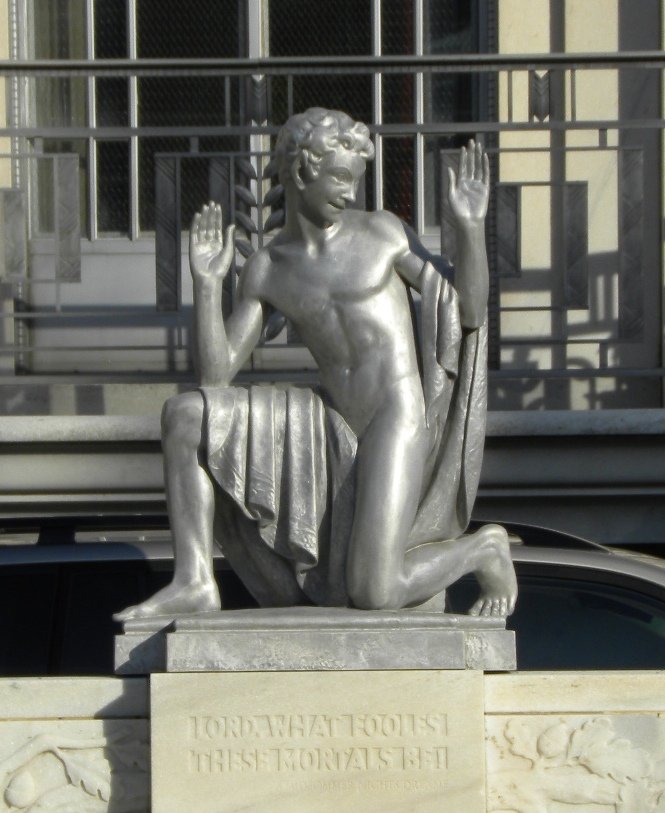
2. It is an interesting sidelight that with all that's going on, the greatest turmoil and tragedy in at least 3 years, the market dropped a quick 1/2% before the ridiculously unimportant NABH housing market index for fear that ???? It would be down or something. What fools these mortals be. And what better demonstration of the ephemeral nature of the public.
Anatoly Veltman writes:
It reminds me of an old hilarious caricature, illustrating a TV anchor going: "The markets world-wide plunged over 90% of their value on astronomers' confirmation that history's largest asteroid is on inevitable collision course with Earth. They have rebounded sharply midday on rumors that the Federal Reserve may lower the Discount Rate".
Sam Marx writes:
Thank goodness for the ephemeral nature of the public.
Mar
11
The Wisdom of Martin Pring, from Anatoly Veltman
March 11, 2011 | 1 Comment
 I must bow again to wisdom of Martin Pring who said that Bonds top first, followed within the cycle by Stocks and Commodities.
And as the upside-down man led his jumbo fund out of the Treasuries between September and February, putting relentless pressure on intermediate-to-long term rates - it all eventually caught up to the markets that were supposed to rise forever…
And we've now seen first Wheat, then Palladium and Copper, followed by Beans and Corn, and Crude and Gasoline, and finally Cotton, and eventually Gold and Silver, and Stocks all succumb to the cycle.
Mar
9
Getting Gold Right, from Anatoly Veltman
March 9, 2011 | 6 Comments
 Getting Gold right is, in fact, harder than getting other (more widely-held markets) right. Over the short-term, Gold is always prone to un-calculable official verbal suasion, geo-political surprise or a gargantuan fund allocation/divestiture. One example is this morning's yet another newswirereport:
I'm a trader at heart. Trying to pinpoint near-term reversals is an exciting daily exercise for me. There is, however, a global crowd of Gold Bugs, and it's growing larger each day now, in 2011. Government actions around the world, U.S. included, generate more and more disappointment and rebellion. This rebellion slowly but surely translates into action on shareholders' behalf against each government's respective "stock certificate" - their currency. Not many global currency equivalents exist - thus Gold, and even "poor man's gold" Silver get a huge near-term shot in the arm. Precious metals bull run, in it's second decade now, appears invincible, and not subject to any upside cap - as the price scale is denominated in paper currency, which Gold Bugs assume trending to zero! Thus, more and more investors enter the space "for the long haul"; they condition themselves to be un-fazed by any near-term technical fluctuations. What gets missed in that type of investing is that, in speculative financial markets, long-term is the sequence of short-terms! Therefore, in my opinion, every long-term un-capped Bullish outlook errs in one assumption: that everything else will remain unchanged. Given that assumption, one can quite logically project that no paper price: $1500, $2000, $5000, $100000 is liable to cap Gold. Just like $147 Crude of 2008 was "surely" going to $250 according to many oil industry pundits - who assumed everything else static. But a single U.S. government action of moral suasion vis-a-visVitol
see this article
caused trend reversal to down; then equity market contraction domino effect perpetuated new downtrend all the way to "unfathomable" lows in the $33 handle within the same year!
This example only serves to illustrate that even with Gold (let alone Silver) - there is still a possibility that any technical correction may prove more bigger for Gold Bugs than their ability to stay solvent. Thus, timing still has its place - even within this newly found religion.
So here is my current assessment of this arcane space: because of a protracted run-up without a significant correction, Longs are more dangerous at this point than Shorts. Speculators should be timing their Short entry, based on their chart feel, experience with "calendar" technical set-ups, inter-market indicators (i.e. clues from other leading markets), anticipation of news headlines and of likely reaction to news.
I venture and anticipate the following: despite Monday's classical intra-day reversal down from new highs - Bulls have not converted. They think: so what that Gold, Silver, Euro, Copper, Crude, Gasoline and Cotton all dropped from new highs - they didn't drop much, and are now appearing to retrace their losses. My opinion: the reason they didn't drop much by Tuesday - is because Monday's "Short play on gap-up to new highs" was soooo obvious - that too many short-term traders ventured in! It doesn't mean the idea of Shorting lofty levels to make a quick buck was wrong - it just wasn't destined to be the big trend-reversal trade. So there is good chance that all those Bull trends persist through Wednesday and even Thursday. Then Friday should prove a different story. And when the second downside reversal takes hold - do not bet that it will be as short-lived.
Most Gold and Silver traders will key off the Crude, Stocks, Bonds and Currencies for clues. I would certainly add Copper and Cotton to this smorgasbord. Not because of any fundamental connection - but rather because those two commodities have gained the most in the last year. Should they turn down, many will say it is because of the anticipated industrial demand slowdown. I say: it will be more because of major funds' decision to abort inflationary plays.
And when asked about the 2011 investment opportunity - I say Natural Gas. As an investor going in now for the long haul - at least you're assured that you're not buying into any current upside bubble in $3 handle vs. historic highs of over $15.
Mar
8
For Those Who Missed It, from Craig Mee
March 8, 2011 | 1 Comment
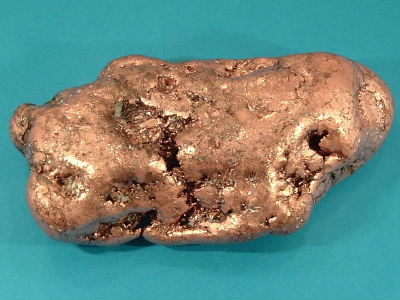 Copper finally succumbed last night, and whether it leads the equity market, or equities lead it, they tend to mimic each other pretty well over the March/April reversal period for the next several months. If they hold this relationship, copper will now have a bit to make up to give this duo strength.
Anatoly Veltman writes:
1. it happened quite abruptly in North American session.
2. mass media explanation: potential premium fuel costs dim prospects for industrial demand.
3. over the years, I've often seen other metals follow next day - although there is no fundamental link. It always was: like players were too busy knocking one market down today; and they switch to the next market next day. Which will be interesting to note tomorrow, as one important nouveau element (cross-market algorithms) should have kicked in already today (?).
Larry Williams adds:
Dominoes is the next game?
Mar
1
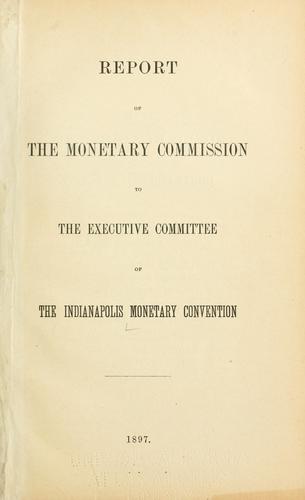 With all the attention the Federal Reserve has gotten lately, Rothbard's "Origins of the Federal Reserve" has been published in pdf form. Very interesting read.
Stefan Jovanovich writes:
Veronica Wedgwood said somewhere (sorry– I can't find the reference) that the test of a historian is whether he or she lets the facts change opinions. Wedgwood herself passed that test in her own work. That is why her history of the Thirty Years War is still the definitive work– 75 years after it was published.Wedgwood also said that a book was only worth reading if you could take its facts and find that they were true.
I wish I could share Jeff's enthusiasm for Rothbard; but, when I took one of the first paragraphs in Rothbard's book and put it to the Wedgwood test, it failed badly.
"The alliance of big business and big government with the Republican Party drove through an income tax, heavy excise taxes on such sinful products as tobacco and alcohol, high protective tariffs, and huge land grants and other subsidies to transcontinental railroads. The overbuilding of railroads led directly to Morgan's failed attempts at railroad pools, and finally to the creation, promoted by Morgan and Morgan-controlled railroads, of the Interstate Commerce Commission in 1887."
The Revenue Act of 1861 was extended in 1862 to apply the excise to gunpowder, playing cards, feathers, iron, leather, piano, billiard tables, yachts, drugs, patent medicines and whiskey. At the end of the war, the taxes were repealed on everything; only the traditional excise - on liquor and tobacco - remained. The same Revenue Act of 1861 enacted the income tax. It was a flat tax - 3% on all income above $800 (what would be $20-25K now) - and 5% on the income of all Americans living abroad. The 1862 amendments changed the income tax to a progressive tax system; they also included an explicit date for its repeal - 1866.
Rothbard is correct in noting that the Morrill Act introduced "high" protective tariffs; but even that statement is out of context. The overall tax rate under the Morrill Tariff was 26%; for dutiable items the average rate was 36%. That was higher than the Walker Tariff rates (17% overall, 21% dutiable). The rates in the 1820s had been much, much higher (roughly 50%).
At heart Rothbard is making the standard Mises.org/diLorenzo/never-mind-the-facts doctrinaire Libertarian argument that the sons of the South were only seeking liberty and small government (never mind the first attempt at the legislative reach of Obamacare - the Fugitive Slave Law). But, try as they might, those who try to make the Morrill Tariff and not slavery the central cause of the Civil War/War Between the States run up against two very inconvenient facts: (1) President Buchanan, a Democrat, signed the Act into law and (2) Morrill's bill would never have passed the Senate, let alone gotten through Conference if the Secessionist Democrats had not already left the Senate.
I will spare everyone any further lectures for now, but I promise to return to those thrilling days of yesteryear and explain why Rothbard's history of the Interstate Commerce Commission and the Indianapolis Monetary Convention is just as specious.
Later:
I promised to return to Rothbard's history of the Indianapolis Monetary Convention.
First factoid: "the Rockefeller forces, dominant in their home state of Ohio and nationally in the Republican Party, had decided to quietly ditch prohibition as a political embarrassment and as a grave deterrent to obtaining votes from the increasingly powerful bloc of German-American voters".
Since all political parties are coalitions, there is a hint of truth here; but only that. The Republicans, in general, favored the "dries" - Methodists, Northern Baptists, Southern Baptists, Presbyterians, Disciples of Christ, Congregationalists, Quakers and Scandinavian Lutherans. The only concession made on the issue of prohibition was that McKinley decided to serve wine in the White House, symbolically reversing Hayes' no-alcohol policy. That was hardly "ditching" prohibition; neither political party dared publicly come out for "rum" or even "beer".
Worst factoid: "As soon as McKinley was safely elected, the Morgan-Rockefeller forces began to organize a "reform" movement to cure the "inelasticity" of money in the existing gold standard and to move slowly toward the establishment of a central bank."
Rothbard reads into the Report an elaborate Rockefeller-Morgan conspiracy to defeat popular opinion when the issue was anything but hidden from the public. The country was openly divided on the question of bimetallism with the Democrats supporting it as a means of issuing "cheap" dollars and the Republicans opposing. Even the Prohibitionists were split among themselves. The "gold" Prohibitionists - i.e. those who sided with the Republicans on the monetary question– won control of the Prohibition party itself .
For James Lawrence Laughlin and others, the purpose of the report to the Indianapolis Monetary Convention was to escape, once and for all, the snare of bi-metallism. The Report is unambiguous about that purpose. Here is the preamble:
We submit, for the reasons hereinafter stated, a plan of currency reform, in the hope that it will, if enacted into law, accomplish, so far as possible, these results :
1. To remove, at once and forever, all doubt as to what the standard of value in the United States is, and is to be.
2. To establish the credit of the United States at the highest point among the nations of the world.
3. To eliminate from our currency system those features which reason and experience show to be elements of weakness and danger.
4. To provide a paper currency convertible into gold and equal to it in value at all times and places, in which, with a volume adequate to the general and usual needs of business, there shall be combined a quality of growth and elasticity, through which it will adjust itself automatically and promptly to all variations of demand, whether sudden or gradual ; and which shall distribute itself throughout the country as the wants of different sections may require.
5. To so utilize the existing silver dollars as to maintain their parity with gold without imposing undue burdens on the Treasury.
6. To avoid any injurious contraction of the currency.
7. To avoid the issue of interest-bearing bonds, except in case of unlooked-for emergency; but to confer the power to issue bonds when necessary for the preservation of the credit of the government.
One more thing:
John Taylor finds himself once again defending his Rule.
The questions that James Laughlin would have wanted to ask Professor Taylor and Chairman Bernanke are these:
(1) how can you have "reserves" in a banking system with a sovereign monopoly on legal tender and no specie exchange requirement?
(2) if a rule is to be the only constraint on unlimited "supply" of money in a world where money and sovereign credit are synonymous, how can the rule avoid circularity when sovereign spending is one of the major components of "growth"?
Rocky Humbert writes:
And for reasons related to Professor Taylor, one finds oneself again poking fun at Anatoly's continuous calls for a top in gold.
On February 9th (18:45), Anatoly wrote:
"We used to be mesmerized by round numbers. But ever since Crude topped at that $147.27 print, I've gone on red alert well on approach of 150-ish. Lo'n'behold, next came an all-time high in 30-y bond futures at 143. And Gold print of $1431, in my opinion, will stand for years…Nothing beats an audited track record (and an internet paper trail) to debunk nonsense and test veracity…for both traders and central bankers."
Anatoly wrote: "…the gold print of 1431 … will stand for years…"
It didn't even stand for 8 weeks!!!!
Even before this latest crude spike, real interest rates were re-testing their record negative yields. Now, the feedback effects of negative real rates are percolating even faster ….
P.S. The gold price continues to rise at a 27% annual rate. While gold options have a sub-15% volatiltiy. Get the "drift" ???? With a nod to the options quants who wince at this bastardization of black-scholes, this risk-averse speculator gets the drift.
Russ Sears writes:
 When hundreds if not thousand of people are dying in the streets from their own government firing at them, millions more hungry because of rising food cost creating the helplessness needed for uprising, and the emerging markets have billions people with new found wealth to protect and a long tradition of hoarding gold for the hard times… the demand is not all about trader/speculators.
I have told the story to the list more than once, how my grandmother's family came to the US with only the gold they had around their house in lamp-stands, candle sticks and silverware made of gold, when their factory, land and home were taken by the WWI revolutionaries, leaving them to flee for their lives. She was seven at the time but she told the tale every time "gold" or "silver" was mentioned in her presence. Tell her gold is useless. The demand does not have to be a bubble soon to bust. Without the shock and awe of the US or Britain and especially not the Israeli military intervening, I would say we are in for a longer haul of uncertainty to the unrest than has been the case to most recent Middle East wars.
Rocky Humbert writes:
Howard Marks (Oaktree Investments) wrote a nice essay on this subject. Because he's a respected stock & bond guy, his articulate thoughts are worth a read.
One of the more pithy things he writes:
My view is simple and starts with the observation that gold is a lot like religion. No one can prove that God exists, or that God doesn't exist. The believer can't convince the atheist, and the atheist can't convince the believer. It's incredibly simple: either you believe in God or you don't. Well, that's exactly the way I think it is with gold. Either you're a believer or you're not.
I'll add that a speculator has a slightly different spin on this. A successful speculator needs to assess the conversion rate from gold atheist to gold believer to gold atheist.
One remembers that when Moses returned from Mt. Sinai, he saw the Israelites worshipping the Golden Calf (Exodus 32:4). This posed a "problem" because it was both wrong for the Israelites to be engaged in idol worship, and it was wrong for them to ascribe a physical representation of God. (Both acts are forbidden.) Nonetheless, 5000+ years ago, Anatoly would have bonded with Moses — because both saw the Golden Calf as an "outrage." Yet the successful speculator would have been long gold — while the calf was under construction — but it's unclear whether the speculator would have subsequently shorted gold due to the nuances of the Biblical story.
Gold prices will rise and fall — based on supply and demand. However, the belief that stocks are (in the long run) are the best performing asset class has elements of religion too — as this too requires "faith." Just faith in different things.
Anatoly Veltman defends himself:
My trading biases come from chart structure - but I would never bet money on something I don't understand. To that end, before putting up $10,000 deposit to Comex - I'd make sure that charts mostly reflect the supply and demand, both near- and long- term.
My family also fled Europe, albeit not in WWI - but in the course of more civilized era of a mere Soviet excursion into Afghanistan and subsequent US-led Olympic boycott. We were able to make necessary transatlantic connections over the phone to arrange currency swap of Russian Rubles here for US Dollars there (at four times premium to official non-competitive exchange rate). Thus, we didn't have to risk trafficking gold through customs. I guess, my bias in that sense is slightly different. I'm not a believer in impending world currency backwardation, and I see even less sense in Silver playing any role in this. So as an investor, I was always very interested and Long Silver in $4-$5 historical areas - when it would languish for a long time devoid of any speculative interest. I remember a stretch of over 5 straight years (and possibly even 8, depending on stats reliability), in which silver usage outstripped silver mining - yet world price hasn't perked by a penny!
Going into Labor Day 2010, I commented that Silver is obviously breaking out of an unprecedented protracted base in $17 handle - and that Shorts will be 100% squeezed. Rocky, who has apparently kept up an e-mail folder of "Anatoly's predictions", should be able to dig it out. Now, since price doubling has been fulfilled - I try to use events like Lybia to invest in Shorts.
Feb
17
Here Is An Off-Beat Indicator, from Anatoly Veltman
February 17, 2011 | 4 Comments
 Say you're a little perplexed by a slow creep-up in commodities last few sessions. On the one hand, most commodities have been now climbing day-in day-out for months - so naturally a contrarian, or value seeker would look to be a seller. On the other hand, you are not really getting a tremendous spike, a blow-off into which to sell. So here comes Cotton to your rescue!
You see, Cotton just nearly tripled in the two-quarter period. Obviously, it's a top-of-the-needle daily war of attrition right now between the Longs and the Shorts in that market. Margin hikes by the exchange, price-limit moves adjustments and all that jazz… So watch closely; and the moment that Cotton finally reverses - there will be your indicator that the drift is changing in commodities. Whether it will be orchestrated (in Cotton) by one or another power-party - the jig will be up that, temporarily, Bull market deflation is favored by someone with influence
Ken Drees writes:
A friend just called me this morning saying he heard on Glenn Beck radio about cotton and clothing price hikes– I would be in the cotton correction camp, if I traded this item–usually when a not often talked market is in the news it's time to consider exit door locations.
Anatoly Veltman reponds:
Because of likely limit lock-down in many of the sessions– the outsiders will be confused as to "real" dimension of price changes and balance-of-power day to day. My point was that someone not taking position in Cotton per se– will still get a hint of shifting wind for all of the inflated markets! Remember that today's markets are arguably the most manipulated in decades. Thus, it's doubly important to be tipped-off as to when the flexions decide to loosen the upward pressure valve.
Rocky Humbert writes:
I think Anatoly's focus on cotton as a "tell" is misplaced. I think the entire commodity complex is keying off of Netflix stock (NFLX). As soon as the farmers stop watching videos and get back on their tractors, Netflix stock will crater, and so will the grains…
(Calculating the R-squared between Netflix and one's favorite commodity is left as an exercise for the reader.)
Craig Mee adds:
Talking to a mate in Singapore today in a trip to the sunny island, and he mentioned a farmer in China, who has stock piled cotton: "he has 6 tonnes of the stuff, taking up every inch of his shack, stock piling with price where it is, no interest in selling." I suppose why would you, with price ferociously in the one direction. Though two questions remain, is this a trait of the Chinese race in general… accumlate accumlate… and for such a specie position…is it another reverse market indicator?
Feb
6
Oh Daytrading… from Anatoly Veltman
February 6, 2011 | 7 Comments
 Oh daytrading…
In individual stocks: forget it ( "they" sniff all orders' volume info; plus exchanges and brokers favor "them")
In futures, there are still some pockets "they" neglect (as "they" avoid visibility in narrow markets– but do you want to get involved in narrow markets?)
Treasury trading has always been government-sponsored mafia's domain; and never so blatant as in current years.
In FX, you'll have to find a backward counter-party, that may not be constantly realizing own advantage– but one of those days the party will go the old-fashion way by simply running off with your deposit.
Jan
24
Market Choppy? Tepper, by Gary Rogan
January 24, 2011 | 1 Comment
David "Buy Everything" Tepper Will Make An Encore Appearance on CNBC Friday
Ken Drees comments:
There must be a huge request list for his bullish tunes—second time around play–eh?
Craig Mee comments:
Like a trend, while in the top 10 and runs on the board "I'm all ears" but be quick adjust to those melody changes.
Anatoly Veltman writes:
Tepper comes across a totally brilliant man. His September Bullish call at near 1000.00 SP came out as simplistic no-brainer, and it did mark acceleration ofthe upside trend. Tepper's current call is widely perceived to predict 1500.00 SP within a year, although he did remark that current near-1300.00 market contains that much more technical risk - in pursuit of the fundamentally-justified gain.
It's hard to understand why perception of currently-embedded risk appears to completely escape just about anyone's attention. I contend that current market condition, technically, will not allow much enjoyment over 1300, period. Let alone the distant 1500 prospect. We have the market that nobody appears to want to Short anymore; everyone speaking about the market is totally spent out of any will for Bearishness whatsoever .
Ken Drees responds:
State of the union and 12000dow / 1300 s&p nice rounds at a nice time.
Dec
17
Weary UNG Bulls: Take Note, from Rocky Humbert
December 17, 2010 | 2 Comments
 These pages have been filled about prognostications about natural gas– and how the UNG etf has been a fast trip to the poor house (courtesy of the brutal roll/contango).
In the spirit of Ecclesiastes 3:1, I humbly report that the contango in natural gas has finally collapsed. The spot price– all through next year's hurricane season is strikingly flat.
This means that venturesome bulls can own the UNG for several months with virtually no negative carry. And only minor carry thereafter.
This does not mean that natural gas prices will necessarily rise. But it does mean that holders of UNG will no longer be walking up the down-escalator.
Note to Bob Crachit: tell Mr. Scrooge to replace his coal fireplace with a cleaner-burning, more-economic natural gas-fired stove.
Anatoly Veltman writes:
What a downhill ride it has been since $13.69 futures peak of July 2008! This week's slide is likely to suck newbies into a Short position. Exactly the category of johnny-come-lately's who got involved in NatGas futures for the first time in their life back then, cheered on by Cramer's chant of the inevitable $16 target. If you hear what DOWN-SIDE is being targeted now, please let me know
Dec
6
A More Handsome Face for the Fed, from Anatoly Veltman
December 6, 2010 | Leave a Comment
 The current Fed's chairman, in my view, did much better than his predecessor in last night's "60 minutes" interview. This interview, though obviously well orchestrated, did project candor, clearness, lucidness. I haven't noticed a single slip-up, even when he had to touch on the most unpleasant and controversial subjects. Green-speak was always mired in smoke and mirrors– and always left listener completely puzzled and disassociated. Bernanke projects stark contrast– albeit Fed's task, as most policy making, may be doomed by definition…
Vince Fulco writes:
I try to look at this from other angles, i.e. why would a "nice country boy from S.C." who understands the plight of his fellow citizens gun the hell out of asset markets with all the concomitant deleterious effects potentially setting us up for another mega boom/bust scenario? Could it be that the rot within the mortgage agencies and institutions (commercial banks both here and abroad) is so terribly bad regardless of what the accounting books say that he has no other choice? QE2 just seems way too blunt an instrument to be affecting employment decisions a few years out. I noticed the bad bank list hit a new high (or near high) over the weekend while the capital markets are whistling dixie. Two to three years into the last bank debacle, we were starting to see the light of recovery through RTC efforts but then again we weren't kicking anything down the road and addressing problems front and center.
Grasping at straws…
Gary Rogan writes:
In my view, the number one purpose of government is to prevent younger/stronger warriors or anyone else from taking anything from anyone else by force or in fact using force for any purpose on unwilling participants. The second purpose of government is to arbitrate and enforce contracts. There are no other real purposes, but I consider it reasonable for people, in a democratic fashion to decide that the government needs to provide fire protection, etc., dispose of public property, and build roads, etc. It's also reasonable for people to decide to delegate these tasks to private enterprise. Things like secretly printing money to buy mortgage-backed securities from foreign banks and secretly printing money to save motorcycle companies are so outside of what I consider the purpose of government to be that saying it's either that or hide your women is a somewhat artificial polemic on the government vs. free markets.
Lying about not printing money on national TV is a consequence of a government-like entity trying to justify its involvement in a matter where it has no natural reason to be involved.
Rocky Humbert rants:
There is nothing remotely interesting, stimulating, humorous or provocative about insulting the Chairman of the Federal Reserve.
However, I remain keenly interested in hearing one's macro economic analysis of QE, and how it affects asset prices.
My thoughts about this dialogue can be found here.
Nov
29
What Does This Portend? from Victor Niederhoffer
November 29, 2010 | 2 Comments
Disregarding the penumbra of small moves, 5 big 10 reversals in a row… what does it portend?
Anatoly Veltman writes:
In the good old times, when charting still worked– increased choppiness of this magnitude tipped pending "previous trend" reversal. Currently, "previous trend" would have to be the up-move from 1000 to 122.
George Parkanyi writes:
I would agree with Anatoly in this situation. Quiet day today, yet treasuries and VIX up a lot on a relatively mild 8 point S&P drop. Major skittishness here I think precursing a downdraft. (Asian markets looking scared in particular with China's anti-inflation sabre-rattling.) But all the bailouts and easings won't just vanish either, so I'm thinking we're at/near the top of some kind of range, to be pushed around for a while by the news-du-jour. Don't have any great conviction for where we go next, but if you put a gun to my head, short-term I would sell equities and commodities and buy treasuries or just go to cash. (And two weeks from now I'll be writing about why that was a bad idea.)
Nov
23
Metal Bulls In Control, from T.K Marks
November 23, 2010 | Leave a Comment
 Following four up-sessions, metals bulls appear in control and all forgot the worries of Nov. 9th exhaustion top experience. Two factors are not widely heeded:
1. That Silver is trading tonight at the highest level that Asia has seen in thirty years.
2. That tomorrow is Tuesday. In front of the U.S. market holidays, no less.
Well, I am prepping for an active Tuesday!
Anatoly Veltman writes:
Never have I yearned for my pit trading past as I do having watched these events unfold.
On the floor the outsize returns were always on the downside, as the moves were mercilessly violent and geography no small consideration. As such, I'd lay on my pillow these nights with thoughts of the avalanche selloffs like visions of sugar plums dancing in my head, to borrow some seasonal verse.
Nov
9
Gold/Silver Bulls, from Anatoly Veltman
November 9, 2010 | 3 Comments

 Gold/silver bulls are getting sloppy again, now at $1410/ $27.73. Silver has been the catalyst for this entire two-month leg up, crowning a whopping $10 move during this time frame. At the start of this Tuesday's session, however, the Bulls ought to be cautious. Just like with that $3.50 Dec NatGas print early in Oct.25 session - the daily charts are going parabolic!
I would be heeding the following alarming factors, as Gold and Silver futures sit at record highs tonight:
1. USD has been firming in last couple of sessions - but Gold and Silver still rallied to records. Bulls will argue that this a positive divergence, pointing to "independent strength". I suspect that this, in fact, may be pointing to forced short-covering; and thus, less of the forced short-covering remains to be executed!
2. Platinum and Copper did not follow Gold, Silver and Palladium's move to new highs Friday and Monday. I would note muted response in Crude and grains as well. The only other commodities that continued parabolic were the leading stars of the period: Cotton and Sugar. Again, another sign of forced short-covering well in progress.
3. Significant news of QE2 and elections are done with, and precious metals have just tacked on more gains.
4. Chartists know that, following a lengthy run, a commodity that continues parabolic at week's start risks a powerful intra-week reversal. Those types of "outside reversals" on the Weekly are much more potent, in my observation, than the ones on Daily. When Gold futures chart-painted that "shocking" intra-day reversal from $1366 to $1326 on October 7, that made me temporary Bullish. I shall not be Bullish if something like "outside reversal" will be painted on Weekly chart.
5. Another chart complication will be caused by semi-holiday week, with Veterans Day shutting the Treasury markets on Nov.11, and taking bank and Fed personnel out of the office.
Rocky Humbert writes:
I would be heeding the following factors:
1) The record high in silver was approximately $41.5/oz on January 21, 1980. That's approximately 49% higher than the current price. Anatoly's statement (regarding silver) is wrong.
2) That gold just made a record high is not predictive but it does prove a simple fact. EVERY gold long is sitting on a profit. And every gold short is sitting on a loss. That's not a recipe for bullish capitulation.
Anatoly is continuing to demonstrate a FleckenAbelGrantian personality disorder. Eventually, he'll be right. But eventually is a long time.
In contrast, I just stay long gold and roll up my puts every $50 or so. I wish I could say that I'm smart, but I'm not. The objective of speculation is making and preserving profits. Not sounding erudite. See this post.
Anatoly Veltman responds:
Rocky's comment is educational. Rocky advocates buy-and-hold (on way up)/sell-and-hold (on-way-down) vs. market timing. Excellent subject for separate thread, and I'm sure such thread will attract wide participation.
To return to this week's Gold/Silver situation, I'm attempting to be ready for this particular charting set-up: outside reversal on Weekly chart. Due to Nov.11 semi-holiday, such weekly bar may be painted this week OR it may take a combination of this week's and next week's bars. Monitoring many liquid markets over the past 24 years, I found such pattern to often mark longer-term reversals- and thus worthy of being prepared.
Why anticipate (rather than follow), and how?
1. A Gold/Silver bull wants to hold Long exposure. Following rapid price jump, his dilemma may be similar to bear's: how to stay with his biased position. One definition of up-trend - higher highs AND higher lows - will be threatened by trading below $1315 or below $1160, depending on trader's intensity. Both marks are too far below, when trading $1410-1425. Thus bull's dilemma is very real: historical cost should never be used in analysis of a liquid trading instrument– you're basically marked-to-market every single $1 move, if not every 10 cent tick. Is this a good plan to hold Long at $1410-1425, if a drop below $1315 will cause you to sell out and possibly reverse to Short? Or even lower, below $1160?
2. One shouldn't ALWAYS try to anticipate every outside price path. Hints are essential to go on ALERT. Fri and Mon Gold/Silver/Palladium jump against stronger USD gave a hint of "forced" short-covering in progress in those particular metals, while other remained calm. Stubborn Cotton and Sugar rocket, while other commodities do little– is another sign of "forced" short-covering. The more short-covering is done, the less remains to be done.
3. I confess that lately my analysis lacks previous complexity, as I just observe/comment and have no vested interest. To duly gage possible trade exhaustion, one-dimensional PRICE charting is not enough. One absolutely must employ second dimension of daily OPEN INTEREST change, and ideally third dimension of changes in Open Interest MAKE-UP (i.e. Commitment of Traders). My current guesses are much less scientific than I'd like– they are just a heads-up.
Nov
5
Chart of JPY looks set-up for BOJ intervention, from Anatoly Veltman
November 5, 2010 | Leave a Comment
There would be implication for many other contracts as well (for example bonds and metals), if such were to occur early next week.
Rocky Humbert writes:
Without expressing any opinion on this, I'd point out that there is a Japanese stock ETF which hedges out the Yen/$ exposure. So if you believe that the BOJ will take steps that pushes up the Nikkei AND the Yen will decline against the Dollar too, then buying some DXJ is a good vehicle for expressing this view.
(There are lots of other ways to express this dual view, but this is the simplest way for ETF traders.)
Jack Tierney writes:
YCS [pro shares ultra short yen] would be a more aggressive way to play the imagined scenario….
Gary Rogan writes:
This doesn't have much to do with hedging the exposure or this particular ETF, but I have not seen a discussion of the following anywhere so I'll pose this as a question. If you look at the composition of Nikkei-225 you see that a large percentage of it is in these groups:
Foods, Textiles and Apparel, Pulp & Paper, Chemicals, Oil & Coal Products, Rubber Products, Glass & Ceramics, Steel Products, Nonferrous metals, Machinery, Electric Machinery, Shipbuilding, Automotive, Precision Instruments, and Other Manufacturing.
It seems like my favorite Central Banker has successfully unleashed a worldwide raw materials inflation cycle, measured in whatever currency you chose. Given that Japan imports so much of its raw materials and so do many of the countries where it now chooses to do some of its manufacturing, how can what's about to happen, even if the final demand somehow rises, be good for Japan?
Oct
28
Gold Bubbles RBC and GATA, from Craig Mee
October 28, 2010 | Leave a Comment
 I just saw an item on the news that RBC I believe, had created a bubble index from data from many previous bubbles. I have not been able to locate it though they were looking for gold to hit over USD 3000. If anyone on the list has more info that would be interesting to know a bit more about the makeup of it. Though I did find this story from 2002 , which if it was indeed correct, would outline a reason for a lot of the pent up energy in the market together with demand and supply shifts in the years since, leading to gold where it is today.
The RBC report says the price of gold is going to explode and cites "Increasing Evidence of Unsustainable Gold Price Manipulation" as one of its reasons. The RBC report points to 11 "factors" of evidence regarding the gold price manipulation:
1) Aggressive gold lending, which from an economic perspective is indefensible, has filled the supply/demand gap.
2) New York Fed gold has been mobilized when the gold price is rising.
3) Timing of Exchange Stabilization Fund gains/losses corresponds to gold price movements.
4) Audited reports of U.S. gold reserves show unexplained variances.
5) Minutes of Fed meetings confirm officially denied gold swaps.
6) Rules on gold swaps have been revised and then denied. However, individual central banks have repudiated the denial.
7) U.S. gold reserves have recently been re-designated twice, initially to "custodial gold" and latterly to "deep storage gold."
8) Statistical analysis of unusual gold price movements since 1994 indicate high probability of price suppression. The invalidation since 1995 of Gibson's Paradox — that gold prices rise when real interest rates fall — suggests that the real manipulation began then.
9) New York gold price movements versus London prices trading defy odds.
10) Timing of huge increases in bullion bank gold derivatives is consistent with gold price declines.
11) A rapid decline in U.S. Treasury holdings of gold-backed SDR certificates is not explained.
The RBC report goes on to say: "One or two of these factors could be viewed as random, but the full body of evidence is overwhelming."
Anatoly Veltman comments:
It is important to keep exchange of info and ideas un-biased.
1. The bottom story of "suppression" is from GATAwebsite– this should be disclosed in BOLD LETTERS.
2. When RBCcame out with February 2002 report, gold was completing a four-year basing formation on price charts, trading in $200-handle most of that period. I also believed that market was dislocated to the down-side. I was 100% Long and was admonishing anyone willing to hold a Short position.3. Re-printing "same story text" following un-interrupted price move from that level to last week's $1388 record– again, one ought to attach tons of qualifiers. The accusations against US/other authorities remained unproven a decade later. Most important: how relevant is it in context of current price, fully 550% off that former bottom?
Oct
26
Movie Recommendation, from Anatoly Veltman
October 26, 2010 | Leave a Comment
The Bear is a fantastic film by Jean-Jacques Annaud. Market applications abound!
Oct
24
Settle, from Victor Niederhoffer
October 24, 2010 | Leave a Comment
 With respect to Anatoly's post about a biased CFTC judge, one should note that almost all brokerage contracts that I have signed including my cash bond agreements call for arbitration at the NYSE. These judges, all of whose average age is 95, are selected by the NYSE based on how often they rule in favor of the Broker, I believe. I had a terrible experience in my arbitration case against them where I served as my own council and then I realized the poignancy of the defendant's warning to me when he urged me to settle: "remember, the NYSE itself is going to arbitrate this." A typical moment at the trial came when I noticed the defendant holding a rolled up wad of paper in my adversaries pocket when I questioned him. I asked the judges to kindly let me and the court see those papers as I suspected it had all the answers that the defendant was supposed to give to my questions as he testified. They refused saying, "we all know that defendants are prepped before testifying.
One of the greatest mistakes I made in business among hundreds of others was not to settle cases before I sued the defendant in my early days. Time and time again I turned down offers of 70% and even once 95% of my claim, only to spend more on legal fees and in some cases ending up receiving nothing at all as the final decision. Regrettably when I started in business I felt that it was mandatory for all parties to be honest and that it was wrongful rather than normal to be chiseled out of a fee or some such. My training in athletics, where I learned after 4 years never to appeal a referees decision, and from Artie where he taught me always to take the judge out for Chinese food, should have been paramount.
In my favor, I must say that I won many a squash match by not dissipating my energy arguing with the referee while my opponent fumed. I still have not learned that lesson as well as I should have in the law courts of life.
Anatoly Veltman shared:
CFTC judge claims colleague issued biased rulings
DANIEL P. COLLINS
Published 10/14/2010
Futures Magazine
Commodity Futures Trading Commission (CFTC) Administrative Law Judge George H. Painter made serious allegations regarding fellow CFTC judge Bruce Levine in announcing his retirement.
In a notice sent to complainants and their attorneys, Judge Painter claims that Levine told him that he had promised former CFTC Chair Wendy Gramm "that he would never rule in a complainants favor". Painter's notice goes on to say, "A review of his rulings will confirm that he has fulfilled his vow."
In the notice Painter recommends the CFTC request the services of an administrative law judge to be detailed to the Commission from another regulatory agency to handle the remain cases on his docket. Painter writes, "If I simply announced my intention to retire, the seven reparation cases on my docket would be reassigned to the only other administrative law judge at the Commission, Judge Levine. This I could not do in good conscience."
The judge also attached a December 2000 Wall Street Journal story by Michael Schroeder titled, "If you got a beef with a futures broker, This Judge Isn't for You—In Eight Years at the CFTC, Levine Has Never Ruled In Favor of an Investor" that details Levine's penchant for favoring brokers over investors seeking reparations.
An attorney who handles futures litigation says that the notice "will freeze [the seven cases currently in Painter's docket] for a considerable amount of time.
Oct
21
A Gravitational Attraction? from Victor Niederhoffer
October 21, 2010 | 2 Comments
 One wonders if by considering the distances and weight of one market from another one would create a gravitational attraction possibly related to square of distance. Would this be even better way to explain recent market moves than twitter? So many markets are up that they pull stocks with it. Every day the crude and the gold and the grains and the metals exert their gravitational attraction on stocks and it's hard for stocks to go down when gravity of everything else is pulling them up?
Ken Drees comments:
Attraction theory may also pull monies from undervalued sectors-like nat gas for example– keeping these sectors starving for investment.
Anatoly Veltman writes:
My take is the former recent relationship has been more a product of U.S. dollar's daily devaluation. Thus the commodity part of it was only a further derivative.
Phil McDonnell writes:
Imagine we are on an island with only two things to trade stocks and gold. Naturally we use sea shells for money. At any given time there is only so much money M. So the total price of stock and gold is proportional to that. In fact we can visualize the possible prices as a circle with radius M and the X and Y axis are the prices of gold and stock respectively. The locus of possible points they can lie on is given by:
M^2 = G^2 + s^2
where I have changed the x and y to g for gold and s for stock.
Since M^2 is a constant at any given time we can just call it c and then we have.
s^2 = c - g^2
showing the relationship. This is all very pretty theory but does it stand up empirically?
The coincident correlation base on daily percent changes between gld and spy for the last 105 days was about 1%, so not much linear going on. but when we look at the relationship between spy^2 and gld^2 we get a 42% correlation consistent with the formula above. When we rewrite the formula for m and not m^2 we get:
m = ( g^2 + s^2 ) ^ .5
which is just the distance formula from high school.
Thought question: What happens when the Fed adds Q to M during QE 2?
Sushil Kedia writes:
The House Money effect works the same way. There is more valuable collateral, there is a larger amount of mental wealth, there is a larger appetite for risk. Akin to the rabbit coming out of an empty hat, money grows in the minds of the market players, when things are moving up.
As one large down move comes in a widely betted asset it gravitationally sucks away the value of the collateral utilized for playing other assets. Like the invisible forces of gravity the various contracts naturally move by in varying proportions broadly in similar directions, mostly together.
I would be inclined to recognize the effect of the varying amount of bets inside different pits and the varying spread of those bets across hands of differing strengths. With that in place any static relationships in assets or contracts is less than likely to be existent for any periods of prediction worthy time horizons. The ever changing cycles are likely originating from this varying nature of the spread of the bets. The vector sum total of all current and past and future bets may indeed by hypothesized as zero. Yet the similar sum at the present moment is not zero. Every changing tick hurts or rewards different sets of people simultaneously.
So, without so much as trying to invoke my limited numeracy skills before the mighty minds, I lay a case, that the pursuit of discovering constant relationships in the markets is the innate desire of men to find a constant while knowing fully well that the meal for a lifetime indeed is the knowledge of ever changing cycles.
Ralph Vince comments:
I lay a case, that the pursuit of discovering constant relationships in the markets is the innate desire of men to find a constant while knowing fully well that the meal for a lifetime indeed is the knowledge of ever changing cycles.
What could be more true than that statement?
We build models of the market– some, with ever-increasing complexity.
Take the stochastic differential equation for price changes in continuous time, where the second term is the Weiner process:
S0 = u S1 dt + dX
Involved math for many of us– but, as a model for how prices change, …it too is pathetically lacking. Our models are not reality, just little peepholes on it's behavior at times.
Sushil Kedia replies:
To add, one early school beginner's physics question:
If gravity works the same way on a feather as well as on a stone, then why does the stone drop sooner to the ground?
Well, the air that provides so much of rest to the feather that it takes longer to come down.
Likewise, the "air" inside the markets that is the varying size of bets of any individual participant as well as the varying size of the total bets present in a market bring by the gravitational pulls to still carry wide and varying variances.
Oct
19
Technically, Gold Is A Short, from Anatoly Veltman
October 19, 2010 | Leave a Comment
 Most Gold followers disagree, and I will enumerate (should the former be the number one factor? Well, not always).
1. Metals have been at mercy of daily/intraday currency moves for many weeks now; thus first reason to suspect great Bull's virility.
2. Currency observations: Euro had zig-zag (as opposed to Bullish impulse) rise from 1.19 to 1.41 - while single-currency woes hit temporary lull. Swiss Franc appeared reluctant to continue into .94-handle for the first time in history, on straight-line daily voyage from 1.17 - just too much too fast for its Central Bank and its good. Japanese Yen got into its own historic 80-handle, very much to its government concern - who wowed to stop its appreciation. Australian Dollar traded to exactly par on a straight-move from 81 - and appeared to simply be along for the ride. Brazilian Real on a straight-move from 1.91 encountered daily intervention to hold it from slicing through 1.65 - and had to eventually succumb to its own Central Bank.
3. The actual reversal signal came from Canadian currency, which was stringing its fourth counter-trend daily move overnight. This will be important to remember– those wanting to hold Long USD positions, from here on, should do so vs. CAD– the only major currency not to have been in any Bull market of consequence vs. USD this year. CAD pierced parity for a split second October 14; since that day, CAD has made the US Dollar look like a real champ - and so very few observers noticed!
4. In fact, the very same tom-tom beat hit Inbox this morning: a widely followed newsletter (claiming over ten thousand paid customers) in its author's 52nd year: "Since the first week of June, the Dollar Index (which I quote every day) has slumped from 99.2 to 76.7, a lapse of over 23% in terms of international currencies, most of which have been declining. Has anyone noticed or am I living on an economic fantasy island?"
5. On Gold price charts' own technical position: it has rallied from $1,160 to $1,388 without a breather, buoyed ostensibly by Swiss Franc daily appreciation - no mystique. It's hard to think of any powerful entity, who is truly interested to help this trend– and simple cheering never made any sense to me. By this morning, intraday price movement from $1,388 record traced out (typically) one of the most Bearish patterns in charting universe: Monday's shortened impulse up to $1,376, followed by this morning's even shorter impulse up to $1,371. Yes, there is no headline change in Gold's fundamentals, but has there really been one on the entire recent run up from $1,160?
Oct
18
A Venerable Technique, from Victor Niederhoffer
October 18, 2010 | 2 Comments
 One of intelligent honest things that Livermore did was to get out of one market by selling a related market, inducing the other traders to think that there was weakness in one market which would carry over to the related market. The art of indirection and letting people use their own intelligence and inferences to come to their own conclusion. for example if he wanted to get out of cotton, he'd sell some coffee. If he wanted to get out of a common, he's sell the preferred or a related company that owned a big chunk of it, like sell Christiana which owned general motors et al. This technique one wonders how often is it used today. When it happens, is it artful indirection or chance? How to quantify and what predictions to be made? Would the robots be smart enough to do this?
Anatoly Veltman writes:
There was a moment in late 80s Energy trading, when legend has it that a great admirer of Livermore who runs a venerable hedge fund near New York was Bearish to the tune of 40,000 lots. If you think it's not much, just remember that Exchange limit for open speculative position in any contract was 6,000. Of course, his positions were in all possible inter-month spreads and across products. So once decision to cover was made, he picked up the phone and asked for the cockiest trader in the Crude pit. "Are you a man or mouse?" Trader thought it was a prank: "Come on Paul, what do you want?" "I'll give an order to sell 1,000 market, and I mean worst. But if I don't see Crude print through even– they're all yours! Do you accept?"
Tim Melvin comments:
Smart enough? Its one of the key concepts the black box guys I have spoken to use every day? I am not a programmer, nor do I play one on TV but it seems to me that a good one could set that up in short order….
Jeff Watson comments:
One technique still used today on a limited basis is to buy or sell a large order in a single batch and see how the market digests it. A trader can glean a lot of information about direction by seeing if his bid or offer is gobbled up or many of the same order comes out of the woodwork. This method worked great when the pits were active, and still works somewhat in the computer age.
Oct
13
Post-Mortem Park Avenue Bank, from Anatoly Veltman
October 13, 2010 | 1 Comment
 The saga of Park Avenue Bank's Charles Antonucci is over. The bank president, who on March 15 was arrested on charges of engaging in a broad range of illegal conduct that contributed, in part, to the bank's demise, but most importantly to stealing $11 million from TARP. Well, tonight the FBI has just announced that Antonucci has formally admitted to and pled guilty to securities fraud relating to his attempt to fraudulently obtain more than $11 million worth of taxpayer rescue funds from the Troubled Asset Relief Program ("TARP"), bank bribery, embezzlement of bank funds, and participating in a $37.5 million scheme that left an Oklahoma insurance company in receivership.
Then again, this is what every other CEO in America is guilty of every single day. Which means that only thing Antonucci really pled guilty to was being a stupid enough to keep Park Avenue Bank Too Small To Succeed. As we all know the TBTF curtain is the only alibi many other criminals in the industry resort to when the congressional theater convenes.
Moral of the story: unless you can threaten the world with collapse, you will go to jail.
Oct
7
A Proverb, from Victor Niederhoffer
October 7, 2010 | Leave a Comment
 The realization is is often faster than the anticipation. Or as they say in chess "the threat is worse than the execution".
William Weaver adds:
And many times less satisfying.
Anatoly Veltman writes:
Yes, I always remembered that one, since my coach mentioned it when I was 6; but I couldn't quite implement till I turned 12– and only then won first title.
David Hillman writes:
Like Fedex next day air. More often than not, when we ship coast to coast and the client says 'email the tracking number', I say 'you'll have the package before you have the tracking number'. Given system limitations, human intervention, variance in 'normal business hours' and time zones, Fedex makes it possible to physically move a package 3000 miles faster than we can get tracking data to the client electronically. One of the more satisfying examples of 'rapid realization'. Any market parallels?
Oct
7
What’s With the Sixes, from Anatoly Veltman
October 7, 2010 | 1 Comment
Ever since the big S&P bear market low of 666 [on 2009/03/06] (hit precisely at the end of long voyage from 1586 top), traders seem to have found a religion. Gold bumped into 1266, and couldn't overcome it all summer long! And finally 1366 this morning. Once a staunch atheist, I'm a believer myself now– I think.
Kim Zussman comments:
This is an example of the hypo-arcsine law: X6666 is always 2/3rds of something, which is itself is an artifact of the hubristic categorization of the universe in base 10.For example in tennis, every shot has to cross the 2/3 point between players before the ball can be returned.
Oct
7
Currency Level Discovery on Columbus Day, from Anatoly Veltman
October 7, 2010 | 2 Comments
 I recall February 14th of 1994, the day dubbed "Valentine Day massacre" by currency traders. Palindrome decided to cover what was rumored to be over 2 trillion Short Yen position. The position was in fact smaller; but market smelled blood, and had him pay up un-fathomable 4 full figures, for a whopping $600m daily loss…
Approaching U.S. Columbus Day Bank Holiday, there are few obvious parallels. There is a factor, however, to keep traders up on their toes: most currency pairs are presently stretched way out of their historic norm.
Case 1: .95 Swiss Francs never bought 1 USD in the entire FX history to-date, rallying daily over 4 straight months now!
Case 2: Australian Dollar has never before traded at parity with USD, rallying daily over 4 straight months now!
Case 3: Japanese Yen is assumed to chase its all-time record against USD, following 5-month rally!
Case 4: even the beleaguered Euro-currency, below 1.19 three months ago (with calls down to parity at that time) has just sprinted to 1.40 instead!
So the SNB [Schweizerische NationalBank] is ready to quietly offer its own currency (for Euros?), the BOJ is ready (not so quietly) to sell its currency for Dollars, the market participants worldwide are ready to finally stop bidding up unbelievably costly US fixed income paper. So what do you think of conceivable currency trend reversal: before the holiday, during the holiday or after the holiday?
Sep
30
Reflections on a Trip to Disney World, from Victor Niederhoffer
September 30, 2010 | Leave a Comment
 One 's first thoughts upon a trip to Walt Disney World with a four year old son (and the 5 and 7 year old daughters of some very good friends) is that the magic and happiness trumps everything with the little boy and the parents settling into the rhythm of creativity, joy, excitement and healthfulness of the experience. The attractions are beautiful and modern, the cast is friendly and helpful, the little girls are all dressed in their princess costumes and the boys are screaming with delight at the thrilling rides, the parks are filled with an up to date diversity of fun and educational events, teenagers are reveling in their favorites shows and games, and the guests are a cross section of the world that makes you jump for joy at the down to earth enjoyment they can take in something this good, and their productivity in being able to afford this delight.
Particularly heartwarming is the effort taken to give the ubiquitous handicapped memories and undoubtedly the happiest times of their life. The parents were also pleased with all the modern efforts to provide healthy foods, with toffuti, hummus, fresh fruits, and sugar-free commestibles available at almost all locations.
I have 7 kids and all of them have been to Disney multiple times. They look back on their vacations there as among the best and most formative experiences of their life. The four year old boy at first was frightened by all the noise and the discordant notes of all the music, and scariness of the rides and the long waits. But after a few days, he settled into the rhythm and he particularly enjoyed the parades, the Jungle Cruise, the moving sidewalk, the movie ride, the circular garden dinner and fountains at Epcot.
 And yet, I was seething after visiting the Hall of Presidents. The show is narrated by Morgan Freeman, one of the 2 or 3% of the visitors there of his color. The history of the presidents presented would be something you'd expect from Russia in the 1970s with a skip from George Washington to Andrew Jackson and then to the two Roosevelts, with lionization of their efforts to stamp out monopoly, save the country from greedy businessmen, and attempts to take from the rich and powerful and give to the weak permeating and enveloping the whole thing. Particularly loathsome was that the talking was at least 50% devoted to the current president and FDR, the two most agrarian Presidents in history. The collectivist bias of Disney in this show was consistent with the anti business movie that Disney just released about Wall Street, the well known anti business attitude and ego mania of its previous president, and the scary remake of Alice in Wonderland that made the whole show a roller coaster ride of scary escapes rather than the coming of age and creative, thoughtful adventures of a girl trying to cope with the world of the original.
Walt Disney himself, after hatching the idea for Disney World in the 1950s, arranging the financing to buy 40 square miles of swamp land, planning every detail of its infrastructure, managing to buy the land through dummy corporations so that all the land holders were happy to sell out for a song the swamp land they bought in 1912 from the Munger corporation for 5 bucks an acre, never lived to see Disney built. Mrs. Lilian Disney said that he would have been happy to see how it turned out. But how he would turn over in his grave to see the anti business, collectivist bias of the executives who have taken over his idea and made it consistent with the idea that has the world in its grip. (It is interesting to note that Eisner refers to his partnerships with Warren Buffet and Charlie Munger as helping him climb the ladder of success at Disney).
Of course, the Disney parks are a mere 25%, of the total Disney revenue of 40 billion a year, and an even lower 15% of profits. Disney itself is mainly sparked by its 100 million cable television subscribers that accounts for 60% of its profits. When they bought ABC, Eisner admitted in that self deprecating mien of the chronic egomaniac that the top guys didn't even know what ESPN was. But now they do, and the analysts that follow Disney and their capital expenditures of 10 billion here and 5 billion there to develop content make the company a play on the public's addiction to sports. Not to be gainsaid of course is the incredible feat of their movie division to have two billion dollar + revenue producers in one year in Alice in in Wonderland and Toy Story. And they continue to follow their mantra of making all their movies for 1/2 the price of any other company, and then tying it in with every aspect of their operation from parks to gifts to licenses.
Indeed, Disney is the very model of a perfect modern corporation. Its stock at 33 is near its century high of 37. It's up some 3500 % from its offering of 1.3 in 1981. It's near its all time high of 43 from 1997, and its revenues and profits this year are up at least 15% in all areas except theme parks. You have to admire the way this company like Apple has adjusted to modern times, and captured the idea that has the world in its grip, and the things that animate kids of all ages in our current generation.
Tim Melvin adds:
 The best trip I ever took to Disney was in early 2009 with my adult children. They still thrilled at the spectacle but were able to appreciate the effort and industry that goes into the enterprise that is Walt Disney World. Thankfully the hall of Presidents was closed or odds are my Ayn Rand loving daughter would have gotten us all arrested. Disney will always be on my buy-in-a-crash list. My sum of the parts for this stock is right around $38 bucks and when it drifts below $20 in a melt down (this has happened twice in the last decade) it paid off huge on both occasions for those who saw the merits of the mouse at such a level.
Steve Ellison comments:
In the Disney parks, everything is part of the show. I was at Disneyland in 2000 watching Honey I Shrunk the Audience when suddenly the action stopped, and I heard an announcement: "We have had a power outage. Please exit through the doors on the right." I assumed it was part of the show and wondered what would happen next. It was not until the doors opened and people started walking out that I realized there really was a power outage (one of many in California after the failed attempt at partial deregulation of electricity).
Anatoly Veltman writes:
I take my kids via motorhome every Winter and Spring breaks: can't beat this destination weather-wise. I don't deem them mature enough for busy Disney Parks; ever since my first visit in 1980, I always thought of Epcot (and later Studios and Animal Kingdom) as a prime education destination. Smaller kids love watery fun of Grand Floridian, Polynesian, Caribbean, Coronado, Saratoga, Boardwalk, Orleans, Key West, Swan/Dolphin. You can access all these via comp buses, boats, monorail. The only resorts really limited to guests are Beach and Yacht Club. Feel free to quiz me for hints, or read up some more general wisdom at MouseSavers.com.
Vincent Andres adds:
The picture on DailySpec triggers some analogy. The river is fake and the little boat moves only thanks to a especially built Deus ex machina. Our occidental "capitalist" world is also, for long, a true Disneyland. The main Deus ex machina are our debts and all what our master fakers are able to do with our "major" currencies. But if the debt flow slows down, we'll soon have our little businesses/boats slowing down also.
We though we were good car sellers, but was it really this difficult when our customers get /in fine/ there money thru loans or money printers ?
I'm confident our master fakers are doing all there possible for our deus ex machina to continue to work properly, but it seems the Mississipi debt river is now slowly founding more fertile soils to irrigate. (Spain just downgraded by moody's.) Let's hope our second fake motor will not also have problems.Little boats and there passengers begin to stamp.
Sep
21
Prechter Says Sell, from Ken Drees
September 21, 2010 | 1 Comment
 Prechter says sell this rally off of yahoo finance headlines–no need to link, that's probably all you need to know about this move.
But if it is a market bluff, yesterday the market bet before the flop and today you should see the continuation bet on the turn and then a big bet to come on the river. If it's a bluff, then they gotta sell it.
Anatoly Veltman comments:
He's often quoted out of context, just like everyone else– thus everyone's track record may appear roughly same.
Prechter does certain analysis well. Those who understand his writings can benefit by incorporating some of his effort into own analysis. Those few who would actually enter trade on his conclusions– risk not knowing how/why to exit.
Ralph Vince writes:
Entirely true, Anatoly. I may not agree with his prognostications, but he does his work very well. What's more, he is often quoted in overly simplistic terms– such as to be a seller on this rally. I am certain he has a point where he would flip and go long, an alternate count or something. I am also sure he has a downside target– is it Dow 5000 ? Dow 10,500 ? These quotes of his floating around don't really tell you want his strategy is, and that's key. He's a guy who, if/when he is wrong, I have found he has not been wrong by much, often able to adapt to changing market conditions as well as any I have seen.
Larry Williams observes:
Prechter go long? Has he ever? His bearish book riding the wave came out the low the 2002, at the recent market low the clarion call was to sell. Be alert to broken watch correctness.
Dylan Distasio asks:
Hi Vic,
I'm genuinely curious as to why you lump Livermore in with the rest of the financial ne-er-do-wells. I'm not an expert on the man by any stretch of the imagination, but I've read assorted stuff on him, and while he was far from perfect in both trading and life (but then again who is?), I've never seen fit to paint him with that brush based on what I've read. Why do you have such a low opinion of him?
Larry Williams attempts an answer:
Livermore and the Reminiscences are two different stories. The Saturday Evening Post serial that became the book is oh-so well written but it is not just about Livermore it is/was a novel with a fictional character that paralleled Jesse but was also a collage.
In real life once Joe Kennedy took over the SEC, Jesse seems to have never made another penny; in other words he was most likely a runner of stocks not some brilliant trader like Steve Cohen, etc.
Sep
20
Gold is the Only Actual Bull Market, from Craig Mee
September 20, 2010 | 1 Comment
 I'm still waking up in the morning trying to decipher this statement as I look at Cotton, Soybeans, Sugar…what time frame…what context, what… whatever else?
For someone as "learned as Soros", besides talking about his book, who is missing what? :
Billionaire financier and political activist George Soros shared his thoughts on topics ranging from Japan's yen intervention to the European debt crisis at the Reuters Newsmaker event on Wednesday. According to the host's coverage, Soros remains bearish on the U.S. economy, noting, "If I had to sum it up in one word, I would say 'blah,'" and there may or may not be a double-dip recession.While Soros is never shy about voicing his opinion on the global economy, the billionaire made particularly interesting remarks on gold prices, where his namesake hedge fund, now actively managed by his two sons, is invested. "Gold is the only actual bull market currently," Soros explained, adding "It will be very interesting to see if there is a decline in the next few weeks," and, "It's certainly not safe and it's not going to last forever.
"Recall that earlier this year, Soros called gold the "ultimate asset bubble," as his hedge fund was more than doubling down on its position in the SPDR Gold Trust (GLD). At the end of the second quarter, the ETF was still the largest position among Soros Fund Management's top-15 U.S.-listed equity holdings, as disclosed in 13F regulatory filings. The firm was reducing its position in the gold trust and miner NovaGold Resources (NG) during Q2, but it left the Kinross Gold (KGC) position largely unchanged.
Anatoly Veltman comments:
An 80-year-old trying to keep $20b working can't possibly mind some of the frisky markets you and I both love.
Hany Saad comments:
Soros sports the nasty habit of actually riding a bubble knowing it's a bubble. This seems to have paid off handsomely over the years. Gold is a metal of no industrial use that keeps going up largely due to a universal psychological flaw that it is the only hedge against recession. A lot of similarity between the behavior of Gold and the tulip mania may be, yet fighting it might not be a winning proposition right now.
Sep
16
Palindromic Precious Metals, from Gary Rogan
September 16, 2010 | Leave a Comment
 This is the perfect time for Palindrome to recreate his "breaking the Bank of England" feat in reverse by buying the yen and breaking the Bank of Japan. He will probably need 100 times more capital, but he seems to have a few more friends in high places so this shouldn't be a problem. Palindromic code name for the operation? "BOJ Soros Job".
Anatoly Veltman writes:
How can a sovereign Central Bank ever be defeated in their resolve to keep their own currency from further appreciation? My (maybe simplistic) argument: what can prevent it from infinitely supplying its own currency to market gluttons?
Current important situations: what will hamper BOJ's and SNB's efforts to halt the rise of the Yen and Swiss Franc respectively? Future academic study scenarios: if Bank of China were to attempt to reign in renminbi– what would all relevant parties do, in what sequence and to what degree (please save moral suasion part, I'd like to follow the actual hard/soft payment process); what could/would Australia do to halt their currency (in case of ever-rising natural resource prices)?
Rocky Humbert agrees:
Anatoly, EXACTLY! A country with a Fiat currency and resolve has the ability to sell UNLIMITED amounts of its currency using so-called "unsterilized intervention." Or, as Chairman Bernanke explained it in 2002/2003, there is "something called a printing press." However, the opposite statement is not correct– i.e. a country with a fiat currency does not have the ability to purchase/support its currency ad infinitum. That's why Mr. Rogan's point is wrong– the Bank of England's attempt to support the Pound is not analogous to the BOJ's attempt to weaken the Yen.
I've frequently wondered why the MOF/BOJ haven't done this over the years. Other than morality and sound money principles, my best answer is that the bulk of their debt is held by Japanese. And the unlimited printing of a currency will (eventually) harm the (domestic) Japanese debt holders.
Alex Forshaw adds:
FX intervention has a permanently distortive effect on domestic prices in the immediate term, to the extent that it is deployed in domestic positive-velocity assets (eg domestic bonds)FX intervention has a permanently distortive effect on global prices to the extent that it is deployed in foreign positive-velocity assets (eg China shorting its own currency to buy USTs)… which over time filters into domestic prices if the intervention is sustained for long enough b/c of impact to raw materials prices that filters through the chain.
Stefan Jovanovich comments:
What a few innocent skeptics wondered in 1910 is the question that a century of higher-minded thinking still cannot answer: why must the central premise of monetary authority be that all legal tender prices clear simultaneously throughout the world? Wouldn't that result in (1) the abandonment of domestic gold exchange rights of U.S. citizens and those foolish enough to put their faith in the U.S. dollar and (2) a banking theocracy? The Swiss are discovering the dubious charms of bi-metallism, but they are asking the right questions.
Sep
11
What Speculators Should Do, from Anatoly Veltman
September 11, 2010 | Leave a Comment
Momentum trading is often dubbed speculative behavior. Too often specs jump on the bandwagon (arguably) late in the game. Some are content with day-trading profit - where they ride futures contract or stock strictly inside of the North American session, biased to prevailing longer-term trend/sentiment. Others keep positions overnight, sometimes pyramiding profits - in anticipation of a blow-off grand finale! My discussion will include entirely different sort of speculation, more akin to "value investing" or contrarian play. In my conclusion, going over a number of modern markets, I either felt that a recent move has been grossly overdone - inviting a significant price reaction, or I sensed an upcoming event - the possibility of which the market has not discounted.
Throughout trading history, there have been arguments on behalf of both styles. Trend-followers argued that the race is naturally easier with tail wind. Contrarians would say: in zero-sum game, how can you shoot for a disproportionately large gain, while siding with disproportionately large camp? Then the 64K question would arise: when and where is market a zero-sum game? How much difference does leverage make? In my opinion: a lot.
I have entered commodity futures trading in 1986. I was intrigued: in the course of the 1987, strong up-trends were playing out in most futures and in stocks - with prevailing laissez faire MO at most infrastructure firms, who allowed customers extraordinary risks via leverage. The kind of environment, where "everybody made money" - obviously not a zero-sum game. I lacked experience and under-rated my stupendous million-dollar gain (from small seed capital) accumulated on precious metals positions - and surely the bubble burst, gobbling up my entire stake. The irony: I'm not sure that those Short-from-the-top have collected all of their gain on April 28, 1987 - as some locals disappeared, their trading cards rumored burned. Not sure what went on behind the clearing house curtains… That market was so inflated by locals using 1,000-10,000% intraday margin leverage; and also by many specs allowed 200% overnight leverage - on top of 50:1 exchange-margin requirement! So obviously, conditions were set-up for parabolic blow-off. Current precious metals market is enigmatic: many claim that derivative contracts and even ETF's deem much more gold and silver exists than is physically true. Is it a zero-sum market? It so happened, that every time gold spiked over $1260 this year - I would get extremely alarmed by sloppy attitude of the Longs. Glance at the daily and weekly charts - and you reach a starkling conclusion: most Bulls would surely convert into Bears on any break below $1160. Is this wise planning: to be Long at 1260, only to reverse to Short at 1160??
Remember an un-backed trade in the infamous $13/bu wheat market of 2008? One Man branch associate electronically entered Long position exceeding reasonable broker limits by 1,000%. Controls subsequently got overdone the other way, eventually deflating Wheat futures back to sub-$5… CFTC's "Niederhoffer rule", to boost option-writing margin requirements, was another example of leverage-busting. Overall, I feel that market conversion to electronic execution significantly decreased historical patterns of blow-off reversals. Throughout the 80's and 90's futures trading, I have empirically observed: trends almost never reversed before holidays, weekends, etc. The adage "turn-around Tuesday"; losers procrastinate, failing to surrender in advance of Fri bell. Lo'n'behold, carnage persists Mon; and this time losers, who had the luxury of weekend time to design their exit orders - execute them. And only in the course of Tue - with all of the hapless banished by now - the market embarks on proverbial Lobagola the other way… This pattern might have broken, since electronic futures trading limits don't allow as much over-leverage to begin with, and liquidating orders get triggered sooner rather than later… And those are the reasons that make the opening argument in favor of not being scared as in the yester-year, and do anticipate potential contrarian plays!
Going through archives, I see just how outraged I was at market participant indifference at start of 2009 in regard to 80-cent Gasoline, 1.30 Copper, 40c Cotton (those commodities subsequently rose to 2.40, 3.60, 90c by 2010!). Spring 2010 sported 4.50 Wheat, 3.50 Corn, 13c Sugar (8.00, 4.60, 23c about 2 Quarters later!) I didn't have to predict Russian Wheat embargo by name - but certain price action always triggers logical alarms… Today's participants are disinterested in $3.70 Natural Gas (but many followed Cramer cheering them on at $13.70, looking to "inevitable" $16 two years ago!) To round up this brief market survey, we can expect Cramer and such to lure their audience into "safe" 2.5% long-treasuries– just wait for a momentary equity market spell.v
Aug
26
Gold Anthems, from Anatoly Veltman
August 26, 2010 | Leave a Comment
 AUTUMN IN NEW YORK
Howard S. Katz
August 23, 2010
Being gold bug's lots of fun.
We've got the bad guys on the run.
The autumn season does behoove
For price of gold to make its move.
Al Abelson, he was a fool.
He sold his gold and broke the rule.
He sold his gold, what do you know
At price that was the very low.
Gold is, in fact, at its typical juncture of later years– where it has again moved up throughout the entire calendar month of August, silencing the skeptics and allaying the fears of the cautious!
This time: throw in spice into the mix: Silver, which was mired in unprecedented tight range for roughly half-year, has been on Bullish rampage this week. The kind of move that is almost guaranteed to fleece hapless Shorts, pre-Labor Day weekend.
Here is what I will be watching:
1. Expect Silver to dominate, putting a smoke screen around Gold– which is getting progressively overbought, to begin with.
2. At first sign of US Treasury market finally reversing to tighter course– end will be all but near to remarkable Bullish performance in non-yielding holdings such as the Yen, and Gold.
3. Have Gold bulls plan for contingency? I mean being Bullish and Long around the record highs may somehow feel comfortable to most Bulls– but would a move later in the year to below $1160.00 turn them into all-out Bears?
Rocky Humbert shares:
It is an ancient Trader
He's stopped out three of three.
"By thy margin clerk and glittering screen,
Now wherefore trades for me?"
"The Fed Vaults doors are opened wide,
And they are long of gold;
The public's met, the feast is set:
May'st hear the merry din."
The Trader raises his skinny hand,
"I am short," quoth he.
"Hold off! Unhand me, you gold-short loon!"
Eftsoons his hand dropt he.
Higher and higher every day,
Till over 1260 at noon-
The bullish public here beat their breast,
Ignoring Trader and bearish buffoons.
And when the GOLD CRASH came, and Trader
should have been tyrannous and strong;
He was instead bankrupt
because he had turned long.
Value, Value, everywhere,
And while good stocks would sink;
Value, Value, everywhere,
But Trader chose not to drink.
My inspiration came from here.
Kim Zussman adds:
Being a bull is lots of fun
When we come out the bears will run
Coming soon - our day in the sun
Fedmodel extrema (that's no pun)
Uncle Ben did everything fix
Hidden it is in daily ticks
Mr Gross still up to tricks
Allah Erian us to no sticks
The blowing blimps are good for us
Nattering nabobs we always suss
Better get on the leaving bus
Or wind up like an old fat Zuss
and while I'm at it, here's another on charts:
Charts! Charts!
Good for your smarts!
The more you look
The faster you fade
The more you fade
The better they feel
Read some charts it helps them steal!
Aug
5
Harry Truman, from Anatoly Veltman
August 5, 2010 | 2 Comments
 Harry Truman was a different kind of President. He probably made as many important decisions regarding our nation's history as any of the other 42 Presidents. However, a measure of his greatness may rest on what he did after he left the White House.
The only asset he had when he died was the house he lived in, which was in Independence Missouri. His wife had inherited the house from her mother and other than their years in the White House, they lived their entire lives there.
When he retired from office in 1952, his income was a U.S. Army pension reported to have been $13,507.72 a year. Congress, noting that he was paying for his stamps and personally licking them, granted him an 'allowance' and, later, a retroactive pension of $25,000 per year.
After President Eisenhower was inaugurated, Harry and Bess drove home to Missouri by themselves. There were no Secret Service following them.
When offered corporate positions at large salaries, he declined, stating, "You don't want me. You want the office of the President, and that doesn't belong to me. It belongs to the American people and it's not for sale."
Even later, on May 6, 1971, when Congress was preparing to award him the Medal of Honor on his 87th birthday, he refused to accept it, writing, "I don't consider that I have done anything which should be the reason for any award, Congressional or otherwise."
As president he paid for all of his own travel expenses and food.
Modern politicians have found a new level of success in cashing in on the Presidency, resulting in untold wealth. Today, many in Congress also have found a way to become quite wealthy while enjoying the fruits of their offices. Political offices are now for sale. (Illinois )
Good old Harry Truman was correct when he observed, "My choices in life were either to be a piano player in a whore house or a politician. And to tell the truth, there's hardly any difference!
I say dig him up and clone him!
Stefan Jovanovich respectfully disagrees:
 This is the worst kind of hagiography; almost all of its facts are fictions. Truman was, in fact, the first modern President to "work" his retirement as a public celebrity. The drive back to Missouri was the most carefully publicized "private" trip ever taken by a President in American history; it was the promo for the damn book! He did have Secret Service protection; after the assassination attempt at Blair House, anything else would have been absurd. Truman was not offered board seats because he was the President who had threatened to nationalize the U.S. steel industry and had (unsuccessfully) vetoed Taft-Hartley; in the days when corporations were still run by business people, not lawyers, and government contracts were as much a nuisance as an advantage, having "that man" on a Board would have cost businesses real customers and not gained them any advantages. (Even defense contracting was closed to Truman: McDonnell-Douglas already had Stuart Symington in the Senate and no Navy contractor would have touched Truman; the admirals were never going to forgive him for trying to give the Air Force ALL the airplanes.) Truman was hardly bashful about using his influence; he got his daughter Margaret a publisher, and he was absolutely shameless about book proposals. (He was appalled to learn from my Dad that he was actually expected to write the American history text book that he proposed.) Truman collected money from public speaking from public speaking (something no other former President had done); he just was clever enough to use the dodge of having the money contributed to the Presidential Library (also a first). Truman was an artful politician; part of his con from his early days was that he was a simple, thrifty man. If you were the bagman for the Prendergast machine in Kansas City, it would have just been plain dumb to play it any other way. I admired our current populist President for his ability to work the same game; what has been disappointing is to see him fail to heed Truman's example of ostentatious thriftiness in the matter of public vacations (Truman "only" vacationed at the Naval Base in Key West - oh, the suffering!). It has always bewildered me how conservatives can rant endlessly about poor Franklin Roosevelt's "losing" eastern Europe at Yalta, even though the Soviet Army had already occupied all the countries that it later held behind the Iron Curtain. Yet, at the same time, those same conservatives (and all liberals) manage to give Truman a pass for failing to support our ally in China. The consequence of that lovely bit of progressive diplomacy was a third of a century of Asian wars and the loss of more than 100,000 American lives. Thanks, Harry.
Jul
29
The Anatomy of a Gold Bubble, from Anatoly Veltman
July 29, 2010 | 2 Comments
 I traded a lot of gold 20 years ago. It was $350-400 Comex scalping paradise, where out of 30,000 total I managed to execute up to 3,000 in-and-out or 10% of futures total, on dull days. Maintaining an open arbline to gold pit - but being physically off the floor - allowed me more of a neutral perspective…
Fast-forward to summer 2010: gold effortlessly straddles $1250 record. I get a lot of Bullish mail, including people I haven't heard from in years: do I know best ways of securing bullion? Hmm… A dear colleague implores: "gold goes up when it's supposed to (declining dollar, market panic). Gold goes up when it's not supposed to (rising dollar, low inflation). That's textbook bubble behavior. There's no story on the table right now which might kill gold…why don't you stop fighting the bubble … and when this bubble bursts, there will be years of bear market rallies to sell!!!??" Explaining that I'm watching neutral from sidelines, I add: my original $1250 post was based more on my feeling THAT DAY that Bulls got WAY SLOPPY… I'll post if I see something interesting.
Immediately come consecutive daily rises into June 21, and I feel compelled to post my second heads-up of the year: "Are Gold Bulls getting sloppy again at over $1266?" What prompted me that morning was an unmistakable way the chart action was unfolding, complete with classic newsletter analysis of Sunday June 20, that I felt important to share (from Gold Scents, by Toby Connor).
And now for the query of the day: has over-90% Bullish consensus (of June 20) been broken?
Craig Mee writes:
What is interesting is the fact that when gold snapped below 1240, and got given for more than 40 bucks, that in 9 subsequent trading days, it failed to get stuck into that days range in a meaning way. Volatility didn't seem overly massive in turns of ATR, at the high… therefore you would tend to think this move was something of a wash out, but Anatoly was dead on in that gold started failing to be bid on the growth story and that was a big divergence from the previous trading pattern. Where's it going? Who knows, but I'll just be trading the price.
Jason Ruspini adds:
When one looks at gold as a % of global fx reserves or as a % of investable assets or monetary aggregates, it doesn't look like a bubble. Gold bears could have saved themselves some money if they had just gotten over the fact that yes it's relatively useless and negative carry– but that explains why gold does well. It does well when opportunity cost, real rates of return, are low. Yes, insofar as yields may "break out" in the next couple of days, gold will be less attractive. The next day some macro number may end that perception. I tend towards the idea that the long term bet on gold is a bet that real rates of return will be low relative to the 20th century. Granted, this is based on insufficiently tested ideas about demographics, globalization and technological rate of change.
Jun
10
Type 1 and Type 2 Errors, from Victor Niederhoffer
June 10, 2010 | 4 Comments
Errors in statistics are usefully classified as type 1 and type 2. A type 1 is a false positive or undue credulity and a type 2 error is a false negative or false skepticism. The greater you try to reduce the level of error in one the greater the likelihood of error in the other.
Don't reject reject
no effect hypothesis true correct type 1 error
no effect hypothesis false type 2 error correct
A useful way of considering the decision making is above. Consider for example the no effect hypothesis that a pill is not healthy. if it's not healthy and you say it's healthy you make a type 1. If it's healthy and you don't say it is healthy you make a type 2.
A certain agency that regulates drugs is famous for only considering the type 1 errors, making sure with endless and ruinous double blinds that type 1 errors are minimized to the excessive making of type 2 errors and keeping off magic bullets that would extend life span and health enormously.
There are many areas where these trade-offs between errors occur. For example in spam filters. You can reject good things, that's type 1. You can accept bad things– that's type 2.
Our own field often has trade-offs like this. The hypothesis that a system or set point for a trade is random is a good null hypothesis. If you accept the system, you're just incurring churning for a worthless randomness. If you don't accept the system, and it's good, why then you've lost some good money.
The decision to expand your business or trading is another area that crops up frequently. If you expand it you might get in over the head. If you dont expand it, you might miss the gold. The movement into a new field, or the engagement of an employee or employer is another frequent trade off of type 1 and type 2, gullible reaching versus excessive caution that frequently arises.
The usual way to trade off between the two types of errors is to consider the cost of both errors, and to balance your decisions based on the relative costs. Considerations relative to randomness, and variability must also be considered. Also, the myriad psychological biases that lead us to place too much reliance on avoiding the two types of errors that the cognitives have contrived with their silly experiments on college students et al.
What other trade-offs of type 1 versus type 2 do you see that mite be of use to market people or others and what better way to consider gullibility versus skepticism do you see?
Alan Millhone writes:
This weekend I will travel to Grove City, Pa for a yearly Checker Tournament. While playing I will have choices to make. Sometimes there's only one way to move. Often times there's more than one way to move or jump. Checker players and Market players need to evaluate all moves or trades before executing. In Checkers if you touch a piece you have to move that piece– often with disastrous results. If you trade on line you need to consider your trade carefully before hitting "send". Tom said, "Move in haste— repent in leisure".
Victor Niederhoffer adds:
 The trade-off in errors in games like checkers and chess would be someone offers you a seeming advantage. Your null hypothesis is that it's not worth accepting. If you take the gambit or seeming opportunity when it's really no good you're making a type 1 error.
In checkers I've found that no opportunity that looks good, no opportunity to set a trap for example, is worthwhile against a good player, as good players never make mistakes. You were too gullible. If you don't take the opportunity when it would have been good, you're making a type 2 error. You were too skeptical. I find that in checkers the type 1 errors are much more costly than the type 2 errors, but in chess I don't know enough to say. But among the good players, I think they often are too cautious or too skeptical if they wish to win a world championships. They are too likely to go for the draws. In general, I would say if you want to be the best you have to be ready to make the type 2 errors to a greater extent. But then you always risk going belly up.
The situations are not without personal applicability to myself. It's easier in squash. I played an errorless game. Never made a type 1 error of going for broke with very risky shots. Well, it wasn't that bad. i went for about 5 years without losing a game in a match or so. But it wasn't good enough to beat the infernal Sharif Khan as much as I should. I should have played a much more errorful game, being willing to accept the risky shots and confrontations and hitting it on the rise and changing my infernal errorless slice backhand to a top spin so I could belt the ball through the Khans the way the Cubans who played Jai Lai could. In other words, I didn't make as many type 2 errors as I should have.
Anatoly Veltman comments:
I remember grandpa coaching me at 5 or so: "always believe a man." If it turns out to be a lie, you'll find ways to extricate. But if you distrusted without good reason to begin with, you risk losing a friend– and that's an ultimate loss.
Jim Sogi adds:
Why do smart people make either type 1 or 2 mistakes? Presumably, and by definition, it is not because of stupidity, so some heuristic must be at play. In type 1, the fear and result is that you look and feel stupid. In type 2, there is less risk of looking and feeling stupid, but you end up being frustrated by the loss of opportunity. The joke around here is "which is worse" –you present a bad and a ridiculously bad alternative. Weighing the cost benefit is faulty because of proven heuristics are lopsided towards avoidance rather than gain. Add in marginal utility considerations and the difficulty is even harder.
Bill Egan comments:
I will add a twist to the type 1 error problem. I have seen certain extremely intelligent people simply be unable to conceive they might be wrong. This is a problem that gradually gets worse. They have been right 99% of the time because they are so smart, and as time passes, they make bigger and bigger bets because, 'hey, I've been right.' This isn't quite hubris or arrogance because they really are that good. Finally the odds catch up with them.
Roger Longman writes:
 Vic,
Vic,
Love this.
So seems to me the real challenge is figuring the cost of a type 1 or 2 decision.
In the case of the FDA, the costs of a type 2 error are dramatically higher than the cost of a type 1. Those costs aren't financial, or not primarily financial. There's the substantial humiliation cost, for example, of approving a drug that turns out to have some important side-effect (or a side-effect more important to a group of influential people than its benefit to a group of less influential people) and being dragged in front of a congressional committee (Charles Grassley of Iowa has been the grandmaster of this, but he's got plenty of competition). There's the bureaucratic cost of being passed over for a more visible job, or an interesting review opportunity, if your name is associated with a controversial decision.
All of which is to say: of course the FDA errs more on type 2's. And the growing pharmacopeia (much of which is generic and therefore low- cost) only encourages this bias towards type 2 errors, particularly in regard to follow-on drugs (i.e., new molecular entities in the same class as approved drugs). If — the FDA figures, albeit not publicly
– by instinct, as it were — there is already a good drug that helps a majority of people why take the chance that a second drug in the same class will provide more incremental benefit than incremental risk, which — as I note above — comes with disproportionate institutional costs?
There's also an inherent problem with drug development divorced from serious comparative effectiveness (the current system of purchasing drugs, based as much on rebates retained by payers as medical and economic value provided to patients and employers, actually discourages the kind of comparisons common in most sectors of the consumer economy).
Victor Niederhoffer comments:
Longman was editor of Windhover Information Ventures Biomed and is very knowledgeable about the FDA. I wish he had been at Prof Tabarrok 's talk at junta where the positive case for the FDA going out of business was limned with statistics and current studies on deaths caused by lack of approval.
Jun
7
Lessons From the Forgotten ‘Flash Crash’ of 1962, from Anatoly Veltman
June 7, 2010 | Leave a Comment
Here is a cool article
on the Forgotten 'Flash Crash' of 1962.
Jun
3
It has been very trying two-year ordeal for investors in this space. Prompt futures have been sliding with unprecedented consistency, ever since their top price of $13.69 traded July 1, 2008. Every month since, as each new futures contract came on board, it has been one-way street for it to drop, drop, drop…all the way to $2.40 by September 1, 2009! July 2010 contract, however, traded below $4.00 for only a few lucky deals and basically quintuple-bottomed near $4. No major change in fundamentals is on the horizon, with record supplies and gargantuan inventories still dominating industry research reports.
However, traders are starting to pick up on the "active hurricane season" theme and looking to capitalize on surprise short-covering squeeze this summer. Surprise just because same failed to materialize during financial troubles of 2008, and a huge disappointment of 2009. Should we put money this year on "whatever didn't work last year"?
Craig Mee coments:
Got to love watching a good extended contraction and being ready to pounce… and reload if necessary.
May
26
A Brief Reflection, from Victor Niederhoffer
May 26, 2010 | Leave a Comment
 Vis a vis yesterday's down open of 3%, capping a nice 200 point continuous decline in a month.
It is interesting to reflect (in retrospect) that when Collab and I got our first job 11 years ago at street.com the managing editor was not interested in anything about our employment or anything else except that we be pc and not mention Galton but kept up a steady stream of questions to me: "there's a rumor going around that you were caught short in gold and that you're being squeezed and that's why it's going up (then about 280), and wondering if you'd care to comment on a "need to know basis." One hadn't traded gold for years at the time having called it a day after they banned buying to bail the members out who were short against the Texans . But one was reminded of that by the rumor "the large man was selling" and putting pressure on the market on the down side with tetrapods (and doubtless flexions) piling in also yesterday at the open (though in the opposite direction). If the "large man" was in play, why it's like "Morse is back" and trolley and canal are ready to go through the roof.
Anatoly Veltman writes:
It is indeed interesting to recall the Sep 1999 Ashanti mine hedge default, their bankers covering from $255 all the way to a split second buying frenzy near $330 in the Comex pit, all in one week! They then took over a year to slowly deteriorate back to $255 double-bottom. We'll be readying for a mirror analogue, anticipating $1250 area futures double-top May 2010
Rocky Humbert asks:
Anatoly, I would be most interested in understanding your reasoning why you believe that we have (in gold) the Nasdaq analog of March, 2000 — as opposed to the Nasdaq equivalent of Autumn of 1999 (or earlier); noting that in that Nasdaq blow-off, that asset was paper securities which could be, and were, issued endlessly, whereas in this market, the asset is a comparatively limited supply of metal that is valued at only 1% of the total global financial market…
And more specifically, can anyone identify any contemporary broad-based asset "bubble" which ended without central bank tightening– as a necessary (but not sufficient) condition? And if not, why should this time different? Stay safe and don't jeopardize your health.
Sushil Kedia suggests:
Why could there not be another interim situation in between what Anatoly is suggesting and what Rocky is thinking:
Gold goes to 1000 as well as 1400 within calendar 2010?
The safety trade can witness the largest volatility it has produced in this decade. As currencies are displaying signs of sloshing much wider than in the last decade while common conversations of most getting trashed abound, why should the expected to be super currency for ages, i.e. gold be spared of a widening range of outcomes?
Anatoly Veltman replies:
Yes Sushil, current news-items certainly make the price of this most useless commodity on the planet volatile: Panicky Greeks Paying Over $1,700 Per Ounce For Physical Gold By Patrick A. Heller on May 25th, 2010
The fear running through the Greek populace is that the nation's government may default on some of its debts. Since 1965, the Greek government has imposed restrictions on trading British Sovereign gold coins (gold content .2354 oz). Despite those restrictions, the Bank of Greece reports that it is selling an average of more than 700 coins per day to worried Greeks. In the first four months of 2010, the Greek central bank sold more than 50,000 sovereigns at its main downtown Athens office. Bank officials estimate that at least 100,000 other coins changed hands on the black market. The Bank of Greece has received as much as $409 per coin, which works out to a price of more than $1,700 per ounce of gold! Prices paid on the black market are reckoned to be even higher. A popular spot for street vendors to sell their coins is near the Athens Stock Exchange. There the traders wait for citizens to bring payments received from unloading their paper assets like stocks and bonds
May
24
The Pit, from Victor Niederhoffer
May 24, 2010 | Leave a Comment
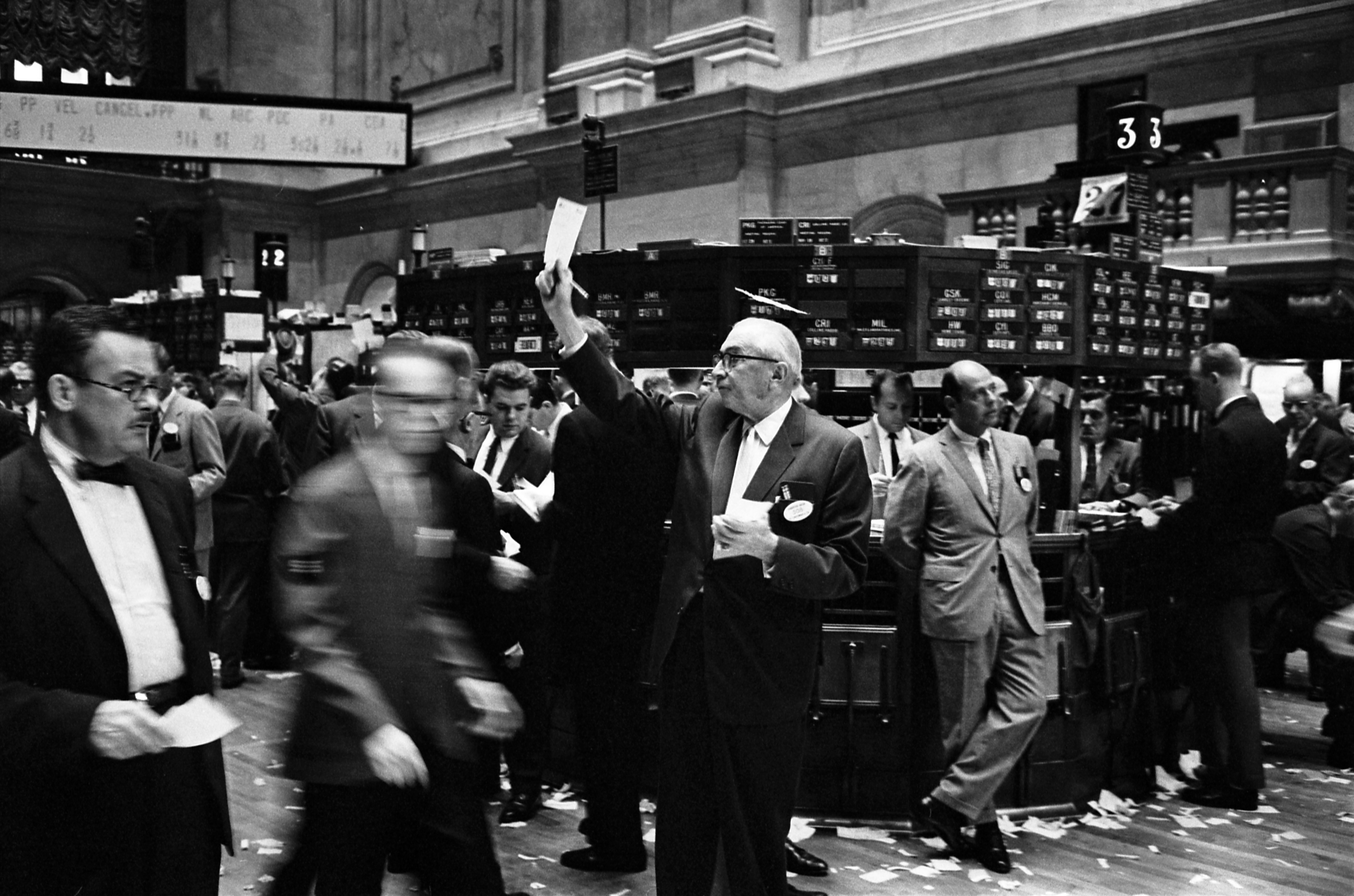 It is regrettable that the pit is dry as a witches heart with only 15000 contracts trades a day versus the old 100000 and all its trades must now be made for logistic or officious or immediate arbitage profit of 10 points reasons rather than it being the hurly burly take no prisoners den of iniquity that it was (where all trades in a customers favor were taken down ) in the old days when it was not dwarfed 100 to 1 by the electronic market. It is interesting to note that the prices are so outdated in the non-robot market that the swings are often 70 points less on each side during the day.
Jeff Sasmor comments:
For sure it's not the hub it used to be. But it's a lot of fun to listen to (although there are long stretches in the middle of the day where nothing's going on at all). And while I certainly can't speak from any authority on the swings, the prices that I hear called out are usually within a few ticks of the electronic prices seen while listening. Actually I've wondered how they can be so close… Maybe I don't get what you mean by "70 points less on each side."
Anatoly Veltman writes:
Intra-day chart of electronic trade will regularly travel further to each extreme than pit transactions would. Because way fewer transactions will in fact be consummated in open outcry, many extreme prices will never land on pit-contract chart. On May 6th, it was quite possible for someone on the opposite side of the pit to offer at 1060-even (and possibly lower) for split-second; but final chart doesn't show any transaction done below 1060-even. Electronic trades did touch the session-limit level some six handles lower!
May
19
High Frequency Trading, from Anatoly Veltman
May 19, 2010 | 1 Comment
1. Can anyone come up with ANY justification for retail parties' engagement in High Frequency Trading?
Russ Herrold writes:
Sure. First would you mind please:
1. Carefully defining: High Frequency Trading
2. Explain if you consider the taking of profit from a market to constitute an adequate 'justification'.
Bill Rafter writes:
Let me deal with them in reverse order:
If a market is inefficient such that a profit can be made by doing a trade to capitalize upon the inefficiency, the trade performs the simultaneous jobs of creating liquidity and reducing inefficiency (and making a profit).
Given that, it makes no difference whether the trading is high frequency or not high frequency.
By the way, I have no dog in this hunt, being a long-only equities trader who tends to hold for a minimum of 2 days.
May
14
 New York City has gone frenzied this week, led by the Hard Asset conference at Marriott Times Square, and sprawling into a dozen of gourmet restaurants' lunch and dinner pitches by exploration and mining companies. Here are some things that bounced off my ear:
1. Gold is not only a commodity with largely non-existent new supply. It is chiefly a currency, which is beginning to replace both the dollar and the euro!
2. Official sector selling has been gradually diminishing since 2005, and turned into net buying by last quarter of 2009.
3. Governments will ban private ownership of physical gold, as they have done many times throughout modern history.
4. Gold historically always got stronger as paper (stocks and bonds) got weaker.
5. We are on the way back to Dow:Gold parity of one ounce = Dow Index, as we were in 1980! In fact, this is probably on the conservative side: outlook has $2500 gold vs. 600 Dow, or roughly one/quarter ounce = Dow!
6. Another decades-long bug calls $5000 gold and even more dramatic Silver gain!
7. European mints ran out of Gold and are about to start running out of Silver.
8. Gold is sooo under-owned, it's not even funny. Practically no one has yet positioned themselves in Gold– except for the likes of Paulson, Soros and Tudor Jones. Asia is only waking up to Gold…
Lars Van Dort replies:
 Here are some more signs for the contrarian that gold may be peaking soon:
1. In Abu Dhabi, an ATM that dispenses 24-carat gold bars has been opened. Think about it…See this video. The clip says Abu Dhabi is the first site with such a machine, but this is not correct. There is already one at the airport in Frankfurt. The company plans, 'for a start', to install 200 more of such ATM's in Germany, Austria and Switzerland. Which will no doubt be followed by world-wide presence. The company explains the brilliance of their concept on their website as follows: "Potential buyers WILL BE ENCOURAGED BY CURRENT PRICES and instant delivery as well as the attractive appearance of the precious metals in the gold vending machine." Yes, of course they will, who doesn't like to buy high…
2. A Dutch newspaper interviewed several gold dealers today. Some reported double sales compared to last week. Some are out of stock. The gold is mainly bought by consumers who are worried about Greece and the euro. The situation appears the same in a lot of other European countries.
3. My father told me investing in gold seemed like a good idea to him. You don't know him, but he's a good contrarian indicator. If there are too many bulls, the market must go down.
Mar
9
 An observation that I've made in the past and see developing is that when you see markets and sectors move up on on higher volume, the tendency is for momentum types to pick up more on pullbacks around 50 day moving average area. That seems to be pattern developing in high beta areas. That looks like the playbook being used by the momentum folk.
Anatoly Veltman comments:
The equivalent indicator in futures markets (as distinct from individual stock trading) is Open Interest. An underlying (I'm being careful not to use the language "a futures contract", which may be incorrectly coded by some as a single delivery month) that rises in price on increasing total O.I. — should also be bought, like in your example. It's of extreme importance for novice coders to understand: volume is largely meaningless in futures. O.I. replaces Volume, once you transition from Stocks arena to Futures.
Feb
26
SP Correlation to Daily/Intraday Moves, from Anatoly Veltman
February 26, 2010 | Leave a Comment
 This phenomenon cannot be denied, if one simply eye-balls the daily charts over the past year. I hypothesize that as the co-relation has become more-widely observed (and embraced as an automated trading signal), it partly became self-fulfilling and re-enforcing. All simple trading ideas follow their learning curve and eventually suffer from over-crowding; this one appears to be at its pinnacle right now. There are two main propositions to consider:
1. Which precise instruments to choose: SP vs. HG, SP vs. AUD/USD, SP vs. AUD/JPY, Nikkei vs same, etc.
2. Pinpoint the causality, i.e. which leads the other; and, possibly in what time-zones and under what special circumstances.
Empirically, I have long noticed that when North-American activity is somewhat curtailed due to holidays or snow-storms, the Australian Dollar moves that precede North-American time-zone will in fact tip the US stock market direction. A very hard to swallow idea: given the enormous size of the US Equities arena. On the other hand, if one's philosophy is that markets move more on perception than they do on reality - then why not?
It's also very important to incorporate varied leverage into your model. In course of 2010, for example: trend runs in outright percentage terms were greater in currencies than SP; and twice as big in Copper than SP! If you further add the effect of widely used 100:1 Forex trading leverage or the high leverage of Copper futures - results are even more outrageous… This is where Theory of Reflexivity may enter near market crests, and those leveraged bets will cause "fundamental reality" to succumb to speculative forces.
Phil McDonnell writes:
To investigate Mr. Veltman's conjecture it might be helpful to do some counting. Looking at SPY relative to the copper ETF JJC and the Australian dollar ETF FXA showed the following coterminal 105 day correlations:
SPY JJC FXA
SPY 100 60% 71%
JJC 100 71
FXA 100
Clearly the simultaneous relationships are strong and positive. But to trade we need a predictive relationship. Looking at the same vehicles but lagged 1 day for FXA and JJC we get the following correlations to SPY the next day.
SPY JJC 0% FXA -7%
Both correlations are insignificant. Neither yesterday's move in JJC or FXA is any help in predicting the next day's move in SPY.
Nick White comments:
I echo Dr. McD's analysis. There are far too many players joining the dots between AU index — resources stocks — AU FICC without any real (well, "real" as how most Dailyspec readers would define it) reason to.
Anatoly Veltman adds:
This was yet another in the series of testing accidents, this time from esteemed Dr. McDonnell. Where would anyone get the idea to lag Australian action by a calendar day, before impacting North American S&P? And if you switch the lag around: that's not the causality hypothesized.No surprise here: for any test to be meaningful, considerable resources are required to set up proper test. Usual handicap: quants are not precise in coding trader's idea.
I originally described this idea in connection with the previous Feb.10 snow-storm. Price action could not have been more clear: Australian Dollar strength led the eventual "surprise" intra-day upside resolution in (hesitant) North American S&P, many hours in advance. S&P's (technical) up-trend then lasted for days! But how will this ever be coded…
Feb
3
The Holy Grail of Speculation, from Anatoly Veltman
February 3, 2010 | 4 Comments
 To know whether the market is currently trending, you have to accumulate a database of intraday progression over at least 30 trading days; then continue to add to your database and trade concurrently. Let's first discuss "intraday progression".
For each stock, currency or futures contract, you need to define the day's "opening range". For a typical stock or commodity: it may be daytime opening 15min "hi/lo box". For internationally-flavored futures contract, the day may well be starting overnight. For FX currency-pairs: I recommend first 30-60min range of domestic time-zone (e.g. Far East open for AUD and JPY crosses, but N. Am. open for $/CAD). Exercise discretion and make provisions for markets that would commonly tread water in advance of crucial regularly-scheduled news releases, and then significantly gap. Award a score to each day, ranging between -4 and +4, grading intraday price progression out of optimized (consistent) "opening box". A day (will occur less than once a week) that never significantly traded out of the opening-range all the way through the close will get zero. -4, -3, -2 and -1 are bearish mirror progressions of intraday events described below as bullish +1, +2, +3, +4.
The most typical day (about twice a week) will be a 2-pointer, where market will break its opening box to the upside and end anywhere up there. +1 is awarded to a day (about once a week) that didn't close that high; but it did manage to overcome an earlier short-lived break-down and ended back within the box. +3 is given following same weak start but stronger close well above the box (about once a week). +4 is the case of prolonged trading well below the box, surprisingly reversed by a blistering second-half rally ending well above the box (less than once a week). An extremely rare (once-twice monthly) case would be very late failure of +4 attempt rolling-back into the box and thus getting a zero. You must be very cognizant of the fact that automatic grading of each instrument under the sun, each day, has shown to be somewhat deficient (understandably, those funds who have succeeded and coded at that level of proficiency will never disclose their secrets). Thus, it remains partly discretionary domain (albeit using consistent set of rules and optimized boxes) to assign those -4 through +4 daily grades to each instrument on the trading board of hundreds! Yes, it requires a lot of market-savvy manual labor.
For each instrument, a black box then accumulates running totals as summation of the latest 30 trading days. Although theoretical maximum reading would be 120 either way, we hardly ever see liquid widely-traded markets conquer the seemingly magic 30 level. The key discovery is that a market that just advanced from lower-sum area to over 10 area (positive or negative) is a market beginning to reliably trend! Once beyond 23, such a run will be getting frothy, and we would commence faze out of profitable position. Having rolled back 10 points off the high (say back to 17 from 27) would cause us to abandon trend bias altogether. It should be understood, however, that a new, down-trending bias would only be assumed way later, once the 30-day summation crosses below -10! So it is obvious, that our summation trend-indicator is a laggard. Well, trend-following is a lagging trading concept!
In my over 20 year real-time market experience, I've observed traders disciplined enough to put on biggest exposure exclusively at points of acceleration from 11 to 23 end up as undisputed winners! With decades of steady gains, they would handily outperform a value-investor or a contrarian. These trading programs were hugely favored by macro hedge fund managers and their clients, as lowest drawdown systems and quarterly results that maximized popular yardstick ratios. I will note that large futures positions taken promptly in accordance with above-described signals were roughly corresponding to riding the right side of wave three of three in a typical Elliott Wave impulse, and thus were yielding upwards to 100% return on margin deposit in just one day of trading! That was because commodity exchange margin requirements under SPAN would still be relatively low at that point, as a newly-recognized gapping trend would suddenly begin accelerating.
A necessary postscript is that only a part of the total program was described above, and quite briefly at that. At its best implementation, the program is multi-dimensional and will not (and arguably should not) be fully described in open forum.
Misan Thrope objects:
Holy Grails are mythical. It is philosophically impossible to determine whether tomorrow you will be trending or range-bound.
Rocky Humbert replies:
On your first sentence, arguing that The Holy Grail is mythical is a religious argument – I'll leave it to greater minds.
On your second sentence, if one uses certain physical and/or information models as a guide to financial market behavior, one can reach different conclusions. I respect many people who both agree and disagree with this view. For some, this is a religious debate too!
Lastly, while the Holy Grail may be a myth, the Hole-ly Grail is not. I keep one on my desk. My secretary filled it with coffee once and it made a terrible mess.
Rocky Humbert, quantitative analyst, speculator and master chef, blogs as OneHonestMan.
Don Chu writes:
A very sensible 'hand-count'. Very much like Mark Fisher's work — his opening range AC/BD classifications and rolling multiple day pivot count, a la his The Logical Trader.
Anatoly Veltman replies:
Correct, Don! Mark practiced (and taught) this methodology for decades. I was at first a sceptical participant in his late 80s after-hour weekly group; but listening to the finer points over the next few years (and markets were always discussed in real-time), I ended up incorporating dozens of his ideas into an overall approach. He deserves tremendous credit!
Jan
28
Surprise Follows Trend, from Anatoly Veltman
January 28, 2010 | Leave a Comment
 One rule I picked up early on from Tudor Jones's philosophy: in trending market, surprise (defined as “big one-day change in price”) follows trend! Based partly on this rule, within an hour of the record-size gap-down in SP futures on Oct. 19 of 1987, Tudor doubled-up on its Short position! (My understanding of the day’s progression: S*r*s interests, in contrast, were Long coming in; and then were on offer, as the day wore on). S&P futures broke below 300.00 in the preceding week and plunged in the course of that Black Monday as low as 190.00!
Black Monday’s open was an example of open game, where futures have never before been known to drop almost 20% straight-line in two weeks, and then be offered limit-down at Chicago’s open. I, for one, never bid that day: who had an answer if any of totally unbelievable bargains changing hands on record volume were worth bidding?! That’s open game – when all valuation tools are locked out, and only support of consequence is the bell. But next day, bouncing of off 181.00 low print on almost non-existent volume, and spreads widening to the point that no transactions were taking place at all — that was an entirely different story…
Same again played out 10 years later, on October 27 of 1997. Gap-down open again (luckily, I came in 100% short), followed by a faint rally attempt, where I doubled-up with my broker’s permission for “intraday play”. Futures proceeded to plunge on heavy volume, triggering momentary circuit-breakers. Eventually, my floor broker said: “Listen, you picked the high so why don’t you just figure out the low and leave me your order, I just can’t hang any more.” I muttered “There will not be a low today”, and I hung up… He calls what seemed to be an hour later: “You were right: they’re shutting us down for the day; we’re not re-opening from this limit-down…” That’s when a closed market was an example of open game, where no support could again be calculated. And again on the contrary, a limit-offered level of next day’s futures open proved to be a brand new game — where many (including me) covered and then feverishly chased offers in attempt to reverse — to no avail, the game already closed…
Nov
25
Kazakhstan Farmland, from Nick Pribus
November 25, 2009 | 1 Comment
 I had an old friend try to convince me to buy in on an investment in a $12 million mansion in the Outer Banks: "You know, they ain't making anymore of this beachfront property." I told him Mother Nature is regularly resettling the beaches with tough storms adding and removing 100's of meters of coastline on a regular basis. That's no investment, that's a hobby for rich people. I told him for that money he could by a few thousand acres of good Iowa farmland, they certainly aren't making any more of that either, and when push comes to shove I still eat but I haven't made my annual journey to the Outer Banks since this recession started. Or for $12 million you can buy a few hundred thousand acres in a place like Kazakhstan where I just traveled a couple weeks looking for a good farm to buy. The land is not as good as that lush Iowa dirt, and you may only net $10 an acre instead of the net a dozen times or more than that in Iowa.
On the other hand, that Iowa productivity bounces up against the law of diminishing returns, it will take a lot longer to up the yields on Iowa acreage whereas, tripling the yields on unprofessionally or unscientifically farmed Kazakh steppe can be done by just picking the low hanging fruit, so to speak, and pardon the pun. Isn't that what investment is all about, profit per unit divided by investment per unit times utilization. Moreover, in the last decade, farmland no longer produces solely food energy. The landscape of agriculture has changed forever only recently as farmland is now an industrial commodity capable of producing energy in the form of ethanol and biodiesel, a new flexibility and opportunity for diversification and profit. A farmer may now convert his corn into fuel for his tractor, or into tasty cornbread, but no matter how hard he tries, a wildcatter can't make oil into a sandwich.
Being the 9th largest country in the world with a population of just 15 million, Kazakhstan ranks consistently number 2 in arable land per capita, and much of that land is not even cultivated in these tough economic times, and what is under plow is cultivated primitively. (Australia, the Saudi Arabia of farm land bank significantly leads the pack-I hate leaving those obvious next questions unanswered). Kazakhstan's next door neighbor China has 20 individual cities with more people than the whole of Kazakhstan, but 1/20th the arable land per capita. Sure China has that unparalleled secular growth story, but it's fiercely competitive unprofitable growth. And sure China has those enormous currency reserves, but on a per capita basis not as much as cash as Kazakhstan, nor as much oil, gold, zinc, copper, uranium, gas, nickel, titanium, niobium… ;no need to list the whole of Mendleev's table, but it all applies. And farmland. Not bad for such a huge country nobody ever heard of, and most can scarcely find it on a map but while the hot money chases deals in China I keep wandering the endless steppe just a bit further west.
Anatoly Veltman adds:
I had the distinct honor of participating in the Kazakhstan Economic Forum just ended at the Harvard Club of New York. I was extremely impressed by the government officials and roster of entrepreneurs in working sessions, as well as networking. Nick Pribus was one I distinctly remembered, and we continued brainstorming over lunch — as our initial introduction during a Carnegie Hall intermission the night before was neither the time nor the place (Kazakh concert, by the way, was truly divine). Nick's decade of experience in the region makes him a leader in the field, at least among the Americans in the space. I hope he finds time for more Russian tutoring, and I hope his quest to raise $300 million of seed capital (pun intended) finds the resource. The natural stats are very compelling, and I really see in the Kazakh steppe a future picture of Omaha steaks!
Nov
2
Moving Averages, a query from Duncan Coker
November 2, 2009 | 2 Comments
 I don't want to touch off a quant vs tech battle, but was interested in thoughts about the use of moving averages. The claims are seen so often in the media for example as 50m/a has crossed the 200m/a as bullish or bearish. As quant this is easily testable, but is there some fallacy built into the assumption, checking once premise. As an average of levels over some period is this overly sensitive to a large event that may have happened at the beginning of the period, or as new data are added and taken away from 200 days ago. This seems a drawback. So on an unchanged day the 50m/a could cross the 200m/a, so it is a lagging measure. I have not used them much but interested in testing and what the merits might be if any. I am prepared to buy a round if venturing too far from our charter.
Craig Mee comments:
Normally people use exponential moving averages which put more weight on the most recent numbers, however it must be noted when looking at technicals from any of the major houses, one day they may be looking at the 50 day exp m/a, the next day the 20 day exp m/a, next day 16 and so on. There seems to be little uniformity and who's to say the market's in a 50 day cycle or 20 or whatever, no doubt this will change at any rate, it must be proven, as to the reason it's used , and this is never done. 200 day just constitutes a longer term trend number. Could be 167 or 198 for the purpose. They may have more of a chance to perform some sort of return in a slower moving stock or short-end rate market, but for futures markets, there is way too much given away on the turn (i.e. consolidating flat markets forever paying away the spread to get in and out.) It's much the same in running a moving average over your profit and loss on a trading system as a filter , normally what you'll find is that the major gains are made on the swing, for that's when markets are extending, and if you're not in then you're not in!
Victor Niederhoffer comments :
Not to mention that it is extremely spurious and dangerous to your wallet to see cycles in moving averages.This is due to the Slutsky-Yule effect, a consequence of regression to the mean, creating false cycles.
Anatoly Veltman suggests:
The best M/A use I know of has nothing to do with crossovers, or even with price charts' current levels vis-a-vis averages. It has to do with current slope of all averages in an optimized pitch-fork of three averages. The method was originally described by Stan Weinstein, as applied to longer-term stock strategies. I’ve had positive results applying the general overriding idea; and over the years, I’ve worked with people who did optimization and chose a pitch-fork of 14-, 30- and 50- day pivot simple M/As. Furthermore, a few effective signals were developed: dubbed Moving-Average Fake-Out Trade and Moving-Average-Divergence Trade, at the time…
Oct
19
2009 The Buttonwood Gathering (Fixing Finance), from Anatoly Veltman
October 19, 2009 | 3 Comments
This two-day, near Davos-quality Forum finally drew curtains late Friday. A rare opportunity, indeed, to pick brains of such present-day luminaries as Geithner, Summers, S*r*s, Ross, Scholes, Niederauer, et al; here are a few vivid highlights (and surprises!) of the gathering.
As a Dailyspec reader I was profoundly stricken by Wall Street, DC, CT and MA dignitaries' complete oblivion in regard to this web site's leading dogma: that strategies that did not work last year … will prove odds-on favorites this year! Just hear a few of the VIP's assertions:
1. The opener from Wilbur L. Ross: the problem lies in over-reliance of today's financial industry on quantitative methods, promising that tomorrow is likely to follow patterns borne out yesterday. The crash occurs precisely when tomorrow is nothing like anything seen yesterday!
2. On future dependability of capital markets (of all things!): survey placed China tops, followed by India, Canada, Australia. Off the bottom, survey featured Russia, UK, Japan and the US capital markets!
3. Economic expectations are largely unchanged going forward (that's following 6-month median doubling of stock indexes in markets world-wide!)
4. The most outrageous Oxford-style Debate upset, all by itself worth the $3,500 venue ticket: the NAY-sayer duo Richard Bookstaber/Jeremy Grantham reversed the pre-debate 20/80 lag into a post-debate 80/20 victory over financial PRO-innovation duo Robert Reynolds/Myron Scholes! Phillip Coggan presided.
5. Stephen Roach's belching critique of the Fed and call for White House's intervention fell on deaf ear of Lawrence Summers, who reparteed: gosh, Steven, everyone is really confused as to where you really stand!
6. George S*r*s dubbed "short US Dollar" an over-crowded trade. Palindrome briefly touched on "inverted square root" recovery theory.
7. Timothy Ryan's debate produced an interesting argument in defense of Goldman Sachs compensation pattern: just like Walmart purchases its inventory at certain prices in China or wherever they decide - so does GS (who provides financial services) pays for its brain inventory whatever they deem necessary to win customer business and ultimately sustain profitability!
8. Harvard's Niall Ferguson thoroughly warned on China's reserve diversification plan: yes, it's very much away from the dollar - but no, it is in no way toward any other currency on the planet. Rather, China will concentrate on hoarding industrial commodities - and no paper currencies whatsoever.
9. Roger Altman assured that there is no currency in the world that will be ready to assume the Dollar's role in near decades, for simple practical reasons. He then excused himself (having to leave his seat at the overtime panel). Coincidentally, Jeremy Grantham stumbled-in from back-stage, fell into Altman's chair and gave Columbia's Jeffrey Sachs quite a history course, as to why China and Japan will never get in bed together - as opposed to Sachs' argument that Germany and France eventually did. Moderator Matthew Bishop jokingly invited "any random audience member" to feel free and grab a seat at the stage!
10. Other lighter notes included Larry Summers' advice, that all of history's bubbles and crashes were the easiest events to forecast: just never stop calling them! In his Harvard years, they "attempted to arrive at second/third best solutions - and ended up with fifth/sixth best." He just hoped that the White House doesn't end end up with thirteenth/fourteenth best… After all, per John Micklethwait's introduction: "It's better to be imperfectly right than exactly wrong!"
11. Myron Scholes had to do plenty of explaining: All higher achievements in civil engineering led to safety improvements - why did new highs in financial engineering result in increased risk?
12. Philip Coggan's debate introduction: what creates higher fees flow is information abridgment, distance from execution facility, cheat-execution, i.e. license to steal - arguably enjoyed by financial industry equally in the past, present and, alas, the future.
13. Yale's Robert Shiller noted: if modern-day and upon-coming financial instruments were less arcane, then how would you be able to charge ever higher fees?
14. Elizabeth Warren agreed: many a financial institution pride themselves of questionable innovation heights: if checks were to bounce - then they will bounce in the order of maximized over-draft fees!
15. Richard Edelman pointed out: "It wasn't just time per se - that brought hi-tech industry and its products back to their current supreme status - in the after-math of 2002-2003 annihilation. It was innovation and cutting-edge achievements."
16. Devin Wenig's over-riding concern was: during an overnight inter-continental transfer - who owns (defaulting) assets?
17. Brilliant working session moderator Zanny Minton Beddows had to defuse another explosive query: "1980's S&L crisis misdeeds resulted in nearly 3000 convictions - and the latest banking debacle produced 2 jail terms to-date??"
Well, near the Conference's tired end, it appeared to me that everyone seemed to agree with Winston Churchill: "Democracy is the worst form of government, except all those other forms that have been tried from time to time…"
Sep
7
Showing Up, from George Parkanyi
September 7, 2009 | 1 Comment
 This past Friday in my 4-team men’s recreational over-30 soccer league, we wrapped up our round robin play to set the positions for the “final”. As we were the top team in the regular season (Brazil), we also ended up winning the round robin with a possible 7 of 9 points. And we managed to do so without scoring a single goal. How? One of the weaker teams played us to 0-0 draw, and then the next two teams (including our arch-rival Argentina who we now play on the final) defaulted for lack of players. As one of our opponents lamented - “Man those guys are good at showing up!”. And that got me to thinking about … showing up.
Now in this situation the point is not so much the seven points, given that six of them weren’t really earned on the field, but rather that in some situations, simply just participating creates opportunity. We have a berth in the final because enough of our players were committed enough to come to the field and play, and in this case just that was enough. (Personally, I don’t think the voo-doo dolls made any difference.) For so many situations in life, if you don’t show up, “put yourself out there”, or get into the game, the chance for opportunity to present itself is guaranteed to be zero. It reminds me of the joke about the man who keeps praying to God to win the lottery until finally in frustration God answers “Could you at least meet me half way and buy a lottery ticket!”. Sometimes it takes years and painstaking effort to make headway, but sometimes also it can happen in minutes – as in the case of the field promotion. Now you don’t necessarily have to go into battle, but in business for example you might advance because someone suddenly leaves, or you’re the only one around to deal with some unexpected crisis. By sticking it out and continuing to “show up” – both for the same things and for different things - you increase the odds that one day you’ll be in the right place at the right time.
I think that what typically holds people back from “showing up” is often fear, habit, or just simple loss of interest. My experience has been that when I forced myself into a situation I expected not to enjoy, of which I was afraid, or that I would find boring, more often than not - by far – the surprise has been to the up side rather than the down. I’ve found it’s not always so bad to jump into the unknown. (A fun book to read along these lines is “Yes Man”, by Danny Wallace. I highly recommend it, especially for pessimists.)
So what then would be the trader’s version of “showing up”?…
Anatoly Veltman writes:
"None have a gift like Beethoven - trading is a learned skill" Matt Johnson once said…; "the market tells me what to do, and when to do it, all I do is listen and follow."
1. Gold was mired in a tiny range all summer; the chart clearly broke out pre-Labor Day. The most widely-traded spec instrument EUR had carved out a similar chart-pattern; but was held back by the NFP report. Tens of millions of EUR traders were given a chance to prepare for Tue action — did they? (Same, of course, was true about daily CHF chart). I want to point out that trading Beethovens often see much more and much sooner than "efficient markets."
2. In summer of 2005, following post-Katrina Sunday night's "regular opening" fiasco (NatGas gapped 20% and trade was "disorderly") NYMEX announced an unprecedented 10am early open for Sunday following widely-anticipated Rita's land-fall. Pre-opening orders "matched" to what appeared to be little-changed (!) opening print: that's for a contract that just doubled (!) in anticipation of hurricane damage — while Sat reports clearly indicated Rita's miss (!) Seconds before 10am open, I entered offer at $12.299, right through the bid, and got a partial fill. My sale at $12.299 remained that night's high, and at regular 7pm night open the contract was changing hands 4% lower on good volume! To this day, I'm ashamed for participants who didn't show up at 10am that Sunday — although, who knows if I'd get to sell any more size if they did…
Sep
5
Holiday Thinking, from Victor Niederhoffer
September 5, 2009 | 2 Comments
 On holidays we all step back and look to where we were at the same time last year, and at the previous holiday. Such a tendency led the mystic W. D. Gann to suggest turning points tend to cluster around holidays. Other interesting tendencies are the swings between consecutive holidays. Do they tend to reverse? Are agonizing reappraisals more common after holidays? Are there any French insider trading actions lurking in the wings while the U.S. markets are closed, such as occurred around Washington's Birthday 2008? Do the moves in the days after holidays tend to put investors on the wrong foot? Hypothesizing minds wish to test.
Anatoly Veltman replies:
I don't know about Gann, but there are some objective reasons why holidays matter:
- Holidays tend to be located around season-changes, (reporting) period changes, the time for new fund/budget allocations, when new traders kick-in, etc.
- If a strong trend persisted all the way into a holiday, then additional/final margin calling will inevitably be enforced — more forcefully than in course of non-holiday trend.
- There is increased probability of surprise news/disclosures over 3-day weekend vs. 2-day weekend.
To add my subjective opinion, as I'm enjoying this pre-school holiday with the kids: we should be thankful for the quite lengthy quiet period re: terrorism threats that we have had. My gut tells me to beware — plus I've found a tendency over my almost 25 years of gold trading: this useless commodity "knows" best.
Matt Johnson recalls:
I studied Gann for a while; I couldn't find success with his theories. Maybe his ideas were wrong, which might also be the reason why he died flat broke. Some turning points or breakouts can happen around holidays due to the lack of liquidity. I remember a great Euro trade either last Thanksgiving or two ago, it was Friday; US banks were on skeleton crews and HK and Ldn had a clear path -— follow through on Monday was also fantastic.
Apr
27
Base of Operations, by Victor Niedehoffer
April 27, 2009 | Leave a Comment
 One of Tom Wiswell's favorite things to say was "make sure you have a strong base of operations." I find this true in all aspects of life. In the market, it would involve the preparation for the investment or speculation. Certainly having all the equipment and getting in on time. And having the proper capital and vig relations. Certainly not being distracted. Tom liked to say afterwards "checkers is a game of architecture." The importance of a proper foundation in a building, a proper base relative to the tower, and proper communication between the various departments of the building is also clear. I have been thinking of this subject in conjunction with a note I am going to send to Aubrey on his third birthday. It is important to have a good base of operations in whatever you do. Always prepare in advance. Don't rush. Plan what you're going to do. Don't act in haste. Make sure you take in the proper foods. That you get a proper sleep. That you don't run around too much distracting yourself from the important essential goals to survive and prosper. Have a proper financial foundation. Be prepared for adversity. Put things aside in case things don't go as planned. Move forward when healthy. Develop your talents. Get proper mentors.
The thought leads me to suggest something controversial. I am a very weak chess player and my thoughts on it must be taken with many grains of salt. However, i took lessons from Art Bisguier for about 20 years, and I have seen Adam Robinson and Dr. Vic play many games as well as watched many games in Brighton Beach where they played every day. I think from my observations that checkers provides many more life lessons than chess because the rules are less specialized. Moving forward or backward, except when a opposing man is in front of you where you jump, is a very binary kind of thing from which all kinds of ultimate outcomes arise including its proximity to computers, electrical relays, and logic circuits which are also on/off or 0/1 systems. Thus, I would recommend checkers as more helpful to kids as a game to prepare for life than chess.
Nigel Davies comments:
I've found myself that the number of rules in chess has diminished with my level of understanding, and I tentatively suggest that this might be applied to all fields.
Douglas Roberts Dimick adds:
The Art of War, Sun Tzu
Chapter 1 — Laying Plans explores the five key elements that define a successful outcome (the Way, seasons, terrain, leadership, and management). By thinking, assessing and comparing these points you can calculate a victory, deviation from them will ensure failure. Remember that war is a very grave matter of state.
As for state, so to for money…
All battles are won before they are fought.
Anatoly Veltman comments:
 I can speak from personal experience: Aubrey's received an essential for a 3 y.o. memo!
My parents handed me over to a personal checkers coach when I was 5, and I was taught basic framework. Master trainer in charge of Odessa Women's Team took over - within the next year, I've traveled the Soviet Union (without parents) as part of the Women's Team. My paradise ended when other teams filed protest over "unfair advantage". I proceeded to score enough wins in Men's tournaments to qualify for "Master of Sports" title by 12 - youngest in Soviet history of any sport. They exempted me from statutory "age 13" requirement, when I've scored double the required points… And curiously: I was not a "natural". Topping eventually over a million registered competitors in my sport for three straight years in Play-off finals - admittedly, I never felt as the gifted one. For instance: the blind-folded record on 100-square board was 10 simultaneous; but I could never complete more than 2-3 games at a time.
What gave me edge over competition was iron discipline and preparation. At 6, they taught me to sit straight and down-the-middle. At 10, they trained my peripheral vision, so I could gaze the entire 100-square board and successfully transition from the 64-square game. Consequently, I could count 30 moves ahead on 100-square board, without touching the pieces. My coach kept me away from alcohol, smoking and all-night bridge sessions. In course of Round-Robin, I'd review each opponent's favorite openings, prepare surprise divergence and win on time-clock alone. Others in my age category often felt defeated, just taking a sit in front of me. My first trades happened to be in Comex gold, and it surprised me how many of "big punters" were totally oblivious to basic idiosyncrasies. It took me only a couple of 50-lot orders, which remained "unable-on-10" - to figure out that physical arbitrageurs were seeking out 40-lot = 10 400oz bars! It took me a forfeit of a million-dollar unrealized profit in Silver on April 27, 1987 to figure out that Comex notice/delivery rules were skewed in favor of Shorts (over the next two years, I made a client $5m profit based on this quirk alone)… It always amazed me that even largest speculative funds neglected 80-lot Yen futures increments = exactly a billion yen; and worst of all neglected two-banking-day settlement duration. That translated into significant Yen and Gold carry on Wednesday evenings year-round (and a real kicker in front of long weekends and numerous Japan holidays!) Since Nov 1997 split, trading 4 or 40-lot bigSP makes much more sense given new $25/point denomination than 5 or 50; but 90% of the participants neglect that too… Dark pools and market-maker wigs have been a "wet dream" of high-frequency trading outfits for years, translating into billions of nearly risk-free profits for them. Yet, schools and teams of "stock day-traders" continue entering the industry in record numbers to this day…
Feb
1
COT Notes, from Anatoly Veltman
February 1, 2009 | 2 Comments
I'm sounding alarm. Amidst signs that:
1. Trading and Investment capital is continuing to contract.
2. Political and regulatory interferences are becoming more chaotic
3. Economic downturn's impact is widening
…it is harder than ever before to pin down intermediate-term opportunities. Those who've been trading in-and-out and even reversing every few days (albeit, with year-opener bias in mind), have done well. But in the course of February, year-opener directions should fade. Sector by sector:
1. SP: Commercials have been on the right side of every twist-and-turn. Raising Net Longs late Q4, shorting early Jan, buying again mid-Jan and selling again last week. Test of Nov lows is certain - and only then the panic will reach the pitch tone. However, it's important to not lose sight of the absolute diminishing values: what will look like the ultimate break-down - in fact, will have little room to forge ahead, relative to enormous Bear coups of 2008. When smaller players finally go overly Short on new lows, en mass - they'll find little reward.
2. Treasuries: 30y futures have retraced exactly half of their straight-line Q4 sprint 111->142, thus relieving unconscionable Xmas overbought. O.I. pattern is bullish at current juncture, dropping on down-days and rising on up-days.
3. Currencies: C.O.T. display intriguing divergence vis-a-vis equity-Bear posture. Yen commitments are Bearish, while SF Bullish. I'm getting ready for substantial reversals in both dropping European currencies and rising Yen. My scenario is that such reversals will be playing out against the background of equities' panic, and will catch Specs flat-footed.
4. GC commitments got predictably stone-walled in course of super-rally. Commercials offered scale-up across the precious metals complex. While long-term outlook for Gold is unavoidably Bullish (given few viable investment alternatives), I'd much rather be a buyer on any sharp profit-taking spells, than on any "strong trend". Copper O.I. pattern remains Bullish - but it will be up-hill battle against the back-drop of equity panic.
5. Energy contracts remain in disarray, with little of new indicators in the past week. Of note CL 6-week consolidation pattern that follows vertical 147->33 move, record HO O.I. levels, RB price out-performance (not supported by O.I. pattern) and NG price under-performance, nearing very important $4.05 low of 2006. My conclusion is that the complex will struggle with equities - and that important buying opportunity will form in the process.
George Parkanyi comments:
I admit that I apply COT like a simpleton, but time and time again I've noticed that aligning with the commercials in physical commodities (in the financial indices or currencies I don't even know who a commercial is, or if they're particularly bright enough to make a difference) generally gets you going in the right direction. THAT I learned to pay attention to from Larry's excellent books on the subject. (Unfortunately, Larry, I didn't follow your money management advice and eventually skewered my commodities account).
A guy called Barry Lees runs a site called cotfutures and basically all he does is reorganize COT data into a useful format -particularly a rolling 18 month 0-100 ranking representing the range between the maximum commercial net-short position (0) and the maximum net-long position (100). I've found the 0-10's to be pretty good markers for a downward reversal and the 90-100's for an upward reversal. Speculators would be at the opposite side of the spectrum. There are other factors of course, but these are pretty good ballpark indicators.
Right now, Copper and Rough Rice are at 100-0 extremes, corn 98-4, oats 93-1, cotton 93-20, lumber 92-14. The latter makes sense - it reflects the housing market and consumer staples (leprosy). Gold and oil are mid-range and inconclusive by this interpretation. The closest thing to a short are hogs at 24-63, which is not really considered to be an extreme. (Commercials seem to have not much of a market to sell into and must be cutting back production or holding back inventory because prices suck. Anyway, that's the way I might interpret it.) Would I rush out and by copper and rice right away? Not necessarily. But to buy copper stocks right now to invest for a couple of years might not turn out too badly.
Larry Williams adds:
Not that I know it all, but a little more than most I kid myself, so I will comment what Lees is doing is 10 years behind the times and fails to take into consideration price levels–a critical point.
COT is actually entering bullish area for hogs—2 weeks ago entered bullish are for lumber but not a great buy point due to price levels. Commercials buy all the way down as they take delivery and use the stuff—they are not spec buyers—and that must be factored in….same in copper sure there's been commercial buying, but low price levels induced it.
James Goldcamp writes:
Conceptually I've always had a hard time taking COT serious in markets where the futures markets are not a significant portion of the overall business such as SP(stocks). Isn't the SP overshadowed by the cash market for stocks (where many of the big players such as mutual funds don't use futures at all or minimally)? The same would seem to be true for the currencies. Perhaps you might argue (with respect to markets where the futures are not significant portion of the overall $ traded) the structure of who is positioned in what manner is indicative of sentiment ; however, I cant believe it's driving anything.
Larry Williams replies:
currencies have a very strong commercial influence; international corps protecting sales in various currencies.
Jan
25
The Beat of the Tomtom, from Victor Niederhoffer
January 25, 2009 | 7 Comments
 Like the beat beat beat of the tomtom
While the market resumes its fall
Like the tick tick tock of the 800 clock
And the certainty of the margin call
Like night and day, the market has been inevitably drawn to the round number of 800. It started the year well in the 900's
hi lo cl
1/05 934 916 927
descended with certainty to break below for a second on
1/20 866 798 806
and then descended to the abyss again
1/23 836 799.5 824
One might ask what and who forces the price down to this level, and what it does to people who use stops, and get in over the head. The move occurs in conjunction with the largest drop in bonds history 12/31 141 3/4 138 138
1/23 130 1/2 128 1/2 1295/8 a drop of 12 points in 15 trading days, the previous maximum being 10 points from 7 10 to 7 31 03. Such a bond move above 8 or so has been bullish in the past for bonds and bearish for stocks on the 2 meager occasions its occurred. What does it mean besides kismet?
At the most microscopic level, it confirms the chair's adage that a round number never holds. It also proves the evility of the market in running stops and breaking the backs of all those who wish to ward off total one shot ruin by letting their losses run without stops, thereby bleeding them to death rather than killing them off with a painless one time death. And let us not forget the gravitational pull of the round number as an ethereal force of immutable timeliness.
Remarkably the markets seem to be coming to their senses. Eventually the bond market had to realize that all the new money or debt being created to pay for the trillions of bailouts and guarantees had to come from somewhere or someone. If more money, then certainly it had to lead to inflation. And the liquidity preference theory that because the Fed was buying bonds the price had to go up without limit is shown to fail a critical test, with the expectations hypotheses that interest rates are an average of the discounted rate of inflationary expectations over many years won out. The stock market seems repulsed by the idea that a handful of people are that much more able to decide the fate of who shall be saved and who shall be encouraged to expand than the decisions of the customers. Perhaps it also shows that the basic ethos of the market does not like a few well meaning people deciding how a trillion should be taken by everybody and given to a selected few worthy institutions and supposed linchpins. And that is why I believe the steady beat has been to that abominable 800 level.
Anatoly Veltman writes:
It's true that 800 held by the skin of its teeth last week. I have another important puzzle to solve: Open interest in both bigSP and E-mini experienced record quarterly redemptions when Dec contract expired. While cash-settled futures' expiry is inconsequential — I see only one explanation to record phenomenon: to passively let your position expire and settle (as opposed to place an offsetting order before expiry, or roll-over via spread, or immediately open Mar position), customers had to have lost (en masse) their ability to place orders (even offsetting orders!). And that's another indication of decision power being taken away from customers…
Jan
14
Evidence of Chart Painting, from Anatoly Veltman
January 14, 2009 | 33 Comments
 I've heard it remarked that modern multi-billion funds are involved in systematic "chart-painting" (i.e. pushing through stop-levels), then covering and possibly even reversing a profitable trade. I certainly have seen plenty of that happening in open-outcry era where locals sometimes managed to simply "yell the market" through a level of known stops, without ever doing a single trade! And yes, it can be accomplished even in the most liquid markets if you know the right spots and have enough capital to satisfy the limit orders resting there. A stark example can be found in EUR/USD trade 12/18/08 and again 1/13/09.
Following the 2008 collapse 1.6040->1.2329, followed by six-week rectangle consolidation, EUR rocketed at record-pace toward the 61.8% retracement mark of 1.4622. But on 12/18/08 it managed to slice through the level, peaked a full-figure over at 1.4717 — and swiftly reversed! Now today, it punctures 1.3241 level = 61.8% retracement of 1.2329->1.4717 run only to swiftly reverse precisely full-figure under at 1.3141. I wasn't much surprised: my charts were marked corresponding to this idea well in advance.
I'll be on look-out for developing situations in this regard.
Jan
10
C.O.T, O.I, and Year-Opener
January 10, 2009 | 23 Comments
 This has been the first full trading week of 2009. In years previous: the trends marked in Year-Opener would provide direction for a number of months(!) Of course, 2009 is getting the most uneasy start across most markets in recent memory - as credit has been severely constrained, fund net inflows are non-existent and the entire financial service industry undergoes austerity. In this extremely emotional environment, we are doubly reminded of just how important objective measures of market commitments can be.
1. SP flows continued somewhat Bearish within their make-up. I was pointing in recent weeks, that Commercials have flipped back into Net-Shorting mode - erasing their Net-Longs accumulated near decade's lows. Also, that sentiment surveys went Bullish 1/6/09 - for the first time since 8/20/08! Current report showed Large Specs shedding their recent Longs into 100-point pop; while Small Specs assuming new Longs, under the drum of "rally over 900". Another interesting tidbit was substantial migration of Open Positions from bigSP to E-mini (except, remarkably, in Small Specs!!) I venture guess: Small Specs, convinced that "bottom may be in", took some Longs earmarked for "longer-term hold". Larger Traders, in contrast, preferred greater flexibility of E-mini to scale in-and-out of price spurts and "play the range". Other than this little distinction: I must note that 2009-opener week was decisively DOWN!
2. C.O.T. showed Commercials rolling significantly out of 30y and 10y Longs and into 5y, 2y and Eurodollar Longs! (again, a tiny indication that big boys are reaching for flexibility - as opposed to committing to obvious yield differentials.) Two very important notes: a) the week was decisively UP for shorter-term paper; b) O.I. pattern in 30y favors one more Bullish attempt - before they commence "long-term Bear Market". Why? The 142->132 pullback was all due to aggressive Commercial Long-liquidation in light trade: hallmark of wave1 DOWN. Wave2 UP to follow is usually emotional and scary. Only then wave3 DOWN should emerge with aggressive NEW SHORTING and voluminous price action DOWN.
3. EUR and SF marked strong DOWN-week; BP, CD, JY UP-week! My opinion remains that EUR and SF will eventually go to new records in 2009; however, as pointed out last week - Specs had to first abort their ill-timed Longs. For those two currencies: this is a classic false start, liable to confuse many a trend-follower. BP has enjoyed solid Commercial support in recent weeks; it should develop into star currency of 2009! Yen is interesting: where its early-week's dump attracted no Commercial support to speak of! I stay of the opinion that Yen lacks its own fundamental bright future - and that it will stay strong in spots on default basis; ready to embark onto multi-year Bear market before most Specs realize it.
4. Gold keeps piling up COT problems: this time Commercials even Shorted it on slight decline. Funds now hold 8 Longs for every 1 Short! Platinum strung basically 11 straight UP-days since I pointed "O.I.-accumulation signal" going into Xmas. Copper's O.I. behavior remains constructive; but it also has already jumped 25% of off Xmas lows. All-in-all, metals are likely to still shadow the currency trade right here.
5. Energies remain extremely interesting: most contracts appear in wave2 pull-back; thus potential of explosive wave3 run remains attractive - despite obviously weak 2009 opening week. CL went up on rising O.I., then down on declining one. Gasoline sports 13:1 Fund long:short ratio. This ordinarily could be viewed a Bear trap - but energy contracts are not undergoing any particular margin stress, plus there is a lot of spread trading among contracts. NG's drop here is very intriguing - as Jan seasonals are, in fact, Bullish. Daily chart is near bottom of yet another price accumulation: five preceding ones resolved down in continuation pattern. This should attract speculative Shorting into the lows - and potential for big Bullish surprise to follow! This has been the first full trading week of 2009. In years previous: the trends marked in Year-Opener would provide direction for a number of months(!) Of course, 2009 is getting the most uneasy start across most markets in recent memory - as credit has been severely constrained, fund net inflows are non-existent and the entire financial service industry undergoes austerity. In this extremely emotional environment, we are doubly reminded of just how important objective measures of market commitments can be.
Jan
6
C.O.T Updates, from Anatoly Veltman
January 6, 2009 | Leave a Comment
Monday's delayed CFTC Report covered the festive 12/23-12/30 markets. It did confirm:
1. Commercial propensity toward Shorting indexes.
2. Commercial propensity to start rolling out of Treasury Longs.
3. Commercial Shorting of currencies.
4. Commercial offer into Gold rally and bid for Copper.
5. Commercial buying in liquid energies, while lightening up record Commercial Longs into NG rally.
Transition and reversal in short-term price moves should be completed by Wednesday Jan. 6 in the following important contracts:
1. EUR/USD will likely sharply reverse from 1.32 area, just like it did from 1.47 area on 12/18 (both 62% retracement targets).
2. Corresponding move in DXC up to 84.50 (62%) area.
3. EUR/GBP has dropped quickly from 0.98 toward 0.90 buy (38%) area.
4. 30y USH aggressive profit-taking from near-142 record (Open Interest fell during each of the three big down-days!) has max. target near 130 (38%) area.
5. In SP: offers are lining up in 950 area; once penetrated, scale-up sellers on the way to 1000.
Archives
- October 2026
- September 2026
- August 2026
- July 2026
- June 2026
- May 2026
- April 2026
- March 2026
- February 2026
- January 2026
- December 2025
- November 2025
- October 2025
- September 2025
- August 2025
- July 2025
- June 2025
- May 2025
- April 2025
- March 2025
- February 2025
- January 2025
- December 2024
- November 2024
- October 2024
- September 2024
- August 2024
- July 2024
- June 2024
- May 2024
- April 2024
- March 2024
- February 2024
- January 2024
- December 2023
- November 2023
- October 2023
- September 2023
- August 2023
- July 2023
- June 2023
- May 2023
- April 2023
- March 2023
- February 2023
- January 2023
- December 2022
- November 2022
- October 2022
- September 2022
- August 2022
- July 2022
- June 2022
- May 2022
- April 2022
- March 2022
- February 2022
- January 2022
- December 2021
- November 2021
- October 2021
- September 2021
- August 2021
- July 2021
- June 2021
- May 2021
- April 2021
- March 2021
- February 2021
- January 2021
- December 2020
- November 2020
- October 2020
- September 2020
- August 2020
- July 2020
- June 2020
- May 2020
- April 2020
- March 2020
- February 2020
- January 2020
- December 2019
- November 2019
- October 2019
- September 2019
- August 2019
- July 2019
- June 2019
- May 2019
- April 2019
- March 2019
- February 2019
- January 2019
- December 2018
- November 2018
- October 2018
- September 2018
- August 2018
- July 2018
- June 2018
- May 2018
- April 2018
- March 2018
- February 2018
- January 2018
- December 2017
- November 2017
- October 2017
- September 2017
- August 2017
- July 2017
- June 2017
- May 2017
- April 2017
- March 2017
- February 2017
- January 2017
- December 2016
- November 2016
- October 2016
- September 2016
- August 2016
- July 2016
- June 2016
- May 2016
- April 2016
- March 2016
- February 2016
- January 2016
- December 2015
- November 2015
- October 2015
- September 2015
- August 2015
- July 2015
- June 2015
- May 2015
- April 2015
- March 2015
- February 2015
- January 2015
- December 2014
- November 2014
- October 2014
- September 2014
- August 2014
- July 2014
- June 2014
- May 2014
- April 2014
- March 2014
- February 2014
- January 2014
- December 2013
- November 2013
- October 2013
- September 2013
- August 2013
- July 2013
- June 2013
- May 2013
- April 2013
- March 2013
- February 2013
- January 2013
- December 2012
- November 2012
- October 2012
- September 2012
- August 2012
- July 2012
- June 2012
- May 2012
- April 2012
- March 2012
- February 2012
- January 2012
- December 2011
- November 2011
- October 2011
- September 2011
- August 2011
- July 2011
- June 2011
- May 2011
- April 2011
- March 2011
- February 2011
- January 2011
- December 2010
- November 2010
- October 2010
- September 2010
- August 2010
- July 2010
- June 2010
- May 2010
- April 2010
- March 2010
- February 2010
- January 2010
- December 2009
- November 2009
- October 2009
- September 2009
- August 2009
- July 2009
- June 2009
- May 2009
- April 2009
- March 2009
- February 2009
- January 2009
- December 2008
- November 2008
- October 2008
- September 2008
- August 2008
- July 2008
- June 2008
- May 2008
- April 2008
- March 2008
- February 2008
- January 2008
- December 2007
- November 2007
- October 2007
- September 2007
- August 2007
- July 2007
- June 2007
- May 2007
- April 2007
- March 2007
- February 2007
- January 2007
- December 2006
- November 2006
- October 2006
- September 2006
- August 2006
- Older Archives
Resources & Links
- The Letters Prize
- Pre-2007 Victor Niederhoffer Posts
- Vic’s NYC Junto
- Reading List
- Programming in 60 Seconds
- The Objectivist Center
- Foundation for Economic Education
- Tigerchess
- Dick Sears' G.T. Index
- Pre-2007 Daily Speculations
- Laurel & Vics' Worldly Investor Articles
