Sep
27
The Diaoyu/Senkaku Islands Dispute, from Craig Mee
September 27, 2012 | Leave a Comment
 For anyone who is interested…it seems this event involves quite a bit of he said she said, with some good old miscommunications, and selected curve fitting thrown in for good measure.
"The Inconvenient Truth Behind the Diaoyu/Senkaku Islands" :
My research of over 40 official Meiji period documents unearthed from the Japanese National Archives, Diplomatic Records Office, and National Institute for Defense Studies Library clearly demonstrates that the Meiji government acknowledged Chinese ownership of the islands back in 1885.
Anonymous adds:
In the current drama of this event, the very ownership of the island, though seemingly at the core, is actually a very secondary issue. What is worth watching are the following.
1) In a country where there is zero tolerance for demonstrations and even public gatherings, how come there were suddenly so many demonstrators on the streets?
2) Why is there is so much resemblance between the main slogans, banners and pictures? Who made them?
3) During some demonstrations in front of Japanese embassies, why weren't passersbys allowed to join in? Who were those allowed?
4) Of the people leading most of the violence in the streets, how come many are short-haired, tan-faced, strong-muscled, young and well-coordinated? How come they had no fear of the police when doing the violence?
5) At a time when Bo Xilai is being judged and when the Party leaders are fighting in closed doors for who will take charge in the future, is all this just a coincidence?
Sep
11
To Hold or to Fold, From Leo Jia
September 11, 2012 | Leave a Comment
 I think we can all agree that pursuing one's conviction in life or even a demonstrated talent is hard. Most successful people would contend that the key is through perseverance, resilience and so on. In other words, one should not give up during hard times. I think this should be true for most successful people on this list who have indeed withstood some hardship in the early career but never given up.
This is in sharp contrast with the mostly agreed approach for trading, where quickly admitting mistakes and reversing course is very key. I don't deny that someone may be doing it through perseverance (is Buffett doing this way?). Even Soros has remarked that admitting mistakes is key for his success. It is interesting here that admitting mistakes only applies to every single trade, but not really to the hardships in one's career.
There is the saying about when to hold and when to fold. For career success, the focus seems to be "hold" on, but for trading success, the focus is to "fold" quickly.
How would one reason about the two different approaches or philosophies (perseverance vs. change)? Is one of them wrong?
Craig Mee writes:
Leo, I would humbly say, one is a number game, and the other is what you do…and with that you can certainly do some fine tuning. Problems may arise from a number of things not central to what your preferred "business" is.
Russ Sears writes:
As a marathon runner who use to be national class, it has been my experience that persistence is only part of the battle. It is very easy for a proclaimed prodigy to persist. What is hard is learning to turn a short term loss into a long term lesson for life. If you watched the Olympics here are a few things that the athletes seemed to do differently than most people.
1. They embraced the pain. Training and hard work was enjoyed. But they also learned from their losses, injuries and general hardships in life. Perhaps these fires are the purifying necessary part of the upbringing that the prodigy misses. Learning to believe in yourself despite what others say, turning losses into a chance to strengthen weaknesses. Things whose first order effect is negative but whose second order effect can be positive are highly favored.
2. They were optimistic about their chances, with a healthy dose of realism about their abilities, their current condition and plan. Before and after the event there were no excuses. They had a plan, believed in the plan and stuck to the plan.
3. There were very few people's opinion that mattered to them, their coach, their immediate family (Dad, Mom, Husband or Wife). They did not care what the critics said, they did not depend on crowd support and were not disheartened by disfavor.
4. There were many opportunities from competition. They found their niche from competing more. While the Olympics may be the showcase for their event they were not dependent solely on its outcome. Worries melted in abundance of gratitude to coaches, training partners, family, other supporter, G_d, and country
5. They were focused on the task at hand. They knew how to avoid the distractions and discount the hype. Yeah, this may be the defining moment in their lives and how they may build their fortune, but as the song says "there will be time enough for counting, when the dealings done."
6. There appeared to be admiration for their fellow competitors. This Olympics were notable in that there were fewer accusation of doping, tainted judges (with a few exceptions about some referee) and general cheating scandals. The badminton scandal being the biggest scandal, suggests to me that the athletes were into the competition more so than the best way to game the system. Perhaps this is an inverse reflection of the markets. Or perhaps simply the media has become part of the cover-up captured by the hype, rather than the watch-dog.
Sep
11
Momentum Wins…This Time, from Craig Mee
September 11, 2012 | 1 Comment
I remember reading somewhere that the guy who wins the first two sets and it goes to five in a tennis match usually wins.
Well, checking U.S Open stats for the first 10 five set matches in which a player won the first two sets in this year's Open, I saw it went to the guy who won the 3rd and the 4th set!
Only one open tournament, I know, but a sizeable drawdown.
Just like trading, a system is tough to follow, depending on the stake, (even if for over 10 years it proved to be true on slams) if your drawdown is extended.
Sep
9
What’s the Difference? from Craig Mee
September 9, 2012 | Leave a Comment
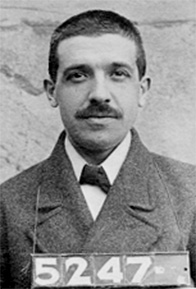 Now as we start thinking about a test of 1575-1600 highs in the SP being possible, we can ask ourselves is there any difference between the run up from 97-2000 and 04-2007?
Have we actually got any sound reasoning to say that the aftermath of these run ups won't play out again, or to argue that the declines to create these monster rallies were unjustified in the first place and 100% run ups over three years in both these previous periods should be looked at in that context?
Internet run/ Housing run/ QE run? What is, or is going to, hold this together?
Even if growth somehow took hold, how much re-adjustment may need to take shape?
Just to finish with a definition of Ponzi Scheme.
"A Ponzi scheme is a fraudulent investment operation that pays returns to its investors from their own money or the money paid by subsequent investors, rather than from profit earned by the individual or organization running the operation. The Ponzi scheme usually entices new investors by offering higher returns than other investments, in the form of short-term returns that are either abnormally high or unusually consistent. Perpetuation of the high returns requires an ever-increasing flow of money from new investors to keep the scheme going."
Sep
7
Question for Investors and QE Programs, from Craig Mee
September 7, 2012 | 1 Comment
What determines how many turns in a screwdriver before the thread wears out? On a quick turn or on one with a little more pressure, it reconnects and sufficiently binds the materials. The strongest material holds good thread, but even poor material can show sufficient strength and there's enough time to feign a bond.
What a balancing act we play.
Aug
29
Ancient Wisdom, from Craig Mee
August 29, 2012 | 2 Comments
Heraclitus said, "everything changes except the law of change" and "you cannot step in the same river twice."
The river changes every second and so does the man who stepped in it. Life is ceaseless change. The only certainty is today. Why mar the beauty of living today by trying to solve the problems of a future that is shrouded in ceaseless change and uncertainty–a future that no one can possibly foretell?
-Dale Carnegie
Leo Jia writes:
I have also been studying the topic of change lately.
Just as Heraclitus said about the river, the ancient Indian Veda teaches that even the human body does not have the same flesh and bones as those a moment ago — it is constantly changing. This constant change has made the concept of death (as we know it) less dramatic. Because death happens at every moment as the change of the body goes, the final physical death becomes no more a distinguishing event.
The very nature of change has led Gautama Buddha, who started as a Hindu monk, to believe that there is no self, contrary to the Hindu belief that there is the eternal soul which is the self.
I believe this ancient concept of change has very good reflections in modern sciences of molecular biology and quantum theories. At the atomic and molecular levels, the body is constantly reshuffling and exchanging, at a very fast rate, the atoms and molecules with the surroundings. This has not only made one body not containing the same atoms and molecules from moment to moment, but also made one body to share the same basic components of life with others in the surrounding. At the subatomic level, the change is even more profound, as quantum theory teaches us. The particles become waves or energy and the waves or energy become particles at all times. With this, the body is no more that physical as we see and feel it. It becomes more of a congregate of energy. And the energy is not in closed form - it is open and exchanging with all in the universe. In this sense, the separation of the bodies amongst us becomes less meaningful.
Isn't there the new concept that information is the change of energy? With that, we no longer need to search or absorb information, the information becomes us and we becomes the information.
Why is it hard to believe? Because we confine ourselves to only rely on our physical perceptions. The physical perception is just that — physical. How do we perceive otherwise? That is what I need to learn, and I look forward to someone enlightened sharing the wisdom.
Aug
27
How to Start Trading, from Lars Gutt
August 27, 2012 | 13 Comments
 Dear Mr Niederhoffer,
I really like your website dailyspeculations. There are a lot of fascinating and interesting articles that lead to new ideas and inspiration.
I read in the "About V.N & L.K" section that you trained some very successful traders and hedge fund managers. I am a student of business administration in Germany and want to work as a trader in the future.
It would be interesting to know how the training of your traders was structured and what were the most important things you focused on during the training? If you were now in my age (25 to 30 years), how would you start and where would you try to get the sufficient education for this business?
I hope that you can help me with your insights.
I wish you all the best and hope you will continue to share your insights on the markets.
Kindest regards,
Lars Gutt
Victor Niederhoffer writes:
This is a good question. Does anyone have a good answer besides reading a good statistics book like [the old] Snedecor, Horse Trading by Ben Green, Bacon's Professional Turf Betting, and starting a hypothetical trading account, and doing some hypotheses testing from a field they know something about?
Jeff Watson writes:
A big question is why you would want to trade. Trading is a pretty thankless job, very tough, and maybe you only see the media presentation, or you want to tell people at a cocktail party, "I'm a trader," but I'd like to see a why.
Having a good mentor, someone that you can apprentice to, is the most important thing in learning how to trade. A good instructor is much more important than Ivy League Degrees, how to manuals, internet chat rooms, books, systems, gurus, the financial media, and all the other mind numbing stuff out there.
My mentor when I first started was an 85 year old guy who was first trained by Art Cutten. He learned well from old man Cutten, and taught me how to keep out of trouble. The main lesson to learn in trading, more than anything else, is how to keep out of trouble. Manage to keep out of trouble, keep your own counsel, and the mistress might give you a second or third date.
George Coyle writes:
Series 3 study guide is a great (relatively brief) overview of the commodity futures industry. It touches on styles of trading as well as goes through lots of the unexciting but important details (order types, etc.). (Outline of material covered in exam [pdf]). (Online version of Study Guide by Investopedia).
From there the Market Wizard books are good to look at the different styles to see which sounds the best to you.
If quant focused I would say read something on how casino games work (odds and such–Richard Epstein's Theory of Gambling and Statistical Logic book is good) and think of how that might be applied to markets with the trader acting as the casino. Focus on keeping it simple, think of what is practical and possible when working with data.
Read your books of course. Read interviews with William Eckhardt. Larry Williams' recent book (LT Secrets for ST Trading) does a good job of outlining how quant works specifically, as does Charles Wright's Trading as a Business. Livermore's How to Trade in Stocks is a good one too (less popular than Reminiscences but more of a "how to" manual).
Deitel and Deitel C++ How to Program is the best C++ manual out there in my opinion. I dodged it for years but it is crucial and so useful. www.thenewboston.com is a great website to watch youtube vids on various languages to get your feet wet (but Deitel is necessary if you really want to learn the specifics).
And just start trading. The best teacher is experience. Even if equipped with all the great logic from above it seems real experience is necessary to actually follow the rules.
Craig Mee writes:
Understand valuation. Get a handle on all things that move a market price. Maybe have an 8 week internship of your own making with 8 different dealers. Corn farmer, art dealer, financial dealer, car dealer, importer, etc, and understand that whatever you're trading, you potentially should be able to move in theory from one to the other seamlessly. You are a valuer first and foremost, and if you value it wrong, you will also see how most of these choose to cut their positions. This might help to keep in the forefront of your mind what your mission actually is.
George Parkanyi writes:
Well if you can get past the fact that he finally went bust and blew his brains out, I found Reminiscences of a Stock Operator, about Jesse Livermore, to be quite useful. The most notable things I remember are (1) "making the most money when he was sitting, not trading" – meaning a position needs time to make really big money, and (2) to Jeff's point about staying out of trouble – averaging UP a position once its already showing a profit, and never averaging down a losing position. (The latter is especially important when trading with leverage.)
Ultimately, it still comes down to a style you are comfortable with – keeping the staying out of trouble part in mind; however you do that. And this may or may not involve the things mentioned above.
David Lilienfeld writes:
Go through some psychology texts–learn to understand human behavior and get to know one's own temperament. Understanding on an intellectual level doesn't help much if one's temperament is suited to trading. I have an old friend from high school who was on the Solomon trading in the mid-to-late 1980s. He hated it, often spent the weekends sweating his positions, etc. He moved on to be a buy side analyst, became the portfolio manager for a number of funds that succeeded pretty well under his direction and prospered. He had no trouble sleeping as a portfolio manager, and as I said, his funds did very well. A college roommate became a sell side analyst and was bored as could be doing his job. He did OK with it, but not great. He changed employers (at one point he thought about leaving the industry if he wasn't hired by someone to do something other be an analyst), started in its training program and found himself on the trading floor. He enjoyed it immensely and retired last year (I'm still not sure if he "retired" or was retired by his employer; looking at his homes, it's not as though he's wanting for much, so maybe he really did retire–but it's also not been a topic open to discussion, at least not with me). My guess is that just about everyone on this list has friends with similar stories. The bottom line: You have to know your temperament. You can learn the math, but if you don't have the fortitude, the math doesn't much matter.
The psychology part is understanding what people are about. Understanding gambling is about the mathematics of risk. Important stuff to be sure. But people matter too, and understanding what they are all about is also important.
Those are my recommendations. Lucking into a good mentor helps, but observing for a while is also one of the best teachers.
Aug
14
The Trader’s Phantom Hand, from Craig Mee
August 14, 2012 | Leave a Comment
 You may have heard of Phantom Limb syndrome before. This passage from an article started me thinking about what things are present in the market that
we feel but don't in fact see, adding to the chance of our ache and
ruin. Or alternately, what is present in markets that helps to guide us,
no matter our deficiencies?
"The woman was born with only three fingers on her right hand and had the hand amputated after a car accident when she was aged 18. She later began to feel that her missing limb was still present and developed a "phantom" hand.
"But here's the interesting thing," Paul McGeoch at the University of California, San Diego, told New Scientist. "Her phantom hand didn't have three digits, it had five."
However RN's phantom thumb and index finger were less than half the usual length and were painful.
Dr McGeoch and Professor V.S Ramachandran used a mirror box which reflected the woman's left hand to make it look like she had a pair of limbs.
After two weeks of training RN was able to extend the short fingers on her phantom limb, which relieved her pain.
McGeoch said the study indicates that there is a hardwired representation in the brain of what the body should look like, regardless of how it actually appears in real life. It showed more about the balance between the external and innate representations of a limb, he said."
Aug
12
Innovation, from Jim Sogi
August 12, 2012 | 1 Comment
 Many innovations changed the world and sometimes the person who first had the new technology garnered great power and wealth. In ancient Japan, a man with a sharp and strong sword ruled all those around him and was for the most part invincible. The first group with the stirrup who could shoot an arrow or wield a sword while riding surely began on the road to world conquest. Imagine the first man to invent a tool, fire, or a weapon. Those innovators surely reaped immense wealth and power. In each case those at a disadvantage soon found the weakness in the strategies used by the innovator, or weakness in the technology. Chair's algo's were innovative, and even now new ones seem to keep appearing by the quick footed. Bill Gates' and Paul Allen's programs were innovative and powerful for their day and timing with new computer chips made their strategy a huge success. Google's algo's still seem to rule and their cache of information is scary. As in the old days, the weaknesses are exploited discovered and the advantage weakens over time, or in cycles but not before resulting in great success, wealth and power.
Craig Mee writes:
James, great insight. I suppose the question then may be are the inflammations of the current system greater than ability of the system to overcome and adapt? Are the internal inflammations getting so large that they may soon take absolute control and lead to death, no matter what the ability of the system to adapt?
Aug
12
Cold Reading and the Art of Fishing, from Craig Mee
August 12, 2012 | Leave a Comment
 Cold reading has much in common with market charlatans:
"There seem to be three common factors in these kinds of readings. One factor involves fishing for details. The psychic says something at once vague and suggestive, e.g., "I'm getting a strong feeling about January here." If the subject responds, positively or negatively, the psychic's next move is to play off the response. E.g., if the subject says, "I was born in January" or my mother died in January" then the psychic says something like "Yes, I can see that," anything to reinforce the idea that the psychic was more precise that he or she really was. If the subject responds negatively, e.g., "I can't think of anything particularly special about January," the psychic might reply, "Yes, I see that you've suppressed a memory about it. You don't want to be reminded of it. Something painful in January. Yes, I feel it. It's in the lower back [fishing]…oh, now it's in the heart [fishing]…umm, there seems to be a sharp pain in the head [fishing]…or the neck [fishing]." If the subject gives no response, the psychic can leave the area, having firmly implanted in everybody's mind that the psychic really did 'see' something but the subject's suppression of the event hinders both the psychic and the subject from realizing the specifics of it. If the subject gives a positive response to any of the fishing expeditions, the psychic follows up with more of "I see that very clearly, now. Yes, the feeling in the heart is getting stronger."
Jeff Watson writes:
Here's a great how-to" book on cold reading.
Bill Egan writes:
A complementary resource I recommend is "The Definitive Book of Body Language" by Allan and Barbara Pease. Always watch peoples' body language and compare it to their words, and watch how both change over time. For example, when the fraud thinks he has you, there is often a split second where he will shift his body position and display a chilling facial expression like a fox looking at a chicken. That half-a-second is real important to you.
Jim Sogi writes:
Trial lawyers look for cues in the jury's race, clothes, hair styles, books or magazines, shoes, apparent class, education, prior experiences who they speak with, their background information on their questionnaires to get a read on how they might decide a case. Trial consultants use broader data on how similar groups might react to similar situation. During Voir Dire, a short question and answer period, the lawyer can ask the prospective juror some questions that might shed light on the juror's prejudices that would justify being removed from the panel or dispose the juror against the lawyer's client. Again, all forms of cold reading.
A fun game I like to play while people watching in restaurants, or on the street is to look at people and try to figure out without anything more than watching from a distance, where they are from, what they do, what the relationships are between members of the group, what they might be like. Family groups on vacation are a pretty easy read as well as their internal family dynamic. Old couples are straight forward. Groups of young people tend to send strong signals. Groups of business men, groups of tourists, newlyweds all have characteristic mannerisms. The next level to try discern their relationship, what they are like and get an idea about them from only external signals.
Aug
12
The Explosion is Almost Here, from Craig Mee
August 12, 2012 | Leave a Comment
 "The explosion is almost here."
Reminds me of the villains talking in Batman The Dark Knight Rises. OK I didn't mind the movie.
Gold had ten inside weeks closes.
GPUSD had ten inside week closes (I see this however had approx 32 weeks of range back in May2009-Jan 2010 before it finally kicked out and moved approx 3-4 times range size.)
In the early 2006 we had 10 inside weeks before a market move 6 x range. Though we have had plenty of other crappy yours mine.
What could be the interest around this movement to decide if this one will kick? Are we in a significant area for concern? What did the move preceding this consolidation signify if anything?
Always be on standby under such conditions and at the controls… and be looking to learn.
Jul
31
Sentiment, from Victor Niederhoffer
July 31, 2012 | 2 Comments
 Are there any events these days that make people inordinately happy or sad. Perhaps these would influence the market? An event like an earthquake or a mass tragedy in a theater would seem to qualify. Perhaps there are classes of events that effect particular groups like flexions that cause them to be happy or sad that have a measurable effect also, like intervention by the EC, or the Fed. What do you think? Is it worth quantifying?
Rocky Humbert comments:
Yes, there are such events. Flying a Boeing 767 into a tall office building is one such example.
Scott Brooks writes:
Not sure this is an event, but…..the realization that massive fraud is occurring. For instance:
The Accounting debacle (i.e. Arthur Anderson, Enron, Worldcom, Global Crossing, etc.) of 2001.
The Mortgage Fraud Debacle of 2008.
Jordan Neuman writes:
The 2003 rally began with the freeing of Elizabeth Smart. Certainly the market was sold out, but I thought a collective sense of gratefulness served as a catalyst. But file this one under the difficulty of setting up the study.
Craig Mee writes:
Potentially state dinners and the like, when the flexions are busy cleaning their shoes and are getting ready for another free meal. Maybe that's why silly season (late Nov through December) appears to do ok. Plenty of back slapping, industry awards and the like. Also maybe Oscars week (or award month) is a winning combo for listed movie stocks.
Jim Sogi adds:
Here's a couple of ideas. Use facial recognition software to detect a "smile" tune in all the security camera in the world, process for correlation. It's a bit big brother-ish, but there are cameras all over in cities now around the world.
How about using beer sales? Old Chinese proverb: If you want to be happy for two hours, drink wine; if you want to be happy for two years fall in love. If you want to be happy forever, take up gardening.
Track marriages.
Track gardening sales, or farming yields. It's said one of the few real producers of wealth is farming. Good weather=good farm yield=good production=happy markets.
Jul
26
Corruption and Dishonesty, from Jim Sogi
July 26, 2012 | 1 Comment
There is a lot of corruption and dishonesty in the markets. The recent Nomura shake up on insider trading, the Libor manipulation scandal, Madoff, PGF, JPM. It seems endemic. People will always cheat and lie. It's only human. It's a cynical view, but the conclusion is unavoidable. Regulation doesn't seem to help much. The question is whether such dishonesty is built into the data, and whether it negatively affects the average joe. Chair's theory is that all under the sun is built into the statistics, the data and if the right questions are asked in the scientific method, information is available. Or does all the manipulation make it futile if one is not a flexion? Or is it, as Tim says, luck?
Craig Mee:
James, I suppose a question is has this got any hope of diminishing or does the vested interest of the insiders to hold their station under deteriorating economic conditions drive this insanity to greater heights? Will people sell out their grandmother, (well, in this case their great great grandkids) and lock and load until the games not just up for them, but more importantly up for the arrogant, all and sundry.
Jul
24
Suppose It Were True, from Victor Niederhoffer
July 24, 2012 | 2 Comments
There is much pessimism on the site about the stock market. One thing I always like to ask is suppose it were true that the economy is really going to be weaker than people expect. Like we'll have 1 or 2% growth rather than 2 or 3. Why should this affect stock prices? What is the evidence that stocks do worse during periods of below average growth? Why should it matter? How does the rate of return on capital of businesses compare to the 30 year rate as stocks are valued based on discounted value of expected future earnings adjusted for risk, with the growth rate of earnings being determined by the rate of return on capital less the pay out on dividends rate. Is it better to buy stocks when people are pessimistic or optimistic?
All these things must be tested. I'm not saying that I'm bullish or bearish on stocks or that one should be. I'm just questioning the glue and the weakness type of stuff. Assuming it was true, which I doubt, why should that be bullish or bearish? Testing is required.
Steve Ellison writes:
A regression of the 1-year S&P 500 return from 1981 to 2010 against the US unemployment rate reported the previous December shows a 16% positive correlation, with the regression line for the next year's S&P 500 net change being -1.9% + (1.9 * unemployment rate).
t=0.86, p=0.40
Leo Jia writes:
I often ask myself similar questions but can not answer them. Perhaps one has to answer this question first: what percentage of the people in the market are rational? Or rather, what percentage of the money in the market is rational? Though I don't have an answer, I tend to believe that there is more irrational money than rational money in general. The clear problem is that the degree varies all the time.
J.T Holley writes:
With the std dev of 18% and annual rate of 8-9%, I'll order a double helpin' of "drift" with a side of "thank you".
If that meal doesn't fill you up then you must question where you get your meals and disregard the gratuity the next time you sup.
Tim Melvin writes:
Drift only exists if you have a 100 year time frame in my opinion. See 1970s and 2000 to present. Much of investing success last fifty years for most investors is result of membership in lucky sperm club.
Craig Mee writes:
Doesn't one new variable in a mix during the testing period influence the outcome– QE, no QE, etc etc…(sure, there's been other ways of doing it). But how to judge what has the over riding influence on the outcome? This could vary under certain conditions. How much of the US equity recent rise is in default of Europe, just like EURGBP taking the heat…and how much of the current price is underpinning based on QE to come?
What has recent price action illustrated, if anything at all…
How should weaker growth effect share prices? I would argue that this would just be a further nail in the coffin, when all the ducks are lining up, but how can we say it's got more weight currently than some other significant half ? It's tough. Are the number of running variables any different than twenty years ago? Maybe not. Are market conditions, HFT, leverage, number of participants in the market any different? Certainly. Has this influenced price action? Maybe Richard Dennis may have some views here.
When does the variation in conditions influence the ability to test? I suppose this might be the question.
Jul
18
The Endowment Effect, from Leo Jia
July 18, 2012 | 1 Comment
 I recently read the wiki page about The Endowment Effect.
Basically, it says the one values his possession much more than others value it.
Thaler conducted the following experiment. He randomly gave some participants a mug, which sells for $6 in a store. He then asked the ones now owning the mug to give a minimum price below which they would not sell the mug, and asked the ones not having the mug to give a maximum price above which they would not buy the mug. It turns out that the owners valued it for $5.25, while the bidders valued it at $2.75. He concluded that the very fact that the persons owned the mug made them give it a higher value.
Very interesting research. But I wonder if the conclusion is as that simple.
First, I wonder what would happen if the owners were asked to buy another mug. How would they now value it? Since it is not a critical item to have and they already own one, it is reasonable to believe that they would bid an even lower price than the bids from those who didn't own it, isn't it?
Second, what about selling short is allowed in the experiment? If the people who didn't own the mug were asked to price it if they would sell it short. I bet their price would be even higher than what the owners offered, and very likely be higher than the $6 store price.
Any input on this, please?
Gary Rogan writes:
Leo, I'm not sure it's productive to attempt to extend these "effects", and there are many of them, beyond their original definition without doing actual experiments. This particular effect seems to be as simple as "defend what's yours harder than you would attempt to get the same thing from someone else", one of the ancient evolutionary developments. Primitive (as well as advanced) animals demonstrate the same effect when fighting for territory, that's why the challenger loses most of the times. Of course someone who has a relatively useless (from their original standpoint) mug to begin with doesn't want another one. Personally I find it more interesting to think about the practical value of the original effect. In the behaviorist books it's supposed to manifest itself by "holding on to losers too long". Every time I read this I always think about whether the logical conclusion is that a rational person should always sell "losers". Sometimes they bring up the tax loss effect, and that's fair but it doesn't get to the heart of the matter. Considering this question, and all the robotic trading that goes on, how would one take advantage of this effect?
Pitt T. Maner III writes:
The self-storage business might be an area where this effect is felt most strongly. There is a lot of rent money being paid (by baby boomers and those who have left houses) and property used to store old things instead of buying new.
Rocky Humbert writes:
This is a fascinating subject for exploration. Being only slightly tongue-in-cheek, I wonder what effect negative real interest rates have on the willingness of people to hold onto "junk" ? To the extent that "the cost of carry" (i.e. monthly rental fees) are small, hoarding is a rational behavior. Also, there was an article in the WSJ last week discussing the effects of "clutter" on marriages and home life. Lastly, there may be a "depression-era" and "aging demographic" effect occurring here. In the situations where I've (sadly) had to empty out elderly relative's apartments, I've discovered that depression-era people hoard useless things like return envelopes from bills, archaic car and doorkeys, memorabilia from bygone days, etc. I think that there are many interesting factors at work in this trend — and there is market-related utility in thinking about them.
Jim Sogi writes:
It's really hard getting rid of one's "junk". There is a weird attachment to the stuff. Its almost painful to throw stuff away. Then there's the issue of getting rid of the junk, and then needing that item the next day. Feng Shui has some good tips on clearing the clutter. There must be some sort of hardwired effect causing one to collect stuff. Look at the bag people pushing around carts of junk.
Craig Mee writes:
I'm with you, Jim, and in the tropics, clutter, dirt and smells brings mosquitoes, which is a very good reason to keep things clean.
On a side note. I've had a lot of trouble with mosquitoes, though I went to a friend open air villa the other evening , and when dusk hit, no mosquitoes ? I looked around and put it down to a) everything was white, walls , furniture, coverings, a well cared for garden, two ceiling fans, (some sea breeze) and importantly I thought …lights under the table we were sitting at. ie everything was clean , tidy, and white, with air.
Further, I read once, if you haven't worn clothes for a season, toss them. That's certainly worked for me.
No doubt those who make money in one particular stock , get attached, (you see it)…it clutters their mind, and they will drag any positive out of fundamentals, value, whatever to get back involved. Got to clear the clutter, or put it out of sight, to free the mind.
Rudolf Hauser writes:
In considering the impact of the pure psychological effect on value from ownership, one should not ignore the economic effect. The cost of the purchase is not just the purchase price of the item but the value of all the effort that went into finding the item in the first place and how difficult it might be to be able to buy it again. Then there is the risk of the replacement being defective or other problems in the acquisition thereof that might happen. One also has to consider the potential cost of needing an item and not being able to acquire its replacement in time to meet that need. As an example, I once wanted to buy a new ink eraser to replace the one that wore out. I then found that I had to run around to seemingly countless stores to find this inexpensive item –an effort countless times more expensive in opportunity cost than the price of the item itself. Needless to say, when I finally found the item, I purchased a whole box full to insure that I never would have to spend so much in search costs again for that item. Nor would I have sold those again except for much more than I paid for them.
As for the psychological impact, say one has purchased an object of great beauty at a price that subsequently appreciated considerably. The new higher price might be one at which one would not consider it prudent to buy given the overall state of one's financial resources even though it is an item one might wish one could buy. But already possessing it one has the excuse for buying it via not selling it because one already had done the deed in effect. When an item is not unique or rare and is easily replaced when a new one is needed, one would not suspect that same tendency to value the item in possession more than the same item not in possession. It would be interesting to see if this effect still persists in that case and how it compares to the former.
A stock would be of the latter type at least in small quantities. With larger quantities there is always the uncertainty as to how much such purchases might impact the price, which would the economic reason as opposed to a psychological reason. A psychological reason might be the emotional difficulty of making a decision that one is not anxious to repeat, ignoring the fact that with an investment an implicit decision has to be made every day as to whether to continue to hold or not. The difference is that to sell or purchase is an active decision whereas to hold can be a passive decision. In effect holding is also a way of putting off a decision.
Jul
18
Thoughts on Scams, from Craig Mee
July 18, 2012 | 1 Comment
 Talking about morals, there seems to be no shorting of those without. Note the Secondary Scam. Wow, is this another reason why some in the market keep on getting clipped and have a lack of versatility. "Consistently more are likely to show renewed interest in contact from fraudsters". The magnetic attraction …of what? Excitement, revenge, thrill seeking–it smells of lack of due diligence at a minimum.
From "Nigeria With Love":
"Meanwhile, ''The Psychology of Scams'', a study commissioned by the UK Office of Fair Trading, shows people who have already been a victim of a scam are consistently more likely to show renewed interest in contact from fraudsters. One trick of conmen is the ''secondary scam'' in which they contact a victim some time after they realise they have been scammed and pretend to be lawyers, government officials or police from the scammer's country. This happened to Munro. ''Sean King'', whom she chatted with on another site, told her he had also been the victim of a scammer. He said the Economic and Financial Crimes Commission, a Nigerian law enforcement agency that investigates 419 scams, had helped him and a friend to recover their money. Her local police had already suggested she get in touch with the EFCC, but ''I emailed them and never got a reply,'' she says. Sean told her he would get the employee who had helped him to contact her. ''So he [the EFCC employee] emailed me and then it was all on again,'' Munro says. The emails had the same EFCC logo as she had seen on the site to which the Australian police had directed her. ''They said because such a large amount of money was due to me, I had to get anti-money-laundering and insurance certificates from the bank. All the documents that came to me looked totally believable,'' she says. ''They named the guy who scammed me and said they had his IP address. It was very clever. I was sucked in.'' Thousands of dollars later for a variety of ''fees'' and ''certificates'', Munro realised she was being scammed again.
An interesting article on The Psychology of Scams
Jun
26
Trouble Afoot for Billabong, from Craig Mee
June 26, 2012 | Leave a Comment
 More retail trouble afoot for the Billabong surf brand.
I see the potential hazards of a singular founding father in control. Though it currently appears all hope is lost, opportunities on the long side may be surfacing. However, when put into context of what has gone on in the past six months it is no surprise. For starters, it has removed a chief executive, had a profit downgrade, issued an equity raising and knocked back a private equity offer at what was more than triple the present share price.
The company and Merchant have a lot of soul searching to do between now and a takeover but one thing is certain - Billabong will never be the same again.
Read more here.
Jun
23
Black Caviar, from Craig Mee
June 23, 2012 | 1 Comment
 Anyone who is into horse racing may want to keep an eye on a truly impressive mare, Black Caviar, who is unbeaten in 21 starts. Just got off the plane in England after traveling from Australia for the Group One Diamond Jubilee at Royal Ascot on June 23. If I was in the old dart I know where i would be heading on that date.
Follow Up:
22 from 22. Another win for Black Caviar at Royal Ascot. But there's a trading lesson in there. A different length straight, and changing time zones (horse lacked a bit of zip), almost saw the jockey blow it, as he eased up 200 m from the line, and almost got swamped. Beware complacency in different environments under changing conditions. Even elementary apprentice errors, can still plague you, even when your well experienced. The little things, like this , were probably the last of the jockeys concerns before the big race, but were almost his ruin.
Jun
18
Sell the AUDUSD? from Craig Mee
June 18, 2012 | 1 Comment
Within hours of jetting into the Mexican Pacific resort of Los Cabos today, Prime Minister Julia Gillard was lecturing an international business audience on "the Australian way" as a response to faltering economies in Europe and elsewhere in the world.
UPDATE
And this is not unexpected… :
"THE Aussie PM has been publicly slapped down at the G20 summit by the President of the European Commission for lecturing Europe on how to solve its economic crisis.
In an embarrassing swipe at the PM, on the first day of the official meeting of leaders gathered at the Mexican luxury resort region of Los Cabos, EC President Jose Manuel Barroso said he would not be lectured by anyone."
meanwhile back at the ranch.. (or farm) in Oz:
"Mr Hockey, the opposition's treasury spokesman, said Ms Gillard's letter to G20 delegates on why they should get their economies in order backfired when European leaders said it contained no new ideas."The Prime Minister is delivering a lecture for local political purposes only," he said."Around the world no-one is taking the Prime Minister seriously."Instead of engaging in megaphone diplomacy the Prime Minister should be admitting to the Australian people how her record debt and record deficits compromise Australia's international competitiveness.
Julia Gillard would be better placed to take a leaf from the Coalition's playbook during the Asian Financial Crisis and offer behind the scenes regulatory and administrative support."
Jun
4
The Business of Trading, from George Coyle
June 4, 2012 | 3 Comments
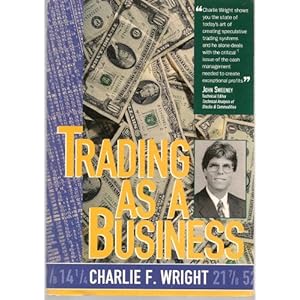 I'm reading Trading as a Business by Charlie Wright. Pretty good book profiling the evolution from discretionary trader to systematic trader. One of those books where I found myself laughing at having been down the paths. More trend following oriented but I think it is a pretty good synopsis of the systematic world and he covers some bases that added value in terms of elements to consider in one's trading (or at least mine). Decent set of checklists.
Do systematically inclined speculators recommend similar books (besides Victor Niederhoffer's and Larry Williams books).
Also, Tradestation seems to do most anything a trader would want in terms of trend following testing. I have never used it though.
Thoughts?
George Parkanyi writes:
The only flaw I find with systems is that they immediately stop working as soon as you try to use them. I think people need to do more research on fading systems.
Christopher Tucker writes:
Where's the "like" button on the Speclist?
Steve Ellison adds:
Yes, even systems I developed myself stop working when I try to use them because of data mining bias. Even if there legitimately is an edge, some component of the good backtesting performance is better-than-average luck.
Leo Jia writes:
The word "enlightened discretionary" is very appealing. The reason for it, I guess, is because of the word "enlightened" more than the word "discretionary". Everyone hopes to be enlightened in someway. Being enlightened seems to be a spiritual consummation. But I guess that is not the first and real reason why people are after being enlightened. The real reason is that it is mystic and mostly unattainable. This coincides with a human nature of always craving for what they don't have, which is among the reasons why most people are persistently unhappy.
I feel preferring discretion to system is quite illogical. Aren't whatever rules one uses as a discretion by nature a system? It perhaps is not explicitly sketched out, but it by all means is a system of rules that resides in one's head. Couldn't that be phrased and then programmed? I agree some are not very easy. But are they really impossible?
Gary Phillips writes:
I've been doing this long enough to instinctively know what works and what doesn't. I only need to look at my P&L for empirical confirmation. If in doubt I just try to see the market for what it is and not what it appears to be. One needs to understand market structure, liquidity, and price action and develop a framework for analyzing the market, somewhere between bottom-up & top-down lies the sweet spot. This allows you to see the market in the proper context and provides you with a compass, which will keep you from feeling lost and will show you the way.
Craig Mee writes:
Aren't ?
Hi Leo, you probably could say "whatever rules one uses as a discretion by nature is a system", but a system may not have the ability to load up once the move kicks (obviously it can be programmed) but at times the opportunity may appear intuitive, and a trader can do that on relatively short notice, whilst keeping initial risk limited.
Interesting, Gary, the issue with systems seems to be at times data mining against price action and structure which gives strength of understanding. The HFT may work on massive turnover, low commissions and effectively front running, and unless you have those edges then it appears difficult to succeed from a data mining basis (and relatively scary trading something that you don't effectively understand from a logical point of view). However classifying a markets structure, and working off 3-4 premises no more, (as I believe more would allow any edge to be diluted across a range of options), and the ability to leverage once on a move, appears to be something you can work with. This is purely from a hands on execution basis, no doubt the pure programmers can weigh in.
I remember speaking to a guy who professionally programs for others… (admittedly a lot of retail), and we were talking about what are the laws in place for him to not front run me after developing a system I gave him…and he was like "mate, to be honest (probably insinuating "dont flatter yourself") 97% don't make a dime." That was certainly probably expected I suppose, but to hear it in technicolour was confronting and I was surprised he said as much.
Gary Phillips writes:
I really don't believe that discretionary trading today, is any harder than it used to be. The emotional aspects, and risk management, have essentially remained the same. Methodology is different, because algorithmic driven HFTrading has forced intra-day traders to change from momentum chasers to mean reversion traders. And as you stated, there are countless global/macro concerns as a result of the financial crisis and continued global easing. So, it does demand a broader universe of knowledge, and revamped techniques and benchmarks, but it still boils down to identifying what is truly driving price and how it is being driven.
I guess this is what gives you the elusive *edge*. But, as we used to say the *edge* can sometimes be the *ledge.* That being said, trading doesn't have to be about being right or wrong the market, or predicting where the market is headed in the next moment, hour, day or week. Trading can be nothing more than a probabilistic exercise, and a trade nothing more than a statistical data point - the next event in a series of events governed by the statistical random distribution of results.
Kim Zussman writes:
"Trading can be nothing more than a probabilistic exercise, and a trade nothing more than a statistical data point - the next event in a series of events governed by the statistical random distribution of results."
One would suggest that trading is a waste of time if your historical or expected mean are random.
May
30
Waterhouse: A Serious Man, from Craig Mee
May 30, 2012 | Leave a Comment
 Tom Waterhouse is the youngest of a bookmaking dynasty in Australia. On his website he offers some fine racing tips which are easily translated to the markets. Here they are:
AIM HIGH. Always take the top of the market.This can be done by betting Top Fluc on saturdays and Best Tote on weekdays.
AVOID the sinking feeling: If the track is heavy , and you see a horse that is odds on, get on. All bookies want to lay the favourite on wet tracks . For the horse to remain in the red, it means its going to be very hard to beat.
WIN BIG LOSE SMALL: Bet bigger if you are winning smaller if you are losing.
GO LONG: If there are two horses with odds under 3.00 get on the longer priced one.
LAYDAY LAYDAY !: The horses on the front of sportsman and Winning Post (racing newspapers) are the lays of the day.
DON'T FOLLOW THE HERD: Be very surprised of the hot tips in the papers.Yet be extra keen if you like a horse and its not mentioned- you will get far better value.
THE BLADDER EFFECT: If a race jumps and you need to go to the toilet, or you feel overly nervous, you are betting too big.
STAY THE COURSE: If you reckon a horse is worth 3.00 and you see it paying 10, do not alter your bet, put on the same amount.Value is king.
OFF WITH THE CASH!: The punter who loses his head loses his money.
TOUGH LOVE: Keep your eyes and ears open when you are on the track and follow the tough money.
TAKE HALF MEASURES: It always is easier to back winners in the first half of a race meeting than the second half.
THE CUP DOESNT RUNNETH OVER: It is much easier to find a winner at a midweek hitout, than the most glamourous race of the year.
DONT PANIC: Never take under. If you miss getting on at the right price, there will be another race.
A good read about the man for those interested is this article: "A Serious Man".
May
30
 The Third Industrial Revolution (link is to a video of Rifkin speaking) will create thousands of businesses and millions of jobs and usher in a fundamental reordering of human relationships, from hierarchical to lateral power, that will impact the way we conduct business, govern society, educate our children, and engage in civic life. Rifkin writes on his website:
With Oil at 147 a barrel people stopped buying, because all the supply
change was too expensive…the entire economic engine of the industrial
revolution shut down, July of 2008, ..that was the great economic
earthquake of the 2nd industrial revolution, the collapse of the
financial markets 60 days later was the aftershock…. we now know the
outer limits of how far we can globalize this world based on elite
fossil fuels its about 150 a barrel and it will shut down.
From the man's home page:
Rifkin's vision is already gaining traction in the international community. The European Union Parliament has issued a formal declaration calling for its implementation, and other nations in Asia, Africa, and the Americas, are quickly preparing their own initiatives for transitioning into the new economic paradigm.
Stefan Jovanovich comments:
Any "revolution" — industrial or otherwise — that needs an "international community" is — by its own definitions — a non-starter. As for the people "stopping buying" when oil was $147 a barrel, a question: did they start buying again at $146? Renewable energy is the canal craze of the 21st century. The one part of it that has worked is the one that people fully understood 100+ years ago when Buffalo, NY was the center of the electrical world - hydro. Everything else has been a crock for the simple reason that it has - and still does - require subsidy. Mr. Watt needed no subventions from Parliament, only the liberty to build an engine without having a committee decide whether or not it was an "appropriate technology".
See the wiki pages for Matthew Boulton and James Watt.
May
7
Hard to Believe, from Craig Mee
May 7, 2012 | Leave a Comment
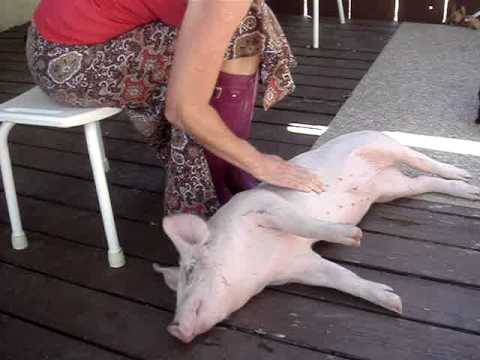 Anyone who has dined in Singapore's fabulous cheap eateries may be interested in these numbers.
"Secret Roast-Pork Recipe Tests Value of Real Estate":
How much is a recipe worth? About $1.8 million, according to the owner of Kay Lee Roast Meat Joint , who boosted the sale price of her Singapore eatery by that amount when she put it on the market this year.Betty Kong and her husband want S$3.5 million ($2.8 million) for their 60-plastic-stool establishment, a premium over the S$1.25 million assessed value of the site. The price includes the property, their recipe for roasting duck, pork ribs and crispy pig skin as well as other Cantonese-style classics, plus three months of cooking lessons
The Roast Meat Joint generates sales of around S$2,000 a day, she said, or S$620,000 annually, assuming it’s shut one day a week and three days for Lunar New Year holidays. Profit margin is 60 percent, according to her broker Raymond Lo at Knight Frank LLP. The asking price is 5.6 times annual sales, compared with the 1.1 multiple for the Singapore benchmark
Straits Times Index. (FSSTI) It would take six years to recoup the recipe premium.
Larry Williams responds:
Food costs are 20% in the best run restaurants so the 60% profit cannot include labor, overhead etc. No way
Black pepper crab in Singapore is one of the worlds greatest dishes.
May
7
Get it While its Hot, from Ken Drees
May 7, 2012 | 1 Comment
 My teens say facebook is yesterday–hope the IPO isn't a "fail" as they call things that suck, or do not work.
The stock now could go public at a lower price. Moreover, new uncertainty about the Menlo Park, Cal., company's growth prospects may temper some of the feeding frenzy that was expected to take place on the stock's first day of trading — currently scheduled for May 18.
Craig Mee responds:
Agreed. Looking at explosive movers and shakers like Google, Facebook is a different animal. Google gets the job done, but Facebook is more part of a trend or coolness factor that can be side stepped as quick as the share/message/like buttons allow. What's more, the site, especially the log in page, looks kind of old school. You can buy things, but you can't buy coolness, once you've lost it.
Russell Sears writes:
My daughter says it is because Facebook has been taken over by all the whiners, posting all the time and losers playing games. It seems the only acceptable use is keeping Grandma up to date. Hence if you admit you use it, you are the sucker at the table.
Gary Rogan writes:
In addition to the inherent instability of any high tech company, this one adds the delightful dependence of its success on the what most of its customers think of most/some of its other customers, usually a characteristic associated with trendy fashion retailers and night clubs. Compared to this one, Groupon that made another all-time low today at significantly less than half of its initial trading range is the rock of Gibraltar.
Apr
30
GBPUSD: to Run or Not to Run, from Craig Mee
April 30, 2012 | Leave a Comment
The gbpusd had 10 straight up days as of Friday. For the crunchers, this has happened, if my information is correct, only 3 times (including Friday's run) in the last 3 decades. (none greater). Whats no10 Downing Street to do? Where's the stop? Where do I take profit? Is there a viable risk /reward trade in there anywhere? Oh so many questions…
Apr
26
3-D Printers, from Craig Mee
April 26, 2012 | 1 Comment
 I found this comment by "Global Guru" on the perceived shift back to the west in manufacturing very interesting:
And for all the talk of the decline of the United States, and the rise of China, India and Brazil, much of the know-how behind this shift is coming from the world's developed economies, with the United States far in the lead.
Much of this historical shift is thanks to the rise of three dimensional (3D) printing. Although it's hard to get your head around it, 3D printing is actually pretty much what it sounds like. Design a part on your computer using some type of three-dimensional software and the "printer" actually manufactures it for you right then and there. In many ways, 3D technologies are the closest things to Star Trek-like transporters you can have. Scan an object in Silicon Valley, and another machine in South Africa can build a copy.
3D printing provides for mass customization on an unimagined scale. And chances are it's already part of your life. Your last customized dental crown or hearing aid was manufactured using this technology. Companies soon will be making customized drugs based on your own DNA sequence. I have no doubt that other 3D printers will one day be manufacturing customized hearts and livers from your body's own cells.
The applications of 3D printing know no bounds. New 3D technologies are helping carbon fiber replace steel; breed viruses to make batteries; and help researchers at Cornell "print" cupcakes. 3D also helps manufacturing processes to accelerate at an exponential rate. While it took 3,000 hours to manufacture a carbon fiber Formula 1 race car in 1981, today it takes four.
Apr
15
Lessons From the King of Blackjack, from Craig Mee
April 15, 2012 | 3 Comments
 I just read The Atlantic article "The Man Who Brok Atlantic City" about Don Johnson the blackjack player who once took $ 6 million in one night from an Atlantic City casino. It was a great read, and I think any one who asks questions about how to be a trader or an investor should read it.
One amazing thing I learned is that Johnson figured out how to drive the house edge even lower. Through hard negotiations he got it down to (by his estimate) just one quarter of one percent. That’s super close to dead even — but still not quite enough. And then came the coup de gras. With some negotiated loss discounts on top of that — agreements for the casino to reimburse a certain amount of if Johnson lost — he actually flipped the overall edge in his favor without the casino realizing it.
House management got played by a math shark. So how did all these casinos end up giving Johnson what he himself describes as a “huge edge”? “I just think somebody missed the math when they did the numbers on it,” he told an interviewer.
Sam Marx writes:
The article stresses that the player, Don Johnson, did no card counting.
If true, he may have used the Basic Strategy with a few of the newer techniques , plus the concessions he received to get the edge.
Card counting is primarily used to determine size of bet and to a lesser extent to vary the Basic Strategy under different counts.
Beating the House and varying the size of the bet are the two things that give away card counting.
However, varying the size of the bet may be somewhat hidden by betting the same amount from hand to hand but after a winning hand if the count is positive then just the let the original bet plus the winnings ride, as letting a winning bet ride is a technique used by many gambler who are not card counters and usually does not cause the House to be suspicious.
The article does not indicate if Don Johnson varied his bets.
If the article is true, he may have been a big winner even with a small edge , because his bets were huge and he may have quit before playing many hands and with luck may have had a good streak during those few hands he played.
The article is interesting, it may be true or hype.
I would like to know more details.
Apr
10
A Domestic Violence Indicator, from Craig Mee
April 10, 2012 | Leave a Comment
 A potential leading indicator for whether to be involved in direct business dealings with a country could be domestic violence statistics.
I think the reasons may be self evident.
It appears difficult to get solid stats though, which may hamper our ability to quantify.
(2004) China's women suffer the highest suicide rate in the world, a rate 25 percent higher than for Chinese men, and in the countryside, where the majority of China's women live, one-third of all deaths among young women are a result of suicide.
"There is no specific law in China that a woman can charge her husband," said Chen Mingxia, of the Marriage Law Institute.
Four out of 10 women in Turkey are beaten by their husbands, according to the recent study entitled "Domestic Violence against Women in Turkey."
"The definition of honor, in the Turkish, more eastern, sense, is always defined within the sexuality of women," Agduk said. "Men believe that when they marry a woman, they possess her. They see a woman just like a car."
Apr
6
Waste of the West, from Craig Mee
April 6, 2012 | 1 Comment
How many decidedly creative but reserved people are so locked into to their blinkered existences in the west (or east, north or south) that their lives couldn't be so much more fulfilling for them and productive for the economy and other people given the right government analysis and framework to work with. What is the cost of pulling blanket rules and regs and raging costs and inflation so that this creme does not rise…
Clock in…clock out…
Apr
4
The Night Watchman, from Craig Mee
April 4, 2012 | Leave a Comment
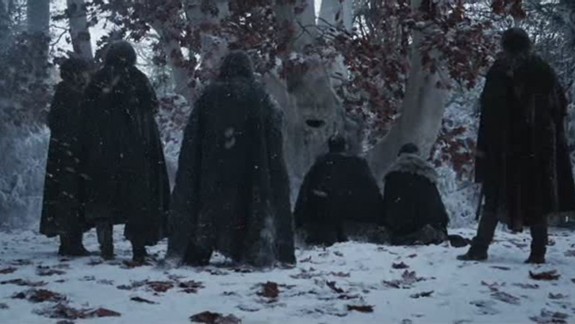 To execute a chosen strategy from the initial plan until exit, takes more gumption than may be initially thought. Ghosts of other strategies, like short term versus a new longer term holding period, try their best to capsize the ship, throwing in sniper bullets, coming up at you at unexpected angles through increased volatility and erratic counter moves, and so do the memories of previous campaigns that have been dealt massive blows in the past, no matter how strong the leadership was. It gives the night watchman plenty of food for thought.
But "holding the wall" and protecting the predefined strategy at all costs is imperative no matter what the adversary. (It maybe wise to remember to say, as per the vow below, when a position has been cleared and a strategy followed to the letter, "And now his watch has ended".
If you are reading or watching Game of Thrones you may be familiar with the vow of the Night's Watch:
The "Night's Watch" is a military order dedicated to holding the Wall, the immense fortification on the northern border of the Seven Kingdoms, defending the realms of men from what lies beyond. The order's foundation dates back to the Age of Heroes, at the time when the Others were pushed back. The men of Night's Watch wear only black.
When the recruits are considered ready to take the black, they say their vows either in a sept or before a heart tree. The vows are as follows:
“Night gathers, and now my watch begins. It shall not end until my death. I shall take no wife, hold no lands, father no children. I shall wear no crowns and win no glory. I shall live and die at my post. I am the sword in the darkness. I am the watcher on the walls. I am the fire that burns against the cold, the light that brings the dawn, the horn that wakes the sleepers, the shield that guards the realms of men. I pledge my life and honor to the Night's Watch, for this night and all nights to come.”It's customary to finish a black brother's eulogy with the words, "And now his watch is ended."
Mar
22
Thought of the Day, from Craig Mee
March 22, 2012 | Leave a Comment
 As the more financially well off in the west live a more and more sheltered life, all brass and glass, and steer away from the hardships of WWII, and the acceptance of some irritations in life, to an existence where nothing can be out of place, does this effect the way we trade our markets?
This is a conditioning, no ifs or buts about it. The more things are in line, the more the general public makes sure the peanut next door toes the line and we don't get our feet wet when we don't have to, and we wear ear muffs when we mow the lawn. Does this effect how we want to knock our markets back into shape when we start believing they are not toeing the line? As individuals generally get more set in the ways the older they get, and less forgiving, does the average age of participants in a market, likewise effect the way a market moves? Are developing world markets, more generous and more flexible, forgiving and acceptable?
Mar
22
When to Buy the Worst, from Craig Mee
March 22, 2012 | Leave a Comment
What are the measures or leading indicators that the world is facing liquidity issues at any one time?
In light of Victor's thoughts about when to get your cane out, it seems you buy the worst stocks when it's not just the company that's at stake, but due to help from government bureaucracy, and inadequacies and oversights (they have their paw print in there somewhere), the markets are getting trashed, and the government will flex their muscles (well, really yours or your grand kids' muscles) and they will save the world (with political overtones and because it's not their cash), no matter what.
When saving the world is imperative, at the darkest hour before dawn, it's time to be swift and strong, and start your sweeping. When volatility is off, and a big name is going backwards, it may well pay to use a cheaper cane.
Mar
19
A Squeeze, from Craig Mee
March 19, 2012 | 2 Comments
A comment on the CFTC:
and this most recent crash in gold and silver during Bernanke's speech on February 29th is of notable importance, as we along with 4 other major institutions, orchestrated the violent $100 drop in Gold and subsequent drops in silver.
Mar
18
When Hubris Takes Hold, from Craig Mee
March 18, 2012 | Leave a Comment
 In light of the GS machine seeing a fall from grace, outlined by Rocky's man on the ground observations, and further by the recent resignation letter, and the Rolling Stone article showing past deeds do not get in the way when you have friends in high places…
How can you pinpoint when hubris has taken over the culture of a company and there's more back slapping then client phone calls taking place? Whether it's a financial company or otherwise, are there any leading indicators– proportion of bonuses to management as opposed to the minnows, for example? I recall Macquarie Group, (often referred to as Australia's Goldman) some years ago had what seemed like a ridiculous amount of money weighted to the top end, as in 6-8 board members.
Maybe though something as simple as a voice response from a cross section of the community, outlined by the following passage may give you a indication on when they're on the nose:
2007 "In the past decade Macquarie has been one of the great stories of Australian business. In the next decade it will surely be one of the most intriguing. How ready is Macquarie for the consequences of owning businesses on which citizens vitally depend? And how ready are citizens to depend upon Macquarie? While what Macquarie Bank ends up being called is of only minor significance, the tone with which people say its name may matter a lot."
(MQG off 66.% from Nov 2007 levels).
Mar
15
Nigerian Scammers, from Craig Mee
March 15, 2012 | Leave a Comment
 In terms of using technology to take it up a notch and play a numbers game, the Nigerian scammers are certainly up there.
I met a bloke personally recently, who said he got done for 4 grand. How did they do it? They sent him a email from his ex wife, with all the language indicative of how an email would be exchanged between the two. She subsequently said she was overseas, which she was, and had a medical issue, and was having trouble getting funds. He tried her mobile but she didn't pick up. He then sent the funds.
Bottom Line: The email that came in, on a closer inspection had one different letter on the back end of it, and his ex wife thinks that they accessed her emails through an internet cafe she was at in London. Didn't sign off, but just clicked out, and they were waiting in the wings to pounce. (Facebook is said to be a wealth of information for them too).
This activation job below, an atypical roll-out by the Nigerians, is just zoning in on pure greed…and due to the money involved, due diligence was being thrown out the window:
The 49-year-old fell victim to an online scam and was convinced a wealthy church friend of hers named Bridget had passed away and left her an inheritance.
"Bridget wasn’t poor, she traveled to South Africa 6 or 7 times a year so she had the money,” Ms Scaf recalls.
She was told she'd need to pay thousands to activate an overseas account holding the $1 million left to her. Ms Scaf says she was emailed a series of documents that appeared legitimate.
"These people are so good at what they do because they come across sounding so genuine,” she said.
Over a period of three months, she transferred almost $40,000 through an online bank account.
Mar
12
Fund Allocation, from Larry Williams
March 12, 2012 | Leave a Comment
 The other day I heard somebody say:
"Assuming the future behaves the same as the past, I reason that this way makes my funds efficiently used".
I wanted to say, my experience is that the past is never like the future so we waste valuable time and skills on a false postulate.
As I see it, it is better to have a core strategy to deal with equity drawdowns, etc –based on logic–as opposed to a strategy based on the past real results or back tested as that is for the most part a make believe world since it never happens quite that way again.
Gary Rogan writes:
Larry's statement seems to be exceptionally profound in what it's saying and in the unambiguous nature of what it's saying. Speculation seems to be about predicting the future. Is there anything but the past, in some sense, that can guide us towards correctly predicting the future? If so, and if it's not similarity, what is it about the past that can help predict the future?
John Netto comments:
There are ample proverbs espousing the merits of both deriving information on events which have taken place before us, as well as the the complexities in attempting to accurately predict the future due to the inherent uniqueness of the time we are living. As a speculator in the financial markets, sports arena, and poker, it's my experience the answer lies somewhere in between. For me, the ability to extract alpha is how well I can ascertain what qualitative aspects are unique and execute a strategy from there.
Two sayings which are both contradictory and complimentary:
"Past is not prologue" "Those who do not learn from history are doomed to repeat it"
Gary Rogan writes:
There are many ways to use the past, such as:
1. Under similar circumstances, Security A behaved a certain way during a statistically significant percentage of the time. I will therefore bet that Security A will do it again under similar circumstances.
2. In the past, a certain class of securities had a certain trajectory under similar circumstances. I will therefore bet that this new Security B, which seems fit to be a member of this class, is statistically likely to follow this trajectory close enough to bet on.
3. In the past, when people were this excited/depressed/confused you could bet with them/against them and make money. Let's do it again.
4. The past rarely repeats under these circumstances. Let's bet against the past.
I'm sure there is an infinite variety of similar observations. Yet in every case the past was used SOMEHOW. There is nothing but the past as the basis for human knowledge, and that's why I was so fascinated by Larry's statement, especially because he is a master of his game.
Craig Mee writes:
Running a stop with any position, regardless of the backtest, is both logical and prudent.
Stefan Jovanovich adds:
When the British and French were forced to give up their remaining military strength in the Arabian Peninsula and the eastern Mediterranean - abandoning the base in Aden, being forced to withdraw from their assault on the Suez Canal, the U.S. did not replace them on the ground. The great fear was that "the loss of the Canal" would result in "the oil weapon" being used against "the West". The actual result was the development of supertankers that by-passed the Canal entirely and increased by an order of magnitude the ability of the oil exporters to ship their crude to Europe and Asia. At the height of the Suez crisis the inflation-adjusted price of crude (using the 1947 nominal price of $15 as the baseline) rose to $18 a barrel - higher than it had been during the Korean War. A decade and a half later - even as U.S. supplies went from 40% of world production to 10% - the inflation-adjusted price fell by nearly a third, hitting a low of $13 in 1972 after production began flowing from the North Sea discoveries.
I find myself wondering if the U.S. eventual withdrawal from Afghanistan and the withdrawal from Iraq already largely completed will not have the same paradoxical effects as the Anglo-French withdrawals did. I realize that this question is completely irrelevant to the questions that anyone trading in commodities has to answer; but those of us in the bleachers are interested in what the professionals on the field think will be the effects of the closing of America's 25-year military misadventures in Southwest Asia.
Larry's maxim: "it never happens quite that way again" - certainly applies to political history. This is the second time in my lifetime that the American public has lost its belief in the virtue of our allies. Last time they were wrong; this time they are right.
Mar
12
Britain’s Madoff, from Craig Mee
March 12, 2012 | Leave a Comment
A fascinating read: "How I was taken in by Britain's Madoff" :
"The mastermind in Britain's biggest Ponzi fraud lived like a playboy until his scheme collapsed, leaving a trail of broken lives. Cahal Milmo spoke to one of his victims "
Mar
7
Article of the Day, from Craig Mee
March 7, 2012 | Leave a Comment
A recent article entitled "Sleight of Hand at Every Corner" in The Bali Times on the fx money changers on the Island of the Gods sounds like the markets. Even after many years in the game, the squeeze for a little more continues…
Mar
3
Dam Levels and Markets, from Craig Mee
March 3, 2012 | 1 Comment
Linked here is a very interesting chart on Sydney Dams. Funny, it wasn't so long ago that the dams were getting to a critical point. Now they are close to overflowing. This link on the overall Dams levels is interesting from the point of rapid expansion from a very low point. As with nature as with markets, like any good breakout model. Mean reversion… swift and strong, after plenty of bleeding.
Feb
24
Government Employee Percentage and the Market, from Craig Mee
February 24, 2012 | Leave a Comment
I am unable to find the data, but I would like to hypothesize that, in keeping with Victor's idea or Max Keiser's, a large government employees number is indicative of bubble creation as the engine needs to be greased……and that the 12 months following, the largest % reduction in a year in government employees sees the least volatility for financial markets in the following 12 months.
This will have to be tested…
Feb
13
Too Many Hustlers on the Street, from Craig Mee
February 13, 2012 | Leave a Comment
 With deleveraging on the frontfoot, for investment for the next 10 years, it may pay to disown countries with a service sector that represents over 65% of GDP.
No doubt there are a few caveats, like the ease with which to transact, and the ability to sort the chaff from the wheat, and hose down beaureacy and red tape quickly, though in the west this may be a non existent situation, since those in power look to justify their positions further and keep adding red tape, increasing the socialist feel rather than reducing it as conditions get difficult.
The numbers of real risk takers in life appear minimal, though there are a lot of yes men. We therefore should not be concerned about investing in countries that have a name for inappropriate ways of doing business in the past since, at least, they will have improving business conditions and stronger rates, so we will may have to only fight it on one front, unlike the west where we will now fight it on two.
Countries like Indonesia where agr 15.3% Industry 47%, and services a minnow 37.6% with interest rates at 5.75% may be worth the consideration.
Too many hustlers on the street.
List of Countries by GDP Sector Compositio.
Anonymous comments:
The mix of low-service sector countries is very interesting.
The 13 below the global average are:
Saudi Arabia 35.7%
Indonesia 37.6%
Thailand 42.9%
China 43%
Iran 47.3%
UAE 47.6%
Colombia 52.7%
India 55.2%
Norway 57.8%
South Korea 58.2%
Russia 59.1%
Argentina 59.8%
Venezuela 61.1%
The merits of international investing are said to be many, but I doubt many strategists would want to place significant sums in regions of the world particularly susceptible to capital controls and confiscation.
With great risk, comes great…
Maybe Big Al and I can come up with a salable "Political Risk" ETF.
Feb
12
The Science and Lore of the Kitchen, from Craig Mee
February 12, 2012 | Leave a Comment
 Specs, in keeping with our interest in understanding what makes things tick and questioning the accepted protocols, this may be worthy:
Harold McGee's On Food and Cooking: The science and Lore of the Kitchen is a kitchen classic. Hailed by Time magazine as "a minor masterpiece" when it first appeared in 1984, On Food and Cooking is the bible to which food lovers and professional chefs worldwide turn for an understanding of where our foods come from, what exactly they're made of, and how cooking transforms them into something new and delicious. On Food and Cooking remains unmatched in the accuracy, clarity, and thoroughness of its explanations, and the intriguing way in which it blends science with the historical evolution of foods and cooking techniques. Recommended as one of the inspirations of Heston Blumenthal of The Fat Duck in Bray, UK. Michelin stars and awards– too many too count.
Feb
9
The Art of the For Sale Sign, from Craig Mee
February 9, 2012 | Leave a Comment
 I have been looking at the "for sale" and "for lease" signs in the local area in Bali, where a lot of the deals are found "locally", ie not represented by agents, but marketed by side of the road signage.
I have found that the more permanent looking the sign, the less of a bargain there is, or some other type of deception is being presented on following up.
So there appears to be some expertise in getting this quite right.
A sign that's strong enough to withstand the storms and the wind and the rain of the wet season, but still have that look of, "I've just whipped this sign up quickly, for a quick sale, as I need money fast, as I just blew too much on a cock fight, come in you'll get a bargain."
No doubt other areas in business, which have got a bit too much spit and polish, like a "too well" dressed salesmen, get you thinking "caution ahead".
It's a fine line which pays for the representative to get it exactly right.
Phil McDonnell writes:
I remember reading an academic paper many years ago that showed that annual shareholder reports without frills were the best stocks to own. If the company was not wasting money on hype and glossy materials then the stock probably was not over valued and they were running a lean machine internally as well. On the other hand companies with the glossy annual reports probably already had their run and were living high on the hog. I do not have a reference but others may recall the paper.
Feb
9
Waves, from Craig Mee
February 9, 2012 | Leave a Comment
I was thinking about surging waves this morning. Fast sideways momentum into an elevated pitch, resulting in a crumbling peak and a crash. No doubt all speeds are relative to the outcome, though it must be tested.
Feb
7
The Pressures of Being the Leader of the Pack, from Craig Mee
February 7, 2012 | Leave a Comment
 Does the pressure of being in the lead make you take greater risks to maintain it, or do you feel like you have to prove yourself, and show everyone you're a well deserving winner, allowing hubris to rear its ugly face.
In Golf, Kyle Stanley bounced back from a bitter defeat to win the Phoenix Open on Sunday, erasing an eight-shot deficit to claim victory a week after his last-round collapse at Torrey Pines.
Alan Millhone replies:
Hi Craig.
I have had the honor of being referee at several world title checker matches. The top Grand Masters when in the lead will be content and play for draws and thus force their opponent to take chances to get a win.
Leo Jia writes:
Being in a leading position is generally tough. First, the leader in a group doesn't automatically get enough motivation to advance. Secondly, he is in an unfair situation where the next win is generally considered a nonevent while a slip to the second position is considered a disaster.
In Chinese idioms, there are some that promote leading. Such as:
First argument occupies the mind; Act first to get the advantage; Voice up the strengths first to forestall the opponent; Be like a crane standing among chickens;
Then, there are many that are against leading:
Sticked-up head gets shot; A man dreads fame as a pig dreads being fat; Protruding rafters rot first; The outstanding tree gets destroyed by wind; The excellent craftsman gets most denies from all craftsmen;
Generally there are more negativity toward leading. Looking back to historic events, a crown prince (a leader of all princes) is perhaps the most dangerous position one can get. From similar reasoning, one key teaching of Confucius is the doctrine of the mean , which basically tells everyone not to stick his head out.
The relative advantage of the leader from the rest (the second and the third for instance) is also very interesting. Consider A, B and C to be the leading, the second, and the third parties respectively. The difference between B and C relative to the difference between A and C is a determining factor in relationships. If B is closer to C (than to A), then generally, B and C will form a union to fight A. Conversely, if B is closer to A, then A and C will very likely form a union to fight B. In either situation, C always has an illusion of being the most advantageous to form a union with A, which as a matter of fact is the most detrimental to itself as well as to B.
A famous ancient novel based on real history called Romance of the Three Kingdoms depicts the above relationships very well. The story happened between 169 AD and 280 AD, when the three kingdoms within the current China's territory: Wei (A), Wu (B), and Shu (C) dealt and fought amazingly amongst themselves, with incessant conspiracies and strategies, all seeking to conquer the entire territory.
Here is the Wiki Page about the novel. An online English version of the entire (long) novel apparently can be read here.
Feb
7
Article of the Day, from Craig Mee
February 7, 2012 | Leave a Comment
 This is an interesting article about how the Surfwear pioneer brand Quicksilver is working with Deakin University to improve their product technology. With phrases mentioned like:
"lines of nature"
"highly tuned piece of garment, that provides information back to the brain therefore giving you more control"
"tight fitting garment that provides you with feedback"
"for every action there is a equal and opposite reaction"
"slingshot back to normality"
it sounds like Quicksilver is learning a thing or two from nature for their own development.
How about a sweeping bottom hand turn…you may not want the mean reversion.
Either way, boardies are not like you knew them anymore…
Jan
30
Ten Steps One Should Take to Become a Successful Speculator, from Victor Niederhoffer
January 30, 2012 | Leave a Comment
 I am often asked what ten steps one should take to become a successful speculator.
I would start by reading the books of the 19th century speculators, 50 Years in Wall Street, The Reminiscences of a Stock Operator by Markman, and others.
Next I would read the papers of Alfred Cowles in the 1920s and try to compute similar statistics on runs and expectations for 5 or 10 markets.
Third I would get or write a program to pick out random dates from an array of prices, and see what regularities you find in it compared to picking out actual event or market based events.
Fourth, I would read Malkiel's book A Random Walk Down Wall Street and update his findings with the last 2 years of data.
Fifth, I would look at the work of Sam Eisenstadt of Value Line and see if you could replicate it in real life with updated results.
Sixth, I would start to keep daily prices, open, high, low, and close for 20 of so markets and individual stocks and go back a few years.
Seventh, I would go to a good business library and look at the old Investor Statistical Laboratory records of prices to see whether it gave you any insights.
Eighth, I would look for times when panic was in the air, and see if there were opportunities to bring out the canes on a systematic basis.
Ninth, I would apprentice myself to a good speculator and ask if I could be a helpful assistant without pay for a period.
Tenth, I would become adept at a field I knew and then try to apply some of the insights from that field into the market.
Eleventh, I would get a good book on Statistics like Snedecor or Anderson and be able to compute the usual measures of mean, variance, and regression in it.
Twelfth, I would read all the good financial papers on SSRN or Financial Analysts Journal to see what anomalies are still open.
Thirteenth, of course would be to read Bacon, Ben Green, and Atlas Shrugged.
I guess there are many other steps that should be taken that I have left out especially for the speculation in individual stocks. What additional steps would you recommend? Which of mine seem too narrow or specialized or wrong?
Rocky Humbert writes:
 All the activities mentioned are educational, however, notably missing is a precise definition of a "successful speculator." I think providing a clear, rigorous definition of both of these terms would be illuminating and a necessary first step — and the definition itself will reveal much truth.
Anatoly Veltman adds:
I think with individual stocks: one would have to really understand the sector, the company's niche and be able to monitor inside activity for possible impropriety. Individual stocks can wipe out: Bear Stearns deflated from $60 to $2 in no time at all. In my opinion: there is no bullet-proof technical approach, applicable to an individual enterprise situation.
A widely-held index, currency cross or commodity is an entirely different arena. And where the instrument can freely move around the clock: there will be a lot of arbitrage opportunities arising out of the fact that a high percentage of participation is inefficient, limited in both the hours that they commit and the capital they commit between time-zone changes. Small inefficiencies can snowball into huge trends and turns; and given the leverage allowed in those markets - live or die financial opportunities are ever present. So technicals overpower fundamentals. So far so good.
Comes the tricky part: to adopt statistics to the fact of unprecedented centralized meddling and thievery around the very political tops. Some of the individual market decrees may be painfully random: after all, pols are just humans with their families, lovers, ills and foibles. No statistical precedent may duly incorporate such. Plus, I suspect most centralized economies of current decade may be guilty of dual-bookeeping. Those things may also blow up in more random fashion than many decades worth of statistics might dictate. Don't tell me that leveraged shorting and flexionic interventions existed even before the Great Depression. Today's globalization, money creation at a stroke of a keyboard key, abominable trends in income/education disparity and demographics, coupled with general new low in societal conscience and ethics - all combine to create a more volatile cocktail than historical market stats bear out. 2001 brought the first foreign act of war to the American soil in centuries. I know that chair and others were critical of any a money manager strategizing around such an event. But was it a fluke, or a clue: that a wrong trend in place for some time will invariably produce an unexpected event? Why can't an unprecedented event hit the world's financial domain? In the aftermath of DSK Sofitel set-up, some may begin imagining the coming bank headquarter bombing, banker shooting or other domestic terrorism. I for one envision a further off-beat scenario: that contrary to expectations, the current debt spiral will be stopped dead. Can you imagine next market moves without the printing press? Will you find statistical precedent of zooming from 2 trillion deficit to 14 trillion and suddenly stopping one day?
Craig Mee comments:
 Very generous post, thanks Victor…
I would add, in this day and age, learn tough typing and keyboard skills for execution and your way around a keyboard, so you don't wipe off a months profit in the heat of battle. I would also add, learn ways of speed reading and information absorption, though these two may be more "what to do before you start out".
Gary Rogan writes:
Anatoly, I don't think really understanding the sector and and the niche is all that useful unless one knows what's going on as well as the CEO of the company, which means that in general understanding quite a bit about the company isn't useful to anyone without access to enormous amount of information. It's the subtle, little, invisible things that often make all the difference. There are a lot of people who know a lot about pretty much any company, so to out-compete them based on knowledge is usually pretty hopeless. It is nevertheless sometimes possible to out-compete those with even better knowledge by sticking with longer horizons or by being a better processor of information, but it's rare.
That said, it has been shown repeatedly that some combination of buying stocks that are out of favor by some objective measure, possibly combined with some positive value-creation characteristics, such as return on invested capital, do result in market-beating return. Certainly, just about any equity can go to essentially zero, but that's what diversification is for.
Jeff Watson adds:
 In the commodities markets it's essential to cultivate commercials who trade the same markets as you(especially in the grains.) One can glean much information from a commercial, information like who's buying. who's selling, who's bidding up the front month, who's spreading what, who's buying one commodity market and selling another, etc. When dealing with a commercial, be sure to not waste his time and have some valuable information to offer as a quid pro. Also, one necessary skill to develop is to determine how much of a particular commodity is for sale at any given time…. That skill takes a lot of experience to adequately gauge the market. Also, in addition to finding a good mentor, listen to your elders, the guys who have been successful speculators for decades, the guys who have seen and experienced it all. Avoid the clerks, brokers, backroom guys, analysts, touts, hoodoos etc. Learn to be cold blooded and be willing to take a hit, even if you think the market might turn around in the future. Learn to avoid hope, as hope will ultimately kill your bankroll. When engaged in speculation, find one on one games like sports, cards, chess, etc that pit you against another person. Play these games aggressively, and learn to find an edge. That edge might translate to the markets. Still, while being aggressive in the games, play a thinking man's game, play smart, and learn to play a strong defensive game……a respect for the defense will carry over to the way you approach the markets and defend your bankroll. Stay in good physical shape, get lots of exercise, eat well, avoid excesses.
Leo Jia comments:
Given that manipulation is still prevalent in some Asian markets, I would add that, for individual stocks in particular, one needs to understand manipulators' tactics well and learn to survive and thrive under their toes.
Bruno Ombreux writes:
Just to support what Jeff said, you really have to define which market you are talking about. Because they are all different. On one hand you have stuff like S&P futures with robots trading by the nanosecond, in which algorithms and IT would be the main skill nowadays, I guess. On the other hand, you have more sedate markets with only a few big players. This article from zerohedge was really excellent. It describes the credit market, but some commodity markets are exactly the same. There the skill is more akin to high stake poker, figuring out each of your limited number of counterparts position, intentions and psychology.
Rocky Humbert adds:
I note that the Chair ignored my request to precisely define the term "successful speculator," perhaps because avoiding such rigorousness allows him to define success and speculation in a manner as to avoid acknowledging his own biases. I'd further suggest that his list of educational materials, although interesting and undoubtedly useful for all students of markets, seems biased towards an attempt to make people to be "like him."
If gold is up a gazillion percent over the past decade, and you're up 20%, are you a successful speculator?If the stock market is down 20% over a six month period, and you're down 2%, are you a successful speculator?If you have beaten the S&P by 20 basis points/year, ever year, for the past decade, without any meaningful drawdowns, are you a successful speculator?If you trade once every year or two, and every trade that you do makes some money, are you a successful speculator?
If you never trade, can you be a successful speculator?
If you dollar cost average, and are disciplined, are you a successful speculator?
If you compound at 50% per year for 10 years, and then lose everything in an afternoon, are you a successful speculator?
If you lose everything in an afternoon, and then learn from your mistake, and then compound at 50% for the next 10 years, are you a successful speculator?
If you compound at 6% per year for 10 years, and never have a meaningful drawdown, are you a successful speculator?
If the risk free rate is 6%, and you are making 12%, are you a more successful speculator then if the risk-free rate is 0% and you are making 6%?
If you think you are a successful speculator, can you really be a successful speculator?
If you think you are not a successful speculator, can you be a successful speculator?
Who are the most successful speculators of the past 100 years? Who are the least successful speculators of the past 100 years?
An anonymous contributor adds:
 In conjunction with the chair's mention of valuable books and histories, I would append Fred Schwed's Where are the Customers' Yachts?.
While ostensibly written with a tongue-in-cheek hapless outsider view of 1920s and 1930s Wall Street, it has provided as many lessons and illustrations as anything by Henry Clews. In this case, I am reminded of the chapter in which Schwed wonders if such a thing as superior investment advice actually exists.
Pete Earle writes:
It is my opinion that the first thing that the would-be speculator should do, even before undertaking the courses of actions described by our Chair, is to open a small brokerage account and begin plunking around in small size, getting a feel for the market, the vagaries of execution quality, time delays, and the like. That may serve to either increase the appetite for such knowledge, or nip in the bud what could otherwise be a long and frustrating journey.
Kim Zussman adds:
The obligatory Wikipedia* definition of speculation is investment with higher risk:
Speculating is the assumption of risk in anticipation of gain but recognizing a higher than average possibility of loss. The term speculation implies that a business or investment risk can be analyzed and measured, and its distinction from the term Investment is one of degree of risk. It differs from gambling, which is based on random outcomes.
There is nothing in the act of speculating or investing that suggests holding times have anything to do with the difference in the degree of risk separating speculation from investing
By this definition one must define risk and decide what comprises high and low risk — which may be simple in extreme cases but (as we have seen repeatedly) is not very straightforward in financial markets
*Chair is quoted in the link
Alston Mabry writes in:
I'm successful when I achieve the goals I set for myself. And rather than a target in dollars or basis points or relative to any index or ex-post wish list, those goals may simply be to act with discipline in implementing a plan and then accepting the results, modifying the plan, etc.
Anatoly Veltman adds:
And don't forget Ed Seykota: "Everyone gets out of the market what they want". I find that everyone gets out of life what they want.
Plenty a market participant is not in it to make money. Fantastic news for those who are!
Bruno Ombreux writes:
This will actually bring me back to the question of what is a successful speculator.
In my opinion success in life is defined in having enough to eat, a roof, friendships and a happy family (as an aside, after near-death experiences, people tend to report family first). You can forget stuff like being famous, leaving a legacy or being remembered in history books. If you are interested in these things, you have chosen the wrong business. Nobody remembers traders or businessmen after their death except close family and friends. People who make history are military and political leaders, great artists, writers…
So you are limited to food, roof, friends and family. Therefore my definition of a successful speculator is a speculator that has enough of these, so that he doesn't feel he needs to speculate. I repeat, "a successful speculator does not need to speculate."
Paolo Pezzutti adds:
I simply think that a successful speculator is one who makes money trading. Among soccer players Messi, Ibrahimovic are considered very successful. They consistently score. They experience short periods without scoring. Similarly, traders should have an equity line which consistently prints new highs with low volatility and a short time between new highs. Like soccer players and other athletes it is their mental characteristics the main edge rather than knowledge of statistics. One can learn how to speculate but without talent cannot play the champions league of traders and will print an equity line with high drawdowns struggling losing too much when wrong and winning too little when right. Before dedicating time to find a statistical edge in markets one should assess his own talent and train psychologically. In this regard I like Dr Steenbarger work. In sports as in trading you very soon know yourself: your strengths and weakness. There is no mercy. You are exposed and naked. This is the greatness and cruelty of markets and competition. This is the area where one should really focus in my opinion.
Steve Ellison writes:
To elaborate a bit on Commander Pezzutti's definition, I would consider a successful speculator one who has outperformed a relevant benchmark for annual returns over a period of five years or more. Ideally, the outperformance should be statistically significant, but market returns can be so noisy that it might take much of a career to attain statistical significance.
Jeff Rollert writes:
I propose a successful speculator dies wealthy, with many friends. Wealth is not measured just in liquid terms.
Should a statistical method be preferred, I suggest he is the last speculator, with capital, from all the speculators of his college class.
In both cases, I suggest the Chair and Senator are deemed successful, each in their own way.
Leo Jia adds:
If I may wager my 2 cents here.
I would define a successful speculator as someone who has achieved a record that is substantially above the average record of all speculators in percentage terms during an extended period of time. The success here means more of a caliber that one has acquired which is manifested by the long-term record. Similarly regarded are the martial artists. One is considered successful when he has demonstrated the ability to beat substantially more than half of the people who practice martial arts, regardless of their styles, during an extended period of time. It doesn't mean that he should have encountered no failures during that time - everyone has failures. So, even if that successful one was beaten to death at one fight, he is still regarded as a successful martial artist because his past achievements are well revered.
With this view, I will try to answer Rocky's questions to illustrate.
Julian Rowberry writes:
An important step is to get some money. Preferably someone else's. [LOL ]
Jan
27
How to be a #3 in Cricket, from Craig Mee
January 27, 2012 | 2 Comments
 Are you a number 3 batsman? We must all be at certain times, but you must know how to bat equally as prudently as an opener or last drop.
Like in trading, with Cricket and sports, you must know your role and be a good reader of what's unfolding and how to apply it, due to volatility and current risk reward opportunities.
Batting at No.3, the player must have a wide range of skills to be successful. He must have the defence of an opener, to come in when an early wicket is lost and nullify the new ball. Or he must come in at 1-100, and attack like it's a one-day match to keep the momentum of the game going his team's way.
The key word is 'momentum'. The player must have the skill to take the momentum away from the opposition bowlers and get it to swing his way. Or he might have to come in late and keep the momentum going as long as he can. All great No.3s had the skill to change the momentum of a match: Don Bradman, Viv Richards, Ponting, Rahul Dravid, Neil Harvey and Kumar Sangakkara.
Jan
24
Sports and Markets, from Craig Mee
January 24, 2012 | Leave a Comment
 England's great Ken Barrington knew how to bat in the subcontinent. He used to say you had to book in for bed and breakfast, which means when you get in, stay in and make the opposition bowl you out. It is not rocket science)
I interpret this in my own life as "don't take risks and over trade in a low volatility environment, just protect your position, and let the slow momentum move you into slow but sustainable profit."
In Tennis, McEnroe in the Aussie Open once said something whose meaning I find similar, "you don't necessary have to change your shot because your opponents there…..don't second guess yourself."
Has anyone else found any sports and markets lessons of late?
Jan
5
Outback Fight Club, from Craig Mee
January 5, 2012 | Leave a Comment
Outback Fight Club is an amazing documentary on youtube about Fred Brophy's tent boxing group that travels around rural Australia taking on all challengers has so many market lessons. Watch for the moves that have no style or symmetry and come out of left field, as they can be the most deceiving and the most devastating….no doubt there are lots more lessons in this film.
Dec
22
Pit Simulation, from Duncan Coker
December 22, 2011 | 1 Comment
 Since the pit trading floors have mostly closed I have an excellent simulation for being able to think under pressure and react quickly in difficult conditions. That would be to care for a cranky and hungry two year old at 6 am, while reviewing and placing trades for the day, and subject to high decibel protestations of the aforementioned. By the time the market actually opens one has developed nerves of steal from the ordeal and ready for anything.
Craig Mee writes:
Good call, Duncan.
With the keen eye of the youngster and their intense gazing at the pretty colours of the charts, it may be worth asking the two year olds what their thoughts are.
Dec
16
Knock and Run, from Craig Mee
December 16, 2011 | Leave a Comment
 In my younger years, a popular game by the local crew in the neighborhood was knock and run, where you would knock on the front door of a neighbor, and then go hide in the bushes, while they searched around trying to find the culprit. Watching the AUS USD last night attack some "key" upside levels, reminded me of this pursuit.
Time and again the aussie rushed into knock on the door, only to get scared off by some lights, or wind rustling the branches and retreat back until finally it got close enough to make contact with the wooden door, knock, and run for the hills.
Makes me consider if a market's velocity into and then out of range highs gives a heads up as to whether a retracement will hold. No doubt you have to time it well, as you cant stay in the bushes all night awaiting the optimum "conditions".
Dec
13
A Leading Indicator? from Craig Mee
December 13, 2011 | Leave a Comment
 Investment clubs–a leading indicator?
"The number of investment clubs reached 60,000 before the bursting of the tech bubble. Now there are just about 5,500 still hanging on nationwide."
Atlanta's Patti Ghezzi was one of those investors who decided to pull the plug on her club. She had originally banded together with around 16 friends to form the "Bullmarket Broads" back in the late '90's. "It was so trendy back then," says the 42-year-old communications consultant. "I knew of some clubs that did nothing but make money for years. Nothing ever went down."
Fast forward 10 years, and the Bullmarket Broads had dwindled to six die-hards. Some members had moved, some had growing families and shrinking free time, and some were discouraged by the stock market's 'Lost Decade' and its multiple equity busts. "It got to be kind of comical," says Ghezzi."We'd buy a stock and it would go down, and then we'd sell and it would go up. We used to say, 'Let's get together for our monthly meeting and figure out how to lose more money.'" As a result, club members finally decided to call it a day in 2009. "In the late '90s, many of my friends were in investment clubs," says Ghezzi. "Now, no one I know is. We're in book clubs instead."
Dec
11
Is the Market Losing its Soul, from Craig Mee
December 11, 2011 | 1 Comment
 I believe in nature. I believe in earth, sun, fire and water. I believe in the circle of life. When a tree loses its leaves, you think it's dead. But the tree is only resting. It's born again, in the spring. I believe in energy. Positive energy.
How could we monitor energy in markets? What are the leading indicators, what is in control positive or negative energy? (This may not mean it is connected with a bullish or bearish overtone). What happens when a market loses its soul? Does this affect the length of time until the leaves return, if they return at all?
Anatoly Veltman writes:
Yes, there are plenty of reasons to believe that the free market has been totaled. It will take some sort of cathartic process to ever regain it.
1. It began with the machines taking over. Big picture has gradually been rendered irrelevant, as black boxes battle to take advantage of regulatory shortcomings– and manage to skim the zero-sum markets of billions inside of every reporting quarter!
2. Then came the cyclical peak in asset prices. By the end of 2007, helped by ridiculously easy credit, the bubble formed and popped.
3. The short-term pain proved so unbearable, that both sides of the isle caved in to the kneeling emissary - giving birth to centralized market and killing off free market spirit.
4. The centralized machinery gained speed, as flexionic power houses began to perfect leveraged self-dealing, smashing through all past records in the process. Billions became chump change. The machinery is hungry for trillions, and the far-from-independent Fed is happy to print them.
5. All those newly minted trillions get channeled to a few, resulting in unprecedented wealth disparity. Trillions get laundered on the periphery of the real economy, avoiding regular capitalist process and diminishing the multiplier effect. The entire demand curve shifts, further distancing the financial assets from real economy and the Main Street.
6. Every so often, the financial infrastructure figures blow up and expose total void of the system's integrity. Former exchange chairman is exposed as a Ponzi, and former governor is about to be exposed as expropriator of customer segregated accounts. That's all we needed at this point of the cycle…
George Parkanyi writes:
Even if these things are true, what benchmark are you comparing current markets to? At what point in time did they ever have true "integrity"? Over the ages markets have been manipulated by different parties who benefited disproportionately in different ways and to different degree. If no-one is willing to step up and define what wonderful era represented the true/ideal baseline market environment that worked for everyone, then I'm not interested in listening to the complaining. We are speculators - I posit that we need to deal with reality, not some kind of utopian fantasy. If markets are being manipulated, then understand the manipulation/environment without the hand-wringing and moralizing, and make the necessary trading/investing adjustments. No-one said speculation was supposed to be easy.
Anatoly Veltman responds:
I'm curious, George. Can you cite modern market history precedent for any of these?
Rocky Humbert joins the conversation:
There are countless examples of similar govt interventions. Everything from exchange controls to wage and price freezes to rationing to anti-trust exemptions to banning private ownership of gold to tariffs that undermine whole industries to regulatory edicts that accomplish the same to union regulations etc. Etc. Etc. Even Operation Twist is a rehashing of old policies; the practice of monetary policy , if anything, has become only more transparent in the past 20 years — but not necessarily wiser.
And of course, there's the occasional war with its wholesale expropriation of wealth, death and destruction.
History rhymes. Always has. Always will.
I look forward to the day when Anatoly writes constructively of something that actually works…instead of commenting endlessly about what doesn't, lamenting the good ole days…
Anatoly Veltman responds:
I'm looking forward to that, too, Rocky, and thanks for straightening me out. However, has there been a precedent for robbing customer segregated accounts to such an extent that recovery is seen as unlikely, and yet prosecution is seen as unlikely as well?
Dec
2
Alternatives to the US Dollar, from Corban Bates
December 2, 2011 | 4 Comments
 Good afternoon everyone,
Would anyone be able to suggest any alternatives to the US dollar that I would be able to put my money into? What currencies or commodities would be worth using to reduce the risk of dollar? I must admit I know very little about this particular subject. I'm not necessarily looking at this as an investment in which I'm trying to get rich, I'm just looking for something that will hold its value better than the US Dollar. As I put money aside for various things in life, I would hope there is something I could have that would be worth the same ten years from now as it would today. Any insights or suggested reading material would be appreciated.
Thanks!
Corban
Tyler McClellan comments:
If you want to buy things in dollars in the future then you'll want to hold dollars.
Gary Rogan counters:
That's like saying, "if you want to put gasoline in your car in the future you need to own gasoline today". Given the 90%++ loss of purchasing power of dollars in the last 100 years there just could be better alternatives than holding them today. If the point is that nobody knows what they are with any degree of certainty, that's a valid point.
Anton Johnson writes:
Inflation protected (at least to the extent of official figures) US series I savings bonds seem to be a decent savings vehicle, especially when they are accumulated over time. Unfortunately, there are minimum ownership periods and the maximum annual purchase is limited to 10K per person.
Craig Mee advises:
Beware of selling the low, Corban, effectively adding size in a market that's been trending south for some time.
If Euro goes to the dump, and USD goes bid a la 2008-09, then that may be a nice way to offload USD then and say buy Aussie at 60c to the USD. (We do have stuff in the ground that helps, although with interest rates cuts just coming through, it appears some goodwill that was present at the start of the year is being priced out of the market against the USD).
Good luck. Oh…beware of the Fed, or in this case FEDS, to up end things at any time…. though if history only always repeats to the letter, it would make investing a wee bit more straight forward…
Alston Mabry writes:
With a decent time horizon, you could put some money into corporate bonds and good divvy-paying stocks. That way you get the divs and also exposure to cap gains. just happen to be researching some recently, so here is a diversified group of sample tickers:
IVHIX
PIGLX
PAUIX
NLY
MAPIX
IDT
TEF
HPT
CQP
MSB
VIV
CINF
RDS.A
PM
KMB
SYY
JNJ
ABT
INTC
PSB
PEP
COP
Leo Jia adds:
Corban,
This is an age of vast changes. For that reason, we can easily lose our vision into the future in terms of what will be more valuable. Even though there are many discussions around the topic, I can't decide easily if the US dollar will be more valueless than any other currencies in the future. Many argue that it will lose more value, but I tend to think that it perhaps will be more valuable than most other sound currencies, for the very simple reason that the US has a more fundamentally solid mechanism of being a most promising country. The very fact that the people with big money are not running away from the US demonstrates it.
There is the notion (as Gary Rogan pointed out) that the dollar has lost 90% of its purchasing power over the last 100 years. While I agree that there has been a devaluation process going on, I don't think the notion should really be understood literally. Many things around any purchase (including venue, environment, safety, transportation, etc) have vastly changed from 100 years ago. All these add legitimate values to the product and hence cost for the purchaser. One can argue that the egg he buys today is not that different from that his grandfather bought 100 years ago. Yes, sure, but things in a social economy can not be taken separately. Many things in it are vastly different from 100 years ago: farmers' lives, air-condition for the chickens, refrigeration along the transportation, etc.
As to what can hold value better for the future, I would like to have agricultural commodities (hope to hear other arguments). I buy into the view that because people in China and India (accounting for nearly 40% of the world population) are getting richer, they will be demanding more higher-scale food like meat which then will demand more amount of lower-scale produces like corn or wheat (I have been actually experiencing the above view personally for the last 10 years in China). Sadly, the production of these lower-scale produces can not be increased easily, so these prices must go up. In the long term, the pressure for the price rise due to the imbalance of demand and supply will be added to the legitimate price rise (as I seasoned in the last paragraph), resulting in much higher prices in dollar's term. One note to add is that the inherent volatilities associated with these commodities along the way should be carefully considered.
Additionally if I may add as an option to where to put your money, it should be into your life, your personal and business interests, and perhaps some interests of any community you are in. My feeling is that this might be more important than anything else.
Laurel Kenner writes:
 There are no safe havens any more. People have been remarkably complacent about the obvious rigging and zombization of financial markets, the transfer of power to lawbreaking elite firms, the restrictions on capital movement out of the country, the baldfaced lies about the nonexistence of inflation, the steady fiscal confiscation of personal assets, The fact that we still can have a meal at pleasure and joke about our plight means nothing in terms of economic freedom. Unfortunately, the one point that holds true is that the foundation of individual liberty is economic liberty. We have merely slipped back into the iron pattern of historical kleptocracies. Maybe that is why there has been so little effective resistance. Those who protest are marginalized by the mainstream propaganda machines. Case in point: Did the Fed just bail out Europe without anyone blinking an eye, and what does that mean for the global future?The only advice that I have found to make sense at all lately is "Be flexible." We are playing against a relentless statist enemy. Some Specs recommend Australian and Canadian currencies. That's merely a play on commodities. I need not remind anyone here that in the past century, the U.S. government made it illegal to own gold, and that a few upward ratchets on certain margin requirements would kill the commodities market. I don't speak from lack of experience. We are all traders; we all like the freedom that brings; and our livelihoods are in jeopardy.
Good luck to us all. The world has changed, and continues to speed with reckless blindness toward a future that I doubt will turn out well.
Alston Mabry writes:
Here is a question that might elicit some interesting answer:
Let's say you have $X (USD) that you must commit for the next five years. Where would you put it? Leave it in dollars? (Though a 5-year Treasury would make the most sense for "cash" with a 5-year lockup.) Gold? Stocks? Some other currency? Norway bonds? And why?
I don't have a good answer to that yet.
Steve Ellison writes:
My starting point on this question would be that diversification, including international diversification, reduces risk. The US economy and the Eurozone have roughly equal GDPs. Japan and the UK are smaller but still quite significant. China is tied to the US dollar. Therefore, a diversified cash portfolio might be 40% US dollars, 40% euros, and 5% each of yen, pounds, Swiss francs, and gold (in recognition of gold's historical role as a form of currency). One could fine tune this allocation to include small percentages of currencies such as the real and Canadian dollar. I would think of this allocation as the equivalent of an index fund, before considering the insights of the many on this list that know more about currencies than I do.
Nov
21
The Drain of For Profit Funds, from Craig Mee
November 21, 2011 | Leave a Comment
The worst [Australian investment] funds are revealed: ''Regardless of the overall return metrics, not-for-profit funds have consistently outperformed for-profit funds by around 2 percentage points a year".
Maybe this is a lesson, as Nick Bhuta from Goldman's pointed out: "Macro correlations across major asset classes have been at decade highs (99th percentile) over the past couple of months while trend strength has been at near decade lows."
Not a good time to be paying up for bro and underperformance in for-profit funds, that is if you want to pay up at all.
But the cost of doing business in mean reversion is no doubt greater than set and forget.
Read more here. (Sidney Morning Herald).
Nov
13
A Lesson From Cricket, from Craig Mee
November 13, 2011 | 3 Comments
 Anyone who understands the game of cricket may be quick to understand this, though it no doubt applies through other sports and, of course, business.
During the week Australia played South Africa in a test match. Each party has two innings (where 11 players bat and total score for the two innings is registered.) Australia batted first, and only one batsman, the captain, did any good, and Australia got to through on a paltry score of mid 200's. South Africa, then batted and fared badly, with no batters doing any good.
At this point it gets interesting, since now there is an "acceptance" in the player's mind that the track i.e the batting pitch is very difficult to get runs on. Australia then go into bat for their second innings and don't make a combined score of 50 runs! South Africa then comes out in the notoriously difficult last innings of the test, where the pitch notoriously has deteriorated, which should be the most difficult innings of the match, and they then smash Australia, scoring runs with ease.
What is of interest here is the role the past conditions and the perceived situation has in affecting the batters mind set. With Australia having trouble in the first innings, then seeing South Africa in the same situation, there was acceptance by them walking out for their second bat that "no one can score a run", and so they didn't!
Is there a lesson to learn here? Probably. Don't accept the norm, and the less you know about the past, in one of the great contradictions of investing, the better off you may be, and stay flexible and adapt on your feet, (if you're a one trick pony, you have to know when the crowd is after you), and don't give weight to the excuse "markets are tough at the moment.
Oct
14
Question to Myself, from Craig Mee
October 14, 2011 | Leave a Comment
I ask myself, though I may be way off track, how much of a major economies fx rate is goodwill based on the size of its economy to provide security and/or a greater chance of improved economic growth on the push than its minnow peers, and at what stage should this be priced out?
Sep
25
Once Upon a Time, from Craig Mee
September 25, 2011 | Leave a Comment
Once upon a time there was a western economy that had minimal government and built up its middle class. This middle class then did good things, like work. Then came big government and political correctness and lots of handouts. The big government needed to get employed on big money, so they kept the punters happy, big and small, and kept delivering to those who did no work, but hey, it won votes and indirectly money was reinvested and taxes were payed by those who made a buck out of it.
Then leverage kicked off, and for a dollar you could invest 10 and drive prices through the roof, since then interest rates went down as that bubble popped to create the next leveraged bubble. China then kicked in with cheap labour manufacturing, and you could have 10 pairs of timberlands, and 20 jet skis.
Then as jobs disappeared and governments sensed 2 minute noodles for themselves, they invested the punters own money in a fully soaked consumer's market , and as a result they failed to buy. Banks, because of the tight spreads, failed to lend growth, then went 0 and stayed there for years and years.
I suppose the question is, has any country in history been involved in this sort of leveraged economy and overheated housing market, with an over ripe middle class, and come back and won the day…quickly? Or do we work out what emerging market has the working tenacity and inner strength, to build from here?
Stefan Jovanovich replies:
The short answer is "yes". With the end of the War of 1812 the United States entered into a transportation boom. The Erie Canal was surveyed and completed, and cities erupted like mushrooms along all the major waterways. The shipping cost for a ton of freight from Buffalo to New York City dropped 90% and express passenger service reduced the time of travel from the Great Lakes to the Atlantic from months to 4 days. (Look up James Sogi's posts on this subject from a few years ago for a detailed explanation.) That was the buildup of the first "middle class" in American history - if you define middle class as people who have enough money savings to afford the snobberies of consumption that Veblen hated so much. The boom lasted as long as the one from 1990 to our present troubles. It had its Tech bubble and crash (the Panic of 1819) but that did not end the leveraging up of middle class balance sheets. If you exclude the 2 largest asset classes - land and slaves - from any calculations of national wealth and look only at the money economy (excluding the subsistence farmers who still made up 80% of the population and had literally no money savings), the government was as big or bigger than it is now, when everyone except the homeless, deals not only in cash but also in credit. Trade with China booms, but the balance of payments remained completely in the Chinese favor, even with the British efforts to substitute opium for sliver as a medium of exchange.
Then we have the end, with Jackson, Biddle and the nationwide collapse of the property market, both specie and credit growth go well below zero as the Carolina mint runs out of ore, and, just as Craig describes, and the banking system becomes a mummy. Enterprise continues but the middle class can no longer afford its luxuries, and Mr. Astor is shrewd enough to abandon furs and take out his cane to buy all the dirt in Manhattan that will become brownstones within another generation.
Sep
19
A Must Read: “Letters from a Self Made Merchant Man to his Son”, from Bill Rafter
September 19, 2011 | 1 Comment
If you have not read this, you should: "Letters from a Self Made Merchant Man to his Son" by George Horace Lorimer.
Craig Mee writes:
I simply mention Stan in passing as an example of the fact that it isn’t so much knowing a whole lot, as knowing a little and how to use it that counts.
Oh, how I have learned this the hard way. As an old squadron commander told me in my 20s, “You get a whole lot more bees with honey than you do with vinegar, young man.” Great advice, and I am happy to say I am finally following it many years later.
Sep
16
For Those Late to the Game, from Craig Mee
September 16, 2011 | Leave a Comment
 The ECB has announced a dollar-based liquidity operation to last through the end of this year so that European banks can access dollar liquidity that they have been shut-out of by the market.
Rocky Humbert writes:
Those of us who follow the US$ money market fund holdings see that the big European banks have gotten shut out of the US$ funding market. While they already had effectively unlimited liquidity from the ECB in Euros, they needed a counterparty to swap those Euros into Dollars. No private counterparty was willing to do this in size, so the Fed and the ECB engaged in this swap. If the collateral that the European banks post to the ECB have declined in value when the swap comes off, the ECB will still have to make the Fed whole — and the only way to do that is to print more Euros, sell them, and buy Dollars. That's not bullish IMHO.
The only people who are stunned are overleveraged idiots whose positions blow up on a move than is less than 1 ATR. My currency view (which may be proven wrong) is predicated on fundamentals AND technicals. The fundamentals haven't changed. And the short-term technicals haven't either. (yet). Like I wrote before, check in with me in a few months.
Gary Rogan writes:
They are trying to fix the whole world by monetary manipulation! We have a much more tightly coupled system, and it's bursting at the seams. You can of course stick with the optimism, and now that it's becoming clear BHO is unlikely to get reelected this may be the right course, but I believe we will get wherever we are going sooner if they somehow resolve the European mess once an for all, whatever current pain is involved instead of being so ingenious about pushing the can down the road.
Stefan Jovanovich writes:
I agree with your diagnosis, Gary. But, the Congress and the President and the elites they usually represent have been doing monetary manipulation and other things to fix the world ever since the Republic was founded. I make no bets on BHO's re-election. Incumbent Presidents have a massive advantage; it takes extraordinary circumstances for them to be voted out of office. Without Ross Perot Bush I would have been re-elected; without the Iran hostage crisis and his attempt to become First School Teacher/Preacher of the nation even Carter would have had a better than even chance. (Look up the polls for September 1980, and you will see how likely it seemed that he would earn a second term.) I place my confidence in Hamilton's Curse/Treasure. Our first Secretary of the Treasury's theory was that the Federal government could succeed if we followed the British model and had a "City" interest that insisted the national Treasury not be raided so frequently that the currency would be trashed. That was true for much of the country's history; our greatest failures as a nation have come when the "City" interest became more interested in working the government (the cotton land boom, for example) than in securing safe returns for the money the Treasury already owed them. We now have a revival of that traditional "City" interest, not on Wall Street but on Main Street. The Baby Boomer present and prospective Social Security recipients represent the largest group of U.S. IOU holders ever assembled. Their interest will supersede all others, and the House of Representatives will vote that interest. How can we geezers lose when everyone agrees that you should not "scare" the seniors by suggesting their claims are anything less than secure?
Sep
11
EURUSD, from Craig Mee
September 11, 2011 | Leave a Comment
 In relation to the Aussie Rocky, the snap backs on any bid in euro, early Asia Friday (USD offer) are insightful. Australia's leadership is lacking, and from what I can see, costs are going through the roof, and there will be D-Day. But with the elephant in the room, China, still trucking along, the bottom of the canyon, without a clear double dip in the U.S, is still some distance off. Not to say you would be long, with the propensity for a exploding dollar bid to pull it south, but on any Euro strength, this horse should canter:
Thanks to such trends, AMP's Oliver believes China will continue to record solid growth. ''I certainly do not see any imminent collapse,'' he says. ''Also, China is still well placed to stimulate their economy if the global economy starts to fall out of bed.
''They can cut interest rates and monetary policy. They can probably undertake another round of fiscal stimulus, albeit not on the same scale as they did last time.
''So, for Australia, China provides a pretty good buffer against the storms blowing in from Europe and the US. The Chinese authorities have shown themselves to be adept at managing monetary policy and managing their economy — far more adept than the Americans and Europeans have been.''
Sep
11
Size Matters, from Craig Mee
September 11, 2011 | Leave a Comment
 Hypothesis: Let's keep it simple.
Looking at the total population sizes of countries, and the ease at which you can organize and get out the broom when the recession hits. Trade: buy the currencies of countries with population less than 25 million, relative to their big brothers when times get tough… I'll leave it up to those with the necessary skills to optimize this a wee bit further which it undoubtedly needs (The Japanese yen was the only unwanted one at the party).
Zimmetro — Latin America is the best performing currency; the Paraguayan Guarani is up 15.90% on the USD this year.
We then have those strong Oceania currencies, the Australian Dollar, New Zealand Dollar and the Papua New Guinea Kina moving north 5.00%, 9.40% and 14.30% respectively matching the USD this year. The Singaporean Dollar and Japanese Yen both appreciated around 6.40-6.60%, against the USD this year. The South Korean Won gained 4.40%.
Europe's best performing currency, the Swiss Franc, rose 14.40% against the USD this year. Norway’s Krone also performed pretty well at 8.40% vs the USD this year. Africa’s best performing currency, the Mozambique New Metical is up 14.10% on the USD, while Mauritius Rupee 9.90%.
But the best performing currency who beats them all, is in Asia.
…..
Myanmar. (Note the overall winner does have a pop of over 50mill), was a country undergoing some major political and structural reform, and goes to show , that this as a investment philosophy i.e structural shift is hard to beat.
Sep
2
The Science of a System and a Golf Story, from Ralph Vince
September 2, 2011 | 5 Comments
 Before you have a system for something, I believe you really need two crucial pieces that most of us never really contemplate because they are hard to think about and the answers are often mushy, but they are the necessary foundation to a system (in anything)
1. A criterion you seek to satisfy (what is it, specifically, you are trying to achieve — it may be more than one thing, or, often, it may be something that you have no business doing given the potential risks)
2. A paradigm or "template," a "model" of how things work from which to craft rules (a system) to satisfy #1.
Lastly, a quick golf story:
In the 1973 PGA Championship, as an adolescent, I got a job retrieving balls that were hit over the fence at he far end of the driving range, onto the 14th fairway. Two guys were teeing it up and hitting it over the fence routinely, out of the entire field. A guy name Tom Weiskopf, and an old geezer named Sam Snead. I remember being amazed at how Snead, 300 yards away, as taking this seemingly effortless swing, and just firing missiles seemingly right at me, when all these other fellows, younger and stronger than him, weren't even coming close.
Incidentally, Jack Nicklaus won that tournament, and the $32,000 first place price. About an hour after receiving the trophy, I was (on the wrong end) of a 3 on 1 fight in the bagroom when I saw my assailants fleeing, looked up and saw a now-well-showered Nicklaus, tell me in that high-pitched voice of his how much I appreciated the work, and he duked me a hundred bucks. Quite the generous guy.
Craig Mee writes:
Thanks, Ralph.
What you say in point #2 is very true. People are looking to trade systems for "something", without understanding the price action or what market price represents. Instead they just focus on the next contract.
Point #1 sounds to me like it goes back to your criteria of time horizon…and if you haven't thought the whole procedure through, and if you keep chopping and changing and being undisciplined and inconsistent, you are going to be forever with your back to the wall.
That's only my interpretation of this, please correct me if I'm wrong.
Ralph Vince replies:
Craig,
Pretty much. I think the "Criterion" aspect is troubling to many. People want to "make money" but with respect to what? If someone is truly looking to simply maximize profits, f = p/2 gets the job done but I don't know too many willing to endure that — or, as I have said, everyone wants to wrestle the gorilla till the door opens.
Many, I find, when you boil it down, are NOT in it to really satisfy any criteria other than "entertainment," a very dangerous proposition.
And yes, that criterion/criteria is nearly always a function of horizon, something which needs to be defined in defining horizon. Some people do all of this reflexively, and, in my observations, tend to be the most successful.
Aug
14
Stages of Destruction, from Craig Mee
August 14, 2011 | Leave a Comment
 Of course rumors come in on the final scene of the first act, (french banks, etc) when the short players are looking for that button, which F1 guys call KERS, to use what's left of the anxiety in the market, as you hear, like a engine roaring, the final gasp as stops get taken out on the initial bottom pickers.
What is KERS? The acronym stands for Kinetic Energy Recovery System. The device recovers the kinetic energy that is present in the waste heat created by the car’s braking process. It stores that energy and converts it into power that can be called upon to boost acceleration.
The rumors were flying for longer during GFC, though we all know now that it is as bad we think. As CHF, gets crunched, the initial leading indicator is on the table to suggest volatility is about to be reduced, and the initial suckers rally will finally come.
We stand at attention.
Jul
23
Aussie Flexions, from Craig Mee
July 23, 2011 | Leave a Comment
The embarrassing aspect of this particular instance is the leak of market-sensitive information came from the ranks of the government or the legion of public servants who were aware of the details of the carbon tax package before it was released to the public on July 10.
Politicians don't understand investment markets and never have. But asking their own regulator to police a market that Canberra abuses is outrageous. Having played with selective leaking of information, Canberra has a nerve asking its regulator to get tough on insider trading.
Jul
12
When the Market Has a Panic Attack, from Craig Mee
July 12, 2011 | 1 Comment
 From Wikipedia:
Panic attacks are periods of intense fear or apprehension that are of sudden onset and of relatively brief duration. Panic attacks usually begin abruptly, reach a peak within 10 minutes, and subside over the next several hours.
It looks like the part about occuring sharply and subsiding over the next several hours is the key, to determining whether a market is having a panic attack, or a more controlled situation. What was today? Well the market was sold heavily on the open in Asia, and got hit all day, with volatility not essentially picking up until the last hour (this may be a crucial element, as it does appear that the attacks end with lower volatility then higher and this may signal whether another one is in the offering)
No doubt some of the causes in the wiki article on panic attacks can be directly compared to economics.
Steve Ellison writes:
Much may depend on one's choice of time frame, but I doubt the original Specialist in Panics would have been excited by a 1.7% decline that started 1% off the 20-day high and 2% off the 2-year high.
Jul
8
Boots and All, from Craig Mee
July 8, 2011 | Leave a Comment
 With more than his fair share of grand final appearances Ewen McKensie, in Australia Rugby might be able to teach us a thing or two about success. In this article he talks about how:
• You haven't won the match until you actually win it.
• favouritism and big names don't guarantee you anything in a final.
• The winning habit, once developed, became ingrained.
• the fear of failure is always a good motivator
• Get the detail right.
• ensure you get your selection right. (Fit verses healthy and experience verses youth were all selection dilemmas prior to the match and ones which you face before every encounter).
• trust your systems of play that got you there and don't wonder after the game if you could have done more. Play to win and not to lose (probably the biggest problem as a black swan trader or any strategy, where losses outnumber wins- not good for the head)
• it's what you do on the day and the attitude you bring which is the key.
Jul
7
What is a Bull Market Trend Like? from Jim Sogi
July 7, 2011 | Leave a Comment
 What is a bull market trend like? What are the characteristics that define it and differentiate it from the preceding bear move?
1. The big violent up move off the bottom.
2. The relentless move up against steady selling pressure.
3. The absence of any pullbacks.
4. As it tires, the slowness of the ticks and the lack of up and down motion, low absolute volatility.
5. Broad participation by both sellers and buyers.
6. Regular new highs, higher lows.
What are the other characteristics? What is the dividing line between the bear and the bull market both on the bottom and on the top? The $64 question.
Craig Mee adds:
Maybe also the release of some large pressure valve that had its foot on its throat, and the reluctant push lower from the beginning of the decline (especially when looking at near term correlated inter market relationships).
Jun
23
The Good Doctor, from Craig Mee
June 23, 2011 | Leave a Comment
 Here is Greenspan talking to Charlie Rose, in an interview on June 17th.
Here is a quote about what was the biggest thing he learned in last 4 years, and it has huge implications for how markets work….
…REALLY!
"We have time preference. People discount future events. Nobody pays for the right to consume something or gain an asset 5 years from now more than getting it today."
Sounds like the good doctor is learning now a bit about behavioural finance and trying to put a spin on a more simplified definition; i.e the end of the "lay-by " (In Australia and NZ a system of payment whereby a buyer pays a deposit on an article, which is reserved for him until he has paid the full price) and the emergence of the sequence of increased credit card and debt use, leverage and volatility).
Give consumers and inch and they will take a mile.
Seems by trying to keep connecting the dots, looking for a foolproof setup in a ever changing and dynamic system, his strategy will always be behind the curve, while losing the forest for the trees.
Jun
16
Ten Things With Wings, from Victor Niederhoffer
June 16, 2011 | 5 Comments
 I have always loved a good library. And some of my happiest days have been spent wandering the stacks of the Widener Library and Baker Library at Harvard, the University of Chicago Library and the University of California, Berkeley libraries. Indeed it was a visit to Lamont library which contained old volumes of the Monthly Weather Review with the great article on runs in sunny days that started me on my hopeful but sometimes fruitless quest to uncover regularities. I never know what I am going to discover in the stacks, and going through the books on a subject as opposed to looking through an index catalogue opens up new worlds, and horizons and puts me in touch with the greatest things that people have ever thought and written.
 On one of these forays, exactly 50 years ago I discovered the Fitch sheets that contained every transaction on the NYSE and ASE. I discovered evidence of microscopic reversal and macrospopic momentum and systematized it, and I believe this was the first of one of the first microstructure of markets studies.
Subsequently when I was still in the orbit of the palindrome, we would frequently meet a common friend as we entered the tennis courts or a gathering and they would out of a attempt to harmonize with the palindrome, "what are you doing these days. Same old thing?" and before I could say "yes" the palindrome would always say "yes, unfortunately".
I often think he's right and that over the last 50 years, I have not discovered much new. And yet, here are 10 things I have discovered since then that are simple but I believe have wings.
1. There are always interactions between markets but they are always changing. Witness the bond stock relation and our colored chart on the site.
2. After a regularity has been doing well, it tends to do badly and after it does badly, it does well. This is a variant of the principle of every changing cycles.
3. The interrelations are always different on different days of the week, weeks of the month, months of the year, hours of the day and minutes of the hour.
4. The market likes to force the flexions to take actions that will be in the interests of the top feeders and cronies in the market.
5. After pessimism is at a high level it is good to take out the canes.
6. Inactive markets like islands in the Ocean have a completely different microstructure than active markets. and as activity in a market change,the microstructure changes. Never try to make money in an inactive market or as I say, "never play poker with a man named Doc".
7. The markets have strong regularities but they have as much non-random tendency to do the unusual, so no matter how much a regularity appears, one must manage his money properly to take account of the unusual.
8. There is an upward drift to stock markets to compensate for the return that entrepreneurs need on their money. The higher the necessary compensation, the greater the return.
9. Most technical analysis which is based on shibboleths and seasonality is only good if you are going to reverse it and take account of the vagarious prices that emerge when transactions engendered by such pseudo things are filled by the strong.
10. A major purpose of markets is to transfer resources from the weak to the strong, so that the infrastructure can be augments and stabilized, and everything you read or hear about the market is designed by an invisible evil hand to put you on the wrong foot so that you will contribute and lose more than you have any civilized personage has any right to do.
I've got a few others up my sleeve but I'd like to hear your ideas on this.
Craig Mee writes:
 Regarding point # 6, I think, Victor, there may be a medium hand in this, and that markets under modest growth and less speculation may show greater structure relative to their more highly prized counterparts.
No doubt the role of harmony is present in all markets to varied agrees, and the players, although they may variate size from time to time in their chosen poisen, are fairly consistent throughout.
Russ Sears writes:
1. There is a rational often sophisticated explanation for every bubble or to paraphrase Proverbs, "there is a way that seem right unto the market, but the end thereof leads to death."
2. A corollary: to be really sophisticated you must accept some form of willful blindness. Most people will learn to ignore those blind spots. They are blinded by the light. Those that understand where the blind spots are will stuff all the risk into those spots. Then short those blinded.
Ken Drees:
In the stacks of a library one may come upon a book that one would never have thought to look for in the card catalog– like at a garage sale, how you never know what treasure you will find. Same thing with newspapers, when you open them and scan the ads and story headers, you may read something that you would never had googled. Really there is something to be said for this type of information interaction that will be lost for a time…until it becomes the new thing to do.
Jun
16
It Started? from Craig Mee
June 16, 2011 | Leave a Comment
 It began Tuesday NY time, highlighted by heavy selling in EUR. This was no big deal. However, then what appeared, we hadn't seen for some time.
Equities off hard, USDJPY breaking out…with Yen being somewhat weaker, and what's this.. CHF WEAKER as well! with USD shooting to the moon. Against all and sundry.
Ears prick up. CPI a bit firmer, but Notes and short end bid…can't be that. Forget about Euro troubles, that's old news. Moody's snooping around French banks, no… couldn't be that…mmm seems something's happening behind the cloak and dagger of the night, where today was going to be the day, no matter what, for a concerted liquidation of USD short positions…. And no doubt there were a few players in the game all lined up together, shooting ducks, and for us punters, there is a need to be nimble and follow the form, or start quacking.
May
28
The Importance of Breaks, from Craig Mee
May 28, 2011 | Leave a Comment
 It would be interesting to see how many times, after a tight battle on the tennis court or otherwise, a break allows the champion to prevail. Maybe before the break a spot of hubris had caught up with him or he had to absorb the early energy of a young contender, but the break gave much needed clarity to the situation…much like trading…where after a tight tussle, maybe due to high volatility, a break would move things to more normal trading conditions.
May
18
Singapore, from Craig Mee
May 18, 2011 | Leave a Comment
 Is the Singaporean enthusiasm for the death penalty just hard-nosed economics– it's cheaper to bump them off than keep them in jail? Hardly, the Singaporeans also have a very high imprisonment rate – 388 per 100,000 population according to current British Home Office figures. Australia's imprisonment rate is 115 per 100,000, Britain's is 141, the highest in the European Union. The USA has not only the world's largest prison population (now more than two million) but also the highest imprisonment rate (701 per 100,000). Russia comes second at 606.
The US imprisonment rate is so high it probably skews US unemployment figures, making them look better than they really are. Singapore leaves them all in the dust. The squeaky clean city state is not just secretive about its execution figures it's positively vague. When Prime Minister Goh Chok Tong was asked by the BBC in September 2003 why he didn't know the precise number of people executed (his guess was 70 or 80 when the actual figure that year was closer to 10) he replied that he had "more important things to worry about."
Yishen Kuik writes:
Singapore executes you for owning firearms, murder and drug trafficking, in that order of frequency. Drug trafficking is most of it (70%?), mostly couriers and dealers. We are not in the business of storing drug dealers, we are in the business of burying them so they dare not hawk their wares. Other nations make this a cause celebre because Singapore routinely executes their citizens (about 1/3 of all executions), especially the Australians. They never make the same fuss when Singapore executes Singaporeans (the remaining 2/3 of the time).
What they don't realize is that once upon a time, when Singapore was governed by the British, it was a free port with meager tax revenues. To pay for municipal administration, the colonial government promoted and taxed opium. 50 % of govt revenues was from opium before WW2.
As a result Singapore was a giant opium den with huge numbers of addicts. Having been there, there is an institutional memory among the older generation of the ruinous effect of drug addiction, and hence support to apply capital punishment to drug dealing.
May
14
Rattle and Shake, from Craig Mee
May 14, 2011 | Leave a Comment
 Train drivers know that if you accelerate out of the turn and do not stop at the scheduled stations for paying customers , in the end you don't make any money.
It seems the U.S. stock market has that problem… (For example, recently, silver and the EURO is beginning too..)
In the last quarter of 98 as well as the 2nd and 3rd quarters of 2010, the SP500 thought it could pay for its upkeep while disregarding who was going to pay for the wear and tear, and when the only passenger turned off the music, all of a sudden you could hear the car start to rattle and the brakes fail. Then it's just a matter of whether the driver has enough experience at the wheel, and enough instruments working on the dashboard, to pull the chariot up to a safe stop (which is usually in direct proportion to how fast he was going) or go banging from guard rail to guard rail.
« go back — keep looking »Archives
- October 2026
- September 2026
- August 2026
- July 2026
- June 2026
- May 2026
- April 2026
- March 2026
- February 2026
- January 2026
- December 2025
- November 2025
- October 2025
- September 2025
- August 2025
- July 2025
- June 2025
- May 2025
- April 2025
- March 2025
- February 2025
- January 2025
- December 2024
- November 2024
- October 2024
- September 2024
- August 2024
- July 2024
- June 2024
- May 2024
- April 2024
- March 2024
- February 2024
- January 2024
- December 2023
- November 2023
- October 2023
- September 2023
- August 2023
- July 2023
- June 2023
- May 2023
- April 2023
- March 2023
- February 2023
- January 2023
- December 2022
- November 2022
- October 2022
- September 2022
- August 2022
- July 2022
- June 2022
- May 2022
- April 2022
- March 2022
- February 2022
- January 2022
- December 2021
- November 2021
- October 2021
- September 2021
- August 2021
- July 2021
- June 2021
- May 2021
- April 2021
- March 2021
- February 2021
- January 2021
- December 2020
- November 2020
- October 2020
- September 2020
- August 2020
- July 2020
- June 2020
- May 2020
- April 2020
- March 2020
- February 2020
- January 2020
- December 2019
- November 2019
- October 2019
- September 2019
- August 2019
- July 2019
- June 2019
- May 2019
- April 2019
- March 2019
- February 2019
- January 2019
- December 2018
- November 2018
- October 2018
- September 2018
- August 2018
- July 2018
- June 2018
- May 2018
- April 2018
- March 2018
- February 2018
- January 2018
- December 2017
- November 2017
- October 2017
- September 2017
- August 2017
- July 2017
- June 2017
- May 2017
- April 2017
- March 2017
- February 2017
- January 2017
- December 2016
- November 2016
- October 2016
- September 2016
- August 2016
- July 2016
- June 2016
- May 2016
- April 2016
- March 2016
- February 2016
- January 2016
- December 2015
- November 2015
- October 2015
- September 2015
- August 2015
- July 2015
- June 2015
- May 2015
- April 2015
- March 2015
- February 2015
- January 2015
- December 2014
- November 2014
- October 2014
- September 2014
- August 2014
- July 2014
- June 2014
- May 2014
- April 2014
- March 2014
- February 2014
- January 2014
- December 2013
- November 2013
- October 2013
- September 2013
- August 2013
- July 2013
- June 2013
- May 2013
- April 2013
- March 2013
- February 2013
- January 2013
- December 2012
- November 2012
- October 2012
- September 2012
- August 2012
- July 2012
- June 2012
- May 2012
- April 2012
- March 2012
- February 2012
- January 2012
- December 2011
- November 2011
- October 2011
- September 2011
- August 2011
- July 2011
- June 2011
- May 2011
- April 2011
- March 2011
- February 2011
- January 2011
- December 2010
- November 2010
- October 2010
- September 2010
- August 2010
- July 2010
- June 2010
- May 2010
- April 2010
- March 2010
- February 2010
- January 2010
- December 2009
- November 2009
- October 2009
- September 2009
- August 2009
- July 2009
- June 2009
- May 2009
- April 2009
- March 2009
- February 2009
- January 2009
- December 2008
- November 2008
- October 2008
- September 2008
- August 2008
- July 2008
- June 2008
- May 2008
- April 2008
- March 2008
- February 2008
- January 2008
- December 2007
- November 2007
- October 2007
- September 2007
- August 2007
- July 2007
- June 2007
- May 2007
- April 2007
- March 2007
- February 2007
- January 2007
- December 2006
- November 2006
- October 2006
- September 2006
- August 2006
- Older Archives
Resources & Links
- The Letters Prize
- Pre-2007 Victor Niederhoffer Posts
- Vic’s NYC Junto
- Reading List
- Programming in 60 Seconds
- The Objectivist Center
- Foundation for Economic Education
- Tigerchess
- Dick Sears' G.T. Index
- Pre-2007 Daily Speculations
- Laurel & Vics' Worldly Investor Articles
