Feb
28
Yuan Thoughts, from anonymous
February 28, 2014 |
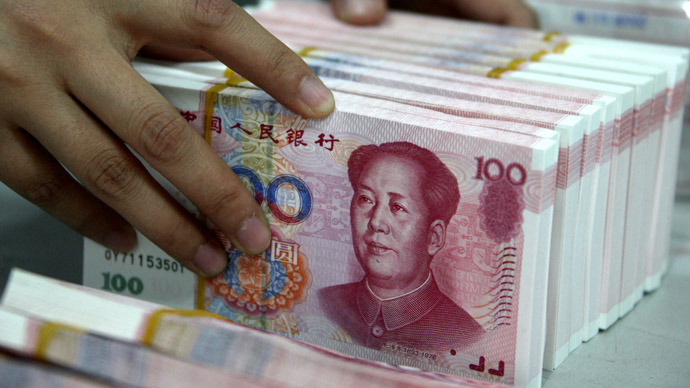 The purpose of this post is to stimulate discussion about an important market development. It's not a prediction.
I believe that one of the most widely accepted memes in the financial markets over the past several years has been that the Chinese Currency was/is undervalued, manipulated and would not go down and must eventually go much higher. The fundamental arguments for this were the persistent balance of payments surplus, purchasing power parity, competitive advantage/cost, political pressure, the history of currency movements in places like Japan, relative growth rates and growth potential; monetary base; and the list goes on and on and on. In fact, I can't find any credible opinion to the contrary. (A couple of summers ago, Bill Ackman made a big PR splash buying "cheap" calls on the HK dollar predicting an inevitable and massive revaluation.)
Over the past few weeks, the Yuan has reversed course and started to decline. It has had a violent and 3 sigma decline in the past 3 days. The story is that the Chinese authorities are encouraging a "wider trading band."
I am not offering any predictions here. But it is striking that the impulse move is in the down direction, not the up direction … all the more so, when the universally accepted truth is that the Yuan can only rise.
Is this just a counter trend move? Or is something bigger going on? If the Yuan starts declining instead of rising, what are the second order effects on other markets? If this is more than a counter trend move in a secular bull market for the Yuan, then I believe there are some very important implications. Unfortunately, I'm not smart enough to know whether the supposition is true and/or what the second order effects may be.
A good place to start thinking about this might be historical analogs. What are the historical analogs? And when does the perma bull Yuan story get stopped out?
Alston Mabry writes:
I agree. With all the issues out there on shadow banking, credit bubble, CBOC actions, ghost cities and shopping malls…who actually knows what's going on? If anybody "knows', it's the market itself. Once China frees up capital controls, import controls and currency controls and becomes relatively transparent accounting-wise…then the RMB will move on economics…mostly. But right now there are so many "shadow issues" in play that it's hard to assess the situation other than on a short-term trading basis.
Richard Owen writes:
Disregarding the background 'China story' which is the key determinant of the secular factors (eg, do you believe China is massively insolvent or not, does it matter), when currencies are 'newly' brought to market (in the sense of being a new regime, if not a new currency), they often trade off initially. Domestic holders want to diversify and foreign buyers have no structural reason to accumulate inventory, thus have a 'show me' attitude on price. And since fx is a short duration asset, nobody is holding for the carry and a trend begets itself. Or to put it another way, as yuan trading is liberalised, does the marginal holder likely want to diversify out of existing stock more than a foreign holder wants to get into? Comparables are perhaps the euro introduction, where despite a hugely profitable convergence carry on long bonds, even underwritten by the ECB discount window, it initially sold off. Perhaps more analogously, when South Africa empowered its blacks, the Afrikaans community thought the end was nigh (as some chinese entrepreneurs do now) and began liquidating everything and selling into offshore currencies. They misread the situation, however, and the sandtown community provided a bid to the Afrikaans. My friend's uncle bootstrapped a working mans savings into a billion by buying the real estate liquidation, putting in newly arriving AAA multinationals as tenants and riding the yield curve down from teens to single digits.
anonymous writes:
In the face of 2008 downturn, the Chinese government created more money than was done by the ECB or the Fed. The shadow banking system carried on making new loans to reestablish the housing bubble. Based on that slice of data, the RMB should not be rising against other foreign currencies, but falling.
Yes, trade surpluses are supportive to a currency, but China's big trade surplus with the US is balanced by some trade deficits with sources of raw materials, and production machinery, so that their trade surplus overall is not as big as with the US. The foreign direct investment into China has been very high as has the Carry Trade where borrowing in low interest rate countries like Japan and buying higher rate Chinese Treasuries, was profitable and gained even more as the RMB rose. This looks to be reversing and is thus a negative for the RMB and is big at maybe a half trillion dollars of hot money.
The image is of the Chinese government suppressing the currency to keep its exports growing and doing so by buying US Treasuries, and that was also pushing the image higher. But Chinese people are buying gold for safety, indicating that they have seen government spending and do not have confidence in the RMB. I think a downward spike in RMB could be followed by more selling if Carry Trade unwind becomes big. But PPP and Trade surplus will limit the move eventually, IMO.
anonymous writes:
I also agree, (Chinese financial reporting is awful) but the assertion that we can know many outside variables from the US$ of the equation is very important. (Current account surpluses and deficits bear many similarities to double-entry accounting, in that aggregate balances in one direction or another should balance each other out.)
I submit that the current state of Chinese property and credit markets bear many similarities to what Hyman Minsky termed a "deviation amplifying" mechanism in his Financial Instability Hypothesis.
However, if asked how it will play out, my tendency is to say that at some point over the next few years, they are at substantial risk for a debt deflation. Personally, I'd have a tough time convincing myself to be short a deflating currency.
Charles Pennington writes:
OK, here's an "N=1" kind of study…
Back in mid/late 2011 the Swiss franc ("CHF") was strengthening violently against the Euro, with the Euro almost going down to parity with CHF. Then the Swiss stepped in to weaken the CHF and forced the Euro back up to 1.2 CHFs. The Euro sat there, pegged at 1.2, but everyone feared that the risk was that the Euro would fall below 1.2. Instead the Euro ended up moving higher against the CHF in mid-late 2012 and 2013. Very similar to Rocky's China story.
Since mid 2012, EWL (the Swiss market etf) is up about 55% and FEU (the EuroStoxx etf) is up about 40%. EWL is probably a bit less volatile than FEU (though I didn't check), so EWL's gain is yet more impressive.
So the N=1 conclusion is that you should buy Chinese stocks.
Comments
Archives
- August 2026
- July 2026
- June 2026
- May 2026
- April 2026
- March 2026
- February 2026
- January 2026
- December 2025
- November 2025
- October 2025
- September 2025
- August 2025
- July 2025
- June 2025
- May 2025
- April 2025
- March 2025
- February 2025
- January 2025
- December 2024
- November 2024
- October 2024
- September 2024
- August 2024
- July 2024
- June 2024
- May 2024
- April 2024
- March 2024
- February 2024
- January 2024
- December 2023
- November 2023
- October 2023
- September 2023
- August 2023
- July 2023
- June 2023
- May 2023
- April 2023
- March 2023
- February 2023
- January 2023
- December 2022
- November 2022
- October 2022
- September 2022
- August 2022
- July 2022
- June 2022
- May 2022
- April 2022
- March 2022
- February 2022
- January 2022
- December 2021
- November 2021
- October 2021
- September 2021
- August 2021
- July 2021
- June 2021
- May 2021
- April 2021
- March 2021
- February 2021
- January 2021
- December 2020
- November 2020
- October 2020
- September 2020
- August 2020
- July 2020
- June 2020
- May 2020
- April 2020
- March 2020
- February 2020
- January 2020
- December 2019
- November 2019
- October 2019
- September 2019
- August 2019
- July 2019
- June 2019
- May 2019
- April 2019
- March 2019
- February 2019
- January 2019
- December 2018
- November 2018
- October 2018
- September 2018
- August 2018
- July 2018
- June 2018
- May 2018
- April 2018
- March 2018
- February 2018
- January 2018
- December 2017
- November 2017
- October 2017
- September 2017
- August 2017
- July 2017
- June 2017
- May 2017
- April 2017
- March 2017
- February 2017
- January 2017
- December 2016
- November 2016
- October 2016
- September 2016
- August 2016
- July 2016
- June 2016
- May 2016
- April 2016
- March 2016
- February 2016
- January 2016
- December 2015
- November 2015
- October 2015
- September 2015
- August 2015
- July 2015
- June 2015
- May 2015
- April 2015
- March 2015
- February 2015
- January 2015
- December 2014
- November 2014
- October 2014
- September 2014
- August 2014
- July 2014
- June 2014
- May 2014
- April 2014
- March 2014
- February 2014
- January 2014
- December 2013
- November 2013
- October 2013
- September 2013
- August 2013
- July 2013
- June 2013
- May 2013
- April 2013
- March 2013
- February 2013
- January 2013
- December 2012
- November 2012
- October 2012
- September 2012
- August 2012
- July 2012
- June 2012
- May 2012
- April 2012
- March 2012
- February 2012
- January 2012
- December 2011
- November 2011
- October 2011
- September 2011
- August 2011
- July 2011
- June 2011
- May 2011
- April 2011
- March 2011
- February 2011
- January 2011
- December 2010
- November 2010
- October 2010
- September 2010
- August 2010
- July 2010
- June 2010
- May 2010
- April 2010
- March 2010
- February 2010
- January 2010
- December 2009
- November 2009
- October 2009
- September 2009
- August 2009
- July 2009
- June 2009
- May 2009
- April 2009
- March 2009
- February 2009
- January 2009
- December 2008
- November 2008
- October 2008
- September 2008
- August 2008
- July 2008
- June 2008
- May 2008
- April 2008
- March 2008
- February 2008
- January 2008
- December 2007
- November 2007
- October 2007
- September 2007
- August 2007
- July 2007
- June 2007
- May 2007
- April 2007
- March 2007
- February 2007
- January 2007
- December 2006
- November 2006
- October 2006
- September 2006
- August 2006
- Older Archives
Resources & Links
- The Letters Prize
- Pre-2007 Victor Niederhoffer Posts
- Vic’s NYC Junto
- Reading List
- Programming in 60 Seconds
- The Objectivist Center
- Foundation for Economic Education
- Tigerchess
- Dick Sears' G.T. Index
- Pre-2007 Daily Speculations
- Laurel & Vics' Worldly Investor Articles
