Feb
2
A Thought, from Jeff Rollert
February 2, 2014 | Leave a Comment
It would be wise to review prior periods of Fed Chair transitions, for their equity and bond moves and overlay that on election years.
But I am not sure I'm wise.
anonymous writes:
Date Chairman DJIA CAGR t t+1 t+5 t+10 t+20 t+62
13-Aug-14 Charles S. Hamlin Market Closed till end of year ??
10-Aug-16 William P. G. Harding 90.05 1.17 -0.23 0.3 2.07 4.2 2.49 16.77
01-May-23 Daniel R. Crissinger 97.4 17.49 -1 0.67 -2.04 -2.05 -1.41 -8.21
04-Oct-27 Roy A. Young 198.88 6.15 -0.45 0.17 -4.95 -6.07 -8.65 1.03
16-Sep-30 Eugene Meyer 237.22 -32.86 0.25 0.22 -6.09 -10.41 -19.06 -21.81
19-May-33 Eugene R. Black 81.75 14.23 -0.99 -1.88 2.42 8.99 15.95 15.11
15-Nov-34 Marriner S. Eccles 99.72 4.51 0.3 -0.33 -0.25 2.67 3.05 1.28
15-Apr-48 Thomas B. McCabe 180.27 11.15 0.64 0.2 0.61 0.39 1.24 5.7
02-Apr-51 William McChesney Martin, Jr. 246.63 6.05 -0.53 -0.25 1.48 3.29 3.29 2.91
02-Feb-70 Arthur F. Burns 746.44 0.07 0.32 1.48 1.24 0.97 5.49 -1.72
08-Mar-78 G. William Miller 750.87 9.04 0.55 -0.12 1.03 0.89 1.74 15.4
06-Aug-79 Paul A. Volcker 848.55 15.42 0.28 1.33 3.15 4.47 2.84 -3.35
11-Aug-87 Alan Greenspan 2680.48 7.91 1.69 -0.42 -0.96 1.56 -4.9 -26.91
01-Feb-06 Ben Bernanke 10953.95 4.72 0.82 -0.93 -0.87 0.96 0.65 4.22
03-Feb-14 Janet Yellen ~15848.61
avg 0.13 0.03 -0.24 0.76 0.21 0.03
stdev 0.73 0.85 2.66 4.67 7.78 12.68
t-test 0.63 0.14 -0.33 0.59 0.10 0.01
Jan
31
The Top 10 Drugs, from anonymous
January 31, 2014 | Leave a Comment
Hypothyroid medication levothyroxine ( Synthroid, AbbVie) was the nation's most prescribed drug in 2013, whereas the antipsychotic aripiprazole ( Abilify, Otsuka Pharmaceutical) had the highest sales, at nearly $6.5 billion, according to a new report from research firm IMS Health on the top 100 selling drugs in the United States.
Following levothyroxine as most prescribed were the cholesterol-lowering drug rosuvastatin ( Crestor, AstraZeneca), the proton-pump inhibitor esomeprazole ( Nexium, AstraZeneca), and the antidepressant duloxetine ( Cymbalta, Eli Lilly).
Rounding out the top 10 most prescribed drugs in 2013 (in order) were the asthma drugs albuterol ( Ventolin, HFA) and fluticasone propionate/salmeterol ( Advair Diskus, GlaxoSmithKline), the antihypertensive valsartan ( Diovan, Novartis), the attention deficit drug lisdexamfetamine dimesylate ( Vyvanse, Shire), the antiepileptic pregabalin ( Lyrica, Pfizer), and the chronic obstructive pulmonary disease drug tiotropium bromide ( Spiriva, Boehringer Ingelheim).
Jan
27
Eight Financial Lessons from White Men Can’t Jump, from Richard Owen
January 27, 2014 | Leave a Comment
 The film White Men Can't Jump features two basketball hustlers: Billy Hoyle (Woody Harrelson) and Sidney Dean (Wesley Snipes).
1. Billy consistently bets his whole account on each game. He gets ahead quickly for a number of games, but also repeatedly wipes out.
2. Sidney, on the other hand, is diversified. He bball hustles, but also runs a food stop and decorating business. He takes a share of the bets Billy fronts.
3. Billy owes hard money. As a result, he has two mafiosos trailing him.
4. Sidney (per Billy) would rather look good than win. He takes risks which don't further his financial goals.
5. Sidney and Billy eventually meet with success by entering a competition funded by sponsors. No money is risked. They have learnt to leverage OPM.
6. When either winning or losing, Billy goes on tilt if criticized. After his biggest victory, having won his money back, he bets Sidney his whole proceeds that "white men can jump".
7. The biggest financial success turns out to be Billy's girlfriend, Gloria. She believes - seemingly irrationally - that her destiny is to be selected for quiz show Jeopardy. Sidney eventually persuades the security man from the Jeopardy studio lot to get her in. Such was her persistence that the irrational became actual.
8. Deception operates repeatedly. There is:
- the trojan horse: offering to play with any partner, having placed preppy doofus Billy in the court stands;
- the thrown game: Billy is paid by some mafiosos to throw a championship match;
- the false friend: Billy and Sidney form a hustling team, but Sidney plays to lose thus hustling his own partner;
- the shakedown: to make a grub stake, a bball player tries to rip off a liquor store;
- rule changes: a hustlee, having realised that he is the mark, refuses to pay up and pulls a gun; and many others.
Jan
24
SPY 20 Day Range Goes Below 2%, from Kora Reddy
January 24, 2014 | Leave a Comment
SPY 20 day range (defined as 20 day intra high - 20 day intra low ) / (Avg(20 day intra high, 20 day intra low) printing a value of 1.97% = (184.94-181.34)*100/(184.94+181.34)/2
Not many instances since 1993.
Paolo Pezzutti asked:
Kora, what are the implications from a practical perspective?
Kora Reddy replied:
12/13 times SPY (for interleaving trade samples) closed higher 20 days later, but the sample size is too low to make a bullish bet.
3/4 times for the non-interleaving samples, SPY closed higher …
12/13 times SPY closed higher than the current close in the next five days at some point of time ( i.e first profitable exit, otherwise exit at fifth day at close.)
Kim Zussman expands:
Dividing SPY into non-overlapping 20 day periods (counting back from 1/22/14 to 1993), I checked for Kora's low range periods.
Range = 20D HI / 20D Low
The most recent range appears to be the lowest in the series, 1.0198 (1.98%)
There were 11 other instances of 20D range <3%; and the next 20D appears to be very bullish:
One-Sample T: nxt 20d ret
Test of mu = 0 vs not = 0
Variable N Mean StDev SE Mean 95% CI T nxt 20d ret 11 0.0146 0.0161 0.0048 (0.0038, 0.0255) 3.02
Here are the instances:
Date H/L nxt 20d ret
04/07/06 1.023 0.022
12/16/93 1.023 0.023
04/08/13 1.024 0.036
08/18/05 1.024 0.015
07/27/93 1.024 0.028
01/14/94 1.026 -0.005
06/22/05 1.026 0.009
12/20/13 1.026 0.015
01/25/07 1.027 0.021
10/12/95 1.029 0.019
04/01/93 1.029 -0.022
avg 1.025 0.015
Jan
23
Problems in the Middle East, from anonymous
January 23, 2014 | 3 Comments
 The recent plea by the Israeli defense minister (supposedly uttered in private) for Kerry to leave Israel alone coupled with a not particularly flattering characterization of him indicates the level of frustration with him in Israel. This Administration is engaged in nothing less than a deliberate attempt to destroy Israel if only they agree to the terms. Since the US supplies a lot of the spare parts and Israeli weapons, their pleas to agree to self-destruction are not gentle urgings of a misguided friend.
Even if you assume that Kerry is only confused and not malicious, he behaves like a drunk who is looking for his lost keys in the middle of the night under a lamppost, and when asked if he had lost them there replies that that's the only place where he can see anything. Nothing will get better for the US if Israel capitulates, so you have to ask yourself what his (and his masters') real motivation is.
David Lillienfeld writes:
I see this as one more step in Israel's international re-alignment. Israeli forces were at one time dependent on French arms, until the French decided that selling arms to the Israelis brought more problems than it solved.
Stefan Jovanovich writes:
David's comment about Israel's use of French military equipment deserves attention. For the decade following the first Suez crisis (1956) France was Israel's sole supplier of aircraft, tanks and naval vessels. During that time Israel was not by any means an "American ally". Eisenhower, who knew how utterly disastrous Korea had been and how weak the U.S. was strategically, wanted to avoid even the possibility of another European war (not exactly in America's best interests then or now), and the Suez crisis offered the United States an opportunity to be "on the same side" with the Soviets and all the anti-colonial member nations of the U.N. (He was also clever enough to know that the British, French and Israelis had utterly destroyed Egypt's military capabilities.) At the same time, it was very much in France's interests to have a foreign "customer" for its own armaments manufacturers, especially if DeGaulle's vision of France as a "third force" was to be achieved. The British came to the party much later, in the 1960s when they provided the Centurion tanks on which the Merkava was based.
All this is, by now, truly ancient history. The United States now has closer financial and technical ties with the IDF than with any other country's military, including those in NATO. (We are not sending Britain or France or Germany or Italy $5B a year in military aid, $4B of which returns to the U.S. for the purchase of American armaments.) I don't think enough attention is now given to how large a force Israel now has (I can understand why it is in their interest to be seen as David against Goliath, but in pure military terms that is far from the truth.) Israel now spends about $15B in its public military budget and (my estimate) another $5-$10B (not including U.S. aid) that is not publicly-disclosed; that puts it on a par with China, if you exclude the money that country spends on what is essentially a jobs program for its equivalent of our national guard.) Israel is the only country in the Middle East that has an independent launch capability. The other countries that can put heavy payloads into the air are Britain, Russia, U.S. France, S. Korea, Italy, Germany, China, India, Japan, Brazil and Ukraine. There is no evidence that any of these countries are eager to provide Iran, Palestine, Saudi Arabia or any other country in the region with free use of such a delivery system, given the fact that the Israeli's have an ICBM (the Jericho) with an 8,000 mile range.
It seems to me that Israeli politicians in control of the government have come to the same conclusion that Reagan did in 1983 when he established the JPMG and Sharon and Weinberger began having what the diplomats call "discussions". The Israeli governing coalition knows that there is absolutely no domestic political risk in ignoring completely the opposition voices of "moderation" (whatever that means); and there is a great deal of domestic political risk in actually doing anything to stop further settlement on the West Bank or reducing the recent Israeli arms build-up. The Europeans won't like it any more than they approved of Reagan's arms build-up; but there is nothing they can do about it. They no longer have the Soviets to fear as they did in the 1980s; but they also no longer have the actual armies that they had then. All they can do is join John Kerry in clucking.
To answer David's question: "No". Morgan did not lock people in a room. That is as much a fiction as the Protocols of the Elders of Zion. The dynamic was the opposite; the question for the meeting was who would be allowed to be in the room and who would be kept out. Everyone knew that the clearing house would resolve the panic just as it had earlier domestic ones. This was not a crisis of gold leaving the U.S. as it did in 1894-5 because people feared Americans would stop crucifying mankind on a cross of gold - i.e. paying its creditors in money rather than IOUs. The issue in the 1907 Morgan meeting was whether or not your paper would be among the notes accepted at par. My own "conspiracy theory" about the founding of the Federal Reserve is that the "good" people in favor of reform et. al. were appalled that the banks had been able to resolve the crisis without "help" (sic) from the government. Roosevelt was particularly infuriated; but the two-term tradition for American Presidents forced him to leave the White House before he and the Progressives could do anything about this monstrous exercise of the freedom of contract.
Jan
23
Google’s Purchase of Nest, from anonymous
January 23, 2014 | Leave a Comment
 While everyone fawns over Google's purchase of Nest, there's this little piece on whether the Nest thermostat might provide a means for the NSA (or someone else) to go snooping in your home. I'm not so sure that this purchase will work in Google's favor as much as one might have thought from all the hoopla. Google may learn some useful things from Nest, but trying to justify the purchase on that basis may be a stretch. This reminds me in some respects of Cisco's purchase of Stratacom back during the dot-com boom (you remember, when webvan was going to put Wegman's, Safeway, and Whole Foods out of business).
Jan
23
HPQ and Today’s WSJ, from Charles Pennington
January 23, 2014 | 1 Comment
 WSJ today has an article that's critical of companies that do big share buybacks. It features quotes from Chanos, who says he's shorting some of the buyback companies. Much of it seems wrong to me.
HPQ is cited as an example of a buyback disaster — "if only" HPQ had just invested in real opportunities instead of those buybacks. I thought though that HPQ's problem wasn't the buybacks, but the high-priced acquisition of a software company that turned out to be fraudulent. Obviously they would have been much better of if they had used that $15 billion to buy back shares.
The main target of the article though is IBM, which seems like a particularly bad choice. IBM's earnings have grown by a factor of 3 over the last 10 years while its share count had dropped 35%. Furthermore, IBM is one of the few companies to have reduced its share count even during the 2008/2009 period–the count went 1385, 1339, and 1309 million in years 2007, 2008, 2009.
anonymous writes:
I think your analysis is quantitatively accurate, but the typical bottoms-up analyst has a much shorter lookback period than you do, 5 years at most, and with good reason.
The fact of the matter is that IBM has had extremely low/negative "organic" revenue growth for several years. The CSFB analyst has made the most consistently cogent representation of this argument, and "FCF conversion attributable to shareholders" (FCF post-financing, post-M&A) has been ~70% of earnings and falling … and FCF conversion has deteriorated every year since 2009 as a fundamental analyst/PM myself (of internet stocks).
I would never use a lookback beyond the current management team, and probably 3 years or less. I suspect Chanos keeps an extremely close eye on FCF conversion combined with -ve organic revenue growth, and sees aggressive corporate buybacks within a rapidly deteriorating fundamental backdrop as a form of management corruption, in which management chooses to invest excess capital in juicing their own stock options, instead of reviving the company's longer term prospects. This is endemic of "blue chip" tech conglomerates that no longer know how to generate organic growth.
I am not quite as familiar with HPQ but i strongly suspect it's a similar thesis. I was totally bewildered by Buffett's decision to load up on IBM in 2011 as were a lot of people who covered IBM. It violated every one of Buffett's own rules.
Side comment: since Chanos is compensated on "negative alpha" instead of absolute return (i.e. if the market is +20% and Chanos's short portfolio is only 10% against him, he is "up 10 percent on the year") he has the luxury of fighting these longer-term wars against these kinds of companies. It's very hard to fight a stock that's buying back 10% of their float per year, which probably makes them more attractive to shorts who can take a longer view.
Gary Rogan writes:
Stocks (or rather companies) that can't go organically but don't shrink are like perpetual bonds, but with an upside option in that someone can buy them for the cash flow. At the right P/E they can make a lot of sense.
Jan
21
Police Calm Angry Crowd at 99p Store Sale, from Richard Owen
January 21, 2014 | Leave a Comment
 Offer and withdrawal + crowd = volatility
"Police calm angry crowd at Wrexham's 99p Stores sale":
Police were called to a discount store to calm angry shoppers chasing 50p bargains in a closing down sale.
The 99p Stores in Wrexham was temporarily closed after crowds of shoppers flocked to a half-price sale which was advertised until 28 January.
However, many became angry and refused to leave when staff put prices back up to the full 99p price.
It has been reported the shop was due to shut because the lease was up but the sale ended when a lease was agreed.
Jan
17
PE, from Alston Mabry
January 17, 2014 | Leave a Comment
 Since you're talking about PEs, I will crosspost this bit:
Listening to Ed Hyman on Wealthtrack. Hyman says he thinks 2013 was like 1996 and that the next few years may turn out to be like the late 90s, as in: +20%, then +30%, +27%, +20% - he specified those percentages - which would mean for the S&P:
year close
2013: 1848
2014: 2218
2015: 2883
2016: 3661
2017: 4394
If you also plug in the earnings growth %'s from the 1998-2000, you get these stats for the S&P:
year: earnings, pe
2013: 107.45, 17.2
2014: 116.60, 19.0
2015: 117.08, 24.6
2016: 136.67, 26.8
2017: 148.44, 29.6
Considering Ed Hyman's comparison to 1996, one can't help but think, "yes, but"…back then we were looking ahead at the interweb and all its spinoffs, and investors thought tech companies would post astonishing future earnings, resulting in the fact that in early 2000, the top 20 firms in the QQQ had a combined PE ratio of 83. The future looked bright.
In the current world, what big factors could drive up the market PE to something like 30, as in the previous post? Two things come to mind in the macro sense:
1. "Developing" countries, especially India and SE Asia, really loosen up the regs and start to take off at an even steeper rate of ascent. Global GDP follows and grows at twice its "normal" rate.
2. A period of serious inflation.
What else?
Gary Rogan writes:
Being able to map this year on some other years for the purposes of predicting the next few years sounds like wishful thinking. Multi-decade returns from this point on are likely to be subdued because this is somewhere between a "fairly valued" and relatively expensive market. This means little in the next few years, which are relatively "short term" for this purpose, and nobody really knows whether trend following or trend reversals will predominate. And since a number of surprises that will affect the treasury rates are in store, some of which will depend on the actions of a few men and one women, these short-term guesses are likely to remain nothing but guesses.
Jan
15
A Personal Poet on Retainer, from Wall Street Poet
January 15, 2014 | Leave a Comment
Think You Have It All? Not Without A Personal Poet On Retainer
Sure you made a jillion. Made it with a social media triumph that allows hordes of vacuous people to spend their days sharing pictures of their cats with millions of friends online. Or maybe with a brilliant derivative that destroyed the economic future of a small country in Europe. You earned your jillions. And you bought all the boy toys that were supposed to make you happy. You’ve even begun the laundering process of this money by giving bits of it to environmental and cultural organizations, thereby earning the right to be endlessly surrounded by chirping Gaian groupies and anorexic graduates with fine arts degrees and meaningless titles at large museums, all seeking to glom even more from your bottomless pile. But it’s not enough. Why? Because every Tom, Dick and Jane billionaire is doing the same — except Jane who bought a lot of girlie goodies instead of boy toys. So now you’re thinking: Mike, how do I set myself apart from the billionaire herd? Here’s my answer: With a personal poet on retainer. Someone to elevate just another multi-million dollar wedding, christening or bas mitzvah into an event that will ring down the ages. And not only bring you this singular joy to which only great wealth is entitled, but memorable rhyming discomfort to your enemies as well. For the poet’s quill can sting like an arrow as well as happily tenderize like a good stool softener. Interested? You betcha. But you’d best get in touch with me promptly. Before someone who hates you and has even more money gets to me first.
Email to mike AT wallstreetpoet.com [replace _AT_ with @] . Serious inquiries only.
Wallstreetpoet's [Michael Silverstein's ] newest book is The Devil's Dictionary Of WallStreet.
Jan
10
Sears vs. Penney, from David Lillienfeld
January 10, 2014 | Leave a Comment
In the days of my youth, there were two national department stores, Sears and Penney. It was a fierce rivalry between the two. Penney tended to do better at the soft goods, Sears, the hard goods. Regardless, they competed against one another. Over the last couple of decades, it seems that rivalry waned. I can now definitively state that this rivalry is back on. Competition, the essence of America! It seems that both companies are in a race to see who can get to Chapter 11 first. Or maybe Chapter 9.
Jan
9
An Ag Question, from Jim Sogi
January 9, 2014 | Leave a Comment
 Are the low prices in ags related to the drop in oil since oil is used for fertilizer to grow ags?
Jeff Watson writes:
Partially, but the crops have been very robust worldwide, there's lots of supply, and remember that we're coming off of a major bull market in ags that started in 2007. That explains some of the gravity as for the past 5 months, one has been able to sell any strength in the grains and make money. This market behavior almost reminds me of the 80s. Since during this bull market, farmers have added enough storage to make many elevators redundant. Sometimes, if you watch the front month of wheat or corn, it will be up a couple of cents while the rest of the grains are down a few cents. That's the grain companies trying to shake some of that stored grain loose from the farmers. One can make money off of that.
Jack Tierney writes:
Maybe this is part of the reason, from the president.
U.S. EPA modified its proposed 2014 renewable fuel standard rule last year after the White House raised concerns about production targets being too high and based on unreliable analyses, according to documents from interagency reviews of the draft proposal.
EPA's proposed rule released in November calls for the first-ever reductions in the amount of conventional, corn-based ethanol and advanced biofuels that refiners must blend into gasoline. Its release shook markets for corn and energy and alarmed biofuel producers scrambling to secure investments.
The rule would require refiners this year to blend 15.21 billion gallons of renewable fuels into petroleum-based fuels — lower than the 18.15 billion gallons that Congress anticipated when it wrote the RFS into statute in 2007.
Jan
2
Facebook, from Charles Pennington
January 2, 2014 | Leave a Comment
 It was in July 13, 2012, more than a few months ago, when Specs were voicing concerns about Facebook, including that it was valued at an "astronomical" amount, and daughters were reporting their friends were getting bored with it. FB was at $31 then; it's at $55 now. It must be very bullish for a stock if kids are getting bored with it.
Jim Sogi writes:
I'd agree with the Professor. Just because it's not in style with kids doesn't matter. When Boomers and Grandmas use it, it's become very successful and more likely to last than a fad. I use FB to stay in touch with kids and friends in a nice way. It's a better tool than email in many ways as a killer app. There are flaws, and they are making it worse, but the idea is the same.
Dec
30
Facebook, from David Lillienfeld
December 30, 2013 | Leave a Comment
 A few months ago, we had an animated discussion regarding the long-term viability of Facebook (and by extension its value). Reports were already starting to surface at that time that youth were moving away from FB. Some ethnic groups like blacks had moved on to other sites, such as MySpace. While most of these reports were US-focused, there is now similar findings for European youth. How FB will address these changes, if it addresses them, is not clear. Also unknown is what the recent disclosures of FB's responses to NSA surveillance requests is also not known. In any case, evidence is mounting that FB is a passing fad, at least among youth. I do not know of similar reports for their parents.
Peter Tep writes:
In terms of cool factor amongst youth, 12-25, I believe FB is indeed fading but its usability is still second to none. As a Google+ user also, I can say that there is no comparison to FB, especially since one can also keep in touch with his older less technologically inclined older relatives.
Twitter definitely has the edge over FB now in terms of instant connection etc and teenie boppers can feel more connected to their beloved celebrities.
Although fading, I'm yet to believe that there will be a worthy competitor of FB.
My 2c
Dec
27
Iran and the Atom, from David Lillienfeld
December 27, 2013 | 2 Comments
For those who understandably thought that the Iran front would be quiet while Iran built their nuke, ’twas not to be the case. It seems Iran is determined that if more sanctions are levied at it (and the US Senate is certainly headed in that direction, White House be damned), it will raise its enrichment program to a 60% level—well beyond any claim of a peaceful use. I’m mystified as to why Iran did this, unless it’s trying to further upend the Obama White House (I’m not sure that’s possible at this point) or to taunt the Israelis (which would be thoughtless, since the one country that won’t hesitate to strike is Israel. Given that Kerry is trying to shove a treaty down Israel’s throat and is being adamant about not releasing Jonathan Pollard even as it demands that Israel release convicted murderer, I don’t know that Obama has much credibility left in Jerusalem to throttle Bibi back. One thing is clear: When Iran detonates its device, assuming Israel has not struck Iran, Bibi’s political career will be over. I doubt Bibi is willing to accept that possibility. That’s my take. I’m sure there are some other ones on this site.
Dec
23
Flexionic Connections, from Jonathan Bower
December 23, 2013 | Leave a Comment
Bonds trade up ~ 5 points, 130-15 to 135-23 in a few seconds, and then the market trades both sides for close to a minute. Certainly enough time for someone who "points and clicks" to take advantage of the "mis-pricing", on the way back down, and now they've canceled all trades above 131-12….
"It was a fat finger"
If that were true then there would have been an instant return to prior trading levels without two way action. It took close to 20 minutes to go back to the prior levels with many up and down ticks.
I'm sure all the little guys who (thought they) bought back their shorts at 131-00 are really happy it's trading at 130-10 now that they're stuck with their longs….
Dec
23
Energy Markets and Nuclear Power, from Carder Dimitroff
December 23, 2013 | Leave a Comment
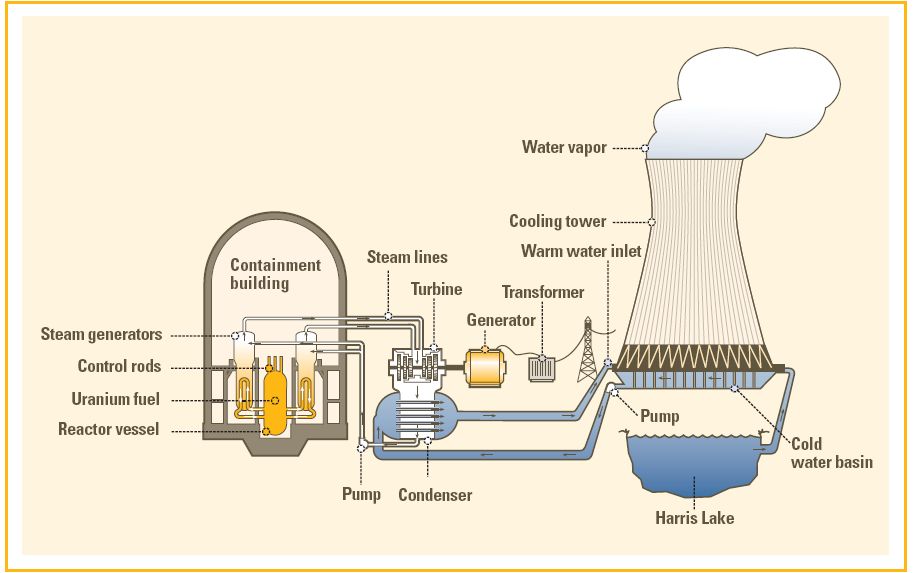 Here are some personal observations from years working in the nuclear power industry that might be helpful for those interested in energy markets.
1. Since most plants need to produce power 100 percent power all the time, most managers see the power markets as inconsequential.
2. Unlike the gas turbine business, it seems nuke managers are unsure about production costs. Yesterday, I saw a slide where a senior person merged capital costs with operating costs to claim higher production costs. It seems self-defeating.
3. It seems DOE has been captured by industry groups. In particular, NE seems to be captured by NEI. Most of their data seems to come from NEI.
4. It seems DOE's NE thinks their primary role is to be the repository of other peoples' thinking. It appears they are not taking any leadership responsibilities.
After discussing this with some colleagues, we think we know some of the [financially] troubled nukes:
5. As Prof. Richter pointed out, there is no national effort to save the nation's nukes. Most industry activity has been redeployed at the state level. It seems desperate.
6. Industry leaders are mostly old white men who are drawing big salaries. The industry is managed like a country club, not a business. Their dues are too high and too few people are willing to pay the price.
Dec
22
Stubby Pringle’s Christmas, from Victor Niederhoffer and the Dailyspec
December 22, 2013 | Leave a Comment
 [Editor's Note: Every year at Dailyspec we post the story of "Stubby Pringle's Christmas" by Jack Schaefer. It is a wonderful, heartwarming story. Hope you enjoy it and Happy Holidays.]
High on the mountainside by the little line cabin in the crisp clean dusk of evening Stubby Pringle swings into saddle. He has shape of bear in the dimness, bundled thick against cold. Double stocks crowd scarred boots. Leather chaps with hair out cover patched corduroy pants. Fleece-lined jacket with wear of winters on it bulges body and heavy gloves blunt fingers. Two gay red bandannas folded together fatten throat under chin. Battered hat is pulled down to sit on ears and in side pocket of jacket are rabbit-skin earmuffs he can put to use if he needs them.
Stubby Pringle swings up into saddle. He looks out and down over worlds of snow and ice and tree and rock. He spreads arms wide and they embrace whole ranges of hills. He stretches tall and hat brushes stars in sky. He is Stubby Pringle, cowhand of the Triple X, and this is his night to howl. He is Stubby Pringle, son of the wild jackass, and he is heading for the Christmas dance at the schoolhouse in the valley.
Stubby Pringle swings up and his horse stands like rock. This is the pride of his string, flop-eared ewe-necked cat-hipped strawberry roan that looks like it should have died weeks ago but has iron rods for bones and nitroglycerin for blood and can go from here to doomsday with nothing more than mouthfuls of snow for water and tufts of winter-cured bunch-grass snatched between drifts for food. It stands like rock. It knows the folly of trying to unseat Stubby. It wastes no energy in futile explosions. It knows that twenty-seven miles of hard winter going are foreordained for this evening and twenty-seven more of harder uphill return by morning. It has done this before. It is saving the dynamite under its hide for the destiny of a true cowpony which is to take its rider where he wants to go – and bring him back again.
 Stubby Pringle sits in his saddle and he grins into cold and distance and future full of festivity. Join me in a look at what can be seen of him despite the bundling and frosty breath vapor that soon will hang icicles on his nose. Those are careless haphazard scrambled features under the low hatbrim, about as handsome as a blue boar's snout. Not much fuzz yet on his chin. Why, shucks, is he just a boy? Don't make that mistake, though his twentieth birthday is still six weeks away. Don't make the mistake Hutch Handley made last summer when he thought this was young unseasoned stuff and took to ragging Stubby and wound up with ears pinned back and upper lip split and nose mashed flat and the whole of him dumped in a rainbarrel. Stubby has been taking care of himself since he was orphaned at thirteen. Stubby has been doing man's work since he was fifteen. Do you think Hardrock Harper of the Triple X would have anything but an all-around hard-proved hand up here at his farthest winter line camp siding Old Jake Hanlon, toughest hard-bitten old cowman ever to ride range?
Stubby Pringle slips gloved hand under rump to wipe frost off the saddle. No sense letting it melt into patches of corduroy pants. He slaps rightside saddlebag. It contains a burlap bag wrapped around a two-pound box of candy, of fancy chocolates with variegated interiors he acquired two months ago and has kept hidden from Old Jake. He slaps leftside saddlebag. It holds a burlap bag wrapped around a paper parcel that contains a close-folded piece of dress goods and a roll of pink ribbon. Interesting items, yes. They are ammunition for the campaign he has in mind to soften the affections of whichever female of the right vintage among those at the schoolhouse appeals to him most and seems most susceptible.
Stubby Pringle settles himself firmly into the saddle. He is just another of far-scattered poorly-paid patched-clothes cowhands that inhabit these parts and likely marks and smells of his calling have not all been scrubbed away. He knows that. But this is his night to howl. He is Stubby Pringle, true-begotten son of the wildest jackass, and he has been riding line through hell and highwater and winter storms for two months without a break and he has done his share of the work and more than his share because Old Jake is getting along and slowing some and this is his night to stomp floorboards till schoolhouse shakes and kick heels up to lanterns above and whirl a willing female till she is dizzy enough to see past patched clothes to the man inside them. He wriggles toes deep into stirrups and settles himself firmly in the saddle.
 “I could of et them choc’lates,” says Old Jake from the cabin doorway. “they wasn’t hid good,” he says. “No good at all.”
“An’ he beat like a drum,” says Stubby. “An’ wrung out like a dirty dishrag.”
“By who?” says Old Jake. “By a young un like you? Why, I’d of tied you in knots afore you knew what’s what iffen you tried it. You’re a dang-blatted young fool,” he says. “A ding-busted dang-blatted fool. Riding out a night like this iffen it is Chris’mas eve. A dong-bonging ding-busted dang-blatted fool,” he says. “But iffen I was your age agin, I reckon I’d be doing it too.” He cackles like an old rooster. “Squeeze one of ‘em for me,” he says and he steps back inside and he closes the door.
Stubby Pringle is alone out there in the darkening dusk, alone with flop-eared ewe-necked cat-hipped roan that can go to the last trumpet call under him and with cold of wicked winter wind around him and with twenty-seven miles of snow-dumped distance ahead of him. "Wahoo!" he yells. "Skip to my Loo!" he shouts. "Do-si-do and round about!"
[For the rest of the story, please follow this link]
Dec
22
Power Market Careers, from Carter Dimitroff
December 22, 2013 | Leave a Comment
If you have a young friend or family member wanting to study markets, they might look at the power markets. They are so large, they are fascinating and no single person can master them.
Consider this:
The market's primary commodity moves at the speed of light. Unlike grains, it cannot be stored. Unlike natural gas, it must be consumed within femtoseconds of being produced (that is a split second).
On the production end, the commodity's financial attributes are entirely dependent on other commodities, most of which are uncorrelated.
On the delivery end, the commodity's financial attributes become dependent on another commodity, which is also uncorrelated. That commodity is wires, which is also auctioned at market.
Once the market is mastered (good luck with that), the student learns it is only one of ten markets operating in North America. Then the question becomes, how does the commodity move between and among markets? The issues of market seams and pancaking suddenly become relevant.
Opportunities are growing:
Power markets are at the beginning stages of development. Not only are power markets growing in North America, they are growing in Europe and Asia. China has power markets. Southeast Asia is starting a new market.
Minds are open. Opportunities abound. Careers are just starting. There are many ideas and concepts to be considered. The issues range from public policy to information technology. There has to be over 100 dissertations waiting to be written.
One interesting person for potential graduate students to consider is William Hogan. His name frequently pops up in FERC, DOE and market meetings. There are others.
The concern:
There are people with good intentions who could ruin the markets. Many want to bypass the markets by claiming the need be the exception. Their arguments range from national security, to reliability, to preserving jobs, to stranded assets to who knows what. Unfortunately, some of those arguments could have traction with policymakers.
Before anyone goes there, this is a bipartisan concern. Most in the industry love free markets - for you. They just want to preserve their cost-plus assets.
The list:
This is just a thought. While I am not personally qualified, perhaps the chair and list members might consider offering their insights. This is a good time. Policymakers are looking for thoughtful people to help them develop and expand markets.
Even if there is not personal interest, if you hear of young economists looking for careers, they might be interested in power markets. They don't need engineering. They need to understand money and markets.
Dec
10
The Spiritual Value of Gold, from Ed Thompson
December 10, 2013 | 1 Comment
 To My Fellow Gold Advocates,
Objectivist and Forbes contributor Harry Binswanger has a new article which explains gold's spiritual value.
Gold is not "a barbarous relic" (Keynes) or "filthy lucre" (preachers) but an objective, esthetic value whose meaning has roots in the nature of how our minds work and the need for incorruptible moral integrity. Gold is the symbol of remaining pure and true. Which is why wedding bands are made of gold.
Gold jewelry is fully as objective a value as utilitarian goods, such as bread or automobiles. Those goods provide value by being consumed-by being used up. You eat bread and it is gone. You drive a car and it wears out. Gold is almost unique in being an Unconsummable Consumable. Like Aristotle's Unmoved Mover, gold provides value without being itself affected.
Gold is the ultimate expression of mind-body integration. It is the symbol of purely, "crassly" material value because it is beautiful-i.e., because it is a spiritual value.
Here is the article: "In Praise of Gold"
Kind regards,
Ed Thompson
Victor Niederhoffer writes:
This article seems more sensible about gold than bitcoin's threat.
Jim Sogi writes:
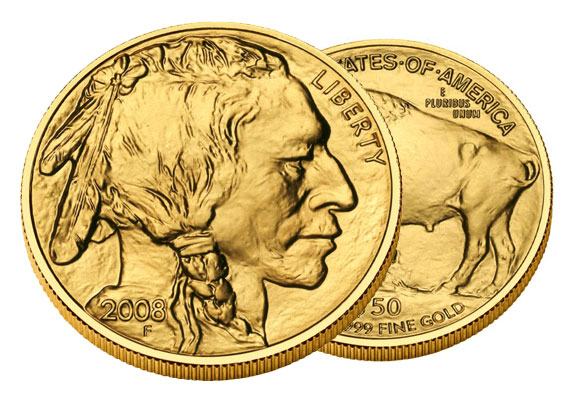
The heft and sheen of a $1300 gold coin is beautiful. The idea that it does not require the full faith and credit of any government is also beautiful.
Dec
10
Thoughts from my Stay in New York City, from Gary Hoover
December 10, 2013 | Leave a Comment
 Here am I in New York City, no time for longer philosophy right now, but quick observations. After talking to friends in recent days, left and right, all ages, NY TX IL …. I'm not sure the real problem is left vs right or statists vs libertarians or socialists vs capitalists, etc.
Because all those worldviews have deeper roots…
Here is what strikes me as possibly the REAL issues…
1. Emotionally driven public policy. (Holy Moses, there is a homeless man, somebody give him some money now! Raise the minimum wage! Ok, problem solved!)
2. A public that is illiterate in arithmetic (not math) and afraid of it, of data, of statistics.
3. A public with no education in economics, even the most basic understanding of how prices clear markets and how that is just as beautiful as dinosaurs and butterflies.
Of course I am saying it's a failure of our k-12 education system.
Its not socialist teachers…I see little evidence of that though of course some exist but I don't know that the students believe them….it's teachers and students piling up over the years who were never shown these things (analysis, rationality, economics) in the first place. It's a problem of curriculum balance. Every grade schooler probably knows how to recycle and figure their carbon footprint. And how to "give back."
I also think there is a real gender gap in these items, especially the emotion point for many women voters. Perhaps not unlike the gender gap in science and technology.
Or something along those lines…you get my drift….
Gary
Gary Hoover
Entrepreneur
Chairman/CEO Bigwig Games, Inc. Play Hard and Prosper
Chris Tucker writes:
Here is a video of the talk Gary gave at the Junto, almost verbatim.
Richard Owen writes:
Mr Hoover should add John Lewis in the UK to his list of impressive department store business models. Great talk.
anonymous writes:
I also enjoyed Gary's talk very much. Seems the historical mechanism for success in retailing has been increasing quality while reducing price. I have been wondering about this lately with respect to healthcare. Along the lines of retailing, in the wake of the recession my patients seem more sensitive to cost, and they don't want to be "nickled and dimed".
Over recent years in my periodontal practice, I have reduced fees, increased service, and do many more things without charging. Despite loss in local employment (Amgen layoffs, etc) and increasing competition, we've stayed quite busy. However like some of the retailers, our profits are down. Presumably by keeping fees low we have preserved market share.Some of my nearby colleagues take a different approach. Since their busyness and revenues are down, they raised fees - as if this will compensate for lack of demand. They are still not busy, but they do have patient flow and stay in business.
Recently I did some grocery shopping at a local supermarket I usually stay away from, which is a small chain known for high prices. One bag with a few items (including Chilean Sea Bass) cost $126, and I vowed not to come back. While in the market I saw several patients from my practice who looked very happy to be shopping there. Like many in our community, these were affluent people who don't need to budget for groceries. Perhaps they obtain status by paying extra to go to an expensive fancy grocery? The exact value of health care services is much harder for the consumer to judge than groceries. Perhaps my high priced colleagues are aiming for this demographic, and are willing to sacrifice market share. And if so, status-spending is a different twist to supply/demand.
Gary Rogan writes:
 It is well known in high-end retailing (or actually retailing of any "prestige" products) that raising prices often increases sales. The function of prices is to communicate information about quality in that world. How can any self-respecting "prestige" buyer think highly either of themselves or the product if it's priced like cheap junk? I don't like people who think better about themselves when they pay more, but that doesn't change the reality of what sells at the high end.
Rocky Humbert adds:
Shopping in our local over-priced "gourmet" market last weekend, I noticed some brilliant-looking Chilean Sea Bass for $29/pound. I didn't buy any. I noticed an in-store special for Starkist Tuna for $0.99/can. I bought 15 cans. What are the lessons here?
1. It is arrogant and foolhardy to make judgments about other market participants and their motivations. The market and the economy works because participants have different preferences, values, and information. The vendor wants to know, and big corporations spends billions to shape the preferences. But they really don't and can't without unintended consequences. I didn't buy the Sea Bass because I was making a Paella. I bought the tuna because one of our cats is on a high-protein diet and at 0.99/can, the tuna is substantially less expensive than gourmet high-protein cat food!
2. Shaping customer preferences is not the same as offering a product that consumers want in a shopping environment that consumers enjoy. The couponization of consumers and the recent experiences of JCP and Sears illustrate this point well. My Lexus dealer offers an oil change for $50 whereas the Jiffy Lube charges $30. Lexus can take 3x as long as Jiffy Lube. Where do I go? Surprise! I go to the Lexus dealer because the waiting area is more comfortable, they treat me better, they have "free" coffee and danish; they give me a "free" car wash; I can do work while waiting so it's productive; and it's a generally more "enjoyable" experience. What is my enjoyment worth? Do the math. Are other people there because they are making a statement about "being seen" at the Jiffy Lube? Who knows. Product differentiation occurs at many different levels. But overall, it's rational and derives from utility curves.
3. I find that many people who have missed this stock rally (and I wish I had been more aggressive) rationalize the opportunity cost by thinking that the people who participated are "wrong". The rally has been "engineered" by the Fed. The long term fundamentals don't support the expectations. It's going to end badly. The Nikkei didn't go anywhere for X years so the S&P will do the same. Blah blah blah. I think the real story and lesson is that making value judgments about other people is not a productive exercise. Not in business. Not in the markets. And not in life.
Gary Rogan adds:
 My favorite example of a case where judging motivation is easy comes from one of the behaviorist books I've read where a lady who owned a boutique in New Mexico had a display case of handcrafted Indian jewelry that wasn't selling at all. Once, preparing to go out of town she left a not to her assistant instructing her to mark down the jewelry with a suggested percentage. Due to her poor handwriting, the merchandise was substantially marked up instead of down, and to the owner's surprise almost completely sold out in just a few days. I will arrogantly (but not foolhardily) assume that the marginal utility of the jewelry came from the high price and not the suddenly changed quality or usefulness.
Rocky Humbert responds:
Mr. Rogan, we both agree that there are many such examples of what you describe. Brands and pricing and intangibles matter. However, the academics often argue that these consumer preferences demonstrate irrational or gullible or other behaviors that are not "efficient" or not "optimal." My point is that the underlying supposition that "optimal" or "efficient" is a universally accepted, static, independent variable, is questionable at best, and misleading at worst. . If you voluntarily partake in an activity, you are getting "value" from it. If the activity is transactional and involves a seller and buyer, then both participants are getting "value" from the activity — or they would not engage in it. To the extent that the transaction is "zero sum" financially does not mean that some other intangible value is not being created. An observer might just not understand what the value is. It's all about personal utility curves.
An observer watching me decline the $29/lb Chilean Sea Bass and buying 15 cans of $.99 tuna would reach a very different conclusion than the truth. An observer wondering why any particular individual decides to shop at Whole Foods, Trader Joes, or the local A&P will similarly come up with questionable conclusions. (I'll bet that the person who started this whole thread doesn't shop for food regularly! Spending 60-90 minutes every week in a supermarket can be a huge chore and one of the attractions of Whole Foods is its environment and presentation.) Sure you can buy the same diamond on 47th street as at Tiffany's for a fraction of the cost. Is it the status of the blue box? Or is it the certainty and comfort of the buying experience? Or is it laziness? Or something entirely else. Countless examples of this.
Gary Hoover writes:
 The books about marketing luxury and super luxury goods list many techniques which are the opposite of standard marketing wisdom for mainstream products. These include creating product shortages, ignoring negative reviews and keeping them off your website because you only want to talk to your advocates, raising prices to create status appeal etc.
While a walk down Fifth Avenue or other luxury districts worldwide might make you think otherwise, luxury goods are still a relatively small part of the economy. Neither BMW nor Daimler-Benz are in the world's top ten vehicle makers in units, though their dollar revenues rank them higher (especially due to Daimler's big truck and bus operations).
But the luxe segment has grown dramatically in recent years.
Nevertheless, the real dollar volume rests, like the last hundred years, in serving the huge and growing global middle class. Those companies have to pay attention to "old school" rules like price elasticity and great product availability and distribution.
In walking stores in New York the last few days, I was intrigued by the volume done by Swiss Chocolatier Lindt, with multiple Fifth Ave locations, who now drives their product through mass merchandising outlets like the drugstore chain, apparently without ruining product quality or perceptions thereof.
Amanda K comments:
 Gary (aka Free Market Liberal),
As a female libertarian who has worked in the tech field for years, I definitely see the gender gap in both areas. I suspect that there is a higher percentage of people in tech that are libertarian-minded than other fields. Is it because they are more logical? Because they spend a disproportionate amount of time surfing the web for good ideas? I don't know. Even my female scientist friends reject small government… and they are supposed to be so logical! Of course, they are paid by the government so they may be a bit biased:)
Warning – Politically Incorrect Paragraph (or PIP) below:
I suspect that many of my girlfriends voted for Obama because he is handsome and youngish, they are more easily guilted into voting based on ethnicity, it's cool to vote Obama, to vote against him is to admit that they were wrong the first time around, and Mitt Romney is a plastic man – there is nothing to latch onto. In other words, they vote for emotional reasons.
There may be another issue in addition to the three issues you outlined:
4) A public that has abandoned basic moral principles. For example, if everyone recognized that it is wrong to steal, then it would be obvious that asking the government to steal in order to give money to the homeless guy is also immoral. Schools would be a symptom, not a cause of this problem.
Thoughts?
Amanda
P.S. – ENFPs and INTJs are the most likely to be libertarian with 5% chance each. The only letter in common is N: Intuition. One of the Myers Briggs websites contains the following statement as part of the description of an N: Sometimes I think so much about new possibilities that I never look at how to make them a reality. Sound like any libertarians you know? 
Dec
10
Finally, a 100% Sure Trade, from anonymous
December 10, 2013 | Leave a Comment
It just occurred to me that, with a profit of 36 bps, this trade reminds me of the Fed's QE, where the banks take the money and then give it back and get paid on the balance. I wonder where the "approx" is in the Fed's fine print?
Dec
10
A Silver Lining in Detroit’s Bankruptcy, from M. Fridson
December 10, 2013 | 1 Comment
 A silver lining in detroit's bankruptcy?
In the short run, a recent ruling in the Detroit bankruptcy is a win for muni bond investors and a loss for city employees. The longer-run consequences could make both sides better off.
Stefan Jovanovich writes:
When my Dad was doing the circuit as a textbook salesman in the late 1940s, he managed to visit every one of the lower 48 states — all (except for New Jersey and Connecticut and our home state of New York) by train. He once told me that those travels were what gave him the time to think about schools and school book publishing and the changes that could be made.
On his trips to Michigan Dad would visit our relatives in the Detroit area — his mother's brothers and sister and their children. Three of Dad's cousins worked at Dodge Main; and one of them was a union rep. Dad, who had never worked with his hands in life but had been raised by Wobblies, was a dedicated New Deal Democrat; so, of course, were his cousins.
On one visit Jerzy, the cousin who was the union representative, invited Dad to come visit him at the plant. Jerzy had his own window office on the 3rd floor of Assembly Building; the office also had an interior window with venetian blinds that looked out on a section of the line. During his visit Dad, showing the usual Jovanovich tact, asked what the blinds were for. "Privacy." And, what was the need for privacy? Dad's cousin, like all good politicians, knew that some things needed to be kept private. In his case it was the pinochle game that the cousin, other shop stewards and the Dodge assistant plant managers in charge of labor relations played after lunch each day.
I can believe that many and probably most of the "city employees" in Detroit were unaware of the fiscal impossibility of any business or government being able to pay the defined benefits that they were promised. The people working the line at Dodge Main, including Dad's two other cousins, were blissfully unaware of the pinochle game.
Dec
10
Watching the Memorial Service on South African TV, from Lubabalo Kondlo
December 10, 2013 | Leave a Comment
To: Alan Millhone and GM Rich Beckwith
Molo oldman and dr. b: Today i am watching tv, the memorial service of tata mandela, and Obama is here. You know oldman tata mandela used to win checker tournament in robben island prison and i was going to invite him to watch the match in february and as humble as he was, he would have come. He was asked what kept him motivated when he was in prison for 27 years and he said "i knew i would come out one day". Lubabalo
Dec
6
Squeezing Money out of Mexican Rocks, from Bo Keely
December 6, 2013 | Leave a Comment
 Deep in Baja five years ago, an exhausted, supply-less hiker was picked up by a crystal hound. The Senior took me hunting with him at certain ledges on the sides of washes showing former black volcanic activity. He taught me to spot a round dome rock that was as ugly as any other, except when you tapped on it. On knuckle rapping, if it made a hollow sound… We danced around the rock yelling, 'home run!'
It was worth a fortune, in Mexican terms; a 3' crystal sold for $80 (a week's salary). Continuing the hunt two days a week for a month, I helped him lug dozens of 30-120 lb. crystals up and into the pickup, and for the three hour drive north to San Felipe in Baja. A thief at night began stealing them, so I slept in a nearby abandoned trailer until they could be moved. On weekends, we sold them at the tourist swap meet and business was good, especially after I started putting desert cactus in the larger crystals making them planters. Others were fashioned into fountains.
Dec
5
Bitcoin, from Barry Gitarts
December 5, 2013 | Leave a Comment
 Hi Victor,
I'm wondering if you have studied bitcoin at all? Or do you only consider a market once its very liquid?
Victor Niederhoffer writes:
Seems ready to implode.
Barry Gitarts writes:
Based on what?
Victor Niederhoffer writes:
Crooks are using it.
Barry Gitarts writes:
Isn't that the case with all money?
Victor Niederhoffer writes:
It will be shut down because it competes with things the government like to monopolize.
Barry Gitarts replies:
That was a fear earlier, however the senators, agency heads and Bernanke all seem to think it serves a purpose and are afraid to stifle the innovation:
Ultimately isn't the government just run by short sighted politicians who just want to be reelected? Any politician who stands up against bitcoin or any internet application stands the risk of being "Ubered" (see this article).
Bitcoin does seem to be a disruptor for traditional banking, but so was the internet for the post office, newspapers, tv and retail, that only grew the internet not kill it.
This reminds me of a half joking quote by Russian entrepreneur: "If you create a business that disrupts big business in Russia they will kill you, in America they buy your business."
Victor Niederhoffer writes:
I remember Peter Theil the founder of PayPal
saying that if they knew what he was doing, they would have shut him
down. As it is, only the Lousiana Attorney General was fast enough out
of the box to try to shut Paypal down.
Richard Owen writes:
Like all good bubbles, there is a legitimate story at hand. Even with Tulips there was a valid story of rarity that then seemed as psychologically permanent as does now the rarity and desirability of a Van Gogh.
Bitcoin is a bit like the currency of an island entrepot whose domestic economy is tiny and whose export base is mainly composed of criminality and laundering and for which the currency of the island is disproportionately held as wealth of a group of island oligarchs [I suspect he has sold some and someone might correct, but it appeared superficially that the founder's bitcoin may have a billion plus market value?]. Many accidental paper fortunes are held by bitcoin miners: will they stand passive in the face of volatility?
Of the three social gatherings I attended Weds to Sat of last week, all featured discussion of bitcoin and at one - of the type featuring participants who, to listen to their narrative over time, would appear as genius and never to have taken a loss - the non-documented boastage of coups won and utmost sagacity shown in the BTC market. Mr Thiel is smart: he is financing the pick and shovel providers, not running a large position in coin.
So yes, why not $10k BTC, but also, why?
Henrik Andersson writes:
 Richard, this is clearly the mainstream/consensus view - bubble. The contrarian trade is not always right (far from it), but was is clear is that many commentators don't understand the many faces of bitcoin. What is also clear is that a good investment decision (long term, not trading) can be done on the premise that the highest probability is that the ultimate value is zero. The question is what probability do you put to the USD 10k scenario. "Nothing is more powerful than an idea whose time has come" Victor Hugo.
Richard Owen writes:
 You make very good points, and I am sure you know all sides of the argument well. If you are long bitcoins I hope very much it is for a large and successful profit. Please manage your risk well. I am not smart enough to assign a probability to $10k. The thoughts are offered without prejudice and are an honest sampling of my experiences as have occurred. I have no position either way and should be distrusted or discredited on that basis. There may be commentary that it is a bubble and my thoughts or analogies may be derivative and unoriginal. The price is possibly also a form of consensus and that is that each BTC is worth a bunch of money, and increasing. As many have gone bankrupt shorting bubbles as being long.
anonymous writes:
I recall the great Jim Rogers saying that Hysteria is the first thing to look for, but one still needs to pinpoint a reason to go against it. The kind of examples he gives are buying stocks in country's whose stock markets have been closed, buying tea plantations when the price of tea has plummeted etc. Bitcoin? Might just have to let it play its course. I think its a bad joke, but even I must admit it did survive the 50% drop recently before this latest headline grabbing advance. Anyway, this is just my two cents and I have no interest in even attempting to try and speculate with or against it.
Jan Peter-Jannsen writes:
Bitcoin as a technology is superb. Bitcoin as a currency is questionable. Bitcoin as an investment is a bad bet.
A great strength of Bitcoin is that it is open source. Any experts can validate the code, and so far there seems to be no flaws. The crypto-curency works!
But cannot open source also be a great weakness? Anyone can copy the code, improve it, and make an even better alternative to Bitcoin. Is there any reason to stick to Bitcoin if and when that happens? Bitcoin is volatile, no prices are quoted in Bitcoins and very few have both their income and expenses in it. Those who use Bitcoin need to exchange to and from other currencies, so why not switch to another digital currency?
In terms of investment I believe it is a bubble. The supply is very low; many coins have been lost and the majority of coins are probably in the hands of the founders. I guess they are selling at the moment, but at a low enough speed to keep the bubble growing. In terms of demand; everyone talks about it these days.
In the coming years I predict new payment systems to arise based on technology pioneered by Bitcoin. But Bitcoin itself will soon be forgotten.
Dec
5
Karl Pearson, shared by James Daniels
December 5, 2013 | 1 Comment
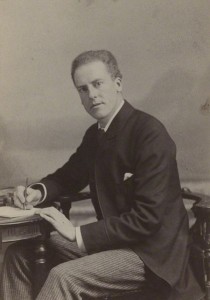 It's the international year of statistics, and each month here at SAS we celebrate a different statistician. For December it is Karl Pearson. This was posted on our internal web this morning, I thought this might be a nice posting for the DailySpec.
Hope you are all well, and happy holidays.
Celebrating statisticians: Karl Pearson
In celebration of the International Year of Statistics, the final statistician we celebrate is Karl Pearson. His work in the late 19th and early 20th centuries laid the structure of mathematical statistics.
Born March 27, 1857, in London, England, Pearson was raised in an upper-middle class family. He studied mathematics from 1876-1879 at King's College, Cambridge, graduating as the third-ranked among those receiving a degree. This scholarly success allowed Pearson to pursue further studies, which were very diverse in nature, and not suggestive of his future as one of the founding fathers of statistics. These included physics, physiology, German literature (he was actually offered a post in the German Department of Cambridge University), and socialism.
Following in the footsteps of his father, he studied the law and was called to the Bar in 1882, but he never practiced. Even as a Professor of Applied Mathematics at University College London starting from 1884 through 1890, Pearson was highly respected in a variety of areas, but had not yet moved into the study of statistics. This changed in 1891 upon meeting Walter Frank Raphael Weldon, a Professor of Zoology at University College London. Weldon also introduced Pearson to Francis Galton, who was interested in heredity and eugenics through the introductions of ideas of correlation and regression. With this, Pearson now wrote papers on heredity and evolution, leading to advancements in the correlation coefficient, introducing the chi-squared test and early ideas regarding p-value and ideas on hypothesis testing. The Pearson system of curves meant to describe non-normal curves served as the basis for continuous probability functions, and laid out ideas of principal component analysis
Pearson, Weldon and Galton co-founded the Statistical journal Biometrika in 1901, which still remains a top journal for statistical theory. His book, The Grammar of Science (1892), with Pearson's own ideas on relativity, was read by a young Albert Einstein. Pearson was elected a Fellow of the Royal Society in 1896, awarded the Darwin medal in 1898, and awarded an honorary LLD (a doctorate-level academic degree in law) from the University of St. Andrews and a DSc from University of London. Pearson was offered the Officer of the Most Excellent Order of the British Empire (OBE) in 1920 and knighthood in 1935, refusing both due to politics (he had very strong views towards both socialism and eugenics). Karl Pearson's son, Egon S. Pearson, was also a prominent statistician (Neyman-Pearson Lemma) and eventually took over his father's position at University College London and as editor of Biometrika. It seems fitting that after starting out with R.A. Fisher as the first statistician celebrated for the International Year of Statistics, we end with Karl Pearson.
There was a long and public feud between Pearson and Fisher over each other's views. This lasted even beyond Pearson's death in 1936 (see Edwards, 1994, for a fascinating read) when Fisher was asked to write about Pearson's life for the Dictionary of National Biography, an entry that was subsequently not used. Perhaps some of Pearson's achievements are overshadowed in that the study of statistics started moving towards maximum likelihood estimation and hypothesis testing at the end of Pearson's career. However, from the website "Earliest Known Uses of Some of the Words of Mathematics," consider some of the terminology attributed to Pearson (though he was not necessarily the originator of the idea itself):
* Standard deviation
* P-value
* Histogram
* Contingency table
* Spurious correlation
* Random walk
* Chi-square
* Goodness of Fit
* Hetero- and homoscedasticity
* Pearson's coefficient of correlation (r)
* Method of Moments
* Mode
* Skewness
* Kurtosis
On examining this list, I have to appreciate how many of these terms have become ingrained into our statistical vocabulary without giving thought to their origins. As the International Year of Statistics draws to a close, we celebrate Pearson, and give thanks to his contributions to the field.
Dec
1
Waiting, from Kim Zussman
December 1, 2013 | Leave a Comment
Should junior buy (and try to hold) at new lows or new highs?
Checking SP500 monthly closes 1955-present, there were 9 closes which were 5-year lows. 5-year highs occurred 173 times.
Holding each buy to the present (SP at 1807), the average return of each buy (not including dividends) was:
5YLo (9): 1152.0% 5YHi (173): 1152.8%
Evidently waiting for rare 5Y lows meant missing out on numerous entries when the market was up but destined to go up further
Waiting for Godot- Lucky Speech
Nov
28
BTC, from anonymous
November 28, 2013 | Leave a Comment
 The Bitcoin market has to be one of the best markets to pyramid i.e. highest possible auto-correlation.
The difference being that you can't be stopped out. No leverage, just hard cash.
Reminds one of Chair's wealth creation in the Silver market.
Nov
25
The Underlying Assumption of Buy and Hold, from Alston Mabry
November 25, 2013 | 1 Comment
 One thing I notice in unsophisticated investor-traders such as myself is that the positions one takes are usually supported by an unspoken prediction: "I will know when it is a good time to sell this and I will be able to do so."
Gary Rogan writes:
The beauty of really long-term investing is that you don't have to have this unspoken prediction.
Victor Niederhoffer writes:
And to add to Mr. Rogan's "beauty", you take full advantage of the most marvelous aspect of arithmetic, the power of compounding. And furthermore, you reduce to a minimum the vig from flexionic and top feeder activity.
Anatoly Veltman writes:
Can't dispute all of the beauty. The problem is that only a narrow group is willing to commit: those who set aside slow money. Most suffer from the "hot money" bug: how to make money work its hardest. Willing for the money to die trying.
Gary Rogan writes:
Very poetically put. It also illustrates the following point: in any kind of investing or trading the problems and solutions come in two flavors, namely those of competence and those of psychology. Even in long-term investing you still have to decide what to buy and when to buy it, so it's not immune from either category.
S. Humbert writes:
Buy and Hold (for the medium term) is not, in my view, enough to earn a living from. Please let me explain before you fry my IP address.
In the past 30 odd years alone, even the unleveraged long only holder of US stocks has had many barren years (and multi year) periods when he lost or didn't make.
In my usual, inelegant fashion, what I am saying is that if you trade for a living — for yourself (i.e. at the sharp end of the game) then buy and hold alone doesn't cut it. (Unless you start in 1982 or 2009 or some other retrospectively chosen low). This does not dilute the effectiveness of the strategy, I'm just saying an individual's perspective and starting point dictate what weight one should give to the passive, low vigorish strategies.
Frankly, a low single digit return with a very poor Sharpe Ratio over the lady two decades LESS retail friction, well… I certainly couldn't have lived off that taking into account my extremely modest circumstances when I started my speculative business in 1990. Anyway — it's at all time highs now right!
Ralph Vince writes:
Worse–you're still going to touch that money. You're going to take a morsel, or add a morsel, you can't sit there and forget about it.
Now you're on the curve.
Now, if you are 100% invested, you are completely doomed, and it isn't a matter of if.
Nov
25
Album for an Age, from Victor Niederhoffer
November 25, 2013 | Leave a Comment
 Among the fascinating anecdotes in Art Shay's fascinating book Album For an Age, which I am reading with delight, is this description of the way they bought companies in Chicago in the 1970s. Nat Cummings of Consolidated and Henry Crown of General Dynamics and Hilton had a regular gin game at the Drake every Sunday evening. An entrepreneur with a major paint company, Kirsch asked Crown if he could present him with his game plan and financials with a view to a purchase. Crown said okay, meet me at The Drake, but be brief because I don't wish to interrupt the game. It would be disrespectful. Kirsch spoke for 5 or 10 minutes to Crown giving him the lowdown and the price. Crown said, "I'm afraid that the asking price is too high. Good luck to you. I'll discard the 9 of spades." Without interrupting the game Cummings said, "young man, I like what you said. I"ll buy your company. Hendry, how many points did I leave you with on that gin."
I wrote to Art: "My only regret is that I did not know you and your wife in previous years. I am an avid collector of books and letters and would have had so much to talk about with your family. And what a family it was."
Art replied:
Likewise. Anyone who sends Bo to another continent to make business decisions should be worth meeting. It's still possible. I have 2 shows opening in Chicago–BUT have a nice show of celebrity pictures opening in NYC March 6 at the Morrison Hotel Gallery, 136 Prince Street in Soho. I'll be there.
I'm 91, but am resolutely planning to do a new bio based on my 150 or so blogs on Chicagoist.com vault of Art Shay. I'm syndicated in 14 US cities, plus Toronto, Shanghai and London. Impetus came from a piece I did titled "Sleeping With Elizabeth Taylor and other perks of the photo trade." It got well over 50,000 hits. Look it up.
Nov
25
Diary of a Retailer, Part 2, from Laurel Kenner
November 25, 2013 | Leave a Comment
 Most of the people who come in my store say, "Glass? I would break it within an hour."
Did their mommies slap their hands once too often? You would think that we lived in a nation of klutzes, so thoroughly have these people been indoctrinated to use plastic.
The things I sell are borosilicate glass, an exceptionally strong and practical formulation fired at extremely high temperatures. Think Pyrex, Duralex. Sadly, verbal assurances fail to convince.
Today, I tried a new tack. "Drop it," I suggested to the customer. He hesitated. I shrugged. He dropped it.
I really didn't know what would happen. I had knocked all the bottles off a display table a couple of days ago without one of them breaking, but he was holding the bottle a foot higher. When he came in, I was in the middle of planning just such an experiment for after hours, with dustpan at the ready.
He dropped it. The glass survived.
"That was very convincing," he said, and paid.
Convinced of the power of demonstration, I sold a GlassFlask to the next people who walked in by pouring boiling hot water over a tea flower and offering them a taste in a Dixie cup.
It is bitterly cold today, and some people come in just for the Kleenex on the checkout counter.
Nov
25
Insights from the Comments Section, from Craig Mee
November 25, 2013 | Leave a Comment
 There is a serious game of cricket happening at the moment between England and Australia. A test match which goes for 5 days. In that 5 days fortunes are made and lost and reversed on a daily basis.
The comment section of most papers following the action gives one a good indication of herd mentality. If this is the same representation of those trading markets news and announcements, then it is little wonder most are caught off guard. A day ago it was all pro England comments and the Aussies were toast, and today it's…. "Doomed, we're all doomed, I tell you. Well played Australia. England haven't a hope in hell of saving this Test."
Nov
11
Countries That Start With I, from Rocky Humbert
November 11, 2013 | 1 Comment
 If you clicked on this email expecting to find my latest prescient thoughts on Apple, you will be disappointed.
Rather, I'm looking for some inexpensively-valued stocks in iNDIA and iNDONESIA. (I know, I know, Russia is supposedly cheap too.)
I looked at the big caps in the India ETF's and they don't look cheap for a country that is suffering from the early stages of a capital flight. And I don't trust my Bloomberg for finding diamonds in Chanakyapuri.
Does anyone have some favorites? As Sergeant Joe Friday would say, "just the tickers, Ma'am
(Don't be shy. I only harass Mr. Rogan when his stocks go down.)
Many thanks.
Sushil Kedia writes:
Define a CIX b'berg as: CNX Nifty Index / CNX500 Index. That would be a ratio of Largest 50 stocks index and the broader 500 stocks index.
A severe flight into safety has played out. Looks like the penultimate round. Obviously the small and mid caps have had visited 10 year lows, more than half of the 4500 listed stocks trade at P/B <1 and about one fourths of the stocks are at a P/E <10.
Elections are due in the first half next year for the Union Govt. Important state elections in 5 states results on 8th Dec.
New high in large cap index got everyone's granny to orgasm. Market closed lower last 5 days.
Flight into safety brings a market to all time highs, with no breadth so to say. The severe divergence in small caps and mid caps produced a jumbo rally in them briging them to be now "overbought".
While the hoi polloi rejoices both the new high trip in the prior weeks and the sizzling rally in smaller stocks, there are heavy signs of distribution. This market is right now hollow.
Flight into safety… hmm… a final scramble of a flight away from safety, i.e. no place to hide remains due…
Well, if this time its different is an adage everyone heard all their lives, I am watching outside of India, while sitting right inside here. Will emerging market currencies sell off? Will this whole world sell off ONLY after FED actually tapers off and there would be no reward to those who will anticipate and speculate?
Cheap… without some reason? The obvious may have first become unobvious, yet once more.
Jeff Rollert writes:
Bristol Myers gas had this strategy for years. They're basically banks now.
Nov
11
Macro Canary, from Vince Fulco
November 11, 2013 | Leave a Comment
$WFM - Whole Foods posted its first material slowdown in sales post the recession - Credit Suisse
Richard Owen writes:
YE reporting is going to be a minefield of canaryism: intra-shutdown slowdown vs. Th-Th-Th-Th-Th-… That's all, folks.
Nov
11
I Recently Spoke with Two Doctor Friends, from anonymous
November 11, 2013 | 1 Comment
 I recently spoke with two doctor friends (an independent study with n=2) about their relationship with the government in their medical practice, specifically in Medicare. Both were quite willing to get paid a fraction of the normal cost to treat their medicare patients or not get paid at all. This they could shoulder. One recounted that late in the year, around this time, state medicare funds completely dry up and they get almost nothing in pay from medicare. What they could not abide however, was government oversight/compliance in the name of fraud prevention.
Now that all the easy targets and hucksters in FL have been rounded up, government needs to find other sources of revenue. So they go after legitimate doctors. One received a $300k fine for minor offenses in not checking certain boxes on certain forms. The other was reprimanded and fined for working pro bono on some patients and not others. Apparently he was not qualified to make a determination over who he could treat for free. The government fraud receipts have gone up from a few $100 million several years ago, to over a billion now and is a part of funding ACA. With so much focus on demand (ACA, affordable this or that), very little consideration is given to supply. Incentives for doctors are largely ignored. They predicted fewer hospitals staffed with fewer doctors. On a positive note maybe Walgreens or Rite Aid will fill in the gaps with NP's and there will be a positive certainly unintended consequence.
Nov
9
Racquetball Court Movement, from Ken Woodfin
November 9, 2013 | 1 Comment
Note: This was a brilliant article by Ken. It should be read by all market people, all athletes, and all others. I'd like to retain Ken to teach my children a few things. I wish I knew and practiced all these things. vic
"Feet-work" for Racquetball Court Movement
Ken Woodfin
How you move on the court greatly affects how you play because ultimately when you aren't there you can't create your competitor's despair.
First, here are movement suggestions for your feet, or "feet-work", and how to build these skills. Second, we'll progress to tactical feet-work and how using certain feet-work skills will raise your game in specific match situations.
I. Feet-work Skills
• Stay Active
Keep your feet alive. And begin from the middle! Here we start with simple principles and then we cover other effective and innovative movement skills.
- Keep moving
When you close in on a ball, take small adjustment steps as you read the ball. Keep your feet light and moving so you may adapt to the bounce of the ball. Play the ball instead of allowing it to play you. Think of it as when your feet stop moving your brain may stop, too! So keep your feet alive, your mind open, and then react and stay active right up until you can just about reach out and pluck the ball out of the midair. Then set your back foot, wind up as you walk into your shot and stroke confidently.
- Go Middle
After you stroke the ball make it *your* tendency consistently to move middle. Even in a slower paced rally, like a nick lob game or ceiling ball exchange, simply *take a walk* back middle. That walk gets you in prime coverage position. When you stay on the fringes of the court, such as against the back wall, up against a sidewall, or locked in the service box after serving, you leave yourself way out of position. Take a more proactive, tactical approach and seek control of the middle. From the middle you may move where you see the ball going or you may move to allow the required straight and crosscourt shots owed your competitor. Now let's explore faster ways to move about the court and always return to the middle.
• Athletic Body Position
How tall are you? Play a little bit shorter than your full height. Why? Know that as soon as you stand up too tall, you have to drop down to move, burning up your moving time. Also, when you bend down too low, you first have to rise up a little to move most efficiently. Slightly bend at the waist. Flex your knees and ankles. That slight body coil spring-loads your whole frame to be ready to move about the court more easily and smoothly.
• Be "ambi-footress" - Start on Either Foot
Choose to avoid being, for instance, just right footed, like you may be right-handed or right eye dominant. Learn to start out equally well off either foot and you'll be able to move about the court even more efficiently and quickly. You can teach yourself to be "ambi-footress". Place your heels flat up against the back wall. Step off aggressively with one foot. Sprint off the wall for a short distance. Return. Switch to the other foot. This exercise is done for two reasons. One, by learning to take shorts sprints off the wall, you train yourself to eliminate a possible false step backwards, while you step off strongly with the lead foot to begin your sprint. That forward only move makes you faster because you don't start going forward by first going backwards. Two, by switching feet and drilling with both, you teach yourself to step out equally well with either foot as you move about the court. That duality makes you a more versatile, efficient mover and harder to back into a corner.
• How to Shuffle Step
Most players are very familiar with the shuttle step as a form of court movement. Here is a short primer: Start near back wall facing either sidewall. Drop down a little height-wise and slide step sideways away from the wall using the foot furthest from the wall. To complete a shuffle step, slide the trail foot sideways, bringing it up next to the first landing foot before you continue your sideways shuffle.
• Power Down to Stop Shuffle Step
As you reach the service line or first line, put on the brakes by bending your lead knee and then flex your trail knee to lower your body. This knee work gracefully stops your forward momentum. The braking move lowers you center of gravity. Bending your knees uses their natural shock absorption to slow down your body when moving about the court. The ability to stop puts you in better, lower position to: (1) perform a balance stroke, or; (2) "freeze" to cover as your competitor strokes, or; (3) bolt to take off in another direction. How do you *bolt* best?
• Why Use Crossover Steps?
The crossover step gobbles up ground from the get-go. To teach yourself to crossover, again do the shuffle step from the back wall toward the service line. When you approach the first line, again put on the brakes by bending the outside leg and then flex the trailing leg. The control method first: As soon as you stop, push off the lead, outside leg and step off in the opposite direction with the trailing leg, the one furthest from the line. Take off in a sprint towards the back wall and slow down well before you reach the wall. That's the SLOW way! Now let's learn the faster, crossover way.
- Crossover As You Learn
To incorporate the crossover, repeat what you did before by shuffling to the service line. This time, when you get to first line, bend that outside, lead knee, then inside, trail knee, brake, and push back as you pivot off both feet (on the pads behind the toes). Then stay extra low as you turn your hips and shoulders and crossover aggressively with the outside, trail leg. Make it a big crossover step. Drive your arms, even pumping with the one holding your racquet, as you dash your very best to the back court. This big crossover step simply makes you faster. The crossover step works for several court coverage situations, such as …
- Dash Forward
When you're stuck in the back court or right up against the back wall and you can see the competitor placing a low kill in the front court or when you see a high ball about to fly way off the back wall, use your jets to dash forward. How: First step crossover into a low, arm pumping all out sprint. Stay low and run quietly or avoid stomping. On the way decide which shot you should hit? Take off running with the ball making sure the ball is away from you. If the ball is flying off the back wall, keep it in the corner of your eye to avoid it running up your back. Use the racquet in your hand and pump both arms to run to where you think you can intersect with the ball while letting it drop extra loooooow.
- Play Keep-away vs Always Drop Shooting
Front court rundown shot tip: get up sideways to the ball and selectively use soft drop shots against a rapidly closing competitor. Be ready to snap off an angled pass toward the least covered back corner. Only when the competitor checks up and backs off to camp on your pass should you hit a soft, disguised dropper.
• Just Jump
An advanced form of the shuffle step is a flick of the feet into a small leap or jump. The jump is used to begin your move or jump to a stop. The player jumps back, sideways or forwards off both feet at the same time. The jump is used to instantaneously adjust your positioning to: (1) clear for your competitor; (2) approach the ball, or; (3) start your run. The landing of the jump is ideally soft and springy, ready for more movement. Still lots of little adjustment steps remain to get in the best position to cover or to flow into a ball that's still reacting to walls or spin. Both an analogy and a metaphor may help explain the ease of the jump and the importance of still moving after landing.
- Leap to Start Analogy
Watch basketball players standing along the free throw lane. After a made fee throw the players do a little rising up leap to get their engine running before they head down court to switch ends. That leap on court can be a little more plyometric or a rapid leap to move over some distance. Learn to emulate a b-ball player by getting yourself in motion.
-
Mighty Mouse Swoosh Metaphor
Oftentimes players land like Mighty Mouse just even with the ball as if to say, "Here I am to save the day!" But really Might Mouse has lots more still to do. Landing a little behind contact allows for momentum to be built up in the post landings stroke. Coiling back and then stepping into the ball or at least moving forward into the ball is best done with little adjustment steps, then weight back and through, and timed body prep and uncoil.
• Split Step Potential
A technique well known in tennis is the split step. In serve and volley tennis, as the server approaches the net, at the "t" formed by the center line and the back line of both service boxes, the net rusher spreads his feet to a two-footed, paused landing type hop versus coming to complete stop. He reads the situation and then takes off toward the angle where he sees or *expects* the ball to be. The same principle of using a split-step may be applied to racquetball, too.
[Continued]
Nov
9
Racquetball Court Movement - Part 2, from Ken Woodfin
November 9, 2013 | Leave a Comment
- Split-Step Tactical Cover
After stroking a deep pass or ceiling ball, dash forward to the dashed line. Step on the line with one foot, and spread your feet to a balanced, on your toes, split-step ready position. Partially face the competitor and read his shot. Get ready to take off toward any one of the 4 quadrants (4 corners). Adjust. If your competitor must retreat to a back corner, you may split-step again to angle off and partially face the competitor.
- Block the Reverse
Move and split-step ON the imaginary diagonal line between the ball in deep court and the opposite front corner. On the diagonal you have a good view of the competitor, while you face the front corner on that side of the court. You get to legally block the reverse by the competitor when you get there before he can set up to shoot. On the diagonal you're ready to cover first the down the line, then the front court, then the crosscourt, and always a ball back through the middle. If instead you were to just face the front wall, widest DTL balls may be just tantalizingly out of your reach.
• Crisscross, a Football and Basketball Feet-work Staple
When you move sideways along the sidewall and you can see the shuffle step is just not gonna cut it and you need to get further, faster, the crossover step with the trail foot BEHIND your lead foot, the "crisscross" gets you there on balance, quickly. As you crisscross, the foot that's being crisscrossed acts as the post. That post foot is your temporary balance point supporting you until the other shoe lands. The crisscrossing foot lands just past the posting foot. Then the posting foot flashes ahead to complete the crisscross. Crisscrossing is sort of a skipping maneuver behind your back. The object of moving about the court is to go as efficiently as possible. The crisscross allows you more options when you need to move sideways lickity-split. As an example, many top flight players serve and then crisscross with their lead or plant foot behind their trail or back foot as they retreat out of the box. It's all about the way to most quickly move and clear the box to cover the receiver's options by being a “littler” further back. A crisscross is much faster than the shuffle step out of the box. A full crossover step commits you more toward the side where you crossover leaving you more vulnerable to the crosscourt return angle. So the crisscross-over is often the crossover of choice to escape the box. The crisscross is an example of a transition to tactical feet-work. Now let's look at more tactical feet-work examples.
II. Tactical Feet-work
• Banana In Approach
Ideally stroke the ball from a light, springy, slightly closed stance, with your front, plant foot half a sneaker closer to the sidewall than the back, push off foot. The partially closed stance allows you to turn your body into a forehand or backhand. How do you get into that ideal stance off BOTH wings? Once you've moved behind and to the side of the ball so that it's about an arm's distance away, you're ready to take on the *banana in approach*. Set the big end of your imaginary banana as the back of your stance. It'll be the push off leg. Then step in with a curved stride with your plant, front foot. This is the "banana in approach", stem in. Stem in means your weight pulls "in" toward the stem or in toward your body. This flow of force and body weight in toward your center gets your legs involved. Force then works up through your hips, turning your torso and finally catapulting your upper body as it synergistically connects to your lower body for greater summed forces.
• Jab and Cross
When the serve is not rocketed into a corner, use the time to jab step with the foot closer to the ball. Then crossover with the trail foot to both close your stance and apply better force and weight into your return. The crossover offers the best balance, while ideally allowing you the receiver to take the ball out in front or ahead of your stroking shoulder.
• Crossover Lunge For Photon Serves
When you pick up a super-fast "photon" serve as it rebounds off the front wall or worse case, as it rockets by the server, crossover with the far leg and lunge low. Be purely focused and doggedly determined to get the ball back to the front wall. Know that you may make contact BEFORE your lunging leg lands, but fear not; you WILL land! The crossover step also serves to coil your shoulders and your racquet naturally flares back with them. Use that natural prep and look to go down the line with your ROS or even DTL to the ceiling to push the competitor sideways and back. Know the main object is to get the ball back to the front wall. The secondary objective is to get the competitor out of the middle. Even a crosscourt pass or ceiling may work because the server will many times be moving your way pursuing the flight of his serve and blanketing the line which is the most dangerous return. Often making good string contact will be enough because you may use the server's power against him to bunt the ball away from him before he may react.
• 2-step Serve Footwork
Paint the edges of the very back line of the box with your sneakers. The foot that will be the plant, lead foot in serving stance starts ahead of the other. The feet are slightly apart and you're in a slight crouch or balanced bend while not squatting down. The racquet is out in front of you in a threatening position. The ball in your offhand resting against, let's say the grip of the racquet. Step up with the back foot toward the front foot. Land inside the front foot and just behind it with both sets of toes pointed at the sidewall.
*Rec: as you step up, draw your racquet back and use and your other arm like a tightrope walker holding his balancing bar.
- Immediately crossover with the front foot toward the front of the box, even landing with the arch of your foot on the front line. Then work your plant leg against your push leg to power your drive serve.
• Get Out of the Box
AFTER you serve and complete your full follow-through your next step is to get out of the box. When you stay in the box you make yourself vulnerable to the pass you can't reach or the ceiling you can't short-hop. Sure you're closer to the attempted kill, but "he", the receiver *sees* you and his pass may rocket by you. So clearing the box, even by just a step, improves your chances considerably.
- How to Get Out of the Box
The way to get out of the box is to first regain your balance. Most of your weight is ideally on your front foot after you serve or stroke. So backshift your weight from your front to your back foot. Take a crossover step with your front foot toward the middle and partially spin toward the ball to flow out of ”no mans' land" in the service zone. Only body spin enough to get a view of the receiver over your shoulder. For protection use your racquet head to look through your strings as you cover your head.
- Retreat with a Crossover or Crisscross
The crossover step is the fastest way to retreat out of the service box. The crossover step may be in front of your back foot or it may be a crisscross-over behind your back foot, which will be covered later. The main point is to avoid a stretch back step with your back, trail foot. A step with your back foot spreads you out, slows you down, exposes you to a loss of balance and an inability to quickly reverse your field should you need to dash back into the front court for a possible low return. Pivot on your back foot and crossover. After the first “crossover” step do another crossover to cover ground even faster. You may shuffle, side-to-side to flow back for serves you read the receiver will return way back in deep court. However, compared to the crossover, the shuffle is in slow motion, as you retreat out of the service box.
- Practice Getting Out of the Box
As part of practicing your serves, practice the crossover (or crisscross-over) step to get into center court. The ultimate objective is to straddle the dashed line with both feet. At a minimum, make your goal to touch the dashed line with your back foot. ALWAYS BLOCK REVERSE pinch angle. From there you can cover most all ROS's. Finish by angling off and face the sidewall in the front court and be ready to blanket the line, your primary and most vulnerable cover.
[continued]
Nov
4
Junto This Thursday, from Gene Epstein, Junto Moderator
November 4, 2013 | Leave a Comment
 Prof. Charles Calomiris of Columbia Business School will speak at the Junto this Thursday evening about his forthcoming book, Fragile by Design: The Political Origins of Banking Crises and Scarce Credit, co-authored with Stanford Political Science Prof. Stephen Haber.
"Systemic bank insolvency crises like the U.S. subprime debacle of 20007-09…do not happen without warning, like earthquakes or mountain lion attacks. Rather, they occur when banking systems are made vulnerable by construction, as the result of political choices."
–Fragile by Design
Time: 7:30 p.m. - 10:00 p.m.
Date: Thursday, November 7th
Place: 20 West 44th St., ground floor
Format is highly interactive, with plenty of opportunity to engage the speaker. Hope you can make it.
P.S. I paste in below Calomiris' review of The Bankers' New Clothes, which appeared in Barrons.online this week.
The Bankers' New Clothes: What's Wrong with Banking and What to Do about It, by Anat Admati and Martin Hellwig
Reviewed by Charles Calomiris
"Capitalism without failure is like religion without sin," as economist Allan Meltzer once wrote, a stricture that applies with special force to the capitalist activity of banking. When banks that cannot pay their bills are protected from that failure by government, the banking system not only allocates funds inefficiently, it may recklessly pursue risks that bring down the economy.
The financial crisis of 2007-09 wasn't the first to demonstrate that government-protected banking systems tend to blow up. Over the past three decades, there have been over 100 major banking crises worldwide in which government protection often encouraged excessive risk-taking. Given these concerns, authors Anat Admati, a finance professor at Stanford University, and Martin Hellwig, a director at the Max Planck Institute for Research on Collective Goods, deserve much of the praise they have received for *The Banker's New Clothes*. By raising public awareness about the dangers of taxpayer bailouts of "too big to fail" banks, they have contributed to the growing support for stronger, prudential regulation of the banking system, especially in Europe and the U.S.
The two main cures the authors propose are another matter. They would force banks to maintain much more of their financing in the form of equity rather than debt, so that bank stockholders rather than taxpayers bear the downside risk of bank losses; and they would break up global banks into much smaller entities. Both proposals, if implemented as specifically set forth in this book, would be quite costly in social terms and unlikely to avert future bank crises.
Admati and Hellwig assume that increasing bank equity is a matter of boosting the minimum requirement for the book value of equity relative to assets, which includes loans. Were it only that simple, but it is not; increasing the equity ratio based on book value does not necessarily increase the true bank equity ratio. Also, any simple equity-to-assets requirement could encourage banks to pursue hidden increases in asset risk. Empirical studies of bank failure typically find no relationship between the book equity ratios of banks and their danger of insolvency. This does not mean that raising equity ratios is a bad idea—just that requiring increased book equity by itself does not result in higher true equity, much less in higher equity relative to risk, which is the essential goal of regulatory reform.
Taking their book's title from Hans Christian Anderson's fairy tale, the authors completely dismiss the idea that higher equity requirements might entail costs as a "bugbear" that is "as insubstantial as the emperor's
*new*clothes in Andersen's tale." In their view, "For society there are in fact significant benefits and essentially no costs from much higher equity requirements."This view has been proved false by decades of research. The potentially high cost to society from requiring high equity-to-asset ratios is a reduction in banks' willingness to lend. When a bank is forced, either by sudden equity losses or by increased regulatory requirements, to raise its ratio of equity to assets, it typically decides to reduce lending rather than to raise equity to maintain its existing amount of loans.
Not that recognizing the costs and complexities of boosting ratios means we must abandon the idea altogether. Raising equity is costly but worth it, because the benefits of a stable banking system exceed the costs of reduced loan supply that would result. Accordingly, I would raise required equity to roughly 10% of assets, about twice today's level.
But we must also ensure through additional reforms that banks maintain that ratio in actual equity, not just book equity, and that they do not offset that increase in equity with a big increase in risk. Higher equity will work as a reform only if it occurs alongside other changes in regulation to ensure that banks maintain adequate equity relative to risk. All this is a far cry from the authors' call for a simple hike in required equity ratios, based on book value, to about 25% of assets, without accompanying reforms.
What about breaking up big banks? The studies on which Admati and Hellwig base their conclusion that there are no social advantages to large-scale, global, universal banking are simply not useful for judging the scale advantages of global universal banks. The data used in those studies come mainly from banks with very narrow ranges of products, services, and locations. Citing those studies to gauge the efficiency of global universal banks amounts to an apples-and-oranges confusion between two very different types of banking enterprises: small traditional banks and global universal banks. One cannot be a global universal bank, with multiple product lines and locations in scores of countries, with an asset base of under $100 billion. Such banks provide important and unique services to the global economy, which Admati and Hellwig are wrong to dismiss.
Despite these criticisms, The Bankers' New Clothes is an important book that identifies correctly the central problem of government protection of banks. But regulators should not single-mindedly focus on very high book equity requirements or on breaking up global banks. When those prescriptions prove to be costly and inadequate for the challenging problem of reducing bank instability, policy makers might find themselves as naked as the emperor in Anderson's story.
Nov
4
I Have a Hypothesis, from Victor Niederhoffer
November 4, 2013 | 1 Comment
 I have a hypothesis that older people with money to invest put too much value on youth in their investments, i.e, that they think that young people and things that young people buy are better than other things. I wonder if this is because of their desire for immortality or just a rejection of their loss of virility. I looked for articles that were relevant to this hypothesis but not having the scope or sweep of Pitt, or Mr. E, I have not yet struck pay dirt.
Vince Fulco writes:
Add to the mix of hypotheses, worry about not keeping up or relevant on world developments, IT, or scientific advancements. It is exhausting for some generations given they were raised with sliderules.
Scott Brooks writes:
Isn't it fair to say that the growth companies of yesterday are the value companies of today?
Older people probably want, at least, some growth in the portfolio, so they invest some of their money with the younger generation who generally more innovative and/or more attuned to "newest" innovations and idea's that come out.
This makes me think of the thread that we had on the open list last week about music. The older we get, the less we are attuned to modern (innovative?) music. We become entrenched in what we know and what impacted our lives growing up.
My theory is that the growth stage of our lives occurs during our teens, 20's and 30's. In our 40's we begin to transition into entrenched value stages and by our 50's (and one), we are value driven.
I think this applies to music and investing.
However, if we are smart (and I'd like to think we are…..at least some of the time), we inherently understand that "youth innovates and invents" and we want to be a part of that.
And since by the time we are in our 40's (and up) we have the money, we are the ones that the "youthful innovators and inventors" come to for cash to fund their ventures. And if we missed the Angel/VC and even IPO stage, we'll still invest a portion of our portfolio's with them to harness their vision……and recapture some of our own lost youthful vigor and insight.
Kim Zussman adds:
Perhaps this wasn't the case before Microsoft (Apple, Google, Facebook, etc) showed that young computer mavens could hit it big, and that nerds will rule the world. People who came of age in the PC era.
Weren't the big success stories pre-1980's stodgier companies?
Scott Brooks writes:
Wouldn't it be fair to say that GM, Ford, IBM, were the growth and innovative companies of the Henry Ford and Bob Hope Generations?
IMHO, every generation has their MSFT or AAPL, or GOOG……it's just that by the time we know about them (we being the next generation), they've become value companies.
The car companies and airline companies of our parents generation were the equivalent to the computer companies of our generation.
Pitt T. Maner III adds:
 One would think that the influence of youth is increasing due to the higher use of the internet by the over 50 crowd (which includes me).
1. "Baby Boomers Driving Technology Wave":
'What explains the rapid pick-up of tech tools among the older crowd? "The younger investor is usually an influencer towards their parents in terms of technology," says Ryan by email.
The numbers dovetail findings by the Pew Research Center's Internet & American Life Project that more than half of adults 65 and older are online today. They're flocking to YouTube, social networks and shopping sites—while also growing more comfortable using banking and other financial services online. They form a surprisingly active demographic for Facebook, where 57% of those 50 to 64 are on the social network, according to Pew.'
So you might look at who are the main internet influencers with respect to individual stocks and the stock market and older internet users. For instance Cramer appears to have a fair amount of online "clout" with respect to stock selection as might several others on CNBC.
2. There are many companies trying to figure out and somewhat quantify who the influencers are– such as Klout.
3. This is a recent paper on the influence of the collective mood state on Twitter with respect to the market.
Behavioral economics tells us that emotions can profoundly affect individual behavior and decision-making. Does this also apply to societies at large, i.e., can societies experience mood states that affect their collective decision making? By extension is the public mood correlated or even predictive of economic indicators? Here we investigate whether measurements of collective mood states derived from large-scale Twitter feeds are correlated to the value of the Dow Jones Industrial Average (DJIA) over time. We analyze the text content of daily Twitter feeds by two mood tracking tools, namely OpinionFinder that measures positive vs. negative mood and Google-Profile of Mood States (GPOMS) that measures mood in terms of 6 dimensions (Calm, Alert, Sure, Vital, Kind, and Happy). We cross-validate the resulting mood time series by comparing their ability to detect the public's response to the presidential election and Thanksgiving day in 2008. A Granger causality analysis and a Self-Organizing Fuzzy Neural Network are then used to investigate the hypothesis that public mood states, as measured by the OpinionFinder and GPOMS mood time series, are predictive of changes in DJIA closing values. Our results indicate that the accuracy of DJIA predictions can be significantly improved by the inclusion of specific public mood dimensions but not others. We find an accuracy of 87.6% in predicting the daily up and down changes in the closing values of the DJIA and a reduction of the Mean Average Percentage Error by more than 6%.
4. That reminds me of these websites
5. This influence effect on the older investor might have to be considered with respect to the depressing findings asserted by this research:
"Examining the economic costs of aging, we find that older investors earn about 3-5% lower annual return on a risk-adjusted basis. Collectively, our evidence indicates that older investors' portfolio choices reflect greater knowledge about investing but their investment skill deteriorates with age due to the adverse effects of cognitive aging."
David Lillienfeld writes:
And the problem is that it's unclear that there's any company to take over the place of MSFT, AAPL or GOOG besides AMZN, which can't seem to earn any money (real profit, not just revenues). I had hoped that my now, there would be some suggestion of which companies those may be, but I'm not seeing them.
Scott Brooks writes:
You could have said almost the same thing about railroads…..then came big steel.
You could have said almost the same thing about big steel….and then came GM.
You could have said almost the same thing about GM…..and then came IBM.
You could have said almost the same thing about IBM…..and then came MSFT.
You could have said almost the same thing about MSFT…..and then came GOOG.
You could have said almost about GOOG…..and then came……?
You have successful well run companies that create cash flow and then use that cash flow and credit to buy up smaller (other) companies….and become dominate.
Isn't that just the way the eternal business cycle works?
Isn't that really just the way of mankind and government?
Nov
4
I Knew Many Silicon Valley Entrepreneurs, Victor Niederhoffer
November 4, 2013 | Leave a Comment
I knew many Silicon Valley entrepreneurs on the spec list and in business in the late 1990s. To a man, they all refused to invest in other Silicon Valley companies claiming that they knew everyone in the industry, and they were all phonies, and finaglers, not to be trusted. The kind that hyped their stock, sold out and repeated in some other field with the glow of unjustified success on their backs.
I have met many who fit this description since. However, I did not generalize the situation to Canada, but apparently I should have as the iconic Canadian company's insider trading of the last several years, and announcements before sales shortfalls (they were big on "shipments" rather than sales shows. The big product presentations as Disney should have been a signal.

Oct
30
Apple, from David Lillienfeld
October 30, 2013 | 4 Comments
 I'm a bit concerned about the last Apple quarter report—not because of what's going on right now but because the thing that i was hoping to hear was that the company wasn't concerned about margins so much as market share. That was the mistake of the 1980s—Apple focused on keeping margins up. Scully thinks that that was a mistake though not as much as firing Jobs. I think he has it backwards. Amazon is worth a fortune without having worried much about earnings. Apple would be the same—if it focused on market share first.
On the innovation front, Apple has always been about changing the relationship between man and his environment. That's what the iPod was, that's what the iPhone was, that's what the iWatch will be about, ditto for the iTV. What are the next two things in Apple's quiver? Try these two:
1. Apple purchases Nest, creates an iTune interface for all manner of modules to control a house. For instance, it reaches an agreement with Whirlpool to put those modules into Whirlpool's products. The modules cost all of $20-30, but they allow you to control everything in your house remotely. Everything.
2. Apple reaches an agreement with Ford to put an Apple iCar into each Ford auto. The iCar contains a description of what properties you want the car to be optimized for. Speed? Mileage? Handling soft ride? Handling firm ride? and so on. You could even build into the iCar a module, software programmable by an insurance company to monitor driving habits, a la Progressive. You could change the iCar with an iTunes like interface, and each driver in the family could have their own iCar. Junior wants the car? Dad puts the iCar into the car—using a secured compartment that Junior wouldn't have access to. Why? Because Dad's put a special limit on the iCar to keep Junior from going more than 70 for more than 15 seconds every 15 minutes. (Junior may need that momentary spurt to escape an accident.)
Ford would like the device because it could segment the market with it—the more expensive the car, the more capabilities in the iCar, and the iCars could be separated on the basis of the attached device, much as differentiates the iPhone 5 from the 4S.
There's lots Apple could do with such a device.
Strange that I have't heard anything about it—and that would sell quickly. You could even upgrade the iCars with each model year. Apple would have secured built in obsolescence. Upgrading the motor? Upgrade your iCar. Etc.
Now, if I can think of that, why hasn't Apple?
Jeff Watson comments:
If you don't like what's going on, you can always short the stock.
Ed Stewart comments:
Tying the aspirational Apple brand to something so lame as a mainstream car company seems like a terrible idea to me.
As for Nest, I think about my smoke alarm or other appliances in the home only once every 3 years or so, if that. It is a non-issue that does not solve any significant need. I can handle my smoke alarm without notes from my iphone. Why apple would want to tie in with such things once again seems a non-starter to me, degrading to the brand's appeal. If anything such features could be done through an app of little significance, a side feature among tens of thousands for those who want it, developed by a third party.
I could be dead wrong, of course. One person's strategic brilliance appears banal and foolish to another.
Good thing we can trade and sort things out.
Carder Dimitroff writes:
I'm not an expert on Apple. I have no idea what they may be developing. However, I do think David may be offering an interesting idea.
Somebody will offer a simple home management system to manage energy consumption. It would take someone like Apple or Google to figure out a simple, easy to use system. It also could come out of somebody's garage.
Pressure is building for consumers to gain control of their energy consumption. Despite low wholesale prices, retail energy prices continue to increase. Regulators are promoting demand side management policies. Intermediaries are happily removing themselves between the consumer and the [volatile] power markets. Smart meters are being deployed across the nation to help consumers become responsive to market conditions.
The setup is nearly complete. A new day is arriving. Consumers will become fully exposed to the dynamics of the deregulated power markets, which operate 24/7 and change every three to five minutes.
The utility will always own the meter and outside wires. The consumer will own everything behind the meter. Creative developers will begin focusing behind the meter and help consumers manage their purchases of electric, natural gas and water.
Residential and commercial consumers will need programmable sensing and control devices. I have no idea what the technology will look like. However, it needs to be simple, buried and invisible to slow adoption consumers (like automobile computers). It also must manage energy consumption without altering lifestyles.
This is more than managing a thermostat. It is about controlling everything on the consumer side of the meter.
Apple and Google are very aware of energy issues. They are aggressively investing in large-scale alternative energy production facilities (solar, wind, fuel cells). Google invested in high voltage transmission lines.
Combining their energy knowledge with their consumer electronics experience suggests they are in a unique position to offer innovative demand-side management technologies. This would include the opportunity to manage massive amounts of data (Oracle is already trying to claim this space). If Apple or Google takes this path is another question.
Apple and Google have already demonstrated that change usually comes from the outside. One fact we know, consumers cannot expect their plain old utilities to develop innovative technologies. The question for me is whether Apple or Google can still deliver an out-of-the-ballpark product.
Oct
22
Finding Love with an Ayn Rand Fan, from Peter St. Andre
October 22, 2013 | 1 Comment
 I thought this article might be interesting to those of the Randian mindset looking for love. From the Wall Street Journal:
"Finding Love With a Farmer, a Gluten-Free Eater or Ayn Rand Fan"
James Hancock wanted to meet a woman who shared his core values. But when you're a strict Objectivist, it can be a little tricky.
Jason and Morgan Kontz, with baby Elliette, met on the dating site Farmers Only.
Mr. Hancock is a proponent of Russian-American author Ayn Rand's philosophy of capitalism and self-interest. At age 30, he had already been "looking for a very specific kind of woman" for three years when Google searches led him to the Atlasphere, an Ayn Rand appreciation site with a dating component.
There, he found his dream date: a woman who also wanted to do logical cost-benefit analyses of every decision.
A growing number of niche dating sites have popped up to serve people who think they know exactly the type of person they want. These includes Farmers Only, whose 100,000 users may have been attracted to the site's tagline, "City folks just don't get it." More recently, GlutenFree Singles launched for love-seeking wheat-free folks.
Atlasphere founder Joshua Zader, 40, of Phoenix, says niche sites are more efficient than broader sites such as OKCupid or Match.com.
"If you assume that maybe 1 out of 500 people is a serious fan of Ayn Rand's novels, on a normal dating site you have a 1 in 500 chance of someone sharing the same basic values," he says. "On the Atlasphere, every profile shows you what you want," he says. The 10-year-old site has seen a spike in membership in recent years—it has more than 16,000 dating profiles—after two "Atlas Shrugged" movies were released, says Mr. Zader, a Web developer. User handles include "Atlas in Arlington" and "ObjectivelyHot."
Oct
21
What is the Anatomy of a Stock Market Crisis, from Victor Niederhoffer
October 21, 2013 | 2 Comments
 It begins with a new uncertainty, we're going to attack Syria, we're going to default on our debt, a Middle East fight, in conjunction a 1 1/2 % decline or more in stocks or bonds then fighting between the conservatives and the liberals a call by Buffett and Krugman for government intervention and more service revenues. A resolution with a big stock market rise to new 20 day highs an end with blame being put on those who wish lower service revenues and reduced intervention and unanimous agreement that we should never strive for reduced intervention again, and tea party types must go back to caves. How would you improve this or possibly profit from it?
Anatoly Veltman writes:
But of course crisis starts on the way up. It's been said that no market has ever topped because someone sold massively short at the high. Any decline from the high is merely profit taking, not new shorting. So the beginning of crisis is such overvaluation that's liable to cause aggressive profit taking.
Gary Rogan writes:
The way to predict the quick resolution of the next crisis is to figure out who is in control of the mechanics. While there was some ambiguity in this one, John Boehner played a truly masterful role in its handling and supposedly (although not by all accounts) received a standing ovation and no blame in the end by most of his tea party opponents, a deliberately induced case of the Stockholm syndrome. Next time he initiates a crisis (and there will be two opportunities early in the new year) bet on a timely resolution, and this time probably a couple of days before the deadline, as in this last one he was almost by his own admission compelled to give his tea party "friends"/antagonists as much rope as was needed to supposedly hang themselves and this will likely not be the case in the future.
Kim Zussman writes:
Doesn't seem that ambiguous.
When the Organizer and his operatives said to worry the market worried. When the conscientious objectors gave up it went up.
We were re-elected and you will go quietly.
Oct
18
The San Diego Housing Market, from David Lillienfeld
October 18, 2013 | 1 Comment
 Out here in SoCal land, specifically San Diego, life has been good. 70 degrees every day, no rain, usually no clouds, etc. But all is not as it appears: the housing market is weakening.
For those not aware, in San Diego, the military is a major employer. By some estimates, directly or indirectly, between 20 and 30 percent of the economy of San Diego is based on federal spending. The home base for the USN Pacific Fleet is in San Diego. Also Miramar (think Top Gun), Camp Pendleton, among others (and there are others).
While the softness in the housing market out here isn't solely due to the sequester, even local economists of the conservative persuasion acknowledge that the sequester is having an impact locally. The assertions from some that the effects of the sequester are minor do not seem to ring true, at least not out here. I expect that while there are housing markets that will be less affected by the sequester than San Diego's, there will be an affect.
Staying away for the moment from housing-related stocks seems a prudent course of action.
a commenter adds:
Second best city in the world behind Sydney.
Oct
17
Regeneron, from David Lillienfeld
October 17, 2013 | Leave a Comment
 Those who follow the biotech world may have seen that Regeneron reported some fantastic results on its lipid-lowering drug. Much more efficacy than statins. Safety data was not reported but it seems safe to say that suggestions of hepatotoxicity that first appeared with the early statins and seem to be a fixture in use of statins for the first 6 months is a segment of the population, were not present; FDA wouldn't have hesitated to intervene if there had been such suggestion, since in FDA's eyes there are already "safe" lipid-lowering drugs on the market.
The same is true for rhabdomyolysis–essentially break down of muscle (some thing the muscle soreness often associated with statin use may be a pre-rhabdomyolysis state, but the data are anything but clear on that). It was rhabdomyolysis that was the reason Bayer's Baychol was withdrawn from the market.
There are some caveats:
1. There has long been the observation that if cholesterol levels are brought below 90-100, there is little gain in mortality (some studies suggest there may even be an increase) and that cancer risk in particular goes up. Of course, recovering from a heart attack has a higher probability than doing so from cancer. Unfortunately, I can't tell you which sites–I just don't remember.
2. There are some established drugs in the lipid-lowering space. Lipitor and Crestor come to mind. The former is generic, and it is probably finally making it onto many P&T committee lists. The latter is still patent protected and, not surprisingly, costs a bit more than the former. That's not to say that Crestor is more efficacious than Lipitor. In a given patient, one may prove to be less efficacious or better tolerated than the other. YMMV.
3. The thing that made the statin market what it is today was a series of studies by Bristol-Myers Squibb and Merck showing that use of statins was associated with lower mortality–quite a bit in fact. Since the effect of Pravachol from BMS in mortality reduction was greater than might be expected if only lipid-lowering were the explanation, there has been a persistent question over what exactly it is that statins are doing besides lowering lipids. There are suggestions that they reduce chronic inflammation (considered part of the pathophysiological process underlying atherosclerosis), reduce risk of osteoporosis (very controversial), reduce risk of gingivitis and periodontitis (Dr. Zussman is better positioned to opine on that one than I am), and some suggestions of reduced risk of Alzheimer's disease, among others. Will Regeneron's drug do any of these? We don't know. Will it even lower mortality? Again, we don't know. Such studies take some time to complete, and I'm not sure if they've even been started. There's also the comparative effectiveness matter. How much this drug will cost for each QALY (quality-adjusted life years) gained isn't yet know, and whether the drug is seen to be as good a value as the statins were when they first came to market isn't known. However, make no mistake, all of these factors will enter into the calculus of how successful, if at all, Regeneron's drug might be.
4. As one who has taken Lipitor for 13 years (horrible family history of heart disease–I keep my total cholesterol below a 100 and LDL below 75), I'm not particularly interested in switching drugs, never mind drug classes. There are many patients taking statins who, I think it's probable, think likewise. That most statins are now well off patent (and cheap generics) is another reason to stay with something of known efficacy in a particular patient. That presents a problem for Regeneron: How to convince physicians to put new patients on its drug and to convert those on statins to switch. The former may be straightforward, though the issue will be one of how much more growth can there/will there be in the lipid-lowering market. I'm agnostic-to-skeptical that there's a whole group of patients needing another lipid-lowering drug. That's not to say there aren't some, though. On the other hand, obtaining health insurance coverage may be problematic, as I'm sure that Regeneron will price the drug in the "near and dear" category (to use industry parlance), meaning high. Very high. I doubt that Regeneron will follow the Pfizer strategy of pricing the drug 10% below the leading statins (or in this case, perhaps, Crestor) for two years to gain some traction in the market, but I could be wrong. One thing to consider is that biotechs are not used to pricing competitively. Usually, they are the long entity in a market space, and they will price accordingly. As for switching patients off of statins, I guess if there are those not getting enough of a reduction, perhaps with LDLs over 140-150, there's a chance of a switch being made. There aren't that many of such people, though. All of this means that Regeneron will have some work cut out on the marketing end to get newly diagnosed hyperlipidemics onto its drug, as well as getting insurance reimbursement.
The long and short of it is the Regeneron's drug may be a game-changer in heart disease–but we just don't know enough as yet about it. The data released yesterday seem compelling, yet they are only in terms of reduction in lipid levels. Fine, except we know from the statins that something may be needed to get much benefit from a lipid-lowering drug.
For those of you liking growth stocks or story stocks, this is a company with a nice story to follow, perhaps to take a position in. For value investors (read: Mr. Melvin), enjoy using the drug (if it gets to market) but don't even thing about looking at this stock. It won't be a "value" one for a decade or two at least.
The President of the Old Speculator's Club writes:
I wonder if any studies have been done on the increased cancer risk. A little while ago, a scientist did a study and claimed that a cancer cure could save something like $5 trillion a year. However, tagged on to the end of the study was a one sentence disclaimer to the effect that the suggested savings did not take into account that while a cancer cure could well cut down on costs, survivors might find that their longer life brought on equally (or more) expensive disabilities - like diabetes or, more likely various dementias. I've been in two post-operative cardiac exercise programs - both for several years. In that time, quite a few individuals come through - most stay for the minimum period; others, like myself continue on. One thing we long-timers watched for was the continued health of those who stayed and, if possible, those who left. The nurses at one hospital were especially diligent in keeping in touch with members of both groups. Over the years (18 to be exact), as one would expect, there have been numerous deaths. However, very, very few were due to cardiac problems - more often, cancer was the cause. So, here's the question: is the propensity for cancer among cardiac survivors an inevitable result of their survival, or can (and should) their deaths be attributed to statins. I know the latter is a popular one, but hell's bells, lawyers couldn't make a dime if it proved out that longevity was the real cause.
Kim Zussman writes:
Life should be more expensive than death because it is more valuable, especially to survivors. The problem is that the disease lottery is zero sum: you will die of something. As medical / nutrition science advances, death rate due to some diseases has plummeted - and survivors go on to die of something else.
Hand (and voter) wringers over increasing medical expenses should start by blaming antibiotics:
"Historical Diseases Death Rates" (see first table)
The progress made with infectious and cardiovascular disease has been faster than cancer treatment (and cheaper). So don't smoke, eat fish, hit the gym, wash your hands, and prepare for the final fight with unregulated cell division.
Oct
16
The Threat and the Execution, from Victor Niederhoffer
October 16, 2013 | 2 Comments
The threat is worse than the execution. Stocks going up on threat that the senate will pass a bill to avert shutdown. Okay, it will be announced. Then the threat will be that the house won't pass it. So it will go down. Then probably it will go down to wire in house. And perhaps the first time they vote they won't pass it, but then a change will be made to avert catastrophe, and then the market will be ready to go down again. Just a prediction in general based on board logic.
Oct
15
Charts, from Victor Niederhoffer
October 15, 2013 | 2 Comments

From Anatoly Veltman:
I just saw this Weekly SP chart, and it's honestly… Ugly (link).
I can't imagine how we're supposed to be Bullish on such chart. Mock me all you want, I am no buyer here, sorry. I'll probably miss another tremendous growth opportunity.
Victor Niederhoffer comments:
Needless to say my silence about the chart interpretations should not be taken as acceptance. And aside from the ecology of markets, deception, avoidance of fear, relation to music and barbeque and sport, longevity, board games, etc, the whole genesis of this site from its founder was to avoid such mumbo jumbo.
Gary Phillips writes a poem:
beware of greeks bearing gifts
and single data points
they support a myopic view
and play into the hands of the deceivers
at any given point in time
an equally compelling case
can be forged in either direction
depending on one's bias
the thing about charts
is that they fail to let one see
the markets for what they are,
but instead, for what they appear to be
Kim Zussman writes:
Charts! Charts!
Like musical Tarts
The more you looks
The more it smarts
So look away
From Siren curves
Or you will get
What you deserves
anonymous writes:
I refer everyone to Bruce Kovner's quote regarding the utility of charts below. If you have a better track record than he does, then you are entitled to mock his wisdom. I will gladly wager that no one who is reading this comes anywhere close to his long-term, continuous, audited track record.
There is a great deal of hype attached to technical analysis by some technicians who claim that it predicts the future. Technical analysis tracks the past; it does not predict the future. You have to use your own intelligence to draw conclusions about what the past activity of some traders may say about the future activity of other traders.
For me, technical analysis is like a thermometer. Fundamentalists who say they are not going to pay any attention to the charts are like a doctor who says he's not going to take a patient's temperature. But, of course, that would be sheer folly. If you are a responsible participant in the market, you always want to know where the market is – whether it is hot and excitable, or cold and stagnant. You want to know everything you can about the market to give you an edge. Technical analysis reflects the vote of the entire marketplace and, therefore, does pick up unusual behavior. By definition, anything that creates anew chart pattern is something unusual. It is very important for me to study the details of price action to see if I can observe something about how everybody is voting. Studying the charts is absolutely crucial and alerts me to existing disequilibria and potential changes.
Gary Phillips writes:
Indeed, I look at 22 charts on 4 screens myself. But, what I should have said while in my rush for cynicism, is no one single chart stands out and provides me with a competitive advantage or a forward-looking view of the market; at least not in the time honored edwards and magee kind-of-way. But when charts are related to a broader network of market events, themes, and correlated markets, etc., and provide (to borrow from the chairman) a consilience, then one can assess the departures from value that govern trading opportunities. which is what, I may say, you do so well.
Victor Niederhoffer adds:
Please forgive my not using the term "armchair speculatons" or "furshlugginer" with reference to all those untested hypotheses and impressionist descriptives but not predictive things about chart movements and also ideas about secular bearish markets when we are within 1% of all time high, and a Dimson 1 buck in 1899 would have risen to 60,000 at present.
Scott Brooks writes:
I say this respectfully. Vic and I have jousted on this front several times (and I believe the back forth has always been good natured). But my overarching point on secular bear/bull markets is valid to the average investor.
The extreme highs and lows we've experienced since 2000 is all well and good for the speculator who can take advantage of the market ups and downs.
But to the average 401k investor, 2000 - 2013 has been the lost decade (plus 3+ years).
Yeah, they've continued making deposits and benefited from DCA'ing. But for far too many of working class Joe's, there is very little gain outside of deposits.
The trader can benefit from the market movements. Johnny Lunchbucket has no idea what to do except to move his money around chasing last years returns, and after a few years of that, he is just flat out frustrated. Johnny Lunch Bucket and Working Class Joe do not care that the market is near all time highs. What they intuitively know (maybe even only on a subconscious level) is that even though the market is near all time highs, they've lost something far more important–13+ years of time for that their money should have been, but wasn't, compounding.
I'm not trying to be contentious with the Chair….I'm just trying to present a different POV that many on this list never experience….the plight of the average investor.
Gary Rogan comments:
Scott, the average investor is handicapped by having the urge to sell low. If you sold during the 2008/2009 lows and waited to get in you are certainly left with a very negative impression of the market that feels like a bear market. The only feasible way for an average investor to think about the market is to look at their 45 or so year workspan as the period to evaluate market performance. 13+ years should mean nothing in that frame of reference. Now, if you start investing when you are 55, it means a lot, but you are doing the wrong thing so getting the wrong impression comes with that.
It is true, in my opinion, that the market today is expensive by such measures as total capitalization to GDP ratios. This is somewhat likely to limit returns in the next 15 years although it means very little for the next say 7 years, but within any 45 year period starting from 45 years ago to 45 years into the future market returns are likely to remain close to their historical average (barring a major calamity). The average investor who knows next to nothing should learn this very simple behavior: put a certain percentage of your income into stocks every year, and stop complaining.
Scott Brooks responds:
The best thing that the middle class working man who who is NOT eligible to invest with top tier money managers (due to accredited investor rules) and is stuck with 15 expensive mutual funds in his 401k or his cousins fraternity brother as a broker or some State Farm guy as his insurance agent, is TIME.
Over time he can make handle the ups and downs. But the fact that the S&P peaked at around 1550 in '00, and is now in 2013 getting ready to hit 1700 means he wasted 13+ years with less than a 1% average annual growth rate. Sure, he picked up a point or two in dividends and maybe benefited from DCA'ing….assuming he wasn't one of the many that stopped putting in money into their 401k's for whatever reason (got scared, saw his pay cut or his job outsourced or his spouse got laid off….or whatever)…..but when you subtract out management fees and 401k fees, he almost certainly netted 1% and maybe less.
That my friends is a secular bear market…..and that's the world that 90% of America has lived in for the last 13+ years.
We gotta remember that people on this list are not like the rest of the country, and it's easy to lose sight of that.
I hope it is clear to everyone that I don't pretend to be something that I'm not. I don't pretend to be a counter or even a trader. I'm a simple man who was raised in a lower middle class world and 90% of my family still lives in that world. I'm not trying to raise anyone's ire with these posts. I'm just trying to shed some light on a subject that is very real…..
And maybe somewhere in my words there is a way to create even more profit for those of us that are blessed with:
1. a brain that works better than 95% of the population and
2. have a burning desire to use that brain to it's fullest.
Oct
15
Shiller, from anonymous
October 15, 2013 | Leave a Comment
 Shiller got the Nobel Prize? I haven't read his scholarly papers, but from what I have read he seems prone to making blatant errors in his statistical thinking.
A common theme of his errors was to take N heavily overlapping intervals and sort of pretend that they were all independent observations. In one case he took annual stock market levels for ~30 years ("x") and compared them with the retrospectively known "present value of future earnings" ("y") summed over the following ~50 years. He then claimed that the market was irrational because there was a lot more variability among the "x" numbers than among the "y". He failed to appreciate that really the "N" for his "y" values was approximately one.
The other supposedly big insight that he had was to smooth the S&P earnings over a 10-year period to come up with a valuation metric that's averaged over the economic cycle. That's fine, but Nobel-worthy? Probably Larry Williams has come up with dozens of indicators of that sort.
Victor Niederhoffer writes:
He also concluded that the stock market is much more variable than dividends and is therefore irrational. I guess they had to give one irrational person a Nobel and another rational person a Nobel. The terrible thing is as Tyler Cowen pointed out vis a vis the choice between the two frond runners for the Chair, one is worse than the other. As Sholem Aleichem would say, a plague on…
Richard Owen adds:
Mr. Shiller's work is used all over the world. It is quoted by near every stock picker fund manager and used by many in their allocations.
People state Shiller's work was "obvious". Similarly perhaps Kahneman. All this, whilst understandable, seems a bit rum. Their insights came at a time when they were heterodox to the consensus. And if his data was limited by reality, he still slugged out a conclusion. Surely that is a good thing?
If Shiller's work was easy, then good for us all that an economic Nobel is on the shelf for all of us to claim should we wish. But perhaps it only looks easy in hindsight?
I should imagine felt somewhat of a buzz that he could out-think the Nobels, and made a fortune from it. Professor Shiller got worldwide acclaim and academic pedigree. Both seem satiated. Perhaps Mr. Seykota is in fact correct that everyone gets what they want out of the market?
Stefan Jovanovich writes:
Do the site readers who have Charles, Kim and the Chair's understanding of statistics have any thoughts about the fact that "earnings" changed their definition after 1913? Before that date they were, for all practical purposes, actual cash dividends because corporations did not have income tax returns. In the late 19th century it would not have been enough for the S&P's dividends to be comparable to bond yields; they would have had to be nearly double for equity securities to be seen as sound. To those of us in the bleachers still suffering from the Pirates' defeat, it seems fairly clear that neither "dividends" nor "earnings" can meet Professor Shiller's test of rationality for the entire period for which he collected data since the game changed from rounders to baseball after the 3rd inning.
It also occurs to those of us crying into our popcorn that the influences of "book value" only become important after the IRS becomes a stakeholder in the earnings of corporations. If you as an owner/promoter find yourself unable to maintain the payouts that were once "normal", the logical and rational move is to persuade the buyers of your securities that they are not just buying earnings and dividends but also assets. The Morgan Bank were meticulous about identifying the physical security for railroad debt - the deeds, trackage, mineral rights, etc. - but they made no assessments of the "value" of those assets. "Net book value" is not a term you will find in their accounts. Yet, magically, by the 1920s the term begins to appear and by the 1950s the Oregano and others have made it a metric to be engraved on the tablets of sacred financial wisdom.
Richard Owen writes:
This is a great explanation of the money system. But the labeling of it as fraud seems quite a leap. To take just one point: the idea the fed has private shareholders. Sure, when the fed was originally set up, it was a concession granted to the participants of good value. But so was the nuclear and broadcast industries and oil rights and so many other things.
The UK bought out the boe shareholders post war. The USA they remain. However, I believe the fed has a profit sweep to the treasury so the balance sheet expansion is of low incremental profit value. Indeed the shareholders might even get a fixed coupon on par value thus it is not much more exciting or nefarious at this point than holding an 8pc government bond? But I am not sure.
The reason why the fed shareholders have never been published line by line (if this is correct)? I am not sure, but it probably is just a bunch of major banks and the 8pc on their stock is a tiny fraction of total profits. And holding the stock is perhaps is admin quirk for being a dealer or something?
As to the idea of a world without fractional reserve banking. It is possible, but a totally different economy. General Electric can either hold its working capital as subordinated creditor to a bank or cut out the banks and hold the mortgages the bank holds instead. Each has different merits, but currently not many engineering firms will accept a pile of New England mortgage certificates as down payment for a jet engine.
Stefan, is it like that? Or is there misunderstanding here?
Stefan Jovanovich writes:
Richard raises the central question that had Americans literally at arms with one another long before slavery was a political issue of any greater importance than the Grand Bank's fishery. What is money and what is credit? What is the ultimate payment unit of account for those who want to be Keynesian traitors to the greater good by just holding cash? The Constitution offered the answer but most Republican-Democrats and a good number of Whigs quickly found that they did not like the answer. They still don't.
Oct
9
The TED Spread, from Rocky Humbert
October 9, 2013 | 1 Comment
 Has the ted spread inverted at 1 month? That's what I"m seeing. The money market funds perhaps can't risk a liquidity event or they would be selling CP and buying bills right now.
I don't see any trade that I can do here. All dressed up and no where to go. But what I don't understand is why money center banks aren't using their excess free reserves to buy 1 month bills. There should be essentially no capital haircut unless the new Basle rules have totally mucked things up. Something isn't working. This is down 40 SPU point kind of stuff. (NOT a prediction and I'm not short SPUs).
anonymous writes:
The Greek Theater partial government shut down has made the plunge encouragement team lazy, or else they're incompetent. I'm looking at the entirety and it feels like I'm on a submarine or other naval vessel and the klaxon horns are going off and the call is man your battle stations. Things could get wild. Grains are very nervous, especially with export worries and that is showing up in the volatility of the basis in different areas. My mentor taught me that nervous markets generally close lower and you have an edge selling into strength in nervous markets. I never even quantified this, as I accept his advice like I accept the fact that the shortest distance between two points is a straight line.
Oct
4
Another Shibboleth Bites the Dust, from Victor Niederhoffer
October 4, 2013 | 1 Comment
 I had to intervene yesterday when David Stockman gave one shibboleth about the coming armageddon after another advising people to put their money under the mattress, and to anticipate tremendous increases in interest rates, and the end of civilization all caused by the increase in the Fed's balance sheet.
I hated to have all the junta attendees nod in agreement as this ruinous guidance, similar to the chronic bear at Barrons, sunk in. At most such epicylic presentations, none have the courage to get up to present an academic, or empirical, or systematic rebuttal. But since it's my junta, I felt I had to point out that the scenario he envisioned was rated at 1 in a billion by market options, that following his advice over the years would have led to multiple bankruptcy and poverty, and that the fears he discussed in recent years were not any greater than those that occur on average every other year.
I referred him to Dimson and Ibbotsen, paid him his fee, and felt like Odysseus coming home to Ithaca to find his home overrun by imposters and suitors of the wife. It's my junta, but the economics editor of Barrons moderates it now, and he's one of those who believes that 6% interest rates are a good average for the next 10 years, as used by the "impartial" congressional budget committee.
In any case, one of the shibboleths most often bandied about is that the POMO from the Fed is the cause of all the market rises. Indeed many anecdotal reports on such sites as Zero have limned this theme. Easy way to make money. Just buy on days that POMO is in play. The days they buy the bonds and mortgages and the amounts are announced in advance on the Fed web site to give an aura of non-flexionism to it all.
But, have you tested it one wants to ask. I did with the assistance of Tim Hesselsweet.
Let's divide the days up three ways big QE buying, small QE buying, no QE buying: number of obs were 406, 258k, 144, respectively. The average move is up for each of the days and each of the afternoons. But the greater the QE, the less the average rise, but for the whole day, and the afternoon following the POMO. The average change respective: 8/10 of a point, 1 point, and 1.4 points. Where there was no POMO, the market went up the most. Thus, another mumbo jumbo, and easy way to make money, and untested reason to hate the system bites the dust.
Sep
26
Trading Strategy Selection Process, from Anton Johnson
September 26, 2013 | Leave a Comment
Many speculators face the quandary of having to choose among concurrent position taking signals from multiple trading strategies, while also being constrained by a prudent maximum leverage level.
Beyond a simple even-split method, one could rank strategies by historic drawdown, mean-return, Sharpe Ratio, or T-Statistic, etc., or perform a back-tested simulation of different strategy combinations and levels to determine the optimal allocation.
You could also choose a system, close-out positions when indicated, then rotate the funds into others indicated to still be open (but how have expectations changed?).
Perhaps a spec could choose a combination of strategies which would form the lowest absolute intra-portfolio sum-correlation construction and fund to maximum leverage.
I've used several of these selection methods many times, and of course there are others, but is there a method for selecting an optimal allocation among concurrent trading strategies?
Alex Castaldo says:
An approximate method which has become popular in recent years (I almost said "all too fashionable") is Risk Parity. You would allocate capital to the strategies in inverse proportion to their standard deviation. So if one strategy has a standard deviation of 15% annualized and the other of 20% annualized you would allocate (1/0.15)/(1/0.15+1/0.2) = 57% to the first and (1/0.2)/(1/0.15+1/0.2) = 43% to the second. There is no strong theoretical justification for this, and it implicitly assumes that the strategies are uncorrelated and have similar expected returns. But it is a simple rule that is one step beyond equal allocations.
Sep
25
Call Me Ted, from Richard Owen
September 25, 2013 | 1 Comment
 One of the most fascinating bits of Ted Turner's autobiography is when he discusses his near win at either Cowes Week or Fastnet. It was the year of a huge storm and record tragic deaths.
Turner writes that, when they hit the center of the storm, he realized they had likely a one third probability of death.
He acknowledged this to himself but quickly made peace and then his primary focus remained throughout on positioning the boat for a win.
That sums him up well.
Sep
25
Running Out of Natural Resources by 2030? from Jeff Watson
September 25, 2013 | 4 Comments
 The earth is going to run out of natural resources starting in 2030 according to certain flexions. Hasn't that been the mantra for a many years? But the politicians are coming up with a plan (they are always coming up with a plan.) One suspects that whatever initiative they come up will involve more government control and less personal freedom. Free markets will have nothing to do with the solution.
Pete Earle writes:
It's funny you mention that, as I'm currently reading The Bet by Paul Sabin, which chronicles the growth of the neo-Malthusian 'population apocalypse' movement in the late '60s under Paul Erhlich and the long, subsequent battle with the economist Julian Simon (who argued that innovation and markets would blunt the unrealistic projections of the doomsayers). I recommend it.
Sep
19
How to Tell if You Are Jaded, from anonymous
September 19, 2013 | 1 Comment
 It is important not to get jaded in trading. Two incidents alerted me that I may be further along that path than I thought.
1. Sometimes if you go for a drink in say Mayfair or the City, in rather busy circumstances you will find someone next to you reading the paper or a book with their pie or pint. It is sometimes my suspicion that such individuals are in reality ear-wigging for sensitive information. Although there are people who enjoy a pint with the paper alone, when you look at their dress/phenotype, time of the week/day, etc. it often doesn't seem to fit.
2. Upon seeing that someone had been mugged and stabbed in Brixton for their copy of computer game GTA 5 — a copy they had somehow gotten just before the premiere store release - my first thought was that it was a PR stunt.
Sep
17
The Hoplologic Arts and Markets, from Kevin Ho
September 17, 2013 | Leave a Comment
In most of the asian hoplologic arts, footwork forms the core of basic work for the first few years. The objective is to get the novice to unconsciously transfer his weight and blend it with his forward momentum when emmitting knock-out power.
Classic case in hand is the Indonesian martial art called ‘Silat’ which uses triangular footwork to advance, sidestep, enter into the opponents space from a diagonal angle and retreat. At higher levels, the use of leverage on the opponents ankle/knee/hip come into play, thereby destroying his base even without the use of hands.
Sep
16
Elvis Presley and Racquetball: From the Vault of Art Shay, shared by Bo Keely
September 16, 2013 | Leave a Comment
 Bo Keely writes: Shay picked up my piece about Elvis in his Chicagoist column. Here's Shay's piece, and mine is in the post below.
Elvis walloped the ball around the court like he was strumming a guitar for the fun of it. He looked like he was on stage except with the racquet , the moves in the court comparable to his gyrations onstage , and to work the audience with his physical performance. His guitar became more of a prop, and so did his racquet.
(Elvis's eminence grise Colonel Parker wouldn't let him be photographed on his beloved private court because his flab would shake, rattle and roll to his PR disadvantage.)
Elvis and his Memphis Mafia loved the sport. E's main contenders at Graceland were touring pros: Davey Bledsoe, National Champ in 1977, an old pal of mine who worked with me and his own Nikon behind the then-new glass windows I designed for the sport; Randy Stafford, the Intercollegiate Champ and also a touring pro and Tennessee State champ; Mike Zeitman, three-time National Doubles Champion with three different partners; David Fleetwood, National Collegiate Doubles Champion who never ranked out of the top 16; and Elvis's sports physician, Fred Lewerenz, who was in the Michigan Racquetball Hall of Fame and had two years on the Pro Tour.
Other members of Elvis's Racquetball Mafia: His bodyguards Red and Sonny West; actor Dave Heble;, harmony singer Charlie Hodge; and road manager Joe Esposito. Friend Linda Thompson also played. Not a bad support group for a middling player .
Elvis was introduced to racquetball in 1968 by his then-physician Dr. Frederick Nichopolos, who told Keeley that he had started playing in 1955 at the Nashville Jewish Center by sawing off the handle of a tennis racquet. The doc coached his son Dean and a few other beginners, then moved his practice to Memphis in the mid 60's and coached Dean in his partnership with young Marty Hogan (who would become the sport's Babe Ruth and all-time highest money-winner. And a good friend and co-author of mine who helped get me into the Racquetball Hall of Fame recently for my pioneering photography that helped make the sport international.) When "Dr. Nick" began treating Elvis for saddle pain from his motorcycle riding, this blossomed into a lifelong friendship during thousands of racquetball games."
I'll spare you the almost infinite loving detail of Keeley's account, which will probably become a book, except to share some of the Elvis racquetball mystique:
Elvis wore white tennis shoes , shorts and huge safety goggles. White headband and white glove. He played day and night before heading out into the dark streets of Memphis and, presumably, its fleshpots. On his motorcycle, with his bodyguards and the Mafia in sidecars, they hit movies and nightclubs. The week before going on tour Elvis wore a rubber suit with tight wrists to sweat off five pounds. Bledsoe said he thought it would help him look good for his fans.
He had a strong forehand as an extension of karate, a standard club backhand. "To be honest," Davey adds sadly, "he wasn't much of an athlete. He just wanted to move around and get some exercise." He did love the game and ended up building a $250,000 court in back of Graceland. Bledsoe sadly compares Elvis's racquetball to his own singing voice: "Horrible."
Steve Smith adds: "Elvis loved the game like he loved Gospel—he just belted it out." He never played "on the road." The fans would've mobbed the courts.
FULL STORY here.
Sep
12
Our Changing Gravitational Constant, from Jeff Watson
September 12, 2013 | 2 Comments
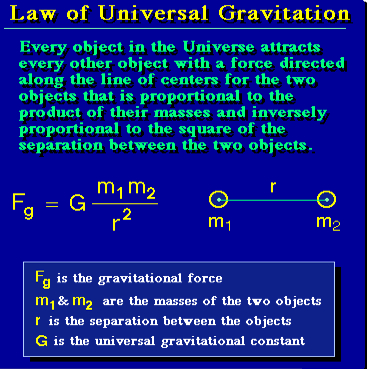 This is an interesting article for the layman about the changing gravitational constant. One part that intrigues me is their hypothesis that maybe the nature of gravity (the form) is changing and that some other force might be changing it. Or maybe gravity is subject to oscillations? Any change could have interesting consequences.
Gyve Bones writes:
A rather weighty and grave subject for this site, eh? I reckon it falls under the category of ever-changing cycles, and perhaps, BBQ.
Gary Rogan writes:
It's almost funny to see these scientists very concerned about the possibility that G is changing without much concern about what, in our universe (other than some supposed new field), really determines why it has any specific value vs. any other value or why it's at least somewhat constant through the Universe. Why shouldn't it change, if you have no idea how the value comes about in the first place?
Jeff Watson adds:
But then again, if gravity can change form, can time and space be far behind? And I'm not talking Discovery Channel stuff.
Gary Rogan replies:
ANYTHING where you don't understand the root cause (and even then if your understanding is wrong or incomplete) can change. All the fundamental physical laws are basically just observations that haven't been contradicted YET, and all the social science/market "laws" are just observations that at some point seemed correct to enough people.
Jeff Watson writes:
I suspect that F=MA would stand the rigors of any test in the macro realm. PV=nRT would probably stand up also, as well as V=1/2 AT^2. The fundamental Newtonian physical laws are pretty intact and have been proven in a variety of ways. Had the physical laws been incorrect, man would have not been on the moon, we wouldn't have landed a rover on Mars etc, Ohm's law(among other things) would not have be proven and I would not be able to communicate with you in this venue. And " the social science/market "laws" you make note of are more of an art than a science. I apply science to markets every day, but along with the science, I also use the art taught to me by my mentor to achieve a small degree of success….sometimes.
Sep
10
David S. Landes, from anonymous
September 10, 2013 | Leave a Comment
 David S. Landes, a distinguished Harvard scholar of economic history who recently passed away, saw tidal movements in the rise of seemingly small things. He suggested that the development of eyeglasses made precision tools possible. Maybe, he said, using chopsticks helped Asian workers gain the manual dexterity needed to make microprocessors.
In more than a half-dozen books and scores of articles, Professor Landes's writing was often as light as his subjects were heavy. Reviewing his 2006 book, Dynasties: Fortunes and Misfortunes of the World's Great Family Businesses, for The Times of London, Christopher Silvester described the writing as pithy, thoughtful and sprightly. The book offers 13 sketches of tycoons, including Henry Ford, John D. Rockefeller and Armand Peugeot.
I love this quote:
"…..In one scene Nathan Rothschild, of the legendary financial family, is hard at work at his desk in London. A peer of the realm is brought in. Rothschild, intent on his ledgers, invites him to take a seat. Offended, the visitor blusters about his high standing. "Take two seats," Rothschild says….."
Sep
10
Life and Trading Lessons from Hemingway, from Vince Fulco
September 10, 2013 | Leave a Comment
 As I work on brushing up writing skills for a potential book on my journey as a caregiver to my wife for 30+ months, I happened across a collection of advice for writers Hemingway sprinkled through his correspondence with colleagues over the years. Wisdom for the ages?
Life lesson:
"Listen now. When people talk listen completely. Don't be thinking what you are going to say. Most people never listen. Nor do they observe. You should be able to go in to a room and when you come out know everything that you saw there and not only that. If that room gave you any feeling you should know exactly what it was that gave you that feeling. Try that for practice. When you're in town stand outside the theatre and see how the people differ in the way they get out of taxis or motor cars. There are a thousand ways to practice. And always think of other people."
And for traders as well as writers:
"Dostoevsky was made by being sent to Siberia. Writers are forged in injustice as a sword is forged."
It makes me think of all the injustices bestowed upon newer traders; complexity, bad prices, one's own emotional state, the non-obvious inner circle game– the list is endless.
Sep
6
McDonald’s Stock, from Ed Stewart
September 6, 2013 | 2 Comments
 On a 2000 mile (round trip) road trip with the family late last spring, I had ample opportunity to sample the various fast food outlets.
I made a point of trying McDonald's newer, "innovative" fare, while my wife stuck with the classics.
My impression–atrocious! Dismal food quality, taste, and presentation.
When I got home I was so disgusted with the experience I sold my McDonald's stock (MCD).
.
.
Sep
5
Junto This Thursday, from Victor Niederhoffer and Dailyspec
September 5, 2013 | 1 Comment
Judge Andrew Napolitano will be speaking at the Junto on Thursday on the rule of law.
Usual place: 20 West 44th St, NY NY. First floor reading room. Start 7:30pm. All are welcome.
Sep
3
Banging the Close, from anonymous
September 3, 2013 | 1 Comment
In August 1998, I ran foreign brokerage for Refco out of Moscow, and most of my local clients kept averaging down in Russian Ruble futures, as the currency accelerated in its worst bear ever. Personally, I was a lucky Short from around 9.0000 of months ago and I patiently hung on through daily slides, as they were now breaching 7.0000.
This futures contract was now listed at the CME, but participation was still spotty. So that Friday the contract gapped down slightly below 7.0000 at the open, but it began slowly rising through its six-hour session, creating a possibility of a key reversal bar near the close around 7.0300. However, I noticed that with 60 seconds left on the clock, there were no bids showing in the book higher than the stale 6.9811 bid unabled un the morning. So with second remaining, I call the floor and ask the broker to post 6.9812 offer for a single lot. He barely managed to post it to the board, as the bell rang. Well, I sold nothing — but the day's settlement price has now shifted back below the 7.0000 for the first time in history, and it was the week's close no less!
So lo'n'behold, some heavy currency hedging activity kicks in as the Russian exchange opens next Monday. It was even rumored to have Palindrome fund connection to Vimpelcom purchase, where he ended up losing hundreds of millions during the ensuing government default. The official Russian default/devaluation declaration followed that week, gapping the devalued Ruble all the way to 4.0000 handle!
Sep
2
Wag the Dog, from Bill Rafter
September 2, 2013 | 2 Comments
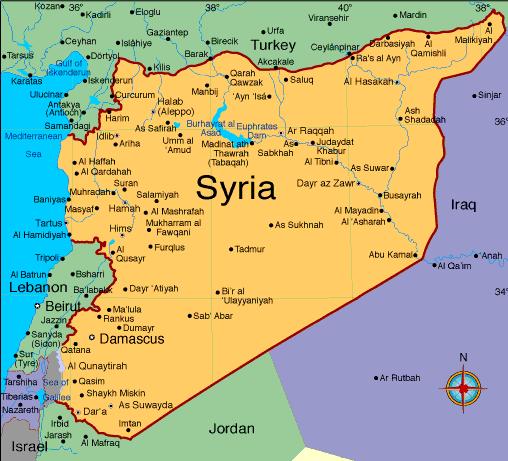 In our shop we monitor various forms of taxation because (a) the reports are the only daily macroeconomic data other than price, and (b) the data is raw and as such unintelligible to the journalists, who consequently ignore it. Regarding the latter point, most people wind up getting their information from journalists, which as a competitor I think is great.
What we know:
First, the Non-Farm Payroll report is due out this coming Friday. It's going to be weaker than currently imagined. Big time. Note that there was an effective 2 percent increase in payroll taxes starting in January. In a perfect world a non-thinking bureaucrat (excuse the redundancy) would expect a 2 percent revenue increase. But people (and employers) vote with their feet so to speak, and the bureaucrats get less. So much less in fact that the YOY payroll tax growth is now negligible. For those of you familiar with the work of Art Laffer, this exemplifies his famous curve. Some of the decline in payroll taxes may be a result of the sequester. But it does not matter; the point is that when one considers the tax increase, there is a decline in the growth of hours_worked * wages. There is no way to paint a smile on that information.
Second, tax filings by corporations show negative YOY growth that just started recently and has not happened for some time. That is perfectly logical as businesses are curtailing expansion because of Obamacare, and for lots of reasons are flush with cash. What they should be doing is investing, but that's not happening now. Given the amount of cash around, one would also expect more M&A activity. Not significant there.
Third, tax payments by individuals other than payroll deductions have negative YOY growth, pretty much in parallel with the corporate filings.
Fourth, growth rates of import duties and excise taxes, good surrogates for discretionary retail spending, are negative YOY. Big time.
I have put up charts of the above (1, 2, & 3) recently, but if anyone has a specific request, I will accommodate.
Opinion/analysis:
Can someone be at the pinnacle of power and be grossly incompetent? Of course. It's hard to think of a Presidency that has not done something egregiously stupid. However at some point you have got to say to yourself, "they simply cannot be that stupid; there has got to be another reason." That's where I am at now.
I think Syria is a Wag the Dog scenario. The questions are why, and what are they covering up? From my foregoing information I think it's the economy. By the way, I am not implying any illegal actions on the part of anyone. Some doctors do not tell their patients the full truth, so why should we expect something different from our political leaders.
Aug
30
Meet the Flexions, from Dylan Distasio
August 30, 2013 | Leave a Comment
 For those interested in reading up further on the flexions and Ms. Wedel's work, the latest issue of Pacific Standard magazine has a nice introduction to this aspect of her work titled "Meet the Flexions."
I only have the print version and am unable to link to a soft copy, but the website for the magazine is psmag.com.
The article is particularly timely with the Prime Mover lately attempting to transmogrify himself into the creature from Jekyll Isle by sheer force of flexionic will.
Aug
29
The Bond Market, from anonymous
August 29, 2013 | Leave a Comment
A couple of weeks ago we had a back and forth about the bond market's behavior. I want to add one more possible explanation to my list of "whys." I read a pundit last night arguing that the iMarkets have a ton of foreign reserves … and that's why this won't be a repeat of 1998. Interestingly, this is possibly bearish for US Treasuries. That is, the iCOUNTRIES may be selling their treasury holdings to support their currencies in the face of capital flight and a growing balance of payments deficit. This might continue until they run out of money and are forced to have violent devaluations. Just a thought…
Aug
26
One of Our Own in the News, from Dailyspec
August 26, 2013 | Leave a Comment
 "Runner Larry Williams Takes First Place in Five Events"
Scott Brooks writes:
Congratulations, Larry!
Al Mabry writes:
Is that a picture of Larry…or Mark Spitz?
Jeff Watson writes:
Most heartfelt congratulations Larry. It takes a lot to impress me, and I am impressed.
Larry Williams writes:
Thanks to all for the kind words.
It was not as much if an accomplishment as it might appear. There were only a few other competitors in my age bracket this year. In some events I was the only one.
Getting back in shape (a year ago I was on crutches for over a month) was the real accomplishment as I see it. Stressing and old body and getting back into a training routine was comforting. I had been there before and it felt really good. Just really slow. Adapting, well trying to adapt for the altitude, was a challenge that I failed.
My real 'victory' was the joy of competition and meeting other old guys to run/play with. When we lined up for our races we invariably would forget our lane assignments; once we realized that we all really got a good laugh.
Happy trails to all.
Aug
22
The Fact that the Dax Was Up, from Victor Niederhoffer
August 22, 2013 | Leave a Comment
 The fact that the Dax was up 3 ratio points against the US markets shows that the largesse of the flexions on our numbers is not withheld from those who make recipes for the bernaise and bechamel sauces in Brussels .
Alan Millhone writes:
Dear Chair,
Am afraid the bernaisacky sauce might upset my stomach.
Note Dow was below 15. That is upsetting enough to many without adding any sauces.
Sincerely,
Alan
Kim Zussman writes:
It was dyspepsia from absence of Bernanke sauce.
Peter St. Andre writes:
I really need to write a little poem that starts with "Ben Bernanke makes me cranky"…
Gary Rogan contributes:
There once was a man named Bernanke
Engaged in some bad hanky panky
But he went AWOL
and skipped Jackson Hole
And now the markets are cranky.
Craig Mee adds:
Bernanke the captain of Fed
Resembles Titanic's, Smith Ed
Evades all bergs, engines full out
Bond infinity, no damnable doubt
"Untapered, untwisted, now screwed", he said.
Aug
21
Maps That Make Sense of the World, from The President of the Old Speculator’s Club
August 21, 2013 | 1 Comment
I found this collection of "40 Maps That Will Help You Make Sense of the World" quite fascinating and a few are important to know.
Aug
19
Bronycon, from Garrett Baldwin
August 19, 2013 | Leave a Comment
 On the way to my graduation from Purdue two weeks ago, I headed to the light rail to travel to the airport.
As I awaited the train, a slew of grown men dressed up in My Little Pony garb were on their way to a conference about four blocks from my apartment. Baltimore in successive biweekly periods has hosted a My Little Pony convention for adult men, Comic-Con (sp?), and soon a Grand Prix race that annually loses millions. But it is the former that was so bizarre to me, that I was very pleased to reach this article, which may be one of the most random, insightful, odd, and funny analyses of academia, counterculture, and exercises in wearing random costumes in public.
Enjoy or shake your head… this is a step into the weird…
Aug
13
Bacterial Booms & Crashes, from anonymous
August 13, 2013 | Leave a Comment
 This article shows results of experiment on the E-Coli bacteria detailing the survival or death of the bacteria in response to the way it handles introduced exogenous stimuli. The upshot is that small changes in exogenous conditions can lead to large substantial differences in outcomes. Surely a rich field for market related phenomena looking at how small changes in one input (say rates) may lead to large movement in other markets (say currencies) when the dependent variable is already under some stress.
Pitt T. Maner III writes:
This is a really interesting field.
It looks like bacteria have been "hedging their bets" for quite some time. And they have a type of "memory" that influences their response to current environmental conditions. On a larger scale it is interesting to note what happens to the ecology of a system when a "keystone species" is removed. The field of "synthetic ecology/biology" looks to have important findings for a wide range of fields and the bacterial algorithms already developed are being used for engineering problems.
1. "Bet-hedging in stochastically switching environments":
"We investigate the evolution of bet-hedging in a population that experiences a stochastically switching environment by means of adaptive dynamics. The aim is to extend known results to the situation at hand, and to deepen the understanding of the range of validity of these results. We find three different types of evolutionarily stable strategies (ESSs) depending on the frequency at which the environment changes: for a rapid change, a monomorphic phenotype adapted to the mean environment; for an intermediate range, a bimorphic bet-hedging phenotype; for slowly changing environments, a monomorphic phenotype adapted to the current environment. While the last result is only obtained by means of heuristic arguments and simulations, the first two results are based on the analysis of Lyapunov exponents for stochastically switching systems."
2. "Memory in Microbes: Quantifying History-Dependent Behavior in a Bacterium":
"Your average bacterium is unlikely to recite π to 15 places or compose a symphony. Yet evidence is mounting that these 'simple' cells contain complex control circuitry capable of generating multi-stable behaviors and other complex dynamics that have been conceptually linked to memory in other systems. And though few would call this phenomenon memory in the 'human' sense, it has long been known that bacterial cells that have experienced different environmental histories may respond differently to current conditions [1]–[3]. Though some of these history-dependent behavioral differences may be physically necessary consequences of the prior history, and thus some might argue insignificant, other behavioral differences may be controllable and therefore selectable and even fitness enhancing manifestations of memory."
3. The work of Professor Robert T. Paine and the concept of the "keystone species" where an organism has a big effect relative to its abundance:
"It was a ritual that began in 1963, on an 8-metre stretch of shore in Makah Bay, Washington. The bay's rocky intertidal zone normally hosts a thriving community of mussels, barnacles, limpets, anemones and algae. But it changed completely after Paine banished the starfish. The barnacles that the sea star (Pisaster ochraceus) usually ate advanced through the predator-free zone, and were later replaced by mussels. These invaders crowded out the algae and limpets, which fled for less competitive pastures. Within a year, the total number of species had halved: a diverse tidal wonderland became a black monoculture of mussels1."
anonymous adds:
 OK, what about Slime Molds (particularly, Dictyostelium discoideum). It has the absolutely stunning biological characteristic that it spends much of its life as thousands of individual cells and other times as a single entity.
When times are good for Dictyostelium doscoideum its 'cells' wander off and enjoy themselves. However, in less hospitable environments the 'swarm' of cells coalesce and form a single entity.
Apparently the cells emit acrasion (or AMP) that contains information useful for other cells
When things are starting to look tough the cells pump out increasing amounts of AMP and the cells begin to cluster….Other cells follow these trails and increase to mass towards it completed whole.
Now, I wonder about the stock market. During the regular upward movements most of the components are doing their own thing, following their oscillations generally higher…. When 'it' hits the fan, the correlations between the stocks increase rapidly to 1.0 and they form a single bearish, growling entity.
Now without pushing the analogy too far, I wonder if stocks 'transmit' statistical information (AMP to follow the analogy) to each other (in this context they would not transmit as much as 'exhibit' some form of common statistical behaviour) that forced the behaviour of component stocks into a more correlated state.
Testing possibilities are legion.
Gary Rogan writes:
My general objections to giving some purpose to the market have to do with incentives, or more precisely lack thereof to do anything in particular.
I read a whole chapter of a book on a slime mold presented as an altruism study. The reason it was presented like that is that when the individual slime mold cells cooperate, only the lucky few that join the growing "mushroom" at the right time get to propagate because they get to form spores only at a particular state of development of the hastily arranged colony. Nevertheless, when presented with a choice of dying for sure or maybe propagating (and the cells only cooperate when they are close to death) they chose to cooperate and propagate. There is also some amount of deception involved when the cells jokey for position, but not a lot, since any particular placement is hard to achieve.
What is the equivalent reason for stocks to cooperate?
Bill Rafter writes:
Should what you say about stocks transmitting statistical information occur, it would mean a relative decline of idiosyncratic volatility. That is something we have studied, and found that when the going gets tough, the idiosyncratic vol grows faster than the market's vol.There are some other measures of "group think" that are good indicators of both the broad markets and individual assets.
I would posit that stocks do not transmit info, but their owners do. Consider the case of futures in which one market takes such a hit as to require significant margin calls. Human nature being what it is, the public sells its winners to finance its losers, and non-related markets dive along with the primary.
Aug
9
3D Printing: Now I’m Excited, from anonymous
August 9, 2013 | Leave a Comment
 There are three videos in this article, all of them are quite fascinating. The last one I found particularly cool — a sandbox for science museum installation that demonstrates how topo– maps work by projecting color and topo lines onto the sand. Watch as he makes it rain with his hand and the system shows the water flowing off the watershed and pooling in the catchment areas.
"Here’s what the immersive, 3D computer interface of the future will feel like"
Aug
8
The Newspaper Business, from The President of the Old Speculator’s Club, Jack Tierney
August 8, 2013 | Leave a Comment
 How did newspapers make money anyway?
Formerly the bulk of newspaper revenues came from Classified Advertising with margins in the 80-85% range. Biggest income producers were Help Wanted (especially those ads aimed at "Executives and Professional." Now Monster.com and others have reached a far broader readership, with an easier search protocol, and the ability to submit resumes electronically.
Two other big money makers were Real Estate (private home sales, home rentals, and apartment rentals (really big in urban markets)), and Automobiles (mostly used). Once again the net won out by incorporating 360 degree filmed shots of all rooms in a home/apartment - readers no longer had to trust in veracity of copywriter (me). Use of pictures for autos on web was a big reason for shift - again a picture was a better sales tool than words. But a newspaper ad with a pix cost way too much
General/National advertising (Ford/MacDonalds/Proctor & Gamble/Nike, etc) were big income producers but split their "buys" and had already begun to move more into TV — local dealers/retailers/food marts/electronic stores, though, spent tons - moved some of that to the web also.
Absolutely huge dollars and margins in political and/or issue advertising — especially campaign ads. Definitely paid the highest rates with NO discounts for frequency of ads or number of appearances.
Retail advertising was very competitive and, consequently, margins were much smaller; many of these advertisers switched some of their advertising to the web but few switched it all.
The big money makers in newspapers remain those in smaller markets with lots of elections and, ideally, without a nearby Wal-Mart. Generally, most smaller towns are one-paper markets and rates are set to insure generous margins (Gannett owned very many of these and they add substantially to the bottom line). However, consumers of local papers like to see bylines by local people — and they demand that coverage be provided for most civic events that big papers would normally ignore (so if the publisher gets too pricey or too indifferent to local events, the staff hears about it, and advertisers act on it). Locals are also are very interested in coverage of high school activities (football, band, and cheerleading are huge.
Political advertising for every office from the Prez down to county Animal Control Officer bring in dollars — local radio gets very little of any as most stations have limited reach and few committed advertisers.
Aug
8
Zimbabwe Opens a “Blacks Only” Stock Exchange, from anonymous
August 8, 2013 | 1 Comment
 Zimbabwe is opening a stock exchange that will only trade shares "appropriated" from other parties. Only blacks may participate.
"Zimbabwe to open a "blacks only" stock exchange"
A commenter adds:
Words fail me. But if there was one country in Africa that needed foreign investment more than Zimbabwe, it would have to be the CAR (or whatever it's now called). If there were any capital left in Zimbabwe that could be moved out of country, I'm sure it's already moving. I guess it will be another generation before the country gets its act together and develops a legal system worthy of the name.
anonymous writes in:
I used to live in Zimbabwe and now live in Durban South Africa – but I go visit frequently.
I would move back to Zim tomorrow if Mugabe went.
Zim runs totally on US dollars – banks ATMs, all cash is the US dollar.
The economy is starting to pick up again and the shops are starting to fill up with foreign goods.
But Mugabe and his sidekick the Indigenisation Minister Kasukuwere are the problems – both are bloody mad.
But that said Mugabe is one of the healthiest 89 year olds I know.
One thing is for certain – every election Mugabe makes outrageous statement of his future intentions- then he rigs the elections - wins -repeats his outrageous statements at his victory speech - then you never hear anything again.
But there is always a first time with this mad man.
Aug
6
Flexionism of the Day, from Dylan Drury
August 6, 2013 | Leave a Comment
There is an apparent flexionism transpiring in the current market environment. The fed flexes their views in deciduous media blurbs while trying to manipulate an asymptotic rise in asset prices.
One is reminded of the war strategies used by the ancient Nuntsekai warriors of the Middle East in the 12th century.The strategy was initially applied with commingling of deceit maneuvers in association with subordinated and mischievous assemblance of morale loss. What then followed was a stochastic attack maneuver which created chaos and confusion in the midst of initial optimism.
« go back — keep looking »Archives
- October 2026
- September 2026
- August 2026
- July 2026
- June 2026
- May 2026
- April 2026
- March 2026
- February 2026
- January 2026
- December 2025
- November 2025
- October 2025
- September 2025
- August 2025
- July 2025
- June 2025
- May 2025
- April 2025
- March 2025
- February 2025
- January 2025
- December 2024
- November 2024
- October 2024
- September 2024
- August 2024
- July 2024
- June 2024
- May 2024
- April 2024
- March 2024
- February 2024
- January 2024
- December 2023
- November 2023
- October 2023
- September 2023
- August 2023
- July 2023
- June 2023
- May 2023
- April 2023
- March 2023
- February 2023
- January 2023
- December 2022
- November 2022
- October 2022
- September 2022
- August 2022
- July 2022
- June 2022
- May 2022
- April 2022
- March 2022
- February 2022
- January 2022
- December 2021
- November 2021
- October 2021
- September 2021
- August 2021
- July 2021
- June 2021
- May 2021
- April 2021
- March 2021
- February 2021
- January 2021
- December 2020
- November 2020
- October 2020
- September 2020
- August 2020
- July 2020
- June 2020
- May 2020
- April 2020
- March 2020
- February 2020
- January 2020
- December 2019
- November 2019
- October 2019
- September 2019
- August 2019
- July 2019
- June 2019
- May 2019
- April 2019
- March 2019
- February 2019
- January 2019
- December 2018
- November 2018
- October 2018
- September 2018
- August 2018
- July 2018
- June 2018
- May 2018
- April 2018
- March 2018
- February 2018
- January 2018
- December 2017
- November 2017
- October 2017
- September 2017
- August 2017
- July 2017
- June 2017
- May 2017
- April 2017
- March 2017
- February 2017
- January 2017
- December 2016
- November 2016
- October 2016
- September 2016
- August 2016
- July 2016
- June 2016
- May 2016
- April 2016
- March 2016
- February 2016
- January 2016
- December 2015
- November 2015
- October 2015
- September 2015
- August 2015
- July 2015
- June 2015
- May 2015
- April 2015
- March 2015
- February 2015
- January 2015
- December 2014
- November 2014
- October 2014
- September 2014
- August 2014
- July 2014
- June 2014
- May 2014
- April 2014
- March 2014
- February 2014
- January 2014
- December 2013
- November 2013
- October 2013
- September 2013
- August 2013
- July 2013
- June 2013
- May 2013
- April 2013
- March 2013
- February 2013
- January 2013
- December 2012
- November 2012
- October 2012
- September 2012
- August 2012
- July 2012
- June 2012
- May 2012
- April 2012
- March 2012
- February 2012
- January 2012
- December 2011
- November 2011
- October 2011
- September 2011
- August 2011
- July 2011
- June 2011
- May 2011
- April 2011
- March 2011
- February 2011
- January 2011
- December 2010
- November 2010
- October 2010
- September 2010
- August 2010
- July 2010
- June 2010
- May 2010
- April 2010
- March 2010
- February 2010
- January 2010
- December 2009
- November 2009
- October 2009
- September 2009
- August 2009
- July 2009
- June 2009
- May 2009
- April 2009
- March 2009
- February 2009
- January 2009
- December 2008
- November 2008
- October 2008
- September 2008
- August 2008
- July 2008
- June 2008
- May 2008
- April 2008
- March 2008
- February 2008
- January 2008
- December 2007
- November 2007
- October 2007
- September 2007
- August 2007
- July 2007
- June 2007
- May 2007
- April 2007
- March 2007
- February 2007
- January 2007
- December 2006
- November 2006
- October 2006
- September 2006
- August 2006
- Older Archives
Resources & Links
- The Letters Prize
- Pre-2007 Victor Niederhoffer Posts
- Vic’s NYC Junto
- Reading List
- Programming in 60 Seconds
- The Objectivist Center
- Foundation for Economic Education
- Tigerchess
- Dick Sears' G.T. Index
- Pre-2007 Daily Speculations
- Laurel & Vics' Worldly Investor Articles
