Jul
15
Gaming the Subway Seats, from Hany Saad
July 15, 2007 | 3 Comments
 I take the subway to work daily. While not the most prestigious means of transportation, it is definitely in my case the most practical, economical, and time saving. I happen to live three subway stops from the beginning of the line.
By the time I catch the subway, it is usually full with no seats available. Sometimes, I am in dire need for a seat to get a little nap, especially if I am caught trading overnight. An hour nap can do wonders in my case.
Out of this need I become more creative about finding this precious vacant seat. Knowing that the previous two subway stops to my own have only two sets of stairs closer to the front end of the train, I started walking all the way to the opposite end in hope that most people will go for the closer compartments. This is in fact the case except oddly enough that the farthest compartment is always packed.
My reasoning in this case is that most people play the same game I do hoping for the precious nap and seat. However, three cars away from the far end seems to be day after day the optimum solution to this game. Now that I choose the optimum car successfully, sometimes I still am not lucky enough to get a seat unless one of the passengers gets off the train.
I start analyzing the passengers’ profiles trying to figure out which ones are likely to get off the train first to sit in his or her place. This is not an easy task but some knowledge of the city and behavior can do the trick. For instance, I stay away from all people over 30 in business suits as chances are that they are headed to my same destination. Once this category is eliminated, I try to eliminate all university students by guesstimating their ages simply because four out of five universities are located downtown (at the end of the line) so the odds are clearly not in my favor there either. I try to spot two age groups. High school students and under since parents most likely prefer to send their kids to nearby schools so it is unlikely that this group will travel all the way downtown for schools. Also, the elderly group is most likely not traveling far either. This whole process usually takes few seconds since I usually get lucky enough to get a seat before we reach the next stop.
This process is very similar to gaming the mistress although I admit it's never this straight forward with her. Incentive, incentive and incentive. I play the market for monetary profits and only profits. I don't care what philosophical reasoning a speculator would give you a la George Soros; the bottom line is that it is all about the monetary reward. It is all about the nap in the case of my subway trip.
I always try to figure the line of least resistance in speculation, the car with the fewest passengers. This is usually the road least followed by the public. In search for prosperity, I have to copper the public play at all times (by going to the opposite end in the case of the subway), but sometimes the simple contrary play is not good enough to win the game. A little tweaking is often needed. In the subway example I had to go to the third car from the opposite end and not the last since some smart passengers figured out the "simple" contrary play by going straight to the last car.
Timing is also a very critical factor and can make all the difference between a win and a loss. In the case of the subway one has to process some information and position oneself accordingly in a few seconds before reaching the following stop. Flexibility is also a key to successful speculation as no fixed system will beat the market forever. In the subway example, my game plan is different on the way back home since a different crowd is taking the subway at that time.
Ever-changing cycles also plays a great role in this game. The last car was full as the public got wiser and I am sure the third will be one day and a new game plan and system will have to be developed.
Knowing who you are playing against is critical to any speculative game as is the case of the passengers' profiles of this subway. An extensive knowledge of the markets you participate in is essential to your success as is a knowledge of the different subway stops and what they represent to different passengers.
I will end this post here as I reached my subway stop and have to vacate my seat for the next player.
Sam Humbert comments:
In my Manhattan years, I'd often give up my seat to a person of gender or age. For me, the psychic pain of sitting whilst a pregnant woman or pensioner is standing outweighs the benefit of sitting down. Often I'd get the fish-eye from my fellow New Yorkers — they were silently thinking "he must be mentally ill." I'd sometimes make eye contact and explain "I'm not originally from New York," and this would calm them.
Craig Mee adds:
Watching commuters pile into the tubes in London, there is sheer brawn! Doors open at the station and boom, some people are fixed on the destination, i.e., empty seats and God help anyone getting in there road. Funnily enough this is usually concentrated to a certain gender. Some people like to try and muscle markets around too!
Chad Humbert adds:
 1. Watch for mothers with small children. Sometimes a child will scurry, and the mother will have to leave her seat to retrieve him. Voila! Open seat!
2. The elderly are often slow. I've found I can often simply beat them to the open seat by walking somewhat faster. If I'm careful, I can make it appear that I passed them inadvertently. "Oh, were you going to sit here? I'm sorry! Do I need to move?" Most of them want to be polite, and they insist that I keep the seat. Copper the elderly.
3. I've found that the handicapped seating rules are rarely enforced, and when they are, it's just a small fine. I pay that fine many times over with the extra trading profits I generate from feeling refreshed after a nice nap.
Yishen Kuik offers:
Mr Saad's comment on how the farthest caboose is not the optimal choice because of gamesmanship, but rather some not so inconvenient caboose reminds me of a well known behavioral finance game.
Ask 100 people in the audience to pick a number between zero and 100. The winner is the one whose number is closest to two thirds of the average.
Eggheads will zero in on zero, but that answer merely demonstrates deductive abilities without canniness.
People with a more limited appreciation of convergent series might pick 33 instead, based on the assumption that the average will be 50. People able to think one more step ahead might pick eleven. People able to think one more step in the convergence series might pick nine, and so on.
The real challenge of the game is to guess the distribution of this gradient of deductive powers among the audience and weight one's answer accordingly.
e.g. If you think half the people in the room will guess 33 and the other half are extremely bright but guileless and will guess zero, you should guess eleven.
So perhaps if the challenge is given in a lecture room at MIT, guess one (zero is pointless because of the likely pot split). If the challenge is given to the general public, guess between ten and fifteen.
Philip Tetlock, whom I'm reading currently, reports that the most common winning answer is thirteen.
Barry Gitarts contributes:
 Here are a few of my subway gaming experiences as they relate to the market.
Gain an edge by counting - I use the grip mats markers to note where the train doors open when the train stops, so next time I will be standing there well in advance of the train arriving. This prevents others from being the first in the door. This takes several observations, because the train never stops in exactly the same spot, but it’s remarkable how close to the doors you can be. Standing on different parts of the platform to observe which cars are the emptiest helps in figuring out which car you would want to focus on.
Work harder then the next guy and be prepared in advance - Even if you are the first in at your door, there will be others coming into the same car through other doors, competing for the same seats as you, this is why you must start looking for empty seats through the windows as the train is still pulling in so you know exactly which seat you need to go for, instead of walking in, looking around and then going for a seat. Those two seconds are the difference between sitting and standing.
Know the relationships between markets - I find that sometimes, especially during rush hour, it makes sense to take a different train one stop away from your destination so one can catch the transfer one stop before the mob boards.
Capitalize on the public fears long after the threat is gone - Unlike Mr. Saad, in my case the last two cars are the emptiest, because the train I take starts in a more unfriendly part of the city where people wouldn't want to be caught sleeping in the last car, so when the train gets to midtown, every car is packed like sardines except the last two which are near empty.
George Zachar strategizes:
As someone who sits most of the day in front of screens, my subway priority is not getting a seat but minimizing total transit time. I have a mental map of where the stairs are at my destination, and maneuver to get closest to the doors that will open nearest to my exit route.
Market lesson? Different players have different goals. Absolute or relative return? Style box restriction? etc.
John Floyd adds:
 I spent one of my school day summers as a messenger in Manhattan. To increase efficiency I learned the exact subways, waiting positions on platforms for door openings, and the correct cars to place me near an exit that would easiest to get me to my destination. I did this for as many of the routes I traveled as possible.
The numbers of possible routes in terms of subways, exits, etc. are myriad. The proper choice allowed me to be the first off the car and up the stairs, oftentimes placing me right inside the building I needed to reach. This was an added benefit as I avoided the often hot, humid, and crowded streets. I would estimate that this on average increased my efficiency by 20-30% at least. Conversely when I rode my motorcycle across the country I looked at the map once in the morning to get a general idea on the direction I wanted to head and roads I might want to take and then just drove. My efficiency of time probably dropped by 50% but my efficiency of pleasure went up by equal.
When traveling now I try to use the time to read, listen to books on tape, or use the time as a period of thoughtful reflection. I do this mostly because I find it most productive for me given I do not find the sleep comfortable or useful to me in modes of transport. I can understand others find it as a useful battery charger that allows them to be productive later.
So I would extend the logic and say that while the goals –profits, learning, etc., may be the same, the path and methods to getting there may be very different. I think another important point is that one needs to decide and focus on what works best for them, as it may not be the same as what works best for others.
James Sogi comments:
 We don't have subways here in Hawaii, but I try to find the best time to find uncrowded waves for surfing. The best bet is to take my boat to spots such as the nearby national park that has nice waves, but only with a long walk and even longer paddle which weeds most out. The boat takes me to the front row spot and a short paddle, with refreshments waiting.
The other method is to go right after lunch, but before school is out and before workers get out. That seems to be the old guys’ slot, and usually only one or two old guys like me are left still surfing.
The other odd thing, is that even if its crowded, many in water can't see where and when the wave will form and break. If you calmly paddle to the spot where the wave will form as you see it coming over the horizon before anyone else realizes where or when it will come, you will be right at the right spot as it breaks without paddling and catch the perfect wave with a single stroke without effort at the perfect spot while all the crowd is scrambling around trying to catch the wave in the wrong spot.
This of course takes about 40 years water experience and have obvious market application as well. Study of the bottom, which many in water don't bother looking at, triangulation of shore navigation aids, like palm tree lined up with volcano peak and far point, and timing of the waves and sets all help find the ideal entry point. I guess it’s like standing at the right spot on the subway platform.
Another method if the waves are small, or really big, is to use a big board. All the kids ride short boards and only have one board, so if the waves are mushy they can't catch rides, or if the waves are big, they can't catch rides, and with 12 different boards for each micro category of waves it’s easier to catch the nice ones. So really good equipment helps.
Another method is to exercise and train even when the waves suck, so when the waves come, you are in great shape and can charge while the kooks are gasping for breath. Of course pros like Shane Dorian exercise all day long lifting weights, and after surfing five hours, swim around Tavarua Island twice. Geeze.
There are a million ways to beat the crowd. The last one is move a million miles away. The market still reaches here in about 89 milliseconds.
Victor Niederhoffer extends:
These posts on how to get a good subway seat are a fine pyrotechnic display of native ingenuity. Presumably many of our readers, in their days as poor shavers, also had to apply these techniques to finding parking spaces, especially if they lived in urban areas and didn't want to pay $50 a day for a garage. What I'd like to ask, however, is how these ingenious delectations could be applied to getting a seat in the market. When someone is forced to get out at an unfavorable price, how do you know it's coming, like on the subway, and how can you take his place at a very favorable position to you? One hint is to study Michael Covel and his gurus.
Allen Gillespie replies:
In my experience, a sign of an open seat in the markets frequently presents itself when everyone sells a stock from news on a single company. A recent example is the retail selloff following SHLD's news — only to have WMT, HD, and retails sales numbers lead the market higher a few days later.
Questions I always try to ask myself in those situations:
1) Is the news company-specific or general?
2) Is the bad news the result of good play by a competitor?
3) Did the valuation make the news appear more important than it really is?
4) Which companies have future catalysts?
Hany Saad contributes:
A fund manager using a trading system that has been losing for more than three consecutive reporting periods is usually a good bet, especially if the majority of fund managers trading the system fall into the switch trap by moving to a different system (usually a very thorough read of the fund prospectus is necessary in this case). They usually give up on the first system at the exact wrong time when it is on the verge of a big win, falling into what Rob Bacon warned against in his wise words "beware of the switches", leaving a seat wide open for the wise observant player.
The same reason I wager that trend following will make a killing next year with the only reservation being that it should be on the long side.
Barry Gitarts adds:
I have tried to predict who would get up on the train, but such efforts have usually been futile. Instead I stand ready, knowing that anyone could be the next person to get up and I'll be ready to run for the seat. Of course this works better standing in the part of the car where there are fewer people, since there will be less competition for that seat when someone does get up.
In the market, this is like predicting the next big selloff. I can't predict when it will come, but I can be sure I have sufficient reserves for when the opportunity presents itself. As in the subway, this may work better where it is less crowded, and in stocks/markets with less media/analyst coverage.
Jul
2
Technical Obsolescence, from Victor Niederhoffer
July 2, 2007 | 6 Comments
 I've found in my 45 years of business experience, as a rule, starting with Tyco's toy racecars (by far the fastest) was that the company with the superior speed or design or popular fancy was always overtaken by a competitor who came up with a comparable or better product. As a complete layman, I wonder how long it will be before someone comes out with a better phone than Apple, and whether this makes the profits form the iPhone ephemeral. Please excuse my ignorance in this field.
George Zachar comments:
Technology acceptance is heavily influenced by network effects and compatibility issues that make the diffusion of digital products take a different trajectory from their non-digital predecessors.
John Floyd adds:
"Leapfrogging" is a real danger. It is also evident in the way Japan evolved in car manufacturing in the 1960s and 1970s. I can remember driving in my uncle's "nouveau Datsun" as a five-year-old and hearing him tell me about the benefits in terms of cost, fuel efficiency, luxury, etc.
From a stock performance perspective I would imagine tests exist and can be done to look at stock performance post introduction of a new product for a variety of markets and products, Apple obviously included. What seems likely difficult to quantify is the "wow" factor: the market's potential to extrapolate huge multiples going forward based on various forms of growth, as happened in cases like the Internet stocks.
Henrik Andersson writes:
It seems like Apple is holding on to their market share for portable music players even though it might not have a superior technology. I can envision the same happening for the phone, which I think would be very suitable for WiMax in the US rather than 3G.
James Lackey writes:
There are so many elegant angles to the iPhone. When you look at the products vs. cycles, prices and innovation, many examples of car production vs. tech can be used. Examples include the furious competition, lower prices, and leaps of innovation.
The iPhone may be a leap of innovation. Of course others will adapt and prices will fall. What is uncertain is how much innovation and cost will trickle down to the sedan market of cell phones. Perhaps that equation, how the mass market accepts it and is willing to pay for the new bells and whistles, will set the pricing and production of future iPhones. Will the iPhone be a sporty two-seater high performance vehicle or just another used sedan at 50% off current retail in five years?
Barry Gitarts writes:
I think your questions apply to the smart phones which have been on the market for years from companies like RIMM or PALM and the iPhone is the answer.
To paraphrase Steve Jobs, people are used to thinking that something is wrong with them, when the real problem is the phone they are using. But Apple is not an iPod or iPhone story, it is a Steve Jobs story. Just look at how Apple did when Jobs was at the helm and then when he left and then when he came back. Is there any doubt he is the man responsible for the value creation reflected in Apple stock?
When I watch Jobs talk about his products, his passion and dedication reminds me of Howard Hughes and Airliners as portrayed in The Aviator. While there is no doubt that new technology will come out that will give the old technology a run for its money, how does one know the new technology will not be developed by those who developed the old one?
J.P. Highland writes:
It won't be about someone producing a better phone, but someone being capable of delivering a cooler phone. The IPod might not be the best mp3 player in the market, but there's something irrational about it. People love it and will keep buying unless the meme fades. But so far people are in love with Apple and the success of the IPod has permeated to the iPhone and the PowerBooks are doing well.
Jun
13
Kids’ Books, from Russell Sears
June 13, 2007 | 1 Comment
 I have been researching on the web how to teach children to dream. What is left out is how to develop a passion for life when dreams fail to develop. I suspect their father's example is the best teacher.
John Floyd writes:
I am looking for recommendations for children’s books. I would like to include the right mix of education, capitalism, logic, reason, imagination, and individuality among other things. A few books and stories that I have found, and the kids enjoy: Jonathan Livingston Seagull, Thidwick the Big Hearted Moose, An Airplane is Born, and The Little Prince.
Scott Brooks adds:
As much as we push education in our home, we've had a dickens of time getting our children to read outside of school. Finally last year, my oldest daughter got into reading the Goose Bumps series. She loves them and needs no prodding to read up on them.
My youngest son somehow got into reading the Star Wars books. He doesn't read them religiously, but will read outside of class if given a little reminder. Interestingly, I bought him a book on bullets at the Quality Deer Management Association national convention in Chattanooga last week and he's been perusing it almost everyday. He's 8 years old and it's way above his level, but he seems fascinated by it. He had his home school teacher read it with him and explain the more difficult parts to him.
For my 12-year-old, we've had to use a different tactic. He doesn't read unless we push him to do it. However, he's really into the markets and learning about investing. So he reads stuff on the net about companies he's thinking of buying and watches and reads investing information.
I guess the key is to immerse your kids in reading and let them find what they like. When I was kid, I'd read one or two Hardy Boys book's a week. I tried to get my kids into them, but to no avail. Keep searching to help your kids find something that they like. There have been a lot of good books recommended here (and I'm saving this thread for future reference for my kids and their home school).
Many of these books are important and are one's that I'll have the kids read as part of their school work assignments (whether they want to or not). But the biggest thing that I've searched for is, how do I instill in them a love for reading a thirst for knowledge? I can't do that by forcing books on them. Sure, I can help them to learn important lessons by requiring that they read certain books. But what I really want to see is them sitting down curled up with a book reading it because they want to. I believe that should be goal!
From Bill Humbert:
One of my children was a reading-avoider. My goal was to get the kid reading and I happened to see the movie League of Their Own in which the Madonna character teaches the non-literate character to read by using trashy novels. I believe the quote was something like, Who cares? She’s reading isn’t she? It’s a scene we always laugh at.
Well, I didn’t use trashy novels, but I did use comic books. We started with the superhero genre and then I gradually slipped in the newer version of the old Classic Comics. For certain works I also acquired Books on Tape, which is more useful than listening to the radio in the car and it gave the child a general understanding of the work.
Since the brain stores different types of input in different locations, this child had an advantage over the children who only had read say Homer’s Odyssey. The child had the pictures from the Classic Comics, the audio from Books on Tape and the printed word itself. After a while the child started to excel in those classes. And only then did the overall desire to read take over. I think it was like a pump that needed to be primed.
Get the child reading. "What" does not matter. If the child finds that useful and desired knowledge comes from reading, eventually that child will take to the books. But you have to prime the pump by starting with something that they want to read, which is not always what we want them to read.
Larry Williams adds:
When I wanted my kids to read a book I was reading I told them they probably should not read it — that it was too adult for them. A cheap trick, I know, but they pick up those books like a brown trout seeing a grasshopper in August.
Nat Stewart writes:
My parents did much to foster my love of reading. In early grade school I would go with my mother to the local library, where I was allowed to pick any books I wanted for that week. I quickly fell in love with the selection of children's books that focused on biographies of America's great heroes. My particular favorites where books on:
1. Thomas Jefferson
2. Thomas Edison
3. George Washington
4. Paul Revere
5. John Paul Jones
6. George Washington
7. Davey Crockett
8. Henry Ford
9. Daniel Boone
10. the Wright brothers
I loved these books! The children's books focus on a narrative of struggle, adventure, and heroism, ingenuity, and are often historically accurate enough to prove very educational. I remember reading them late into the night, hoping no one notice that I had my light on long past the official bed time.
My parents also spent a good deal of time reading to me. My favorites included books about King Author and Nights of the Round Table, "Little House on the Prairie" books, and The Chronicles of Narnia.
Let a kid explore the library and pick favorites. Provide enough options so that reading can become an adventure rather than a chore. Spend some time reading to them over summer vacation.
From Bill Rafter:
 We all remember our trips to the library. However that cannot be replicated today. The libraries simply cannot compete with television and the Internet either with content or "wow" factor. The answer to the problem will be in using the new technology not avoiding it. Television, even the good stuff like National Geographic or Ken Burn's "Civil War", is still second-rate because it's passive. The Internet is active, and thus has more potential as a learning tool.
Games can be very helpful. One that had particularly helped me (both myself and subsequently my children) was Scrabble. After a street game of "boxball" we would dig out the Scrabble board while we cooled down. Those games got very competitive to the extent that several of us kids started doing research on words by randomly reading the dictionary. Scrabble also required you use arithmetic to keep score.
My favorite Scrabble word was "ennui," as it cleaned out your collection of accumulated poor-value tiles. It also led to challenges, which led to another turn and more points. While researching through the dictionary I stumbled upon the word "eunuch", which also had good Scrabble possibilities. Being in 6th grade, I didn't care what it meant, but kept a mental file for future use.
Well somehow I got into a name-calling event in the schoolyard with a girl and called her a eunuch. She had no idea what it meant, but the teacher Sister Mary Hatchetface was in earshot and she most certainly knew. The next thing that happened was that I was in the principal's office (Sister Jane Battleaxe). My father was summoned. He was a Philadelphia policeman, and he happened to be in uniform.
So there I was in the Holy of Holies with the two nuns in their penguin uniforms and Dad in his, trying to learn what trashy literature I was reading. The revelation that it was the dictionary left them with no solution.
Ahhh, the ability to stick it to authority…priceless.
May
30
Peru, from John Floyd
May 30, 2007 | Leave a Comment
 It is notable that today the largest equity index decliner is not China but Peru, which at the moment is down 9.44%. The index is weighted heavily toward commodity shares, particularly industrial commodities.
A large part of today's move is generated by one particular stock, SMCV PE. Nonetheless, I think these sorts of developments should be watched as having potential implications for other similar and correlated markets. Specifically, does this say anything about what has been a seemingly endless demand for commodity-related assets, stocks, currencies, physicals, etc.? What implications might this have for particular countries, both pro and con, that both export and import these products, such as Australia, Chile, and South Africa, etc?
From Luca Coloso:
The Peruvian index has done +168% last year and today's fall included +41%. This is catching the attention of the locals who are speculating mindlessly. My wife is Peruvian and was telling me that one of her aunts, who has never invested in the stock market before, just last week was recommending strongly to her daughter to get a loan from the bank and invest in the market.
I don't think this needs further comment apart from the public's need to lose more than necessary, the system's upkeep, and the perils of a heavily "commoditized" market.
May
25
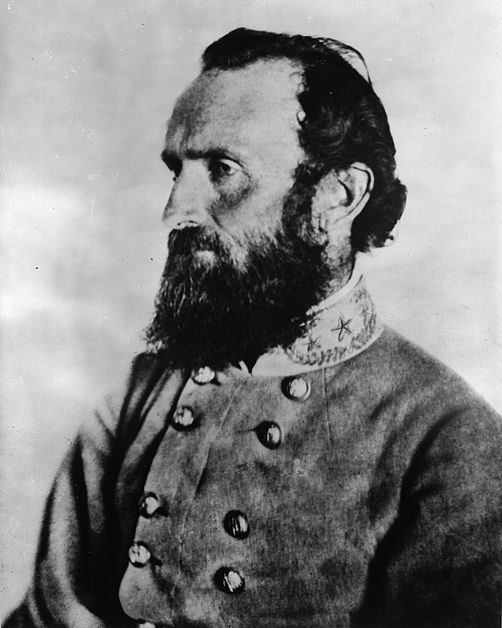 Remarkably, each of the four days this week the S&P Index has traded above its previous all time high close of 1527.9, but then failed to set a new closing record.
| Day | High | Low | Close |
| Mon | 1534 | 1526.6 | 1527.9 |
| Tues | 1533 | 1525 | 1525 |
| Wed | 1535.7 | 1524.3 | 1525.5 |
| Thur | 1532.5 | 1507.8 | 1511.6 |
Note the artful way that the market was able to be down on the week by a hair, as of Wednesday, setting up the longs to increase their positions, only to decline 25 fast points the following day. It would take a Rommel or a Stonewall Jackson to duplicate such cunning.
Thursday had the highest single day range since March 21st; it was up seven by 10 a.m., but then down 18 by 3.40 p.m. (NY time). This is about two and a half times the average range of last year, and shows the usual ability of the market to do the unusual.
Finally, there have been four serious down afternoons, and these are presumably related to the fake Drs. feelings about China … let us hope he visits there for a second time soon, as the first time he was only there for a day (with Paulsen, just 1 year ago).
From John Floyd:
I think other contributing factors to the market's retreat are also tied to the cycling of rate expectations, economic data, and "carry trades." The beginning of yesterday's sell-off started not soon after the stronger U.S. economic data and coincided with a sell-off in interest rates and carry.
In addition to the Dr.'s comments, who does seem to be losing some of his "mojo," the directive of the latest comments were towards China and the market has disregarded the comments and moved to new highs since them. The overnight price action in carry and Japanese inflation data continuing to border on deflation should make today interesting.
Also of note, combined with other indicators, is that gold last Memorial Day was at roughly the same level and subsequently fell sharply.
From James Sogi:
Why three times? It's like the old knock, knock joke. Who's there? Always three times of course. Three is the minimum number to create a pattern. "Knock, knock. Who's there? Orange you glad I didn't say banana?" The three tops were also the three-mountaintop candlestick pattern. Seems like the market likes threes. "On your mark, get set, go!" Seems like something deeper, but what? But it's something to ponder over a three-day weekend.
Speaking of weekends, here's a favorite barbecue: Yakitori.
It's great for sitting on the deck because you can eat holding the little stick and still have a free hand for the beverage and you can gesticulate with the little stick to make your points more emphatic. Serve rice of course, or better yet Musubi. Here's how to make Musibi.
From Dylan Distasio:
If you're in the NYC area, check out Yakitori Totto on the West side for awesome organic yakitori and a great sake selection. They actually have an East side location also. My wife and I have eaten at both fairly often, and the food is delicious. They cook most of it over the long slim charcoal grill on skewers, and you can order any piece of a chicken you can imagine (and then some). It's fun to just order an assortment of small skewers and drink some sake. There's a great atmosphere also. I've never been to Japan but it seems pretty authentic. We're often one of the few Caucasians in there; the rest are usually all Japanese-speaking, including the entire staff. I'd highly recommend it.
John Floyd adds:
Actually if you want sake and good food the other place to try is Sakagura on East 43rd street, in the basement of an office building. There are several hundred of types of sake to choose from, anywhere from a few dollars to a hundred dollars for a masu (traditional wooden box cup).
May
24
Commodity Substitution, from John Floyd
May 24, 2007 | 1 Comment
 Real time substitutions are taking place in commodities due to NYC Mayor Bloomberg's schedule for all NYC taxis to be hybrids by 2012, and also the increased presence and use of other energy sources such as solar and wind. I wonder about the dire predictions of $100 per barrel oil.
I also heard today the suggestion that if U.S. drivers switched to the equivalent European models, one year's consumption Chinese oil would be saved. I wonder about countries such as Venezuela and Russia, which are heavily oil-dependent and moving in non-market friendly directions.
Henry Gifford replies:
Yes, things are changing a little. Many NYC taxis are already hybrids, the jeep looking ones. As they are driven more than other vehicles, the payback is more attractive, with drivers reporting huge savings, especially when the air conditioning is off. Looked at another way, a non-taxi hybrid sits idle most of 24 hours, yielding no payback.
Yesterday I heard about a New York State agency paying about 2/3 of the purchase cost of a solar system that has a 94-year payback. Solar is nice, but expensive.
Wind in urban areas is mostly for show, as velocities close to the earth's surface are lower than a few dozen meters, and it is hard to harvest energy from the turbulent wind currents near buildings.
This all strikes me as two examples of the government using our money for things that don't pay well. That is unless the systems installed result in property tax increases exceeding the value of the energy saved. This isn't unheard of. It would be one example of the government partly taking credit for a change already in progress, and perhaps slowing the change down in the process, by encouraging taxi owners to wait for the government to set up the plan to pay them for what some are already doing.
May
18
Pseudo Math Talk, from Victor Niederhoffer
May 18, 2007 | 5 Comments
 One of the giveaways of imposters is their use of highly technical terms, as if they are on a loftier plane of understanding higher math than you and I. For instance, the Fake Doctor said today "at the moment, I still say as I said before, by algebraic implications, the odds are 2 to 1 we won't have a recession," referring to some probabilities from Fed researchers about the odds of a business slowdown, when the yield curve is inverted or when the expansion has run X quarters or more.
There are so many problems with such "algebraic" implications, starting with changing cycles, retrospection, multiple comparisons, the part-whole fallacy, and the general impossibility of predicting from retrospective small numbers of observations. But it brings up the general subject of key semantic indicators of poseurs and imposters. What key words do CEOs, advisers, et al, use when attempting to appear rigorous and profound and smart? Words that should act as a leading indicator of staying away and avoiding such poseurs? To start off, I would propose lognormal and neural networks as two other key semantic posings.
Martin Lindkvist adds:
Greenspan has been all over the media today, but I saw the headline yesterday evening, so perhaps some people got frightened and used it as a reason to sell. He now says there is "a 2 to 1 chance that the US avoids a recession." But he said something like "a 1 in 3 risk of a recession" in February. Is he trying to be funny? Or maybe he just wants to avoid being called a pessimist? Why is it that he always is in the headlines talking about recession as soon as the market goes down? Does he miss the limelight?
Victor Niederhoffer remarks:
Yes. I believe he suffers from the old lion displaced from the pride syndrome that so many other old men suffer from. It is limned in grotesque detail in the indie movie, Little Miss Sunshine.
George Zachar adds:
Another old lion scandalized by youth:
May 16 (Bloomberg) — Nothing in John Whitehead's 37-year career at Goldman Sachs Group Inc. prepared him for the excesses of today's Wall Street. "I'm appalled at the salaries," the retired co-chairman of the securities industry's most profitable firm said in an interview this week. At Goldman, which paid Chairman and Chief Executive Officer Lloyd Blankfein $54 million last year, compensation levels are "shocking,'' Whitehead said. "They're the leaders in this outrageous increase.''
From Gordon Haave:
I have always thought the #1 way to spot a fraud would be based on the percentage of falsifiable statements per total words spoken/written. The issue you raise, i.e., speaking on a plane above others, would count to total words but not towards falsifiable statements. The general point of such statements is "until you have my level of education on this subject, you are unqualified to falsify my statements". Of course, one can't attain that level of education, because part of the education would be agreeing with them.
An example in the world of trading would be a discussion of Elliot wave theory. The Elliot wave folks defend themselves by taking it deeper and deeper into the theory to a level that you can't attain without spending years studying it. If you study it with an open mind, you will quit studying it after a few weeks. If you push on, you will have a heavy bias towards believing it in order to justify the amount of time you put in.
This is also very prevalent in academia. The most useless of all professors tend to just make up entire new words, and speak in the most complicated of matters solely to keep you from pointing out that the emperor has no clothes.
Now, you ask how to quantify and test? I have given a shot at quantifying, but you can't test. That is the whole point. They prevent you from testing because the statements are always non-falsifiable.
From Sushil Kedia:
Regarding the Chair's posting, focusing back upon CEOs and their ilk operating or claiming to operate at a higher plane:
1. Descriptive handles: for example when on CN*C market analysts / advisors start describing market as a tough animal, as G_d etc., etc., and not answering to the point, that is, where do they think the analysis is going.
2. Deflective handles: words like in spite of, despite, even after, in the face of a hostile, or for example a Chairman's report / comment in corporate annual reports saying that despite competitive challenges your company has done well.
3. Picking the Fly: secondary variables of valuation like market share, cost management, planning. An example is,"We have chosen to push for a continued growth in market share and are certain that in the long run this would continue to accrue value to our shareholders." [Oh I thought returns in excess of the cost of funds created value, unless you believe in today's age and times you would one day become a monopoly while continuing to feed the expansion of your ego.]
4. Shifting in Time: that brings to mind another key handle called, "In the long run". Would a bad trade qualify to become a good investment? Oh, often it would if you are in the presence of an advisor. In the long run, none of them have died.
John Floyd writes:
This may get off the track of the question's intent but I think there are a number of facets of this to explore that are of use in vetting imposters, as well as helping to find profitable trading opportunities. There is choice of words, clothes, cars, etc. that all give clues.
Beyond the actual word choices and phrases, I think one should look at the number of times certain words are used and word choices changed. The currency markets, for example, have had a fixation on Trichet of the ECB's use of the words "strong vigilance". Another example would be the number of times certain words such as "slower" are used in U.S. Fed comments. The degrees to which these words are expected and unexpected by markets as well as the shifts in language often expose opportunities. Yesterday for example the fact that the market had become calloused to "strong vigilance" yielded no reaction and the Euro actually weakened in part on the comments.
Steven Pinker has done some interesting work on linguistics and cognition. I have also heard that both Mark Frank and Paul Ekman have done some worthwhile work on non-verbal communication. Marc Salem, while some of his work is clearly of the "fun" and non-scientific variety, is entertaining and I would recommend his live shows when he is in town.
Vic replies:
I had in mind terms such as "Pareto distribution" and "infinite variance" and "closed-form solutions" or attempts to absorb prestige from academic institutions like Stanford, Caltech, MIT, or Princeton, through their "luster" and "close encounters" thereto, a la the magician who can bend keys and spoons at will.
From Easan Katir:
There was a certain bond trader in London who was horrible at trading, but could talk such a good story he was able to move from one high-paying desk to another. He was head of trading for a Japanese Bank, last I checked. Anyway, his favorite word to throw into a conversation was "hypersclericity". I don't know how to test prospectively, but retrospectively, when the secret account where he hid his losses came to light, it was game over.
Vincent Andres writes:
As a programmer working with algorithms, I must say that I'm a bit distressed seeing algorithms often blamed as faulty rather than the users. Every morning I use my razor. Yet in the hand of a baby, a razor would clearly be horrible. Should I throw my razor away?
It's exactly the same thing with algorithms, though this is not to say that there aren't bad algorithms. Hundreds are invented every day (mainly rococo useless constructions). But generally those algorithms don't reach the news.
Jason Ruspini remarks:
For many people, even "bootstrapping methods" is buzzwording. It does come back to the user/context. "Correlation" can be a buzzword, and often is. Count the unnecessary syllables. On Friday's 8pm show a CEO cited a "one hundred basis point" improvement in margins.
Vic comments again:
Part of the pseudo-math is using a terms when one does not know the first thing about what it means. The idea that the frequency distribution of some aspect of market prices or paths more closely fits a normal distribution than a log-normal distribution, and that this explains long tails/isn't properly priced, is so complicated that it would take the most competent of practicing statisticians to unravel it.
When the person who has never had a statistics course uses it, and pretends that he has the same understanding as great 'mathletes' such as the mediaval liberal fund, or the Harvard opera fundist, or the math arbitragers from Columbia use it — why that's transference and flimflammery squared.
It amazes me that it is so easy to fool so many with these high sounding words. The other aspect of course, is that those who know math and use the words properly often lack the wisdom to consider why such exact and precise and computationally intensive methods are completely useless except as a marketing tool, due to such things as the law of simplicity, the principle of ever changing cycles, and multiple comparisons.
May
16
U.S. Dollar, from John Floyd
May 16, 2007 | 2 Comments
 These numbers have not been tested yet but recent moves in break even inflation expectations as measured by TIPS and nominals, industrial and commodity metals like gold and copper, and inflation as measured by the Bureau of Labor statistics turning lower (and likely to continue to do so given a host of things including rents, etc.) may portend the turn in the U.S. dollar to higher levels particularly versus the European currency pairs. There is a host of other factors that seemingly should support this that would make capital flow to the U.S. versus Europe.
May
9
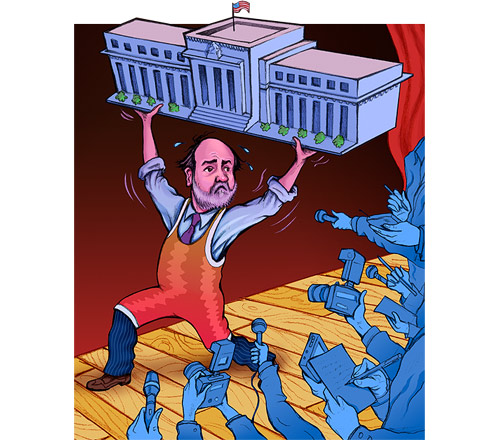 Rather than watch the paint dry on my screens, I am going to burn some calories at the gym, and return to watch the post-FOMC spasm. I'm sharing this seemingly pointless anecdote as a roundabout segue into my Fed meeting thoughts.
Like countless other bond geeks, I went over the last meeting's statement with a highlighter and pencil, ticking off the key Talmudic phrases.
I can see no reason they can't reissue identical wording this time around. Naturally, any change will be hyper-scrutinized, and there's always the possibility they'll be panicked/stampeded by the overwhelming doomsterism in the media.
But we get two more rounds of inflation data, and another jobs print, before the end-of-June two-day Fed confab, plus another round of data before the July Bernanke testimony on Capitol Hill.
Today, there's certainly no reason for them to do or say anything other than "adjustments will depend on the evolution of the outlook for both inflation and economic growth, as implied by incoming information."
John Floyd adds:
Of the economic data released in the last month, eight indicators have been below consensus expectations, eight have been above expectations, and the rest have been on expectations. Financial market indicators such as stocks, the dollar, and spreads have been stimulating.
Since the last meeting on March 21, March 08 Eurodollars have moved from a 4.600 yield to 4.915 yield (this is just price change, doesn't include curve roll-down). Some subtle shifts in the growth and inflation tradeoff, but given the differences in Greenspan's and Bernanke's approaches, I would concur the probability of any changes seems low.
James Tar remarks:
Early in the tenure of the current Fed Chair, I was critical of his public discussion of inflation, interest rates, the dollar and the economy. And we all know of his gaffe with CNBC's poster girl.
Over the course of the last 12 months, I have become an adoring fan. Not once has he made a mistake in discussions and forecasts regarding the overall progress of the economy. He has not been wrong. Not once.
What we should all pay attention to in today's statement is the Fed's forecast for a continuation and recycling of strength in economic activity in the later part of this year. If GDP progress is going to continue, corporate profits can only go much further beyond present market expectations.
Apr
9
Between a Rock and a Hard Place, from Jim Sogi
April 9, 2007 | Leave a Comment
 The book Denali chronicles the history of climbing Denali, tallest mountain in North America. Severe storms can set in with little warning and can trap climbers for days with winds of up to two hundred miles per hour or blow them right off the mountain. The deaths occur when unprepared climbers are caught near the peaks in a storm in temperatures down to 100 below zero with wind chill, and high altitude dehydration, and the accompanying errors in judgment that start to pile up. Small slips can lead to a fall and death.
A classic error is waiting too long when the opportunity presents itself. When near the top or the bottom when good weather presents itself, it is imperative to make progress immediately. Waiting, wasting good weather can result in getting caught later in a bad storm. By waiting, the odds of getting caught in storm increase. When caught, the climbers get stuck in a position where they can neither go up nor down. Bad situation.
In markets it is easy to let opportunity on high peaks slip by for one reason or another, be it bad judgment, bodysnatcheritis, fear, busy with something, lack of attention, a million reasons or faulty reasoning. Once the good weather slips by one is running behind. The odds of getting stuck in a bad place increase. Getting stuck, too late to enter, too late to reverse, can't go forward, can't go backwards. Stuck. Not a good situation, and all arising from the initial failure to take advantage of the good conditions.
From John Floyd:
On a related note I remember a quote that Ed Viesturs once told me. "Getting to the top is optional, getting down is not." Ed has the ability not only to summit numerous peaks but to do so while treading the fine line of pushing limits while always remembering survival is the paramount goal.
Likewise, I have found in trading it is important to know when to push the limits of risk. In fact, without pushing the limits it will be impossible to earn high rates of return over time. On the other hand, those limits need to be put to the test in conjunction with a full focus on survival. If we lose our bankroll getting back into the game will be that much more difficult.
Alan Milhone writes:
 Aside from scaling the heights of mountains there are those who scale financial heights and lose their head when at the pinnacle.
I think about the tirade that ensued between Donald Trump and Rosie O'Donnell. Mr. Trump is at the top of his mountain (though he constantly looks for higher peaks to conquer in the financial world). However I feel he should not lower himself to trade barbs with Ms. O'Donnell and a man of his caliber should keep himself well above the fray. Did he verbally attack her for ratings? I am sure the 'haircut' bet with Vince McMahon was 100% over ratings and money.
As a billionaire I am sure Mr. Trump has a gigantic ego to feed. I like what the Chair says about being humble in what we say and do. I admire Mr. Trump for his successes and am sure he does a lot of behind the scenes donations for various charities. So when climbing the financial mountains one should maintain humility and civility in what is said and done; many are watching every move.
Apr
6
Spanish Sub Prime, from Nigel Davies
April 6, 2007 | Leave a Comment
 The situation in Spain puts the US housing market into perspective. There is plenty of sub-prime lending plus steep sales taxes (6% plus) which would exacerbate any problems if they have an economic downturn.
"The chill winds of the home loan crisis in the US are having a sobering effect in Spain, where mortgage lending and house prices have risen faster than anywhere else in continental Europe.
"As with the US, low interest rates and a buoyant job market have made home ownership affordable to lower income groups in Spain. Fierce competition has driven some Spanish banks into the riskier segments of the market. In particular, Spain's 4m-strong immigrant population - young, low-skilled and with no credit history in Spain - have proved to be too large and tempting a group to ignore. Mortgage brokers who specialise in arranging loans for immigrants are doing a roaring trade."
John Floyd writes:
Spain has gotten itself in a difficult situation now that requires a lot to maintain current stability. The Spanish economy is roughly $1 trillion versus Germany at roughly $ 2.7 trillion. Spain's current account deficit is running around 8% of GDP and the country has lost about 35% in competitiveness to Germany over the past few years. The funding on the capital account side has come in part from direct investments and debt as the sovereign and corporate are in many cases highly rated and bought by pension funds despite tight spreads. The government fiscal accounts are in good shape with a surplus of 2%.
The fact the Spain is somewhat pinned by monetary, fiscal, and currency policy constraints makes this a difficult predicament.
The market currently has a very benign scenario priced with Spanish sovereign credit in the 5 and 10 year trading about 5 basis points over Germany. The heavily bank weighted stock index has also been doing well.
It is unclear what the trigger is but the sustainability of the situation seems tenuous at best. The likely sequence of events may be a weakening economy leads to strains on the fiscal accounts that lead to downgrades of the debt and political noise.
Opportunities to investigate seem to be the stocks that may be heavily levered to the housing market and credit spread widening.
Mar
23
The US Dollar, from John Floyd
March 23, 2007 | Leave a Comment
 On the day, the U.S. dollar is trading generally better versus the majority of currencies after the initial weakness posted by the FOMC. I am wondering whether the expected return profile augurs for a more significant strengthening in the U.S. dollar in the days and weeks going forward.
While not significant on its own, it is interesting to note that there are several examples in the past six years where the Euro has made a new high or very close to it, failed, and then had a period of notable weakness. See below for a rough outline. In combination with other factors such as: what seems like a universal bearish U.S. dollar sentiment; likely improving U.S. balance of payments as the trade account improves with the slowing U.S. economy and the capital account remaining strong; and future interest rate expectations in the respective countries already pricing a wide divergence in rate paths.
One clear major risk is an all out liquidation of U.S. assets. And with that the capital account would deteriorate more than the improvement in the current account, leading to a weakening in the U.S. dollar.
High Low
July 19 2002 1.0199
September 20 2002 .9613
March 14 2003 1.1083
March 21 2003 1.0504
May 30 2003 1.1933
September 5 2003 1.0764
October 10 2003 1.1860
November 7 2003 1.1377
February 20 2004 1.2926
April 30 2005 1.1761
December 31 2004 1.3666
Februay 11 2005 1.2732
March 11 2004 1.3482
July 8 2005 1.1868
September 2 2 1.2589
November 8 2005 1.1640
June 9 200 1.2979
July 21 2006 1.2458
December 8 2006 1.3367
January 12 2007 1.2868
Mar
23
Carry Trade, from John Floyd
March 23, 2007 | Leave a Comment
It is interesting to note that the Yen is stronger overnight with JGB yields higher. There have been some marginally better Japanese data of late (land prices, etc.). Predictively, I wonder if this portends some consolidation/correction in carry/assets after recent runups.

« go back —
Archives
- October 2026
- September 2026
- August 2026
- July 2026
- June 2026
- May 2026
- April 2026
- March 2026
- February 2026
- January 2026
- December 2025
- November 2025
- October 2025
- September 2025
- August 2025
- July 2025
- June 2025
- May 2025
- April 2025
- March 2025
- February 2025
- January 2025
- December 2024
- November 2024
- October 2024
- September 2024
- August 2024
- July 2024
- June 2024
- May 2024
- April 2024
- March 2024
- February 2024
- January 2024
- December 2023
- November 2023
- October 2023
- September 2023
- August 2023
- July 2023
- June 2023
- May 2023
- April 2023
- March 2023
- February 2023
- January 2023
- December 2022
- November 2022
- October 2022
- September 2022
- August 2022
- July 2022
- June 2022
- May 2022
- April 2022
- March 2022
- February 2022
- January 2022
- December 2021
- November 2021
- October 2021
- September 2021
- August 2021
- July 2021
- June 2021
- May 2021
- April 2021
- March 2021
- February 2021
- January 2021
- December 2020
- November 2020
- October 2020
- September 2020
- August 2020
- July 2020
- June 2020
- May 2020
- April 2020
- March 2020
- February 2020
- January 2020
- December 2019
- November 2019
- October 2019
- September 2019
- August 2019
- July 2019
- June 2019
- May 2019
- April 2019
- March 2019
- February 2019
- January 2019
- December 2018
- November 2018
- October 2018
- September 2018
- August 2018
- July 2018
- June 2018
- May 2018
- April 2018
- March 2018
- February 2018
- January 2018
- December 2017
- November 2017
- October 2017
- September 2017
- August 2017
- July 2017
- June 2017
- May 2017
- April 2017
- March 2017
- February 2017
- January 2017
- December 2016
- November 2016
- October 2016
- September 2016
- August 2016
- July 2016
- June 2016
- May 2016
- April 2016
- March 2016
- February 2016
- January 2016
- December 2015
- November 2015
- October 2015
- September 2015
- August 2015
- July 2015
- June 2015
- May 2015
- April 2015
- March 2015
- February 2015
- January 2015
- December 2014
- November 2014
- October 2014
- September 2014
- August 2014
- July 2014
- June 2014
- May 2014
- April 2014
- March 2014
- February 2014
- January 2014
- December 2013
- November 2013
- October 2013
- September 2013
- August 2013
- July 2013
- June 2013
- May 2013
- April 2013
- March 2013
- February 2013
- January 2013
- December 2012
- November 2012
- October 2012
- September 2012
- August 2012
- July 2012
- June 2012
- May 2012
- April 2012
- March 2012
- February 2012
- January 2012
- December 2011
- November 2011
- October 2011
- September 2011
- August 2011
- July 2011
- June 2011
- May 2011
- April 2011
- March 2011
- February 2011
- January 2011
- December 2010
- November 2010
- October 2010
- September 2010
- August 2010
- July 2010
- June 2010
- May 2010
- April 2010
- March 2010
- February 2010
- January 2010
- December 2009
- November 2009
- October 2009
- September 2009
- August 2009
- July 2009
- June 2009
- May 2009
- April 2009
- March 2009
- February 2009
- January 2009
- December 2008
- November 2008
- October 2008
- September 2008
- August 2008
- July 2008
- June 2008
- May 2008
- April 2008
- March 2008
- February 2008
- January 2008
- December 2007
- November 2007
- October 2007
- September 2007
- August 2007
- July 2007
- June 2007
- May 2007
- April 2007
- March 2007
- February 2007
- January 2007
- December 2006
- November 2006
- October 2006
- September 2006
- August 2006
- Older Archives
Resources & Links
- The Letters Prize
- Pre-2007 Victor Niederhoffer Posts
- Vic’s NYC Junto
- Reading List
- Programming in 60 Seconds
- The Objectivist Center
- Foundation for Economic Education
- Tigerchess
- Dick Sears' G.T. Index
- Pre-2007 Daily Speculations
- Laurel & Vics' Worldly Investor Articles
