May
16
Briefly Speaking, from Victor Niederhoffer
May 16, 2009 | 7 Comments
 1. My 18 year old Lab regularly wakes up and barks at 5 am, and the coyotes are waiting right outside the door and howl in unison. One wonders if they are waiting for a meal or believing a friend is close. The market often is near death at 5 am and lurches in a spiral, with the Dax plummeting below the round.
2. The last hour on Friday often reminds me of the last two minutes of many basketball playoff games, especially those of the Celtics. The lead changes five times. There are violent moves with three-point shots and running of stops on both sides, and a complete recap of what has happened up to that time. Slow but steady wins the race.
3. The Dollar/Yen and the S&P do a very nice dance together and when you trade one you are really making a forecast of the other. Many times all the people who use the program I invented are waiting for a move to happen predicted by this or that market on this or that day or time, and out of the clear blue sky, someone like Dr. Greenspan will be speaking at a lunch, and will say something that makes the prediction come true. How did it know? And how if it didn't could you keep up with those who don't pay commissions and are always ahead of you on the bid or offer no matter how fast you are?
4. The many and increasing 100 million trading days that the "banks" are realizing these days presumably will help their kids get into certain Ivy League schools or at least get them a good letter of recommendation from former "bigs" there.
5. After a 35% rise, when the market drops 5%, the bearish commentators and the newspapers are not as hopeful of the big decline as they are after declines that follow terrible moves.
6. The Laffer Curve should be generalized to encompass the incentives that people have to buy and pay whenever any purveyor tries to siphon away their margin of benefit.
7. I can never read a Patrick O'Brian book without finding in every chapter insights into how by following the wisdom of Jack or Stephen, I could trade better.
8. I wrote a letter to a little boy telling him that having a strong and long base of operations is a key to success in life and I would be pleased to share it with those who might find it of interest in life or markets.
Alston Mabry writes:
My dogs and I have made a casual but first-hand study of coyote behavior (less casual, perhaps, for my dogs, especially Trevor who lost a dollar-sized chunk of fur and flesh to a coyote bite when he was about three). We call it a "hoot-up" when they howl as a group. In my experience, a hoot-up is a claim on territory. Coyotes coming back into the mountain park here just before dawn, after having spent the night scavenging and hunting cats and ducks in the suburbs, will stop at a familiar waypoint and do a hoot-up: "We're back. This is our territory." Several times, too, when I have been out with the dogs at 3am, and they have found and noisily chased a rabbit through the cactus, the coyotes came along twenty minutes later and did a hoot-up on the spot where we barked and whined, to claim it and try to scare us off. When you have a group of coyotes like that, they are a family, not a pack, with the parents and usually one or two cohorts of siblings not yet struck out on their own.
The end-of-day action reminds me sometimes of a football game, when there are six or eight minutes left in the 4th quarter, and the team that is behind starts throwing long passes and marching down the field. And I wonder, "Why didn't they play like this all game?" But similar to markets, they didn't play like that all game because of risk. When they get to the point where the game is on the line, then everything must be risked or else all is lost.
It's also interesting to throw the Nikkei-S&P correlation into the analysis. Is it time to go long the AUD again?
Is it that we watch the market turn and then interpret contemporaneous news as the cause? And when nothing much is happening, we ignore the news– if the market isn't reacting, then it can't be important. It's good that with both news and market data, there is an uninterrupted supply.
Paolo Pezzutti writes:
Two good friends interact and follow the same path in life. Some time one is leading, some time some the other takes the initiative. Overall they share the same values and enjoy spending time together. Suddenly, for some reason difficult to explain they part and go to different directions and not without pain. Similarly markets correlations emerge and increase to a point where you think there must be really very good reasons for them to work. Then you find out that it was all ephemeral and they were may be brought together inexplicably and randomly. With sadness you look at your friend and do not understand any more, it is simply a different person. And you hope things could go back to the good old days. Sometimes they do, but most of the times they don't.
May
9
At the Barber’s, from Paolo Pezzutti
May 9, 2009 | Leave a Comment
 There was a time when in my country the barber was quite a personality in villages. The social opportunities and contacts at the barber's or at the bar in the piazza were unique. The barber was a very precious source of information. There you would do your business, get useful information and news about people and things happened, find friendships and establish connections. Much of the talk was about people I must say, and I am afraid that they would not talk about stocks tips and hints because the financial market was not developed at the time. Moreover, it was a place where you could spend some time and relax reading a newspaper with someone taking care of you; it was a weekly routine to be shaved the way only a barber can do. Provided that it was sometimes dangerous… Remember those scenes in old movies where a gangster is shot dead in a barber's chair? By the way, Al Capone's father was a barber. It seems that much has changed today when we consider going to have a haircut a waste of time and money.
May
5
Nowcasting, from Paolo Pezzutti
May 5, 2009 | Leave a Comment
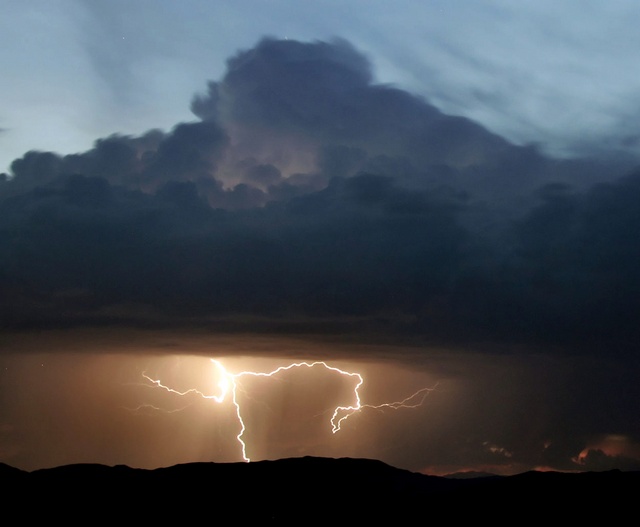 In meteorology, with nowcasting you want to perform short term estimates and prediction of thunderstorms or other events. Typical questions you want to answer are: where is the storm now? Where will the storm be in 60 minutes? What is its path? Is it weakening or strengthening? Are there hazards associated to it (lightnings, flooding, etc)? The problem you want to solve is about spatial location and intensity. It is similar to what we want to know about price: will it be up or down in X hours? How many points? Predictions are performed using algorithms and extrapolating radar echos (based on movement) assuming no growth/decay, which is normally acceptable for 60 minutes forecasts. There are several methods to track objects and estimate motion in real time using filters (e.g. Kalman) and calculate trends. The longer the time considered for the prediction, the higher the uncertainty. Accuracy is strongly depending on the type of model you use. In the stock market, when you try to predict the price of an asset at a certain time in the future you take into account the information you have at the moment you do the forecast. This involves uncertainty, which is also function of the time horizon of your forecast. As time progresses, you are able to include new data and more information in your model to update and refine your forecast. With time, you have more data available and your forecast horizon decreases. As uncertainty decreases, you have a more accurate forecast, but also have lower margin profits. For example, at the close today you forecast the next day's close taking into account the data available up to that moment. As time progresses, you include in your model the overnight action, then the open, the morning action and so forth getting closer to the end of the trading session. Accuracy will depend on how your model smooths data and extrapolates movement.
How can we use this methodology? When you open your trade you expect a certain behavior as time progresses. Nowcasting can be used to check if the path (price) of your asset follows the expected pattern. You have a number of "what if", such as: what happens if it opens higher, what happens if it prints a spike to the upside and so forth. Each time you update your expectations and when the expected path deviates too much from your original forecast it is time to close your trade. Conversely, if, with more data, expectations are reinforced you keep your trade going. It is a matter of thresholds of course and accuracy of your model, that depends much also on the frequency of observations and amount of data available.
Apr
18
Femme Fatale II, by Paolo Pezzutti
April 18, 2009 | 3 Comments
The femme fatale seduces her lovers with her beauty and charm, but the sexual allure I think is the characteristic that bonds her victims the most in a deadly and compromising relationship. For some reason, she hypnotizes her victims, sometimes more than one at the same time, attracting them gradually, but inexorably, in a situation they can escape only with extreme actions and outcomes. She builds slowly and scientifically, an asymmetrical relationship where signals of confirmation of her affection alternate with denials. She has a sort of network where victims are monitored and managed to make sure they do not escape. She does all she can not to let them free, including lying. Her lovers enter finally a state of dependence and obsession that she enjoys and of which she drives the dynamics that with time become more and more extreme. The desperation, exhaustion, anxious and obsessive phase of lovers is characterised by an unhealthy and overwhelming attachment that can cause irrational decisions. The final destructive phase involves feelings of self-blame and often anger. The deadly femme fatale has a complex personality, hard to recognize at first. When victims realize the situation, it may be too late. Similarly, the market seduces lovers with charm, beauty and the art of deception. The deadly outcome leaves victims with huge losses.
Marion Dreyfus writes:
Just because the vast preponderance of readers here is male is no reason to excoriate females — the description of f.f. goes way overboard. Most women are aware of their allure (it does not take much to excite randy males, which describes, given the chance, 95% of all the gender), but we do not spin these nets and traps — it is an anachronistic model, based upon the impotence of former females in insurance securities, investments and her own nested income. Absent the need to survive and ensure for her needs, these females melt into the tough, hard-working, capable, no-nonsense female of today. To the extent that women are again (arguable if so) 'femmes fatales,' it is because of the insecurity of the times. That is why skirts rise in lean times: Females are wont to finding and bonding with a future of plenty, not want, and the sexual signal is the come-hither to desirable males.
Indeed, if a woman does behave in this alluring, seductive pattern when a male is about, it compliments his status-quotient. Were he to be adjudged low in value, her interest would not be piqued, and her sexuality would be aimed elsewhere.
We all try to to survive. The devices and tools women have are mimicked in the insect and animal world models–these are meant to procure food and necessities–stop spinning the paradigm as if it were *sui generis* for no reason other than the gratification of the destroyed male.
Scott Brooks replies:
Just like women are often attracted to the rebels…..you know the old saying….good girls are attracted to the bad boys….men are often attracted to femme fatales. I dated a FF for a short time in college. I found myself attracted to her as she was obviously a "bad girl". The attraction didn't last long as I found I was not quite as "adventurous" as she wanted to be.But of course, today, the Mistress has her hooks in me and she's driving me crazy. But I live a well balanced life. My wife is a balance wheel, very well grounded and keeps me on the straight and narrow!
Now our very beautiful, very femine Dr. Dreyfus bemoans the use of the FF phrase…..sweet innocent Marion…..who, I'll bet, has gone hunting, fishing and shot more guns than most of guys on this list…..who did her stint in the IDF. Who has roamed the hostile streets of the middle east and who manages to navigate the often moody straits of the Type A middle aged successful men who inhabit this list……and yet…… does so with flair, feminity and grace.
Fair Marion has probably been in more dangerous situations than many on this list will ever be…..I like to think of her as our groups own private FF……a living character in an adventure novel…..so we get to have all the adventure (but only in our minds) with none of the danger!
Apr
11
Ships and Markets, from Paolo Pezzutti
April 11, 2009 | 4 Comments
 When you maneuver a ship, there are controllable forces, such as propeller and rudder effects. There are also uncontrollable forces, such as wind, current, sea conditions. Moreover, each vessel has different characteristics and reacts differently. You have also to take into account the characteristics of your ship that may not be constant and given, such as ship loading and hull conditions. As a result, a captain works in an environment where a ship's behavior is not observed in exactly the same way and each situation is different from another. A maneuver is a dynamic process. You have your plan and when you execute it, you want to have a continuous update to understand the effect that your order has achieved and the next course of action in order to be able to follow your plan. Each time you find yourself in situations where your ship reacts differently due to everchanging combinations of speed, rudder, wind, current, sea state.
You need to be adaptable to the environment. Often, a too frequent assessment of your orders is not good because you need some time to let the ship react to your order because of its inertia. At the same time, if your feedback cycle is too slow, you might not have enough time to correct your action. You might end up not being able to follow your plan any more. In that case, the wisest thing you can do is give up and start again the maneuver from scratch instead of trying improbable corrections.
In markets, you do not have controllable forces, but you have expected crowd behaviors. In this context also each situation is different. A trader establishes a plan and during the trade execution, as new data come in, he/she assesses the market's behavior. The frequency at which this feedback process is done is critical. Traders may overreact and be deceived by the short term noise (you need time for the trade to develop), or they may be too slow to realize that the trade is not going as expected. How much data do you need, how often? How is the behavior different from what is expected is an interesting parameter. What is the threshold that makes you realize the trade went wrong? A ship maneuvering characteristics can be modeled mathematically, but in real life captains have to apply their experience and judgment to work in an observe-evaluate-decide-act cycle, which is very similar to what a trader does in a real time environment. Similarly, the market can be modeled, but most of the times expected outcomes require judgment and interpretation. It is all about the human dimension, where the action-effect cycle is matched against broad assessments of a generic "system" behavior.
Jeremy Smith comments:
“Consider how often a vessel must change its course in leaving a harbor, yet once on the high seas a single heading may bear it to its destination. Only
a major navigational hazard could change it.”
– Louis Auchincloss, The Embezzler [1966]
J.T. Holley adds:
In the spirit of Patrick O'Brian I would have to disagree or at least add to this quote. Pirates, Enemies and Gov't can cause navigational changes in both the ships directions and destinations as well as in the markets. Seamanship by David Dodge is a excellent book that discusses the navigational patterns as well that the U.S. Navy utilizes. Having served onboard the U.S.S. Stark I can assure you that rarely is "a single heading" utilized to reach a destination. Sure it is the broad direction, but there are other directions that are in between when going from point A to point B.
Pitt T. Maner III writes:
Let me add a nice quote from The New Dictionary of Thoughts (1963). I wish I knew who "Anon" was:
A smooth sea never made a skilful mariner, neither do uninterrupted prosperity and success qualify for usefulness and happiness. The storms of adversity, like those of the ocean, rouse the faculties, and excite the invention, prudence, skill, and fortitude of the voyager. The martyrs of ancient times, in bracing their minds to outward calamities, acquired a loftiness of purpose and a moral heroism worth a lifetime of softness and security. Anon.
The pdf of the book is searchable and many a fine old quote can be found there.
Jim Sogi adds:
Jeff is right. A sailing ship in particular will sail the best course made good, rather than rhumb line. For example, it will take the best angle to the wind, for the ship best speed, even though off rhumb line, for best course made good. A catamaran, for example, will go faster tacking down wind, zig zagging rather than shortest distance. I think day traders know this instinctively. It's quantified in markets in the absolute volatility numbers, or in Sharpe result numbers.
Another curious effect is when there is a strong current setting the vessel down. The vessel aims at a different point than where it intends to go, and 'crabs' along its course. This is hard for people to understand, as they can't really see the current, but one has to be aware of the motion of the ship in relation to the course, which is a derivative function. I suppose this might be thought of as Sharpe as opposed to gross dollars in trading or percent.
Another odd effect I experienced last weekend up in Alaska skiing was during a white out, a sense of vertigo. There is no visual reference point to balance, and its easy to lose balance in total white out conditions. While standing still, a small avalanche passed by, and though I was standing still, seeing the snow pass by gave the impression of motion, and threw me off balance. Or there is the feeling of standing still, then all of a sudden hit a bump and realize the skier was moving, but couldn't see it. The idea is that sometimes the perception is not correct and some other reference is needed. Pilots know this. This was one of the main points in survival. Loss of a reference point often lead to panic and death. In the markets, it's easy to lose reference. Chair's international numbers, I believe, are an attempt to get some sort of reference point. I had guides skiing up in the wilderness, who have a lifetime of experience and reference. Like markets, if you lose your reference point, you'll be dead in short order.
Apr
7
 Redundancy is one of the keys to digital cell phone transmissions, and packet transmissions for the internet, human speech, credit card numbers, music composition. The list goes on and on, but should include the market. In speech, typically people say the same thing over and over, to guaranty the message gets through. Digital cell phone technology uses some sort of redundant error correction to insure the correct message. Musical composition often has three verses, and repeats the theme to get the message through.
The market does the same. The mechanism is the result of trial and error, to some degree, but also of communication, error correction. A minimum of three is needed to provide some sort of error correction, and to insure transmission of the message. This is why we often see things in threes. It is good to know or expect repetition or redundancy as it gives an edge. For some reason the news and commentators seems to think rather of endless continuation as the normal mode.
Paolo Pezzutti adds:
Redundancy increases reliability of systems, usually in the case of a backup. You can find in many critical-performance systems and applications that some components or modules can be at least doubled. When you have a federated system, for example, you can choose to have a central "intelligent' core and a number of "non-intelligent" sub-systems, or you can have "intelligent" subsystems providing a higher degree of resilience to failures. This is typical of some combat systems on board ships for example. The point is that not only redundancy adds reliability, but it increases also the performance, because intelligence is distributed throughout the system of systems and decentralization is a more efficient and effective solution (there are less bottlenecks and so on).
Redundancy and reliability, however, have a cost. When designing a system you have to weigh costs and benefits to find a balance that meets the user requirements. Markets find dynamically a balance between costs and benefits through the price discovery process. Also in this case, network-enabled players that apply a decentralized approach have an advantage in situational awareness, speed of evaluating the situation and making decisions, and speed of execution have an advantage over bureaucratic, centralized and slow players.
Phil McDonnell comments:
Redundancy can be very good but there are some occasions when it accomplishes less than one might think. For example, most data centers have more than one server. But if they are running on the same electrical power system they are still vulnerable to the loss of that common critical resource.
Another example might be when the sources of failure are not independent. One example using two servers might be if both are plugged into the same wall plug. They are susceptible to common power surges and lightning strikes transmitted over the power lines. Even several computers connected via long network cables can be simultaneously damaged by the EM pulse from a nearby lightning bolt.
Mar
29
A Month and a Year, from Victor Niederhoffer
March 29, 2009 | 1 Comment
 What a difference in the complexion of the world markets from last year where at the end almost every market was down 50% with no exceptions. This year as of March month-end the world markets are down a mere 10% and there are exceptions galore, notably Israel up 15% and Russia up 31%. All over, anomalies exist. Norway up 10%. Pakistan and Taiwan up 17%. Indonesia up 10%. All over South America markets up from 10 to 30 % in Peru and Venezuela. Venezuela up 40% from 1999. Recapping the wisdom of Maturin during the French Revolution advising Sophie to buy stocks, a stridency relevant to today shortly.
George Parkanyi writes:
Many a financial network talking head these days pronounces that "buy-and-hold" is dead. Here, or somewhere around here, is the perfect time to initiate a buy-and-hold strategy. This is from where the $3 AMDs and Motorolas of the world go back to $30 or $40 in the next bull market. And what of it if it takes 10 years, not that it's likely to take that long. That's still 100% per year non-compounded. My ex-high-school teacher and stock market mentor Omar Sheriffe Vernon-el-Halawani in the last two decades of his life (he passed away in 2005) did just that for most of his portfolio — buy good companies on the incredible cheap when the opportunities arose, and just put them away. He introduced me to "Reminiscences of a Stock Operator" long long ago, and in his last few years kept admonishing "George, why bother to sell?" (Though he wasn't inflexible either — he did sell Sun Microsystems once it got to $200. A couple of his closer friends rode Nortel back down to nothing.)
Paolo Pezzutti replies:
What if in ten years from now Motorola and AMD do not exist any more because a Chinese or Taiwanese corporation has wiped out these companies in an already mature market of telecoms and semiconductors? Sort of a General Motors and auto industry fate in 2015? In the meantime we have to see if the Western countries will manage to lead the next wave of innovation. It is not a given.
Stefan Jovanovich adds:
Motorola may survive as a defense/government contractor like Studebaker did; but its days as a competitor in the mobile dial-tone device market are long over. It has a legacy business in walkie-talkies, but those devices are now commercial products for — oh, happy day! — the construction and events trades. The "next bull market" will be in businesses that do not need the help or money of the academic/finance/regulatory complex. Some pissed off genius who is dropping out of graduate school right now because he can't stand another day listening to a discussion about hockey sticks will be the guy who creates a viable alternative to the internal combustion engine. The fact that the next Henry Ford did it because his uncle died and left him enough money to allow him to pursue his dream of racing an electric motorcycle will definitely NOT make the history books. Instead, some not-so-bright but perfect resume student of "economic trend analysis" at Berkeley will write a seminal paper explaining how it was all due to the "convexity of the forces of ecological history" (assuming, of course, that CalPERS has not blown all the money and put the University of California into receivership — which may the wildest of all my surmises). On a happier note, the Cal Men won the national swimming championships this week. Go Bears!
Pitt T. Maner III writes:
"Hardened silo" companies, with strong management, that have survived through and handled multiple, steep cycles over the past decades by mothballing equipment as needed, sending seasoned hands "back to the house" when necessary, and which have high barriers to entry (and negative government support) into the particular business would appear value candidates now. High quality drilling and drilling service companies, over the longer term, are appealing at present prices unless solar, windmill, nuclear, and alternate energy supplant the need for hydrocarbons. There are many other groups and companies that probably fit this undervalued, "tough-times survivor" model that odds would favor moving forward.
Jim Sogi adds:
After such a rally, and now when more and more people and pundits are calling a bottom, and I hear news proclaiming a thaw, and I hear talk of people starting to buy, these are the type of things that put my radar up. It's funny that the news media is somewhat stultified in that despite their steady barrage of bad news, the markets are all up. They actually have to change their copy of bit as it's hard to proclaim, markets up 15% on steady barrage of bad news. Obama did make a good call to buy, the day before the low and gave everyone a chance to buy. He knew what was in the govvy cards of course. That was the time to make the big commitment, not now. There should be more chances before they proclaim the next bull market as the market tops.
Legacy Daily writes:
Given things stay roughly the same, I cannot disagree with any of these comments. The challenge right now is that nothing is given.
For people who trade via systems, I have a question.
At which point does one decide to a) modify the system (and to what degree and based on what), b) discard the system (and why), c) continue relying on the system (and for how long); if such a system is producing losing trades more recently but has worked fine for a long time (definition of time scales not relevant)?
Perhaps the answer contains clues regarding our recent government actions (and market reactions) where the scale of the system and the magnitude of its impact is great. The problem is further complicated by control over one's actions but lack of control over [negative] consequences of those actions in a human system.
The second question that does not leave me alone is whether a game of chess (or any other game) can be won if every few moves, the game rules are modified. Does the player quickly adjust and remain focused on winning the game according to the new rules ("queen can only move three squares at a time" for example) or does the focus shift on guessing what the next set of rule changes may be? After a few set of changes and corresponding adjustments, does the player begin to suspect the rule maker in taking one side or the other?
Mar
12
21st Century Games, from Victor Niederhoffer
March 12, 2009 | 12 Comments
 I wonder if snow, for example the deluge on Feb 1, 2009, in New York has a negative impact on stocks. It had a positive influence on the ability of youngsters in the 1950s to buy stamps, as school was out and Nassau Street was accessible by train. Now you can't even find kids having snowball fights as they are all inside with Nintendo or Twitter or IM.
Paolo Pezzutti comments:
Last evening I left my girls to spend a few hours at some friends' place. I left them playing with a "Chinese" toy pen with very basic videogames such as bowling or skying in it. When I came back they were still playing with that silly toy. They were hypnotized, although sleepy, but they would not give up. What is the power of these applications — even as simple as this? We can track a parallel with a trading screen and its ability to hypnotize wanna-be traders (and not only them) creating a compulsive attraction and dark force to trade even when it is not the best setup.
I was somewhat nervous about my daughters because they were not stimulated to do something different. It seems that if they are not "educated" and addressed to healthier and outdoor activities kids (and adults too) in most cases prefer spending their time following action on a screen. This is what game companies and stock brokers exploit.
Michele Pezzutti adds:
 That's true. This is something I always think about when I reflect on the way kids are growing. I often wonder if the way the kids play today is healthy. I do not want to sound old-fashioned. I do not come from the 18th century. But are fantasy and creativity stimulated the same way by a computer game as they are by Legos, for example? I think that the problem is not in the technology itself but in the use we make of it as in everything else. Too much is poisonous. And I feel relieved when I see that my kids, when they feel like, can still play as only kids can do. From nothing they are still able to create their world and stories. They have plenty of imagination. Then my worries fade away as I can see in them the same kids we used to be. In the end, every new generation must have asked the same question.
Jim Sogi replies:
 When my son was younger, we also worried that he also loved computer games and stayed up all night playing. I reasoned, better playing at home than out on the street. He was also an athlete who surfed, snowboarded, skate boarded. But the training he got playing games serves him well now in his new career in the financial markets. Is what we do 24 hours a day glued to a screen any healthier? I say no. It's really the future of work and communication and social structure.
Speaking with my daughter, we compared our contacts with old high school friends and family. She right pointed out that it is easier for her with IM, Twitter, email, sms, and use cell phones to keep in touch. Don't be old fashioned. It's a new world.
Alan Millhone writes:
 On the news tonight it was reported on a program in El Paso, Texas schools that has a regular exercise program in the schools that shows that regular exercise in youth produces better test scores, etc.
When I was a youth the neighborhood kids played outside till dark and our parents had to call us in for supper. In the Winter we built snow forts that we defended with snow balls against attackers. In the Summer if a new basement for a house was being excavated when the workers left we had dirt clod battles!
I began collecting stamps at age seven when that Christmas my parents gave me a Coronet stamp album and some stamps from H. E. Harris and Co. of Boston. In my early years they gave me sets of Lionel Trains (still have both sets in the original boxes ). We had no computers, cells, Ataris, etc. to fritter away our time and no TV for several years. We played board games, rode our Huffy bikes with a baseball card held in the rear spoke with a wooden clothespin. Modern technology is good to a point for youngsters. Much though that was good and wholesome has been forever lost. Just like the Checker players that at one time could be found on a daily basis in Central Park under the wooden canopied shelters. Tom Wiswell would not believe the changes there.
Jeff Watson comments:
I just got through watching the excellent movie Surfing For Life. Written and produced by David Brown and narrated by Beau Bridges, it chronicles the lives of people who are still surfing in the twilight of their lives. The movie took a sampling of notable surfers from the ages of 60-93, gave brief bios, and showed them surfing well as seniors. Surfing for Life is much more than a surfing documentary, it's a celebration of man's optimism and the results of living a life of optimism. It showed one particular surfer who visits senior facilities on a volunteer basis, and most of his charges are younger than him. It then cut away to him surfing a nice 6' wave. The central theme of this movie is that living a life with an optimistic bias will ensure personal happiness. My favorite scene is the closing where they show Doc Ball, 93 years old, riding a skateboard. Not only was he riding a skateboard, it was obvious that he was clearly enjoying it like a little kid. I've been told by many that I'm just like a little kid, and take that as a compliment whether they meant it as such or not. Little kids enjoy playing games, are optimistic by nature, and receptive to new experiences and knowledge. I'm of the view that trading is a game, an extension of the games we played as children. It can't be mere coincidence that a plurality of traders I know usually excel at one form of game or sport. Whether it's checkers, chess, poker, the racket sports, or surfing, these games played for a lifetime keep one's mind sharp, and mentally nimble. Game playing also keeps our competitive edge well honed, which serves us well in the markets. Surfing for Life is such a positive, uplifting movie that it should be seen by all, as it exudes optimism. It would be an interesting study to analyze the optimism/pessimism ratio for all market players. I have a hunch that the successful players would fall into the optimistic category. Optimism breeds self confidence.
Russ Sears says:
 When I hear tales of the freedom of youth my thoughts often turn me back to my 7th grade year, in Pauls Valley OK, where I delivered the Pauls Valley Daily Democrat door to door on a rusted out Schwinn bike I had spray painted baby blue.
I recently went back and visited the town 33 years later. The drugstore where my brother and I spent our share of the subscription price on comic books, baseball cards and soda fountains chocolate shakes had moved from across the street from the newspaper to the new Wallmart. Parts where still the same, with only a fresh coat of paint, others totally gone.
We had a great time "owning" our part of town. However, I think we were one of the last two kids to deliver papers this way. The only reason they gave me the job, since the Sunday papers weight more than me, was cause they were desperate. Few parents would let their kids do something like this even in small town mid late 70s. And thinking back, there were several times where I think "what were my parents thinking"… As I had a machete to my neck from a high druggie, learned where to drop my collection money off before I went to certain areas, and narrowly escaped a pedophile.
Bottom line is it's not all the kids' fault.
Anton Johnson writes in:
In addition to dirt clod fights, we would play king-of-the-hill on construction excavation mounds, resulting in the occasional emergency room visit. During spring-time we played Monkey-in–the–Middle and 500, honing our baseball skills, all the while dodging vehicles and swatting mosquitoes. On moonless sultry summer nights, we played neighborhood wide team hide-in-seek, some of us subtly maneuvering to get close to the object of our affection. Not even brutal winter weather could keep us inside. Often a dozen would-be Bobby Hulls would play ice hockey, taking brutal hits without pads (some of us even wearing figure skates). We shoveled our own rink on the lake, and hauled seemingly endless buckets of water to fill in ice cracks. Almost nothing could deter us, we played whether +40F or -15F degrees, sometimes coming home soaked after falling through the ice or occasionally with a frostbitten appendage. I wonder whether the electronic generation will reflect on their childhood with a similar nostalgia.
Feb
23
Leeches and Markets, from Paolo Pezzutti
February 23, 2009 | 1 Comment
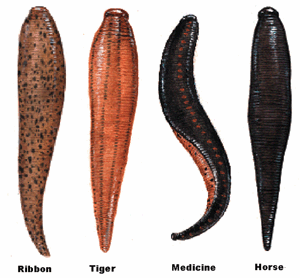 Summary From Wikipedia: Haemophagic leeches attach to their hosts and remain there until they become full, at which point they fall off to digest. They all have an anterior (oral) sucker, which releases an anesthetic to prevent the host from feeling the leech. Some species of leech will nurture their young, while providing food, transport, and protection. Not all species can bite; 90% of them solely feed off decomposing bodies and open wounds. Leeches normally carry parasites. However, bacteria, viruses, and parasites from previous blood sources can survive within a leech for months, and may be retransmitted to humans. Bloodletting is the withdrawal of often considerable quantities of blood from a patient in the belief that this would cure or prevent a great many illnesses and disease. It was a popular medical practice from antiquity up to the late 19th century.
Leeches are part of the ecosystem. They have interesting characteristics:
- Victims of the leech do not feel pain because the leech releases an anesthetic. Many similarities with victims of frauds and scams.
- Most of them feed off dead or wounded animals. Isn't it the same in the markets? The weakest, the less informed, the less skilled are targeted first.
- Leeches carry parasites. We know there are many also in real life.
- Leeches will nurture their young. I can see how this applies to proteges of various types.
- The most interesting feature is that there are patients who are willing to have leeches suck their blood. They think they can be better off and clients are badly willing to be admitted to certain clubs and circles.
There is only one huge difference:
- Once they are attached to their host they do not leave until they are full. I have to say that leeches are fair. In the markets I am afraid leeches are never full.
Feb
17
The Two Wolves, from Andrew Moe
February 17, 2009 | 15 Comments
 One evening an old Cherokee told his grandson about a battle that goes on inside all people.
He said, "My son, the battle is between two wolves inside us all.
One is Evil. It is anger, envy, jealousy, sorrow, regret, greed, arrogance, self-pity, guilt, resentment, inferiority, lies, false pride, superiority, and ego.
The other is Good. It is joy, peace, love, hope, serenity, humility, kindness, benevolence, empathy, generosity, truth, generosity, compassion and faith."
The grandson thought about it for a minute and then asked his grandfather, "Which wolf wins?"
The old Cherokee simply replied, "The one you feed."
Michele Pezzutti responds:
 This reminds me of The Strange Case of Dr Jekyll and Mr Hyde: I would like to share my experience on how this thinking can make me a better trader.
If I should apply this to my (very, very poor and limited) personal trading experience, I can find Evil everywhere:
-arrogance, when I trade based on pure instinct and with little/no evidence of trends or data supporting a decision.
- false pride and superiority, for being able 'to beat the market', when I make some profit.
- anger, when I lose too much not being able to put a stop loss.
- lies, when I do not want to admit to yourself that I have acted irrationally.
- regret, when I think 'why did I do that?' And I could go on and on…
Much more difficult is to find examples of the Good wolf. That is, long way to go to become a 'Good' trader.
Paolo Pezzutti writes:
I want to propose a slightly different perspective of the two wolves, the "bad" and the "good" one.
Trading wolves move in packs. They are territorial and wait for their preys to graze standing ready to attack when they are distracted. Wolves can also establish some type of coordination during the hunt. They conceal themselves as they approach the prey, targeting the easiest options available, the weakest animals of the herd. Sick or young animals, even pregnant females. They look for preys they have seen already. They do not take much risk, do not even engage in long chases, and rather wait for their prey to die because of the wounds. Sometimes wolves have to yield to their prey and their killing success rate may be low. But they know that their prey will be there in the same place at the same time the next day. It is only a matter of time, sooner or later the wolves will get it. These traders are deadly, but the current downturn might have killed many of them. They have taken too much risk, too much confidence in their strength. These wolves have become preys themselves in this phase of the market. Those who will survive, however, may become even stronger and be able to adapt their techniques to the new environment.
Single trading wolves can also be found, but less frequently. Lone traders can be old specimens expelled from the pack or young animals in search of new territory. Solitary wolves target smaller animals and many deaths are due to other wolves' attacks. Being alone in the wild can be very dangerous. These traders have to find niches, small inefficiencies left over and disregarded by the wolves packs. They have to be adaptive. They have to learn how to survive. I feel one of the lone wolves. Hopefully I will survive and learn how to be a "good" wolf.
Who knows if any of the wolves will survive this market? After all, species can also disappear.
Feb
11
Communication Strategies and the Market, from Paolo Pezzutti
February 11, 2009 | 2 Comments
 On February 10th, Treasury Secretary Timothy Geithner presented the details of the Administration's bank rescue plan. The new program includes government spending and private-sector involvement. It provides for buying toxic assets from banks and supporting consumer and small business lending. The aim is to get private investors to buy up the toxic mortgage related assets. Everything looks fine except that the markets plunged almost 5% after the speech in heavy selling. Bank shares lost more than 10%. We know that markets over-react, that the crowd sometimes is not able to make rational decisions, but what we saw today was a real fiasco after the world wide expectations of the first Administration's steps. Hopefully they will be more successful in the next weeks, but today's market reaction was nasty. The plan was deemed by analysts to have lack of transparency and lack of detail. How the plan is going to be implemented was not said and may be investors fear the nationalization of the banks that would wipe out shareholders (shouldn't have it happened already?).
As an agent of change, the new Administration has not offered a striking debut. This is for sure. I think it's important to understand why the strategy was so poor. Was there a lack of details on purpose? If yes, there had to be a good reason and this might be reassuring somehow. One could say they have a good plan and clear ideas, but they have decided not to describe them in detail now. Might this be related to the approval process of the stimulus package? In this case, it was a great buying opportunity. But if the lack of details was there because there are no details yet, well, I think the markets have a good reason to be scared. Everybody now is thinking of what the President said: "The time for talk is over, the time for action is now." And critics are already saying that he won the campaign and now it's time to lead. In this context, the speech given by Geithner today is a false note in the concert of statements received in the past weeks. I do have trust that the Administration will manage to restore trust and confidence, and revive the conomy. The world is looking at the US with great hope (too much?). Hopefully today it was only an episode of failed communication strategy and not the lack of the financial stability strategy.
Victor Niederhoffer comments:
One must always remember the beaten favorite routine with the next time out winning at much more favorable odds by indirection. "Boy, dont work him so hard at 4 to 5 unless he's a clear winner," and also, the bond and stock vigilantes who like to force the forces to do the right thing through going down when they might waver.
Feb
8
The Dark Side of Psychology, from Nigel Davies
February 8, 2009 | 5 Comments
 During my chess career I learned a lot about the dark side of psychology. One thing that I didn't put into 'Chess for Scoundrels' was how to talk a tournament leader into self destruction.
It goes like this. Let's say that a particular player is leading a tournament and is really 'in the zone'. The way to ruin him is to congratulate him on his magnificent play and then innocently ask what exactly is he doing right? This works in 2 ways, the first part (the flattery) being to cultivate vanity (more preening, less vigilance) and the second (requesting the explanation) fosters the kind of self-consciousness which takes them well and truly out of the zone.
Now I don't use this myself, but I've seen it done many times by, let's say, 'well meaning' fans. They flatter and beg advice, thus unknowingly sowing the seeds of self-destruction in their hero. And of course they promptly move onto a new hero when that one happens to fall.
This is why it's better to only flatter your enemies. And run like the wind when you're the lucky recipient.
Pitt T. Maner III adds:
Gamesmenship is practiced in many sports. And Stephen Potter was one of the masters in a good-hearted way:
All this failure is important, for it never would have occurred to a successful man to devise the four strange books that were the making of Potter's reputation as a comic artist. The idea for these books first arose while Potter was playing tennis with the philosopher C.E.M. Joad as his partner, against two younger and better players. After hitting a ball that was obviously well out of court, Joad called, "Kindly say clearly, please, whether the ball was in or out." By suggesting a slight lapse in etiquette on the part of the younger players, good sportsmen both, it threw them off stride, a stride they never regained, and Potter and Joad went on to win the match. "For me," writes Potter, "it was the birth of gamesmanship." "Gamesmanship" is devoted to "the art of winning games without actually cheating." Actually is the key word here. In tennis, golf, chess, poker, cricket, bridge, hunting and other games, Potter suggests delicate ways of breaking the flow of concentration in your opponent so that he stumbles and falls off his game. A gamesman does what he can to make sure that the best man does not win.
George Parkanyi comments:
This would suggest a corollary that insults and criticism would only just strengthen the already confident, i.e. the rise to the challenge gets the creative/competitive juices flowing.
It reminds of a recent football game — I think it was the Super Bowl. For some unknown reason, this huge Pittsburgh player went after this much smaller Cardinal player tossing him around like a rag after the whistle had blown. I remember commenting at the time — "What did he say to that guy?" It certainly was something.
Paolo Pezzutti writes in:
It happened to me after a long streak of winning games during a tennis match. For some reason I was in the game, focused and ready to exploit any weakness of my opponent. But when I would start to rationalize what was happening and why it was happening and building scenarios for the final victory I was finished, and eventually I would lose at least the set. Maybe it's because you take bigger risks: you think you can do even better and change something in your tactics. This makes you out of sync with your physical and mental condition which builds an advantage to your adversary. Similarly in the markets, after a long winning streak, when I try to analyze the what and whys, I end up changing the way I have been trading up to that moment and things get worse.
Nigel Davies adds:
Empty sycophants can be bad news for any teacher, especially teachers who are active participants in their activity and need to maintain great focus and self discipline. I've found in my own mentoring work that the best students can be very difficult, but they can actually help you raise your own game.
Jan
19
New Players in the Global Economy, from Paolo Pezzutti
January 19, 2009 | 7 Comments
 The financial crisis has a number of causes including weaknesses and gaps in regulation and supervision. However, the idea of a growing government as a solution to problems created by greedy capitalists and bankers around the world looks too simplistic and has a bit of populism in it. There may be results in the short term, but in the longer term the issues will likely be more than the benefits with an expensive bill for the next generation of taxpayers and citizens. I am not referring specifically to the US, but also to Europe to some extent.
Real change would be first to understand weaknesses and challenges of our industrial, financial and social systems. The world is changing. There are new players in the game. And the relative importance and power of countries is changing with time, and accelerating. We should recognize this fact. This has consequences on our present and future ability to be innovative and competitive, on the possibility to maintain the same lifestyle in the future, the same welfare. This crisis has shown that the US is still vital and fundamental for the good of the world's economy, but it has also dramatically shown the increasing difficulties of the US in maintaining this leadership, which is not only economic, but also intellectual and political. After this crisis we cannot go back to business as usual and our countries will end up with more debt on their shoulders. We cannot solve the crisis just pumping government money in a model that is not working without doing anything to change it. We will only have crisis after crisis if we do not eliminate the roots of the problem. And the problem is that new players in the global economy produce goods cheaper than we do, that they are learning fast how to make high tech products and services, that they sell more than they buy. This is causing a fundamental imbalance in the global system that market forces should solve within a proper framework and set of rules provided by governments. Also we should probably all realize that may be we are living a standard that we cannot afford any more.
From a WSJ article:
One memorable moment in "Atlas" occurs near the very end, when the economy has been rendered comatose by all the great economic minds in Washington. Finally, and out of desperation, the politicians come to the heroic businessman John Galt (who has resisted their assault on capitalism) and beg him to help them get the economy back on track. The discussion sounds much like what would happen today: Galt: "You want me to be Economic Dictator?" Mr. Thompson: "Yes!" "And you'll obey any order I give?" "Implicitly!" "Then start by abolishing all income taxes." "Oh no!" screamed Mr. Thompson, leaping to his feet. "We couldn't do that . . . How would we pay government employees?" "Fire your government employees." "Oh, no!" Abolishing the income tax. Now that really would be a genuine economic stimulus. But Mr. Obama and the Democrats in Washington want to do the opposite: to raise the income tax "for purposes of fairness" as Barack Obama puts it.
Riz Din writes:
Not so long ago, I heard a pundit commenting on recent economic policy responses saying something along the lines of when the fires are raging, the first priority is to put them out, and to deal with the longer term implications later. Personally, I think it is better to sometimes let things burn and let nature take its course.
I agree that we are living a standard we cannot afford any more, but only in the sense that we may have 'brought forward' living standards by a few years and that we may have to contend with tougher times before the wheels of progress start spinning again. Indeed, while a part of me worries that all this policy meddling risks damaging the natural checks and balances of a free system, I am reminded of the old adage 'necessity is the mother of invention', and look forward to new discoveries being born from a period of relative hardship.
Duncan Coker adds:
Looking to history, in the 1930s all the programs rolled out by FDR did little to solve the Depression. There was even a mini Roosevelt depression within a Depression in 1937-38, four years after all the government action. What did get people back to work was arming for potential conflict, which added three million jobs in 1939-40 and continued through the horrible conflict to follow. All the FDR structural reforms played a bigger role a decade later, after the war, when security and arguably a more transparent system allowed for exponential growth for middle class incomes, housing and standards of living. I believe it will be the small businessman and entrepreneur that paves the way this time, really the only ones that can "create" jobs.
Jan
9
Love Illusion, from Paolo Pezzutti
January 9, 2009 | 3 Comments
 The biggest love delusion is illusion. When you feel the irresistible attraction of the first dates, you think she has something special, unique that you cannot miss even for a minute. But with time inevitably daydreams vanish. And you discover a different person. That you don't understand. That you don't know. That you don't like anymore. You remain with the bitter feeling of failure. Once again.
It is similar when you apply a market model that works for some time. All parameters perfectly synchronized with the price action, you are mesmerized by such perfection and beauty. Price swings follow the rhythm that you have perceived and coded. Invariably cycles change and the same parameters and logic applied appear so inadequate and awkward you feel almost ashamed to have considered them in the first place. You remain with the bitter feeling of failure. But for some time, the illusion to have found your meal for a life time remains. The illusion to have found the woman of your life.
Jan
4
Love and Trading, from Jim Sogi
January 4, 2009 | 10 Comments
 The most powerful kind of love is the love that is not self centered, but goes outward. This kind of love can take many forms such as the love of knowledge, compassion and empathy towards others, the love of nature, love of one's profession and work, or the love of art. In some respects one can love the market as a love of knowledge.
I disagree with the oft used characterization of the market as 'mistress'. That definition embodies and emphasizes more tawdry, baser instincts in the relationship. It is an erroneous anthropomorphication and an unhealthy relationship. Empathy is one of the elements of love. Empathy can be used to understand the herd's motivation to profit in the market. Love enables late nights, long hours and tedious computations. Love is power. Love creates power and that is why it is the greatest of all.
Jeff Watson adds:
I'm so glad that the holiday season has passed, as all of the commercialized sentimentality tends to give me a case of a sour stomach and the need for a strong bromide. Holiday cheer is supposed to allow one to demonstrate love for his fellow man, and a person is supposed to show this love by purchasing as much swag as possible to keep the holiday numbers strong. To all of this, I have to agree with Dickens and say, "Bah Humbug." Not to say that I have anything against love, but love has some psychological components that should be examined. Love has been shown to be a mammalian trait, much like hunger or thirst. Psychologists state that there are different stages of love in an interpersonal basis that include lust, attraction, and attachment. These stages can be overlapping and all involve the chemistry of neurotransmitters in the brain and other endocrine glands. Some theories about this misunderstood phenomenon also state that love is composed of three components that are intimacy, commitment, and passion.
While it is all good that psychologists have done exhaustive studies of love, it is my contention that self delusion is a major component of what we call love. When there is that initial attraction between two people, only the good sides are shown, and one only sees an incomplete picture of what the other person is all about. The mind makes up an idealized model of the other person, ignoring all of the other characteristics that could cause one to change one's mind.
Love happens to be a very irrational concept, although it's worked since time began. Love has been the subject of writers from Shakespeare and Ovid, to Danielle Steele and a hundred other cheap romance writers. Love happens to be big business, in fact it's a multibillion dollar business. It would be a tough calculation to determine the amount of our GDP, that is a derivative of love.
Love happens to be a very bad thing for speculators or any traders for that matter. When one falls in love with a position, irrationality takes over, and one only sees the idealized position, not the real one. When one loves one side of the market, whether it be bullish or bearish, all other rational arguments fall upon deaf ears. When one loves a particular method of trading… a style, one might not see that the method has become unprofitable before it's too late. Love will keep one going back to the same mistakes, all irrational of course, but that's what happens sometimes. One might fall in love with the Mistress of the Markets, and feel a strong desire to be at her side 24/7, and always have a position on. Spending all of one's time in the market courting the Mistress, carrying a position, can spell financial doom. I'm sure that a hundred different analogies about the detrimental effects of love regarding trading could be listed, and this short list is by no means complete. I will admit that I feel a lot of love in my heart for friends, family, and my country. I will also admit that I've felt love in the markets before and paid very dearly for that love. Since I've gotten older, the best trading lesson I've finally gotten after all these years is the lesson of a dispassionate attitude, not love.
Kim Zussman writes:
 A man walks into the market, and asks, "What kinda Gin ya got?"
She replies, "Oxygen, Nitrogen, and Estrogen"
It seems no accident to refer to the market's alluring, seductive, narcotizing, hypnotic, deceptive, convoluted, torturous, capricious, punitive, empty, destructive path as "mistress". Not just any mistress; but that just ripe girl with a perfect body, blemish-less skin, and crystal eyes that smile with love just for you. Until you grow to need it.
How do you dally with her without falling in love? As Jeff says, love is the point beyond which ruin no longer matters. If you can be intent enough to see it coming, can you be strong enough to resist the temptation of heroic sacrifice?
Maybe it takes a good lady's man. Presumably the guy who can take it right to the edge, make her believe, but hold back enough of himself to walk away unscathed at any moment. See Casanova.
Dr. Janice Dorn observes:
 In my experience, one approaches the study of the markets, the long hours, the tedious computations with a sense of passion. People truly fall in love with the study of the markets and the attempt to make sense of them. Perhaps it is the challenge of attempting to understand or explain that which can possibly be understood or explained after the fact — not before.
First Corinthians 13: 1-13 says that — of faith, hope and love — the greatest of these is love.
In the actual trading of the markets, there is no place for faith, hope or love. Markets are not entirely rational and not entirely random. They hold out hope and dash it. They hold out faith and dash it. One can fall in love with the idea of trading until your real money in on the line. Then, the mean markets show themselves and love turns to fear and loathing. Certainly, one can use the concept of empathy to understand the motivation of the herd to profit in the markets. The herd needs empathy because, for the most part, the herd loses.
The markets are neither friendly nor loving. This is a game where some 60 million people compete everyday to take your money before you take theirs. If love is truly a battlefield, there is no better place to find the battle than in the markets.
The markets demand humility, they demand gratitude, they demand that one approaches each day as a loser.
I challenge anyone who actively trades these markets every day to tell me that they are not a demanding mistress, that they are not there to take as much money from as many people as possible or that they are loving and kind.
Paolo Pezzutti adds:
The relationship between love and passion is interesting. A sane passion helps you reach significant results and objectives. You do not have great objectives if you are not a dreamer, and somehow an irrational component in these endeavors is always involved. Markets are not loving and caring, but you can actually love the way they are structured and twork, and how they surprise investors with sudden and unexpected moves which systematically trap the herd on the wrong side.
You can love the long and patient endeavor to discover hidden inefficiencies and short term behaviors due to specific and repetitive moves of certain participants in the markets. However, love must not be confused with obsession. In this regard, the initial phase of a relationship is characterized by an instantaneous attraction. This phase can be replaced by an anxious and obsessive phase, characterised by an unhealthy attachment possibly overwhelming your life. The final destructive phase may involve extreme feelings of self-blame, anger, and desire to seek revenge. Markets are a fascinating expression of social behavior. The emotional behavior and the ever-changing characteristics and number of participants makes them so complex and quite unpredictable. But the feelings that participants in the markets can have are quite similar to those in a relationship. The post Lady in Sorrento I wrote back in November is about this.
Jan
1
Queries, from Victor Niederhoffer
January 1, 2009 | Leave a Comment
 1. They say a good symphony ends on the same motif that it starts on in many respects. Would you hypothesize that the market will do the same with respect to its beginning and end?
2. Aside from the admonition of the British Navy that politics and religion not be discussed at dinner, and that no one speak before the captain, and that articles of war are to be read every Sunday, and that no one argue with an officer publicly (a capital offense), and that all invitations from the captain be accepted, what are the major customs of the British Navy that made them the source of so much peace and prosperity and victory for 200 years, in a field where, like ours, just one plank separates you from life or death, and the only certainty is that you always have to be on your guard, with two lookouts always on duty?
3. What are the requirements for a market move to replicate and exponentiate? After a very quiet five up days in a row, what does the market have in store for us, especially considering the unchanged day in Japan, and the fantastic 1 1/2 % moves in 10 minutes at the early stealth close in the Europeans?
Paolo Pezzutti comments:
The following are customs and traditions of the Royal Navy that I find significant in this regard:
- Until 1825 some pay was held back as a guarantee against desertion
- Capt. Cook was determined to avoid deaths from scurvy. His success was an important step in the creation of the British Empire. Other diseases were avoided through keeping the ship, the crew and their clothes clean.
- Organization. Each man's role on board was efficiently defined.
- Discipline was important. Punishment also reinforced organization. Men were punished if they failed to do their duty and put the ship in danger.
- Training made the difference. British ships handled sails and fired guns more quickly than others.
- Navigational skills. They were by far superior.
- Promotion to Commander and then Captain was through merit or bravery. Incentives are key to success of an organization.
- The best officers through patronage could pick their followers. This would create cohesive, ambitious teams willing to pursue victories and prizes.
I would add also:
- Wardroom drinking (which must be social and not solitary), and the toast of the day
- Men remove their caps entering a mess
- The rule about not to call anyone a liar in the wardroom
- Using the ship's bell to mark the passage of time
- Seniors board last and leave first.
My view is that you do not build a Navy like that only with money. You need to have an organization which attracts brilliant minds, able to understand the strategic context, conceive and implement successful visions, capable of commanding men. On the other hand, you need people who can develop the best operational concepts, understand the operational requirements, design ships and weapons better than others, an industry base able to support adequately the fleet. You need to have good sailors and fighters to achieve the command of the sea and it is not only a matter of money. They need to be professionally skilled, motivated and share common values and objectives.
Nigel Davies adds:
There's also a question of motivation. Britain, being an island, would be able to defend itself by commanding the waves. And being good at seafaring was also essential from a trade point of view. You can still see the influence of these times in today's UK with our preference for preserved foods such as marmalade and port.
GM Davies is the author of Play 1 e4 e5: A Complete Repertoire for Black, Everyman, 2005
Dec
31
Treasuries, from Paolo Pezzutti
December 31, 2008 | 1 Comment
 I believe that Treasuries should not be even considered at these prices. I see a better opportunity with corporate bonds as investors will switch from low-yielding Treasury bonds to high-grade corporate debt. It’s early to say that credit is finally back, but the LIBOR (London Interbank Offered Rate) went considerably down from recent highs. In September, investment grade bonds plunged after the collapse of Lehman Brothers. Now they have recovered a lot from their lows but the yield spread with Treasuries is still very big. As credit markets normalize, the economy starts to recover and risk taking is resumed this spread will be reduced. Partially because of the huge amount of government bonds that will be issued to finance debt that will finally bring interest rates higher. But also because investment grade bonds will represent a good investment opportunity as general conditions improve at the expense of low yielding Treasury bonds.
Jeff Rollert responds:
We were +95% in treasuries for much of the year.
A more important question is are the events of Q4 are likely to continue in the near future? That is something money can be made from.
My wife an I went to see the movie Australia recently. In it, a boy stands in front of a stampede and looks the lead bull in the eye in an attempt to keep the heard from going off the cliff. Right now, there are many alpha males charging towards multiple cliffs. I sure hope there is a brave one, and they see the boy in real life.
Dec
23
Falling in Love, from Paolo Pezzutti
December 23, 2008 | 1 Comment
 When you are in love with someone, you refuse to see certain aspects of his/her personality and behavior. You find always a way and a reason to justify them. Although you are humiliated and hurt, you do not manage to free yourself from the situation. You are willing to accept any condition provided that the link with the loved one remains established. At any price and any cost. It is impossible to think of a different relationship or even life without that person. When you finally manage to leave this blurred perception of the reality, you may have damaged yourself seriously. Similarly, there are investors who are in love with a specific stock they have been following for years. They look at the ups and downs of prices with the idea that eventually their loved one will reward their patience and trust. When prices go down, they continue to find justifications about the good fundamentals, the strong cash flow, the new products the company is about to launch, the improved market share and so forth. Or even the charisma of the leadership. They average down their positions as prices plunge, but they do not even think of buying something else which could perform better.
Falling in love implies a "fall" into a new state of mind, a dramatic, uncontrollable and sudden emotional change. A state of vulnerability for the investor, but also of irrational excitement to start a new life. During the dotcom bubble these situations were quite common. This is typical of some companies such as Google or Apple. For their fans, it is difficult today to justify why the stocks have lost more than 50% in one year. Actually, I would refer to infatuation more than love at this point. Love is a mutual condition and in this case there is no reciprocity. But we'll see what happens to these emotional relationships and their investors' portfolios in the next months.
Nigel Davies adds:
This is one of the great truths of very many activities. I sometimes think that it's especially dangerous for counters because we can find new numbers on the fly and convince ourselves we're being scientific. I've become convinced that the proper approach is to adopt the same rigor as some of our TA cousins and have trades worked out beforehand and have them written down trading plan. This should of course include escape routes.
By the way, I understand that some hard-nosed American women conduct early dates like a kind of interview, which would be the, er, 'romantic' equivalent. Once their potential beau meets the appropriate criteria (shoes, manners, absence of hair in ears etc) they allow themselves to 'fall in love.' In many respects this actually seems very sensible though I wonder how well it has been tested. If any successful trades had actually been made, presumably they wouldn't still be looking. So the criteria must therefore be arbitrary.
Dec
5
Girls and Boxing and the Market, from Paolo Pezzutti
December 5, 2008 | 2 Comments
 Many years ago I wanted to date a friend of mine. When I called her, sometimes she was nice and would talk. This gave me hope. The same hope you have when markets rebound after a sell off for a few sessions even with light volume. Sometimes she would tell me: "Call me back in five minutes. I am doing something very important." When I called back after five minutes, she would not pick up the phone. Or if she finally did, she would say: "Sorry. I am leaving now. Can you call me this evening?" When I called her later, I wouldn't simply find her at home, she would be busy brushing her teeth or shampooing her hair. Eventually I didn't succeed in my efforts and I gave up. Low after low, rebound after rebound, you refuse to accept that you are in a bear market. You keep on insisting as stubborn as ever. And your losses mount. You refuse to see signals that are very clear to those not emotionally involved in the situation. And you average your positions as prices go down, with horrible outcomes. As if, in the case of my girlfriend's story, hope resulted in a mortal disease.
At the same time, I like to remember the epic fight between Rocky Balboa and Lang. Rocky was feeling the pain of his opponent's tough punches. Lang said: "I'm gonna torture him. I'm gonna crucify him. Real bad." Rocky replied: "You ain't so bad, you ain't so bad, you ain't nothin'. C'mon, champ, hit me in the face! My mom hits harder than you!". Lang expended his energy trying to knock Rocky out. Rocky eventually retaliated and knocked the confused Lang out with an impressive counter-attack. The 9% plunge few days ago hurt me much less than the downtrend did back in October. Eventually you get used to these plunges. You get prepared to expect very negative events. Hopefully bears will get exhausted like Lang did and we will eventually see higher prices and a trend reversal. The selling pressure at a certain point will ease and the bulls will prevail with a fast and sudden counter trend as Rocky came back and surprised his opponent.
Kim Zussman comments:
It's hard to imagine that most traders can discern random from non-random, not to mention that even scientists have trouble with the subtleties (pertinent variables, sample size, learning set selection, multiple hypotheses, causation vs. association, etc.).
Another way to assess this is whether statistically astute traders do better (under all market conditions) than innumerates.
Dan Grossman remarks:
Regarding the girlfriend story, it is a principle of behavioral psychology, and gambling, that random reinforcement is highly addictive.
Victor Niederhoffer replies:
One should carefully consider whether there is any evidence that random reinforcement is better than systematic reinforcement or punishment in inducing behavior. The evidence is very mixed and inconclusive last time I studied it.
Gibbons Burke writes:
The wikipedia article on Operant Conditioning in a sub-article titled Reinforcement provides a decent trailhead to further references, as well as criticisms:
Effects of different types of simple schedules
• Ratio schedules produce higher rates of responding than interval schedules, when the rates of reinforcement are otherwise similar.
• Variable schedules produce higher rates and greater resistance to extinction than most fixed schedules. This is also known as the Partial Reinforcement Extinction Effect (PREE)
• The variable ratio schedule produces both the highest rate of responding and the greatest resistance to extinction (an example would be the behavior of gamblers at slot machines)
• Fixed schedules produce 'post-reinforcement pauses' (PRP), where responses will briefly cease immediately following reinforcement, though the pause is a function of the upcoming response requirement rather than the prior reinforcement. • The PRP of a fixed interval schedule is frequently followed by an accelerating rate of response which is "scallop shaped," while those of fixed ratio schedules are more angular.
• Organisms whose schedules of reinforcement are 'thinned' (that is, requiring more responses or a greater wait before reinforcement) may experience 'ratio strain' if thinned too quickly. This produces behavior similar to that seen during extinction.
• Partial reinforcement schedules are more resistant to extinction than continuous reinforcement schedules. • Ratio schedules are more resistant than interval schedules and variable schedules more resistant than fixed ones.
Nov
30
Driving on the Way Home and Trading, from Paolo Pezzuti
November 30, 2008 | 6 Comments
 I was driving on the motorway I-95 last Saturday, the day after Thanksgiving, to come back home from Washington DC after visiting some friends. There was traffic, but it was acceptable and with a kind of "stop and go pattern." Patterns change all the time, but my wife came up with the usual comment: "You are always on the wrong lane!". For an Italian driver this is quite an outrageous comment, I have to say. In these situations I normally do not change lanes often, I tend to stick to one lane. After all, the distribution of cars in the three lanes should be efficient with cars moving from one lane to the other until drivers see a benefit in changing. With my portfolio of stocks I tend to do the same. When I start chasing sectors and stocks, I do worse than following a buy and hold strategy. The timing is difficult, I end up overtrading and paying a lot of commissions. For some time I noticed that on the left lane there were more cars than on the other lanes because that lane was faster. However, when cars came to a stop, the left and center lanes were much better because they had less cars. You could see drivers shifting away from the left lane in that situation. As the traffic conditions improved, this pattern disappeared. My mind went to the markets and their ever changing nature. Those investors fast enough to notice a new pattern can benefit from the temporary market inefficiencies and I came to the conclusion that I could also ask my wife to help me manage my portfolio. Then, after almost two hours driving, I happened to see the same truck on the center lane that overtook me during the "stop and go" pattern. He remained very likely on the same lane all the time, while I was wasting time and energy.
Scott Brooks adds:
 I've written about this before, but when I used to have to fight rush hour (I've completely arranged my life to avoid rush hour and I'm successful about 95% of the time), I noticed a few patterns.
Based on a a 8 - 12 lane highway (4 - 6 lanes in each direction), the best lane to be in was the second to last lane (the 3rd lane if there were 4 lanes or the 5th lane of there were 6 lanes.)
The right two lanes had to deal with traffic merging and exiting so they were slower. The furthest left lane was where most people went to "go fast" (as it is known as the "fast lane" or "passing lane"). However, it was my experience that so many people went for this lane, that it got crowded. It had spurts and burst, that were followed by busts.
So people in the "fast lane" would have periods where they got ahead and things went fast. When that happened people in the second to last lane would immediately jump into the left lane to take advantage of the current "trend" of moving fast. That would clear out the second to last lane and "off we'd go in that lane". People in the second to last lane would also be dropping into the right two lanes to exit. The further I drove, the less traffic would get (because as we moved away from the city centers to the outskirts, traffic merging in decreased and traffic exiting increased) and more and more people would exit.
The fast lane people would usually stay in that lane because they liked the big burst of speed that that lane would provide (at least that's my hypothesis) and would fear that they'd miss out on "the next big run" more than they feared getting stuck in motionless traffic.
My theory didn't hold up everyday. Sometimes the left lane would be faster. Sometimes a traffic jam or a "Sunday Driver" would screw things up. But at the margin, the second to last lane was the best lane to be in to make the best overall time when traveling in heavier traffic.
Nov
8
Shock and Awe, from Paolo Pezzutti
November 8, 2008 | 6 Comments
As you may be aware, shock and awe is a military doctrine based on the use of overwhelming power and "spectacular displays of force to paralyze an adversary's perception of the battlefield and destroy its will to fight". After the second consecutive day plunge in the markets with more than 10% lost, this was the feeling I had yesterday looking at the closing prices: shock and awe. Your perception is paralyzed, you are not able to fully understand the context in which you are operating and therefore to make rational and informed decisions. Your will to fight is destroyed and you are simply brought to turn away your account statements in disgust.
Is this the result of a campaign built to shake weak hands (and minds)? Most of us are vaccinated by many other bear markets and crashes, such as 1987 and 2001-2002. Something really spectacular was needed this time to shake the resolve not to give away stocks at these ridiculous prices. Well, "they" are doing it. The public is shaken, hit by bad news on all sides and sudden panics in the markets. The public is selling at any price, stocks, mutual funds, bonds. The average investor cannot see the big picture, overwhelmed by negative information campaigns and catastrophic predictions.
It is difficult to resist, but I will try not to fall victim of this "shock and awe" campaign. I will not put my stocks "for sale" at these levels. On the contrary, I will buy new dips. Markets forces are already at work to adapt to the new situation, economies will find eventually a way to deal with the recession. It will be painful, but it will not be the end of the world and capitalism. We will continue on the secular path of growth. On a different note, I hope that the governments' intervention to deal with dysfunctional markets and the collapse experienced in the past weeks will not kill the patient instead of curing it.
Vincent Andres asks:
You wrote "the public is shaken". I'm wondering how much of the market is actually in "public" hands ?
If I compare what people (the public) save on their own willingly, and what the public must save in pension funds in mandatory way, I guess the public's direct participation in the markets is much lower than e.g. pension funds. So, I doubt public is now shaken, public has probably gotten out since already several weeks. Of course, this may vary from country to country.
Riz Din notes:
One public, on the other side of the world, seem to be buying with abandon as prices flirt with their lowest levels in a couple of decades. From Bloomberg .
'Nov. 7 (Bloomberg) — Japan's individual investors, armed with more than $7 trillion in cash, piled into shares trading at their cheapest valuations ever last month, even as the global credit crisis prompted overseas fund managers to sell out.'
I'm not sure about the choice of quotes in the article though:
'Individuals are the most clever out of any investor group, in my opinion'
'…they're not the kind of investors who get carried away with optimism and keep buying'
Nov
1
The Lady in Sorrento, from Paolo Pezzutti
November 1, 2008 | Leave a Comment
 There was a lady in Sorrento wearing a pink dress at a party that night. She asked the man in front of her: "Do you think that someone who has been married to a woman for 25 years could decide to leave her for me?" She was beautiful. She was staring at him now. How could it ever be possible for someone to resist her? He saw his own life passing by. The relationship with his wife had become difficult, and his job was keeping him very busy but unhappy. In his mid forties, he was seeing his life progressing on a declining trend. He knew he had to do something about it. He answered the lady: "He is a lucky man, but it is not so easy. There are people who do not accept taking a loss," he continued. "You manage your life the same way you manage your portfolio of stocks."

The bear market had started a year earlier. At the time, it was difficult if not impossible to see what was coming. In the same way, at a certain point his relationship had started to get worse. When prices printed the first leg to the downside he hoped it was only a correction. But prices moved again down to lower lows month after month. He could see his losses accumulate and still he could not act. His relationship was exactly the same, low after low with some rebounds from time to time. The trend was clear, but he could not make a decision. Hope, fear, a sense of guilt, it was difficult to take responsibility for a failure.
He said: "People do not want to sell at a loss. They keep their positions hoping that things will improve. It is human nature. Eventually, when they are desperate and get their margin calls because markets capitulate, they finally liquidate and take huge losses. Similarly, most people will not close their relationship until there is really no other alternative and things have become unmanageable and nasty."
She asked: "So what is going to happen?"
"It depends what kind of guy he is. Ask the lucky man if he uses stop losses in the markets and you will know if he will leave his wife soon. If he does not, then you have to hope for extreme events to come that will overwhelm him and force him to decide." He could see the path he was personally following. He was hoping for her that the lucky man was different. "I wish you good luck. Let me know how it goes," he said and left. After six months, he was reading a newspaper at the airport in Washington D.C. when he recalled that conversation with that lady in Sorrento . Markets were plunging to multi-year lows in a wave of panic. He was at a critical point with his wife. He asked himself: "Can my relationship survive this phase? What has happened to the lucky man?" After all, when you have a sell-off a new trend will eventually emerge… He did not know at the time that he would meet her again.

Oct
26
Roubini on Bloomberg, from Paolo Pezzuti
October 26, 2008 | 4 Comments
 In a recent Bloomberg interview, Roubini says that markets are dysfunctional, there are no natural buyers, markets are in a situation of deleveraging, capitulation and total panic. He says to stay away from the US dollar, which appreciated too much. Stock prices will plunge another 20-30%. Relative economic, political, geostrategic power of the US over time will be eroded and reduced. It is likely we will experience a L shaped recession with long term economic stagnation. Not really an optimistic view I must say. Sen. Obama has a clearer idea of how to solve the crisis. He said a laissez-faire approach at this time cannot work. I was skeptical when I heard him speak at the beginning of this year and then the economy and markets spiraled down as he predicted.
I do not have enough information or the crystal ball to assess whether he is right or not, however, his "predictions" are quite scary. But are we really able to predict how this crisis is going to evolve? Being optimistic may sound silly at this point. The crisis is spreading to East Europe, smaller governments may default, there may be a currency crisis. The speed of this meltdown in the past weeks has been impressive. Are there any positive points? For the moment I do not see many, unless you believe that market forces will start again to price assets orderly and investors will see good value for money at these prices sooner or later. I believe, however, that we may see even a long rebound, but this crisis will have a long term effect. If you look at the charts, e.g. the Nasdaq, you can see that the bear market has actually started in 2000. The uptrend between 2002 and 2007 was only a long rebound. The long term bear trend has now resumed to print a C Elliot wave for the "secular" optimists or a wave 3 for the chronic bears.
Has the ability of creating wealth in our societies become a problem? If technology and innovation are not creating value in our economies, it may the bad sign of the shifting of geostrategic power to other powers of the world. The challenge is intellectual. We need to rethink if we want to tackle this challenge, and how our societies can re-organize and re-assess their life-style, their education, financial and industrial system.
Nigel Davies responds:
Quite a few people have predicted something like this, though they tend to differ on how it will play out. The big unknown is how we react to this crisis, for example it's a moot point about whether we should have tried to prop the thing up at all.
One very interesting feature to emerge from this is that the World's nations have come to a very sudden understanding that we're all linked economically. So hostile acts vis a vis oil, for example, end up rebounding. I wonder if this will be the great good that emerges from this crisis, an awareness of our shared predicament.
GM Davies is the author of Play 1 e4 e5: A Complete Repertoire for Black, Everyman, 2005
Oct
12
A Few Observations, from Victor Niederhoffer
October 12, 2008 | 20 Comments
 1. Of the 100 biggest markets around the world, almost all are down 40- 60% in dollar terms with the exceptions' being Tunisia and Botswana. The impact of the decline this week, unless rapidly reversed, is going to be very severe on purchases. The previous 20% caused great angst; imagine what this decline will do to those who rely on retirements. The positive feedback of the decline in a negative direction also impacts the election results with every market decline making it more likely the Republicans will be blamed for the situation.
2. The worst aspect of the decline this week from a health point of view was that fixed income around the world cratered, thereby reducing world wealth by a good 15% as opposed to the normal situation where the equities go down 10% and the fixed incomes go up 8% leaving total wealth down only a little. And the people that talked about how bearish it was for stocks because commodities were up would never say that it's bullish now because commodities are down 40% over the past four months.
3. A new word should enter the market vocabulary, a waterboarding decline, being a decline that seems to have a breath of life at the open before going into a death spiral.
4. Because of the decline in all sectors, the wealth/price ratio has stayed relatively constant with corn, copper, soybeans, wheat and oil down 40- 50% since June 30, thereby keeping the number of bushels and barrels we can buy with one DJIA relatively constant, making the number of ounces of gold you can buy with the Dow less than 10 for the first time in a googol, and looking like a bargain for the Dow.
Paolo Pezzutti writes:
In other crises you could see the flow of money from bear markets to more promising assets. From equities to bonds, from equities to housing, from technology to defensive, and so forth. You could see investors moving away from the "bad" returns toward the "new" vein of expected future returns. This time it is a simultaneous meltdown and loss of money everywhere. Only cash has been a safe haven in each country. At least until some of the currencies initiate a fast devaluation path on lack of trust not only of the banking system but also of a country's ability to navigate these stormy waters. Only a few months ago I was confident to see the financial system, at least in the US, finding a good base and start recovering. After all the financial system of the US could not simply collapse! I was not expecting this could go so far. There were many predicting a financial armageddon but I did not pay too much attention. Catastrophists have always been around. The fact that money is simply being burned actually makes it quite difficult to have a complete recovery. I am afraid it will take many years. Because in this case, simply, the flow of investments cannot return to equities. This time there is not enough money to move away from some other asset. What I am really afraid of, and I go back to a previous post I wrote about the end of the US dominance era, is the following: this crisis signals the transition to a new balance of power in the world. I learned at my expense that systems and large organizations continue to act ignoring that they are moving at the edge of an abyss. Factors for a change of balance accumulate but they are ignored. Suddenly they ignite rapid and impressive changes with an avalanche effect (black swans?). It seems that these transitions cannot occur smoothly or gradually. Awareness does not grow gradually. People live in a dream until they are brought abruptly to reality. The reality is that the US and Europe have lived a number of years spending and consuming more than they could afford. Continuously growing current account deficit and immense flows of money out of our countries did not ring the bell. Now, whatever the specific cause that started the crisis we are brought to reality. More regulations vs less regulations, more government vs less government are the discussions we hear in order to try and find a solution. The problem lies in the fact that our societies consume and spend more than they earn accumulating debts that eventually nobody will be able to pay. This has to be changed somehow. And hopefully not through increased presence of the governments in the economy or, even worse, through protectionism. Of course emerging markets are suffering a lot in this crisis. We are the main source of income for them and we finance their surpluses. Moreover, we will not be able to go back soon to previous levels of demand. However, the relative weight of some of these countries will increase as their internal demand will pick up to fuel their growth while we lick our wounds. And demography explains the dynamics of aging western societies. We need to be aware that this historical shift is developing and accelerating. I do not think we will be able to go back to "business as usual". This will have effects in the long term, in my opinion, also in the strategic posture of the US and Europe and in their role in the world governance. There are already signs of increased weakness from the military and political perspective. More in general, we need to understand the possible answers to this crisis. And the implications. This phase, however, if my analysis is correct, could be an opportunity to invest in those emerging markets that will grow faster than we will be able to do (provided that one still has the liquidity to do it).
Steve Leslie remarks:
If it were not enough for ACORN to help destroy the housing market in Florida by being the pointpersons for loans to unqualified buyers, now it seems they wish to start another stain on the Sunshine State with voter fraud. It seems that Mickey Mouse tried to register to vote in the state of Florida at the behest of the political action group. They are currently under investingation in 13 states for voter fraud. My one question would be how in the world did Mickey fill out the application and sign it with those huge hands? And if Mickey Mouse is registered will the other Disney characters soon follow?
Sep
19
The Herd, from Paolo Pezzutti
September 19, 2008 | 2 Comments
 As animals grazing peacefully hear gun shots and start running without at first understanding the right direction to go, the herd begins to form. The animals regroup and appear to move together, although their behavior is not coordinated. Each animal moves, seeking safety for himself by staying closer to others. Gun shots come now from the opposite side and the herd changes swiftly direction. Again. And again. They run as fast as they can. Many fall, hit by hunters, and others follow, stumbling against fallen animals. Dust is everywhere, noise is loud. The animals cannot see clearly where they go, their senses confused. They are exhausted, many are wounded and fear is driving them away from the gun shots that arrive from different directions, continuing to make them run in any direction. Unfortunately often the wrong one and right toward the hunters, and many die. Suddenly there is silence, but the herd continue to run for some time, still grouped. Then it starts to disperse. Still scared, any noise can make the animals regroup and run again, although the hunters have ceased their chase and are not around any more. The herd slows down now and it disperses again. The animals that survived start grazing again.
Aug
6
The End of the Era of US Dominance?, from Paolo Pezzutti
August 6, 2008 | 8 Comments
 You can read a lot lately about the end of the US dominance era. Many dare to compare the Roman empire with the United States. Examples can be demographics issues with "barbarians" entering the empire as workforce (as opposed to invaders) while the average "citizens" age increases, high military expenses to maintain presence along the borders, big trade deficit as rich consumers help grow poorer neighbors that produce at lower costs. Environment, food, climate change, and energy are additional problems, which are not exclusively "American", but require a global response. Let's leave aside the parallels between Romans and Americans. There are multiple futures ahead with profound implications from the U.S. perspective. The main drivers are related to:
- energy: peak oil and dependence from foreign sources;
- technology: what happens if the technology gap narrows in favor of competitors?;
- demography: older population and immigration issues;
- climate change;
- global governance and geopolitics: failing states and emergence of areas of regional/global power (Asia/resurgence of Russia).
There could be many other drivers, but, in my opinion, the analysis of the implications of the different future scenarios should start from the present situation.
Twenty years after the end of the cold war the US remains the only global power, however, I think that being global in the years past has shown itself to be too expensive for the benefits it gives. The efforts required to maintain a constant (or even increasing) high level of global presence are too high. The main point is that marginal costs are higher than marginal benefits. In summary, if this trend continues, the country could enter a long decline era, where vital resources are wasted to "guard the outposts of the empire" instead of being used to sustain the country's capitalistic and entrepreneurial spirit. Maybe a global strategy should be set aside in favor of a reduced and more focused intervention in specific critical areas and issues. At the same time, concerns about US "strategic competitors", should not be excessive. No country, from China to Russia and each for different reasons, can cultivate the ambition to become a global player for decades to come. The US should manage the comparative advantage in technology, military, innovation potential, financial markets, social development, property rights, education, and so forth, making a better use of its huge resources. The current trend of deficits and debt is not going in this direction. Many consider this trend acceptable and manageable. Actually, my personal opinion is that a continuously weaker currency, higher inflation, increasing private and public debt, a fragile credit system display that the current strategy (with the related cost and budget implications) cannot be sustained much longer. If we look at the stock market, which represents the economy, in the past ten years it has not grown that much. And, if we take into account exchange rates, the situation looks even less satisfactory. The wave of innovation (and source of huge profits) brought by the advent of the information age in the nineties was initiated and "owned" by US technology and US companies. Microsoft, Intel, Oracle, Cisco, Yahoo! and so forth are some examples. The last wave, still ongoing, but limited in its effects, is now represented by Google and Apple. This sector is getting mature and growth appears to be slower with time. In general, the stock market performance reflects a mature economy where growth can be sustained only at the cost of higher inflation. The US needs badly a new wave of innovation. Where is the next wave coming from? Will US companies once again be protagonists? This is what is really crucial in the next decade. Energy dependence is one important aspect, also from the national security perspective, to take into account in this scenario. Is alternative energy going to drive the new technological developments and the needed growth? Biotech? Nanotechnologies? Very difficult to say. Very important, however, is that resources be allocated properly to maintain the intellectual and cultural leadership in the various fields of human and economic interest and not dispersed to support global strategic efforts, which could reveal themselves as unsustainable in the long term.
Jul
8
 Today is the 299th anniversary of the Battle of Poltava. In a single afternoon Charles XII of Sweden lost his empire and the political map of Europe was permanently redrawn. Until then (June 27th 1709 under the Old Style calendar, July 8th under the New) Sweden had controlled the Baltic and much of northern Germany, and the Swedish Army had been respected and feared for 3/4ths of a century as the preeminent military force on the continent, in the same way the Wehrmacht was from the Franco-Prussian war to the end of WW II. Then everything changed - in an event that was as important for European and world history as Stalingrad. The Swedish army was routed, Charles fled to the Ottoman Empire for refuge (he stayed five years!), and the Russians became the dominant power in Eastern and Northern Europe. For the next 280+ years the Russians were feared, scorned and courted but never ignored. Perhaps the Russians think that $150 oil is an adequate replacement for the Red Army (the Washington Post certainly does), but I doubt it. What, if anything, they can do to recover their lost glory is problematic - as the Swedes found out (look up Hats' Russian War and Gustav III's Russian War if you want to read the sad and stupid end of the story).
Paolo Pezzutti adds:
On a recent trip to Stockholm I visited the Vasa Museum. The Vasa was a ship built for King Gustavus Adolphus of Sweden from 1626 to 1628. At the time Sweden was fighting the thirty Years' war and the king was impatient to see the ship contributing to the war efforts after unfortunate and multiple ships losses due to storms and lost battles. The ship had to support the expansionism of the Swedish kingdom and it was supposed to be a powerful and feared ship. But her destiny was not glorious and the ship sank during her maiden voyage in august 1628. It was left laying under the sea for centuries when finally in 1959, after being located, it was raised to be displayed in a museum only in 1990 in all her beauty and perfection (but not from the engineering perspective though).
There are several reasons why the ship sank that were investigated. The ship had not enough ballast. The project was changed to accomodate the king's requests. A line of guns was added contributing to instability. What is interesting is that it seems that a stability trial was held with little or no success, but that no action was taken at that point. Several lessons learned in my mind:
- As usual in these sort of projects, changes to the original requirements and specifications during the development may have a bad impact on timelines, costs and performance of the ship.
- Changes came from the top level. Most of the times, the less competent technically, but the most influential politically. No one dared to stop this.
- After the stability trials, no one wanted to face the king to say that the project was failed. The staff followed blindly instructions without willing to be accountable for the technical choices made.
- There were also financial implications of the failed project development that nobody probably wanted to cope with and responsibility was left to the top management.
Eventually, there was an investigation and nobody was found responsible for the disaster in which 30 to 50 people died. The sinking was explained as an act of God. Nice and modern story of power, bureaucracy, economic interests, accountability and motivation versus fighting capabilities, technical competencies, professional expertise, and life of men and women at stake.
Jun
21
During the past week the public has been hit by bad news about the economy and the geopolitical situation. I could not find a single positive event in the news. Even potentially good things have been presented from the negative side. Some examples: 1) The Saudis announced an increase in oil production; 2) US considers starting to exploit their resources more fully (apart from environmental considerations); 3) China increased the price of gasoline. Eventually they were presented as bad news: 1) The Saudis have declared this many times and moreover we really do not know how much oil they have left in their reserves. 2) Oil from Alaska could contribute very little to reduce US import dependence. I even heard that 3) in China this measure could increase demand; and in any case Chinese consumer behavior takes a long time to adapt to new situations. On the other hand other, potentially more negative, news had an impact on oil prices. Israelis a month ago exercised to bomb Iran facilities. The problems in Nigeria could disrupt extraction. Alternative energies are still a long way ahead. Then we are hit by news about the credit crisis, mortgages, frauds, a plunging housing market, growing deficits. Skyrocketing inflation is putting at risk emerging markets growth. Food prices and climate change are going to bring instability and famine in many areas of the world. The free trade era may be nearing an end amid food and growth concerns.
The stock market is going to retest last January lows. Earnings forecasts are negative. Recession is behind the corner. Consumer sentiment is at its lows. Terrorism is a threat and the situation in Afghanistan can only get worse and at best it will take a decade to be solved. Similar comments for the operations in Iraq. I find all this quite discomforting. In this climate, it is impossible for the public to build their own map of opportunities and risks if news is so unbalanced to the negative side.
Sometimes I really wonder if it is possible for someone or a group of people/interests to design and implement these information campaigns. Military info ops are nothing compared to what we see on TV and read on newspaper and the internet these days!
I have seen more than one recession in my life. It is always the same pattern.
On the other hand, I remember during the dot.com bubble, every company announcement was the demonstration that a new era had begun. Every bad news was interpreted as uninfluential in the powerful flow of innovation and creativity of the internet revolution. Of course it was not like this.
Now we confront our decision making process with the oil bubble, the weak dollar, the unsold inventory of houses, inflation and so on. I do not want to be positive at all costs. The long process of growth started after WWII brought improvements in many parts of the world. I understand that new elements could arise at a certain point to undermine what for us is now given for granted: a continuous seamless improvement of our conditions. But I really do not think this is the case now.
Between the lines we need to able and read the key drivers for continued growth and development in the next years. "They" are simply making it difficult for the public to see them and make sound investment decisions.
Vince Fulco reviews the events of Friday:
The bears could not have scripted a better one for quad witching if they had hired Hollywood writers for the purpose. It all revolved around six negative words in the headlines, though the reality was more nuanced:
1) DOWNGRADE- of the monolines the prior night which has been discussed ad nauseam by fixed income and equity analysts alike for months (whoops 5 notches). What happened to efficient markets and discounting of information?
2) WAR- Israeli war games over 3 weeks old, in plain view of most neighboring countries. Comes on the heels two weeks ago of politically motivated utterances by a minister re: war's inevitability which caused selloff and recovery in numerous instruments.
3) PRE-RELEASE- Newswire "reports" unsubstantiated rumours that Mother MER will pre-release. This is after days of repeated number trims and caution by early/late street analysts to the bulge brackets' plight.
4) CREDIT WATCH NEGATIVE- Rating agencies NOW waking up to the reality of >$4 gas and fleets that are inefficient and unsound. Not to mention finance arms run amuck.
5) QUAD WITCH- Primary TV program reporting OT1H "look out for increased vol today" and OTOH "the day isn't as important as years past due to traders spacing out their portfolio changes".
6) OFFERINGS- After weeks of endless capital raises among the big boys, the regionals start to hit the accelerator shortly after being "outed" or "goaded" by GS and (in repeated attempts) by Fed and Treasury.
Tailor made IMHO and a sight to behold given SPUs were only down 4-5 points at 5:00 am. Although it involved numerous random events, sure has a deus ex machina feel to it.
James Lackey writes:
1. Keep in mind it is an election year. 91 saw similar doom and gloom. After the fact Clinton inherited a booming economy and could raise taxes.
2. Dem Sweet is a lock. Taxes are going up without a vote. Best way to have taxes lowered on the rich would be a wicked recession.
3. Global warming green meme is a rise in taxes, a whole new regime of taxes and carbon credits. The quick way around this is to Jam up all energy prices as high as they can get them. No politician can raise energy taxes when even electricity bills go limit up.
The counter argument is now being formed. At the barber shop this am Newsweek or one of the rags had "Global warming is a Hoax". Yet on Fox News on the TV next to the news rack they had Dow at 3 month lows, Energy at highs, stagflation. Ill be looking for a new barber shop without the TV.
Apr
1
Drama in Africa, from Paolo Pezzutti
April 1, 2008 | Leave a Comment
 Africa will start playing a role in global strategic relationships and in the global economy in the next decade. Addressing poverty, terrorism, failing or weak states, and health issues is important for global security. The need to diversify sources of energy and materials in the competition for natural resources and secure access to the global market make Africa an important actor.
Assets move globally in search of low costs of labor and production. Emerging markets in African countries will become with time more and more representative.
In Africa we will see the US, China and the EU compete. Security, stability, respect of human rights are the basis for economic and social development within the respect of the local culture. The way is quite long and difficult but with ups and downs, at times and in some countries even dramatic, the conditions exist for a path of improvement and development.
Clive Burlin adds:
If a country like Mozambique can start making a comeback, the future for Zimbabwe looks ultra bright.
Mar
29
Categorizing Market Action, from Paolo Pezzutti
March 29, 2008 | 1 Comment
Categorizing market action can be done in several different ways. A simple dimension is associated with concepts such as range and volatility. Another dimension is related to directionality. Using the various combinations you can build a bi-dimensional matrix of market behavior. (I am not sure whether they are the only two dimensions to take into account. You could have multi-dimensional environments more complex to categorize and study.) Considering a bi-dimensional matrix, market conditions are:
1. volatile - directional
2. non-volatile - non-directional
3. volatile - non-directional
4. non volatile - directional
The problem is how to efficiently and with limited lag identify the state the marketplace is currently in. An appropriate trading system would be chosen accordingly. In a non-volatile directional environment you could be quite profitable implementing a trend following system, which would not suffer so much from false signals. In a volatile non-directional environment you could implement a contrarian system which would profit from the high number of false breakouts. And so forth.
Many indicators can be used to define the areas, although borders/lines of contact between areas remain a problem together with the lag you would face during transition phases from one environment to the next. Overall, however, gray areas and lag could impact significantly on your performance.
Building a family of robust systems to cover the whole spectrum of situations is one solution to the problem. For example, you could have a system working well in low volatility conditions (directional or non directional) together with a system working well in high directional situations (volatile or non-volatile) and a system optimized to work in volatile non-directional environments. Combinations of systems could obviously be very different depending on systems' characteristics. Generally speaking, lag would not be an issue because as soon as market conditions change one of the system would overperform others. Definitions of market conditions through various indicators would be simplified as well as optimization of parameters which would lead otherwise to overoptimization. Robustness of systems during sub-optimal phases for their performance is the key to profitability.
Systems not fully satisfactory when traded alone could become interesting when traded in parallel with other systems as the equity lines would be smoother and risk would be reduced although at the expense of the overall profitability.
Mar
5
The US Has a Big “Sale” Sign, from Paolo Pezzutti
March 5, 2008 | 4 Comments
 When I moved from Italy to the US last year I asked for advice about the opportunity to buy a house during my three-year tour in this beautiful country. Most of the responses were against buying and I am glad that I followed this advice. At the time, the exchange rate between Euro and US dollar was 1.28 vs the current 1.52 (almost a 19% difference). There was a house for sale in the neighborhood for 450K$. After one year, the house is still for sale, but this time at 380K$. Moreover, you have to subtract the 19% due to the more favorable exchange rate. For the equivalent of a small two-bedroom apartment in the suburbs of Rome, you can now buy a four-bedroom house here and still have 350K$ cash. This situation is not related only to the housing market, but the economy in general. The difference in price between goods and assets in the US and Europe during the past year has become impressive. Whenever I happen to fly to Europe I have some relative or friend asking me to buy and bring a new computer, telephone, videogame, golf club, article of clothing, etc. The same is true for the price of cars. But of course importing a car from the US is not so easy! The same applies to the stock market. For Europeans and for others the US has a big sale sign on the country! Sooner or later these imbalances will be resolved and markets will start working in this direction as investors will find opportunities in this new situation.
Jim Sogi adds:
Same in Hawaii, the Europeans are snapping up land like crazy. What a good deal, they say. I remember the Japanese doing the same 20 years ago. What a good deal, they said. Many of them bailed out in flames from their excesses.
Stefan Jovanovich remarks:
This is not the first time. One of the least appreciated of President Grant's many virtues was his insistence that the U.S. capital markets become completely open to foreign investment. That was his primary reason for reestablishing the gold standard for the dollar after the Civil War. During the same period J.P. Morgan & Son established its reputation as our country's preeminent investment bank by urging its European customers to exchange their francs and pounds for dollars after the Panic of 1873. When those investments proved to be stunning successes, Morgan's word became literally as good as gold as far as the bankers in Paris and London were concerned. What is truly sad is that, this time, it is the wise visitors like Paolo, not Americans themselves, who see the historic opportunity.
Bruno Ombreux adds:
Because of dollar depreciation, visitors have the purchasing power. Even if American see the buying opportunity, they don't have the purchasing power. Also it seems they are in debt, which makes it difficult to add more debt to take advantage of purchasing opportunities.
I see the purchasing opportunities also. I think I'll buy assets in the States in a couple years. It is cheap. And in the long-term, the USA will be better off than Europe.The US has a better demographic pyramid. It has a lower population density. It has the best universities in the world. Taxes are confiscatory but less than in most European countries.
It is cheaper than Europe and has a better and brighter future. This is a buy.And you are right, this is a historic opportunity. I am trying to micro-manage to time the purchase by waiting a couple years, but maybe I am too greedy.
Stefan Jovanovich replies:
American non-financial corporations certainly have the ability. They have become self-funding, even for capital expansions. They have less dependence on debt markets and banks than they have had in a generation. But their managements seem to be taking their inspiration from Sewell Avery instead of Sam Walton in terms of their confidence about the country's future prospects.
Bruno Ombreux explains:
The US and Europe have different perceptions of history. In the US, the traumatic experience was the Great Depression. In Europe, it was the Weimar hyperinflation which led to the rise of Hitler which led to the horror of WW2. The purpose of the EU is to avoid another WW2. That was the founding principle of its predecessor the EEC. The purpose of the ECB is to avoid another Weimar. European are ready to take it on the chin and suffer a lot to avoid any repeat of Weimar or WW2. In the 1990s the French experienced two recessions for the sake of Europe. First they absorbed part of the cost of German reunification through imported deflation. Then they cut spending to meet the Maastricht treaty obligations, while due to low growth they should have run an expansionary fiscal policy. They'll do it again. The German will do it too. Everybody will do it. The rest is posturing in the context of negotiations between goverments, as well as trying to influence the ECB. The ECB is not like the Fed. The ECB has only one mandate. It is price stability. It is very precise: CPI right below 2%. The Fed has two mandates, price stability and economic growth. I never understood why, because there is a macroenomic theorem that you need to have as many policy tools as economic targets. If you you want to control inflation for instance, you need only one tool, that is either monetary or fiscal policy. If you you want to control inflation and growth, you need two tools, that is monetary and fiscal policy. That is the case if the Fed and the government are coordinating actions as they seem to be doing. But then it means the Fed is not independent. You can't control inflation and growth and the currency. Something has to give. The job of the ECB is much easier.
Paolo Pezzutti extends:
The risk in investing in US assets is not related to the value of the assets in US dollars. For example, buying the depressed and daily hit by bad news financials in the long term is something that will work out to be profitable. The financial system is the engine of the US economy. It simply cannot fail and eventually will recover from its excesses. The question mark lies with the exchange rate between euro and US dollar, which could really impact overall performance as it has done in the past years. However, we are at a point of excessive difference in the purchasing power. For example, if you check on Amazon for book prices or on other sites for electronics, such as iPods or Nintendo, you will notice that they sell an item for 100 Euro on one of the Atlantic and for 100$ in the US, which is quite impressive.
Kim Zussman replies:
What happened to no-arbitrage theory? A 40 year old student converts his Euros to dollars, buys iPods in the US, and sells them for Euros back home. Same with real estate. Sells his Amsterdam flat, converts to dollars, and buys a beach house in Venice, California. True, ganja is only legal in CA by prescription — but a 50 Euro visit to Dr Pheelgut fixes that.
Feb
21
Thoughts Inspired by the Eclipse, from Victor Niederhoffer
February 21, 2008 | 1 Comment
 The round number is never a penumbra.
Jeff Watson adds:
The umbra I noticed in South Florida was an oval shape, and considerably darkened the full moon surface. I attribute the oval shape to my different point of view, being thousands of miles from the area where the total eclipse would be complete. However, I was blessed with the clearest, most detailed view of the moon's surface I've ever seen with my little Newtonian. Although I saw the same event as the rest of the people on this continent, I got a whole different observation, and a different set of data from other observers 1000 miles away. Applying this to markets, One can look at a market from one perspective and arrive at a quite different conclusion from someone viewing the exact same event elsewhere. It's up to the speculators to bring the different pictures together to form a composite that is acceptable to all.
Scott Brooks recalls:
During the eclipse, a friend from Anchorage called me. He's getting ready to ship out to Iraq. We talked about the eclipse and what I was seeing. It was just after 9 pm cst. It was only a bit past 6 in Anchorage and not yet fully dark. So they didn't get a good view of the eclipse at all.
The kids and I did enjoy it very much. Since it was too cold to stand outside for very long, we went inside to get a break from the cold and I gave them a demonstration of how the eclipse worked using a ceiling light (the sun), a basketball (the earth), and a white jar of handcreme (the moon).
I moved the handcreme back and forth under the basketball…..and it gave a great visual representation of the the eclipse looked like as you could really see the shadow of the earth (the basketball) move over the moon (the handcreme). I actually did this from several angles with the kids to show them the difference between a full and partial eclipse. It was actually pretty cool to see the expressions on their face as they "got it" (although I'm not sure my 6 year old daughter completely grasped it).
We then went out and looked at the moon again and they saw it differently than they had before. David and Hunter even decided to try and figure out where the sun was in relation to us at that time. They figured that if they pointed to the moon with their right arm, then angled their bodies so that their right arm was at a 90 degree angle with their body and then pointed with their left arm, in the exact opposite direction such that their left arm was also at a 90 degree angle, they were pointing at the sun.
I think David (13) got it and understood that the sun was "in that direction. But Hunter (9), walked over to the spot on the ground where he had just pointed and stood there and asked "so the suns here?" (thinking it was directly below where he was standing. I'll give David credit for trying to explain to Hunter and Abbey (11) too that the "line" they were creating to point at the sun continued thru the earth and didn't just stop at that spot on the ground. I'm not sure if they got it, but it was fun watching David trying to explain it to them.
So Lydia (6) went and stood on the spot on our deck where Hunter had pointed to "where the sun was". She announced that it was just as cold "where the sun was"…….thats when I noticed that she was standing outside barefoot. That was the catalyst send us back inside.
We went back to our bedroom and tried to use the ceiling light/basketball/handcreme combo to explain what David was trying to explain. I don't think it worked.
By now it was bed time. We got the kids tucked in and Gwen and I got ready for bed ourselves. A few minutes later, I went out to see what was going on with the eclipse and noticed that there was a beautiful crescent shadow from the earth covering a portion of the moon. It looked pretty cool, so I ran upstairs to get the girls and downstairs to get the boys and took them all outside (barefoot and in jammies/skivvies) to see the eclipse.
They all thought it was pretty cool…..pretty cool that they got to get out of bed. They acted facinated by the eclipse, but I sense it was a ruse on their part to get to stay up for a while longer.
After a few minutes out in the cold (kids will tolerate a lot to be able to stay up), I dispatched them back to bed.
It was a good evening at the Brooks household!
Paolo Pezzutti writes:
Spin-orbit period coupling concerns other pairs satellite/planet in our solar system.
I wonder what market spin orbit coupling in addition to Nikkei/SP there might be in the market universe. How about various micro relationships spinning about price change?
Russ Sears discovers:
Daily Google close, modulo 100:
Makes a nice orbit if you graph, flipping it back at 49.99…
Jan
25
Market Moves, from Jim Sogi
January 25, 2008 | 6 Comments
 I remember the 1960s through the 1970s (Chart). There were 50% price swings. Though I cannot test it, I hypothesize the recent 20 year sample won't be predictive in that 1960s out sample. In the 1970s and early 1980s apparently simple trend following strategies worked, but in the last several years such tactics have not worked. Successful trend followers became extinct. But today we are seeing 20% trend moves which might be defined as multiple 100 point moves without an equal bounce. Bollinger wondered whether old things might have their comeback. I do too. To quantify this, we have had a 200 points down with no 100 point bounce. In 2001-2002 there were several 300 point down moves without a bounce.
In 2000 and 2001 mechanical day trading tactics worked. Strategies such as trailing stops, breakout/down buy/sell stops, buy prior x bar high breakouts, pyramiding etc. These have not worked well the last five years. Also note that ranges, gaps, absolute volatility are all non-significant for 15 years data. Today entries and exits almost had to have been at market to get in or out in time. There were no retracements on the runs up or or down runs. Today's 68 point bounce was the biggest up move open to close since 1994.
Referring back to our discussion of stop/no stop/leverage tactics, the no-stop method does not work well in a trending situation and one trend, whether random or not can hurt a no-stop leveraged account. Larry Williams is right on this. No stops may have been right before, but things have changed, again.
 The non-significance of current moves indicates climatic changes. Only adaptability will prevent extinction. In evolution theory, fixed or slow moving characteristics or non-adapters were wiped out when climates or conditions changed rapidly. Even the mighty dinosaurs disappeared after ruling the earth for hundreds of millions of years. The question is, are the data becoming stale? Hurricanes build when energy is released. All this stimulus is going to keep these storms going strong. What about a 50% trading range like the 1960s-1980s? There were weird government maneuvers going on then too, price controls, the dollar off the gold standard, Vietnam, Savings and Loans, inflation pre-Volcker, assassination of presidents, impeachment, war, race riots. All very weird. I remember getting out of investments in October 2001 after some stiff losses thinking, things are changing. Glad I did. It saved me.
Paolo Pezzutti adds:
The market will come back eventually.
What is amazing is how quickly you can give back your hard gained money. Especially, what happens to small traders is that even if you do recognize situations like this one as buying opportunities you are under capitalized to enter the market. You are caught by surprise, when you consider selling it is too late, your gains have already gone, you decide to hold because it will go back up, but you are unable to profit from the "On Sale!" prices. You cannot participate in the party and you get only the crumbs. End of story.
When trading short-term you do not have these problems, you are in and out often, but the small trader, part time trader is not consistent, does not have time, has high commissions, may have a not-perfectly-tuned strategy and the results most of the times are at best underperforming.
In all these years, I have learned that when volatility is above a certain level, I have to stay out. One loss can be so big as to eat all the profits I made in two months. Normally volatility does not increase so abruptly that you cannot tell that the environment has changed.
Dec
27
I Wish, from Paolo Pezzutti
December 27, 2007 | 2 Comments
 Knowledge in the past was passed by the senior members of communities to the younger generations in a slow and steady flow of traditions, experience, culture.
This role is less and less evident in the Western world today. Parents and grandparents tend to lead their life getting the most out of it for their own pleasure and satisfaction. I sense less dedication and commitment to transmit the famil'sy and the society's values to the next generations. I do not intend to be negative. It is a change, however, that is impacting our lifestyle and it is caused (at the same time) by our life style. Both parents go to work to make ends meet and/or to fulfill their expectations. They may not have enough time to dedicate. Children and teenagers have started to make use of the network to find answers to questions. Usable knowledge may comes from a virtual (but real) mass of humans who interact and share information through chats and blogs. Some blog the most private details of their youth writing very personal diaries to get some type of support from unknown readers. Also children have started to live their virtual life in the network. Virtual characters websites are an example.
Values proposed as the basis of the interaction are those of the website developer. Values are also broadcast by the latest TV series on the fanciest TV channel. Media are powerful vehicles to develop knowledge through sharing of information, but the direction in which knowledge and education is developed has to be based on values, that cannot be provided by the network or a TV channel. It has to be based on something more individual than global, more private than public. Family members cannot and must not be replaced in this role. The family must fulfill a role that is given by given by mother nature. As a father, I wish I were able to transfer to my girls the best part of myself, as a man.
I wish to transmit the story of our family, what my dreams were when I was a child and what has become of them now.
I wish to let them understand my mistakes and how we can learn from them. I wish to share with them my hopes and future endeavors.
I wish to discuss with them what I see right for their future.
I wish to observe them and help them exploit their talent.
I wish to help them be happy about their life and positive.
I wish to learn and understand their personality and to respect them.
I wish to invest my time in their future.
I wish to try and answer their questions. As they grow up, I expect these questions to become more and more difficult.
It needs preparation, it needs commitment, it needs love.
This is what I wish for next year.
Sam Humbert extends:
 I got to thinking about Dr. Pezzutti's wise words yesterday, on my daily constitutional, in this case through a 200ish acre woodland park a few miles from my house (Vic and Laurel have written often of the benefits of a quiet walk-in-the-woods, and I've taken their sage advice).
Since I'm in the woods often, I've discovered all the local teenage drinking/smoking hideaways. Yesterday I noticed with dismay, at one of these gathering-spots, a bottle of Bacardi Razz — a fruit-flavored rum-based product that tastes like flavored cough-syrup. I can't imagine voluntarily drinking this stuff.
For how many generations past, in affluent Fairfield County, have the underaged sneaked off with a bottle of Early Times or Old Grand-dad (or other dignified, respectable drink) to indulge in the timeless ritual? And where are their parents now, to educate them about what is meet and right?
Frank Corberts advises:
Sam, I can only conclude by your narrative that you, in fact, tasted from the bottle of Bacardi Razz that you found at said party spot. Are you in the habit of sampling random liquors found in the wilderness? If so, I believe that some bars may offer the dreck of unfinished beverages for a man of your distinction. You may wish to thank your stars that the teens had not substituted some more nefarious mixture in the bottle — say, Green Dragon.
Dec
22
Market Inefficiencies, from Paolo Pezzutti
December 22, 2007 | Leave a Comment
I am fascinated by the concept of market inefficiency. From my perspective, the concept is related to the price formation mechanism. But more educated. An inefficiency can be exploited from a trader's perspective only if it is significant enough to overcome the transaction costs. Spread, commissions, etc. can make it not tradeable. This is true especially if the inefficiency occurs in very short time frames at the intraday level.
From a speculator's perspective, a methodology should be in place:
- to identify whether a new inefficiency is created. This should allow, while monitoring the market, to spot a new inefficiency with a very low delay.
- to determine the end of an ongoing inefficiency with a minimum delay, in order to limit losses that come from continuing to trade it.
One issue I see is related to the amount of data necessary to assess and validate a candidate inefficiency. 10, 100, 1000 bars/days? This choice affects directly the delay with which a speculator spots a change in the pattern. But the length of data influences also the probability of mistakes and false assessments. The methodology to follow to identify an inefficiency should follow a scientific approach.
The market presents a behavior which is the (weighted) sum of the behaviors of all market participants. A change in behavior of one or more participants can modify the market characteristics of a specific product. This is very likely what happened since last summer after the financial crisis developed. Why the big ranges? What has changed? or better: who has changed what? I am not able obviously to answer these questions, but the change has been evident to everyone. What is the impact on existing inefficiencies? Is the new environment creating new opportunities? If yes, how to spot them? In this case the length of data to use may be easier to identify as the break with past low-range days was very clear. In other cases, it is not. The parameters to be monitored to categorize market behavior are important. I could find several great ideas on the this web site, but theoretically I lack a comprehensive and systematic view of the approach to take.
Once a pattern is identified, it is important to assess whether it is tradeable. Under specific conditions may the market behave inefficiently. One aspect is related to the validation process. How and how much does the behavior need to be "different"?
The other aspect is that this observation has to become a strategy, with proper entry and exit rules. Which makes things difficult especially when you have to find adequate exit rules in case the pattern does not work out as expected, heavily impacting returns in some cases.
Dec
14
Intraday Path Length, from Kim Zussman
December 14, 2007 | 1 Comment
 The usual way to quantify intraday range is some comparison of high to low. But this misses another dimension - the length of the path traveled by price, which is related to speed of the market (since o-c time is constant, for the entire session market speed = path length). For example there could be two days, between 930-415 ET (405 min), both with H-L = 20pt (ES). One goes steadily from low at open to high at close, a path length of 20 pt and rate 20pt/405m = 0.05pt/min. The other is a wild day, with a 20 pt gain followed by a 20 pt loss (net unchanged). The wild day path length is (simplifying) 40 pt, which is a rate of [20 + 20]/405 = 0.1pt/min.
Considering just the constant open-close daily period, market speed = path length (a potentially potent area of study is the reaction to market speed in short time intervals, but I will leave that for later). Exact path length would require summing tick data for each day, but for a reasonable estimate here I use 5 minute closing prices and estimate path length as sum { abs(5min moves) } for each day from 930-415. Here are the largest o-c path lengths since 1/07, along with the o-c return (ES points):
date sum_abs oc
08/16/07 233.25 24.75
08/10/07 212.50 5
11/08/07 185.25 -7.75
08/01/07 185.25 12.25
11/20/07 176.50 9.5
07/26/07 175.75 -20.75
08/09/07 173.25 -20.75
11/02/07 161.50 -2.5
07/27/07 154.50 -31.5
08/17/07 151.00 -7
10/24/07 150.25 2.75
11/09/07 148.75 -3.25
08/15/07 148.25 -15.25
12/12/07 146.00 -22
Notice the big move yesterday is only 14th longest path length YTD. Since that path length is a form of volatility, I compared o-c return with contemporaneous path length and found the usual negative correlation:
Regression Analysis: oc versus sum abs
The regression equation is
oc = 4.49 - 0.0648 sum abs
Predictor Coef SE Coef T P
Constant 4.490 1.636 2.74 0.007
sum abs -0.0648 0.019 -3.27 0.001
S = 11.7078 R-Sq = 4.3% R-Sq(adj) = 3.9%
Gibbons Burke asks:
Do you consider in this calculation the distance from the previous day's close to the current period's open? If not, then a gap day's net price path sum won't include the overnight move in the path.
Larry Williams adds:
It is not just the range and such but which side is moving the market on that path. It is clear to me the gap from last night's close to today's opening is public activity, the path from today's open to the close much more professional activity; that's the key to the numbers as I see it.
Jim Sogi remarks:
I agree with Larry, but for different reasons. Rather than just pro/public, the night session is related to the global situation and large gaps seem to be a whole new area recently developing. Yet another new different unseen cycle.
Paolo Pezzutti suggests:
There are at least two dimensions in play: one is speed, which is somehow associated with concepts such as range and volatility. Another is related to directionality. According to different combinations of these two dimensions you could build a matrix of market behavior. The areas would be:
1. volatile; directional
2. non-volatile; non-directional
3. volatile; non-directional
4. non volatile; directional
The problem is related to indicators to be used to efficiently define these areas. How you identify the borders/lines of contact between areas? This classification can be useful when trying to identify the proper tools and techniques to use in each area. What kind of indicator could one use to take into account speed? What can we use to identify directionality?
Steve Ellison responds:
In his book "Trading and Exchanges", Larry Harris identifies two types of volatility. Fundamental volatility results from changes in fundamentals. Transitory volatility results from excesses of uninformed traders who move prices away from fundamental values. Price moves caused by transitory volatility are likely to reverse as informed traders take advantage of bargain prices to buy or rich prices to sell. Price moves caused by fundamental volatility are much less likely to reverse.
A hazard for a contrarian trader is falsely assuming volatility is transitory when it is in fact fundamental. Dealers and market makers protect themselves from this risk by widening spreads when the order book is one-sided.
I propose a 2×2 matrix of the actual type of volatility and the market's perception of the type of volatility:
.                     How most market participants
.                     perceive volatility
.                     Fundamental          Transitory
Actual
type of
volatility:
.                     Price quickly        Price trends
Fundamental           establishes a        as disbelievers
.                     new equilibrium      change their
.                                          minds one by
.                                          one
.
.                     Market reverses      Price quickly
Transitory            dramatically         reverts to
.                                          previous levels
For years, the trading literature was very heavily slanted toward trend following as the road to riches, which biased many traders toward assuming any volatility was fundamental. However, with much money having been yanked from trend following funds this year, the upper right quadrant is occurring with more frequency.
Oct
21
Oversold, from Paolo Pezzutti
October 21, 2007 | Leave a Comment
Suppose you bought any Friday where the stochastic indicator was oversold at the close. What is the percentage of winning trades, placing a sell limit order of c+x points for Monday? I checked in the past 10 years all the situations. If the order is not filled, you exit at Monday's close.
3 points 96%
5 points 86%
7 points 80%
9 points 70%
11 points 65%
15 points 63%
Larry Williams explains:
the problem is such an approach has massive equity drawdowns and small average profits per trade. The losses, when they come, are much bigger than the gains. Accuracy alone does not make for a good system or trader. Risk/reward trumps accuracy every time. Eventually large losses devour strings of wining trades.
To evaluate such an approach, look at the equity curve; not just the numbers.
Jim Sogi adds:
The equity curve Larry talks about is a thing of beauty. We all know what happened after 1987 as well. The survivors prospered. If you want to argue sample, only time will tell. History unfolds in mysterious ways and you can never know the future. If you always look at 1987, you'll never trade. One way to avoid annihilation in addition to money management is to stay nimble in addition to having deep pockets. Wall Street has deeper pockets than you.
Phil McDonnell writes:
 As an augmentation, the following discussion of the features of a normally distribued random walk with absorbing upside barriers should prove helpful. Naturally as traders this simply means using the theoretical distribution with an upside profit target.
Using a profit target will:
1. Double the probability of being at or above that target at the end of a fixed period of time.
2. Have no impact on your expected gain or loss.
3. Reduce your variance and standard deviation
4. Result in larger losses than gains
This result derives from the fact that the normal distribution is symmetric and self-similar. Thus it obeys a property called the Reflection Principle. Each price path has an equal and opposite mirror image. Each price point reached has a distribution of points past it and an equal and opposite distribution of points which were 'reflected back'. Elementery proofs for the analogous case of stops, using nothing more than high school algebra, are given in my book Optimal Portfolio Modeling.
It should be emphasized that this is the theoretical model. To the extent that one can find empirical evidence that the market does not conform to this, there may be something tradeable. But just because you can manipulate your distribution to double the probability of a winning trade does not mean that the average winnings will be any better My Motto: You need an edge — never let your money leave home without it.
Oct
19
Patrick O’Brian, from Alston Mabry
October 19, 2007 | 5 Comments
 I started Master and Commander a couple of times, and for various reasons, didn't get into it. Also, while on the road, I bought a copy of Post Captain on tape, but again, my listening was interrupted by events, and I never returned to it. I wound up convincing myself that the Aubrey/Maturin series just wasn't my cup of tea.
But then, the other day I pulled the box of cassettes of Post Captain off the shelf and decided to take it with me on my afternoon hike. Suddenly, it all makes sense to me, and I'm hooked. Mr Tull's reading is just the right pace to give me time to understand and enjoy. I admire Aubrey but resonate more with Maturin — and I think I, too, would have a thing for Diana V. Now I have all twenty novels to look forward to. What a pleasure.
Paolo Pezzutti adds:
It is exciting to read about traditions, situations and procedures that are still in use in navies worldwide. Most of all I like reading about the organization of the ship, the role played onboard by each member of the crew. The basic organization still stands the test of time. The type of relationships and the psychology between the Captain and his men are still there. At the Spec Party I had the pleasure to discuss this with Vic and Laurel. Promptly the question was: If this type of organization is so successful that is still valid after centuries, do think it could be applied to other types of organizations? I had to expect this question from Vic and Laurel because of their multi-disciplinary approach and their efforts to see links between different disciplines. Of course, I did not have an answer ready at the time! A partial answer could be that the organization used on board a ship can work in small and vertical organizations, up to a few hundred people. This is because personal relationships are important and the possibility to vertically control the organization cannot be effective when you have too many layers. The business of the organization has to be operational. The mechanisms to delegate activities but not responsibilities are very well established. Procedures and roles are clear. In an operation-like environment the Captain takes care directly of the operational outcome of the actions, while his executive officer works on the internal routine aspects of the organization. On board a ship there are also apects of a matrix organization, especially in combat. For instance fire-fighting, firing a gun, boarding another ship: it requires horizontal coordination of competences and services. This critical aspect of coordination is more complex in big organizations. This organization can fit in situations where your operation is performed throughout the 24 hours. Operation centers of any kind — security, production, monitoring, emergency services, construction, etc. May be even a trading room that operates globally. With this in mind, when I read Patrick O'Brian now I always start to build relationships and find parallels of how we could reuse that expertise today. It is a nice exercise to train your mind.
Aug
28
Markets and Oceans, by Paolo Pezzutti
August 28, 2007 | 1 Comment
Markets develop impulses which displays some similarities with what you experience at sea. After a big anomalous wave you can expect a period of lower waves. That is when you want to change the course of your ship because it is easier to turn. A second series of waves will then challenge your ship; they can be weaker than the first series or bring a renovated impulse to mounting seas. We have experienced in the market a first big impulse to the downside with increased volatility, followed by a rebound characterised by lower ranges and volume. A good opportunity to exit the market in the short term. The second series of waves has now started toward the downside. It remains to be seen whether it has less strength than the first and it will not reach or only test previous lows. Or it will surge higher and bring the market to print new lows.
Aug
27
Market Efficiency, from Paolo Pezzutti
August 27, 2007 | 1 Comment
 Market efficiency assumes that at any given time prices fully reflect all available information and the market comprises a large number of rational investors. According to this approach no investor has an advantage in predicting a return on an asset. There are three forms in which the hypothesis is stated: weak; semi-strong; and strong. In various degrees it emerges that no excess returns can be earned using technical analysis, historical prices, or other data.
Speculators will try to exploit anomalies until they disappear. Predictable pattern of price movements eventually will not be traded because transactions costs outweigh benefits. Large and liquid markets where information is widely available should be more efficient. In order to implement investment strategies based on the exploitation of these inefficiencies, transaction costs have to be lower than the expected profits.
Inefficiencies come and go; some may remain for longer periods. Anomalies exist and will continue to exist because investors do not always behave rationally. I believe that in certain markets the main players adopt similar strategies and influence market behavior, leaving niches to be exploited by more flexible and fast traders. This should be a driver when trying to identify new anomalies.
Aug
3
When in Rome, from Paolo Pezzutti
August 3, 2007 | 1 Comment
ROME (Reuters) - A Sicilian mother took away her 61-year-old son's house keys, cut off his allowance and hauled him to the police station because he stayed out late.
Tired of her son's misbehavior, the retiree in the central Sicilian city of Caltagirone turned to the police to "convince this blockhead" to behave properly, La Sicilia, one of Sicily's leading newspapers, reported on Thursday.
The son responded by saying his mother did not give him a big enough weekly allowance and did not know how to cook.
Most Italian men still live at home late into their 30s, enjoying their "mamma's" cooking, washing and ironing.
This article is poor and looks like gossip more than information. Who knows what the issue really was? "Most Italian men still live at home late into their 30s" does not make any sense to me. As an Italian, I do not recognize this as one of the many inconsistencies and contradictions of my country. We love our mothers as they do in any other country, but the sentence displays only a stereotype which has no relationship with our society and simply is not true. Unfortunately, there are also many others about Italians. But that's life!
Jun
28
An American Hedge Fund, by Timothy Sykes, reviewed by Paolo Pezzutti
June 28, 2007 | Leave a Comment
 I had a chance to read an advance copy of An American Hedge Fund, by Timothy Sykes, about his experience as a very young trader and his hedge fund start up. It is the story of a college student who made money on over the counter buy back stocks very quickly, leveraging on short-term market inefficiencies in a very speculative and volatile market. The book made me think about the following aspects of trading:
- A trader's ability to adapt to changing market conditions is the key to successful trading.
- While many praise foresight, they mistake incredible luck for incredible intelligence.
- A speculator succeeds when he/she is able to identify and take advantage of market inefficiencies.
- Trading books usually ignore the evolution of marketplaces.
- Traders pick up on any consistently successful strategy until it lasts before the cycle changes again.
- Short term trades that turn into long term situations often become the source of financial and mental agony.
- Sometimes you need to accept defeat and move onto new opportunities.
Sam Humbert adds:
I also read a proof of Mr. Sykes's self-published (why self- rather than Wiley-published is another thread) book on the plane back from Chicago last week, and here's my back-of-the envelope: I liked the book better than I'd expected. It's a fast and breezy read, and had a pleasantly candid and enthusiastic tone. Mr. Sykes comes across as an eager, hard-working, observant market participant with good hondling sensibilities.
Several of his trading ideas, though generally not original/unique to him, are well-presented and explained. The one negative is the long digression about a private-equity situation that didn't pan out, which distracts from the main narrative flow. But I guess those are the facts he had to work with. For a market veteran, it's best read with an empty mind, without preconceptions such as 'what the heck does a 20-year-old know?' and can be enjoyed as such.
Eric Falkenstein remarks:
Sounds fascinating. I would accept some overestimation of skill vs. luck, but generally many big money situations involve people's being in the right place at the right time — and the recipients aren't morons. But I couldn't see where to buy this book.
Tom Alexander writes:
I also had the opportunity to read an advanced copy of Mr. Sykes's book. I think there are several lessons here. Mr. Sykes sent me a flattering note requesting I review a copy of his book. I accepted; flattery works really, really well on my old ego. While I have not had the opportunity to read it yet, my wife found it very readable and illuminating from her lay perspective.
Mr. Sykes is self-publishing his book, allowing him to keep a much higher percentage of the profits. The downside is he has to do his own marketing. He seems to have very effectively figured this out by using viral marketing and the wonders of the Internet to spread the word through blogs.
It is nice to see entrepreneurship alive and well.
Jun
25
The American Dream, from Paolo Pezzutti
June 25, 2007 | 1 Comment
 Recently, I had a chance to go to an Italian restaurant in the area. Some friends indicated it as a place where you can have "genuine" food. Normally, I do not go to Italian restaurants abroad. Most of them adapt their cuisine to local tastes. Or they do not have an Italian cook. Or they do not use original Italian ingredients. Or may be all of it. In this case, the food was fine, the ambience was great.
The owner, a man close to his sixties, emigrated to the USA when he was 18 years old. Needless to say, he had nothing when he arrived. He started as a waiter, then opened his own place. He made money. Good money. As a matter of fact, the restaurant is quite popular.
Last night I went there again and we started to talk about Italy. He comes from Calabria, a small village in the mountains. His mother is still there. His mind is still there. He almost cried recalling the places of his childhood. In a place that was not able to give him anything but a chance to leave. His dream is to go back to Calabria and buy a hotel on the beach to offer wedding services. He thinks that he can bring, along with his hard-earned money, the organization and methodologies applied in the US. He thinks that the heart is more important than the head. What is amazing is that even his children, who were not born there, would like to return there.
But Italy is not what he left behind. He is not any more the man who left his country more than 40 years ago. He is idealizing a place that now exists only in his mind. Many times you see people who emigrated come back to their homeland after they succeed in life and get older. Often they fail. They lose what they have accumulated. They cannot adapt. Leaving your country because of necessity is hard.
But America gave him much more than his country could give him at the time. The American dream is here for him. It is realized. I tried to convince him to go back only for his holidays. Maybe long holidays. The reality is that he belongs to here more than to Calabria now. But I left the restaurant with strange feelings. Who am I to judge his life and his dreams?
Jun
7
Limit Orders, from Paolo Pezzutti
June 7, 2007 | Leave a Comment
When conducting system design, you have to decide what type of order your system has to implement. A limit order allows a pre-specified number of shares to transact at a pre-specified price, but it will not cause an immediate and certain execution. On the other hand, the market order is an order to transact a pre-specified number of shares at market price, which will cause an immediate execution, but is subject to price impact.
Limit orders ensure a "discount" when buying a security, although the time-to-fill and the probability to fill are elements which are key to effectively define the effectiveness and profitability of the system. On the other hand, market orders may have an impact on price. Slippage could affect significantly the overall performance of the system, especially when trading a short term system.
Liquidity refers to these different aspects. Based on these differences, liquidity providers or liquidity takers can advantaged in specific market conditions. Assessing the price impact and slippage in case of a market order is easy, especially when trading a limited number of contracts on the e-mini. Much more difficult and challenging is to assess the probability of execution and time-to-fill of a limit order.
I guess that several variables are to be taken into account, such as volatility. How active is the market in terms of transactions/time unit is also to be taken into account. Therefore, traders have to be careful when designing and subsequently testing their systems to accurately quantify the probability of execution of a limit order before jumping to conclusions about the profitability of their system.
Brian Haag comments:
Limit orders sell a price discovery option; market orders buy the same option. The process of valuing said option is the crux of micro structure and algorithmic execution research. Harris' Trading and Exchanges is a good trailhead.
May
27
About Pessimism and Optimism, from Paolo Pezzutti
May 27, 2007 | Leave a Comment
 Last week I attended a project management course called Prince2. It was very interesting, but also challenging. The written exam lasted about three hours. At the end I was exhausted. The questions were difficult and you had to manage your time very well.
English is not my mother tongue and may be this is also why I got so tired. The instructor asked me: "How was it?" I said, "Very difficult. I am not happy". The reply was, "You are never happy. You are a pessimist".
Perfectionism, is often confused with pessimism. In the end he was right from a certain perspective. You do not live well always looking to "the next step" in order to improve your results. Traders must be optimists because they must be confident in their system when they take risks. Optimism does not have to be confused with superficiality - "things will go fine anyway".
The optimist looks at the next market move confident that prices will go in his or her direction. A pessimist will never start trading because the improvement process will continue forever. A pessimist will work out the details and analyze risks thoroughly. A pessimist suffers during trades, projecting reversals and fakes to his positions. A balance should be found.
I think, however, that the approach should become as mechanical as possible to leave out emotions and attitude. A tested approach has to be followed with discipline. A trading methodology should be designed, tested, and applied in a scientific and mechanical way leaving the human factor out of the game. I am not sure how intuitive traders can do. The validity of their approach is not measurable, although their results in the long term are. And there are many successful intuitive traders out there.
From James Lackey:
Perhaps the reason "emotion and attitude" get a bad wrap is they're not measured and tested. In hindsight all bad trades were due to "emotion and attitude." What about the good trades? Are good trades always entered with the so-called proper no emotion and humbleness? Of course the proper way to exit a good trade is with reasonable humility.
Discipline is only good after the desired result. Discipline with bad results is insanity, doing the same thing over and over expecting a different result.
I have seen a few mechanical traders fail. After the fact they might blame their interference for their demise. After pointing out their system wasn't good enough in the first place, they argue that, no it was their lack of so-called discipline for not sticking with a winning system. Yah, right. If the system were winning big the emotional response would be to go out and celebrate or promote for even a greater monetary gain off a bigger stake.
May
21
Aglianico del Vulture, from Paolo Pezzutti
May 21, 2007 | Leave a Comment
When you feel the market has been nasty to you, probably one of the best things to do is to invite a good friend over, to open a bottle of wine, and just  spend some time together. As a suggestion, I propose a wine which is getting more and more popular in Italy, called Aglianico del Vulture. It is a red wine produced in Basilicata (Vulture area), and it is considered one of the finest wines that is produced in Italy from Aglianico grapes. The color of the Aglianico wine is ruby garnet red with a dry and savory taste, and 11.5-13 % Alcohol. The wine goes very well with meats, especially roasts and wild game.
My approach to the market lately has been quite poor, because of a lack of discipline. I did not close a losing position, hoping that the usual random movement could help me as it normally does (99.5% of the time at least). But the market has not been "normal", and unfortunately this time it worked differently and I could not (or did not want to) find a decent exit. This is a lesson that I am sure will drive my trading behavior in the future.
Flexibility and recognizing your own mistakes is very important. The market has changed behavior in the past 3 months and I have not been able to understand it in a timely manner and act accordingly. Last night I invited a friend of mine over, and spent some time talking about the next holidays, past common experiences, and we enjoyed a couple of glasses of good wine.
Today, my trading loss is still there, but the Aglianico and the friendship worked well. I look to my future trades with more optimism, and with the aim to improve as a trader applying the lesson learned.
Janice Dorn writes:
It is not the markets that one tries to understand, rather one's response or reaction to what the markets are saying. It is a form of inability to take personal responsibility that causes us to lay the blame for underperformance on something outside of ourselves. There is no shortage of people, places, or things to blame. Instead, we may be better served to drive all blames into ourselves and to respond to that activity with self-compassion and learning.
In the end, it is not the markets that have been nasty to you; rather it is you who has been nasty to yourself in the environment of the markets. Friends and wine may certainly help, although I am not completely certain how this works except as a temporary respite
May
11
Point and Figure, from Bill Rafter
May 11, 2007 | Leave a Comment
 In an article by Bruno Dupire of Bloomberg titled "Optimal Process Approximation: Application to Delta Hedging and Technical Analysis" (July 7, 2005), he looks at price changes irrespective of time. I cannot speak for him, but in reading the article, I had the distinct impression that Mr. Dupire was unaware that he was really describing point and figure filtering. That's believable, as I doubt he would read the P&F literature, since it is considerably beneath him. I also doubt that anyone who is seriously into P&F would read Dupire. Most of the P&F crowd are unaware that P&F is a non-linear, adaptive (and in some cases asymmetric) filter.
In our shop we have done lots of work with filtering data. Universally we have found that using P&F techniques create unnecessary lag. I say unnecessary, as there are other filters that do not distort, and yet do not create lag. So we were vexed by the time we wasted in researching P&F.
But, critically, we never researched the patterns of P&F. Then Vic and Laurel mentioned it, which got us thinking we may have dismissed P&F too soon. So we have recently embarked on creating a library of frequently-recurring patterns, and using those to deselect some of the stocks on our daily lists. That is, using P&F filtering on price data.
But P&F may have other possible beneficial uses. In many ways it is the opposite of a moving median. Whereas the median discriminates against an abrupt move, P&F immediately recognizes moves beyond a certain size and ignores periods of inactivity. That makes it extremely interesting, and for more than price.
Victor Niederhoffer remarks:
The probabilities that Dr. Rafter found are completely non-random and form the base for a simple model that can be tested against extensions for reductions of variation relative to hypotheses concluded. The positive sequence of length 12 in the Dow overrides the normal difficulties with drift and heightened chance of momentum due to starting out in each case nearer the next sequence than the reversal due to randomness.
Paolo Pezzutti asks:
Is this true also if the number of observations is quite limited for every pattern?
Victor Niederhoffer explains:
The numbers can be tested with a broad brush, with a standard variance of expected number of observations for each classification. There's enough there for the simple model to be highly significant.
Apr
16
Goodbye to An Old Friend, from Jeff Sasmor
April 16, 2007 | 1 Comment
 RIP: 2/6/2004 - 4/13/2007
No, this isn't about someone who died. It's about selling a stock that I held even though it tanked after I bought it. The Buy-and-Hold Blues. Perhaps one of the usual suspects will regale us with a modified song of that name.
A little over 2 years ago, Feb 6 2004, to be exact, I bought a little bit of MRK. You know, of Vioxx fame. It was down in the mid-40s, a bit from its recent peak of about 60, so I bought in. Just a few hundred shares to get started; I planned to add more later (fortunately never did since it sort of oscillated in a narrow range). I didn't pay a lot of attention to it.
Well, we all know what happened to MRK. Come around the beginning of Oct 2004 it went over a cliff and proceeded to go down to nearly $25. But for some reason I decided to hold on to it. Can't tell you why. Little did I know it would take more than 2 years to come back! Something gnawed at me - take the loss, dummy. But I didn't. Nope, can't tell you why. Felt a bit dumb about it, actually. Watched it claw its way up, fall down, dust itself off and climb again.
Well, I said goodbye to my old friend on Friday when it gapped up on news of Vioxx trial success, several upgrades, and earnings. I was used to seeing it on the screen every day. It became an old friend. But my hand reached out, I clicked the mouse, and sold within 20 cents from the HOD (not bragging, just fortunate). My suspicion is that a lot of people will be selling it on Monday as they prime the pump via Schwab and Ameritrade websites over the weekend. So what if I'm wrong? So it goes.
But what's odd to me about how I handled this was how I anthropomorphized this stock. Maybe it was a way of deflecting the shame reaction: rationalizing my bad decision not to sell it when it originally broke down on the bad news. Because it had to be a rationalization - there was really no good reason to hold on to it.
RIP, my MRK shares. May you enliven someone else's life. You're out of mine.
Paolo Pezzutti adds:
If you like them so much you can buy them again lower on Monday!
Apr
4
Estate Sale, from Paolo Pezzutti
April 4, 2007 | 1 Comment
 This afternoon I went to an estate sale close to where I live. I have to say that I do not feel at ease entering the home of someone who very likely died only a few days before. I feel it's violating the privacy of the person. I feel like it's accessing his or her intimate secrets through the objects, the books, the souvenirs, the mementos, the medicines, even the food which is still in the fridge.
You are able to assess a lot about this person: hobbies, culture, interests, and financial status. Everything is left as it was the day before his death. Everything has a price and a ticket. You buy her life. In this case it was a navy officer who died. I walked through the rooms willing to respect the man and his home. I was immersed in his life: the pictures at the Naval Academy, the flight jacket, his wife's wedding dress, and the bowling league prize. He's gone now. In a few hours his life will be sold.
I came across a book: Watch Officer's Guide, issued in 1956. He must have been young at the time. As a naval officer I was immediately attracted by the book and bought it for $9. I started to read it. After the introduction it reported:
"It is not humanly possible to be letter perfect in everything that may concern an officer of the deck. The superior watch officer, however, is always ready for any situation that may arise and, for that reason, the most important faculty to be cultivated is forehandedness. Always look ahead, a minute, an hour, or a day, and make it to your pride never to be caught unprepared. Rehearse mentally the action you would take in the event of a fire, a man overboard, a steering failure, or any other serious casualty.
"Eternal vigilance is the price of safety. [He must] observe intelligently all that comes within his vision, both outside and inside the ship, but his vigilance must extend beyond this. He must cultivate the faculty of foreseeing situations, as well as seeing them. The same type of mental lethargy which will permit an officer of the deck to stand abreast a lighted gangway after sunrise _ will fail to detect in time an incipient collision.
"On a darkened destroyer in high-speed work at night only essentials count and you must key your mind to its keenest pitch. Finally, he must have technical knowledge of his job. He must know the relative importance of his many responsibilities. He must have experience."
I went back with memory to the time when I served onboard ships as officer of the deck, and I recognized myself in these words of wisdom. "Still valid at sea after quite a few decades." Then I left his home with an undefined sense of sadness.
Thanks, old man, for the time spent together today.
From Victor Hrehorovich:
The Watch Officer's Guide applies to many officers of the deck. The "deck" is everywhere; everywhere an officer is given responsibility to make sure that unforeseen events are kept from becoming catastrophes. They are very applicable to the medical profession! Thanks for sharing these thoughts with me. I will incorporate them in my upcoming address to our first graduating class.
Mar
22
SKICOD, from Paolo Pezzutti
March 22, 2007 | 1 Comment
 This acronym stands for Skill, Commitment, and Discipline.
I like to refer to SKICOD when analyzing my approach to markets and assessing whether I will ever succeed as an investor and a trader.
The first element is skill. Proper and detailed knowledge of the market structure and the related products is a fundamental requirement. Having an edge is also the basis. If you buy and hold for 25 years, as it was proposed recently on the SPEC list, you do not need an edge. But if you want to be active on the markets, not having an edge will bring you sooner or later to a loss (it depends on how lucky you are if it is later than sooner). An edge you have today may also disappear. A market inefficiency you identify in now could fade away with time, reducing margins. Continuous research is therefore necessary to keep you competitive in the markets.
The second requirement is commitment. Passion (and obsession) for trading is necessary if you want to obtain above average results. Only with sacrifice and determination you can get the knowledge, the experience, and the hunger for results that is typical only of ultra motivated and committed people. Time is an important component of commitment. Unfortunately, time is a scarce resource. As a part-time trader, I suffer from the lack of time. Family and work may absorb an enormous quantity of energy from you. And if you want to be healthy also some hobbies and cultural activities are necessary. The rest has to be dedicated to trading with great sacrifice.
Discipline is the last but not least requirement. This is probably the most difficult part. Building proper procedures and implementing them consistently is a complex challenge. One must also consider the psychological and behavioral aspects of trading. Being able too build a map of your decision making processes, defining your trading "decision tree," and sticking to it are the keys for success.
I am still struggling to improve myself from a technical and mental perspective in a continuous iterative process, that eventually would lead me to make my meal for a life time, be a better trader, and a better man.
Alan Millhone adds:
I enjoyed your fine article. Your three areas have a direct carry over to my game of checkers.
Number one is skill. In the scientific study of checkers skill is important and has to be developed with study of the game and over the board play with better players. In the market one must associate with the top traders who have paid their dues and have learned a great deal about the market over years of trading.
Number two is commitment and in checkers you have to devote yourself to study the books on the game and do so on a regular basis in order to understand and improve one's game. Rome was not built in a day and neither will one improve in checkers overnight. I am not a trader, but have learned much from this list of experts and seasoned traders. Your article and many others carry over to the board and thus have helped my game improve. The main thing in checkers and the market is keeping your mind open and to think outside of the box.
Number three is discipline, and in a game you have to set a course to follow once the opening moves of a game have been played. When you arrive at a critical juncture and decide to do something else, you usually encounter trouble. Discipline to 'stay the course' in the market is just as important and many times you do your own research and chart your own course to pursue.
I enjoyed your article.
Mar
8
In the US, from Paolo Pezzutti
March 8, 2007 | Leave a Comment
 Every time you speak to an employee at an office of a company or government, a technician, or someone who has to manage a process/activity you have to face the "procedure" issue. Everything in the US (but in general in the Anglo-Saxon countries) is regulated by a procedure in the form of a checklist of specific actions to accomplish in order to obtain the desired output.
As an Italian, I cannot certainly advocate for the capability to rationalize and structure a process in a way that it could be managed by anyone who is provided with the necessary level of training! As a matter of fact the Italian culture makes all of this very difficult. As an example, even when you go to a restaurant in the US, the result is that waiters and waitresses apply the same procedure with regards to how a customer is served. Same way of greeting people, proposing the menu, same smiles (most of the times not really sincere), same way of managing the bill.
In terms of performance this "system" allows good average results. A good standard. But only in few cases can it provide excellent performances. A change of situation, if it is not scheduled in the "checklist," may generate confusion and bring disaster to the organization.
As an example, I went to a restaurant last week with my two daughters and I asked for a steak to be cooked without particular flavors and sauces: a simple, plain steak. I understand this is something probably very unusual here, but this is what the girls normally have in our country. As this request was not in the menu, the manager came to the table to see if that was what we really wanted. Later, much later, a steak arrived which was almost burnt. We complained and, after some time, another steak arrived in the same conditions. Comment: the chef in his checklist probably did not know how to cook it without sauces and the steak got too dry. Interestingly enough, the manager apologized and eventually she offered the dinner for free. (I will go back to that restaurant, but I'll order only what is on the menu! Actually I was surprised they even ageed to do something different from the menu.)
Other approaches, less structured and more inclined to leverage on the personality and the personal characteristics of whoever is in charge of a process/activity may generate peak performances, but lower standard/average responses. The overall characteristics of the single organizations are different. Depending on which field you are operating in, one approach could be better than the other. However, the society also reflects this different culture.
In trading we could probably experience something similar. An approach based on a number of variables to be managed with flexibility based on sometimes-qualitative assessments can bring peak performances, but lower average results. A systematic, structured approach may lead to less volatile, higher average results. In this last case, however, a specific market condition not provided in the "behavioral matrix" can bring the system to collapse. And in this case the dinner will not be for free!
Feb
27
That’s How They Do It in Dixie, from Paolo Pezzutti
February 27, 2007 | 1 Comment
 I have finally moved from Rome to Norfolk with my family. A big change! I have a NATO assignment for a three-year tour.
I am really excited although it is not easy to settle down. The culture, the food, even the simplest things are different. The fact that houses are made of wood is also quite interesting. Last night there was heavy rain in the area. I have just rented a home and was still asleep on a mattress as my furniture has not yet arrived from Italy. Suddenly, I noticed that water had infiltrated through the roof and had come down to the living room. Very nice start I have to say!
Electrical outlets are different, so I had to buy all new electronic devices. Heating is different. Even the washing machine works differently. And in Italy, dryers are not very common.
What really impressed me, however, as soon as I arrived last month was the housing market in general. There are so many houses for sale in the area that you are brought to think that something is wrong. I do not know the US market and this area in particular, but the volume of housing for sale is huge. From what I understood, however, prices are still high and sellers, I have tried to test them, are not so inclined to reduce the price.
The rental market is different. I could not find so many houses for rent. And prices are quite high. Eventually, I decided to rent the house for the next 3 years. Currency risks and the weak housing market led me to make a very conservative choice. But with this type of market it might also be possible to find good bargains. I need time to search, and patience.
Jan
13
A Part Time Trader, by Paolo Pezzutti
January 13, 2007 | 1 Comment
It's a hard life trying to outperform the stock market indexes. Most of the time these traders do not have tested systems or, if they have done some testing, it is likely that the methodology used has some shortfalls. But let's suppose that everything is fine, and that they have managed to find a niche of market inefficiency which can be exploited by a small flexible trader in and out of the market very quickly. The problem is that a part time trader goes to work in the morning, participates in meetings, travels, etc. Sometimes the boss calls him/her right when the setup is there to be traded! When the system gives a buy/sell signal, he/she is not there to trade it. The lack of consistency is the main issue. For a European trader, it is even worse. Markets in the US open 15:30 European time and close at 22:00. The European part time trader goes home when US markets are open and finds the family "requirements" to be met often more demanding than those of the office work. He/she has to help the kids with their homework, the wife/husband with things to do, dinner time, friends after dinner, etc. Being consistent with the trading plan is almost impossible even for the most determined and focused part time trader. Moreover, when they go on holiday, no trading is possible unless they want to divorce. At the end of the day, although their system works fine and they are very disciplined traders, there is no way to outperform the market simply because they were not there to trade their systems.
Maybe the solution is to give up trading, buying an ETF and spend more time with the family.
Kim Zussman comments:
Yes, but there can be advantages to the part-time vantage:
1. Not looking at markets all day reduces over-trading. The more you look at moment-to-moment moves, the more tempting it is to mistake them for opportunities.
2. Long-term patterns and anomalies are generally more profitable because they integrate more risk and less vig.
3. Personal diversification: Necessarily, frequent losing trades are extremely painful, and it is nice to have other concurrent professional activities which are rewarding. Be a portfolio with a mix of risky and low risk assets, balanced to suit your psyche.
3a. Cover: Being ridiculed and berated by family and friends is diluted when the income stream is not at stake, and they can more easily forgive difficulties of a second vocation if the first is intact.
4. You can easily run your own hedge or mutual fund while drastically reducing cost and customizing risk to fit your temperament.
4a. If you are certain there are others who can invest much better than you, get past your ego and use them.
5. The market needs you, especially if you trade a lot and make many mistakes, to provide liquidity and profits for smart guys on the other side of your trades.
6. The golf rule: Investing/trading can be more frustrating than golf, but it is 1.5 million times more interesting and will make you a babe magnet.
George Criparacos adds:
As a part time trader, I identify completely with the problems outlined and with the response of Dr. Z. I would humbly like to add that there should not be a target to outperform the market.
Scott Brooks offers:
This is a great post by Kim! There is wisdom here for everyone, even those who are not part time traders. Everyone, even pros and day traders, should cut this out and put it in their playbook. I know I am!
Thanks for this Kim!
Scott Brooks further adds:
It is important to remember that outperforming the market (usually thought of as the S&P 500 … the cap weighted index) is difficult. Most pros don't beat the index.
Maybe your goal would be to create an income stream of 3%/year to live on with a moderate amount of growth to offset some of the effects of inflation.
Maybe your goal is to beat a composite index of stocks and bonds (pick the indices that you think are appropriate).
Maybe you're good enough as a personal trader to accomplish the return goals your looking for and to receive satisfaction from managing your money (kind of like a hobby … but one that is profitable).
I have several clients that have me run a portion of their portfolio while they run the rest. The reason in many cases is that one spouse has nothing to do with the money (usually the wife) and the other spouse likes to invest and is really into it (usually the husband). The husband realizes that if something happens to him, his wife is not just going to take over the portfolio and all of a sudden become an expert in something that she has no interest in. So he has me run a portion of the money so that he can be comfortable with my competence and the wife can have a relationship with someone that she knows and has come to trust.
People can have many goals in the markets. It is imperative that you:
1. Identify what your goals are
2. Figure out a methodology that can accomplish those goals
3. Figure out if you have the time to work that methodology
4. Make sure that a fail safe is in place (i.e. work with a professional if your spouse is not interested, or work with your spouse)
5. Figure out if you have the competence to accomplish your goals
6. Be able to back test your system in the bad times (everyone was bragging about their genius in the 90's … but seem to have lost half their new found IQ since)
7. Have a playbook for how to handle different scenarios (especially what I call lifeboat drills)
8. Be willing to admit that they may not be able to do it
9. Other things that are important that I'm sure I'm missing
10. Make sure that you're having fun if you meet all the above criteria
Steve B. adds:
The part time trader is not the problem or the issue. The part time trader has at his disposal an arsenal of conditional orders that are set to fire on almost any imaginable market condition. It is the conditions that the part time trader has not taken the time to identify.
The issue in this case is the strategy. A part time trader will trade like "the trend is your friend." In this case the trend is what is hot and what strategy is in vogue. With the ever-changing cycle of trends, there is no possible way to get ahead in this type of trading. I would also argue that the part time trader is price focused - he does not care about volatility, interest rates, currency fluctuations, emerging markets, etc. due to the nature of his game "part time."
The part timer finally is apt to find shortcuts in order to make up the difference in time. The problem with shortcuts is that they run near to the edges of steep cliffs.
Dylan Distasio responds:
The issue in this case is the strategy. A part time trader will trade like "the trend is your friend." In this case the trend is what is hot and what strategy is in vogue. With the ever-changing cycle of trends, there is no possible way to get ahead in this type of trading.
I would disagree with this statement as someone who has traded both fulltime as an intraday trader, and who now trades part time with a different vocation during business hours (and a longer trading time frame for a number of reasons). The part time trader is not tied to trend following strategies, and is certainly not obligated to follow what is hot and in vogue. They are just as capable of fading the herd as a full time trader or coming up with any other strategy to try within an interday time frame.
I would go on to argue that trend following strategies are capable of making money long term. The No Load Fund X newsletter which combines a relative strength trend following strategy with mutual funds (or more recently ETFs) has consistently beaten the S&P 500 since 1980 as audited by Hulbert Financial Digest.
In any case, they are not tied to the trend. There's nothing preventing them from following whatever strategy they wish. Practical considerations usually exclude the intraday time frame as an option for the part time trader, but they can use their ability to sit on their hands and cherry pick within a longer time frame as a strength.
I would also argue that the part time trader is price focused - he does not care about volatility, interest rates, currency fluctuations, emerging markets, etc. due to the nature of his game "part time."
I would argue that the part time trader should care about all of these things. Speaking for myself, I certainly do.
The part timer finally is apt to find shortcuts in order to make up the difference in time. The problem with shortcuts is that they run near to the edges of steep cliffs.
The part timer who is serious about attempting to beat the market should realize the amount of work required to do so. I think most of the ones who are able to trade part time and consistently beat the market are combining a lot of hard work after hours with their experience, and a willingness to constantly learn.
J. Klein offers:
Respectfully, I would tend to disagree. Part time vs. full time is not a question of strategy. It is, I feel, an acknowledgment of one's limitations.
Many will disagree, but I find that trading is mainly hard work. If you work hard on learning the market and about yourself, eventually you will work out some small strategies that leave you with a few more coconuts in the evening than you had in the morning. I am old enough to have seen more than one dumb young person get decent rewards, if they hung around long enough and are honest and hardworking.
The market is very large and there are many opportunities, but a part timer may take a relaxed view and let most of those golden opportunities flow away. Existing in a less pressurized environment, he may engage in only a few situations, and follow them more carefully. He trades part time, but his mind keeps working full time (how can one avoid it?) so he may be doing more thinking on each trade. More thinking, less pressure, less fear = better results, hopefully.
Dec
8
Brunello Di Montalcino, from Paolo Pezzutti
December 8, 2006 | Leave a Comment
Allow me to present to you this great wine, an expression of the Italian tradition and culture. Maybe you can have a chance to taste it during the Christmas holidays.Montalcino is a small town in Tuscany. The region’s farmers have made wine for centuries. Sangiovese grape provides a superior variety, carefully handled and extra-aged superior wine.
Market success began in the 1960s when regulations in Italy gave quality a chance. Brunello became the first of the elevated DOCG wines in 1980. The wine is superb, but of course it is not cheap. Prices can vary from 25 Euro up to 60 Euro and more depending on many factors. Brunello usually is aged for a total of up to five years, including a minimum of two years in oak barriques. With a ruby-red color complemented by a rich bouquet, Brunello di Montalcino is a wine of robust character. It possesses a depth and complexity softened by an elegant, lingering aftertaste.
Dec
5
Obsession and Passion, by Paolo Pezzutti
December 5, 2006 | Leave a Comment
 What is the limit between a sane passion for something, let’s say trading, and some form of obsession, not to say dependence. How do we discern the scientific quest for markets’ inefficiencies, conducted with determination, and the dream of a Don Quixote fighting the windmills without either skill or knowledge? It is difficult to say.
You do not reach significant results if you do not have significant objectives. You do not have significant objectives if you are not a dreamer.
Success might be a way to measure and define the difference between passion and determination. If you are successful you can say that your passion and determination brought you to understand the one market inefficiency sufficient enough to make a living.
After several years of frustrating tests and losses the same determination might be defined as obsession and dependence — the dream of a better life searched for without method and skill.
Dr. Mark Goulston adds:
- Obsession: Gotta’ have it — and when you don’t you can feel devastated, which can lead to dangerously risky behavior (e.g. going after the long shot to redeem yourself for all the time and effort spent chasing an obsession that won’t pay off)
- Passion: Want to have it — and when you don’t, you feel disappointed which you don’t like, but have the internal breathing room to take a deep breath and let it go.
GM Nigel Davies comments:
I think that people become passionate about what brings them success, appreciation by others and therefore self-respect. The ‘winner’ concerned will most likely become dependent on that feeling and the activity that produces it, working passionately to maintain or increase it.
Of course you will hear many other reasons for the pursuit of excellence in something, but probably these are more carriage than horse. And the glorification of the field concerned is usually just more fuel for the ego, whatever they say.
This might explain why trading success is so elusive. The drive to succeed is ego based whilst the ego itself must be subverted to logic and method. Not an easy trick to pull off.
Russel Sears mentions:
Often the line between insanity and passion is when the effort and work becomes the goal instead of the outcome.
For runners they often become obsessed with “mileage” and have to run so much per day or week regardless of physical condition. Ron Hill, was the prime example of this. He was a British marathoner who never really achieved his best, and his obsession to mileage cause a very up and down career. Now rather than his performances, he is best known for having the longest documented running streak for consecutive days. Running through sickness, car accidents, even knee surgery, hobbled on crutches for 2 miles.
Again the obvious connection to overtraining and over trading. Learn to rest and recover.
The other line is being objective enough about your talents that your passion does not blind you to opportunities.
Oct
26
How Much Data is Required for Forecasting?, by Bruno Ombreux
October 26, 2006 | Leave a Comment
I use an intuitive and unscientific rule of thumb derived from a law of cybernetics.
To forecast/control a system of degree N, one needs a system of at least degree N+1. Positing an arbitrary hierarchy of markets systems: years > months > weeks > days, means that to forecast one day ahead one needs to look at weekly anomalies.
That is sets of five trading days. Since in a parametric setting one needs at least 20 to 30 data to converge to a normal law, the minimum length of data is 5*20 to 5*30, that is 100 to 150 days, to operate at the daily frequency.
Paolo Pezzuti replies:
My opinion on this issue is that the length of data should not be defined as a fixed number (e.g. 150 or 200). Data selection to run the tests should reflect criteria of behavior observed in relationship with the scope of your test objectives. In the everchanging cycle process you might recognize that a cycle has changed because of increased volatility or directionality or what else you have identified as your guiding parameters of the market “personality”. In this case your length could vary a lot. For example, if you assume that a new paradigm began in 2003 with a low volatility environment, etc. and this is relevant for the type of assumption that you want to demonstrate with your testing activity than you could use a 600-days data test set.
Sep
25
Volatility Decline, from Paolo Pezzutti
September 25, 2006 | Leave a Comment
I had some fun developing a volatility breakout system back in 1996, which tested quite well until 2003. At the time I was not aware of the ever-changing cycle phenomena. Year after year I was observing increasing volatility and I thought that we would live with it (and possibly profit from it - a meal for a life time). However markets change, their structure changes, their players change.
That system is not testing that well at the moment. On the contrary, other systems which benefit from low volatility environments are doing well. If low volatility is here to stay, that is fine. But if the ever-changing cycle concept is true, I expect something new to happen again. In this contest, the "meal for a life time" concept should be reviewed and renamed in the "meal for the current cycle time".
Sep
18
Paolo Pezzutti on the Daily Range
September 18, 2006 | Leave a Comment
Is it wrong to assume that every market has a specific "personality"? Players are different, the underlying security has different fundamental characteristics, the market structure (rules, procedures and technology of the exchange) may be different. If you take, for example, the average daily range/average price expressed as a percentage, you notice the difference. The NASDAQ has higher ratios than currencies or the S&P, therefore you would expect different trading opportunities. Short-term traders prefer higher daily ranges. But can we use this information to try and understand the "quality" of a move, provided that prices represent at any moment a balance between buyers and sellers?
When markets trend you would expect to see an expansion in volatility in the direction of the trend. That means bigger daily ranges in the direction of the trend. That implies that the public participation in the move is high and pushes prices higher. You can also experience low volatility trends, when prices drift higher without the classic thrusts. For example, the up leg started on the S&P, the NASDAQ and the Dow Jones which all have this characteristic. A low average daily range move may be a warning that this uptrend has not enough fuel to continue above certain levels? How do we test this concept?
« go back —Archives
- October 2026
- September 2026
- August 2026
- July 2026
- June 2026
- May 2026
- April 2026
- March 2026
- February 2026
- January 2026
- December 2025
- November 2025
- October 2025
- September 2025
- August 2025
- July 2025
- June 2025
- May 2025
- April 2025
- March 2025
- February 2025
- January 2025
- December 2024
- November 2024
- October 2024
- September 2024
- August 2024
- July 2024
- June 2024
- May 2024
- April 2024
- March 2024
- February 2024
- January 2024
- December 2023
- November 2023
- October 2023
- September 2023
- August 2023
- July 2023
- June 2023
- May 2023
- April 2023
- March 2023
- February 2023
- January 2023
- December 2022
- November 2022
- October 2022
- September 2022
- August 2022
- July 2022
- June 2022
- May 2022
- April 2022
- March 2022
- February 2022
- January 2022
- December 2021
- November 2021
- October 2021
- September 2021
- August 2021
- July 2021
- June 2021
- May 2021
- April 2021
- March 2021
- February 2021
- January 2021
- December 2020
- November 2020
- October 2020
- September 2020
- August 2020
- July 2020
- June 2020
- May 2020
- April 2020
- March 2020
- February 2020
- January 2020
- December 2019
- November 2019
- October 2019
- September 2019
- August 2019
- July 2019
- June 2019
- May 2019
- April 2019
- March 2019
- February 2019
- January 2019
- December 2018
- November 2018
- October 2018
- September 2018
- August 2018
- July 2018
- June 2018
- May 2018
- April 2018
- March 2018
- February 2018
- January 2018
- December 2017
- November 2017
- October 2017
- September 2017
- August 2017
- July 2017
- June 2017
- May 2017
- April 2017
- March 2017
- February 2017
- January 2017
- December 2016
- November 2016
- October 2016
- September 2016
- August 2016
- July 2016
- June 2016
- May 2016
- April 2016
- March 2016
- February 2016
- January 2016
- December 2015
- November 2015
- October 2015
- September 2015
- August 2015
- July 2015
- June 2015
- May 2015
- April 2015
- March 2015
- February 2015
- January 2015
- December 2014
- November 2014
- October 2014
- September 2014
- August 2014
- July 2014
- June 2014
- May 2014
- April 2014
- March 2014
- February 2014
- January 2014
- December 2013
- November 2013
- October 2013
- September 2013
- August 2013
- July 2013
- June 2013
- May 2013
- April 2013
- March 2013
- February 2013
- January 2013
- December 2012
- November 2012
- October 2012
- September 2012
- August 2012
- July 2012
- June 2012
- May 2012
- April 2012
- March 2012
- February 2012
- January 2012
- December 2011
- November 2011
- October 2011
- September 2011
- August 2011
- July 2011
- June 2011
- May 2011
- April 2011
- March 2011
- February 2011
- January 2011
- December 2010
- November 2010
- October 2010
- September 2010
- August 2010
- July 2010
- June 2010
- May 2010
- April 2010
- March 2010
- February 2010
- January 2010
- December 2009
- November 2009
- October 2009
- September 2009
- August 2009
- July 2009
- June 2009
- May 2009
- April 2009
- March 2009
- February 2009
- January 2009
- December 2008
- November 2008
- October 2008
- September 2008
- August 2008
- July 2008
- June 2008
- May 2008
- April 2008
- March 2008
- February 2008
- January 2008
- December 2007
- November 2007
- October 2007
- September 2007
- August 2007
- July 2007
- June 2007
- May 2007
- April 2007
- March 2007
- February 2007
- January 2007
- December 2006
- November 2006
- October 2006
- September 2006
- August 2006
- Older Archives
Resources & Links
- The Letters Prize
- Pre-2007 Victor Niederhoffer Posts
- Vic’s NYC Junto
- Reading List
- Programming in 60 Seconds
- The Objectivist Center
- Foundation for Economic Education
- Tigerchess
- Dick Sears' G.T. Index
- Pre-2007 Daily Speculations
- Laurel & Vics' Worldly Investor Articles
