Jan
14
Spring is Almost Here, from David Lillienfeld
January 14, 2015 |
 As the days lengthen and the crocuses bloom, as the buzz of spring approaches, one's thoughts turn to the icon of the warmer times of the year: baseball.
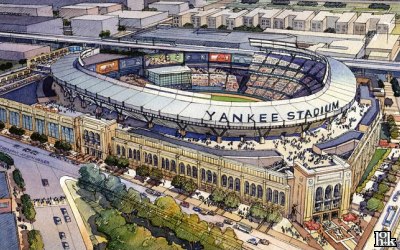
Over the weekend, I was talking to a neighbor about the coming season, and he commented about the changing styles of ballparks and their effect on the game and how it's played. Consider: Yankee Stadium is often referred to as the House that Ruth Built. I had always understood that to be a reference to the size of the ballpark. When it opened in 1923, Yankee Stadium was 60-70 percent bigger in seating than other ballparks–accommodating the fan interest in the King of Swat. But one could argue that the moniker The House that Ruth Built was as much about the dimensions of the field as about the size of the stands. Yankee Stadium had incredibly shallow depths along the foul lines–under 300 feet. While no one would question Ruth's ability to belt out home runs, the quantity of those hit at home was likely aided by the short distance to the foul pole. Perhaps that's the reason Ruth's (and Gehrig's) power is shown so well in extra base hits. Those aren't helped so much by a shortened outfield.
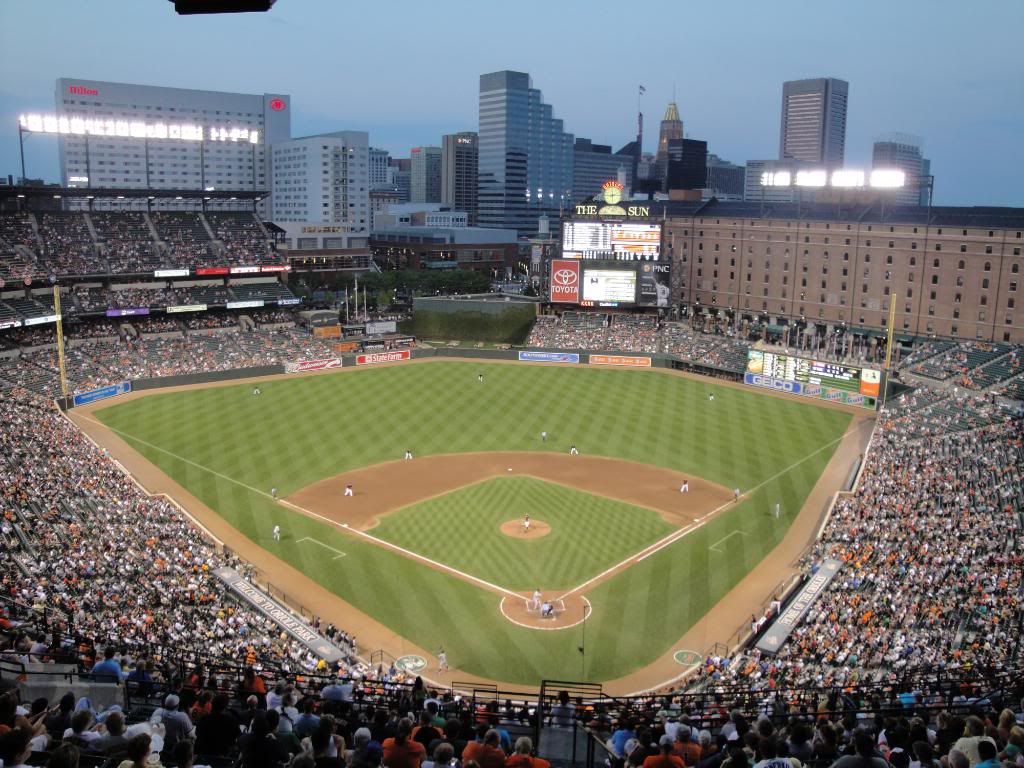 Compare Jacobs Field (now Progressive Field) in Cleveland, or Oriole Park at Camden Yards, with 320-330 along the foul lines. (The short lines were not strictly a Yankee Stadium characeteristic. Ebbets Field and Fenway Park, for instance, both had similarly short foul lines.) Big difference. (It wasn't until 1958, tough, that dimensions like those of Yankee Stadium would be considered unacceptable under the MLB rules for new ball parks.)
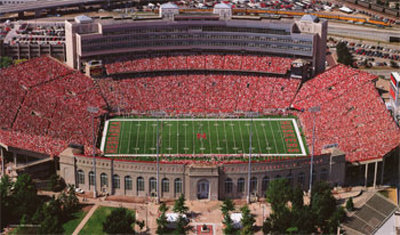
As we were talking, I thought about the different eras in the construction of baseball parks. There was first the innovator era, when the owners built the parks and often named the parks for themselves. Wrigley Field, for instance, named for the owner of the Cubs who play there. Not that Wrigley built the park, he just named it after himself during the late 1920s. Comiskey Park was built and named for the White Sox owner, Ebbetts Field in Brooklyn, Griffith Stadium (Washington Senators), Shibe Park (renamed Connie Mack Stadium) (Philadelphia As), and so on. (Not all were so named, though; Forbes Field in Pittsburgh, for instance, was named for the soldier in the French and Indian War who named the city.) It was in this cohort of ballpark that the "classical" design took hold. It would hold sway until after World War 2, when the next era of ballparks would arrive, typified by Memorial Stadium ("The Old Grey Lady on 33rd Street"or "The World's Largest Outdoor Insane Assylum," take your pick) in Baltimore. (At one time, at 34th and Charles Streets, by the Entrance to Johns Hopkins's Homewood campus, there was a bust of Johns Hopkins on an island in the street.
 When Memorial Stadium opened, so the story goes, there was such confusion about where the stadium was–many drivers thinking the bust was for some athlete, insisted on turning onto 34th Street, with lots of accidents, as the traffic signals were not set for lots of left turning traffic (many drivers jumping the light)–that the bust was moved to the side of the road. At least that was the story on the Homewood campus, particularly the university's historian during the centennial commemoration of its founding.
This new cohort of ballparks was designed for mixed use–not as a ballpark for which some other sport might be tolerated. That meant some compromises. They still abided by the general feel of the first round–the "owners' round"–of parks. Bricks and such, but they also started strut some steel; materials were used to have the ballparks "fit in" with the surrounding community, though how something as big could "fit in" isn't so straightforward. One other interesting feature to this round: Unlike the prior round, in which the teams financed the construction of the park, now municipalities were doing so. Perhaps that was the beginning of the myth that ballparks pay for themselves.
At least for the baseball season, with 81 games played, I can see how there might at least be an argument for economic benefit, but for football?? In any case, this round of ballparks lasted into the 1960s. It may not harken the same loyalty that the owners' round would–but when the baby boomers went to the park, it was as often as not one of the newer parks, and so the newer parks were embedded with pleasant memories in their brains, unless of course they were Senators' fans, in which case I can't talk about any association of pleasantry since my recollection of the Senators in that era was of a team more consistent with A-AA ball than the big show. And some days, sandlot might be applicable (except when Frank Howard was hitting well; they didn't look so bad then–even the defense seemingly performed on those days).
 The Astrodome ushered in the "modern" era of ballparks. It was domed–that was new. It had a space age look (befitting its location in Houston)–that was new. It was big–that was new (well, it was in Texas). No longer would the fans enjoy the proximity to the field of the earlier eras. Houston being a major petrochemical center, it's not surprising that the Astrodome also ushered in Astroturf, a plastic pseudograss that bears as much similarity to its living counterpart as an aluminum Christmas tree does to the living (or at least formerly living) one (or if you prefer, ox to bull, or McDonald's shake to those available at many of the remaining diners still operating in the US). I'll leave aside the issue of whether real baseball can be played on pseudograss–a field lacking the sweet scent of mowed green blades, all in support of that most pristine shape in sports, the baseball diamond–or has to be played on the real thing to qualify as "real" baseball. There are also variations on this theme–for instance, no dome, or a retrievable cover.
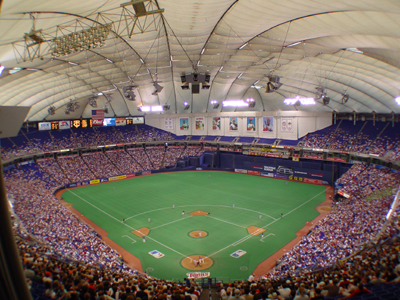 Perhaps the peak of the third age can be found in the Hubert H. Humphrey Metrodome, know affectionately in the Twin Cities, prior to its demise, as the West Bank Marshmallow. It may remain as the only site in which an MLB game was snowed out by a 15 inch blizzard on May 15, 1986–without a snowflake ever touching the field. The Metrodome was a hitter's paradise. Four baggers would go flying out faster than an F-18 off a carrier. Maybe that's why Kirby Puckett liked playing for the Twins so much. Regardless, while there are many who probably liked the Metrodome, it always struck me as sterile. Indeed, that's my complaint about the third age: the ballparks lacked character, identity. There was one thing I liked about the Metrodome, though: it was right by downtown. That was not a universal characteristic. It wasn't a feature of ballparks until the fourth era, the one we are still in.
In the fourth era, ballparks went back to the early 1900s to take their style cues. Sure, modern engineering enhanced the experience, with unobstructed views. And there were the skyboxes, rights to which flowed to the team's bottom line. But with the style going back to the classic one of the early 20th century, one might term it retro. Fans like the effect. Ballparks built over the past two decades have been designed in the retro style. Bricks, old style grillwork, often located near downtowns, and so on. Character was not absent in these places. The trend started with the building of Oriole Park at Camden Yards. Oriole Park was part of a grander scheme to revitalize Baltimore's downtown. First, there was Harborplace, then the Aquarium (site of Willy Don's battle with the sea lions in 1981). And then, nothing. There were a few apartment houses built, a convention center, but not much else. Downtown Baltimore still felt incomplete.
With the departure of the Colts in 1984, scurrying like a thief in the night at the end of March that year, with snow flurries in the air and a Governor whose campaign theme of honest government seemed to think that it prohibited him from intervening, Baltimore's city elders realized the risks of the Orioles leaving Baltimore (I'm not sure the name would have moved as easily as "Colts" did) were there, and needed to be addressed. Back in the late 1970s, the Os' owner, Edward Bennett Williams, complained that it took too long to get from Memorial Stadium back to DC and that Baltimore alone was too small of a market to support a baseball team. Enter the Mayor, who had the police tail Williams back to DC for the next three games that he attended. When Williams next complained about the troubles of leaving 33rd Street, he was met by the Mayor noting how quickly Williams made it back to his DC office (not noted was the speed that Williams's limousine took to achieve those times, nor the anger among the State police that Williams–a defense attorney–that they were under strict orders not to issue a speeding ticket to that car). Williams never complained about it again. So the city elders caucused as they were wont to do, and they decided that Memorial Stadium, beloved as she was, likely was near the end of her useful life. Barely 30, and washed up. Thus began the planning for a new ballpark in downtown Baltimore, around which further downtown development would happen. There was mass transit emerging in the city (though why Baltimore needed a subway is beyond me), and I-95 right next door to facilitate ingress and egress. That was the plan, at any rate. It took a few years to get all the plans in place, but when Camden Yards was finished, it was magnificent. So much so that it kicked off the retro trend
 One of the nicest ballparks built with the retro theme is AT&T Park, the replacement for Candlestick Part in San Francisco. AT&T was built in part because not only was Candlestick not economically competitive in terms of skyboxes and the like but it was arguably the worst located park in the MLB. The winds off of San Francisco Bay would howl in the summer, so much that Fisherman's Wharf and the Presidio seemed warm even during the summer. Had the park been built a mere 75 or so yards to the west, the winds would have been less of an issue. Ditto for orientation. The fog that enveloped Candlestick during night games was legendary–not only for the associated temperature drops, but also the challenges it presented to the player, particularly in the outfield. One of the Alou brothers once noted that at Candlestick, you could see the pitcher throw the ball, you could see the batter hit the ball, but from then until the ball came down, the fielder had to rely on instinct–you just couldn't see the ball all the way through the air. This was the place, after all, where Stu Miller (he died a little over a week ago) was called for a balk during the 1961 All Star game played at the spanking new Candlestick Park. Miller always contended he hadn't balked. No matter, that's how it was scored Of course, many of the pre-retro parks are beloved by the fans. Dodger Stadium at Chavez Ravine is a great example. Woe to the visiting team fan at Dodger Stadium. Watching Koufax pitch at home was a delight, but the fans like the ambiance of the ball park itself.
There are 37 more days before Orioles pitchers and catchers report.
Play ball!
Comments
1 Comment so far
Archives
- August 2026
- July 2026
- June 2026
- May 2026
- April 2026
- March 2026
- February 2026
- January 2026
- December 2025
- November 2025
- October 2025
- September 2025
- August 2025
- July 2025
- June 2025
- May 2025
- April 2025
- March 2025
- February 2025
- January 2025
- December 2024
- November 2024
- October 2024
- September 2024
- August 2024
- July 2024
- June 2024
- May 2024
- April 2024
- March 2024
- February 2024
- January 2024
- December 2023
- November 2023
- October 2023
- September 2023
- August 2023
- July 2023
- June 2023
- May 2023
- April 2023
- March 2023
- February 2023
- January 2023
- December 2022
- November 2022
- October 2022
- September 2022
- August 2022
- July 2022
- June 2022
- May 2022
- April 2022
- March 2022
- February 2022
- January 2022
- December 2021
- November 2021
- October 2021
- September 2021
- August 2021
- July 2021
- June 2021
- May 2021
- April 2021
- March 2021
- February 2021
- January 2021
- December 2020
- November 2020
- October 2020
- September 2020
- August 2020
- July 2020
- June 2020
- May 2020
- April 2020
- March 2020
- February 2020
- January 2020
- December 2019
- November 2019
- October 2019
- September 2019
- August 2019
- July 2019
- June 2019
- May 2019
- April 2019
- March 2019
- February 2019
- January 2019
- December 2018
- November 2018
- October 2018
- September 2018
- August 2018
- July 2018
- June 2018
- May 2018
- April 2018
- March 2018
- February 2018
- January 2018
- December 2017
- November 2017
- October 2017
- September 2017
- August 2017
- July 2017
- June 2017
- May 2017
- April 2017
- March 2017
- February 2017
- January 2017
- December 2016
- November 2016
- October 2016
- September 2016
- August 2016
- July 2016
- June 2016
- May 2016
- April 2016
- March 2016
- February 2016
- January 2016
- December 2015
- November 2015
- October 2015
- September 2015
- August 2015
- July 2015
- June 2015
- May 2015
- April 2015
- March 2015
- February 2015
- January 2015
- December 2014
- November 2014
- October 2014
- September 2014
- August 2014
- July 2014
- June 2014
- May 2014
- April 2014
- March 2014
- February 2014
- January 2014
- December 2013
- November 2013
- October 2013
- September 2013
- August 2013
- July 2013
- June 2013
- May 2013
- April 2013
- March 2013
- February 2013
- January 2013
- December 2012
- November 2012
- October 2012
- September 2012
- August 2012
- July 2012
- June 2012
- May 2012
- April 2012
- March 2012
- February 2012
- January 2012
- December 2011
- November 2011
- October 2011
- September 2011
- August 2011
- July 2011
- June 2011
- May 2011
- April 2011
- March 2011
- February 2011
- January 2011
- December 2010
- November 2010
- October 2010
- September 2010
- August 2010
- July 2010
- June 2010
- May 2010
- April 2010
- March 2010
- February 2010
- January 2010
- December 2009
- November 2009
- October 2009
- September 2009
- August 2009
- July 2009
- June 2009
- May 2009
- April 2009
- March 2009
- February 2009
- January 2009
- December 2008
- November 2008
- October 2008
- September 2008
- August 2008
- July 2008
- June 2008
- May 2008
- April 2008
- March 2008
- February 2008
- January 2008
- December 2007
- November 2007
- October 2007
- September 2007
- August 2007
- July 2007
- June 2007
- May 2007
- April 2007
- March 2007
- February 2007
- January 2007
- December 2006
- November 2006
- October 2006
- September 2006
- August 2006
- Older Archives
Resources & Links
- The Letters Prize
- Pre-2007 Victor Niederhoffer Posts
- Vic’s NYC Junto
- Reading List
- Programming in 60 Seconds
- The Objectivist Center
- Foundation for Economic Education
- Tigerchess
- Dick Sears' G.T. Index
- Pre-2007 Daily Speculations
- Laurel & Vics' Worldly Investor Articles

Thank you so much for your baseball writings. I count the days, as you, to pitch/catch and relish each season.
As a Yankee fan from the early 80’s I’m more used to being frustrated than triumphant as the past generation has enjoyed. I’m more excited about them now as they try to add youth and become a team truly worth rooting for. I think the possibility of not making the playoffs again, yet be in the process of building a strong foundation will separate the wheat from the chaff for the real/bandwagon fan as I have hoped for, for sometime.
As an aside, watching BoSox fans wearing Pink Panda Boston hats will fill me with glee.
Orioles probably will win division again.