Oct
29
Secrets of Survival, from Victor Niederhoffer
October 29, 2013 |
 I wish I hadn't written the chapter on poker in edspec. I hadn't played for 30 years when I wrote it, and all I did was read some books from the gamblers book club, and then write about it as a layman, poseur, armchair geezer. I wasted 5 pages of everyone's time on it. And anyone who knows the game would have seen I was out of my league. I try not to be as ignorant of my ignorance as I once was.
The current issue of Outside is all about the secrets of survival. What it takes to stay alive. I am ignorant on this subject. The only thing I know about it, is from books, that when you're the captain, you're supposed to be the last man out, until you say "every man for himself" as Aubrey did. Also, what I read in L'Amour about always being aggressive at the beginning when threatened with a life saving situation. But people on this site are infinitely more knowledgeable than I on this subject as are all my kids and partner, who all had to spend a few days alone in the Vermont wilderness as part of the Mountain School they went to.
So please, give us your survival things, and comment on what Outside said, so that we can survive better in speculation, a consummation devoutly to be wished, and which the all seeing eye would like to do so many things in this life over again related thereto.
Jim Sogi writes:
 Many cases of death in the wilderness are as a result of a series of small stupid mistakes that compound and make what is not a deadly situation, into a deadly one. First is lack of preparation. The classic case is the two hour hike without proper basics such as jackets, maps, water, shoes, compass and the weather gets bad. The party hurries, mistake 2. One in the party gets injured: mistake 3. The parties separate to get help: mistake
4. Both parties become disoriented and lost and panic, running about. mistake 5. Their bodies are found days later a few feet off the path. All stupid mistakes, compounding a nice situation and tipping into irretrievable disaster. It is the same as Chair talks about: a good base of operation. Basic needs of the operation in the wild are adequate shoes, protection from weather, warmth and hydration, and basic navigation.
The second main survival issues are the basic needs of human survival: water and warmth. One can go for days, and almost weeks without food, but without water, hours can bring on death. If the body goes just a few degrees below or above its normal temperature, body and mental functions shut down and the person goes into a stupor. It can happen in 70-80 temperatures surprisingly.
Often, the simple cure to avoiding the above is just to stop. People have a real need to be doing something, and often it is not helpful and leads to disaster. How many parallels there are to trading!
I have a simple survival first aid package. Loss of blood is one of main causes of battlefield death. Unless bleeding is stopped, death will quickly follow often in minutes. Cetox granules go in the wound and staunch the bleeding by forming clots. Pressure and bandaging or sealing with stitches or tape will stabilize until further help. Also in the kit are pain killers. Sprains and breaks are common, and pain killer will allow the party to limp or carry to further help. The commercial first aid kits are often a waste. Water treatment is top of the survival bag list to kill giardia and cryptosporidium that will cause runs and dehydration. A small tarp or space blanket and jacket will provide enough shelter to avoid hypothermia by blocking wind and rain. Tape such as dermoplast or even duct tape can be used to staunch bleeding, make splints and stabilize breaks and sprains. A good flint and steel and tinder and water proof matches will help build a fire to keep warm. That's about all in my kit. All the crap in the commercial kits tend to be useless weight. Most survival situations only last 3 days. By then 95 percent are rescued or dead. Just stay warm, drink water, and keep your blood inside you.
Bibliography:
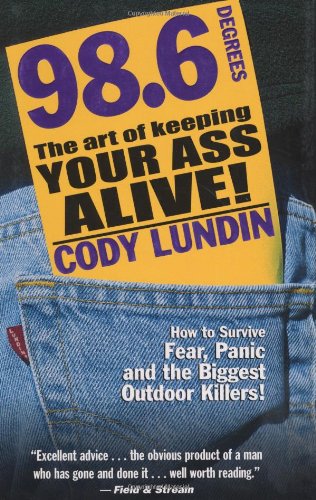
98.6 The Art of Keeping Your Ass Alive Cody Lundin
Backcountry Skiing Skills Wheeler, Margaret
First Aid: A Pocket Guide Van Tilburg
Glacier Travel and Crevasse Rescue , Selters, Andrew
Deep Survival, Gonzales, Lawrence
Phil McDonnell writes:
About the only thing I can add to Mr. Sogi's excellent summary of survival techniques is to recommend the choice of tinder for the flint and steel technique. I have considerable experience from Boy Scout days with flint and steel. The best tinder by far is steel wool. I believe the reason is that hitting the steel against the flint throws off molten steel sparks which somehow are attracted to the steel wool fibers. In competitions I used to be able to boil a #10 tin can of water in 3-4 minutes.
Pitt T. Maner III writes:
 I occasionally watch the Les Stroud Survivorman show and he has some good ideas on the subject. Similar to Mr. Sogi.
For urban disaster he emphasizes having a basic kit stored in a plastic container.
In Stroud's view it is ideal to keep: 1) a week's supply of water and 2) a nice first aid kit (probably doesn't hurt for everyone in the family to take the Red Cross First Aid/CPR course or from another qualified provider. He advises having a 3) crank-up radio to keep in touch with outside world and 4) a shake, non-battery flashlight. 5) Water proof matches, 6) Rope, 7) a Multi-Tool.
During the hurricane season a trip to Costco to prepare for a possible storm is important. Easy to pick up canned goods, water and other items needed. A little wine to share with your fellow condo survivors doesn't hurt either when the power and water go off for a week and you are sweltering without the A/C. I like a big lantern-type flashlight with fresh batteries so you can read a bit at night.
At any rate, Stroud emphasizes staying dry to avoid hypothermia in the wilderness. Exposure is a big risk in the wilds.
Ed Stewart writes:
 James has an excellent summary of important points. I will add (or expand on) a few.
First, be very cautious when venturing into new territory. If one is experienced at hiking a certain path or mountain or area, Don't assume "it is all the same" when you go to a new place. Don't assume, "I know how to find my way". I grew up in rural New England and spent a great deal of time in the woods (back country type skiing, hiking, fishing, etc) from a young age. My families home was near a govt owned wilderness area, and over time I got to know the terrain extremely well in terms of having a mental map and orientation, but also things like natural formations that could be useful as shelter, etc. Knowing a wilderness territory is like knowing where the "utilities" are that you can access from any position.
It is very dangerous to generalize such specific knowledge into thinking "I am good at finding my way", a mistake I experienced and learned from.
Wear the right clothes initially, not just in a backup capacity. What is comfortable in ideal conditions (light cotton long sleeve T-shirt, etc) can be a disaster when conditions change. Material that is waterproof and/or maintains insulating ability when wet is always good.
Extreme danger emerges out of "usual" situations and seemingly small challenges. It is hard to see danger without experience. For example a recreational hiker thinks, "that small rock formation would be fun to climb". The problem is, how it looks at the bottom (easy!) is a distortion relative to what one sees close up (unstable rocks, dirt, etc) from a now dangerous height. "From a distance" assessments are not an accurate judge of things for most people.
Focus on external factors that reveal themselves through the five senses. Take the time to observe. Stop and listen. Look at shadows, type of earth you are on, gradient, sounds, smells. Getting into that observation mode, not talking, not focusing on your own thoughts but on what is "out there." Bringing the senses alive to the slightest changes in the environment is a significant survival skill.
Experience coping with blood and guts, both literally and metaphorically, prepares one for survival. Many people are very deceived about survival situations because most of modern life is very safe, sanitized, and compartmentalized. Meat comes in a plastic package. "Someone else" does the dirty work. "Someone else" fixes an injured person. "Someone else" makes things safe and secure. People are squeamish about crossing boundaries, and when confronted with them can panic or become ill. An easy way to develop a natural survival mentality in any circumstance is to look for ways to cross boundaries before one is forced to do so.
The sound of a heavy metal bell can carry a great distance. As I said, I grew up in a very rural area and our home was on a large number of acres. When I was out late fishing, etc, my mom had a very heavy metal bell that she would ring– a sound which would carry for miles and alert me to come home — and immediately, automatically set my orientation. There are plenty of ways that a low cost item like this can be used.
Vince Fulco writes:
 Besides some of the other great pubs listed here, the US Special Forces Medical Handbook (a bit dated) can be found on amazon and similar for $10. There is plenty of food for thought for the non-medical professional for when the stuff hits the fan in a bigger way.
Vincent Andres writes:
I remember well one of Reinhold Messner's simple tips.
When in danger, you are yourself the very first level of protection (and also one of the best, since your reaction can be very immediate). So work well on this very first level, and don't count on somebody else doing the job for you.
This is also a very libertarian and Randian tip.
Comments
Archives
- September 2026
- August 2026
- July 2026
- June 2026
- May 2026
- April 2026
- March 2026
- February 2026
- January 2026
- December 2025
- November 2025
- October 2025
- September 2025
- August 2025
- July 2025
- June 2025
- May 2025
- April 2025
- March 2025
- February 2025
- January 2025
- December 2024
- November 2024
- October 2024
- September 2024
- August 2024
- July 2024
- June 2024
- May 2024
- April 2024
- March 2024
- February 2024
- January 2024
- December 2023
- November 2023
- October 2023
- September 2023
- August 2023
- July 2023
- June 2023
- May 2023
- April 2023
- March 2023
- February 2023
- January 2023
- December 2022
- November 2022
- October 2022
- September 2022
- August 2022
- July 2022
- June 2022
- May 2022
- April 2022
- March 2022
- February 2022
- January 2022
- December 2021
- November 2021
- October 2021
- September 2021
- August 2021
- July 2021
- June 2021
- May 2021
- April 2021
- March 2021
- February 2021
- January 2021
- December 2020
- November 2020
- October 2020
- September 2020
- August 2020
- July 2020
- June 2020
- May 2020
- April 2020
- March 2020
- February 2020
- January 2020
- December 2019
- November 2019
- October 2019
- September 2019
- August 2019
- July 2019
- June 2019
- May 2019
- April 2019
- March 2019
- February 2019
- January 2019
- December 2018
- November 2018
- October 2018
- September 2018
- August 2018
- July 2018
- June 2018
- May 2018
- April 2018
- March 2018
- February 2018
- January 2018
- December 2017
- November 2017
- October 2017
- September 2017
- August 2017
- July 2017
- June 2017
- May 2017
- April 2017
- March 2017
- February 2017
- January 2017
- December 2016
- November 2016
- October 2016
- September 2016
- August 2016
- July 2016
- June 2016
- May 2016
- April 2016
- March 2016
- February 2016
- January 2016
- December 2015
- November 2015
- October 2015
- September 2015
- August 2015
- July 2015
- June 2015
- May 2015
- April 2015
- March 2015
- February 2015
- January 2015
- December 2014
- November 2014
- October 2014
- September 2014
- August 2014
- July 2014
- June 2014
- May 2014
- April 2014
- March 2014
- February 2014
- January 2014
- December 2013
- November 2013
- October 2013
- September 2013
- August 2013
- July 2013
- June 2013
- May 2013
- April 2013
- March 2013
- February 2013
- January 2013
- December 2012
- November 2012
- October 2012
- September 2012
- August 2012
- July 2012
- June 2012
- May 2012
- April 2012
- March 2012
- February 2012
- January 2012
- December 2011
- November 2011
- October 2011
- September 2011
- August 2011
- July 2011
- June 2011
- May 2011
- April 2011
- March 2011
- February 2011
- January 2011
- December 2010
- November 2010
- October 2010
- September 2010
- August 2010
- July 2010
- June 2010
- May 2010
- April 2010
- March 2010
- February 2010
- January 2010
- December 2009
- November 2009
- October 2009
- September 2009
- August 2009
- July 2009
- June 2009
- May 2009
- April 2009
- March 2009
- February 2009
- January 2009
- December 2008
- November 2008
- October 2008
- September 2008
- August 2008
- July 2008
- June 2008
- May 2008
- April 2008
- March 2008
- February 2008
- January 2008
- December 2007
- November 2007
- October 2007
- September 2007
- August 2007
- July 2007
- June 2007
- May 2007
- April 2007
- March 2007
- February 2007
- January 2007
- December 2006
- November 2006
- October 2006
- September 2006
- August 2006
- Older Archives
Resources & Links
- The Letters Prize
- Pre-2007 Victor Niederhoffer Posts
- Vic’s NYC Junto
- Reading List
- Programming in 60 Seconds
- The Objectivist Center
- Foundation for Economic Education
- Tigerchess
- Dick Sears' G.T. Index
- Pre-2007 Daily Speculations
- Laurel & Vics' Worldly Investor Articles
