Nov
25
Grist for the Chair, from Scott Brooks
November 25, 2011 |
 Vic recently stated that we were not in a range bound market. I have held that we are in a long term secular bear market since at least 2000, and one could make an argument that we've been in a bear market since 1998.
When I look at the S&P monthly closing values starting in Dec. 1998, I see a figure of: 1229
When I look at the S&P monthly closing values through October 2001, I see a figure of 1253
Eyeballing the chart, I see a high of around 1549 and a low of around 735 during that time frame. I see the high approached several times and the low approached several times.
How can we trade in the above range for the last decade+ and it not considered to be a range bound market?
I've always contended on this list that secular bear markets and secular bull markets each have certain characteristics that you see to help you recognize them.
Bulls have lower volatility and have a general upward trend. They do have pullbacks and crashes (i.e. the bull of 1982 - 2000 had the 1987 crash). But as a general rule of thumb, you can set your sails and just ride the bull winds to profits.
Examples of secular bulls include, the roaring 20s, the 1950s/60s, the 1980s/90s.
Bears have higher volatility (often much, much higher). They shot up and down but basically end up where they started and often end up where the started several times. You need to pull your sails down, turn on your engine and use a lot of energy to navigate the rough waters of the bear.
Examples of secular bear markets include, the Dust Bowl Years, the Great Depression, the 1970s, 2000 - ?
Not being a counter or someone with great math or statistical skills, I'm sure that there is a way to refute my point. I'd be interested in better understanding where I'm wrong and where I might be right.
Steve Ellison writes:
Mr. Brooks has suggested that it is better to invest when stocks are in an upward trend with low volatility and to stay away when stocks are in a downward trend with high volatility.
Since Mr. Brooks is talking about very long periods, I used S&P 500 index data back to 1950 and Dow Jones Industrial Average data from 1928 to 1949. For each day I calculated a sort of normalized 1-year VIC: the average of the daily absolute percentage changes over the past year. Beginning on the day after Pearl Harbor, I determined the median 1-year volatility of all the previous dates. Thus, using data that could theoretically have been known at the time, I classified the 1-year volatility each day as high or low.
If the index was higher than a year previously, I categorized the trend as up; otherwise the trend was down.
I considered a bull market to be in effect if the previous day's close was higher than the close a year earlier and the previous day's 1-year volatility was below the historical median. I considered a bear market to be in effect if the previous day's close was lower than the close a year earlier, and the previous day's 1-year volatility was above the historical median. I considered all other days to be neutral.
By this method, a bull market was in effect continuously from March 12, 1992 to March 30, 1994. The market then flipped several times between bullish and neutral as volatility was low, but prices in 1994 sometimes dropped below year-earlier levels. The market was then continually bullish from February 7, 1995 to March 31, 1997. The market then moved to neutral status as volatility rose. Except for two days in October 1998 when a bear market was in effect, the market was neutral until November 10, 2000, when it moved to bearish. It stayed bearish for all but 6 days until June 2003. There was a continuous bull market from July 12, 2004 to October 26, 2007.
There was a continuous bear market from January 14, 2008 to October 7, 2009. Then the market was neutral (up trend but high volatility) until August 9, 2011. It was bearish for one day and then flipped back to neutral. There have been a few more flips between neutral and bearish, and after Wednesday's close, this indicator has again flipped from neutral to bearish.
Using this method to contemporaneously identify bull and bear markets, I got the following results since 1941.
Number Average Value of $1000
Type of market of days daily return invested on these days only
Bull 8118 0.034% $16335
Bear 2872 0.018% $1695
Neutral (downtrend 2163 0.004% $1094
but low volatility)
Neutral (uptrend 4463 0.031% $3933
but high volatility)
It does appear that investing in contemporaneously recognizable bull markets is better than investing in bear markets. But wait–is that just by random chance? For example, see the following graph of the cumulative results of 300 coin flips. The underlying process is completely random, but there appeared to be a long heads trend, followed by a Fibonacci retracement.

To answer this question, I ran 500 simulations in which I randomly chose 8118 of the daily returns since 1941. I then compared the total returns of these random selections to the total return of the 8118 bull market days. The actual return of the bull market days was in the 82nd percentile of the randomly generated 8118-day returns. Thus, I estimate the outperformance of bull market days has p=0.18 and falls short of statistical significance.
Charles Pennington writes:
I think Scott is saying that the market has been bounded ON THE UPSIDE, never going much above 1500 at any time over the past >10 years, although bumping up against that level a few times.
"Range bound" should mean that the market is tightly bound both on the upside and the downside–it has a tight RANGE. I think that when Vitaliy wrote his book, he was expecting that the market would have a true tight range going forward, and his readers might fairly have concluded it would be a good idea to sell some puts and calls to capitalize on the forthcoming tight range. Instead, of course, the market fell 50%. So Vitaliy re-interpreted his prediction to mean "bounded on the upside".
Victor Niederhoffer comments:
Yes. The professor has captured the gist of the promotion and huckstering and conversion of property and putting on the pretty face to hook the rich so typical of those raised in that environ that caused one to boot him off the site.
Anatoly Veltman writes:
May I twist the subject slightly…
We all remember Greenspan's only explanation of unusually long subdued inflationary pressures over the 90s decade and into the 00 decade: super-efficiency, labor achievements. And then came the real-estate bubble.
Bernanke's issue appears more deflation than inflation. However, the redistribution of means achieved politically creates somewhat of an asset bubble relative to real economy.So remembering that market is never favorite to go down, I'm still struggling with these fears: what if market's only nominal robustness is purely a devaluation phenomenon? Is equity investment then justified, or is some sort of hard-money is just as well (not gold necessarily– maybe oil, gas, agri commodities)?
Paolo Pezzutti writes:
Hmm…. Maybe gold or oil? It does not seem that for the moment gas is appealing to investors. That is why I decided to buy it, contrarian as usual, and UNG went down from12$ to 8$. And when I bought it I was thinking that it could not possibly go lower given the steep fall already printed. After all gas is something tangible and oil was relatively much more expensive. Who knows, may be things will change when someone will demonstrate that shale fracturing techniques damage the environment. If this downtrend continues soon they will gas for free at the corner of the Streets…
Bruno Ombreux comments:
I don't understand this concept of "investing" in a commodity.
A commodity is meant to be produced then consumed. How can anyone invest in that? It does not pay an interest or a dividend. You eat it, burnt it… Just taking one extreme: power. It is not storable. Supply must equal demand all the time.
I cannot think of anybody idiot enough to invest in commodities except hedge funds, who are really idiots.
No?
p.s. Gold is the only exception. Some people say it is a commodity. I do not agree but let us accept this to avid a semantic debate. You cannot invest in it but it is money. So you can buy it and keep it. But you don't really "invest" in gold.
Just to be clear, one can "speculate" in a commodity, as long as it is storable. As Keynes brilliantly showed, the economic role of the speculator is storage. So not only can you "speculate" but also you make the world a little bit better. But "invest"? Come on…
Gibbons Burke replies:
 Gary North, in an ebook he provides for free on his website, has an interesting description of times when commodities become money:
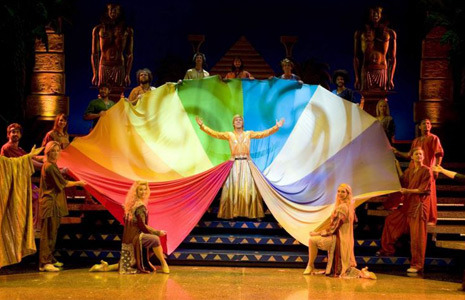
Now let’s take a real historical example, the famine era in Egypt. Joseph had warned the Pharaoh of the famine to come, and for seven years, the Pharaoh’s agents had collected one-fifth of the harvest and had stored it in granaries. Then the famine hit. The crops failed. The people of nearby Canaan also suffered. No one had enough food.
And Joseph gathered up all the money that was found in the land of Egypt and in the land of Canaan, for the grain which they bought; and Joseph brought the money into Pharaoh’s house. So when the money failed in the land of Egypt and in the land of Canaan, all the Egyptians came to Joseph and said, “Give us bread, for why should we die in your presence? For the money has failed” (Genesis 47:14-15).
What did they mean, “the money has failed”? They meant simply that compared to the value of life-giving grain, the money was worth nothing. Why would a man facing starvation want to give up his remaining supply of grain in order to get some money? What good would the money do him? He wanted life, not money, and grain offered life.
Because the money “failed,” it had fallen to almost zero value. Thus, in order to buy food, the people had been forced to spend all of their money. Now they were without food or money.
And Joseph said, Give your livestock, and I will give you bread for your cattle, if the money is gone. So they brought their livestock to Joseph: and Joseph gave them bread in exchange for the horses, the flocks, the cattle of the herds, and for the donkeys. Thus he fed them with bread in exchange for all their livestock that year (Genesis 47:16-17).
Were the Egyptians foolish? After all, all those cattle and horses were useful. But animals eat grain. The grain was too valuable during a famine to feed to animals. All that the animals were worth was whatever they would bring as food, and in Egypt, the meat wouldn’t last long. Dead animals in a desert country don’t remain valuable very long. Why not trade animals for grain, which survives the heat? The only reason the Pharaoh had any use for the animals and money is that he knew he had enough food to survive the famine. He knew that it would eventually end. Thus, he would be the owner of all the wealth of Egypt at the end of the famine. For him, the exchange was a good deal, but only because he had the food, and the army to defend it, and he also possessed what he believed to be accurate knowledge concerning when the famine would end. Joseph had told him it would last seven years.
Because he had a surplus of grain beyond mere survival, and because he had “inside information” about the duration of the famine, money and animals were valuable to the Pharaoh, even though they were not valuable to the people. Thus, a voluntary exchange became profitable for both sides. The Pharaoh gave up grain for goods that would again become very valuable in the future. The Egyptians gave up goods worth very little to them in the present in order to get absolutely vital present goods. Each side gave up something less valuable in exchange for something more valuable. Each side improved its economic position. Each side therefore gained in the transaction.
Notice here that we are not dealing with any so-called “equality of exchange.” This theory says that people exchange goods only when the goods are of equal value. It is true that in the marketplace, they may be of equal price, but they are not of equal value in the minds of the traders. What we are always dealing with in the case of voluntary exchange is inequality of exchange. One person wants to possess what the other person has more than he wants to keep what he already has. Because each person evaluates what the other has as more valuable, a voluntary exchange takes place.
Egypt’s money failed. In fact, grain became the new form of money, although the Bible doesn’t say this explicitly. What it says is that everyone was willing to trade whatever he had of former value in order to buy food. But if some item is what everyone wants, then we can say that it’s the true money.
The Properties of Money
Why would grain have served as money? Because it had the five essential characteristics that all forms of money must have:
1. Divisibility
2. Portability
3. Durability
4. Recognizability
5. Scarcity (high value in relation to volume and weight)Normally, grain doesn’t function as money. Why not? Because of characteristic number five. A particular cup of grain doesn’t possess high value, at least not in comparison to a cup of diamonds or a cup of gold coins. The buyer thinks to himself, “There’s lots more where that came from.” Normally, he’s correct; there is a lot more grain where that came from. But not during a famine.
Why divisibility? Because you need to count things. Five ounces of this for a brand-new that. Only three ounces for a used that. Both the buyer and the seller need to be able to make a transaction. The seller of the used “that” may want to go out and buy three other used “thats” in order to stay in the “that” business, so he needs some way to divide up the income from the initial sale. This means divisibility: ounces, number of zeroes on a piece of paper, or whatever.
Portability is obvious. It isn’t an absolute requirement. I have read that the South Pacific island culture of Yap uses giant stone doughnuts as money. They are too large to move. But they are a sign of wealth, and people are willing to give goods and services to buy them. Actually what are exchanged are ownership certificates of some kind. Normally, however, we prefer something a bit smaller than giant stone doughnuts. When we go to the market, we want to carry money with us. If it can’t be carried easily, it probably won’t function as money.
Durability is important, too. If your preferred money unit wears out fast or rots, you have to keep replacing it. That means trouble. A barrel of fresh fish in a world without refrigeration won’t serve as money. But there are exceptions to the durability rule. Cigarettes aren’t durable the way that metal is, but cigarettes have functioned as money in every known modern wartime prison camp. Their high value per unit of weight and volume overcomes the low durability factor. Also, they stay scarce: people keep smoking their capital.
Recognizability is crucial if you’re going to persuade anyone to trade with you. If he doesn’t see that it’s good, old, familiar money, he won’t risk giving up ownership of whatever it is that you’re trying to buy. If it takes a long time for him to investigate whether or not it’s really money, it eats into everyone’s valuable time. Investigations aren’t free of charge, either. So the costs of exchange go up. People would rather deal with a more familiar money. It’s cheaper, faster, and safer.
So what we say is that any object that possesses these five characteristics to one degree or another has the potential of serving a society as money. Some very odd items have served as money historically: sea shells, bear claws, salt, cattle, pieces of paper with politicians’ faces on them, and even women. (The problem with women is the divisibility factor: half a woman is worse than no woman at all.)
Rocky Humbert disagrees:
I'm not going to waste everyone's time articulating why Mr. Bruno is wrong. (You can find that in any reasonable textbook.) I will simply note that ALL investments (including commodities) have many complex and related attributes, including replacement cost, store-of-wealth, scarcity value, Graham & Dodd "margin of safety," and of course, cash flow and future expected value. (If Bruno doesn't understand how to derive cash flow and future expected value from a commodity and/or commodity futures investment, I'll be more than happy to tutor him at an hourly fee that appropriately compensates me for my annoyance in having to deal with a pompous windbag.) Whether one is "investing" (or "speculating") in a start-up company in someone's garage, in a T-bill (with a negative real return), in natural gas (which is trading below its fully-loaded marginal cost of production), in aluminum (which may have a worldwide supply deficit), in Groupon (because eventually they will make a profit), in BAC (because it's trading below Book value)….etc, etc, etc., the discipline, analysis and approach are consistent.
I have to hand it to Mr. Bruno — he now has two things in common with my brilliant wife. They both enjoy fine French wine, and they both think I am an "idiot." (The similarities end there — since my wife knows that California produces some wines that embarrass the French Premier Cru's — and she also knows that those with an IQ between 51 and 70 are "morons;" whereas "imbeciles" possess an IQ between 26 and 50. She sadly knows that as a hedge fund manager, I live in the "tail" of the distribution — as "idiots" have an IQ between 0 and 25.
Bruno Ombreux replies:
I am not going to retract. I think the hedge funds who say they invest in commodities are idiots. If they are not idiots they are crooks which is even worse.
You cannot invest in a commodity. If you present it as an investment, there are two possibilities:
1) You do not know it is not an investment, and then you are an idiot.
2) You know it is not an investment, and then you are a crook.
And I am sorry, I met many people from hedge funds. It is true they are nice people and sometime extremely clever, if often a bit naive. But the are not competent in trading commodities. They are clever marketers. That is they are clever at raising money. But most of them suck as traders or investors.
I wouldn't blame them if they took exception to your comment and demanded that you be keelhauled then ordered to buy a round of drinks for all. I know a couple hedge fund managers on the list and they seem to be the smartest people I've ever had the occasion to know.
Comments
Archives
- October 2026
- September 2026
- August 2026
- July 2026
- June 2026
- May 2026
- April 2026
- March 2026
- February 2026
- January 2026
- December 2025
- November 2025
- October 2025
- September 2025
- August 2025
- July 2025
- June 2025
- May 2025
- April 2025
- March 2025
- February 2025
- January 2025
- December 2024
- November 2024
- October 2024
- September 2024
- August 2024
- July 2024
- June 2024
- May 2024
- April 2024
- March 2024
- February 2024
- January 2024
- December 2023
- November 2023
- October 2023
- September 2023
- August 2023
- July 2023
- June 2023
- May 2023
- April 2023
- March 2023
- February 2023
- January 2023
- December 2022
- November 2022
- October 2022
- September 2022
- August 2022
- July 2022
- June 2022
- May 2022
- April 2022
- March 2022
- February 2022
- January 2022
- December 2021
- November 2021
- October 2021
- September 2021
- August 2021
- July 2021
- June 2021
- May 2021
- April 2021
- March 2021
- February 2021
- January 2021
- December 2020
- November 2020
- October 2020
- September 2020
- August 2020
- July 2020
- June 2020
- May 2020
- April 2020
- March 2020
- February 2020
- January 2020
- December 2019
- November 2019
- October 2019
- September 2019
- August 2019
- July 2019
- June 2019
- May 2019
- April 2019
- March 2019
- February 2019
- January 2019
- December 2018
- November 2018
- October 2018
- September 2018
- August 2018
- July 2018
- June 2018
- May 2018
- April 2018
- March 2018
- February 2018
- January 2018
- December 2017
- November 2017
- October 2017
- September 2017
- August 2017
- July 2017
- June 2017
- May 2017
- April 2017
- March 2017
- February 2017
- January 2017
- December 2016
- November 2016
- October 2016
- September 2016
- August 2016
- July 2016
- June 2016
- May 2016
- April 2016
- March 2016
- February 2016
- January 2016
- December 2015
- November 2015
- October 2015
- September 2015
- August 2015
- July 2015
- June 2015
- May 2015
- April 2015
- March 2015
- February 2015
- January 2015
- December 2014
- November 2014
- October 2014
- September 2014
- August 2014
- July 2014
- June 2014
- May 2014
- April 2014
- March 2014
- February 2014
- January 2014
- December 2013
- November 2013
- October 2013
- September 2013
- August 2013
- July 2013
- June 2013
- May 2013
- April 2013
- March 2013
- February 2013
- January 2013
- December 2012
- November 2012
- October 2012
- September 2012
- August 2012
- July 2012
- June 2012
- May 2012
- April 2012
- March 2012
- February 2012
- January 2012
- December 2011
- November 2011
- October 2011
- September 2011
- August 2011
- July 2011
- June 2011
- May 2011
- April 2011
- March 2011
- February 2011
- January 2011
- December 2010
- November 2010
- October 2010
- September 2010
- August 2010
- July 2010
- June 2010
- May 2010
- April 2010
- March 2010
- February 2010
- January 2010
- December 2009
- November 2009
- October 2009
- September 2009
- August 2009
- July 2009
- June 2009
- May 2009
- April 2009
- March 2009
- February 2009
- January 2009
- December 2008
- November 2008
- October 2008
- September 2008
- August 2008
- July 2008
- June 2008
- May 2008
- April 2008
- March 2008
- February 2008
- January 2008
- December 2007
- November 2007
- October 2007
- September 2007
- August 2007
- July 2007
- June 2007
- May 2007
- April 2007
- March 2007
- February 2007
- January 2007
- December 2006
- November 2006
- October 2006
- September 2006
- August 2006
- Older Archives
Resources & Links
- The Letters Prize
- Pre-2007 Victor Niederhoffer Posts
- Vic’s NYC Junto
- Reading List
- Programming in 60 Seconds
- The Objectivist Center
- Foundation for Economic Education
- Tigerchess
- Dick Sears' G.T. Index
- Pre-2007 Daily Speculations
- Laurel & Vics' Worldly Investor Articles
