Aug
24
Depositors and Clearing Houses, from Stefan Jovanovich
August 24, 2011 |
 What is now completely forgotten is that banks used to be on their own. Neither the U.S. Treasury nor the full faith and credit of the Congress nor the Federal Reserve system stood behind them; yet somehow commerce flourished, panics were short, and - wonder of wonders - the paper currency people held was literally as good as gold. The risks of that system were the ones J.P. Morgan explained to Congress in his testimony before the Pujo Committee - one was always dependent on "the character of the borrower". And that character could and would fail, sometimes badly. What distinguishes the period before 1912 from what came afterwards is that the risks of failed character were not socialized. It was not the world we have now where everyone is everyone else's counter-party and savings=investment because that is how the equations work out. Yet it was, very much, a world of Physics and Politics.
The late 19th century financial system operated on Walter Bagehot's principles. It was assumed that, in the event of a crisis, the primary dealers in credit and money would come to the rescue but they would do so according to Morgan's hard rule. Bagehot's famous advice, "Discount freely", would be followed, but it was assumed that bad characters would not receive loans at all because their word was no good. That would be "cruel" (sic) to the depositors who trusted those bad characters, but such cruelty was an essential part of the system. Liars and cheats could not be rewarded, and neither could the fools who trusted them. One of the many things admirable about Ulysses Grant is that, when his son was swindled by a Bernie Madoff of the 19th century, he took the loss as being entirely his own. Neither he nor his family ever suggested that anyone else, besides the fraudulent partner, was to blame. Under such a system "sound" banks were the very ones that seemed most awful; they would only lend to people they knew and would always demand solid security.
This nasty truth seemed horribly undemocratic, as undemocratic (small or large D, take your pick) as the idea that people should have a sufficient down payment and prospects of reasonable income before being given a loan to buy a house. The Federal Reserve Act was promoted by Progressives as a solution to this problem. With the added security of interlinked banks and the implicit guarantee of the Treasury (the Treasury's currency was to become the Federal Reserve's), banks could cease to be so stingy. It is easy in retrospect to create conspiracy theories about "the Fed"; but there is very little justification for that. There was nothing at all radical in the actual language of the Act itself; its terms merely put in place a permanent Clearing House system that would be available at will in times of distress. The Clearing House system had worked during the Panic of 1907, but its very success had alarmed people who feared the Money Trust. Better to put the system in the hands of a quasi-public institution like the Bank of England than to leave it up to the Morgan Bank. (Note: The 1907 Panic had scared people in banking precisely because it had been a "Rich Man's Panic". The country had been fine; indeed, the "country" banks had remained sound. What was troubling was that, after the failure of the Knickerbocker Trust, those country banks had decided that the New York bank's character was less sound than had been supposed.
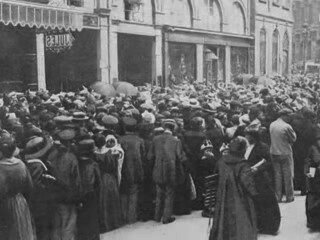 So, having the Federal Reserve system serve as a banker's bank, an intermediary between the members, would not by itself be a great change. None of the supporters of the Act - Progressive or otherwise - presumed that the system would abandon the discipline of Bagehot's doctrine - no lending to bad characters. No one in the country supposed that the Act would change the currency - i.e. abandon the Constitutional gold standard. All the Act would do was create a formal authority that would have the "flexibility" to discount freely in times of crisis and thereby prevent people of "good" character from being wrongly slandered by the market. That was, of course, the beginning of a devil's bargain, but only a few cranks anticipated that it would be the beginning of the permanent destruction of the currency.
What those cranks anticipated was that the Fed and the U.S. Treasury would decided that the Constitutional gold standard was not really a standard but only a guideline. That came in 1914, when war broke out in 1914, and the Secretary of the Treasury decided that, in the name of national security, he had the authority to shut down the New York Stock Exchange for 6 months.
That default by the government of the United States is the major part of the devil's bargain that we are still paying for. Shutting down the Exchange not only prevented the European holders of U.S. securities from selling up and asking for their bank drafts to be exchanged by the Treasury for bullion, it also destroyed overnight the private intermediaries for the bulk of world trade. The factors, dealers in commercial paper, and others who acted as the actual risk takers for payments for the greatest part of the volume of imports and exports were shut down. Trade finance ceased to be the dealings of private parties and became, instead, part of the official dealings of national treasuries and their respective central banks. The check and balance provided by those commercial dealers was literally abolished. The European governments whom Woodrow Wilson and the Congress favored - Britain and, to a lesser extent, France - were allowed to write checks for imports of food and war materials that their own pre-war banks would not have cashed. The financial tyranny of the Presidential executive order that Scott and others have so justly complained about did happen, but the author was not a 19th century Illinois Republican but a pair of modern, 20th century Virginia Democrats.
If you have no problem with any of this - and a majority of Americans and all but a few professional economists - do not, then you still have to explain why, in every financial crisis, from 1930 to 1971 to 2008, the Federal Reserve has ended up protecting the interest the banks and the banks' counter-parties and lenders and their mercantilist certainties at the expense of the savers and depositors and holders of the currency. The very hoard of gold acquired by the Treasury and the Fed in WW I was not used to "bail out" (sic) the depositors of the U.S. banks in 1930, 1931 and 1932 even though the system had been sold on the promise that "a systematic revision of banking laws in ways that would provide relief from financial panics, unemployment and business depression, and would protect the public from the domination by what is known as the Money Trust."
In 1930, 1931 and 1932 the depositors lost their money outright; this time their money has been "protected" but its very value has been destroyed in the name of lowering real interest rates. That, of course, ignores the last part of Bagehot's doctrine - the central bank is to lend freely but only at high rates.
Comments
Archives
- October 2026
- September 2026
- August 2026
- July 2026
- June 2026
- May 2026
- April 2026
- March 2026
- February 2026
- January 2026
- December 2025
- November 2025
- October 2025
- September 2025
- August 2025
- July 2025
- June 2025
- May 2025
- April 2025
- March 2025
- February 2025
- January 2025
- December 2024
- November 2024
- October 2024
- September 2024
- August 2024
- July 2024
- June 2024
- May 2024
- April 2024
- March 2024
- February 2024
- January 2024
- December 2023
- November 2023
- October 2023
- September 2023
- August 2023
- July 2023
- June 2023
- May 2023
- April 2023
- March 2023
- February 2023
- January 2023
- December 2022
- November 2022
- October 2022
- September 2022
- August 2022
- July 2022
- June 2022
- May 2022
- April 2022
- March 2022
- February 2022
- January 2022
- December 2021
- November 2021
- October 2021
- September 2021
- August 2021
- July 2021
- June 2021
- May 2021
- April 2021
- March 2021
- February 2021
- January 2021
- December 2020
- November 2020
- October 2020
- September 2020
- August 2020
- July 2020
- June 2020
- May 2020
- April 2020
- March 2020
- February 2020
- January 2020
- December 2019
- November 2019
- October 2019
- September 2019
- August 2019
- July 2019
- June 2019
- May 2019
- April 2019
- March 2019
- February 2019
- January 2019
- December 2018
- November 2018
- October 2018
- September 2018
- August 2018
- July 2018
- June 2018
- May 2018
- April 2018
- March 2018
- February 2018
- January 2018
- December 2017
- November 2017
- October 2017
- September 2017
- August 2017
- July 2017
- June 2017
- May 2017
- April 2017
- March 2017
- February 2017
- January 2017
- December 2016
- November 2016
- October 2016
- September 2016
- August 2016
- July 2016
- June 2016
- May 2016
- April 2016
- March 2016
- February 2016
- January 2016
- December 2015
- November 2015
- October 2015
- September 2015
- August 2015
- July 2015
- June 2015
- May 2015
- April 2015
- March 2015
- February 2015
- January 2015
- December 2014
- November 2014
- October 2014
- September 2014
- August 2014
- July 2014
- June 2014
- May 2014
- April 2014
- March 2014
- February 2014
- January 2014
- December 2013
- November 2013
- October 2013
- September 2013
- August 2013
- July 2013
- June 2013
- May 2013
- April 2013
- March 2013
- February 2013
- January 2013
- December 2012
- November 2012
- October 2012
- September 2012
- August 2012
- July 2012
- June 2012
- May 2012
- April 2012
- March 2012
- February 2012
- January 2012
- December 2011
- November 2011
- October 2011
- September 2011
- August 2011
- July 2011
- June 2011
- May 2011
- April 2011
- March 2011
- February 2011
- January 2011
- December 2010
- November 2010
- October 2010
- September 2010
- August 2010
- July 2010
- June 2010
- May 2010
- April 2010
- March 2010
- February 2010
- January 2010
- December 2009
- November 2009
- October 2009
- September 2009
- August 2009
- July 2009
- June 2009
- May 2009
- April 2009
- March 2009
- February 2009
- January 2009
- December 2008
- November 2008
- October 2008
- September 2008
- August 2008
- July 2008
- June 2008
- May 2008
- April 2008
- March 2008
- February 2008
- January 2008
- December 2007
- November 2007
- October 2007
- September 2007
- August 2007
- July 2007
- June 2007
- May 2007
- April 2007
- March 2007
- February 2007
- January 2007
- December 2006
- November 2006
- October 2006
- September 2006
- August 2006
- Older Archives
Resources & Links
- The Letters Prize
- Pre-2007 Victor Niederhoffer Posts
- Vic’s NYC Junto
- Reading List
- Programming in 60 Seconds
- The Objectivist Center
- Foundation for Economic Education
- Tigerchess
- Dick Sears' G.T. Index
- Pre-2007 Daily Speculations
- Laurel & Vics' Worldly Investor Articles
