Mar
10
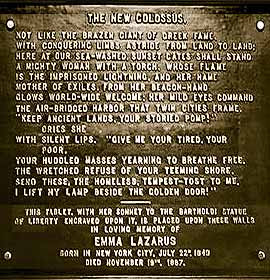
In 1883 Emma Lazarus wrote "The New Colossus" as a donation to a Statue of Liberty building fund. The poem concludes with these lines:
"Give me your tired, your poor, Your huddled masses yearning to breathe free, The wretched refuse of your teeming shore. Send these, the homeless, tempest-tossed to me, I lift my lamp beside the golden door!"
Since the fall of communism in Eastern and Southern Europe, China, and the former USSR, and the move from nationalism and socialism in India and much of Africa, huddles masses have been streaming to fast-expanding cities around the world. Lacking economic freedom and rule of law institutions, wealth creation in cities of the developing world is distorted and slower than it could be. But technology advances dramatically reducing the price of food, transportation, and clothing in recent decades partially compensate.
Edward Glaeser in "Triumph of the City" comments that there is "a lot to like" in the shanty towns of the developing world. They seem terrible places for homeless families, and for the homeless without families, but compared to what? Compared to the reality of rural poverty in the developing world, urban poverty turns out to be a step up for most. A Manhattan Institute review observes: "Even the worst cities—Kinshasa, Kolkata, Lagos—confer surprising benefits on the people who flock to them, including better health and more jobs than the rural areas that surround them."
It is very, very good news for the coming decades to have hundreds of millions of people on the path to prosperity that often begins by looking for work in cities. As labor becomes more plentiful, capital becomes relatively more scarce, and returns on capital will improve.
Paul Romer's "Charter Cities" proposals are among the many ideas for improving cities and speeding the development process. (Another is the Hernando de Soto's project to push governments to recognize the informal legal norms that operate among the poor.)
 These issues matter because the nationalist delusion confuses our thinking about international issues like Iraq, Libya, and Afghanistan. These are make-believe countries left over from colonial times. It is up to tribal people living in the cities within the borders of Libya to decide if they want a future democratic nation-state to continue to rob them, or whether a formal or informal alliance of cities might suit them better.
Nationalist scholars have long bewitched the public into thinking national governments are sources of stability and prosperity. Every crisis brings breathless media reporting on government officials meeting, then announcing plans, initiatives, and policies, pretending they know what is going on and what should be done about it. Congress, the Federal Reserve, and Federal regulatory agencies claim to be fine-tuning the economy, protecting workers and consumers from predatory business practices, and securing the general welfare. (And states run the schools to teach children civics and the history of wise governments.)
Not states but cities are the dynamic engines of economic development. People gathering together in cities create ever more opportunities for gains from trade, gains from specialization and division of labor, and gains from cross-fertilizing technologies and enterprises. Successful cities don't need to be as big or a prosperous as New York City or Boston or London, but they do need enough economic freedom to maneuver around local officials and entrenched elites. Cities like Cleveland and Detroit are burdened with thousands of regulations, licensing restrictions, arbitrary taxes, and corrupt city agencies, and now lack prosperous industries creating enough wealth to cover their tax and regulatory overhead.
A century and a half ago, New York City was as poor as any big city in today's developing world. A few months ago I read the Horatio Alger, Jr. novel, "Ragged Dick or Street Life in New York with the Bootblacks." This short novel is full of scenes of 1860s New York City street life. Though written for young people, Alger's novels on "Street Life in New York City" are realistic, fun, and fascinating. They tell stories that are true in all times and places: success is never certain, but progress depends on the everyday virtues of honesty, savings, and self-improvement.
And Alger's novels are full of scoundrels. Young americans would do well to learn more of the many deceptions and cons that surrounding them, always preying on those wishing too much for too little. Each day we hear get-rich-quick advertisements on talk radio (conservative talk radio especially), we read or glance at endless email scams (as we check or spam folders), and we regularly hear of multi-level marketing claims, stock and commodity promotions, and, of course, the misleading statements made daily by politicians. These are all tricks and deceptions similar to those practiced daily in 1860s New York City.
On the other side of the planet a century and a half later, the Chinese movie of rural China, "Not One Less" tells the touching story of a young girl teaching at a village school. The movie's realistic portrayal of rural poverty explains why tens of millions of Chinese migrate illegally to cities. The young teacher is told she will be paid only if no students run away to the nearby city.
The movie has a surprise at the end, and there is a key scene when the runaway boy is being driven back from the city and is interviewed by TV reporters. They ask him about city life (where he was alone and hungry before clearing tables at a small restaurant): "The city was wonderful," he says, smiling.
I wonder if Horation Alger novels are available in the developing world? I just finished "Ben, the Luggage Boy" and it includes footnotes where Alger cites newspaper articles or personal interviews with the real boys whose stories are part of the novel. I expected in Alger's novels to have fanciful rags to riches themes ("Horatio Alger stories"). But the five or six Alger novels I have read so far are more "rags to a new suit and stable income" stories. The key is always the decision to think ahead, and the decision to begin savings and self-improvement. Each young man is struggling upward, through a world of opportunities, but also through a world teaming with con-artists, thieves, bullies, and occasional friends.
Here is link for "Ben, the Luggage Boy" at Project Gutenberg: http://www.gutenberg.org/ebooks/28381
In this book a stubborn ten-year-old runs away to New York City after a fight with his father. Arriving in the city, he looks around for work and learns quickly from other street kids. Like a cat gone feral he gradually comes to get by making enough day-to-day, but also gradually forgetting his early home life and book-learning. He adjusts to enjoy life in the city, with its wide variety of work and fun, including occasional cheap cigars and evening entertainment. Later on an incident motivates "our hero" to reform and start savings.
What does all this have to do with investing? Well, consider the numbers: New York City in 1870 was home to over 1 million of which at least 500,000 were immigrants. In 2010, New York City is listed as having nearly 10 million, and 350 cities around the world have over one million residents. None are as economically free as New York City was in 1860, but now all have relatively cheap clothes, Internet, and cell-phones. Increased trade, travel, and international investment, combined with communications technologies, open the door for tens of thousands of new textile, light manufacturing, and service enterprises. Teenagers in rural India advise grandfathers in America how to operate their cell phones and computers (though partly because U.S. regulations make it difficult for U.S. teens to provide consulting services for pay). Communications technologies cheap in any city open windows to the world.
For energy or resource crisis, every disaster scenario fear-mongers can dream up (and politicians sometimes turn to reality), a hundred astounding advances stand ready to stimulate the mental energy and active innovation and collaboration of young people around the world. Millions of young people have only just arrived in a city, and their eyes, ears, and minds are just opening as they tap into the the worldwide streams of new ideas. Every day around the world, an 1860s version of New York City lifts a lamp for the "huddled masses yearning to breathe free" after endless generations of rural poverty.
Stefan Jovanovich comments:
A minor quibble: the immigrant populations in New York, San Francisco and the other American cities in 1870 were almost all adults. Passage to America in 1870 was still expensive enough that it had to be worked for; few families in Ireland, Italy and Poland could then afford the cost of bringing the kiddies. That came later with the acceleration of the steam engine revolution; that order of magnitude expansion in the efficiency of steam propulsion reduced ship and rail transport costs to the point that entire villages would empty overnight once the news reached them that a month's wages could buy a ticket to New York and beyond. Lazarus' poem became famous precisely because it was so prescient a prediction.
Comments
Archives
- October 2026
- September 2026
- August 2026
- July 2026
- June 2026
- May 2026
- April 2026
- March 2026
- February 2026
- January 2026
- December 2025
- November 2025
- October 2025
- September 2025
- August 2025
- July 2025
- June 2025
- May 2025
- April 2025
- March 2025
- February 2025
- January 2025
- December 2024
- November 2024
- October 2024
- September 2024
- August 2024
- July 2024
- June 2024
- May 2024
- April 2024
- March 2024
- February 2024
- January 2024
- December 2023
- November 2023
- October 2023
- September 2023
- August 2023
- July 2023
- June 2023
- May 2023
- April 2023
- March 2023
- February 2023
- January 2023
- December 2022
- November 2022
- October 2022
- September 2022
- August 2022
- July 2022
- June 2022
- May 2022
- April 2022
- March 2022
- February 2022
- January 2022
- December 2021
- November 2021
- October 2021
- September 2021
- August 2021
- July 2021
- June 2021
- May 2021
- April 2021
- March 2021
- February 2021
- January 2021
- December 2020
- November 2020
- October 2020
- September 2020
- August 2020
- July 2020
- June 2020
- May 2020
- April 2020
- March 2020
- February 2020
- January 2020
- December 2019
- November 2019
- October 2019
- September 2019
- August 2019
- July 2019
- June 2019
- May 2019
- April 2019
- March 2019
- February 2019
- January 2019
- December 2018
- November 2018
- October 2018
- September 2018
- August 2018
- July 2018
- June 2018
- May 2018
- April 2018
- March 2018
- February 2018
- January 2018
- December 2017
- November 2017
- October 2017
- September 2017
- August 2017
- July 2017
- June 2017
- May 2017
- April 2017
- March 2017
- February 2017
- January 2017
- December 2016
- November 2016
- October 2016
- September 2016
- August 2016
- July 2016
- June 2016
- May 2016
- April 2016
- March 2016
- February 2016
- January 2016
- December 2015
- November 2015
- October 2015
- September 2015
- August 2015
- July 2015
- June 2015
- May 2015
- April 2015
- March 2015
- February 2015
- January 2015
- December 2014
- November 2014
- October 2014
- September 2014
- August 2014
- July 2014
- June 2014
- May 2014
- April 2014
- March 2014
- February 2014
- January 2014
- December 2013
- November 2013
- October 2013
- September 2013
- August 2013
- July 2013
- June 2013
- May 2013
- April 2013
- March 2013
- February 2013
- January 2013
- December 2012
- November 2012
- October 2012
- September 2012
- August 2012
- July 2012
- June 2012
- May 2012
- April 2012
- March 2012
- February 2012
- January 2012
- December 2011
- November 2011
- October 2011
- September 2011
- August 2011
- July 2011
- June 2011
- May 2011
- April 2011
- March 2011
- February 2011
- January 2011
- December 2010
- November 2010
- October 2010
- September 2010
- August 2010
- July 2010
- June 2010
- May 2010
- April 2010
- March 2010
- February 2010
- January 2010
- December 2009
- November 2009
- October 2009
- September 2009
- August 2009
- July 2009
- June 2009
- May 2009
- April 2009
- March 2009
- February 2009
- January 2009
- December 2008
- November 2008
- October 2008
- September 2008
- August 2008
- July 2008
- June 2008
- May 2008
- April 2008
- March 2008
- February 2008
- January 2008
- December 2007
- November 2007
- October 2007
- September 2007
- August 2007
- July 2007
- June 2007
- May 2007
- April 2007
- March 2007
- February 2007
- January 2007
- December 2006
- November 2006
- October 2006
- September 2006
- August 2006
- Older Archives
Resources & Links
- The Letters Prize
- Pre-2007 Victor Niederhoffer Posts
- Vic’s NYC Junto
- Reading List
- Programming in 60 Seconds
- The Objectivist Center
- Foundation for Economic Education
- Tigerchess
- Dick Sears' G.T. Index
- Pre-2007 Daily Speculations
- Laurel & Vics' Worldly Investor Articles
