Nov
25
Betting on Farm Land, from Jeff Watson
November 25, 2009 |
 Here's a good article from Fortune/CNN-Money about the resilience of the agricultural real estate market. One never thinks much about agricultural real estate, but the value of the land reflects the amount a farmer can borrow to run his business and ability to put in his crops. Agricultural land has suffered far less in the recent downturn than residential and commercial real estate markets. Since 1945 the average size of a farm has increased from 213 to 461 acres, but yields have increased three to four fold. Still, the increased yields are working against the income of the farmer with each 1% increase in yield resulting in a 4.5% decrease in prices at the farm gate.
Despite this increase in size and productivity, the market in acreage is cognizant of the fact that we're losing an area of agricultural production the size of Ohio and Pennsylvania every 30 years, and our population is trending up. The bottom line is that the number of farms in the US is at an all time low, and that number is trending downward. The size of the farms are getting bigger, yields are going up, yet the arable amount of agriculture land is approaching a historical low basis the total population. We're down to 0.6 acres of arable farm land per person and that number is shrinking drastically.
The market is aware of these trends and the invisible hand is keeping the prices in agricultural land more in line with reality than the other real estate markets. Most farm land is sold without a broker and reporting of exact prices is difficult, as only the county assessors are privy to this most sensitive of information. Still, the broad trend of prices is up, and many are placing huge bets on the rise. Farmers are mostly close-mouthed, and asking a farmer how many acres he owns or how many head of cattle he has is tantamount to asking him how much money he has in the bank. Simply not good manners.
Jeff Watson, surfer, speculator and art connoisseur, blogs as MasterOfTheUniverse.
Scott Brooks respectfully disagrees:
I have to respectfully disagree with much of what Jeff has written here, though. He is right that the the farming landscape (both figuratively and literally) has changed immensely and keeps changing over time.
But as to farmers not wanting people to know how much land or how much cattle or how much crops they're running, that may be true, but it's certainly not like how much money they have in the bank. You're money in the bank can be kept a secret, but the amount of land you have is pretty much wide open for the world to see. I can go to the FSA office and use their computer system to draw boundaries around a person's property and it will tell me how many acres they have….plus, anyone who lives in the area for any period of time knows how much land farmer Jones has. As to how many heads of cattle one runs, that's open for the world to see, too. And on top of that, if you ask a rancher how many head of cattle they are running, it's been my experience that they will usually tell you.
Most farmers that I know do not have to borrow against their land to run their operations. The FSA office, the local grain elevator, or the local farmers bank will almost always loan money to farmers to grow their crops. I know some pretty awful farmers and they still get the inputs fronted to them by these entities.
Farm land pricing is very regional in nature and depends on the type of land. Bottom land in the farming country is very valuable in terms of income. Hay ground, pasture and non-bottom crop ground is probably next in pecking order. Land in my area of MO, is priced low compared to land two counties over and much lower than land two counties north in Iowa. Scrub land, the land that was of little or no value a few years ago, is now very valuable as hunters (like myself) come in and want to buy up property for recreation.
The little farmer with 461 acres is not what you think he is. Take me and my 522 acres. Based on the standards of the study cited, I am above average in terms of farm size…..but…..I do NOT farm my land (I don't even live on my farm). So what this changes is perspective. I may not farm my land, but it does get farmed. What happens is a farmer (who owns around 750 acres within their family) rents my land for farming purposes (bottom land for crops, grasslands for hay, and other lands for spreading excess manure from his pig operation).
You see, a farmer usually can not make much of a living off 461 acres. So real farmers (non-corporate farmers) rent up a bunch of land to farm. My farmer rents my land and a bunch of other land so that he has agricultural control over ~ 3000 - 3500 acres of land (3,200 acres is the equivalent of 5 square miles of land……640 acres is equal to 1 square mile). The family can run crops, do contour farming, hill top farming, cut hay, run cattle, build hog barns, and many other activities in order to make money.
As to the pricing of crops, I don't believe that we'll actually know the value of the crop (grain or cattle) as long as the government keeps subsidizing their values.
The discussion of subsidies is a whole other post that I don't have time to go into, but suffice it to say, a book could be written on the subject (and several probably have). I'll just say this final thought about them. It is my opinion that the government is like a drug pusher, that once they get their hooks in you with the drug of subsidies, you can't get off them.
As to farm land prices being in line with reality goes……….. This is just false. My farm has quadrupled in value since I bought it 10 years ago, and I've had offers to purchase it for 7 times what I paid for as recently as 3 years ago.
Farm prices skyrocketed in the boom, but they also have not suffered as much as other real estate in the downturn. Most farms in my area, quadrupled in value over the last ten years. They actually quadrupled in 7 years and have remained fairly steady over the last 3. My farm was an exception to the rule due to the fact that I ran a Quality Deer Management Program on my farm and had 7 years of records and pictures of our progress. Due to the work I did, wealthy hunters from out of state were inquiring about purchasing my land for hunting purposes. Those offers have mostly dried up due to the economic downturn.
Obviously there is more to write on farming, but I have a 4 hour and 15 minute drive home from my farm (been up here hunting for the last two weeks) back to my home in St. Louis, so I'm gonna cut it off here.
But I will say this before I sign off. Everything that I have said is very much regionally based. Remember, farming is VERY regional. So what I've written here may not be germane to what is happening in northern Iowa.
So with that being said, what Jeff Watson has written may be true overall, but it's not in my area……so take what I've written with the appropriate grain of salt.
Bruno Ombreux adds:
Here in France a state agency called SAFER records land sales. Their database holds more than 6 million transactions starting in 1970. They have less exhaustive data from 1950.
Unfortunately their database is on a pay-per-use access. But browsing it one can conclude:
- as Scott said, prices are very location dependent. There are literally thousands of micro-markets. Poor grassland in remote locations can be acquired for less than 1000 euros/hectare. Some wine land in Burgundy can fetch several million euros/hectare. (1 hectare = 2.47 acres).
- when one looks at the average of all transactions, land is a very good inflation hedge.
In real terms, prices today are a bit higher than in 1950. Land preserved its value through the inflationary 60s and 70s!
Actually, it looks like land is a leveraged inflation bet, with asymmetric payoffs around a CPI threshold. Above the threshold, one gain more than inflation, below the threshold, one loses in real terms.
On this long-term chart, there are 3 periods:
- 1950-1979: land prices gained in real terms. They increased faster than inflation. - 1980-1995: land prices decreased in real terms, while there was low but still positive inflation. - 1996-present: prices are gaining again in real term, by more than official CPI.
Stefan Jovanovich adds:
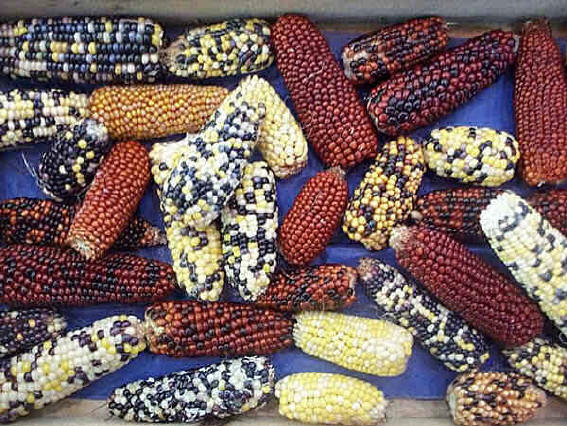 The settlers in Plymouth had experience in growing the cereals that were the major foodstuffs for Europeans in the 17th century: Barley, Oats, Rye, and Wheat. It strikes me as highly improbable that the one edible grass born in the Americas - corn (maize) - would have been so surprising to the Plymouth colonists that, but for the help of the Wampanoags, they would not have known what to do with it. The colonists called it "Indian corn" because it was so different from the types of corns (or grains) they were used to growing and eating; but the name itself suggests that they hardly needed instruction in planting (their colony was named The Plimouth Plantation).
Here is Bradford's version of how "Indian corn" was discovered:
"They also found two of the Indian's houses covered with mats, and some of their implements in them; but the people had run away and could not be seen. They also found more corn, and beans of various colours. These they brought away, intending to give them full satisfaction (repayment) when they should meet with any of them, - as about six months afterwards they did… And it is to be noted as a special providence of God, and a great mercy to this poor people, that they thus got seed to plant corn the next year, or they might have starved; for they had none, nor any likelihood of getting any, till too late for the planting season."
Comments
Archives
- October 2026
- September 2026
- August 2026
- July 2026
- June 2026
- May 2026
- April 2026
- March 2026
- February 2026
- January 2026
- December 2025
- November 2025
- October 2025
- September 2025
- August 2025
- July 2025
- June 2025
- May 2025
- April 2025
- March 2025
- February 2025
- January 2025
- December 2024
- November 2024
- October 2024
- September 2024
- August 2024
- July 2024
- June 2024
- May 2024
- April 2024
- March 2024
- February 2024
- January 2024
- December 2023
- November 2023
- October 2023
- September 2023
- August 2023
- July 2023
- June 2023
- May 2023
- April 2023
- March 2023
- February 2023
- January 2023
- December 2022
- November 2022
- October 2022
- September 2022
- August 2022
- July 2022
- June 2022
- May 2022
- April 2022
- March 2022
- February 2022
- January 2022
- December 2021
- November 2021
- October 2021
- September 2021
- August 2021
- July 2021
- June 2021
- May 2021
- April 2021
- March 2021
- February 2021
- January 2021
- December 2020
- November 2020
- October 2020
- September 2020
- August 2020
- July 2020
- June 2020
- May 2020
- April 2020
- March 2020
- February 2020
- January 2020
- December 2019
- November 2019
- October 2019
- September 2019
- August 2019
- July 2019
- June 2019
- May 2019
- April 2019
- March 2019
- February 2019
- January 2019
- December 2018
- November 2018
- October 2018
- September 2018
- August 2018
- July 2018
- June 2018
- May 2018
- April 2018
- March 2018
- February 2018
- January 2018
- December 2017
- November 2017
- October 2017
- September 2017
- August 2017
- July 2017
- June 2017
- May 2017
- April 2017
- March 2017
- February 2017
- January 2017
- December 2016
- November 2016
- October 2016
- September 2016
- August 2016
- July 2016
- June 2016
- May 2016
- April 2016
- March 2016
- February 2016
- January 2016
- December 2015
- November 2015
- October 2015
- September 2015
- August 2015
- July 2015
- June 2015
- May 2015
- April 2015
- March 2015
- February 2015
- January 2015
- December 2014
- November 2014
- October 2014
- September 2014
- August 2014
- July 2014
- June 2014
- May 2014
- April 2014
- March 2014
- February 2014
- January 2014
- December 2013
- November 2013
- October 2013
- September 2013
- August 2013
- July 2013
- June 2013
- May 2013
- April 2013
- March 2013
- February 2013
- January 2013
- December 2012
- November 2012
- October 2012
- September 2012
- August 2012
- July 2012
- June 2012
- May 2012
- April 2012
- March 2012
- February 2012
- January 2012
- December 2011
- November 2011
- October 2011
- September 2011
- August 2011
- July 2011
- June 2011
- May 2011
- April 2011
- March 2011
- February 2011
- January 2011
- December 2010
- November 2010
- October 2010
- September 2010
- August 2010
- July 2010
- June 2010
- May 2010
- April 2010
- March 2010
- February 2010
- January 2010
- December 2009
- November 2009
- October 2009
- September 2009
- August 2009
- July 2009
- June 2009
- May 2009
- April 2009
- March 2009
- February 2009
- January 2009
- December 2008
- November 2008
- October 2008
- September 2008
- August 2008
- July 2008
- June 2008
- May 2008
- April 2008
- March 2008
- February 2008
- January 2008
- December 2007
- November 2007
- October 2007
- September 2007
- August 2007
- July 2007
- June 2007
- May 2007
- April 2007
- March 2007
- February 2007
- January 2007
- December 2006
- November 2006
- October 2006
- September 2006
- August 2006
- Older Archives
Resources & Links
- The Letters Prize
- Pre-2007 Victor Niederhoffer Posts
- Vic’s NYC Junto
- Reading List
- Programming in 60 Seconds
- The Objectivist Center
- Foundation for Economic Education
- Tigerchess
- Dick Sears' G.T. Index
- Pre-2007 Daily Speculations
- Laurel & Vics' Worldly Investor Articles
