Nov
28
Richard Fortman Obituary, from Alan Millhone
November 28, 2008 |
 From The London Times:
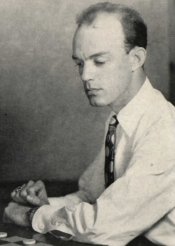
Richard Fortman: draughts master
Fortman: he took a keen interest in man v. computer draughts contests
Richard Fortman was the most prolific author in the history of draughts, as well as the game’s leading annotator since 1946, a world champion at postal play and a master player for 70 years. Bob Newell, the doyen of internet draughts editors, called him “the last of the legendary checkerists”.
Richard Lee Fortman, known as “RLF” to all enthusiasts, was born in Springfield, Illinois, in 1915. At the age of 15 he was introduced to draughts — called checkers in the US — by his father, a telegraph operator who used to play the game to keep himself awake during lengthy shifts.
For a year father beat son mercilessly, but once the teenager had acquired a book from the local library — Chess & Checkers, written by the chess master Edward Lasker — and studied it assiduously, the tables were turned for good. “Using dead men’s brains” was tantamount to cheating, according to Fortman Sr, and their playing sessions came to an abrupt halt.
At that time Springfield had a thriving chess and checkers club, and under the tutelage of Harland Richards, a state champion, Fortman made rapid strides. After coming third in his first Illinois state tournament, in 1933, he performed creditably in a practice session against Edwin Hunt, a world title contender, in 1934, and established his master status in 1938 by winning the Trans-Mississippi tournament.
Playing in all 26 Illinois state tournaments, he won six, the first in 1950 and the last in 1978, and invariably came in the top four. More significantly, he made creditable showings in the masters section of the 1948 and 1958 US national tournaments, and in 1973 and 1983 he was in serious contention for inclusion in the mighty US team that slaughtered the UK and Ireland contingent in the third and fourth international matches.
Despite these achievements, he was to find greater fame as a postal player. George Bass, a renowned exponent who regularly played as many as 500 games simultaneously, was the first to make Fortman aware of its esoteric charms, in 1934, and he quickly found it invaluable for developing his analytical powers and encouraging the exploration of original lines of attack and defence.
Disappointed by a 1-0-11 draws defeat in a match for the world postal championship with Alf Huggins in 1964, Fortman persisted, and in 1986 finally attained his goal. Demonstrating the tremendous scope of this branch of the game, in which players have 72 hours to formulate their replies and access to extensive libraries, in 1990 he heavily defeated Dennis Cayton, a most worthy challenger, 9-0 and 7 draws to retain the title.
Proving that success in one field does not invariably lead to success in another, he also defeated the world crossboard champion, Derek Oldbury, 5-3 and 16 draws in a series of postal matches played around this time.
Remarkably, it was as an annotator that he was to find his true niche. He made his first contribution to the literature in 1935, and followed it with a highly valued series of monthly articles in Wood’s Checker Player in 1938-39, he established himself at the forefront of this field with his annotations to the 11th American Checker Association tournament games in 1946.
He provided annotations for a host of national tournaments staged by the American Checker Federation, several world championships, at which he was often the referee, and many of the inter-district postal tournament booklets. In 1954, 1956 and 1958 he singlehandedly annotated the postal matches between the US and Great Britain, and in 1973, 1983 and 1995 he repeated the operation for the crossboard matches contested between the US and the UK and Ireland. He also made extensive contributions to all the leading magazines of the day, including Elam’s Checker Board, California Checker Chatter, Midwest Checkers, Keystone Checker Review, the 6th District Newsletter, The Square World and English Draughts Journal.
Developing a remarkable indexing system, he managed to attain the demanding standards expected of an annotator by Oldbury: “He must be combined historian, essayist, psychologist, philosopher and prophet — and it were well he could play draughts too.” Moreover, he blended all these talents with entertaining storytelling and a capacity for relevance.
A close friendship with the celebrated Dr Marion Tinsley, one of the leading mind-sport competitors of all time, had an integral part to play in Fortman’s life, and spanned the period from 1946 until Tinsley’s death in 1995. While Tinsley “mined gold nuggets” from Fortman’s vast collection of postal games and correspondence, he benefited enormously from their extended practice sessions. Soon after one particularly bruising encounter in 1981 he went on to win an important tournament in a breeze — “After Marion, anything’s easy,” he remarked.
Like many draughts players, Fortman had a more than passing interest in chess, playing at a competent level and acquiring a library of about 300 books, mainly dealing with the game’s history and great players. While granting the sister game complete respect, he was, however, quite willing to challenge any chess players who chose to pronounce inaccurately on draughts.
When one famous English chess writer suggested that losing a game of draughts did not involve the same sense of personal loss as losing a game of chess, Fortman was aghast. He pointed out that some of his losses were still painful 50 years on and, tongue somewhat in cheek, declared that he “played chess for fun and checkers for blood”.
At the first Computer Olympiad staged in London in 1989, Chinook, programmed by a team led by Jonathan Schaeffer, at the University of Alberta, arrived on the scene, and quickly gave notice of its great ability. It was evident to Fortman that the days of the analyst and postal player were numbered, but he was philosophical about it. Recognising that such programs were a vehicle for demonstrating the beauty and profundity of draughts to a completely new audience, and would guarantee its future as a game and intellectual art form, he took a keen interest in the short-lived man-machine contests, and accorded Chinook due credit for its achievements.
Interestingly, Fortman’s seminal opus, Basic Checkers, played a crucial role in the landmark match between Tinsley and Chinook, staged at the Park Lane Hotel in London in 1992. The seven books in this remarkable series marked Fortman out for immortality and won the praise of players of all standards. Naturally, it was not perfect, however, and a dubious variation found its way into Chinook’s opening database. Cue the opening victory for Tinsley in his crushing defeat of the silicon monster, and thunderous applause from the spectators.
As an interlocutor for the professional blindfold exhibitioners Newell Banks and William Ryan in the 1930s and 1940s, Fortman realised that any attempt to make a living at the game would be precarious at best. For him, it was a hobby, which he miraculously fitted in around his work — as a warehouse foreman for the Panhandle Eastern Pipeline Company in Illinois — and family commitments. He was essentially an amateur, requesting only expenses for his work; the beauty of the game was its own reward. “A good game of checkers is like a great building — every brick fits right into place and, when the architect has drawn his plans correctly, the finished product is something to admire and enjoy,” he said.
With the advent of the internet, Fortman’s voluminous letters gave way to e-mails, and in his last few years he confined his contests to cyberspace. Of master strength right up until his death, he was always a most dangerous opponent
and, more importantly, regarded by the entire fraternity as one of the all-time greats.
He is survived by Faye, his wife of 58 years, and their son and daughter.
Richard Fortman, draughts master, was born on February 8, 1915. He died on November 8, 2008, aged 93.
Victor Niederhoffer writes:
I was doing a hand study of what happens when a trade hasn't worked recently, and would be bullish or bearish, but this is contradicted by the exact similarity of today with the gestalt. In doing it, I read about Richard Fortman who just passed away at 93 and was the greatest annotator of the game, and postal champion. There was a reference to his great and ingenious filing system which enabled him to annotate all games perfectly. I realized that the hand study I was doing was very similar to the manuscript work that all good checker players did with various variations off trunk, and computer updates from Chinook from the good old days. No doubt that the exacting game of checkers is a very good training for market systemists.
Comments
Archives
- October 2026
- September 2026
- August 2026
- July 2026
- June 2026
- May 2026
- April 2026
- March 2026
- February 2026
- January 2026
- December 2025
- November 2025
- October 2025
- September 2025
- August 2025
- July 2025
- June 2025
- May 2025
- April 2025
- March 2025
- February 2025
- January 2025
- December 2024
- November 2024
- October 2024
- September 2024
- August 2024
- July 2024
- June 2024
- May 2024
- April 2024
- March 2024
- February 2024
- January 2024
- December 2023
- November 2023
- October 2023
- September 2023
- August 2023
- July 2023
- June 2023
- May 2023
- April 2023
- March 2023
- February 2023
- January 2023
- December 2022
- November 2022
- October 2022
- September 2022
- August 2022
- July 2022
- June 2022
- May 2022
- April 2022
- March 2022
- February 2022
- January 2022
- December 2021
- November 2021
- October 2021
- September 2021
- August 2021
- July 2021
- June 2021
- May 2021
- April 2021
- March 2021
- February 2021
- January 2021
- December 2020
- November 2020
- October 2020
- September 2020
- August 2020
- July 2020
- June 2020
- May 2020
- April 2020
- March 2020
- February 2020
- January 2020
- December 2019
- November 2019
- October 2019
- September 2019
- August 2019
- July 2019
- June 2019
- May 2019
- April 2019
- March 2019
- February 2019
- January 2019
- December 2018
- November 2018
- October 2018
- September 2018
- August 2018
- July 2018
- June 2018
- May 2018
- April 2018
- March 2018
- February 2018
- January 2018
- December 2017
- November 2017
- October 2017
- September 2017
- August 2017
- July 2017
- June 2017
- May 2017
- April 2017
- March 2017
- February 2017
- January 2017
- December 2016
- November 2016
- October 2016
- September 2016
- August 2016
- July 2016
- June 2016
- May 2016
- April 2016
- March 2016
- February 2016
- January 2016
- December 2015
- November 2015
- October 2015
- September 2015
- August 2015
- July 2015
- June 2015
- May 2015
- April 2015
- March 2015
- February 2015
- January 2015
- December 2014
- November 2014
- October 2014
- September 2014
- August 2014
- July 2014
- June 2014
- May 2014
- April 2014
- March 2014
- February 2014
- January 2014
- December 2013
- November 2013
- October 2013
- September 2013
- August 2013
- July 2013
- June 2013
- May 2013
- April 2013
- March 2013
- February 2013
- January 2013
- December 2012
- November 2012
- October 2012
- September 2012
- August 2012
- July 2012
- June 2012
- May 2012
- April 2012
- March 2012
- February 2012
- January 2012
- December 2011
- November 2011
- October 2011
- September 2011
- August 2011
- July 2011
- June 2011
- May 2011
- April 2011
- March 2011
- February 2011
- January 2011
- December 2010
- November 2010
- October 2010
- September 2010
- August 2010
- July 2010
- June 2010
- May 2010
- April 2010
- March 2010
- February 2010
- January 2010
- December 2009
- November 2009
- October 2009
- September 2009
- August 2009
- July 2009
- June 2009
- May 2009
- April 2009
- March 2009
- February 2009
- January 2009
- December 2008
- November 2008
- October 2008
- September 2008
- August 2008
- July 2008
- June 2008
- May 2008
- April 2008
- March 2008
- February 2008
- January 2008
- December 2007
- November 2007
- October 2007
- September 2007
- August 2007
- July 2007
- June 2007
- May 2007
- April 2007
- March 2007
- February 2007
- January 2007
- December 2006
- November 2006
- October 2006
- September 2006
- August 2006
- Older Archives
Resources & Links
- The Letters Prize
- Pre-2007 Victor Niederhoffer Posts
- Vic’s NYC Junto
- Reading List
- Programming in 60 Seconds
- The Objectivist Center
- Foundation for Economic Education
- Tigerchess
- Dick Sears' G.T. Index
- Pre-2007 Daily Speculations
- Laurel & Vics' Worldly Investor Articles
