Jan
19
Shipping Container Homes, from Bo Keely
January 19, 2022 |
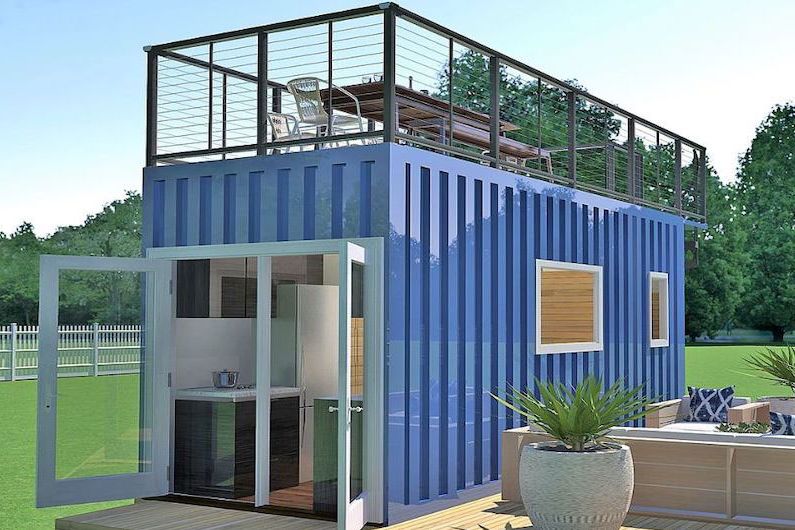
I’ve reviewed elaborate videos and glossy books on shipping container homes at the high scale end. It’s far simpler for cheap. I’ve lived in two containers in different valleys and it’s as easy as going to the bread aisle at the grocery store.
You go to the vendor – around the Salton Sea it’s the Calpatria hay store or trucking companies near the border. You pick out a used one from the lot, fork over $1-2000 that includes transportation, and lead the flatbed with your new home out to your place. The driver slides it onto pre-laid RR ties, you put a lock on the door, and celebrate the new home.
The biggest advantages are it’s difficult to rob, arson, or blow over like in the Three Little Pigs, and without building codes since it’s on skids.
I had no idea on moving into my first container in 1999 on the Sonora that I was looking into the architectural future. I installed a loft with waterbed, office with a solar powered laptop, and garage beneath a trap door. Chilled air rose from the garage through stovepipes into the interior and vented hot air out the roof. A satellite dish pulled in the Nature and History channels on an upside-down B&W TV. A pet packrat was a muse and road partner in search of gold in abandoned mining camps that it had been trained to retrieve. We drove two hours to sub-teach when mining was poor.
Then, in 2013, I owned the first container home in Slab City and am as content as a clam. There are three more now, the nearest scavenged and dragged from a bombing range target and riddled with hundreds of high-caliber holes. The second was towed from the Mexican border and is hemmed with painted flowers. And, the third was trucked from Los Angeles and converted into a church.
I thought I was on the vanguard of a would craze that is verified.
In the South Africa capital of Johannesburg, thousands of brightly colored boxes piled on and around each other, are stacked and re-stacked, and hauled away on trucks and freight trains, as homeowners decide where they want to live or sell. In Sudan, a prison is built of old containers slammed together. That’s how secure they are. Now container architecture is a hip fad in European cities for offices and homes. London has one of the biggest housing projects in the world of containers, and Amsterdam has the largest student village with over 1000 containers.
In USSR, shipping containers are used for market stalls and warehouses. Southeast Asia bazars are typically double-stacked containers. New Zealand earthquake rocked malls were rebuilt of shipping containers in the business districts. A Tokyo company provides container modules for multi architectural use. Prefab container homes are bomb across China. Google barges ply the seven seas with superstructures of stacked containers.
Shipping containers were invented in the USA in 1953 when trucking businessman Malcolm McLean gave a lot of thought when, frustrated by the glacial pace of overnight freight transport on the American highway system, he fashioned a set of stackable aluminum boxes and outfitted a decommissioned tanker ship to shuttle boxes of cargo up-and-down the eastern seaboard. In the next two decades, it spread over the oceans to other continents to radically change the face of global shipping. No longer does cargo have to be loaded and unloaded by a cadre of dock workers. Suddenly, the major cost of getting consumer goods around the world efficiently dissolved, and with it, many millions of boxes have been built and shipped, trucked, and trained, and now lived in.
Today, at any given moment, there are about 20 million more bobbing across the ocean or sitting in ports around the world. Union Pacific trains slide them three miles from my Conex home, and hobos know that a ride on a container train is a cannonball to any destination.
The sky is the limit. I think shipping containers will advance to fill into our architectural dreams for city projects, apartments, condos, hotels, and single housing units. Shipping containers are legal homes in California and elsewhere. They are cheap, built like a tank, fit the Golden Ratio, fast to construct, without codes, with high resale value, and can be moved as your heart pleases.
Alex Castaldo comments:
I have never lived in a container, but I would not recommend it. They lack the natural insulation properties of a wood or brick home, so they are chilly in winter and hot in summer. There is also the problem of no windows….
Larry Williams responds:
They work well here in the usvi where folks put 2-3 together for L or U shaped home.
Henry Gifford expands:
A steel box leaks almost no air unless doors and windows are installed in a sloppy way.
In rare cases, a building's heating and cooling loads are actually calculated before equipment is chosen. The job involves lots of measuring, and some simple math in the case of heating, and some fancier calculations for cooling loads.
Having calculated the heating and cooling loads of each room in many buildings over the years, I have found that very roughly half the peak and annual heating loads for a building are attributable to cold outdoor air leaking through the building, about one fourth is heat transmitted (conducted and radiated) out the walls and roof, with the other one fourth going out the closed windows. This is a rough generalization, but about equally true for old, poorly insulated buildings and new, very well insulated and airtightened buildings.
So, the lack of air leaking through a shipping container goes a long way toward comfort - it eliminates maybe half the heating load. And without the usual chemical soup of construction materials (glues, sealants, caulk, paint) in a normal house, the need for ventilation for health is reduced to a smaller amount. As few houses, old or new, are ventilated (few people open windows, as they also admit cold air, hot air, humidity, insects, rain, snow, and criminals), reducing the need for ventilation is a nice thing.
One way to explain the leakiness of normal construction is to point out that a person can hold a concrete block to their mouth (or a piece of a block) and breath in and out at a rate sufficient to satisfy the needs of an adult. I don't recommend vigorous exercise while trying this, but the point is that normal, sturdy looking materials leak a surprisingly large amount of air. The leaking is worse at connections between materials, and even worse than that at connections between assemblies (walls to roof, etc.).
Cooling loads are much more complicated mathematically because of the effects of humidity on indoor comfort, and because a cooling load calculation has to account for solar gain into windows (usually the largest part of a cooling load for a house), internal gains of heat and humidity from cooking, lights, showering, breathing, etc. Numbers for heat and humidity output from a bowl of soup or a lab mouse can be looked up, and are useful for calculating the cooling load on a restaurant or a medical lab.
The total lack of windows, or lack of numerous large windows in a shipping container goes a long way to keeping a shipping container comfortable during the summer.
Bo Keely responds:
You make the mundane details of buildings interesting, and this more than usual. The only air leaks in my container are fork holes where they loaded it over the years. This brought the price down to my wallet. I choose to not plug them near the roof as they vent the air in the summer. Where there is air, there is sound. My almost hermetically sealed box is soundproof. Also, roaches and rats can't get in. These are things money can't buy in Manhattan. I've never been so content.
Comments
Archives
- October 2026
- September 2026
- August 2026
- July 2026
- June 2026
- May 2026
- April 2026
- March 2026
- February 2026
- January 2026
- December 2025
- November 2025
- October 2025
- September 2025
- August 2025
- July 2025
- June 2025
- May 2025
- April 2025
- March 2025
- February 2025
- January 2025
- December 2024
- November 2024
- October 2024
- September 2024
- August 2024
- July 2024
- June 2024
- May 2024
- April 2024
- March 2024
- February 2024
- January 2024
- December 2023
- November 2023
- October 2023
- September 2023
- August 2023
- July 2023
- June 2023
- May 2023
- April 2023
- March 2023
- February 2023
- January 2023
- December 2022
- November 2022
- October 2022
- September 2022
- August 2022
- July 2022
- June 2022
- May 2022
- April 2022
- March 2022
- February 2022
- January 2022
- December 2021
- November 2021
- October 2021
- September 2021
- August 2021
- July 2021
- June 2021
- May 2021
- April 2021
- March 2021
- February 2021
- January 2021
- December 2020
- November 2020
- October 2020
- September 2020
- August 2020
- July 2020
- June 2020
- May 2020
- April 2020
- March 2020
- February 2020
- January 2020
- December 2019
- November 2019
- October 2019
- September 2019
- August 2019
- July 2019
- June 2019
- May 2019
- April 2019
- March 2019
- February 2019
- January 2019
- December 2018
- November 2018
- October 2018
- September 2018
- August 2018
- July 2018
- June 2018
- May 2018
- April 2018
- March 2018
- February 2018
- January 2018
- December 2017
- November 2017
- October 2017
- September 2017
- August 2017
- July 2017
- June 2017
- May 2017
- April 2017
- March 2017
- February 2017
- January 2017
- December 2016
- November 2016
- October 2016
- September 2016
- August 2016
- July 2016
- June 2016
- May 2016
- April 2016
- March 2016
- February 2016
- January 2016
- December 2015
- November 2015
- October 2015
- September 2015
- August 2015
- July 2015
- June 2015
- May 2015
- April 2015
- March 2015
- February 2015
- January 2015
- December 2014
- November 2014
- October 2014
- September 2014
- August 2014
- July 2014
- June 2014
- May 2014
- April 2014
- March 2014
- February 2014
- January 2014
- December 2013
- November 2013
- October 2013
- September 2013
- August 2013
- July 2013
- June 2013
- May 2013
- April 2013
- March 2013
- February 2013
- January 2013
- December 2012
- November 2012
- October 2012
- September 2012
- August 2012
- July 2012
- June 2012
- May 2012
- April 2012
- March 2012
- February 2012
- January 2012
- December 2011
- November 2011
- October 2011
- September 2011
- August 2011
- July 2011
- June 2011
- May 2011
- April 2011
- March 2011
- February 2011
- January 2011
- December 2010
- November 2010
- October 2010
- September 2010
- August 2010
- July 2010
- June 2010
- May 2010
- April 2010
- March 2010
- February 2010
- January 2010
- December 2009
- November 2009
- October 2009
- September 2009
- August 2009
- July 2009
- June 2009
- May 2009
- April 2009
- March 2009
- February 2009
- January 2009
- December 2008
- November 2008
- October 2008
- September 2008
- August 2008
- July 2008
- June 2008
- May 2008
- April 2008
- March 2008
- February 2008
- January 2008
- December 2007
- November 2007
- October 2007
- September 2007
- August 2007
- July 2007
- June 2007
- May 2007
- April 2007
- March 2007
- February 2007
- January 2007
- December 2006
- November 2006
- October 2006
- September 2006
- August 2006
- Older Archives
Resources & Links
- The Letters Prize
- Pre-2007 Victor Niederhoffer Posts
- Vic’s NYC Junto
- Reading List
- Programming in 60 Seconds
- The Objectivist Center
- Foundation for Economic Education
- Tigerchess
- Dick Sears' G.T. Index
- Pre-2007 Daily Speculations
- Laurel & Vics' Worldly Investor Articles
