Jul
14
Elvis InfoNet Interviews Bo Keely on New Book, from Dailyspec
July 14, 2016 |
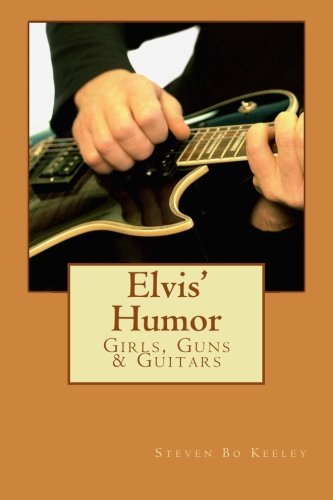 EIN: Bo, thanks so much for taking time to talk to EIN. Before we discuss your new book, Elvis' Humor Girls, Guns & Guitars, I'd like to find out more about you as a person. You have led, and continue to lead, an incredibly interesting and eclectic life. Tell us a little about your life travels.
BK: If you follow Buck the dog in Jack London's Call of the Wild then you follow my life travels. A comfortable loving upbringing in suburban Idaho, into the freight boxcars across America, and on to 105 countries the hard way – under a backpack – until yielding to the Call of the Wild. A decade ago I dug a burrow in the Sonora, USA desert and pop out now and then to travel and write books. I've walked the lengths of Colorado, Florida, Vermont, California, Baja, and Death Valley seeking the Call.
EIN: Were you an adventurer from an early age?
BK: I was an adventurer from the get-go. I jumped down the clothes shoot into the family cellar for a phoenix birth into adventure. From there I climbed the steps into the neighboring woods, swinging from the Weeping Willow vines like Tarzan (whom I had read about), and pedaled on full day bicycle trips, and raft trips on creeks like Thor Heyerdahl aboard Kon-Tiki. These were a series of escapades to explore nature and the border pieces of the puzzles that is me.
EIN: What did you find?
BK: I found myself at age thirty in a garage called Nirvana on a remote lake in Michigan where I undertook a final series of 24-hour experiments designed to fill in the interior pieces of the puzzle. Slowly I began to take shape by bicycling 24 hours, walking 24 hours, not blinking 24 hours, sleep deprivation, and so on in an article I wrote called 'Bladder Cross-Training in a Michigan Garage'. The point, for example, of trying to jump up to hit my head on the ceiling was to explore my extremes.
EIN: And…?
BK: Here I am to answer your questions about Elvis from an adventurer's point of view.
EIN: What is your first memory of E?
BK: At seven years I was walking John Adams Parkway in Idaho Falls, Idaho to the rural market for a nickel hotdog. It was rare to have a nickel and I was carrying my only Christmas present that year, a little Sony transistor radio. A singer came on the radio crooning 'Hound Dog Man' and for a few seconds I forgot about the dog. The rich voice captured me and I liked the topic of animals. I was so naive that I thought Elvis was somewhere nearby singing live, and I wondered how the next singer, and the next would get to the microphone between songs.
I was not an early Elvis fan … until three decades passed. In 1975 racquetball boomed across America and Elvis built his own court at Graceland complete with gold swivel 360-degree showerheads. I knew the architect and builder of the court. Everyone in Presley's entourage, including the bodyguards, band, and many of his girlfriends, played racquetball. I was the #1 or 2 player in the world at the time and, though I didn't play at Graceland, many of my peers did including champions Davey Bledsoe, Mike Zeitman, the Smith brothers, Dr. Nichopoulous, Fred Lewerenz, and others in a special group of a couple dozen for whom I coined the name Elvis and the Memphis Racquetball Mafia. A 2013 article by that name was syndicated and became the basis for the 2015 ESPN documentary 'When the King Held Court'.
EIN: What did the King look like when he held court?
BK: Elvis struck the ball around the court like he was strumming a guitar for the fun of it. He looked like he was on stage except with a racquet. His moves incorporated karate, just like in concerts, and to work the audiences he would whack guys in the back of the head with the ball to keep them on their toes. When someone like Sonny or Red West whacked him back to the kidney with the ball, a free-for all would ensue. Elvis loved mixing it up, and though I would like to say that his favorite sport was racquetball, instead it was these in order: Football, martial arts, girls, and racquetball.
EIN: Elvis live hard, and so have you. What are some of the highlights for you over the years?
 BK: They would include a handful of mental and physical feats. The first real tough thing I did was Veterinary School. Due to a post WWII pet boom Michigan State University devised a concentration program to cram six years into five, including summers and weekends. My next point of pride was winning a National Paddleball Championship while in Vet school. This parlayed on the West coast after vet school into multiple National titles in racquetball and paddleball. One of the most difficult things I did was learn to become ambidextrous, playing tournaments left and right handed. The goal was to go up one side of the bracket lefty, and the other side righty, and meet myself in the finals. Always a prosaic perfectionist, I learned to write opposite handed and to read and write backwards with the print flowing from right to left. I've read the last few hundred books upside down to balance the visual system and have greater stamina. Let's say you're traveling down the Red Sea with nothing to do but read – being able to turn the book every which way is like shifting arms in weight lifting to go longer. Let's say you're writing a book or a long interview and want to continue to make it enjoyable – you just turn the screen upside down and continue reading or writing to stay fresh.
I like what I've done in travel. I became a boxcar tourist riding the rails of North America and Mexico and ultimately developed a website and Executive Hobo Service as a sort of hobo Outward Bound. In world travel, so many near death experiences accumulated that I sat down and listed them all on index cards, stacked them into chronological order, gave the concept a working title of 'Catman Keeley' (The man with nine lives), created a website http://www.catmankeeley.com/, and wrote a two-volume autobiography titled the Book of Bo I & II.
I get press now and then and the most recent was a feature in Mother Jones with an improbable title of 'The Amazing and Possible True Adventures of Catman Keeley and his Corporate Hobos'.
EIN: Is there one accomplishment you value over all others?
BK: I've helped myself enough that my greatest thrills have become helping others. My first venture of altruism was pulling the oldest fraternity called Farmhouse out of the athletic cellar at Michigan State University. Ever since the college founded in 1865 Farmhouse had been at the bottom of the fraternity rank in athletics while #1 scholastically. I was able to coach the genius hayseeds to become #1 while attending vet school. Now I establish silent scholarships as a sub-teacher in California desert communities, help stray animals, and give a handout where a handout's due or earned.
EIN: What is involved in a typical Bo Keeley day in July 2016?
_05.jpg) BK: I use a systematic approach for efficiency. Five days a week 12 hours a day for the past six months I've been at a library working on a new biography. After writing and publishing about 26 books, this may be the last and the best. It's about a telekinetic schizophrenic who got on 'That's Incredible', was Star Magazine's 'World's Greatest Psychic' cover story, a hillbilly martial artist who broke the Guinness record for the most linear feet of bricks broken in a single blow, and became the greatest escape artist in modern history from prisons and insane asylums. It's been a battle of wills finishing the biography, but it will get done.
BK: I use a systematic approach for efficiency. Five days a week 12 hours a day for the past six months I've been at a library working on a new biography. After writing and publishing about 26 books, this may be the last and the best. It's about a telekinetic schizophrenic who got on 'That's Incredible', was Star Magazine's 'World's Greatest Psychic' cover story, a hillbilly martial artist who broke the Guinness record for the most linear feet of bricks broken in a single blow, and became the greatest escape artist in modern history from prisons and insane asylums. It's been a battle of wills finishing the biography, but it will get done.
EIN: Bo, apart from numerous physical endeavors, you have played chess with U.S. Open champion, Art Bisguier. In fact your bio suggests a strong balance between mind and physical pursuits. What is your philosophy on how you approach your life?
BK: Look. If I'm here I might as well do something. I've been bored and don't like it. I'd rather accomplish. Create value: make something out of little. I've always followed a Golden Line of progression in some little way every day of my life, thinking that will affect the soul.
I learned early on that there are two paths to excellence. You can do it the Jack Dempsey way and work the mines and forest, and tie your hands to the brake rods underneath boxcars to keep from falling under the steel wheels while hoboing to the next of hundreds of bar fights en route to becoming the World Heavyweight Champion. That is a rags to riches story, it is the American possibility and way, and I like it and have tried to emulate it.
On the other hand, there is what Napoleon Hill called the Master Mind Group in his book Think and Grow Rich. A Master Mind Group are highly qualified teachers in your area of mental or physical pursuit. In the 1980s, I identified those I wanted to learn from and 'drove to the mountain'. I outfitted a '74 Chevy van and cruised the USA with a 7' stuffed rabbit named Fillmore Hare riding shotgun. Not only did I visit intellectuals coast-to-coast, Fillmore would wave down smart looking hitchhikers for me to talk to via an invisible fishline attached to his thumb. In this way, I visited and vied against chess champion Art Bisguier, checker champ Tom Wiswell, ping pong's Marty Reisman, speculators Vic Niederhoffer and George Soros, and scientists like DNA's Jim Watson. What an honor!
EIN: How many close encounters have you had with rattlesnakes?
BK: You make it sound like meeting an alien. Rattlesnakes are individuals with distinct personalities including lowdown sidewinders and gentlemen like the Western Diamondback that is the doorkeeper at my burrow home. When I meet a new rattler I and it says howdy-do, I sit down six feet away if it is 4-feet long, and let it dissipate its nervousness through its tail, and then we study each other for a few minutes until one of us out of boredom walks away. I've encountered upward of 200 rattlesnakes in the course of hiking, and been struck at only once. That's more than I can say of uprights. I don't handle them but on occasion do handle scorpions and tarantulas.
I used to have a Tarantula Hotel with suites for Terry, Theodore, Thomas, and Tam. Tam was a rubber spider attached to a spring that would jump out and get stuck on peoples' shoulders or in their hair. It was a good screen to get proper dates. A girl in such terror looks like when she is very excited. I was also an amateur magician and used tricks to incite romance, including one that backfired when a fire flash jumped out my palm and burned off a sweetheart's eyebrows.
As I age, and the sleight of hand becomes less nimble, I have gravitated toward animals for simple companionship. I've been car camping in a Hertz rental in the Sonora desert for the past 16 months ever since thieves broke into my desert property and took everything of value. So I followed the Call of the Wild deeper into the desert and have made friends with various species including Kit Foxes who tug me by the hand to the dinner plate to share Ol Roy's sirloin strips.
EIN: Bo, please tell us about the time you and a friend, disguised as Mexicans, rode atop freight trains with Central American immigrants through Mexico, finally being apprehended by the US Border Patrol while swimming the Rio Grande with expired Mexican visas.
BK: One of the grandest migrations in modern history is thousands of Central Americans atop freights through Mexico to the Promised Land USA. I've ridden with them a dozen times, two hundred of us on the decks of a dozen freight cars playing cards, trading stories, and ducking branches. Why would I do that? All you have to do is read John Griffin's Black Like Me to know that to empathize with a group one must become one of them. I became a Mexico hobo, and still enjoy riding the rails south of the border without the worry of railroad bulls. The last one who picked me up was a Bull-ette who took me home and introduced me to her mother who entreated me to marry her daughter. Alas, I left her after that short ride, and took to the rails north to the Promised Land. I got nabbed by the Border Patrol wading across the Texas Rio Grande into USA. The Border Patrol was cordial after finding out I was writing Executive Hobo: Riding the American Dream.
EIN: And the time you were deputized in Namibia. What happened?
BK: That was a little affair in the southern Africa country of Namibia where I rolled into Windhoek fishing rides with a thumb. The equivalent of a sheriff stopped and asked if I'd masquerade as a tourist wishing to buy elephant Ivory from a desperado they had been trying to corral. I scorn Ivory poachers, so I found myself driving an unmarked car with a pistol under the driver's seat driving up to the perpetrator's doorstep. He was such a nice young fellow who claimed ignorance of the Ivory trade that I didn't know who to believe. I parked the car in an alley, and hitched out of town. Anything can happen in world travel, which is why I recommend it.
EIN: Bo, what is that drives you to lead such a varied and challenging life?
BK: I was the Elvis Presley of potato country growing up in Idaho as a kid. Elvis's mom dragged him between her legs in a gunny sack up and down the rows of picking cotton, and my mom took me during what was called Potato Vacation from grade school in the potato capital to pick spuds. Like Elvis, I didn't have a damned thing that couldn't be left out in the rain. Is it any wonder he became wild, or anyone who had an upbringing like that would strive out and away from it? At least that's what I think, in retrospect, as a certified Psych Technician.
EIN: Of the more than 20 books you have written do you have a favorite and why?
 BK: My favorite book is last year's publication of Advanced Racquetball. It was written on the 40-year previous promise in the introduction of the best-selling Complete Book of Racquetball that in 1975 was the sport bible. I promised to write a sequel for advanced players, and though it took four decades I did it. It was written over the course of five months, 12 hours a day, seven days a week while recovering from an illness in Iquitos, Peru at the headwaters of the Amazon. I had contracted the worst case of Chronic Anemia from hookworms in the hospital history – with a hematocrit of 50% norm - and the doctor told me to stop moving or die. So, I sat at a buck-an-hour Internet and typed, and gathered pictures, and completed the 850 page tome. I had always admired the length, breadth and quality of Ayn Rand's Atlas Shrugged, and created a sport work that also did not have a single edit going to press.
EIN: Bo, you and Elvis shared a love of racquetball with Elvis building a court at Graceland and you achieving status as US National Champion and one of the world's top three players throughout the 1970s. How proficient was Elvis as a racquetball player?
BK: Elvis was what I would call a Club Player, like Bobby Fisher was a genius in one thing but a Club Player in racquetball. E had a strong forehand as an extension of karate, a standard club backhand from never throwing a football backhanded, and hit the gamut of serves while preferring the hard drive. Racquetball was a workout and a release for him. He played in white tennis shoes, shorts, and Dr. Nick made him put on safety goggles to protect those eyes for the girls. His headband was white and he always wore a glove, and almost always a rubber suit around the midriff to lose weight. At the time, he was battling a watermelon gut and used racquetball to sweat off pounds to look good for his fans before going on tour.
Make no mistake, Elvis Presley was a great athlete. He played football, rode horses, waterskied, and Kenpo karate. The Memphis Racquetball Mafia told me that he was 'deadly' at martial arts, and I believe that after hooking up with grandmaster Ed Parker that Elvis could manage himself in any scrap. I saw him perform in a video with hands flashing as fast as Bruce Lees, and more rhythm, but Bruce didn't play the guitar.
As for racquetball, Presley's silent physician and my personal friend, Dr. Fred Lewerenz of Michigan stated it best. He told me that Elvis just loved to play. He liked the fast action and release of energy, along with shedding pounds. It made him feel good. Having the court in back of Graceland meant that Elvis could yell at the guys from the piano, 'Hey, everybody. Get dressed for racquetball!' And minutes later the bodyguards, musicians, girlfriends, and some of the pros on hand, would be on the court having a good time.
EIN: Elvis surrounded himself with several premier level racquetball stars. Please tell us about that.
BK: The first I heard of Presley in racquetball was from my competitor and chum, National Champion Davey Bledsoe in the mid-1970s. Bledsoe was supplying Leach Industries (also my sponsor) racquets and sweats to Elvis with one distinct difference: The equipment had Elvis's name engraved in gold on them. It's easier to refer you to the complete vicissitudes of Elvis and racquetball in 'Elvis and the Memphis Racquetball Mafia' that goes from his first racquet to his attempt to open Presley Center Courts that was squelched by Colonel Parker.
The members of the Racquetball Mafia from the pro racquetball tour were Bledsoe, Lewerenz, Dr. Nick and his son Dean, Mike Zeitman, Sarah Green, Stew and Steve Smith, Randy Stafford, and Dave Fleetwood.
EIN: EIN understands Dr. Nick was a more than handy player as well?
BK: Dr. George Nichopolous told me that he introduced Elvis to racquetball in 1968. Nick, who I had played once, gave me the whole spiel. Nick had been the game's pioneer promoter in Nashville, TN as early as 1955, sawing off the handle of a tennis racquet to hit a ball around a handball sport in wintertime. Racquetball was born! along with similar innovations at the same time across America. Nick showed Paddle Racquets, as it was called then, to young players with ambition and talent. Dr. Nick had begun treating Presley in 1967 for 'saddle sores' from so much horseback riding on the Hollywood sets and motorcycle riding back in Memphis, not to mention the girls. He suggested racquetball as an alternative to Elvis, who loved it. The Graceland Court was built, and a new era of Presley's life was underway.
The best player at Graceland after all the pros went home was bodyguard Red West who fell just short of Open play. Red was an accomplished all-around athlete who took those talents to the racquetball court. Still, my tournament nemesis Davey Bledsoe once challenged one-at-a-time all of E's security to one game to 21 for $100 per man. Bledsoe used an antifreeze bottle as a racquet against Red, Sonny, Dave Hebler, and the rest … and won each bet.
EIN: Why did racquetball take hold in the US while squash was prominent in other countries including Australia and Pakistan?
BK: Racquetball took America by storm in the 1970s because the nation psyche was suited to it, as opposed to Australia with its rugby and India with its squash. I know squash from having played a little and buddied with world champions Heather McKay and Vic Niederhoffer, and I knew rugby in preferring those rougher sports such as it, football and wrestling to the one that I happen to be better at, racquetball. But in USA in the 1970s the Americans' brains were pacing fast and furious. They demanded a bouncier ball and bigger and bigger racquets, until the game nova'd at the end of the decade and literally fell in on itself like a black hole. Elvis, racquetball, and I were simply a synchronicity.
My little part in it occurred on top the William B. Tanner Building in Memphis. A little backstory first. Memphis and San Diego were the warring racquetball capitals during the Golden Decade of the 70s. Even before Elvis built the Graceland court in 1975, there was another man about Memphis who was as moneyed as Presley and nearly as powerful. He was called 'the most prestigious man in Tennessee' by the press that he controlled. Bill Tanner and I crossed paths, shook hands, and locked horns a few times. Tanner owned the building named after him rising on Union Avenue above downtown Memphis where many of the racquetball pros whom I've mentioned worked for him. Elvis and the Racquetball Mafia played in a private court on the top floor before the Graceland one was built because Tanner would keep it open all night for them. On one swing through Memphis with Fillmore Hare in the Chevy Van, I stopped by the Tanner building, climbed the stairs, and was jogging laps around the rooftop 18-lap-to-a-mile track when President Tanner stepped out the sliding glass doors and blocked my progress. He gestured grandly over the rail over Memphis that he 'owned'. 'The key to the City is yours, Keeley, 'he said, 'if you join the Tanner team.' He wanted me to go to work for him, which included meeting Elvis. I explained that I had a previous sponsor whose contact I couldn't break, and thanked him for the offer. That was that.
EIN: You saw Elvis live in concert in 1976. What were your impressions of Elvis' performance?
BK: On April 24, I saw Elvis in concert at the San Diego Sports Arena. I had a close enough seat where I could smell his sweat and the pheromones of the gaggles at stage front. His voice was good, and I was impressed by a pro. A pro performs whatever his circumstances and his worst day is your best day. I liked what I saw. His voice was as rich as the day twenty years earlier I had heard him belt 'Hound Dog' on a transistor radio.
Then, on June 11, Davey Bledsoe shocked the racquetball world by plowing through first me and then Marty Hogan to win his first National Championship.
Two weeks later, on June 26, Elvis gave his last concert at Market Square in Indianapolis for a crowd of 18,000.
Back on the Graceland racquetball court, Elvis looked pale, weak and overweight, but there was nothing to suggest impending death.
About that time Bledsoe beat the three bodyguards with an anti-freeze bottle –Red and Sonny West, and Dave Hebler- who released Elvis: What Happened in a UK serial that was later published as a book in August, 1977.
On August 16, 1977, a few hours after leaving the racquetball court, Elvis succumbed. I wrote that Elvis had played racquetball to death.
EIN: Bo, Elvis' Humor Girls, Guns & Guitars. What gave you the idea for what is a unique book in the Elvis literary canon?
BK: Now we're talking Elvis! After the 'Elvis and the Memphis Racquetball Mafia' story I thought I had caught a tide. I would convert the article into a book Elvis and Sport. I don't go half-way on things and quickly identified and ordered from Amazon.com the top forty-five biographies by those who knew him: His bodyguards, step-brothers, musicians, girlfriends, housekeeper, doctors, neighbors, and kin - only firsthand information. I also had taped interviews from a dozen of the Memphis Racquetball Mafia. In each book and transcript I highlighted all the aspects of E in Sport.
EIN: How long did it take you to research it?
 BK: A year later, in mid-2014, I had sufficient material for a lean book on Elvis in Sport. As I had read the biographies, early on I had noticed another strong theme in the Presley's life – humor. It never stopped. It was as prominent as girls, guns, and guitars in his life. I had also highlighted his humorous moments in the forty-five books. I liked the humor better than the sport. I methodically cut each of thousands of comic instants from the research, including EIN, and ordered them chronologically. Then clipped the same anecdotes told by different people – they matched, and there was little irregularity, making Elvis Presley truly a connoisseur's funny fellow. With this bunch jiggling like three pounds of carrots, I fashioned Elvis' Humor.
EIN: Apart from sourcing examples of Elvis' humor from published sources you also interviewed people who knew Elvis. Who were some of the most interesting people you talked with?
BK: The 'live' people provided the best visions into the comic life of Elvis, and when they started crying on the phone, whether from joy or sorrow at the loss of their joy, then it was interesting. Especially helpful were Stew and Steve Smith, Dr. Nick and son Dean, Randy Stafford and Dave Fleetwood, Dr. Lewerenz, and I'm sorry if I've forgotten others. To pick one would be to slight the others, which would not fare well for me next time on the racquetball court.
EIN: Bo, what are some of your favorite Elvis comic moments?
BK: I like all of the moments about Elvis and his pets – the chimp, dogs, horses, and menagerie in his swimming pool. The girls' ones get redundant like eating steak every meal. The appearances of Colonel Parker are stunning – and now we know who tickled E's funny bone. The money and gifting yarns show what Presley was really made of. The media ones portray a graceful leader among leaders. Hollywood is crazy and that's why E had to be funny. There are just too many anecdotes sitting on the smorgasbord to assimilate and dispense a favorite one or two. That's why the collection should be a one-a-day reminder like a calendar of proverbs rather than a one-sit read that kills you laughing.
Comments
1 Comment so far
Archives
- October 2026
- September 2026
- August 2026
- July 2026
- June 2026
- May 2026
- April 2026
- March 2026
- February 2026
- January 2026
- December 2025
- November 2025
- October 2025
- September 2025
- August 2025
- July 2025
- June 2025
- May 2025
- April 2025
- March 2025
- February 2025
- January 2025
- December 2024
- November 2024
- October 2024
- September 2024
- August 2024
- July 2024
- June 2024
- May 2024
- April 2024
- March 2024
- February 2024
- January 2024
- December 2023
- November 2023
- October 2023
- September 2023
- August 2023
- July 2023
- June 2023
- May 2023
- April 2023
- March 2023
- February 2023
- January 2023
- December 2022
- November 2022
- October 2022
- September 2022
- August 2022
- July 2022
- June 2022
- May 2022
- April 2022
- March 2022
- February 2022
- January 2022
- December 2021
- November 2021
- October 2021
- September 2021
- August 2021
- July 2021
- June 2021
- May 2021
- April 2021
- March 2021
- February 2021
- January 2021
- December 2020
- November 2020
- October 2020
- September 2020
- August 2020
- July 2020
- June 2020
- May 2020
- April 2020
- March 2020
- February 2020
- January 2020
- December 2019
- November 2019
- October 2019
- September 2019
- August 2019
- July 2019
- June 2019
- May 2019
- April 2019
- March 2019
- February 2019
- January 2019
- December 2018
- November 2018
- October 2018
- September 2018
- August 2018
- July 2018
- June 2018
- May 2018
- April 2018
- March 2018
- February 2018
- January 2018
- December 2017
- November 2017
- October 2017
- September 2017
- August 2017
- July 2017
- June 2017
- May 2017
- April 2017
- March 2017
- February 2017
- January 2017
- December 2016
- November 2016
- October 2016
- September 2016
- August 2016
- July 2016
- June 2016
- May 2016
- April 2016
- March 2016
- February 2016
- January 2016
- December 2015
- November 2015
- October 2015
- September 2015
- August 2015
- July 2015
- June 2015
- May 2015
- April 2015
- March 2015
- February 2015
- January 2015
- December 2014
- November 2014
- October 2014
- September 2014
- August 2014
- July 2014
- June 2014
- May 2014
- April 2014
- March 2014
- February 2014
- January 2014
- December 2013
- November 2013
- October 2013
- September 2013
- August 2013
- July 2013
- June 2013
- May 2013
- April 2013
- March 2013
- February 2013
- January 2013
- December 2012
- November 2012
- October 2012
- September 2012
- August 2012
- July 2012
- June 2012
- May 2012
- April 2012
- March 2012
- February 2012
- January 2012
- December 2011
- November 2011
- October 2011
- September 2011
- August 2011
- July 2011
- June 2011
- May 2011
- April 2011
- March 2011
- February 2011
- January 2011
- December 2010
- November 2010
- October 2010
- September 2010
- August 2010
- July 2010
- June 2010
- May 2010
- April 2010
- March 2010
- February 2010
- January 2010
- December 2009
- November 2009
- October 2009
- September 2009
- August 2009
- July 2009
- June 2009
- May 2009
- April 2009
- March 2009
- February 2009
- January 2009
- December 2008
- November 2008
- October 2008
- September 2008
- August 2008
- July 2008
- June 2008
- May 2008
- April 2008
- March 2008
- February 2008
- January 2008
- December 2007
- November 2007
- October 2007
- September 2007
- August 2007
- July 2007
- June 2007
- May 2007
- April 2007
- March 2007
- February 2007
- January 2007
- December 2006
- November 2006
- October 2006
- September 2006
- August 2006
- Older Archives
Resources & Links
- The Letters Prize
- Pre-2007 Victor Niederhoffer Posts
- Vic’s NYC Junto
- Reading List
- Programming in 60 Seconds
- The Objectivist Center
- Foundation for Economic Education
- Tigerchess
- Dick Sears' G.T. Index
- Pre-2007 Daily Speculations
- Laurel & Vics' Worldly Investor Articles

Bo Keely go fuck yourself you lying piece of shit human waste project, the purge is on the way fuckhead.