Jan
7
Loss Guaranteed, from Nick Pribus
January 7, 2010 | 4 Comments
 Not long ago with 10 years just a shade over 3% and 30 years a shade under 4%, I calculated that with taxes and inflation factored, you are pretty much guaranteed to lose money. My father the Colonel conceded “some of us prefer to lose our money safely.”
I liken it to the bathtub game my young daughter likes to play. Rocking her body she sends walls of water sloshing back and forth, seeking it’s own level. Most investors seem to prefer buying in the deep end of the tub, chasing the water instead of dipping into the shallow end. Treasuries are like that, and gold.
One thing that has always served my allocation is yield, and I currently find a good bit of it in Canroys. Terribly out of favor these days, many of these are yielding better than 10%. With a universe of more than 30 to choose from, there are several gems which are not over levered, have a low operating cost, and pump enormous amounts of black gold year in and year out.
People fled because the Canadian government in their infinite wisdom decided penalizing this major industry with punitive taxes starting in 2011 would be a good idea. Then, oil fell. And credit dried up. And many cut their dividends in favor of reducing leverage. But throughout the oil and cash continued to flow, and the good news side of the story is that exploration and lifting costs are falling with suppliers stacking drilling rigs and crews right and left.
Even with oil half where it was a year and a half ago, many are doing quite well, and there is something to be said for the comfort of that monthly dividend check (and still for at least the time being a qualified dividend).
My other big yield play the last 18 months was cemeteries. As morbid as it sounds, the business is recession proof, and at the peak of the crisis I doubled down positions in two smaller cemetery companies (not the big one you are thinking of) when their dividend yield both exceeded 30%. I will clip that coupon the rest of my life, and that coupon will go up in the next 30 years as it has for both of these companies for the last 30 years. The coupon on that 30 year treasury will always be the same.
It may come as a surprise to some of the big brain quants and hedgies out there that something as quaint at the Gordon Growth Model can be useful. In case you don’t remember it, published in 1959, the model determines the intrinsic value of a stock, based on a future series of dividends that grow at a constant rate. Given a dividend per share that is payable in one year, and the assumption that the dividend grows at a constant rate in perpetuity, the model solves for the present value of the infinite series of future dividends. Stock value (P) = D/k-G Where:
D = Expected dividend per share one year from now
k = Required rate of return for equity investor
G = Growth rate in dividends (in perpetuity)
Not wanting to date myself too much I will admit that, yes, I studied this in school and remember vividly calculating this for all 30 of the Dow by hand in the days before excel. It has been in my valuation arsenal ever since as a supplement to other measures and proves that there is nothing new under the sun, King Solomon himself probably used this formula.
Nick Pribus, a US citizen, has been actively involved investing in the Former Soviet Union since 1992 when he first traveled to Moscow supporting Honeywell's newly formed affiliate operation. In the following years Mr. Pribus was Controller of Eastern Europe for Honeywell responsible for accounting and development activities in Honeywell's newly formed affiliate operations in Warsaw, Prague, Budapest, Sophia, Kiev, St. Petersburg, and Moscow. Starting in 1998, Mr. Pribus was Investment Officer and Chief Financial Officer of the $100 million OPIC supported fund Agribusiness Partners International. That fund had control investments in eight leading companies in the FSU including the number one or two positions in poultry, glass container production, flexographic and offset printing, juice, water bottling, cheese, sparkling wine, ice cream, and dairy. Following the successful sale of fund portfolio companies in 2007, Mr. Pribus joined a private Kazakhstan company developing real estate, exploring in minerals, and continuing in agricultural activities. He continues to consult international investor groups interested in the Central Asia region using his extensive experience and deep contacts in the region, and is currently developing a $300 million private equity fund to focus on Kazakhstan and Central Asia. Mr. Pribus graduated with High Distinction from the Carlson School of Management at the University of Minnesota.
Jan
6
Distribution of 52 Week Price Changes, from Phil McDonnell
January 6, 2010 | 1 Comment
Below is a graph of the distribution of 52 week price changes for stocks tracked by Google. To me the interesting part is the distinctly bi-modal shape. Some companies are doing well in the last 52 weeks and the mode of the right hand side is about 66%. But others are clearly struggling and the mode on the left hand side is -21% in an otherwise up year.
The valley in the middle is centered around unchanged.

.
Charles Pennington responds:
I'd think the left-hand peak is just an artifact of the fact that Google used the wrong horizontal axis — they should have used ln(Pf/Pi) (where Pf=final price; Pi=initial price), rather than percent return — which they would have known if they had read "Optimal Portfolio Modeling" by Dr. Philip J. McDonnell.
Jan
6
Coronal Mass Emissions, from Phil McDonnell
January 6, 2010 | Leave a Comment
 The work by Krivelyova and Robotti on geomagnetic activity and market returns is fascinating.
They find outperformance vs buy and hold, but concede that factoring in transaction costs equates it back to buy and hold performance.
I'd be curious to hear critique of this paper or similar research (e.g. Dowling, Lucey; Kelly, Meschke).
The paper by Krivelyova and Robotti is another Atlanta Fed paper that has been discussed here in the past. When I did a followup using their data sources the only correlations that appeared significant were the Coronal Mass Emissions (CME). There did not seem to be much there for the basic sunspot and geomagnetic data. The CMEs only seem to have a Terrestrial effect when actual Solar matter is ejected and it hits us. CMEs visibly show up as auroras and radio and electrical interference. My test was only using a linear model not the somewhat more sophisticated cosine transform used by the authors. In any event neither study showed a strong effect.
Remember that a statistically significant effect is not necessarily strong enough to make money, especially after vig. Note that Golden Slacks has its own entitlement program that extracts $100 million a day in trading profits in order to do G_d's work. The rest of us contribute to that.
Chris Tucker writes:
Current space weather (read solar events) is always available at NOAA for those interested.
Jeff Watson adds:
I like Solen.info for solar activity much better than NOAA.
It seems that the sun has been quiet the past couple of years and solar activity should be picking up soon because we're supposed to be in a new cycle. Some believe this reduced activity might be part of a supercycle that the sun exhibits every 222 years or so. Needless to say, all indexes from the J index, K index to the A index all point in this direction.
Jan
6
Welcome to Orwell’s World 2010, from Kim Zussman
January 6, 2010 | 2 Comments
 Smash hit Cameron film "Avatar" fits well with current Laureate apologia:
"John Podhoretz, writing a critique for the Weekly Standard, goes so far as to call the movie "anti-American."
"The conclusion does ask the audience to root for the defeat of American soldiers at the hands of an insurgency. So it is a deep expression of anti-Americanism-kind of," Podhoretz writes." (ABC news)
Not surprisingly the film is setting records in Russia, where the mafiacracy foments resentment against the US imperialist military-industrial complex. Expect louder cheering from those quarters as we become layered with increasing taxes, bureaucracy, and official corruption, evening the playing field.
Janice Dorn writes;
In 1984, George Orwell described a superstate called Oceania, whose language of war inverted lies that "passed into history and became truth. 'Who controls the past', ran the Party slogan, 'controls the future: who controls the present controls the past'."
Barack Obama is the leader of a contemporary Oceania. In two speeches at the close of the decade, the Nobel Peace Prize winner affirmed that peace was no longer peace, but rather a permanent war that "extends well beyond Afghanistan and Pakistan" to "disorderly regions and diffuse enemies". He called this "global security" and invited our gratitude. To the people of Afghanistan, which America has invaded and occupied, he said wittily: "We have no interest in occupying your country."In Oceania, truth and lies are indivisible.
Stefan Jovanovich comments:
I don't think Orwell would have agreed with Dr. Dorn. He wrote 1984 after working for the BBC during WW II when private letters were read by government censors; food, petrol and housing were all under government control; the currency had, within very recent memory, ceased to be exchangeable for gold; And –most important of all– all the citizens of a common law state were subject to impressment at will. That is hardly the situation now.
Measured by Orwell's standards, the glorious good old days of the 1960s were a great deal closer to 1984. The Tet offensive debacle of the NVA was a "success" because Walter Cronkite said it was; the New York Times knew best; and we had a draft. Over the past half century the tyrannies of academia have become far worse, and the civil servant class has expanded to the point that the U.S. and Europe are now equally oppressed by bureaucracies and airport security is truly a tyranny invented by the telephone sanitizers; but freedom of thought has never been greater. It becomes less and less possible to say "everybody knows".
As for perpetual war, there has been one going on in Africa for the past decade and a half. No one has done a census of the casualties, just as no one did a census of the deaths from Mao's Great Leap Forward or Stalin's rationalization of Soviet agriculture, but reasonable people agree that the scale of all 3 atrocities is comparable - somewhere between 15 and 30 million deaths beyond what would have occurred from normal aging and disease and ordinary mayhem. Thank God that perpetual war, which surely dwarfs our own petty struggles against Islamofascists, is coming to an end. Those who decline to believe in Almighty Providence can attribute the onset of peace to other causes: simple exhaustion and the decline in the supply of Kalashnikovs and other implements of less than mass destruction. Whatever the cause, someone much closer to peace has broken out in Africa. In the world of Oceania that would not have been allowed.
Jan
6
Review of Google’s Nexus One, from Dylan Distasio
January 6, 2010 | Leave a Comment
 I had a lot of interest in Google's Nexus One phone (the Verizon version) going into their presentation yesterday, but based on the limited T-Mobile pricing plan Google is going with, I'm put off. I would like to be able to get a family plan on this phone without having to buy it unlocked at $500+ a piece. Based on current info, this is not possible, at least at T-Mobile. I have concerns that the same single plan will be offered by Google / Verizon.
Basically, you're getting three things with the Nexus One that you're not with the Droid. A great OLED screen, a much faster processor, and Android 2.1. Motorola has already confirmed the Droid will be getting Android 2.1 shortly, so all of the cool OS features in Nexus One will be hitting the Droid with that. I am considering sacrificing the faster processor and more beautiful screen, and go with a Droid. They are available for $120 each right now with Verizon, so it is a tempting offer.
Fish or cut bait…fish or cut bait…
Jan
6
S&P 500 Dividends, from Larry Fletcher
January 6, 2010 | 2 Comments
Buying for dividends now seems foolish. The S&P 500 dividends from 1960 to 2009 were lower against the prior year in '70, '71, '86, '92, '00, '01, '09, — 7/49 or 1 in 7 years. In years after a down year in dividends, you have a 2/7 chance of having another down year in dividends, or double the first year's probability. The drops signal the bad years in SPX returns. The greatest drop in dividends occurred from '08 to '09, so one would expect a similar drop in SPX coming soon.
Plus, why would anybody buy oil or land related deals when expecting deflation?
I pulled the data from Aswath Damodaran's site.
P.S. I finally have a handle on the harmonic and periodicity (or current lack thereof) in markets. Thank you for the tons of tests and thought experiments you have provided. They are probably the greatest gift a person can give. Studying the markets through the lens of DailySpec has been my greatest joy.
Jan
6
Wonderful Things About The Market, from Jim Sogi
January 6, 2010 | 1 Comment
 1. The clearinghouse makes sure there is money to clear the trade. As soon as the trade is done, bingo, the money is in the account. You don't have to go collect the rent check before the deadbeats spend it on drugs or hire a lawyer to dun the deadbeats. You don't have to go to the bank, wait in line, deposit the cash. You don't have wait til payday to get repaid.
2. It seems there is a sucker born every minute, and they line up to give up their nickels. And it can be done day after day. In a small town, you make too many sharp deals and the locals won't deal with you anymore. Seems the same old tricks can be used again and again in the market, at least for a while till they figure it out.
3. There is anonymity. When you make a total fool of yourself, lose a bundle, the boys don't laugh at you, snicker behind your back when you come back to the table. You can come back, and try again, hiding your shame. (see 2 above).
4. You get instant credit to buy or sell without filling out a thousand forms and waiting weeks, calling the banker a dozen times, obtaining appraisals, only to get rejected.
Jan
5
No One Asked Me, But…, from Victor Niederhoffer
January 5, 2010 | 3 Comments
 No one asked me but the relative movement of the S&P and bonds this year of -40 percentage points, +22% for stocks and -18% for bonds, appears to be the second greatest divergence in favor of stocks in history by a long shot, rivaled only by 1999 when stocks were up 17% and bonds down 30%. 2000 was not a good year for stocks. And the Fed Model has worsened considerably to say the least.
The Call of the Wild by Jack London is full of market insight. London starts out by pointing out that Buck was kidnapped because the workman relied too much on a system and all systems end up going broke and leading to such things as kidnapping. He also says that a miner's trial was held for Buck when he defended his master and ripped the throat of a drunk bum who threatened the master. One would like to hold a miner's trial for those who profited from the forgotten man's contributions to their wherewithals in recent times, and others seem to share the sentiment.
The problems of musical notation on computers are similar to the problems of using computers to predict market movements. It is twice as fast as hand notation apparently. the musicals no longer can show a few persons singing and get the audience to suspend disbelief so they have to make fun of the singers these days. When will the market people suspend disbelief in the ability of the earmarks?
The scholarly market starts the year in fine fashion up 1% to 1080, a 15 month high, within 5% of an all time high, thus leading the way. The respect that the chair of the Central Bank there receives should be captured in a story by Sholem Aleichem and be followed by all who wish to see the likely course of interest rate policy around the world.
The energy stocks have performed the best over the last 10 years. Insights concerning their likely future performance will be gained by watching the subsequent scoring figures of Nate Robinson of the Knicks after his 45 points last Tuesday. A reading of Statistics on the Table by Steve Stigler is always helpful in this regard also.
Kim Zussman adds:
I ran yearly change of TNX (10y rate) and SPX, 1962-present, and when ranked by chg TNX found 2009 and 2008 were at the extremes of the series:
The top 5 are biggest yearly increase TNX (and same-year chg SPX), and the bottom 5 are biggest yearly drops in TNX:
chg chg
year TNX SPX
2009 0.71 0.23
1999 0.39 0.20
1994 0.35 -0.02
1969 0.28 -0.11
1967 0.23 0.20
1985 -0.22 0.26
2002 -0.24 -0.23
1982 -0.26 0.15
1995 -0.29 0.34
2008 -0.44 -0.38
Stands to reason that an outliar (sic) year is followed by another.
Jan
5
Private Jets, from Jim Sogi
January 5, 2010 | 2 Comments
 Counted 58 jets over Christmas/New Year Week. Empty spaces. More small jets. This is thinner than prior years. It's still impressive to see a billion of hard assets parked there all shiny. The corporate guys probably can't use the company jets to fly their kids anymore. Some great custom paint jobs on the private jets.
Great waves over the week. The seasonals on waves are remarkably consistent with large global forces at play. No reason why markets should be any different.
There is really no such thing as randomness, only ignorance of real causes. The ancients attributed it to dieties.
William Weaver comments:
Kamstra, Kramer and Levi find in their 2003 paper "Winter Blues: A SAD Stock Market Cycle" that stock returns are significantly related to season. Their study examined equity performance during the six months between fall equinox (SEP 21) and spring equinox (MAR 21) for the northern hemisphere and the opposite for the southern hemisphere. Overall, stock markets underperformed in the seasonal summer and outperformed in the winter. As an example, the authors cite the returns of a portfolio invested 50% Sydney, Australia and 50% Stockholm, Sweden. From 1982 to 2001 the portfolio earned 13.1% annually. If the portfolio was rotated following darkness (SEP-MAR = Stockholm; MAR-SEP = Sydney) the portfolio returned 21.1% annually. Following the light (opposite above) the portfolio returned 5.2% annually. — Paraphrased from Inside the Investors Brain, Peterson
I ran the numbers through present and found significance using a sample of two means. The recent returns are less impressive; L/S is possible to create long term AR.
Also, are we able to understand all confounding variables given our position within the system? I'm going to open a bucket shop on the moon. No inter-sphere communication, just observation. The shop will be open to moon people with no connection to Earth.
Phil McDonnell replies:
Unless I totally misunderstand the point of the paper it shows that the strongest return in the US comes in Jan following a sharp rise from Oct through Dec. The weakest monthly return is Sep, which neither corresponds to maximum sun nor minimum sun. Apparently the claimed effect is that minimum sun causes us to buy stocks. This is not what I would expect if SAD is the true cause.
Also the claimed effect of a ten parameter regression explains only 1.1% of the variance in both US and Sweden. That does not give one much of an edge for ten parameters.
Henry Gifford writes:
Persons who have attributed aspects of human behavior to DNA/evolutionary related causes have noted that after 9 months in a relationship women ask for a longer term commitment, and then either receive it or move on.
William Weaver writes:
In the past four years I've ended four relationships in October or early November and started a new one in December or early January with the exception of one year where I started a relationship in June. Might this be influenced by weather/seasons or other variables that could influence behavior and thus financial market volatility?
Jan
5
Poker Madness, from Jeff Watson
January 5, 2010 | Leave a Comment
 I was playing in a 15-30 NL hold'em game this evening. Since everyone at the table was unfamiliar to me, I had to put my reading and deception skills to the test.
In the best hand of the night, I was in the cutoff seat, and my hole cards were the four and six of clubs. The player under the gun folded, and a European guy started the betting by smoothly limping in, and getting a caller after him. Even though the cutoff seat wasn't the button, I liked my position enough to feel I could take a flier with my hand, so I trailed in.
The player on the button, a friendly gambler with whom I've been building some rapport, put in a raise. Oh well, that's why its not such a good idea to limp in with a hand like suited 6-4 when you're not the button, but it's not called gambling for nothing. Not only was I committed to throwing an extra bet after a seeing a speculative hand, but the raiser was the one player who had position on me. Still, I had to stay in.
The player in the small blind dropped out, but the big blind, a young Asian guy whom I read as more of a thinker than a gambler, called. Everyone else who was already in the hand put in an extra bet and I stayed in.
The flop came down 8c 8d 5c. Suddenly, I liked my hand, although I wasn't crazy in love with it. I had a gut shot straight flush draw, which means that any of the three sevens give me a straight and the fourth, the seven of clubs, give me a straight flush. Any other club would give me a flush, too. But a non-suited seven could give anyone holding 8-7 (a plausible limping hand) a full house, and there could easily be better flush draws out there. The good news was that, given the action and the players in the hand, 8-5 was fairly unlikely in someone's hand, so that I was reasonably comfortable that no one had a full house yet……. maybe. I still had twelve outs to make a possible winning hand, but there was a reasonable likelihood that some of them would not work.
The action was checked through to the player on the button, who, surprisingly bet. Big blind called, European called, seat 5 called. I liked the pot odds, even though the number of players still in the hand means that my draw was thinner than I'd like it to be, I called.
The dealer burned and turned the 46-to-1 long shot miracle, the seven of clubs. I'd made my straight flush! Now my only task was to get as much money into the pot as I could without arousing suspicions or making people fold.. I decided to slow play, keep peeking at my cards to indicate weakness, act more nervous than usual, and give someone holding an eight in their hand the chance to catch enough to commit more money to the pot.
The big blind checked, and European bet. He might be playing a suited 8-7…… I'd seen him play cards like that in early position a couple of hands before — but I think the more likely hand for him was the ace of clubs and a suited kicker, but I could be wrong. The player between us dropped out, seat 5 dropped out, and I just called the bet, waiting for the river to put the squeeze on European. The player in the big blind called and it just kept getting better and better.
The river card that the dealer put out was the queen of spades. The big blind checked. European bet again. Now was my moment: I raised.
To my complete astonishment, the player in the big blind re-raised, and went all-in, which we both called.
At the showdown, I said, "I sure hope that somebody has pocket eights!" and showed my hand. The player in the big blind showed his queen and eight of hearts. He had a full house of eights full of queens which was too little too late. European forcefully mucked his hand in disgust and silently cursed, but I assume from the fact that he called the bet at the end that he too, had a losing full house.
I hid my glee, congratulated my opponents on such good play, and offered the everyone a drink, which was accepted.
I sat in 5 more hands and retired to the rail after racking up my chips.
This hand was my third straight flush in my life after playing about a half million hands. My first came early in my poker career in 1977, when I was dealt a pat straight flush in in a Vegas 2-4 stud game. That time, all I won was the antes and bring-ins and nothing more, zilch. The second was online a year or so ago, when I lost to a higher straight flush and I don't wish to discuss that particular black swan although it cost me the equivalent of a Cadillac. I've never had a royal flush, and I speculate that I never will. The odds of getting a pat Royal flush are over 600K to 1 in a 5 card game.
Still, it was nice to return to a brick and mortar game and realize that I still have my poker chops. I need to spend the next couple of days seeing how well my chops hold up.
Jeff Watson, surfer, speculator, poker player and art connoisseur, blogs as MasterOfTheUniverse.
Jan
5
Many Energy Technologies for the 2010s, from Greg Rehmke
January 5, 2010 | Leave a Comment
 I wonder about energy stocks going forward. No one can know the "right" price for oil. The Saudis though used to believe that current prices were way too high.
Official Saudi policy used to focus on keeping world oil prices below $25 a barrel. Dollars have lost value since then, but the logic behind earlier Saudi policy is worth remembering. The Saudi economy suffered greatly from the unintended consequences of the huge price increases of the late 1970s (the early price increases were just adjusting for the falling value of the dollar).
The oil price collapse of the 1990s followed the huge investments high oil prices attracted to oil production, and the new innovations and subsurface analysis that increased the reach and accuracy of oil-drilling equipment. North Sea oil came onstream. Prudhoe Bay drilling and development received a political okay over environmentalist objections only because of high oil prices from the Middle East. OPEC's share of total oil production fell significantly as world exploration was spurred by much higher prices.
High prices slowed demand and pushed supply dramatically up, which should not have been a surprise. But high oil prices were such a gift to the legions of true-believers invested in green visions. They wished for smaller more fuel-efficent cars, for recycling, for green energy. Environmentalists and governments got on board with investments, grants, and tax-credits for solar panels and wind turbines (ones that were way, way less efficient than today's still not good enough solar and wind technologies).
The elites wanted to believe. Oil producers wanted to believe that finally oil prices would go up and stay up. Wealthy environmentalists wanted to believe oil and other natural resource were running out, as they had been taught in college by textbooks like Herman Daly's "Steady-State Economics" (which was one of my textbooks in my "Social[ist] Economics" course). We had been taught that economic growth and overpopulation were the great dangers of the modern world.
Ph.D. economists were hired by the hundreds to staff energy economics research agencies and private consulting firms. Some 400 energy reporters eagerly covered the energy beat and rushed to cover each OPEC meetings and Energy Dept. briefings where they thought future policy and prices would be decided. (OPEC meetings were the IPPC meetings for that past alarmist generation.) Everyone was engaged and happy. Everyone except everyday Americans who now paid far more for gas and home heating.
Energy reality struck, dropping oil prices well under $20 a barrel, which wreaked the oil-producing economies in the Middle East as well as the fragile Russian economy. Early alternative energy companies and investments were wiped out, and half the major oil companies were swept into the mergers that gave us so many hyphenated oil companies.
Fast forward a bit to new turmoil in the Middle East and the oil price spike of 2007-08. High prices helped crash the U.S. economy and stall other major economies, and attracted billions and billions of new investments in alternative energy firms. Huge revenues from high prices raised investments by the majors as well.
More important, tens of thousands of top engineers and scientists turned their eyes and minds to oil and alternative-energy technologies.
The wishful thinkers again wished it would be different this time: that high oil prices were here to stay. The dot-com guys thought the tech party would continue on, the housing enthusiasts though the same, and now many oil investors think $75 a barrel oil is "only the beginning." Many say energy supplies are constrained in new ways.
The last ten years saw stunning economic growth around the world, especially in China, India, Indonesia, Brazil (Tyler Cowen discusses this in his recent NYT article. This economic expansion increased energy consumption beyond what was projected by pessimists. So energy prices spiked and oil companies that had downsized in the 1990s tried to restart and rebuild various departments and production ventures.
Maybe this vision of billions of new oil consumers led the Saudis to believe that this time entrepreneurs would not be able to summon enough innovation to respond to the higher demand and prices. But among the billions of new energy consumers are tens or hundreds of thousands of new scientists, engineers, and entrepreneurs who are searching, finding, developing, processing, inventing, and imagining new energy technologies and sources. The stunning natural gas discoveries across the U.S. suggest similar reserves can be found in Europe.
Exxon is less likely than wealthy environmentalists to waste investments in alternative energy. When Craig Venter gets his hands and mind on Exxon's $600 million for an algae fuel project, that is a very different thing than Department of Energy minions or Al Gore throwing money at plausible green-energy projects.
The drilling technology, biotechnology, and computing power available today to search both for new energy reserves and for biological energy processes is far, far beyond what was available or even imagined 30 years ago.
Just a couple years ago natural gas supplies seemed hopelessly constrained and processing and shipping LNG to the U.S. was thought the only option. Small firms kept drilling and experimenting across Ft. Worth, mostly ignored by the majors. But natural gas price spikes in 2005 and 2008 spurred them on, giving them access to new investment dollars.
Now natural gas is in vast supply. Somehow people can't imagine that similar technology advances could quickly find new oil supplies and other technology advances could discover scalable biofuel sources. How many energy price spikes and crashes should we expect over the next ten years?
Jan
4
Uncertainty and the Slow Recovery, from Art Cooper
January 4, 2010 | 1 Comment
An outstanding Op-Ed piece titled "Uncertainty and the Slow Recovery" by Becker, Davis & Murphy, in today's WSJ, argues that political/economic uncertainty is a major cause of the slow rate of recovery from the Great Recession. This is highly reminiscent of the prolonging effect of the New Deal on the Great Depression, when business uncertainty resulting from seemingly arbitrary government action caused economic malaise to linger for years.
Jan
4
Humor, from Orson Terrill
January 4, 2010 | Leave a Comment
 As one who, for a while, based all my market hypotheses on the importance of humor, I could go off for a very long time about it. Specifically related to stocks there is a relationship. However, I think that the study of birds is important to understanding humor (one subject of which I had desired to submit here some time back but immediately lost all my data, models, photos, video, and writings (and my dogs) when my girlfriend discovered my heart was for another girl).
Birds preferring groups, like pigeons, exhibit a useful behavior that I believe is a pointer to the origins of laughter. When observing pigeons for an extended period of time you will notice a repeating pattern. Typically when feeding on the ground, for instance, one pigeon will scare from a sudden movement of another and take flight. Most of the time all frantically join in flight and fly in circles a few times surveying the area for any real threat, and make their way back to where they were. They will do this over and over unless the threat is real, or the incentive for returning has been removed. They become more comfortable with a location with this process. Too much comfort and they start to just merely jump in the air and float back down, because after all, the place is safe. Is this “trusting the comedian”?
I was fortunate enough to be a few feet away from a large group in a park observing this "panic-exertion-calm" cycle as a hawk dove in on us. They were in the air before I even knew what was going on compressing the air around me with their flapping wings. Though I could tell it was different that time. After flapping full speed away over the lake in front of me they made lighting fast cut back. The hawk joined their flock, closing in on one. As fast as they flipped back towards me they reversed back to other direction, no circle here, and flew full speed out of sight. The hawk's target escaped by diving towards to the lake below while the group faked the move and continued away from me. Needless to say they never came back. It wasn't "funny" in the bird's equivalence of the word. I think this may point to the origins of laughter, and may explain its contagious attribute.
As a group creature a large portion of this animal's logic is based on the behavior of those around it. It makes up for what it lacks mentally by grouping. I think this is how they continually rationalize the safety of a location. Instead of incorporating many variables they merely use this “panic exertion calm” pattern as a way of giving them a feeling for the place.
People have a more complex method as we deal with many complex issues. Our intricate social experience necessitates the ability to chuckle off something that threatens our understanding of reality, an understanding we need to act out our roles daily. If someone jumps out and scares us we don't run around for five minutes to get over it, though if it’s scary enough we will. Laughter assists us in rejecting the negative association with the person scaring us and our environment. We logically understand we are safe, but chemically our brains are telling us we are in danger. Laughter gives us the chemical correction we need. If we don't, then an unhealthy sense of anxiety may develop and negatively affect our risk taking abilities (like going to the basement at night).
Many theorists on laughter believe that laughter is largely an ego driven behavior, many times used to assert our superiority over someone else's subhuman mishaps. Surely this occurs, but I believe that this is mostly using laughter to assert the status about ourselves to ourselves. It is one that the most insecure engage in: standing around making fun of people. Even this exposes the real purpose of laughter. This is a tool used to protect the whole person (which includes our sense of physical safety) and their social group. Here it is used in an attempt by someone to protect their own identity from incorporating characteristics of the people they make fun of (real or imagined). They neurologically reject the information (clothing, hairstyle, whatever) being presented to them. Teenagers are the best at this, and they are also the most insecure. They wield this tool cruelly because their self-identity is so fragile. Is a young up trending stock with many volatile swings insecure, but does that mean it is developing properly? I believe this is partly why teenagers and children laugh so much more. They are chemically rejecting certain behaviors or notions while having a good time with the exploration of their logical boundaries (small children).
The relationship of flocking birds returning to a location, laughter being used as a sentinel for what we incorporate as normal behavior for ourselves, social group, and society, and stocks is this: They are all based around a relatively trusted position and threats to that position. The structures of our personalities are obviously not fixed on a Cartesian plane, but they are still a mostly fixed structure at any point in time. Humor or laughter is an agent of plasticity. It seeks to maintain the status quo. It keeps the entropy of the social environment from making us gray. It preserves our direction. It doesn’t mean we whole heartedly reject the information per se. Laughter helps us induce a different view or information while safely maintaining our status quo. This is important. Our trajectory is determined in a symbiotic relationship between the short and long term. What we reject in laughter this time we may embrace the next. A dying rally can look like this.
Stocks have positions and direction of course. There are many ways to measure this. That brings up another subject entirely that I will avoid here as this already much longer than I had hoped. In equities most people are long so a sell off is generally a negative experience to a person holding, and possibly scary. Will the selloff be juxtaposition to the trend? Will it be a joke that only a few “get” at first? Then the understanding spreads to a wall of laughter across the audience? Conversely, will it be swift and unanimous?
Humor has a range of plasticity, or it is the range of which the plasticity occurs. A joke may be so far outside of the range that our logic can simply deal with it by becoming offended or simply recognize it as too much like our reality in a way that is simply not funny. Our social structures of the mind can deal with this incoming, unfunny, proposition. It did not get inside us and cause a problem with differentiation. We can reject it without exerting the correcting laugh that aids our logic in rejecting the small juxtapositions or subtle misunderstandings.
So like jokes, maybe there are ranges in stocks too which are digestible? Maybe it depends on the counter velocity and range relative to the longer trajectory? Maybe there is an escape velocity? Something that ensures it escapes from the constructs which laughter could heal. Escapes to a range where a different response would be needed; a sell off that actually needs to be sold into. Maybe at that point the rally, instead of the sell off is the joke; the frame of reference; the direction in need of preservation. Careful you don’t end up like those pigeons; too comfortable pecking at my seed while the hawk dives in.
What companies do people like? What will they decide is playing a good prank after a selloff occurs? Will a selloff and recovery reinforce their sense of safety or leave it weakened? Likewise for the “over rally”. How will that change the ranges you buy and sell? I dedicated much time building and studying various algorithms around this. It was worth it, though the fruit does not hang low and may not be plentiful if you lack resources as I do.
Jan
3
Seasonal Oddities, from Paolo Pezzutti
January 3, 2010 | Leave a Comment
 I found this post on Trading The Odds.
He analyses 3 set-ups on S&P 500 with respect to a holiday: assumed one would’ve bought the S&P 500 on the close two sessions before the Holiday (setup 1), on the close of the session immediately preceding the holiday (setup 2), and on the close of the session immediately following the Holiday (setup 3).
His results:
1. New Year’s Day (celebrated on January 1)
The model will take a long position on close of the first session of a new year.
2. Martin Luther King Jr. Day
The model will not take into account the Martin Luther King Jr. Day exchange holiday.
3. Washington’s Birthday/Presidents’ Day
The model will not take a long position on close of the the session(s) immediately preceding Washington’s Birthday/Presidents’ Day
4. Good Friday
The model will take a long position on the close two sessions before the Good Friday exchange holiday.
5. Memorial Day
The model will not take into account the Memorial Day exchange holiday
6. Independence Day (celebrated on July 4)
The model will not take into account the Independence Day exchange holiday
7. Labor Day (celebrated on the 1st Monday in September)
The model will not take into account the Labor Day exchange holiday
8. Thanksgiving Day (celebrated on the 4th Thursday in November)
The model will take a long position on the close two sessions before and on the close of the session immediately preceding the Thanksgiving Day exchange holiday, and no long position the session immediately following the Thanksgiving Day exchange holiday, at least if not any other criteria are met.
9. Christmas Day (celebrated on December 25)
The model will always take a long position on the close, between two session before until two session after the Christmas Day exchange holiday.
In a previous post :
1. The (calendar) Day of the Month
The model will take a long position on calendar day 30 or day 31, depending on which one represents the last business day/session of a month
2. The Day of the Week
The model will not take into account the day of the week.
3. FOMC Meetings (scheduled) and FOMC announcement sessions
The model will take a long position on close of a pre-FOMC announcement session as well as on close of an FOMC announcement session if the index doesn’t close up greater than +0.50%.
4. Government’s Job Report Friday
The model will take a long position on close of a session immediately preceding the Government’s Job Report Friday in the event the index closed up.
5. Option Expiration
The model will not take into account the option expiration.
This is not complete and may not add much to what you do, however, I find it interesting that counting is done by many out there. The problem is: what is the right way to count?
Victor Niederhoffer comments:
There would seem to be many problem of multiple lookback, multiple comparison, Monday morning quarterbacking, selective retrospection, and consistencies with randomness with such an approach. Most important of all, they don't take into account the diference between likelihood (which is very high) and predictability. The seasonarian left our site because of "e" and is not here anymore, but his ghost lives on in this interesting post, designed presumably to elicit this comment.
Jan
2
What We Can Learn From Learning Morse Code, from Chris Tucker
January 2, 2010 | Leave a Comment
 I was thinking about Morse Code today and recalled that when learning the code it was actually counter productive to try to begin learning by listening to characters transmitted at a reduced speed and then progressively picking up the pace. Seasoned hams are familiar with either the Farnsworth or Koch methods. to quote Wikipedia:
People learning Morse code using the Farnsworth method, named for Donald R. "Russ" Farnsworth, also known by his call sign, W6TTB, are taught to send and receive letters and other symbols at their full target speed, that is with normal relative timing of the dots, dashes and spaces within each symbol for that speed. However, initially exaggerated spaces between symbols and words are used, to give "thinking time" to make the sound "shape" of the letters and symbols easier to learn. The spacing can then be reduced with practice and familiarity. Another popular teaching method is the Koch method, named after German psychologist Ludwig Koch, which uses the full target speed from the outset, but begins with just two characters. Once strings containing those two characters can be copied with 90% accuracy, an additional character is added, and so on until the full character set is mastered.
The point being that learning the code by hearing it at its normal (high) speed from the outset is easier than having to learn how to ramp up your speed as you progress. I was thinking that if you had a trading simulator that operates at speeds faster than real time, then you could learn to recognize set ups more quickly and perhaps be more agile when it comes to actual trading in real time.
Counters and algo writers may find dichotomic search interesting as well.
Jeff Watson writes:
When I first learned the code back in 1967, I didn't use the Farnsworth or Koch methods. An 80 year old guy (got his ticket in 1918) taught me the code by sending at high speed (40+ words per minute) and combining all the dits and dahs into entire words and making me learn whole words from the sound. He would not let me copy the code on paper, making me learn it in my head and drilling it in. Whereas a person could learn the code using the aforementioned techniques in a couple of weeks and be able to easily copy the minimum of five words per minute (required for the Novice license at that time), it took me five months of practicing code every day to learn and get dialed in, but I was copying code at 38 words per minute right out of the chute. He told me that the method I learned was the same method that they used to train the old telegraph operators in the 1880s.
To this day, I don't write my code on paper, instead copying it in my head, without the use of any computers or other such heresy. With 43 years of practice, code (CW) is like a second language to me. There is a certain elegance in in using the code, and there are many old-school diehards such as I who refuse to give up using CW. With the advent of electronic keyers and computer technology, it is possible to send code perfectly spaced and without personality. Using old-fashioned straight keys and Bugs, one was able to develop a personalized style of sending code, and the code would have an accent, an individual swing of sorts. One could identify the sender just by listening to his CW. I still use my old Vibroplex, and refuse to go to a keyer, where all functions are on a chip. There is also computer software that will copy code very fast, but it only works with the perfectly spaced code from a keyer. We know who the people using artificial cheat methods are.
There are many of us tradition-bound hams and many youngsters who still use code on the amateur frequencies. We are a rare bunch, with only an estimated 30,000 of us left in the world. I wouldn't count CW out as of yet, because it is still the best communication method when conditions are noisy or bad. Voice might be distorted to the point of being unintelligible, but CW will usually get through. On a personal note, I am rarely on SSB, AM, or FM, preferring to use CW for my communication needs. In fact, the only time I get on voice is when the International Space Station or the Space Shuttle has an operator on 2 Meters, and it is passing overhead. I will give them a shout. It's pretty cool to talk to someone orbiting the earth. It's also cool to send a CW signal up to the moon and bounce the signal off the moon and work people anywhere in the hemisphere.
Jeff Watson, surfer, speculator, poker player and art connoisseur, blogs as MasterOfTheUniverse.
Jan
1
And To Think That I Saw it in 2009 On Wall Street, from Russ Sears
January 1, 2010 | Leave a Comment
Adapted from Dr. Seuss,
When I leave behind an old year,
Father time says to me,
"Russ, keep your eyelids up
And see what you can see."
But when I tell him where I've been
And what I think I've seen,
He looks at me and sternly says,
"Your eyesight's much too keen.
"Stop telling such outlandish tales.
Stop turning minnows into whales.
Now, what can I say
When the ball drops tonight?
All along the way to the brink
And all the way back,
I've looked and I've looked
And I've kept careful track.
But all that I've noticed,
Except my own 401k,
Was a bear and a bull battling
In 2009 on Wall Street.
That's nothing to tell of,
That won't do, of course…
Just a busted old bear
That's that followed by a bull.
That can't be my story. That only a start.
I'll say it was a conspiracy, to let Lehmans go!
And that give a new ruler, no one can deny,
When I say that I saw it in 2009 on Wall Street.
Yes, the plot is fine.
But I think it's a shame,
Such a marvelous scheme
With such a start should end so tame.
The story would really be better to hear
If the real king I saw were a puppeteer .
Goldman, Paulson, Bernanke someone real sweet,
Rumbling like thunder down 2009 on Wall Street!
No, it won't do at all…
A conspiracy is too small.
A coming revolution is better;
They're bloody and messy and never end neat,
And they look mighty deadly and tart
In old 2009 on Wall Street.
Hold on a minute!
There's something wrong!
A revolution, I hate the way that feels
To pull off such a thing that ruins the Streets appeal
Investors would be much happier, instead,
If they could flee to gold and not trust the fed.
Hmmmm…A revolution and gold bullion…
Say–anyone could think of that,
Lackey or Fred or Tim or Nigel—
Say, even Victor could think of that.
But it isn't too late to make one little change.
something political, an ELEPHANT! Health Care, There's something that's a danger!
I'll pick one with plenty of crazy last minute provisions and size,
Compromises galor with plenty of fun mischief in their eyes.
And then, just to give him a little more tone,
Have a Prez, with truppet, perched high on a throne.
Say! That makes a story that no one can beat,
When I say that I saw it in 2009 on Wall Street.
But now I don't know…
It still doesn't seem right.
An elephant pulling a thing that's so light
Would whip it around in the air like a kite.
But he'd look simply grand
With a great big brass band!
A band, trumpets of doom, should have someone to hear it,
Global warming coming so fast it's hard to quite hear it.
I'll put in a noble committee trailer! I know they won't mind
If a man sits and listens while the world is hitched on behind.
But now is it fair? Is it fair what I've done?
I'll bet that CO2 weighs more than a ton.
That's really too heavy a load for one beast;
I'll give him some helpers. He needs two hundred countries, at least.
But now what worries me is this..
Wall Street runs into Bliss,|
Unless there's something I can fix up,
There'll be an awful inflationary mix-up!
It takes One World Regulator, Police to do the trick,
To guide them through where confusion and the air is thick —
It takes One World Police to do the trick.
They'll never crash now. They'll race at top speed
The President himself is there
And he thinks it is grand,
And he raises his hat
As they dash by the stand.
The President himself is there
Some chosen Senators too,
All waving big banners
Of red, white and blue.
And that is a story that NO ONE can beat
When I say that I saw it in 2009 on Wall Street!
With a roar of its motor an airplane appears
And dumps out confetti while everyone cheers.
And that makes a story that's really not bad!
But it still could be better. Suppose that I add………
….A Chinese man An Accountant
Who eats with sticks…. Doing some tricks…|
A stait laced golfer No time for more,
That needs a …. I'm almost home.||
I swung 'round the corner
And dashed through the gate,
I ran up the steps
And I felt simply GREAT!
FOR I HAD A STORY THAT NO ONE COULD BEAT!
AND TO THINK THAT I SAW IT IN 2009 ON WALL STREET|
But Father Time said quite calmly,
"Just draw up your stool
And tell me the sights
Along the way to trading school."
There was so much to tell, I JUST COULDN'T BEGIN!
Father looked at me sharply and pulled at his chin.
He frowned at me sternly from there in his seat,
"Was there nothing to look at…no people to greet?
Did nothing excite you or make your heart beat?"
"Nothing," I said, growing red as a beet,
"But a plain beaten down bear followed by a bull in 2009 on Wall Street."
Jan
1
Price Discovery in the Used Vehicle, from Jeff Watson
January 1, 2010 | 1 Comment
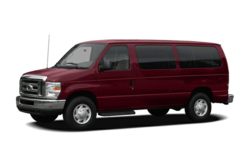 I've noticed that every time I have sold a car, the dealer told me how flooded the market is with my make and model, and that the prices are much lower than I would expect. I take the dealer's words with a grain of salt, but am still not going to beat him in his own market. The equities and futures markets are much the same (and although this is anecdotal), it seems whenever I need to pitch out a position, there is a lot of whatever I own offered for sale at that moment. Conversely, whenever I wish to buy something, there is never enough around. I usually end up paying too much and selling too cheap.
Jeff Watson, surfer, speculator, poker player and art connoisseur, blogs as MasterOfTheUniverse.
Bill Egan writes:
You need a new van. A large one. By the end of February.
Ford E-350 Super Duty 12-passenger vans look good.
Prices for 2009 models
new MSRP: $36,325
new Invoice: $32,184
new Edmund's "What Others are Paying": $30,459
Yuck
Edmunds used retail price: $25,808
Kelley Blue Book used retail price: $24,710
Better
What is the distribution of true prices? Attached is the histogram of prices of 168 used 2009 Ford E-350 vans listed on cars.com within 500 miles of my house. Yes, the same basic vehicle is selling for $16,477 to $32,995. This took about ten minutes for me to make. (Yes, some options did vary, and there were a few misclassified vehicles, but overall this is really useful)
It is even faster to look at the most useful percentiles. Just sort by price on cars.com. Then go to the last page to get the total number of vehicles that actually have a price. In this case there were 168 vans with prices. Scrolling through the four web pages and quickly counting allows you to figure out the percentiles. For example, the midpoint or median is at the 84th van (168/2). That price is $21,495. The 25th percentile is at the 42nd van (168/4) priced at $19,998.
Used list price at the closest Ford dealer: $21,695 (just over 50th percentile)
Used "best price" at closest Ford dealer after we had a chat about other dealers' prices: $19,495 (18th percentile).
For a fleet vehicle manufactured in March, 2009, auctioned in October, 2009, clean CarFax, with 13,200 miles and almost all the options.
Kim Zussman replies:
Don't you think the distribution of prices attributes less to mispricing than +/- valuation factors estimated by sellers — mileage, condition, options? They ought to know the going prices, and attempt to price theirs competitively modified by their knowledge of condition.
As with romance, if condition is held constant then price should vary based on ignorance and desperation.
Gordon Haave writes:
Car selling is all about one thing: price discrimination. The good salespeople do one thing: size up the maximum that you are willing to pay and make sure that is how much you pay. They do this through a number of techniques but most notably the questions about what you do for a living, how much your current car payment is, etc.
All the confusion around pricing and monthly payments and such is just to give them wiggle room to be able to charge you the most you are willing to pay.
Alan Millhone adds:
I pass a used car lot daily in Belpre and have been noticing the strategy this fellow uses to push his lot vehicles. He calls 89,000 miles LOW mileage ! One car he lists on window as a LOCALLY owned car — So? Occasionally he puts a HOLD sign on the windshield — who cares? Across the street is a strip plaza that a man owns that I know. On the front that is not used you can set your vehicle or boat or trailer and pay him 20.00 a month for that parking spot. Lots of traffic flows by each day. You list details on your vehicle and make your own deal. One new car dealer of KIA has his own clunker program and will give you 5,000.00 on your trade. My best friend traded in his car and a van he had towed in and the dealer allowed him 4,000.00 each towards a new KIA auto. I note gas in my area creeping up again so the economy cars are selling well.
« go back —Archives
- October 2026
- September 2026
- August 2026
- July 2026
- June 2026
- May 2026
- April 2026
- March 2026
- February 2026
- January 2026
- December 2025
- November 2025
- October 2025
- September 2025
- August 2025
- July 2025
- June 2025
- May 2025
- April 2025
- March 2025
- February 2025
- January 2025
- December 2024
- November 2024
- October 2024
- September 2024
- August 2024
- July 2024
- June 2024
- May 2024
- April 2024
- March 2024
- February 2024
- January 2024
- December 2023
- November 2023
- October 2023
- September 2023
- August 2023
- July 2023
- June 2023
- May 2023
- April 2023
- March 2023
- February 2023
- January 2023
- December 2022
- November 2022
- October 2022
- September 2022
- August 2022
- July 2022
- June 2022
- May 2022
- April 2022
- March 2022
- February 2022
- January 2022
- December 2021
- November 2021
- October 2021
- September 2021
- August 2021
- July 2021
- June 2021
- May 2021
- April 2021
- March 2021
- February 2021
- January 2021
- December 2020
- November 2020
- October 2020
- September 2020
- August 2020
- July 2020
- June 2020
- May 2020
- April 2020
- March 2020
- February 2020
- January 2020
- December 2019
- November 2019
- October 2019
- September 2019
- August 2019
- July 2019
- June 2019
- May 2019
- April 2019
- March 2019
- February 2019
- January 2019
- December 2018
- November 2018
- October 2018
- September 2018
- August 2018
- July 2018
- June 2018
- May 2018
- April 2018
- March 2018
- February 2018
- January 2018
- December 2017
- November 2017
- October 2017
- September 2017
- August 2017
- July 2017
- June 2017
- May 2017
- April 2017
- March 2017
- February 2017
- January 2017
- December 2016
- November 2016
- October 2016
- September 2016
- August 2016
- July 2016
- June 2016
- May 2016
- April 2016
- March 2016
- February 2016
- January 2016
- December 2015
- November 2015
- October 2015
- September 2015
- August 2015
- July 2015
- June 2015
- May 2015
- April 2015
- March 2015
- February 2015
- January 2015
- December 2014
- November 2014
- October 2014
- September 2014
- August 2014
- July 2014
- June 2014
- May 2014
- April 2014
- March 2014
- February 2014
- January 2014
- December 2013
- November 2013
- October 2013
- September 2013
- August 2013
- July 2013
- June 2013
- May 2013
- April 2013
- March 2013
- February 2013
- January 2013
- December 2012
- November 2012
- October 2012
- September 2012
- August 2012
- July 2012
- June 2012
- May 2012
- April 2012
- March 2012
- February 2012
- January 2012
- December 2011
- November 2011
- October 2011
- September 2011
- August 2011
- July 2011
- June 2011
- May 2011
- April 2011
- March 2011
- February 2011
- January 2011
- December 2010
- November 2010
- October 2010
- September 2010
- August 2010
- July 2010
- June 2010
- May 2010
- April 2010
- March 2010
- February 2010
- January 2010
- December 2009
- November 2009
- October 2009
- September 2009
- August 2009
- July 2009
- June 2009
- May 2009
- April 2009
- March 2009
- February 2009
- January 2009
- December 2008
- November 2008
- October 2008
- September 2008
- August 2008
- July 2008
- June 2008
- May 2008
- April 2008
- March 2008
- February 2008
- January 2008
- December 2007
- November 2007
- October 2007
- September 2007
- August 2007
- July 2007
- June 2007
- May 2007
- April 2007
- March 2007
- February 2007
- January 2007
- December 2006
- November 2006
- October 2006
- September 2006
- August 2006
- Older Archives
Resources & Links
- The Letters Prize
- Pre-2007 Victor Niederhoffer Posts
- Vic’s NYC Junto
- Reading List
- Programming in 60 Seconds
- The Objectivist Center
- Foundation for Economic Education
- Tigerchess
- Dick Sears' G.T. Index
- Pre-2007 Daily Speculations
- Laurel & Vics' Worldly Investor Articles
