Aug
20
Air Fees, from David Lilienfeld
August 20, 2012 | Leave a Comment
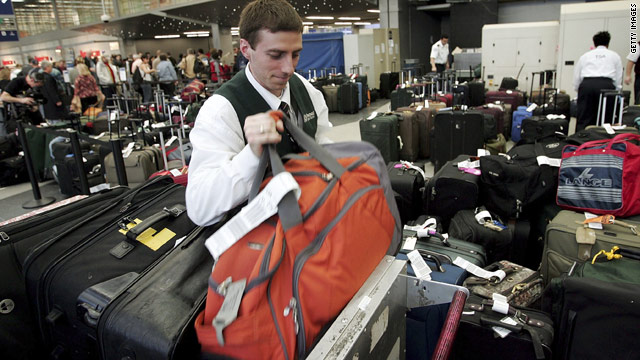 I'm headed to Barcelona on Tuesday for a week of business meetings. I decided to start using my old US Air FF miles for the trip (with more than a 1.2 million miles and given that I've stopped using USAir back in 2008, this seemed like a good use of them). Imagine my surprise to open my email this morning and find US Air's wonderful missive offering me citrus-marinated chicken skewers or vegetarian Portobello mushroom tortellini for the lovely price of $20. (I assume since this will happen somewhere over the Atlantic, there's no tax.)
And the airlines wonder why people complain about air travel?
It would be good if someone took a look at how much the airlines are actually making off of their baggage fees, too. Yes, it's revenue, but the consequence is that everyone who can brings their luggage as walk-ons. While it took maybe 15 minutes to board a plane in the 1990s, these days it's at least 30 minutes and often longer. That's time lost from being in the air, which is after all what the airlines are in business for in the first place. I don't know anymore which I dislike more–air travel or airline stocks.
Aug
12
A Resurgence, from David Lillienfeld
August 12, 2012 | Leave a Comment
Back in the 1970s, the number of new cases of TB in the US had declined to the point that it seemed that TB would be eliminated from the US within a decade. Accordingly, since TB was no longer an "epidemic," Congress and the President decided to cut spending on TB control programs. After all, they reasoned, the disease is going to disappear on its own anyway, why waste the money. Then came AIDS, and TB resurged. It seems we may be at the same point with gonorrhea, except instead of HIV, it's a drug resistant bug.
Aug
8
Rate of Change in Gini Ratio by Year, from Kim Zussman
August 8, 2012 | Leave a Comment
The Gini ratio is a commonly used measure of income inequality. Historical GINI data by year is available here.
Higher GINI ratio is greater inequality, and has been widely discussed GINI has risen 1948-2010. This data was used to calculate year-to-year change in GINI, and yearly rate of change was partitioned by presidential party: Democrat (1) and Republican (2). Mean GINI yearly rate of change for the two presidential political parties was compared:
Two-Sample T-Test and CI: yr change GINI, D(1) VS R(2)
Two-sample T for yr change GINI
D(1)
VS
R(2) N Mean StDev SE Mean
1 27 0.0012 0.0206 0.0040 T=-0.58
2 36 0.0038 0.0135 0.0023
The mean yearly rate of change in GINI for both parties was positive (income inequality increasing). Though during Republican administrations the rate increased about three times faster than during Democrats, the difference was not significant (there is no statistical difference in the rate of increase in GINI).
The attached plots yearly change in GINI vs year. One notes the dispersion in yearly GINI change was much higher pre-1980. A possible explanation for this would be changes in the US central bank's approach to the business cycle ("the great moderation")

David Lilienfeld writes:
I have a different take. Prior to 1980, it looks like there is a pretty clear positive slope, whereas after that the line is pretty flat. That strikes me as counter-intuitive.
Ron Schoenberg writes:
I would like to see an analysis based on wealth rather than income which I believe would show a significantly greater inequality. Also, the data referred to below apparently doesn't include capital gains. I believe the results are understating true inequality.
Rocky Humbert wonders:
And how does Ron propose to apportion the so-called wealthy people's share of Federal, State and Local debt? Of the trillions of unfunded liabilities through out the public sector?) Does he propose to allocate it based on "wealth" or per capita? And if he apportions it per capita, how does it deal with the fact that per household debt cannot possibly be serviced by per household income.
It's all reminiscent to the way that a couple going through a contentious divorce to do it: The wife says: "I'll keep the house." Husband: "Ok."Wife: "And I'll keep the dog." Husband: "Ok." Wife: "But you take the debt." Husband: "But, but…."
Jul
31
California, from David Lillienfeld
July 31, 2012 | 4 Comments
Up and down the California central valley, you can watch the cities filing bankruptcy. They don't have the money to do anything else. Some might say that "it's California. That's what happens when you eat lotuses." Perhaps. But here's the thing. There is no way to get the US functioning again without having California operating smoothly. It's not like Wyoming, where no one might notice for a spell. With 12 percent of the nation's population and a higher percentage of its economy, California still sets the trend. Even in foreclosures!
Seriously, though, the fiscal cliff at the end of the year isn't necessarily the biggest challenge facing this country economically. I think California is.
Jul
26
Late Movers Advantage, from Sushil Kedia
July 26, 2012 | Leave a Comment
Google+ is increasingly leaving one with a feeling that Late Mover Advantage can be as significant as the Early Mover Advantage. A lot of thoughtful work seems going into Google+ avoiding so many of the aches that a stand alone twitter or a stand alone Facebook may be giving. This one seems way more integrable into many things in the future, what with the android keeping growing.
I had been bearish on Google as a business earlier, based purely on my nationalistic sentiments of their display of different maps of India when viewed from different locations in the world. I need to look beyond my own sentiments and of course on a longer term business basis, this giant continues to display clairvoyance.
Yet, for a speculative mind, if indeed Late Mover Advantage can be significant, how does one profit systematically from ideas such as if a market takes much more time than other related markets to achieve a movement, is the adage delay is not denial become ever-more profitable? Is there a good way to identify how much bunching of a volatility or delay is a good trigger for firing in a trade?
David Lilienfeld writes:
Microsoft has built a company around Late Movers Advantage–it's their business model. Google has not. The question that needs to be asked, I think, is how and when Google+ can be monetized. As I think most on this list serve know, I'm a skeptic about FB's ability to monetize the 900 million accounts it has. I am equally skeptical about Google+. So far as I can see, the only social media company which has successfully monetized its accounts is LinkedIn. Otherwise (and I know many will disagree), I think social media is the fad-du-jour, much as twitter was the fad-du-jour from a few years back .(Tim Melvin and I had a great correspondence about this when twitter first came in–we followed one another, and neither of us had any idea what it meant to do so!) Or Flickr. Or email (remember when Microsoft bought Hotmail for $400 million? Can someone explain to me how Microsoft has earned any sort of return on that $400 million? I don't think I would change one iota what I think of Google as an investment because of Google+ or anything else it does until it shows it can obtain some revenue from doing so. Otherwise, it's just a freebie, and it doesn't take much to get lots of people using a freebie. Especially since I think Congress is going to shut down the marketing data collection that FB and Acxiom are marketing. And if Congress doesn't act soon (and it's already moving in a bipartisan way to address such data collection), the EU will likely do so.
Bottom line: Where's the revenue? Show me the revenue. Otherwise, it's Larry and Sergei's excellent adventure.
Jul
24
Unix Version 6, from David Lillienfeld
July 24, 2012 | Leave a Comment
I still long for Unix Version 6 from the mid 1970s. It was the first operating system that I tinkered with. Bell Labs had created a masterpiece, and between it and the C programming language (still the basis for the internet), I found a system able to do almost anything asked of it.
It's nice that Unix lives on, particularly in a widely used system, Linux.
Jul
24
Life After Finance, from anonymous
July 24, 2012 | 1 Comment
 I have a lot of friends on Wall Street who are losing their jobs and/or are concerned they will lose their jobs imminently. Most of these people are 30-50 and have financial responsibilities, wives, kids, etc. Most seem to hang on and try to find jobs but the time to find work has been growing and growing and hearing someone is out of work for 12 or more months isn't that shocking anymore. The business is shrinking. Regulation is expanding. Jobs are scarce. Qualified applicants are plentiful. Incomes are dropping. Technology is replacing the need for people. Arguing the financial industry is in a jobs depression is not that far fetched. Reports are that for every opening there are thousands of applicants.
What do you think? Will the industry rebound or is this the end of Wall Street as we have known it. How does this jobs environment compare to the 70s recession or before, were those times equally as daunting? What are alternatives for people who are forced out of the business?
David Lilienfeld writes:
Are you sure you're not talking about the 1930s? or perhaps the 1970s? Or the 1890s? or the 1850s? (See the pattern here?) There will always be a need for financial services in a capitalistic economy. The problem these bankers are having is that given the oversupply of them (or relative lack of demand, if you prefer), and given their lack of wealth creation in the society (industry creates wealth, services create QoL), I don't see where the problem is. Financial services is overstaffed the same way retail is. 7/11s and digging graves sounds like it has more value-add. Maybe they'd like to work picking crops in central California? I understand that since the crackdown on the border took hold, the San Joaquin Valley farms are short-handed. The wages aren't great, the sun's a bitch, and occupational hazards abound, but there are jobs, and those holding them do get paid. But I grant you, it's hard to pay for a Porsche SUV on a farm-picker's wage.
Leo Jia writes:
Perhaps I can offer some sort of soothing message.
They at least have some very good unemployment benefits.
I remember years ago (perhaps the same now) the state regulation on the unemployment benefit for all domestic people working at so-called "wholly foreign owned enterprises" (WFOE's) in China is as follows. All of one's personnel issues are registered at one of the state-owned so-called "personnel management companies". The company withholds a certain percentage from the employee's salary every month. By regulation, the unemployment benefits it offers to the employee are: 1) it first tries to find a job for the person if unemployed; 2) if no job can be found, it pays the person certain percentage of his original salary (for 3 months?); and 3) if one doesn't want to take the job it finds, then no unemployment payment. Sounds not too bad. But the key is the job it find you. It literally could be a street sweeping job, and they always find one for you.
Dan Grossman writes:
A person knowledgeable about business (and as talented as most finance professionals seem to regard themselves) can think of a needed product or service and start his own business to provide same. I am always surprised how few do, even after many months of unemployment.
Or, instead of just "looking for a job", a person with such background and talent should think of the way he could bring new or significantly increased profits to an existing business, large or small. And then go to that business with a proposal that he be engaged (whether as an employee or at-risk contractor) to bring about those new or significantly increased profits. As a business owner, I would be very interested in such a proposal, far more interested than in "giving someone a job".
Jul
13
Facebook, from David Lilienfeld
July 13, 2012 | 1 Comment
 Perhaps someone can explain this one for me:
Facebook is valued at an astronomical amount. Its revenue base is, basically advertising. But FB is sustained, use-wise, by kids and young adults ( <30 ), who at one time had a fair bit of purchasing power and/or influenced significantly what a typical family bought.
Today, however, that demographic group doesn't have that kind of purchasing power. So what's the appeal for advertisers in supporting FB? Is there any data to suggest that ad buys on FB have a higher ROI than other media venues?
If not, is FB just a lousy investment, or a good one because these things are temporary?
Anatoly Veltman writes:
Also, consider the theory of reflexivity in the case of FB, of self-perpetuation. I notice that my 11 y.o. daughter has gained self-confidence (and self-absorption) via FB-ing.
Those kids flaunt their "social edge" over the older purse-holders, and pull on purse-strings with ever-increasing zeal.
Like Henry Ford said, "I'll pay my workers enough to buy my cars", FB is fostering its own consumer channel.
Gary Rogan writes:
The hope with large end-user software companies has always been that they (a) create dominance in their particular specialty (b) use this dominance to figure out as yet unpredictable way to monetize way beyond their current valuation (c) use this dominance and their speed of execution to stay ahead of adverse end-user trends. If often hasn't worked out this way, but of course when it does you get outsized returns.
Stefan Jovanovich writes:
For the most recent quarter FB generated roughly $.5B in EBITDA - the same result that my favorite submarine with screendoor investment - AMAT - produced. FB did it with 1/4th the number of employees and 40% of the revenue. Does that justify a valuation 5 times what the market now pays for Applied Materials? Yes - if the belief continues that network effects will predominate in social media as they have in paid search. The world will need the production of foundries - both steel and silicon - but it will only pay a premium for businesses that promise that their profit margins will increase on marginal sales because there is no used/distressed inventory out there to compete with the "new" products. The answer will be No only if the world of corporations and teenagers decides that Google+ is a better way to sell their virtual images to the world. (Note to file: since those of us here at Chaos Manor now buy and own stocks as if they were cars and houses - i.e. once we find one we like well enough to buy, it is usually a decade and more before we even think about selling, these comments are only for people - all 3 of you - still willing to attend early morning mass at the church of Buy and Hold.)
Peter Tep adds:
Above all else, Facebook is just a huge time sink and besides being a networking tool, is another place for people to gloat and boast or climb the social hierarchy — meant in a non negative way. With so many kids using it and literally connected to it 24-7, it's probably going to be a good investment if Facebook finds more ways to market to it's users on an even more emotional level. Has anyone seen the series posted on Ritzholtz blog about this?
I guess it is a great investment because it keeps people emotionally connected, like a great movie is playing out in front of them and they are part of it. If Facebook refines its marketing strategies even more using its users' data, then I guess the sky's the limit.
Jack Tierney writes:
David asks some important questions regarding FB and its value. I agree that the current price is astronomical, but have very little knowledge of the operation — I am not a member and, barring any unforeseen developments, will not join. I have followed FB for sometime and have not joined because of the incredible amount of information they can gather regarding your personal history, preferences, and affiliations.
That very knowledge, though, explains why this could be a very rewarding investment. Back when I was still employed I did some work with the "research and marketing" groups. One of the first puzzling discoveries I made while going over some data was that, although our newspaper regularly received a huge amount of national food advertising, the relatively small markets covered by the Miami Herald and the Milwaukee Journal, received more.
It was explained to me that both cities were unique in that they were split almost evenly demographically. The wealthy, well-to-do, and upper middle class occupied one half of town, those not that well off, the other. This gave General Mills, Coca-Cola, Proctor & Gamble, etc. ideal platforms from which to launch new products, different packaging, innovative couponing programs, size and container preferences (12 oz. cans vs. 16 oz. bottles).
These two cities gave marketers some valuable insight into buyer preferences…yet it was no where near good enough. The Holy Grail, what each individual preferred, was not only impossible to discover, but impractical to reach. That may now be achievable with FB.
While many who are members argue that they reveal very little about their preferences, few are aware of how much their "friends", directly or indirectly, reveal about them. The most memorable story sent to me regarded an English woman who had been "on the dole" for a couple of years, receiving whatever that country's monthly stipend is for an unmarried, unemployed woman with two children. Someone from Inland Revenue (apparently the equivalent to our IRS) decided to check up on her. Rather than checking her page, he started with the pages of some of her friends.
He happened to come across one that featured a several month old picture of the woman in question, relaxing on a beach in some exotic, expensive European resort — with her new husband. Her friend also happened to mention how fortunate she had been to have an employer who let her take a month long paid vacation.
Well, the outcome was not a pretty one. But the story illustrates that if a "friend" should just happens to mention you're a pizza lover, expect to get an uncommonly large number of pizza promotions - from Pizza Parlors in your very own neighborhood. (How did they know???)
If FB plays this right, they could pull in billions. Marketing has always been about reaching the maximum number of potential buyers for the least cost. From what I've read about FB, this is within their reach. If they follow through, or allowed to follow through, their reach is incredible and I would consider buying.
J.T Holley writes:
I'm 41. I choose to "like" The Jefferson Theater so that I could see the feeds/updates of concerts that were being booked. I got notice that they were having a Southern Rock Band "Blackberry Smoke" play on July 25th. They also said that if you "liked" the announcement then you would be put into a drawing for free tickets. I won. I have two free tickets and allowed them (they asked) if they could say that I won.
GM and all others that don't understand the power of FB are foolish. It reminds me of A. Miller's "Death of a Salesman" and Charley's wise words:
"The only thing you got in this world is what you can sell. And the funny thing is that you're a salesman, and you don't know that." Charley
and he best double negative ever to be used in writing when Charley addresses Willy (foreshadowing).
"Nobody's worth nothin' dead." Charley
Google became the yellow pages.
FB is becomin' greater than the yellow pages.
It's a tectonic shift that many aren't willin' to accept or grasp. I'm nobody and humble and I get it.
Dylan Distasio writes:
While I think your example is a good one of what Facebook COULD monetize, they are far behind Google on most advertising metrics and have a very low click through rate on the ads they do allow. It's understandable, Google is in the business of ads and has been at it for longer. Zuckerberg seems hesitant to admit or embrace the fact that FB is also in the business of advertising.
And the fact that Google is a yellow pages should not be scoffed at. It is a large part of why their ads in search work and demand higher prices. They are for things people are looking for and highly targeted.
I think with the amount of personal data Facebook has, they have great potential to monetize ads. The big question is whether they are interested, and if so, will they be able to execute.
The current issue of MIT Technology Review has a great article on a team at FB that is looking at the bigger picture in sociological terms of what they can do with the data. While their explicit goal is not focused on monetizing the data, some interesting techniques for doing so may come out of it indirectly.
Facebook has to be careful about how far they go in using people's data in the interest of monetizing it, and has to build a more sophisticated toolbox of ad types and techniques if they want to compete with Google. While they have certainly reached what appears to be critical mass as a social network, people can be fickle with their allegiances, and are happy to jump ship to something else when they get bored or feel slighted. FB will be forced to walk the same tightrope Google does if they want to seriously compete with them.
It should be an interesting couple of years watching this unfold. That said, I think based on the current view of things, FB is tremendously overvalued unless they are willing to start heavily exploiting the data in their possession. I'm not sure Zuckerberg is willing to, and he controls the company with 51% of voting shares. He's now a billionaire and can run his own agenda for quite awhile at the shareholders expense. As an example, I would question his acquistion of Instagram for $1 billion dollars but I guess time will tell. It will help them in the mobile space where FB is currently very weak, but we'll see if it was worth a billion to buy a company with no revenue.
Jul
13
Stocks and Bonds, from David Lilienfeld
July 13, 2012 | 1 Comment
So, corn and wheat are going up, just about all other commodities, gold included, is headed down. Copper, too? Jury's out. Stocks don't look so hot–valuations are high and guidance is turning pretty crappy. Oh, and there's an election in the offing. So, with the 10 yr Treasury south of 2% (and maybe setting another low in the next several days), where does one put one's money–in Europe?(!?) In…
Tim Melvin writes:
Every time I think if passing on the mess that is Europe I think if John Templeton's advice to invest at the point of maximum pessimism.
Of course all of us have found a supposed max to be a min to our dismay.
I have a baby toe in Europe at this point.
Andre Clapp writes:
My point exactly… Pessimism on Europe, if not at a maximum, is certainly very high. Significant career risk for professionals. Everyone knows you'd have to be an idiot to invest in Europe. Reminds me of the US market during March of '03 and '09. Buffett out today saying Euro is "doomed to failure" with one small caveat. (Who is more front page than the Oracle?) Reminds me of the Economist issue "Drowning in Oil", when oil was $12 a barrel. They felt that oil should trade at $5 a barrel, with one small caveat, "in the absence of political considerations"… Hmmm, seems like a pretty big caveat to me! Needless to say, oil (Brent) trading at triple digit levels only a decade later, even in a weak global economy. The lesson to me: Mind the caveat!
Lastly, The Oracle may have his own personal reasons for "encouraging" the Europeans. He is not above that, IMO. People stating the consensus opinion often leave this kind of trap-door caveat behind. My guess is that the sun will still rise, and Europe will still be here, 10 years from now.
Jul
13
Home Construction, from David Lilienfeld
July 13, 2012 | Leave a Comment
 There are those, like Doug Kass, who are pounding the table and screaming about the dawn of a multi-year housing boom in the US.
Yet I remember reading in Barron's a few years back that the major determinant of long-term housing trends is the formation of new households. Many kids, who have had trouble finding a job that pays sufficiently for them to run their own household or not having a job at all, have moved back in with their parents (the boomerangers). We've deported a lot of folks, too (who might otherwise form households), and there's been no increase in immigration quotas. In general, it's only the middle-aged and elderly that are growing in size, and those age groups aren't known for lots of new (or net) household formations.
So where's the increase in households going to come from to drive that boom in the market? What makes me even more confused is the comment on the Toll Brothers call that the company finally has pricing power in 16 or its top 20 markets.
Something's not right here.
If there is a boom, or even a boomlet, do you go with Toll? Lennar? Ryland? Or the suppliers (small caps like Lumber Liquidator or large caps like Home Depot)?
Thoughts, ladies and gentlemen?
Jul
12
Employment Numbers, from David Lilienfeld
July 12, 2012 | 1 Comment
 Have you seen this article- "Obama: Government Job Slayer". Supposedly Obama has cut more than 500,000 government jobs.
Jack Tierney writes:
Members of the military are counted as government employees. For many who weren't sure this became evident during Clinton's administration — you might remember his assertion that government had become too big and he intended to cut back on its size. One of his follow-up pronouncements declared that substantial cuts had been made. However, the cuts were primarily in the military numbers; about 700,000 full-timers and 275,000 reservists.
Cuts that became an election issue…primarily in the Bush/Kerry confrontation — Kerry had been a supporter of the cuts. At almost any other time this might have served him well - but 9/11 cast a giant shadow.
Rudolf Hauser writes:
I believe the recently released public sector employment numbers refer to total government employment at the BLS definitions, which exclude the armed forces. The seasonally adjusted numbers from Jan. 1993 to Jan. 1997 show an increase in government employment of 692M, but a decline in Federal government employment of 247M. The corresponding numbers from Jan. 2001 to Jan. 2005 show and increase in total government employment of 900M and a drop in Federal government employment of 26M. The numbers from Jan. 2009 to June 2012 show a total decline of 633M but a slight rise in Federal government employment of 16M. In essence all of the trends referred to where in state and local government employment, something that Clinton and Bush can hardly be credited for and a decline that Obama can only be blamed for by arguing that he made the economy so bad that those governments revenue trends brought about the drop. It certainly had nothing to do with a desire on Obama's part to reduce the size of government.
Jul
3
 As Anne O'Connell, a professor at University of Cal Berkeley, said "there are important cases in which the chief justice has to put the court's interests above his own ideological or jurisprudential views. This was one such case."
One would suggest that the court acts to survive and prosper like the badger or any other organism subject to incentives and emoluments.
Gary Rogan writes:
We may never know whether he wanted to keep getting invited to all the cocktail parties or they made him an offer he couldn't refuse, but he did change his mind at the last minute. In either case, a man with a lifetime appointment somehow has to side with card-carrying communists while making basic mistakes (like a tax law cannot be challenged until the tax is actually collected, and several others), and redirects trillions of dollars of economic activity. All this to make sure that the rest of them with lifetime appointments and no known personal threats of any kind have no chance of being marginalized? Never has so much been sold out for so little even if this subhuman was threatened.
David Lilienfeld writes:
Two comments:
1. It's significant how many in our country have as low regard for the SCOTUS as they do. Even more so when one has a Senator questioning whether the court has any standing to rule something as being constitutional or not. The dysfunctionalities present in our government are manifesting at the SCOTUS, and the populous is none too pleased about this. Given that we live in the iPhone Society, one might wonder when the populous would expect anything else.
2. At the time Truman desegregated the military, 65 percent of the country opposed the action. When Brown v Board of Ed was decided, 60+ percent of the country opposed integration of the schools (though this was to change rapidly in the wake of the decision). Courts and politicians are political animals, but they are also leaders–or at least at times in the past, have been leaders. Unfortunately, as we have been without political leadership for sometime, it isn't surprising that this case was decided in such a manner as to defy just about any and all expectations. (There are a lot of people on Intrade who got hosed in this decision).
Rocky Humbert writes:
Have you even read Robert's opinion? I did. He didn't do any favors for the left in it; he takes a swipe at Wickard and he is very clear that upholding the mandate should not be construed as any expansion of government power. Essentially, he wrote that if it walks like a duck, talks like a duck, smells like a duck, then it's a duck. Substance over form. He blew away the government on every other substantive argument.
In the future application of this ruling, I believe that his opinion won't be used as opening the door further to govt intervention; quite the opposite is true! But unless you read the opinion, you won't know this and the MSM won't report it. I find it disappointing that the court ruled this way, but as I noted yesterday morning, this was not an easy decision and the opinion reflects that.
I find it reasonable for you to quarrel with the substance of his opinion only after you have read it. But judging from your comment, you haven't. And you comment is vacuous and snarky.
Read the opinion and then comment on the substance.
Gary Rogan adds:
This ruling is a tortured conclusion looking (and failing) to find reasonable arguments as far as the "tax" portion of it is concerned. What is being taxed here?
It was sold as a mandate and this legal genius finds it to be a tax. If someone sells you a duck claiming to be an elephant, and you find that it's OK because you have a license to sell ducks instead of finding fraud, you are not operating in good faith. Especially if the duck isn't even a normal duck but some mutated monster resulting from an unfortunate breeding of a duck with a goose.
He cuts one type of power found in the "living breathing Constitution" by progressive activists and adds another power of similar flawed pedigree. He did no favors to the left? He SAVED the damn left, to continue their abuse of the Constitution and the country. This man is a snake.
Garret Baldwin writes:
"It was sold as a mandate and this legal genius finds it to be a tax."
Respectfully, it was sold as a mandate to the American people and to representatives in Congress. But when it went to the high-court, it was sold as both a mandate and as a tax. There were two arguments provided on behalf of the Administration. One was that the mandate fell under the commerce clause. In essence, Congress was ruling that it could create commerce in order to regulate it. They were creating a program that forced people to buy something, and that would fall under the clause. Could Congress then make you buy anything it wanted, became the question.
Roberts ruled that down. Even Sotomeyor disagreed with that logic.
But then the issue of a tax did in fact come up in discussion. Though the President said that it wasn't a tax on ABC in 2009, the administration argued in front of the court that the mandate fell within Congress' taxing power… but attempted to argue that it was not a tax… They argued that PENALTIES are within the reach of Congress' taxing power, but that this was not a "revenue generating policy" which is what a tax technically is.
What Roberts ruled is that Yes, this does fall under Congress' taxing authority, but you're not allowed to call it a penalty. It's a tax. Congress can tax whatever it wants, soda, medical devices, and even inactivity. For the optimistic on the right, and for people who have being saying this is a tax all along, the ruling isn't necessarily the worst in the world. First, it shuts down Congress' ability to create markets under the guise of the commerce clause. This was especially concerning for me because I feared they would try to create Cap and Trade through similar means. Second, Democrats are now the "Tax Party", and Roberts has given Romney ammo. This is a tax. And the President swore that no new taxes on the middle class would hit them. There are 21 new taxes in this law, and seven of them directly impact the Middle Class.
"It you think healthcare is expensive now… wait until you see what it costs when it's free." PJ O'Rourke
Rocky Humbert writes:
This will be my last post on this subject, so Mr. Rogan et al should feel free to label me a "snake," "commie," or whatever choice epithet that he uses for people who don't agree with his self-declared (and as yet unproven) "superior" weltanschauung.
I am starting to see non-legal analyses on the the web, which may over time cause the currently-celebrating liberals to realize that by bringing this case to the Supreme Court, they have opened a Pandora's Box which they will rue. Sure, you can bitch and moan that they didn't strike down the ACA. But this ruling will have a much more important effect in the months and years ahead in terms of LIMITING government. Sure, I had hoped that they would strike the ACA down, but I'm starting to believe that what Roberts did here may be vastly superior IN THE LONG TERM.
If Mr. Rogan can turn off his kneejerk reaction for just a moment and read the following URL, I think he will begin to see that Roberts may have just proven Voltaire's Maxim: "The perfect is the enemy of the good." It's quite possible that in 50 years, the historians will look back and see this as a defining moment when the pendulum which started in the 1930's begins to swing back.
While I believe the ACA is bad economics and bad policy, I believe that the precedents which this ruling establish (and to which lower courts will be bound) are vastly more important and more supportive for freedom and long term prosperity. I am hopeful that as today's scoreboard and November's election fade from memory, the lasting positive consequences (for those on the right) of this ruling will come into focus.
Jun
26
We'll soon see if the Israeli economic model for electric automobiles is viable. This is an interesting article on the subject.
« go back —Archives
- October 2026
- September 2026
- August 2026
- July 2026
- June 2026
- May 2026
- April 2026
- March 2026
- February 2026
- January 2026
- December 2025
- November 2025
- October 2025
- September 2025
- August 2025
- July 2025
- June 2025
- May 2025
- April 2025
- March 2025
- February 2025
- January 2025
- December 2024
- November 2024
- October 2024
- September 2024
- August 2024
- July 2024
- June 2024
- May 2024
- April 2024
- March 2024
- February 2024
- January 2024
- December 2023
- November 2023
- October 2023
- September 2023
- August 2023
- July 2023
- June 2023
- May 2023
- April 2023
- March 2023
- February 2023
- January 2023
- December 2022
- November 2022
- October 2022
- September 2022
- August 2022
- July 2022
- June 2022
- May 2022
- April 2022
- March 2022
- February 2022
- January 2022
- December 2021
- November 2021
- October 2021
- September 2021
- August 2021
- July 2021
- June 2021
- May 2021
- April 2021
- March 2021
- February 2021
- January 2021
- December 2020
- November 2020
- October 2020
- September 2020
- August 2020
- July 2020
- June 2020
- May 2020
- April 2020
- March 2020
- February 2020
- January 2020
- December 2019
- November 2019
- October 2019
- September 2019
- August 2019
- July 2019
- June 2019
- May 2019
- April 2019
- March 2019
- February 2019
- January 2019
- December 2018
- November 2018
- October 2018
- September 2018
- August 2018
- July 2018
- June 2018
- May 2018
- April 2018
- March 2018
- February 2018
- January 2018
- December 2017
- November 2017
- October 2017
- September 2017
- August 2017
- July 2017
- June 2017
- May 2017
- April 2017
- March 2017
- February 2017
- January 2017
- December 2016
- November 2016
- October 2016
- September 2016
- August 2016
- July 2016
- June 2016
- May 2016
- April 2016
- March 2016
- February 2016
- January 2016
- December 2015
- November 2015
- October 2015
- September 2015
- August 2015
- July 2015
- June 2015
- May 2015
- April 2015
- March 2015
- February 2015
- January 2015
- December 2014
- November 2014
- October 2014
- September 2014
- August 2014
- July 2014
- June 2014
- May 2014
- April 2014
- March 2014
- February 2014
- January 2014
- December 2013
- November 2013
- October 2013
- September 2013
- August 2013
- July 2013
- June 2013
- May 2013
- April 2013
- March 2013
- February 2013
- January 2013
- December 2012
- November 2012
- October 2012
- September 2012
- August 2012
- July 2012
- June 2012
- May 2012
- April 2012
- March 2012
- February 2012
- January 2012
- December 2011
- November 2011
- October 2011
- September 2011
- August 2011
- July 2011
- June 2011
- May 2011
- April 2011
- March 2011
- February 2011
- January 2011
- December 2010
- November 2010
- October 2010
- September 2010
- August 2010
- July 2010
- June 2010
- May 2010
- April 2010
- March 2010
- February 2010
- January 2010
- December 2009
- November 2009
- October 2009
- September 2009
- August 2009
- July 2009
- June 2009
- May 2009
- April 2009
- March 2009
- February 2009
- January 2009
- December 2008
- November 2008
- October 2008
- September 2008
- August 2008
- July 2008
- June 2008
- May 2008
- April 2008
- March 2008
- February 2008
- January 2008
- December 2007
- November 2007
- October 2007
- September 2007
- August 2007
- July 2007
- June 2007
- May 2007
- April 2007
- March 2007
- February 2007
- January 2007
- December 2006
- November 2006
- October 2006
- September 2006
- August 2006
- Older Archives
Resources & Links
- The Letters Prize
- Pre-2007 Victor Niederhoffer Posts
- Vic’s NYC Junto
- Reading List
- Programming in 60 Seconds
- The Objectivist Center
- Foundation for Economic Education
- Tigerchess
- Dick Sears' G.T. Index
- Pre-2007 Daily Speculations
- Laurel & Vics' Worldly Investor Articles
