Feb
19
The Movements After Disaster, by Victor Niederhoffer
February 19, 2007 |
 After a tree dies and falls in a forest, there is an opportunity for greater sunlight and nutrients from old decaying matter to nurture new growth in the vacant space. New plants develop in the open space and often grow vigorously. Other plants that grow on the old branches are called epiphytes, generally lichen, algae, mosses, and orchids. Often their growth and stability are amazingly vibrant and fecund. A great example can be seen not in a natural rain forest, where they usually occur, but in the greenhouses of the Bronx Botanical Gardens.
The movement of stocks and markets after a disaster is often similarly vibrant. Take the Israeli market, the Tel Aviv 25, which after moving down to 778 in September 2006, in the aftermath of the war with Lebanon, moved above 1000 for the first time on Monday Feb 19.
As I write at 730 AM EST, the upward march of stocks after the end of a war seems to be a general phenomenon. And one of the first studies that I performed in business was on the buoyancy and above average growth of US stocks after the end of the Vietnam War with particular reference to the surge after World Wars I and II. The sources of that growth appear to be both economic and psychological.
A general study of the markets and individual sectors that grow best after disasters such as bankruptcies, hurricanes, and fires, as well as the much more common artificial disasters and squeezes which are the meat and potatoes of the "locals," would seem to be in order. There is no better way to start this than by reviewing the Wikipedia article on Epiphytes.
From Scott Brooks:
 There is a synergistic rhythm to cycles of life and death, with life being dependent on death for the source of energy, nutrition, and general opportunity. That is why optimism should always rule the day, especially in the face of great adversity.
Hurricanes, fires, tornados, ice storm, and avalanches all change the landscape and create great opportunity for growth, regeneration, and life in general. The same thing could be said of war and man-made calamities. An unfortunate fact of life and human nature is that men do battle and battle creates great adversity, death, mayhem, and destruction. As much as we would all like to have world peace, it is simply not something that is attainable. Therefore, we have to look for the seed of opportunity that lies in the great adversity of that happening (an adversity, that I'd like to point out, is out of the control of anyone one person reading this).
Some of you may take what I'm saying to be harsh or callous or mean spirited. I would submit to you that you need to look at the facts of what I'm saying and then ask yourself "is anything he's saying not the truth?" Also, finding the seed of opportunity does not mean being immoral or unethical.
Was it a mistake for me to invest in the Israeli stock index a few days after Hezbollah attacked last year? I say no. The mistake was when I sold my position after six weeks for only about a 6% gain. I should have held it longer.
We also have to watch out for people that are "Life Bears." These people are always pessimistic. They can always find negative in anything that occurs and turn it into "the sky is falling." I believe that the global warming bunch is a great example of Life Bears. They see global warming as a way to force the rest of us to comply with their vision of negativity by forcing us to give up the one thing that can save us, progress via the Mind of Man. You see, if we follow their prescribed methodologies for solving the problem of global warming, we halt most of the progress that will likely solve the associated problems.
Keep in mind what I've said many times on this list, quoting Napoleon Hill, "the dominant thought that you hold in your mind will manifest itself in your life in some form of outward reality." The global warming crew holds a preponderance of negative thoughts in mind, and they are working fervently to make their view of negativity come true, so they can have the ultimate satisfaction of being able to say, "See, I told you so."
Even if their "solutions" cause more problems, it will still fulfill their vision of negativity, and they will take no responsibility for it. They will simply say, "See, you should have acted sooner and done more of what we said to do."
You see, Life Bears have to ignore facts in order to support their negative view. They look only for white swans and thus proclaim, "See, all swans are white." They ignore history in reference to global warming and cooling. They ignore the facts that state the earth and our sun go through cycles where temperatures and conditions change. Therefore, we need to prepare for those changes by finding the opportunities that are embedded within them.
And what better source of finding the embedded opportunities than the free market! Entrepreneurs using their keen minds and intellects to find a way to create great wealth and prosperity out of adversity. What we need to do is not curb carbon emissions; we need to unleash the Mind of Man. That is our only hope of solving adversities!
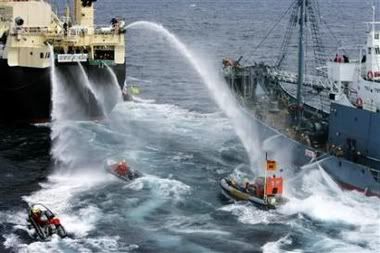
But the Life Bears cannot allow this to happen. They cannot allow an environment where the mind of man has the opportunity to roam freely and create solutions. Therefore, Life Bears have to stifle their mortal enemy, the Mind of Man. They stifle it by slowing it down, by creating a yoke like the Kyoto treaty that ties the Mind of Man to the wagon of Life Bears.
They have to tax it. By taking away an ever increasing portion of the wealth created by the Mind of Man, the Life Bears stifle a percentage of further growth (I wonder if the percentage that is stifled is equal to the marginal tax rate?), and on top of that, the Life Bears get funding to pay for the further spread of their poison propaganda. It is interesting to note that Life Bears are wholly and completely dependent on their mortal enemy, capitalism, for the funding of their very existence.
They have to regulate it. Life bears can't completely tax the free enterprise system. That would be the equivalent of a parasite killing its host. Therefore, since Life Bears need the existence of their mortal enemies, the Capitalist, they have to devise some methods of controlling them. So they regulate the Capitalist. Usually the more successful the Capitalist, the more they have to regulate them, as too much success is a black swan, and Life Bears can not allow the existence of a black swan. (Well, at least not the existence of one that they cannot ignore or control enough to deny the fact that it's black.)
So taking this back to Vic's original point of tree's, death, and life…
The death of a tree is no tragedy. Its death will release nutrients and allow sunlight to reach the ground, thus allowing the seeds that may have laid dormant for years to spring to life. New life will spring up all around it; and new life equals new opportunity. The death of a company, although seemingly tragic (Enron, Arthur Anderson, Global Crossing, Adelphia, Worldcom, etc.) is really just an opportunity in disguise.
It is an opportunity to release the nutrients of those involved in the collapse. That is to say the minds of man that had been stuck in a rut working for a steady paycheck and doing their job by in a reflexive, non-creative manner. It will release those employees who thought about going into business for themselves (because they had a great idea of some sort, or maybe just the desire to be free of the shackles of an 8 - 5 job), but feared the loss of a steady paycheck and the unknowns of entrepreneurship. Now they are given that opportunity.
The death of these companies allows new sunlight to get to the ground and new companies that may have laid dormant or been under-utilized to spring up and fill the void. Just like seeds that had no chance of competing against a giant oak tree for sunlight, new entrepreneurs that had no chance of competing against a giant company like Worldcom, now have the opportunity to step up and make a go of it.
But just as hard as the Capitalist is going to work to find "the seed of equal or greater opportunity," the Life Bears are working to undermine them (i.e. Sarbanes Oxley, The Kyoto Accord, etc.).
So Capitalist must be ever diligent and hard working and continue to have a never give up attitude. We must push forward even though we will be fought every step of the way by the Life Bears.
And we must be ever diligent with a simple understanding of 3 things:
First, The Life Bears will never go away. No matter how hard we try, they will always exist. Second, Capitalists have no, absolutely no use for Life Bears. We have no need for them whatsoever. But they will still be there. Therefore, we must find ways to minimize their impact. And we do that by doing what we do: Be capitalists! Finally, the Capitalist can take solace in this one simple fact: Life Bears do not exist without Capitalist. They're like incurable tapeworms. Since we can't get rid of them, we may as well resign ourselves the fact that they are going to act like the parasites that they are and suck a small amount of life out of us. So we may as well go about our business and do the best we can and smile at the fact the parasitic tapeworms like Life Bears are completely and wholly dependent on the largesse of wealth we create!
Steve Leslie writes:
To follow up on this theme, if one were to look at world plagues one would see similar events and how they set the stage for growth. One third of Europe was destroyed by the black plague that began in Southwest Asia and spread throughout Europe in the 1340s. It is estimated that at least 75 million people were killed by the disease. It was thought to return every generation with varying degrees of intensity up to the 1800s. The cause was a bacterium and it was spread by fleas. It was a horrid disease of acral necrosis which is a blackening of the skin caused by subdural hemorrhages.
Its effect was to profoundly and irrevocably change Europe's social structure. It was a serious blow to the Roman Catholic Church, Europe's predominant religious institution at the time, and resulted in widespread persecution of minorities such as Jews, Muslims, foreigners, beggars, and lepers. The uncertainty of daily survival created a general mood of morbidity influencing people to live for the moment, as illustrated by Giovanni Boccaccio in The Decameron (1353).
Historians postulate that the Great fire of London in 1666 may have ended the plague by killing off the black rats and fleas that infested them and carried the disease to their human counterparts.
The great and concomitant result of the plague:
The great population loss brought economic changes based on increased social mobility, as depopulation further eroded the peasants' already weakened obligations to remain on their traditional holdings. In Western Europe, the sudden scarcity of cheap labor provided an incentive for landlords to compete for peasants with wages and freedoms, an innovation that, some argue, represents the roots of capitalism, and the resulting social upheaval caused the Renaissance and even the Reformation. In many ways the Black Death improved the situation for surviving peasants. In Western Europe, because of the shortage of labor they were in more demand and had more power, and because of the reduced population, there was more fertile land available. However, the benefits would not be fully realized until 1470, nearly 120 years later, when overall population levels finally began to rise again.
On top of all this, the plague's great population reduction brought cheaper land prices, more food for the average peasant, and a relatively large increase in per capita income among the peasantry, if not immediately, in the coming century.
Comments
Archives
- October 2026
- September 2026
- August 2026
- July 2026
- June 2026
- May 2026
- April 2026
- March 2026
- February 2026
- January 2026
- December 2025
- November 2025
- October 2025
- September 2025
- August 2025
- July 2025
- June 2025
- May 2025
- April 2025
- March 2025
- February 2025
- January 2025
- December 2024
- November 2024
- October 2024
- September 2024
- August 2024
- July 2024
- June 2024
- May 2024
- April 2024
- March 2024
- February 2024
- January 2024
- December 2023
- November 2023
- October 2023
- September 2023
- August 2023
- July 2023
- June 2023
- May 2023
- April 2023
- March 2023
- February 2023
- January 2023
- December 2022
- November 2022
- October 2022
- September 2022
- August 2022
- July 2022
- June 2022
- May 2022
- April 2022
- March 2022
- February 2022
- January 2022
- December 2021
- November 2021
- October 2021
- September 2021
- August 2021
- July 2021
- June 2021
- May 2021
- April 2021
- March 2021
- February 2021
- January 2021
- December 2020
- November 2020
- October 2020
- September 2020
- August 2020
- July 2020
- June 2020
- May 2020
- April 2020
- March 2020
- February 2020
- January 2020
- December 2019
- November 2019
- October 2019
- September 2019
- August 2019
- July 2019
- June 2019
- May 2019
- April 2019
- March 2019
- February 2019
- January 2019
- December 2018
- November 2018
- October 2018
- September 2018
- August 2018
- July 2018
- June 2018
- May 2018
- April 2018
- March 2018
- February 2018
- January 2018
- December 2017
- November 2017
- October 2017
- September 2017
- August 2017
- July 2017
- June 2017
- May 2017
- April 2017
- March 2017
- February 2017
- January 2017
- December 2016
- November 2016
- October 2016
- September 2016
- August 2016
- July 2016
- June 2016
- May 2016
- April 2016
- March 2016
- February 2016
- January 2016
- December 2015
- November 2015
- October 2015
- September 2015
- August 2015
- July 2015
- June 2015
- May 2015
- April 2015
- March 2015
- February 2015
- January 2015
- December 2014
- November 2014
- October 2014
- September 2014
- August 2014
- July 2014
- June 2014
- May 2014
- April 2014
- March 2014
- February 2014
- January 2014
- December 2013
- November 2013
- October 2013
- September 2013
- August 2013
- July 2013
- June 2013
- May 2013
- April 2013
- March 2013
- February 2013
- January 2013
- December 2012
- November 2012
- October 2012
- September 2012
- August 2012
- July 2012
- June 2012
- May 2012
- April 2012
- March 2012
- February 2012
- January 2012
- December 2011
- November 2011
- October 2011
- September 2011
- August 2011
- July 2011
- June 2011
- May 2011
- April 2011
- March 2011
- February 2011
- January 2011
- December 2010
- November 2010
- October 2010
- September 2010
- August 2010
- July 2010
- June 2010
- May 2010
- April 2010
- March 2010
- February 2010
- January 2010
- December 2009
- November 2009
- October 2009
- September 2009
- August 2009
- July 2009
- June 2009
- May 2009
- April 2009
- March 2009
- February 2009
- January 2009
- December 2008
- November 2008
- October 2008
- September 2008
- August 2008
- July 2008
- June 2008
- May 2008
- April 2008
- March 2008
- February 2008
- January 2008
- December 2007
- November 2007
- October 2007
- September 2007
- August 2007
- July 2007
- June 2007
- May 2007
- April 2007
- March 2007
- February 2007
- January 2007
- December 2006
- November 2006
- October 2006
- September 2006
- August 2006
- Older Archives
Resources & Links
- The Letters Prize
- Pre-2007 Victor Niederhoffer Posts
- Vic’s NYC Junto
- Reading List
- Programming in 60 Seconds
- The Objectivist Center
- Foundation for Economic Education
- Tigerchess
- Dick Sears' G.T. Index
- Pre-2007 Daily Speculations
- Laurel & Vics' Worldly Investor Articles
