Feb
14
A Word on Triumph of the Optimists, from Hanny Saad
February 14, 2007 |
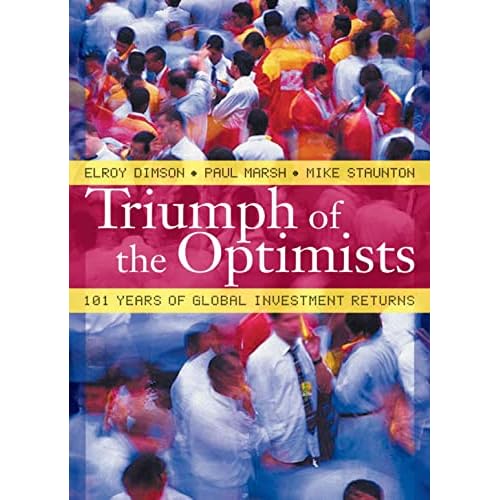 Triumph of the Optimists: 101 Years of Global Investment Returns, by Elroy Dimson, Paul Marsh, and Mike Staunton, is considered by many to be the best book written about markets and in so many ways it actually is. The authors went to great lengths to collect the most accurate data available from sources including century-old newspapers and dusty books from university libraries among others. Their efforts were very rewarding in the sense that their findings debunked some mainstream beliefs.
In general, this is an outstanding work and one of the best-researched books on markets to date. It suffers none of the biases that previous research by Fama and French or Malkiel and O'Shaugnessy were guilty of, namely the easy data bias: the bias from incorrect rights-issue adjustment, bias of hindsight choice of companies, bias of hindsight choice of sector, and survivorship bias. All these biases are so well covered in the book that there is no need for me to repeat or explain them here. In this sense, the book is exemplary research and the authors deserve to be applauded for their efforts.
The book was recommended first by Victor Niederhoffer in his posts to the list and in his book as the best book written about markets. And in terms of data accuracy and elimination of biases I have to agree with Victor. No other book I am aware of before the trio came close to offering such a comprehensive study of markets with this impeccable accuracy, even uncovering the beauty of ever-changing cycles in some cases, as with the small cap out performance that stopped working once widely discovered, and its return in 2000 and so forth.
But (didn't you see this coming?), there is some critical observation I have about the trio's great research. In the few cases the authors gave their personal opinions and played the forecaster's role, they failed miserably as there was no empirical support whatsoever.
One notable example in one of the most crucial segments of the first part of the book, The Conclusion, the authors mention that an optimist as stated by Archy the cockroach is a guy that has never had much experience, and in this spirit they state, "statistical logic tells us that future expectations must lie below today's optimists' dreams. We cannot expect the optimists to triumph in the future. Future returns from equities are likely to be lower. As Archy the cockroach warned us, experience should teach us realism not optimism.
How deflating. After reading this conclusion I felt as if I had such a build up of pleasure with the great data provided, but failed to climax reading the conclusion. Isn't 101 years of data over 16 countries a sufficient dose of realism? Didn't their own research show how the stock market outperformed through two world wars, a Wall Street crash and Great depression, hyperinflationary and economic turmoil?
Yet the authors don't expect the future to be as rosy and they call it realism. I believe the authors' opinions were influenced by the tech sector crash prior to the book's publication. Other examples include their conclusion about value versus growth.
This is a great book only if you can skip the authors' opinions and concentrate on the data. I may well be the guy who has never had much experience. As in Archy the cockroach, the authors referred to but failed to provide me with empirical reasons not to be the optimist as opposed to realist according to their definition above. In fact, their research and data make me believe that, if anything, the next hundred years should even be better that the past, given the overall political stability (please don't thow at me the war in Iraq or the Israeli-Palestinian conflict, since they fade in compared to two world wars). The great technological advances are the universal availability of information for executives to make more informed decisions.
From Steve Ellison:
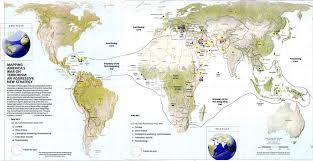
In one important respect, the 21st century has a head start on the 20th century: the number of people engaged in trade. Thomas P. M. Barnett, in The Pentagon's New Map, identified three periods of globalization.
The first was "proto-globalization" from 1871 to 1914 involving Western Europe, the United States, and Canada. After the two world wars came "Globalization I," involving approximately the same countries plus Japan. "Globalization II," since 1980, has brought China, Korea, India, Russia, and Brazil, among others, into the global economy. One would expect the trend of increasing international trade, if not reversed, to increase wealth creation and opportunities for profit.
From Stefan Jovanovich:
Dr. Barnett is the perfect theorist for an age when no one knows any history. Free trade had its most dramatic worldwide expansion in the period from the abolition of the Corn Laws to the adoption of Imperial Preference. The period of "proto-globalization" that Barnett refers to was precisely the period when the clear advantages of open economic exchange began to be overridden by the kind of awful grandiose geopolitical doodling that led to WWI and is still the essence of all "strategic planning." Barnett's popularity is, alas, one of those terrible hints that the anarchy of growing international trade is once again about to be brought to heel by the superior wisdom of the people who have seen the latest Power Point presentation.
Comments
Archives
- October 2026
- September 2026
- August 2026
- July 2026
- June 2026
- May 2026
- April 2026
- March 2026
- February 2026
- January 2026
- December 2025
- November 2025
- October 2025
- September 2025
- August 2025
- July 2025
- June 2025
- May 2025
- April 2025
- March 2025
- February 2025
- January 2025
- December 2024
- November 2024
- October 2024
- September 2024
- August 2024
- July 2024
- June 2024
- May 2024
- April 2024
- March 2024
- February 2024
- January 2024
- December 2023
- November 2023
- October 2023
- September 2023
- August 2023
- July 2023
- June 2023
- May 2023
- April 2023
- March 2023
- February 2023
- January 2023
- December 2022
- November 2022
- October 2022
- September 2022
- August 2022
- July 2022
- June 2022
- May 2022
- April 2022
- March 2022
- February 2022
- January 2022
- December 2021
- November 2021
- October 2021
- September 2021
- August 2021
- July 2021
- June 2021
- May 2021
- April 2021
- March 2021
- February 2021
- January 2021
- December 2020
- November 2020
- October 2020
- September 2020
- August 2020
- July 2020
- June 2020
- May 2020
- April 2020
- March 2020
- February 2020
- January 2020
- December 2019
- November 2019
- October 2019
- September 2019
- August 2019
- July 2019
- June 2019
- May 2019
- April 2019
- March 2019
- February 2019
- January 2019
- December 2018
- November 2018
- October 2018
- September 2018
- August 2018
- July 2018
- June 2018
- May 2018
- April 2018
- March 2018
- February 2018
- January 2018
- December 2017
- November 2017
- October 2017
- September 2017
- August 2017
- July 2017
- June 2017
- May 2017
- April 2017
- March 2017
- February 2017
- January 2017
- December 2016
- November 2016
- October 2016
- September 2016
- August 2016
- July 2016
- June 2016
- May 2016
- April 2016
- March 2016
- February 2016
- January 2016
- December 2015
- November 2015
- October 2015
- September 2015
- August 2015
- July 2015
- June 2015
- May 2015
- April 2015
- March 2015
- February 2015
- January 2015
- December 2014
- November 2014
- October 2014
- September 2014
- August 2014
- July 2014
- June 2014
- May 2014
- April 2014
- March 2014
- February 2014
- January 2014
- December 2013
- November 2013
- October 2013
- September 2013
- August 2013
- July 2013
- June 2013
- May 2013
- April 2013
- March 2013
- February 2013
- January 2013
- December 2012
- November 2012
- October 2012
- September 2012
- August 2012
- July 2012
- June 2012
- May 2012
- April 2012
- March 2012
- February 2012
- January 2012
- December 2011
- November 2011
- October 2011
- September 2011
- August 2011
- July 2011
- June 2011
- May 2011
- April 2011
- March 2011
- February 2011
- January 2011
- December 2010
- November 2010
- October 2010
- September 2010
- August 2010
- July 2010
- June 2010
- May 2010
- April 2010
- March 2010
- February 2010
- January 2010
- December 2009
- November 2009
- October 2009
- September 2009
- August 2009
- July 2009
- June 2009
- May 2009
- April 2009
- March 2009
- February 2009
- January 2009
- December 2008
- November 2008
- October 2008
- September 2008
- August 2008
- July 2008
- June 2008
- May 2008
- April 2008
- March 2008
- February 2008
- January 2008
- December 2007
- November 2007
- October 2007
- September 2007
- August 2007
- July 2007
- June 2007
- May 2007
- April 2007
- March 2007
- February 2007
- January 2007
- December 2006
- November 2006
- October 2006
- September 2006
- August 2006
- Older Archives
Resources & Links
- The Letters Prize
- Pre-2007 Victor Niederhoffer Posts
- Vic’s NYC Junto
- Reading List
- Programming in 60 Seconds
- The Objectivist Center
- Foundation for Economic Education
- Tigerchess
- Dick Sears' G.T. Index
- Pre-2007 Daily Speculations
- Laurel & Vics' Worldly Investor Articles
