Feb
11
Google’s Book Project, from Alston Mabry
February 11, 2007 |
 Just discovering Google's book project. They're scanning in books from various libraries and have an ambitious plan to scan every book ever published (New Yorker article by Toobin).
A search for "speculator" brings up these full, searchable texts (among many others):
Arthur Crump: The Theory of Stock Exchange Speculation; London, 1874, John Hill, Jr. (of the Chicago Board of Trade).
Gold Bricks of Speculation; Chicago, 1904, A Study of Speculation and Its Counterfeits, and an exposé of the methods of bucketshop, and "get-rich-quick" swindles.
Harrison H. Brace: The Value of Organized Speculation; New York, 1913. A prize-winning essay from a contest run by Chicago, Columbia, Michigan, NYU, and Harvard, and sponsored by, "…Hart, Schaffner & Marx, of Chicago, who have shown a special interest in trying to draw the attention of American youth to the study of economic and commercial subjects."
Jim Sogi writes:
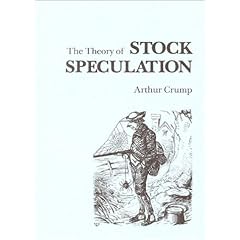 Thanks to Alston Mabry for pulling this one up. It will surely be a favorite of the Chair.
Arthur Crump appears to talk about the English markets, but the lessons are the same. Crump charges out of the gate with some great formulas for risk, such as, "…the sum risked must be only such proportion of the possible gain as the mathematical probability of gaining it is of unity." This is brilliant. "A man should not hazard his all on any terms."
Imagine this quantitative risk measurement in the 19th century. Closer to current one-day drops he speaks of typical drops of 2-3% a day with very gradual gains, familiar scenario indeed.
Crump identifies the pitfalls that await the unwary.
A typical reason many beginners convince themselves speculation is simple is they say to themselves the market can only go up or down and his chances are at least 50-50. Their mistake is overlooking path dependency in calculating the odds, thinking reversing position might have avoided losses.
"The outsider's stakes are too large a proportion of their means."
"Multiply each gain or loss by the probability of the event on which it depends; compare the total result of the gains with that of the losses. The balance is the average required and is known by the name of mathematical expectation."
It follows from this that the player must be able to stand a number of plays to realize the expectation. Furthermore, the gains must be greater than the expenses.
"Those whose only business it is to be in the stock markets must of course know that the outside public are always dropping their money."
"If a speculator has not learnt the alphabet of recurring intervals, he has not learned the alphabet of his business."
More later, but this is fun and good book in nice quaint old print.
More Crump Quotes from Jim Sogi:
"Any jackass can take a profit, but it requires a devilish clever fellow to cut a loss. After he has once realized the importance of having his accounts open and ready for the periodic haves to carry him in and land his profit, the difficulty is to get him to realize the importance of keeping out while the water weeps back, carrying with it the gray speculators who were not content to take their profits"
Good advise these last few days.
"It is as necessary to the success of his operation that he posses no more regard for the feelings or pockets of other people than a hungry tiger would for him, if he were airing himself unconcernedly in a Bengal jungle. He has a purpose in view, just as a surgeon has when the amputation of a leg has been decided upon."
"Deception in all its form will be found in the armory
of the professional speculator, and the weapons, two-edged, are employed.""Then there is the fatal blunder made by almost every inexperienced speculator, of never being satisfied with a moderate profit. If he buys, and the price rises 1/2, he cannot make up his mind to take it, but must wait for 3/4th. When it has reached that he must have 1 per cent and when that rise has been attained too, he wants another 1/8th to cover the commission. Like a dog in attempting to grasp the shadow of his bone, he loses all."
Comments
Archives
- October 2026
- September 2026
- August 2026
- July 2026
- June 2026
- May 2026
- April 2026
- March 2026
- February 2026
- January 2026
- December 2025
- November 2025
- October 2025
- September 2025
- August 2025
- July 2025
- June 2025
- May 2025
- April 2025
- March 2025
- February 2025
- January 2025
- December 2024
- November 2024
- October 2024
- September 2024
- August 2024
- July 2024
- June 2024
- May 2024
- April 2024
- March 2024
- February 2024
- January 2024
- December 2023
- November 2023
- October 2023
- September 2023
- August 2023
- July 2023
- June 2023
- May 2023
- April 2023
- March 2023
- February 2023
- January 2023
- December 2022
- November 2022
- October 2022
- September 2022
- August 2022
- July 2022
- June 2022
- May 2022
- April 2022
- March 2022
- February 2022
- January 2022
- December 2021
- November 2021
- October 2021
- September 2021
- August 2021
- July 2021
- June 2021
- May 2021
- April 2021
- March 2021
- February 2021
- January 2021
- December 2020
- November 2020
- October 2020
- September 2020
- August 2020
- July 2020
- June 2020
- May 2020
- April 2020
- March 2020
- February 2020
- January 2020
- December 2019
- November 2019
- October 2019
- September 2019
- August 2019
- July 2019
- June 2019
- May 2019
- April 2019
- March 2019
- February 2019
- January 2019
- December 2018
- November 2018
- October 2018
- September 2018
- August 2018
- July 2018
- June 2018
- May 2018
- April 2018
- March 2018
- February 2018
- January 2018
- December 2017
- November 2017
- October 2017
- September 2017
- August 2017
- July 2017
- June 2017
- May 2017
- April 2017
- March 2017
- February 2017
- January 2017
- December 2016
- November 2016
- October 2016
- September 2016
- August 2016
- July 2016
- June 2016
- May 2016
- April 2016
- March 2016
- February 2016
- January 2016
- December 2015
- November 2015
- October 2015
- September 2015
- August 2015
- July 2015
- June 2015
- May 2015
- April 2015
- March 2015
- February 2015
- January 2015
- December 2014
- November 2014
- October 2014
- September 2014
- August 2014
- July 2014
- June 2014
- May 2014
- April 2014
- March 2014
- February 2014
- January 2014
- December 2013
- November 2013
- October 2013
- September 2013
- August 2013
- July 2013
- June 2013
- May 2013
- April 2013
- March 2013
- February 2013
- January 2013
- December 2012
- November 2012
- October 2012
- September 2012
- August 2012
- July 2012
- June 2012
- May 2012
- April 2012
- March 2012
- February 2012
- January 2012
- December 2011
- November 2011
- October 2011
- September 2011
- August 2011
- July 2011
- June 2011
- May 2011
- April 2011
- March 2011
- February 2011
- January 2011
- December 2010
- November 2010
- October 2010
- September 2010
- August 2010
- July 2010
- June 2010
- May 2010
- April 2010
- March 2010
- February 2010
- January 2010
- December 2009
- November 2009
- October 2009
- September 2009
- August 2009
- July 2009
- June 2009
- May 2009
- April 2009
- March 2009
- February 2009
- January 2009
- December 2008
- November 2008
- October 2008
- September 2008
- August 2008
- July 2008
- June 2008
- May 2008
- April 2008
- March 2008
- February 2008
- January 2008
- December 2007
- November 2007
- October 2007
- September 2007
- August 2007
- July 2007
- June 2007
- May 2007
- April 2007
- March 2007
- February 2007
- January 2007
- December 2006
- November 2006
- October 2006
- September 2006
- August 2006
- Older Archives
Resources & Links
- The Letters Prize
- Pre-2007 Victor Niederhoffer Posts
- Vic’s NYC Junto
- Reading List
- Programming in 60 Seconds
- The Objectivist Center
- Foundation for Economic Education
- Tigerchess
- Dick Sears' G.T. Index
- Pre-2007 Daily Speculations
- Laurel & Vics' Worldly Investor Articles
