Jul
18
Yet More Gold Standard Rantings, from Stefan Jovanovich
July 18, 2012 |
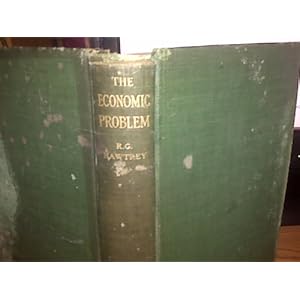 My favorite economic witticism (I think it's funny; others may not) is R. G. Hawtrey's comment that "currency is better explained in terms of credit than credit in terms of currency". Hawtrey thought it was self-evident that money existed in a society only because there was a government that required money to be used in the payment of taxes. In that sense he agreed with the Paulistas; in a perfectly free world there would be no need for legal tender because, in the absence of a government, people could freely agree on whatever they wanted to use for the settlement of private accounts. But, with governments and their monopoly authority, the payment of debts became a matter that involved "policy" - i.e. making certain the mandarins got paid for sitting and talking and writing and meeting. For governments to exist, money had to be invented because, unlike private parties, the government had nothing to offer in exchange.
Hawtrey had no success in convincing others in his profession that the importance of the gold standard was to let people go back to speculating about each other's credit and stop worrying about some final settlement of accounts into a sovereign currency or currency of all sovereigns. Whether or not a country stayed on the gold standard, left it, or tried to cheat by imposing capital controls would become simply a matter for discounting between private parties as long as one country in the world was willing to follow the simple rules and let its currency supply fluctuate depending on how much people wanted to hold gold or gold certificates and how much they wanted to convert dollars (for example) into bullion and send it abroad or do the reverse. That country's currency would be come the universal unit of account precisely because it would be the one money that would not have a political speculation attached to it.
Believing that the political manipulations of a currency could somehow rule economic behavior was, in Hawtrey's mind, literally to put the cart before the horse. (To my mind it also means the "wise" men and women are even worse the committee in charge of describing an elephant; they spend all their time looking at the ass-end of the wagon and talking about where it is going even as it stands completely still.)
Europe was broke in 1919 not because it failed to adopt the proper monetary unit of Keynesian design but because all of its nations had utterly ruined their public and private credit in the extravagance of 4 years of world war. This was no more a popular an opinion in the 1920s than it is now; reviewers of Hawtrey's book on the gold standard took him to task for arguing that money itself was unimportant except as a measure of credit-worthiness and the gold standard - at whatever value - was only important because it prevented the governments of the world from fudging the measurements. Hawtrey thought that governments' credit-worthiness was entirely dependent on their ability to conform their legal tender to what the country could, in fact, afford to pay to its foreign creditors and tax collectors; and that was all there was to it. Here is what he wrote in 1919: "There never was a time at which the currency systems of the world were so exposed to danger as they are likely to be in the immediate future. The portentous profusion of paper money affords unparalleled opportunities for deflation while the development of credit and the elaboration of such devices as the exchange standard have opened the way to an almost indefinite further inflation cloaked under the disguise of an economy of gold. Between these two contrary dangers there seems to be no clear principle to keep mankind in the middle way and it is even possible that one may succeed by way of reaction to the other.
Footnote: Under the "exchange standard" countries could pretend to pay each other in gold for the net balances of trade and credit without actually delivering the bullion. It was "the gold standard" without the essential element of that system - namely, the ability of the creditor to ask the borrower to actually settle up his account in specie. It was, in that regard, indistinguishable from our present fiat money system.
Britain did not, in fact, restore the gold standard until 1925. Britain's comparative success during the 1930s (even as Orwell was writing The Road to Wigan Pier British unemployment was slightly more than HALF what it was in the U.S.) can be attributed to the fact that Britain's banks did not, in fact, fail after the country went back on the domestic gold standard. Neither, for that matter, did the French banks fail as France also restored it promise that the franc could be changed into specie. In academia the severe U.S. depression is blamed - as David suggests - on the collapse of the Credit Anstalt, etc. yet the volume of U.S. trade in 1930 to central Europe was less than 1% of U.S. GDP. Smoot-Hawley raised the effective tariff rate by less than 5% for a country whose economy was almost entirely focused on domestic consumption; yet that also is the villain. What is ignored is the central fact; all the debtors to the U.S. were broke and, once they defaulted on their sovereign debts, they were in the position debtor-in-possession companies usually are - they could do business at a much lower cost. It was the U.S. response to this fact that made the defaults of the European debtors into a world collapse. Instead of accepting the fact that American consumers would now profit from cheaper imports - if Americans were allowed to send their money abroad, the Hoover and Roosevelt administrations decided that the solution to the problem was the ultimate Keynesian response - the country should do away with the barbarous metal by permanently hoarding its gold reserves and NEVER PAYING THEM OUT TO ANYONE.
That was, of course, Hawtrey's point; you kept money reserves precisely so they could be used in a credit crisis; but the reserves had to be actual money, not more pieces of government paper. The "global" banking collapse occurred throughout the 1920s, along with sovereign defaults from the German and Austrian and Italian and Polish and Czech and Russian (er, Soviet) hyperinflations; but the severity of the U.S. depression cannot be blamed on those events. It is attributable to the efforts of the U.S. to pretend that its underwater debtors could pay their war debts by having the U.S. lend them the specie and then have it immediately redeposited in the New York Fed's vault (quantitative easing's grandfather). The irony is that the U.S. decided that it had to abandon the gold standard and run away from world trade just as its European allies were finally ready to pay for their own imports with real money. Enough said, indeed.
Comments
Archives
- October 2026
- September 2026
- August 2026
- July 2026
- June 2026
- May 2026
- April 2026
- March 2026
- February 2026
- January 2026
- December 2025
- November 2025
- October 2025
- September 2025
- August 2025
- July 2025
- June 2025
- May 2025
- April 2025
- March 2025
- February 2025
- January 2025
- December 2024
- November 2024
- October 2024
- September 2024
- August 2024
- July 2024
- June 2024
- May 2024
- April 2024
- March 2024
- February 2024
- January 2024
- December 2023
- November 2023
- October 2023
- September 2023
- August 2023
- July 2023
- June 2023
- May 2023
- April 2023
- March 2023
- February 2023
- January 2023
- December 2022
- November 2022
- October 2022
- September 2022
- August 2022
- July 2022
- June 2022
- May 2022
- April 2022
- March 2022
- February 2022
- January 2022
- December 2021
- November 2021
- October 2021
- September 2021
- August 2021
- July 2021
- June 2021
- May 2021
- April 2021
- March 2021
- February 2021
- January 2021
- December 2020
- November 2020
- October 2020
- September 2020
- August 2020
- July 2020
- June 2020
- May 2020
- April 2020
- March 2020
- February 2020
- January 2020
- December 2019
- November 2019
- October 2019
- September 2019
- August 2019
- July 2019
- June 2019
- May 2019
- April 2019
- March 2019
- February 2019
- January 2019
- December 2018
- November 2018
- October 2018
- September 2018
- August 2018
- July 2018
- June 2018
- May 2018
- April 2018
- March 2018
- February 2018
- January 2018
- December 2017
- November 2017
- October 2017
- September 2017
- August 2017
- July 2017
- June 2017
- May 2017
- April 2017
- March 2017
- February 2017
- January 2017
- December 2016
- November 2016
- October 2016
- September 2016
- August 2016
- July 2016
- June 2016
- May 2016
- April 2016
- March 2016
- February 2016
- January 2016
- December 2015
- November 2015
- October 2015
- September 2015
- August 2015
- July 2015
- June 2015
- May 2015
- April 2015
- March 2015
- February 2015
- January 2015
- December 2014
- November 2014
- October 2014
- September 2014
- August 2014
- July 2014
- June 2014
- May 2014
- April 2014
- March 2014
- February 2014
- January 2014
- December 2013
- November 2013
- October 2013
- September 2013
- August 2013
- July 2013
- June 2013
- May 2013
- April 2013
- March 2013
- February 2013
- January 2013
- December 2012
- November 2012
- October 2012
- September 2012
- August 2012
- July 2012
- June 2012
- May 2012
- April 2012
- March 2012
- February 2012
- January 2012
- December 2011
- November 2011
- October 2011
- September 2011
- August 2011
- July 2011
- June 2011
- May 2011
- April 2011
- March 2011
- February 2011
- January 2011
- December 2010
- November 2010
- October 2010
- September 2010
- August 2010
- July 2010
- June 2010
- May 2010
- April 2010
- March 2010
- February 2010
- January 2010
- December 2009
- November 2009
- October 2009
- September 2009
- August 2009
- July 2009
- June 2009
- May 2009
- April 2009
- March 2009
- February 2009
- January 2009
- December 2008
- November 2008
- October 2008
- September 2008
- August 2008
- July 2008
- June 2008
- May 2008
- April 2008
- March 2008
- February 2008
- January 2008
- December 2007
- November 2007
- October 2007
- September 2007
- August 2007
- July 2007
- June 2007
- May 2007
- April 2007
- March 2007
- February 2007
- January 2007
- December 2006
- November 2006
- October 2006
- September 2006
- August 2006
- Older Archives
Resources & Links
- The Letters Prize
- Pre-2007 Victor Niederhoffer Posts
- Vic’s NYC Junto
- Reading List
- Programming in 60 Seconds
- The Objectivist Center
- Foundation for Economic Education
- Tigerchess
- Dick Sears' G.T. Index
- Pre-2007 Daily Speculations
- Laurel & Vics' Worldly Investor Articles
