Jun
6
For the “Gold Bugs”, from Alex Castaldo
June 6, 2010 |
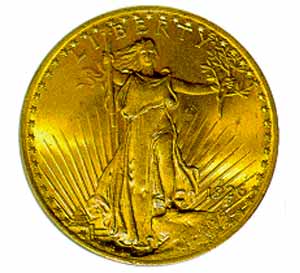
On June 5 , 1933 the United States went off the gold standard. Would we be better off today if it had not happened? - A Reader.
The classical gold standard, which brought price stability and prosperity to the major countries of the world, ended with the outbreak of World War I in 1914. Price stability was thrown overboard as a goal; fighting the war was deemed more important by the leaders at that time. The gold standard was dead.
What happened next is quite instructive.
In 1924 England (the most important country in the world) decided to restore the gold standard using the same parity for the British pound as before the war. But the price level was a lot higher as a result of the inflation during World War I. Have you ever tried to put on an old pair of blue jeans after you have gained 10 pounds? It is quite painful, especially around the waist and crotch. And so it was: the newly restored gold standard began to put heavy downward pressure on prices and on economic activity. Ultimately this was a major contributor to the severity of the Great Depression.
The 1924 decision is one of the greatest economic policy blunders in history, probably second only to the decision by emperor Diocletian in 301 AD to put price controls on food. It was highly contractionary and backward looking, attempting to restore a status quo that was realistically no longer achievable. They had not carefully thought it through and were doing mostly for reasons of prestige and tradition. Starting in 1932 and 1933 the error had become obvious and countries began to get off the gold standard and they immediately began to experience economic improvement; the worst of the depression was over. Relief at last, the blunder had been corrected.
So June 5, 1933 is not really the end of the gold standard but the end of the ill-advised 1924-1933 attempt to re-establish the gold standard in a mistaken and poorly coordinated manner. And we should all be glad that episode is over.
Stefan Jovanovich opines:
Alex repeats several common misconceptions that are thoroughly embedded in the received wisdom of the current academic age. The post-Civil War advocates of the resumption of the classical gold standard - President Grant being the most notable - were quite clear about what they wanted - the resumption of the absolute right of holders of U.S. Treasury notes to convert their paper dollars to gold at the Constitutional standard. They did not promise or expect the classical gold standard to bring "price stability"; they did not even expect it to bring "prosperity". They expected it to bring a fundamental honesty to the Federal government's accounts by making it impossible for Congress to indulge in serial deficits. (It is no accident that Grant's political opponents challenged his proposals by accusing him of personal dishonesty; if you are going to attack a straightforward plan for keeping straight books, argue that the proponent has been stealing from petty cash.) What seems almost impossible for the well-trained mind of the present to understand (whether educated in New Haven or Cambridge East or West) is that it was the discontinuities of the classical gold standard that were its great strength. The earnest reformers who brought us the Federal Reserve Act and those who are now eager to bring us a world currency and unified central bank share the Marxist illusions that the marketplace fluctuations in prices can be tamed if only the government gained absolute control over money and credit. It is an appealing and enduring fantasy, even if it is also a folly. What the supporters of the classical gold standard understood is that free exchange between people can create wonderments of credit and commerce if there is open competition and the price terms for the ultimate clearing of transactions are not subject to government manipulation. They also understood that governments cannot avoid being monopolies where the question of legal tender is concerned; indeed, the U.S. Constitution itself required that Congress have monopoly power over the United States' money. The only solution was to limit the government authority by requiring its paper to be backed by specie. Hence, the classical gold standard.
One of the complications of dealing with the history classical gold standard is that, while the United States was on the classical gold standard from 1791 onwards, our government, unlike Britain's, never resolved in the 19th century the issue of whether a central bank to have the right to issue notes that were to be accepted by the Treasury (in Britain the Exchequer) as legal tender. The United States had the further complication of bimetallism - dealing with what Gresham had explained to be a logical impossibility, having two legal tenders whose exchange ratios would be fixed. What both Britain and the United States did have in common was the presumption that the fluctuations in relative prices between different countries would be adjusted through discounting of trade bills, not through adjustment of their respective conversion ratios of paper into gold. In that sense both Alan and Alex are right. Britain (along with France, Germany and Austria-Hungary) abandoned the classical gold standard at the onset of WW I; but the United States did remain on the classical gold standard until June 5, 1933. Until that date a person could tender $20 in paper U.S. currency to the Treasury or a national bank and receive an ounce of gold stamped by the U.S. Mint as legal tender.
Alex is also correct in stating that Britain's attempt to do what the United States had done after the Civil War - resume convertibility - was a failure. But the failure came not from the choice of the pre-war ratio but from the assumption that a gold exchange standard could replace private party discounting as a mechanism for adjusting relative prices between countries. The classical gold standard was not restored after World War I. During the war and after its end every country in Europe had exchange controls and limits on specie redemption; even exchanges of specie for paper currency between countries were limited by international agreement. What was "restored" was something that had not existed before the Great War - a gold exchange standard. The gold exchange standard presumed that the terms of international trade would be controlled by coordination between the central banks, not by the marketplace results of private credit transactions. The gold exchange standard allowed central banks to accept each other's paper based on the assurance that the inter-government swaps would be backed by gold, but that guarantee was a fiction. The U.S. had substantially all of the world's gold reserves, just as it did after WW II; Britain's ability to pay its war debts in gold was based on the assumption that Germany would pay its reparations in gold which it would borrow from the United States.
Britain's valuing the pound at the pre-war exchange standard would not have had any ill effects if private credit markets had revived because Britain's trade bills would have been freely discounted. The best way to understand the post-WW I world economy is to see it as comparable to the present situation in the U.S. real estate market; the massive expansion of government debt and guarantees had left the world with an enormous mound of crap paper that could not be written down to its actual value because the pricing mechanisms of the pre-war world had literally been destroyed. It was very much extend and pretend. The abandonment of the gold exchange standard did not, as Alan suggests, revive world economies; Europe's output of consumer goods rose only slightly from 1932 and did not recover to 1929 levels until the 1950s; and the United States' record was not much better. The only production that did increase substantially in the 1930s and 1940s was spending for war.
Comments
Archives
- October 2026
- September 2026
- August 2026
- July 2026
- June 2026
- May 2026
- April 2026
- March 2026
- February 2026
- January 2026
- December 2025
- November 2025
- October 2025
- September 2025
- August 2025
- July 2025
- June 2025
- May 2025
- April 2025
- March 2025
- February 2025
- January 2025
- December 2024
- November 2024
- October 2024
- September 2024
- August 2024
- July 2024
- June 2024
- May 2024
- April 2024
- March 2024
- February 2024
- January 2024
- December 2023
- November 2023
- October 2023
- September 2023
- August 2023
- July 2023
- June 2023
- May 2023
- April 2023
- March 2023
- February 2023
- January 2023
- December 2022
- November 2022
- October 2022
- September 2022
- August 2022
- July 2022
- June 2022
- May 2022
- April 2022
- March 2022
- February 2022
- January 2022
- December 2021
- November 2021
- October 2021
- September 2021
- August 2021
- July 2021
- June 2021
- May 2021
- April 2021
- March 2021
- February 2021
- January 2021
- December 2020
- November 2020
- October 2020
- September 2020
- August 2020
- July 2020
- June 2020
- May 2020
- April 2020
- March 2020
- February 2020
- January 2020
- December 2019
- November 2019
- October 2019
- September 2019
- August 2019
- July 2019
- June 2019
- May 2019
- April 2019
- March 2019
- February 2019
- January 2019
- December 2018
- November 2018
- October 2018
- September 2018
- August 2018
- July 2018
- June 2018
- May 2018
- April 2018
- March 2018
- February 2018
- January 2018
- December 2017
- November 2017
- October 2017
- September 2017
- August 2017
- July 2017
- June 2017
- May 2017
- April 2017
- March 2017
- February 2017
- January 2017
- December 2016
- November 2016
- October 2016
- September 2016
- August 2016
- July 2016
- June 2016
- May 2016
- April 2016
- March 2016
- February 2016
- January 2016
- December 2015
- November 2015
- October 2015
- September 2015
- August 2015
- July 2015
- June 2015
- May 2015
- April 2015
- March 2015
- February 2015
- January 2015
- December 2014
- November 2014
- October 2014
- September 2014
- August 2014
- July 2014
- June 2014
- May 2014
- April 2014
- March 2014
- February 2014
- January 2014
- December 2013
- November 2013
- October 2013
- September 2013
- August 2013
- July 2013
- June 2013
- May 2013
- April 2013
- March 2013
- February 2013
- January 2013
- December 2012
- November 2012
- October 2012
- September 2012
- August 2012
- July 2012
- June 2012
- May 2012
- April 2012
- March 2012
- February 2012
- January 2012
- December 2011
- November 2011
- October 2011
- September 2011
- August 2011
- July 2011
- June 2011
- May 2011
- April 2011
- March 2011
- February 2011
- January 2011
- December 2010
- November 2010
- October 2010
- September 2010
- August 2010
- July 2010
- June 2010
- May 2010
- April 2010
- March 2010
- February 2010
- January 2010
- December 2009
- November 2009
- October 2009
- September 2009
- August 2009
- July 2009
- June 2009
- May 2009
- April 2009
- March 2009
- February 2009
- January 2009
- December 2008
- November 2008
- October 2008
- September 2008
- August 2008
- July 2008
- June 2008
- May 2008
- April 2008
- March 2008
- February 2008
- January 2008
- December 2007
- November 2007
- October 2007
- September 2007
- August 2007
- July 2007
- June 2007
- May 2007
- April 2007
- March 2007
- February 2007
- January 2007
- December 2006
- November 2006
- October 2006
- September 2006
- August 2006
- Older Archives
Resources & Links
- The Letters Prize
- Pre-2007 Victor Niederhoffer Posts
- Vic’s NYC Junto
- Reading List
- Programming in 60 Seconds
- The Objectivist Center
- Foundation for Economic Education
- Tigerchess
- Dick Sears' G.T. Index
- Pre-2007 Daily Speculations
- Laurel & Vics' Worldly Investor Articles
