Oct
25
The Fuinki: the “Atmosphere” of the Tokyo Area as I See it, from Artie Niederhoffer
October 25, 2019 |
 Follow @RtNeeder on twitter for more dispatches from Japan
In spite of all Japan’s amazing qualities—number one, for me, being the food, also the design, the cuteness of the children, the low cost of living and convenience—there are some major deal breakers about the culture here which makes it obvious I can’t stay. The number one for me would ironically be ones that the Japanese are most proud of: The fuinki or “atmosphere” and omotenashi, or the "customer service/hospitality.” These are things that are exquisitely curated at every level through design and behavior and quite jealously guarded. Let’s start with the fuinki. The atmosphere. The fuinki reminds me of a soothing noxious gas filling up every space in the room and breathed in by the people.
The phrase “not a hair out of place” comes to mind wherever I go. Cleanliness is very important to Japanese culture. And the colors are so beautiful, whether on a dump truck, the train, or a department store. They are surprising combinations that somehow work well together. It doesn’t have to be fancy, but not a hair is out of place. I guess I mean this literally. There are as many hair salons in Tokyo as Dunkin Donuts in New York and training to be a hair dresser in Japan is like training to be a doctor in America. Everyone from the children to the grannies are perfectly accessorized in brand new fashions. The babies, literally, carry backpacks and purses. The men over 25 are in pressed business suits. Under 25 they’re in stiff t-shirts and wide-leg Dickies pressed of every tiny wrinkle. To me it is incredibly oppressive.
In public you have to be almost silent. Even a sudden broad facial expression will draw attention from people around you. It’s stressful. A baby about two years old was looking at his mother’s iPhone on a full but completely silent train one recent weekend when he let out a loud giggle at something he saw. Immediately, his mother’s hand shot across his stroller to cover his mouth while she pleaded with him to be quiet. While the unsupervised children in Japan are smiling and joyfully running, the grown people seem visibly miserable and exhausted to the point that every day I see some of them so tired they’re able to sleep standing up on the packed train. They remind me of Tor during our high school days in which we too led very Japanese style existences, come to think of it.
The work load is a lot. Up until fairly recently the official standard work week included Saturdays. (Unofficially this continues). And the workday doesn’t end after work, because Japanese business people are expected to socialize and drink with coworkers and clients after that.
But back to the fuinki. As many of you know, Merlin is very funny and sometimes he makes a joke while we’re walking down the street. I laugh, not like a hyena, and I really have to believe i’m not an obnoxious or loud person, but I do occasionally perform a natural bodily reaction in response to joy that comes out in the form of a medium volume noise. So when I indulge this behavior, this laughter, at least five people around me are guaranteed to make full 180 degree turns to see who has disturbed their precious mood of misery and look at me with such disgust it is like I’ve abused an animal in front of them.
A Japanese superstition is that it is bad luck to whistle at night. The neighbors will think there’s a madman on the loose. Another one is that if you lie down after a meal you will turn into a cow. I’ve also heard it as pig.
Pleasure for pleasure’s sake, happiness, joy…these are not things the Japanese seem to seek out. It is why Japan ranked in the high 50s on the World Happiness Index Report, below Venezuela. In a way a happiness report doesn’t make sense here in a culture where people take pride in being unhappy. It’s like the old Kanye West saying from before he was cancelled: not smiling truly makes them smile.
 One thing I really do enjoy about Japanese people is their self deprecating humor. When they complain about their lives to me, I check myself before feeling too sorry for them, because I realize they are trying to be funny in a way. And they are funny. From listening to them you would think every one of their bosses is crazy (definitely true). Their kids are lazy (doubtful). Their wife is always mad at them. And she’s ugly. (Ha. Ha. Ha). A very funny student was showing me pictures of his business trip to Portugal. Flipping through them he explained (in near perfect English) he had absolutely no fun because he was working day til night, and due to his extremely poor English he couldn’t understand a thing that was going on. “Wow, beautiful pictures though,” I said. (He shakes his head) “But, my wife (getting to a picture of an impeccably dressed middle aged Japanese woman in front of a vista) is in them, and she is… not beautiful.” Then he burst out laughing.
A really strange thing has happened recently. After an incredibly hot and humid summer, fall has begun. The leaves have started to change, the humidity has lifted, there is snow on the top of Fuji. Where I come from, this is many people’s favorite time of year. It’s Christian Girl Autumn. A time when everyone feels annoyingly positive and back home we would be saying to each other, “I’m so excited to wear layers! Let’s go apple picking or stay in and watch a movie. Don’t you love fall?” The first fall day like this, every student I saw greeted me with “It’s so cold!” What? Just yesterday you were using “atsui, ne?”— “hot, isn’t it?”— as a perfunctory greeting in place of “hello.” Now suddenly it’s cold? I respond like, “oh, I love this weather.” They look at me like they’re embarrassed for me or I’m bragging. It’s like “Ooo, someone’s in looove. You love cold? Good for youuu.” “??” (I’m obviously reading into this, but it’s the impression I get. I’m thinking, “am I going crazy here?”). So yesterday, it was a lightly breezy 75-and-sunny with not a cloud in the sky. In other words an Objectively Perfect Day (OPD). I was explaining to Merlin that I couldn’t wait to see what the students thought of this weather or if they would still find a way to complain. Exactly as I was saying this, a woman walked by on the phone, complaining to someone “atsui, ne?” And then, as if to make sure we heard her, she repeated it, this time. In. English. “It’s soooo hot.” We couldn’t believe it. We were laughing so hard. Well, as hard as we could while stifling our laughter so as not to disturb the fuinki. Suddenly the sun was out so it was back to, “it’s so hot”? What? Do you remember August when it was 99 and humid? No.
(Side note: there is nothing sinister or spooky about fall in Japanese culture. In fact, though they will take any opportunity to redecorate and have gone all out for Halloween, they don’t seem to have taken the leap from spiders and skeletons and witches on brooms to a feeling of fear. The accompanying Halloween messages are quite cheerful. Summer is the traditionally “scary” season in Japan, when all the terrifying Japanese ghost stories take place and kids transform their schools into “horror houses” for their end of year parties before vacation.)
It is another situation where up is down and down is up, so I really can’t compare or understand the fuinki because the significance and symbols mean something completely different to them as they do to me. But to me, their fuinki is what I will very American-ly diagnose as “triggering to my anxiety and depression.” I look around at the people on the train, their eyes either closed or on the ground, and I can’t see them any other way. Because to maintain this perfect fuinki and to perform the perfect omotenashi—hospitality—you have to hide your humanity.
There are two recent examples of this involving a really sweet person I work with named N*. I really can’t say anything bad about her as she is an angel who has gone above and beyond for me. She even accompanied me to the doctor when I needed to, translating everything, including questions that clearly humiliated her to have to ask me—like if I was pregnant (I’m not), and held my hand and told me “gambate—fight! or a better translation, ‘you can do it!’” when I had to get a shot. She is the administrative assistant at work, a position only open to pretty young women (not officially, but culturally) and she is required to wear heels and a pink scarf around her neck that signifies her level in the company (her boss wears an orange one, and their bosses wear blue ones). She also has to praise the students and deliver our feedback to them in appropriately respectful terms, and manage customer service, booking, and sales (subject to competitive targets and quotas each month). She works insane hours and is paid less than I am. And it seems she is also responsible for managing the faux pas of the foreign staff, like the following: I lightly sneezed in the presence of a student. Not a hacking sneeze, but a short, dry one as triggered by some dust in the air. I’m the first to admit I’m not the most well-mannered person in the world, but I distinctly raised my elbow to cover my mouth and clearly said “excuse me.” Well my coworker N* burst into nervous laughter and began apologizing on my behalf to the student who had to hear that. I was kind of annoyed to be honest. I already said “excuse me.” In my mind, a human reflex that every one us experiences merits just that. (Actually, in MY culture, it’s the OTHER person who is supposed to apologize, in a way, by saying ‘God bless you’ but never mind.)
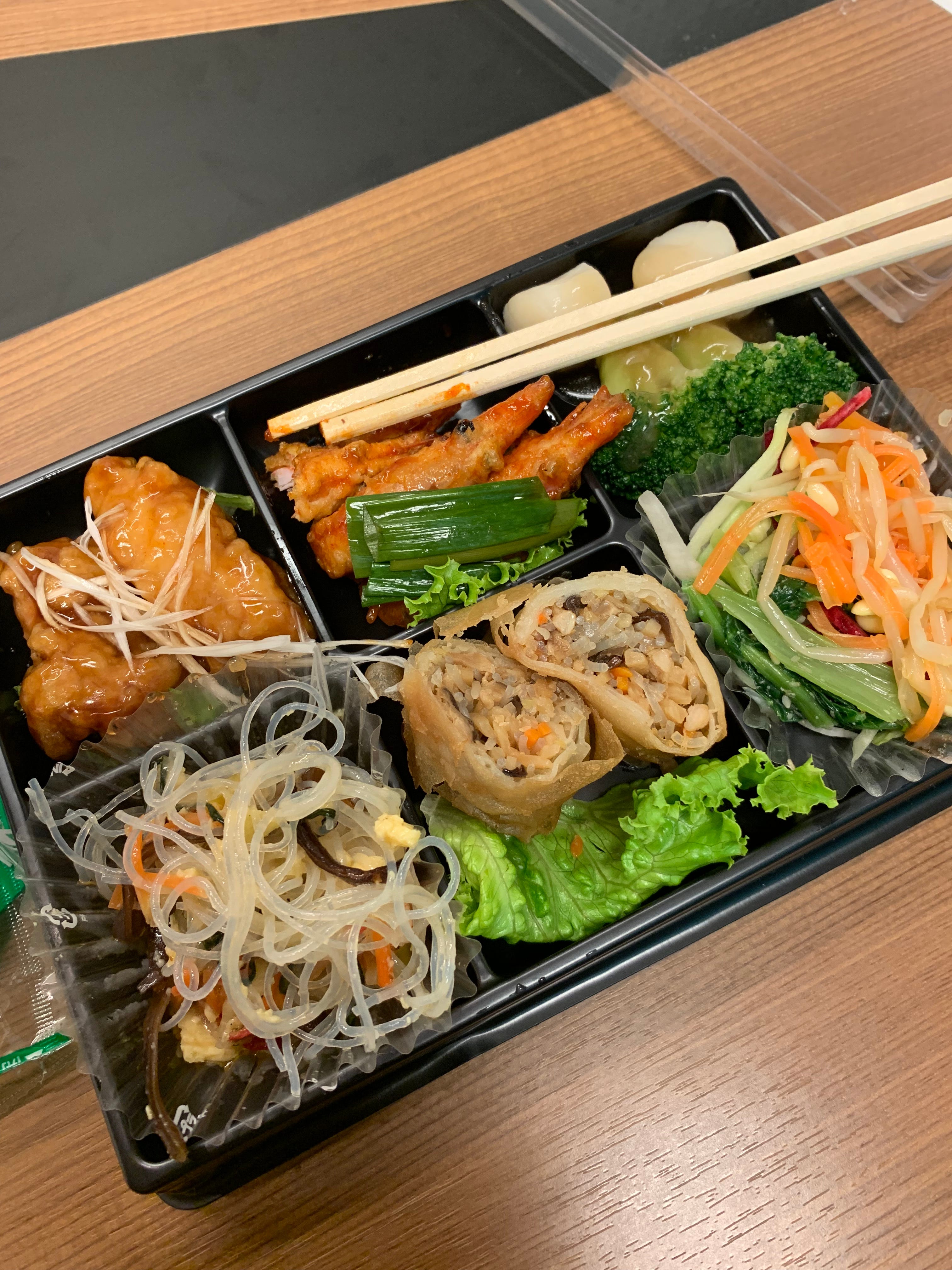
Another time recently, I was eating my bento box in an empty classroom during break time. I had finished the delicious assortment of flavors (shrimp, an amazing spicy noodle salad, fried chicken, saucy tofu, Japanese pickles, some greens) and was staring at the empty box, admiring its packaging, when a student who was a bit early for the next class popped his head in. He began to read the label of the box to me, written in kanji which I can’t read. “Five colors, six flavors,” he said it said. (I bought this very cheaply, for around 400 yen or $4). Two of the dishes in the box had been the same color—the shrimp and the chicken—but each had its distinct flavor, so I guess that’s why it was called “five colors, six flavors.” Just as I was about to respond to his information, N* walked by and gasped. She began nervously laughing and apologizing to the student that he had to see his teacher, not eating, mind you, but looking at her empty bento box about to clean it up. She was making eyes at me, like, “how embarrassing! Oh no! Haha” I’m like, trying to look at her reassuringly back but thinking “…i’m sorry, i’m not embarrassed that an adult student had to learn something most children learn in the first grade, namely that their teachers are human beings who eat and exist outside of class hours.”
This reminded me of another time, some teachers and I were eating in the common area during official break time, when the doors are locked to students. N* gingerly approached us to say she would be opening the doors early because a student named Taiki had made an appointment with her to study for his level-up test. “Wait, isn’t Taiki a kid? Who is 8 years old?” “Yes,” she said. “That Taiki.” So, we have to clean up and hide in the back room for his benefit? (He wouldn’t be coming with his parents since at 8 years-old, kids can usually do everything on their own). “Yes. Sorry. As I told you,” she said, becoming visibly nervous, “he will be coming soon, so please…hide your selves.”

To quote William Blake it is through sh*t like this I believe that the kids who are so cute and free slowly lose the divine joy that comes so naturally to them and over time become anxious and depressed. It is all for the benefit of the fuinki and the omotenashi, which makes us pretend that the humanity in us is bad and the corporate world is great.
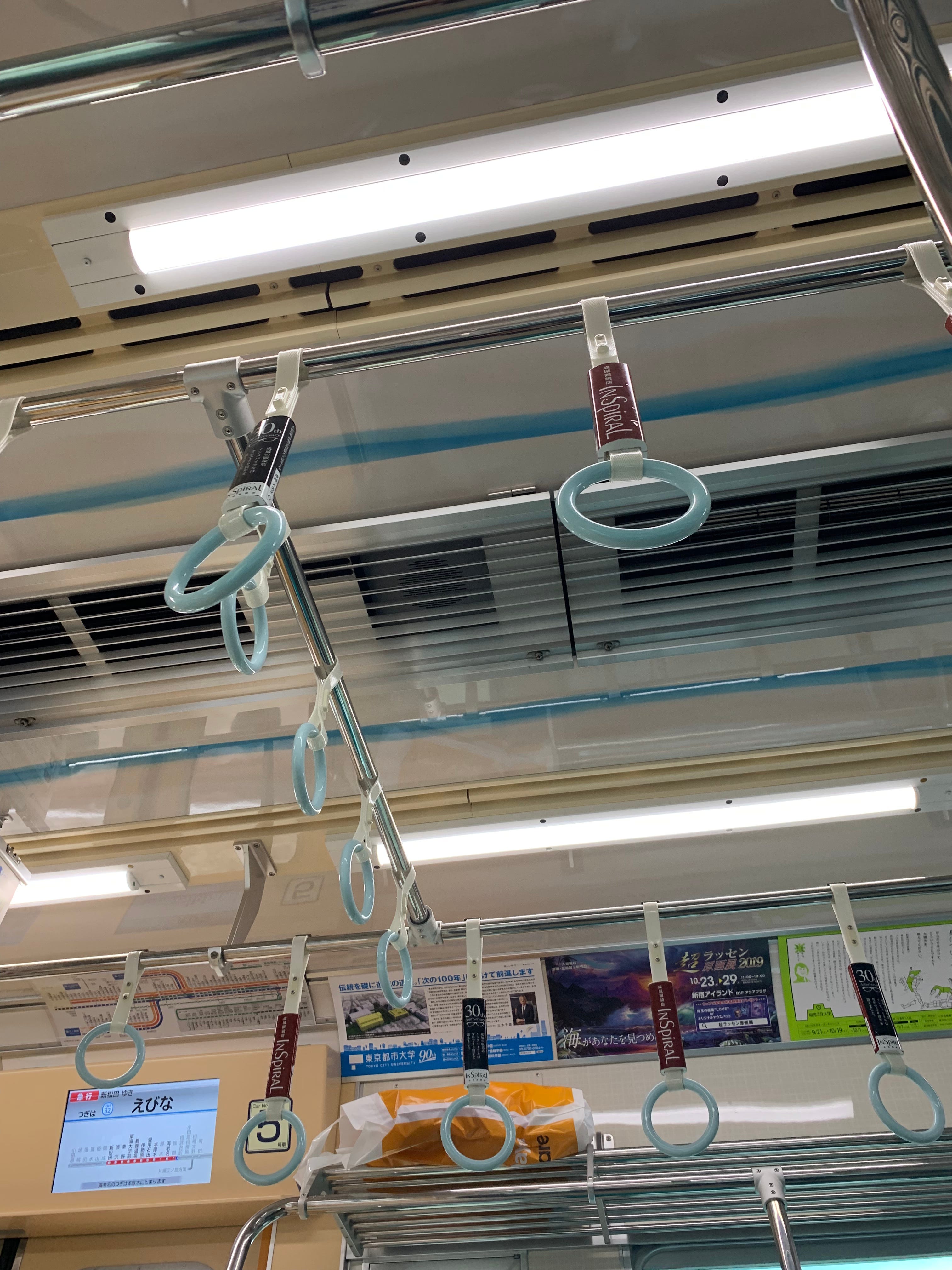
(train above that was decorated for its 90th birthday. I believe you can see the outline of a child trying to get my attention from inside. The sign on the window is that this car is women's only during rush hours—a tale for another letter) (I love the design details on the train below)
Comments
Archives
- October 2026
- September 2026
- August 2026
- July 2026
- June 2026
- May 2026
- April 2026
- March 2026
- February 2026
- January 2026
- December 2025
- November 2025
- October 2025
- September 2025
- August 2025
- July 2025
- June 2025
- May 2025
- April 2025
- March 2025
- February 2025
- January 2025
- December 2024
- November 2024
- October 2024
- September 2024
- August 2024
- July 2024
- June 2024
- May 2024
- April 2024
- March 2024
- February 2024
- January 2024
- December 2023
- November 2023
- October 2023
- September 2023
- August 2023
- July 2023
- June 2023
- May 2023
- April 2023
- March 2023
- February 2023
- January 2023
- December 2022
- November 2022
- October 2022
- September 2022
- August 2022
- July 2022
- June 2022
- May 2022
- April 2022
- March 2022
- February 2022
- January 2022
- December 2021
- November 2021
- October 2021
- September 2021
- August 2021
- July 2021
- June 2021
- May 2021
- April 2021
- March 2021
- February 2021
- January 2021
- December 2020
- November 2020
- October 2020
- September 2020
- August 2020
- July 2020
- June 2020
- May 2020
- April 2020
- March 2020
- February 2020
- January 2020
- December 2019
- November 2019
- October 2019
- September 2019
- August 2019
- July 2019
- June 2019
- May 2019
- April 2019
- March 2019
- February 2019
- January 2019
- December 2018
- November 2018
- October 2018
- September 2018
- August 2018
- July 2018
- June 2018
- May 2018
- April 2018
- March 2018
- February 2018
- January 2018
- December 2017
- November 2017
- October 2017
- September 2017
- August 2017
- July 2017
- June 2017
- May 2017
- April 2017
- March 2017
- February 2017
- January 2017
- December 2016
- November 2016
- October 2016
- September 2016
- August 2016
- July 2016
- June 2016
- May 2016
- April 2016
- March 2016
- February 2016
- January 2016
- December 2015
- November 2015
- October 2015
- September 2015
- August 2015
- July 2015
- June 2015
- May 2015
- April 2015
- March 2015
- February 2015
- January 2015
- December 2014
- November 2014
- October 2014
- September 2014
- August 2014
- July 2014
- June 2014
- May 2014
- April 2014
- March 2014
- February 2014
- January 2014
- December 2013
- November 2013
- October 2013
- September 2013
- August 2013
- July 2013
- June 2013
- May 2013
- April 2013
- March 2013
- February 2013
- January 2013
- December 2012
- November 2012
- October 2012
- September 2012
- August 2012
- July 2012
- June 2012
- May 2012
- April 2012
- March 2012
- February 2012
- January 2012
- December 2011
- November 2011
- October 2011
- September 2011
- August 2011
- July 2011
- June 2011
- May 2011
- April 2011
- March 2011
- February 2011
- January 2011
- December 2010
- November 2010
- October 2010
- September 2010
- August 2010
- July 2010
- June 2010
- May 2010
- April 2010
- March 2010
- February 2010
- January 2010
- December 2009
- November 2009
- October 2009
- September 2009
- August 2009
- July 2009
- June 2009
- May 2009
- April 2009
- March 2009
- February 2009
- January 2009
- December 2008
- November 2008
- October 2008
- September 2008
- August 2008
- July 2008
- June 2008
- May 2008
- April 2008
- March 2008
- February 2008
- January 2008
- December 2007
- November 2007
- October 2007
- September 2007
- August 2007
- July 2007
- June 2007
- May 2007
- April 2007
- March 2007
- February 2007
- January 2007
- December 2006
- November 2006
- October 2006
- September 2006
- August 2006
- Older Archives
Resources & Links
- The Letters Prize
- Pre-2007 Victor Niederhoffer Posts
- Vic’s NYC Junto
- Reading List
- Programming in 60 Seconds
- The Objectivist Center
- Foundation for Economic Education
- Tigerchess
- Dick Sears' G.T. Index
- Pre-2007 Daily Speculations
- Laurel & Vics' Worldly Investor Articles
