Mar
30
Counting on Chinese Canvas, from Marion Dreyfus
March 30, 2007 |
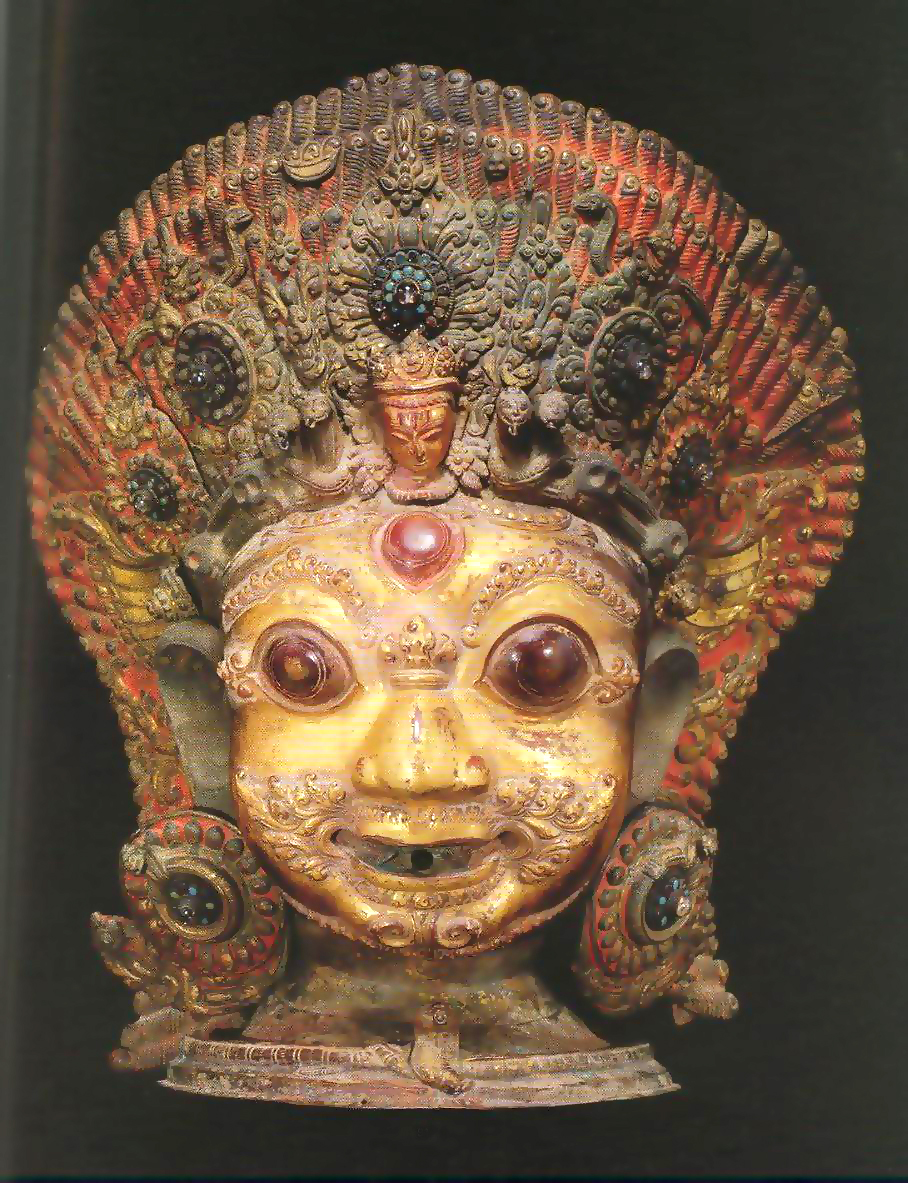 The Asian Art Auction held at Sotheby's in March was notable for several reasons.
As recognized by the art crowd, it is a baby market. As such, the prices are still short of the stratospheric heights attained by the likes of the Impressionists and their kin.
Still, the prices were not the bargains of five years ago, when a few thousand could fetch you a now-prime Huang Yan, whose multiple face images feature handsome young Chinese men with calligraphy, fernery or landscapes "creeping" or growing across their faces, hands or torsos. Still, for his intensely mesmerizing "Face Painting: Plum, Orchid, Bamboo and Chrysanthemum," lot 247, the hammer struck sold for a bargain $20,000. One can hypothesize a rapidly ascending price trajectory for Huang.
A fellow in the art field, British, living currently in Shanghai, murmured to this reporter that such prices as were common at the auction are "hype." Asked for follow-up clarification on this capsule review, the Brit, call him Trevor, said that hammer prices are not reflective of the actual prices for these paintings. Of the 308 lots auctioned on Wednesday, 21 March, three went to the mat for over $1 million. Highest price, for lot 21, "Bloodline: Three Comrades," by the stunning Zhang Xiaogang (one of my favorites), sold for $1.85m. The aggregate sum (commission plus taxes) totaled an impressive $2.11m. His painting adorned the inside cover of the Sotheby's catalog.
The front of the catalog featured a descending series of four Chinese brushstrokes ideograms. I puzzled over them awhile, trying to discern stroke formations I learnt while I lived there. Finally, after much effort, I realized what they 'said.' Art For The People — in English! — cunningly worked into traditional calligraphic formats. This lot 153, by Xu Bing, "Square Word Calligraphy," drew $190,000 on the hammer.
"Goldfish," lot 53, by the significant and escalating painter, Yue Minjun, now 45, went for $1.2m. It is a strong canvas, with a repeating Chinese Kuomintang figure, smiling broadly in profile, receding endlessly into the distance, curving around a balustrade suggestive of the Great Wall. All the identical figures grinned broadly as they peered down into a dark strand of water where a lone goldfish swam, indifferent to his onlookers.
An exceptional formulation of the traditional Chinese five-pointed star was captured in chilling detail, with rivets and nails and metal cobbling together the symbol of the State, in "Five-Pointed Star," by Leng Jun, which went for $1.05m, minus aggregate fees and commission.
Another of my favorites, Wang Guangyi, sold one of his less-glorious canvasses, "Eternal Halo #1," for a mere $310,000, lot 170. At 50, Wang is one of the elders of these powerful artists. His canvasses often sport two unrelated series of file numbers "stenciled'' in black over entire canvases in regular intervals, like flocking; his colors are often primary red, yellow and black, and the overall feel is that of ambitious patriotic revolutionary posters of the sort that still abound in the hamlets and byways of the Peoples Republic.
A striking Chinese red sculpture standing some 10' tall marched strong black dots ascending and descending invisible longitude lines from its topmost twig end on a "pumpkin" of brilliant Styrofoam and acrylic sold for $220,000 ($264,000 in aggregate). Created by one of the older artists represented: Yayoi Kusama, at 78, is several decades older than the run of artists at the center of attention. To my eyes, it more resembled a giant red bosque pear than a pumpkin. Other sculptures, in green bronze, rosewood, iron, bronze, painted wood, and, especially, aluminum, were very strong examples of the form. In particular, Sui Jianguo drew plaudits, and $240,000, for his 5-foot-tall aluminum pompous, empty Mao's jacket, "Legacy Mantle." It spoke voluminously as it stood commandingly — massy, gray, fearsome — at the head of the auction hall.
Two well-received names sold for from half a million to one million. More than 50 works sold for from $100,000 to half a million. Several, of course, seemed like bargains for under $10,000, with the biggest bargain three lots that went for a mere $2,000, with a puny $400 for fees and taxes.
The morning session, with 125 lots, sold far more expensively than the second session after 2 pm, with another 125 lots. Most of the heavy draws were sold in the morning; all three $million+ canvasses were auctioned in the early session. One canvas in the afternoon session did top half a million. Wang Yidong's "Yi River," a deceptively 'easy' representational painting with immaculate brushstrokes of a young peasant woman on a round stone in a fabric-seeming river, in front of a sleeping contemporary man on a black rock ledge, went for $680,000. Aggregated, the total price topped $800,000. Not bad for a market of such tender years.
Many of favorites were on sale, and some, as one would expect, were to be had at bargain pricings, as well as the obverse. Subject matter that was less conventionally 'pretty,' or that had a deeper subtext that required more time to suss out, such as the agonized self-portrait of a harsh nude, "Dreaming," by Liu Xiaodong, were purchased for well below what should be their correct market rates. Axiomatically, while unconventional paintings might not grab the 'sofa-conscious' buyer, they are often the canvasses that linger in the assessments of the elite and discerning, far down the road. Their value often accretes with successive press and acclaim.
Coming into the picture are questions of living with the artwork –some paint is just easier on the eyes, and living spaces, than others.
The crowd was considerably thinner than last year, despite the strong representatives of exceptional Chinese painting and sculpture, indicating perhaps that the non-gathered were aware that the prices were no bargain. Being at the Sotheby auction is in my opinion one of the iconographic IT experiences one can experience in NYC. The excitement at lifting a bat and having the auctioneer recognize one's bid with a nod, then being overbid by a telephone bidder (a slew of telephone assistants on a raised dais lined both sides of the hall, on the phone constantly taking bids from those stationed elsewhere but unwilling to let a favored art-piece go without a pertinent offer).
My bat was a favorite number: 807. I carefully keep my yawning and waving to friends at a minimum, ever since, some years ago, I mistakenly "purchased" a $5,000 item at an Israeli auction of memorabilia from Entebbe and other high-notes of Israeli history. Another time, excited by the aura of excitement at a furniture and household auction, I bid on a killim I neither wanted nor needed –and got it. Now, I keep myself in check, do not drink before or during such events, and sit on my paddle. Why go, if that is the case? Endorphinic rush, that's why.
It is a truism that if the current escalation in valuation continues, next year's prices will be at a premium to this year's, so those not sitting in this week may have forgone a buying opportunity, much as the nose-bleed tags seem to belie that possibility. Few storied subprime lenders hang out in these precincts, and fewer still, those who can't shell out the shekel.
My art dealer from Shanghai also voiced the mantra of all art auctions: "Of course, don't buy on the expectation of appreciation. Don't buy unless you love the artwork. There is no guarantee these works will scale upwards in the future." No telling how many of the hundreds of purchases were from ardor and not dancing-dollar dreams.
The artwork, costly or not, was among the most pristine and enjoyable I have seen in years, and especially so when compared to nonpolitically stressed oeuvres. It is obvious that countries where the polity may not voice their opinions overtly often excel in exceptionally vivid and vocal productions in the plastic arts. A gander at Russian work from the war years, as well as at Nazi-era productions, reinforces this postulate to squelched freedom of speech.
Art can do what tongues cannot.
China, though hardly the mirror of the brutal "Thousand Year Reich," manages to blank out some emails, overt public dissent, workers' strikes or protests and the like. It has produced, evidently, a bumper crop of striking and eminently collectible works of canvas and wood, marble and metal, works that speak profoundly to the emerging culture, to the voice of silence, and to the rebirth of expression by another name.
Comments
Archives
- October 2026
- September 2026
- August 2026
- July 2026
- June 2026
- May 2026
- April 2026
- March 2026
- February 2026
- January 2026
- December 2025
- November 2025
- October 2025
- September 2025
- August 2025
- July 2025
- June 2025
- May 2025
- April 2025
- March 2025
- February 2025
- January 2025
- December 2024
- November 2024
- October 2024
- September 2024
- August 2024
- July 2024
- June 2024
- May 2024
- April 2024
- March 2024
- February 2024
- January 2024
- December 2023
- November 2023
- October 2023
- September 2023
- August 2023
- July 2023
- June 2023
- May 2023
- April 2023
- March 2023
- February 2023
- January 2023
- December 2022
- November 2022
- October 2022
- September 2022
- August 2022
- July 2022
- June 2022
- May 2022
- April 2022
- March 2022
- February 2022
- January 2022
- December 2021
- November 2021
- October 2021
- September 2021
- August 2021
- July 2021
- June 2021
- May 2021
- April 2021
- March 2021
- February 2021
- January 2021
- December 2020
- November 2020
- October 2020
- September 2020
- August 2020
- July 2020
- June 2020
- May 2020
- April 2020
- March 2020
- February 2020
- January 2020
- December 2019
- November 2019
- October 2019
- September 2019
- August 2019
- July 2019
- June 2019
- May 2019
- April 2019
- March 2019
- February 2019
- January 2019
- December 2018
- November 2018
- October 2018
- September 2018
- August 2018
- July 2018
- June 2018
- May 2018
- April 2018
- March 2018
- February 2018
- January 2018
- December 2017
- November 2017
- October 2017
- September 2017
- August 2017
- July 2017
- June 2017
- May 2017
- April 2017
- March 2017
- February 2017
- January 2017
- December 2016
- November 2016
- October 2016
- September 2016
- August 2016
- July 2016
- June 2016
- May 2016
- April 2016
- March 2016
- February 2016
- January 2016
- December 2015
- November 2015
- October 2015
- September 2015
- August 2015
- July 2015
- June 2015
- May 2015
- April 2015
- March 2015
- February 2015
- January 2015
- December 2014
- November 2014
- October 2014
- September 2014
- August 2014
- July 2014
- June 2014
- May 2014
- April 2014
- March 2014
- February 2014
- January 2014
- December 2013
- November 2013
- October 2013
- September 2013
- August 2013
- July 2013
- June 2013
- May 2013
- April 2013
- March 2013
- February 2013
- January 2013
- December 2012
- November 2012
- October 2012
- September 2012
- August 2012
- July 2012
- June 2012
- May 2012
- April 2012
- March 2012
- February 2012
- January 2012
- December 2011
- November 2011
- October 2011
- September 2011
- August 2011
- July 2011
- June 2011
- May 2011
- April 2011
- March 2011
- February 2011
- January 2011
- December 2010
- November 2010
- October 2010
- September 2010
- August 2010
- July 2010
- June 2010
- May 2010
- April 2010
- March 2010
- February 2010
- January 2010
- December 2009
- November 2009
- October 2009
- September 2009
- August 2009
- July 2009
- June 2009
- May 2009
- April 2009
- March 2009
- February 2009
- January 2009
- December 2008
- November 2008
- October 2008
- September 2008
- August 2008
- July 2008
- June 2008
- May 2008
- April 2008
- March 2008
- February 2008
- January 2008
- December 2007
- November 2007
- October 2007
- September 2007
- August 2007
- July 2007
- June 2007
- May 2007
- April 2007
- March 2007
- February 2007
- January 2007
- December 2006
- November 2006
- October 2006
- September 2006
- August 2006
- Older Archives
Resources & Links
- The Letters Prize
- Pre-2007 Victor Niederhoffer Posts
- Vic’s NYC Junto
- Reading List
- Programming in 60 Seconds
- The Objectivist Center
- Foundation for Economic Education
- Tigerchess
- Dick Sears' G.T. Index
- Pre-2007 Daily Speculations
- Laurel & Vics' Worldly Investor Articles
