Apr
3
NYC Junto, from Vic Niederhoffer
April 3, 2014 | 1 Comment
On Thursday April 3, 2014 at 7 pm Don Smith president and CIO of Don Smith & Co. (a successor to Home Portfolio Advisors), a deep value investor, and free market personage, will be speaking at the NYC Junto at the mechanics institute's General Society Library, 20 West 44 th St, NYC). All Dailyspec readers and fellow individualists are invited.
Apr
3
I Wonder Why, from Richard Owen
April 3, 2014 | 1 Comment
 Apparently, in the mid 1920s, a washing machine and a Ford Model T both cost around $300.
The ratio of those prices has changed dramatically.
I wonder why?
Shane James writes:
A magnificent relationship to ponder.
Richard Owen adds:
Another strange example of deflationary monetary flows is that in the 1990s, when Operation Tuxedo stopped the December flow of 120k MDMA tablets, 108kg of amphetamine and 60kg of hash into Liverpool, armed robberies of bookies and posts offices in Merseyside increased by 80% the following Jan and Feb.
Pete Earle writes:
My off the cuff answer: the political machinations surrounding auto manufacturing (labor, corporate and military acquisition, etc.) leads to a large degree of government intervention, price controls, etc., in turn producing distortions, whereas washing machines are (far) less 'corporatistically' engaged. Also, a washing machine is still, for the most part (excepting, I guess, credit cards) an outright purchase, where rarely if ever is a car purchased without some sort of long-term financing. (Although the latter may be effect, and not cause.)
Apr
3
The Bubble, from Steve Ellison
April 3, 2014 | Leave a Comment
 Bubble might be the most overused term in finance. It seems that if any asset price goes up, somebody will say it is a bubble. I think of a bubble as being an event of extreme price increases accompanied by widespread behavior that would be considered irrational in normal times. As Eric Falkenstein pointed out in the excellent article cited below, fraud becomes rampant, too. Valuing money-losing Internet startups on eyeballs in 2000 was irrational in hindsight. So was giving $700,000 no-doc mortgages to anybody who showed up. The only comparably insane activity that I am aware of today is building whole cities of empty buildings in China.
"A Batesian Mimicry Explanation of Business Cycles"
[B]usiness cycles are best understood though the framework of Batesian mimicry, an endogenous mechanism for booms and busts thru a misallocation in the horizontal structure of production. In ecosystems, Batesian mimicry is typified by a situation where a harmless species (the mimic) evolves to imitate the warning signals of a harmful species (the model) directed at a common predator (the dupe). …
… In an expansion investors are constantly looking for better places to invest their capital, while entrepreneurs are always overconfident, hoping to get capital to fund their restless ambition. Sometimes, the investors (dupes) think a certain set of key characteristics are sufficient statistics of a quality investment because historically they were. Mimic entrepreneurs seize upon these key characteristics that will allow them to garner funds from the duped investors. The mimic entrepreneurs then have a classic option value, which however low in expected value to the investor, has positive value to the entrepreneur. The mimicry itself may involve conscious fraud, or it may be more benign, such as naïve hope that they will learn what works once they get their funding, or sincere delusion that the characteristics are the essence of the seemingly promising activity.
Gary Rogan writes:
The thing about bubbles, they can only be definitively identified in retrospect when it's useless for any practical purposes. Is Facebook with P/E of 100, P/S of 20, and P/B of 10 a bubble? Is Facebook paying $19 Billion, more than 10% of its market cap for a company with $20 million in revenue a sign of a bubble?
anonymous adds:
I have never understood the "only identified in hindsight" notion. I think I have been reasonably good at identifying bubbles. Most of the traders I have known, If I look back, i think have been decent at identifying bubbles. The real problem is that identifying bubbles has nothing to do with profiting off of them, and that creates confusion.
The real problem for those who want to call a "bubble" and benefit from it is that there is almost never a mechanism for arbitraging the situation other than by participating in, and thus perpetuating, the bubble. That is why it becomes a self-reinforcing process. People claim not to know things are not irrational because that is how one saves face or reputation after the music stops. Before the music stops, everyone hopes to be quick enough to find a seat.
To switch the topic, or perhaps an analogy, in Atlas Shrugged Rand had the heroes use a very interesting strategy to change the social order. Rather than "fighting" the system, they accelerated the system. That was a good strategy. I think this same type of ordering process occurs at times in financial markets. At times, the fastest way to end a bubble or pop a bubble is to accelerate its growth - the underlying process is too strong to fight or go against.
Apr
2
Guaranteed to Happen, from Victor Niederhoffer
April 2, 2014 | 4 Comments
 1. When you got out for lunch, the market will take a big move in your favor that you were too slow on the trigger to capture. Your wicked friends will stay glued to the screen during that time, knowing the big move in what would have been in your favor is about to happen.
2. When you switch your position size down after series of big losses, you will hit 5 winners in a row, which will not compensate you for just one of the big losses you took.
3. The bonds will rally big on a economic number like GNP, but stocks will go down sharply and the explanation will be concerns about interest rate increases.
4. The big basketball game will feature a comeback the previous evening that is exactly like what happens in your market, and your team won't make it to black nor will you.
5. Whenever you have a big loss, and it turns around and goes to break even and you get out with a hootenany of relief, the market will go at least as far in your favor if you held as your were under water before.
6. Whenever there is serious morbidity in your family, you will lose many days in a row.
7. After a tremendous decline, the market will percolate around near unchanged for a day or two until you give up hoping for a rise, and then it will have a huge rise in your favor.
8. After a series of lucky trades in your favor, you will increase your size and the market will give you a tremendous beating. The same thing happens with basketball teams when they hit a lucky % of threes in the first half. When they try the same thing in the second half, they will make only 10% of them, and will go on to an ignominious defeat.
9. The worst trader on your team will be the one that defends you after a big loss and says that everyone should rally behind the boss, he's been trading the longest. Imagine the ignominy of having Smith the worst player in the league, and the cause of all the Knicks woes, defending Woodson and saying all the team should rally behind him because he works so hard.
10. Your wife will come in and look at the roller coaster chart of your swings on the day, and suggest "why don't you get out of half". You won't listen to her and you'll double up, and you'll be so ashamed you'll quietly sleep in the dogs kennel that evening.
11. The more time that passes from your early days as a speculator, the better you were (in your own eyes).
12. When you're long the grains in the summer, and you spend a weekend in the Hamptons, the sun will shine brightly all day, and a light rain will fall at the end of the day.
13. When you go out for dinner, the person next to you will be talking about his youngest daughter bought Netflix and Tesla and made millions on them.
14. After getting out of positions successfully on a swing during the day, you will try it the next day, and by the close if you had held your position you would be a rich man.
15. When you're long the market over the weekend, war will break out, or John Kerry will be reported to be visiting the Mideast or Russia to put out a fire.
Please add to the list.
David Lillienfeld writes:
Vic, if it makes you feel any better about it, I often wind up having to sleep in the kennel, and that's without a trading loss. And we don't even have a kennel.
Gary Rogan writes:
David's tale of woe reminded me of the old definition of Metaphysics: it's like being in a dark room and looking for a black cat that isn't there. Either that or the waterbed joke: you know it's going to be a bad day when your waterbed has sprung a leak and then you realize you don't even have a waterbed.
But for me what's guaranteed to happen is this: if I buy a little of some stock, I will have a nice gain, if I buy a lot, I will have a big loss.
Ed Stewart writes:
 The malevolent invisible hand guides ones trades when the in-laws visit. Suddenly your position size is 3X the norm, getting bigger, and at just the wrong time.
George Parkanyi writes:
16. When you sell or short a stock - a takeover announcement will happen the next day (that happened to me twice - sold Robert Simpson; shorted General Instrument).
17. When you go from theory to practice, your well-researched and tested system will immediately bleed money, and will only start making money (without you) when you stop using it.
18. The positioning of your stop-loss order is irrelevant - you WILL be stopped out within a few cents of the low/high, and the market WILL go roaring the other way. (This is the only sure thing in trading.)
19. You will apply logic, reason and critical thinking to the market. You might as well have thrown a dart.
20. In exasperation you will eventually just throw a dart. Your position will go against you.
21. You will continue trading anyway, because your DNA has failed, permanently locked in the "I can do this" switch position.
Craig Mee writes:
As soon as you mention a position to
anyone (some more so than others–for example, Vic's Hoodoos) the
heavens will open and you can kiss it goodbye.
Ed Stewart adds:
Another guaranteed to happen item. Far more often than should occur by chance an invisible hand keeps you in the loss by a few ticks. At this point if you get out with a planned time based exit, most often prices move quickly in what would have been your favor. If you stay in, it does the opposite. And a related item, if you get out with a day-trade profit, it keeps going in your favor for days. If you swing trade it, the reversal was just a blip in the previous trend and you are soon dunked underwater again. My thought, and I could be wrong, is that much of this is real, not imagined, and is a more distant effect of the adverse selection problem with limit orders.
Apr
2
Trading and Fishing, from Hernan Avella
April 2, 2014 | Leave a Comment
 In preparation for my first fishing trip of the year next weekend, I watched the film Low and Clear. It starts with the usual boring fishing-zen dialogues, but then it presents an interesting parallel between mentor and student reunited for a steel-head fishing trip in BC. The mentor is a fishing master that has done little else with his life and has a relentless approach to catching fish. The student now has a life outside fishing, but he is not as good fisherman anymore and he focuses more on the experience of fishing and other superfluous things like a "spade cast".
This contrast reminded me of the time when I discovered that trading didn't need to be a beautiful process, it only needs to get the job done. And somehow I don't see around the guys who were obsessed about catching the big swing with fancy methods. I do see the disciplined hybrids (specs/grinders) consistently making money every year.
A quote from the Palindrome seems appropriate:
"A lot of people of average intelligence make a good living. Really smart people can accumulate a fortune if they are truly committed. The problem with you is that you like to do interesting work. Someone who wants to be rich doesn't care what he does. He only focuses on the bottom line. All day long he thinks how can he make more money. If that means setting up more shoe shine stands, that's what he does."
Happy Fishing, and trading!
Duncan Coker writes:
It is good to hear from another angler on the list. Hernan brings up the "winning ugly" concept as it relates to fishing and trading. It is definitely better to win ugly, then lose gracefully in trading, in sports and many other things. In fact all my trades are ugly. It is a scrappy dog fight.
Fishing, though, is a respite and pastime in nature, not a vocation. If I was a guide maybe I would feel differently. But as an amateur and outdoorsman, I like all the aspects, walking to the river, scouting for fish, setting up, casting. On style, I much prefer spending the day taking long casts with a dry fly versus "hucking-lead", the equivalent of bait fishing on a river. My fishing buddy and I fit the two different profiles well. It ain't pretty, but he catches more fish. I am slow and deliberate. He races from one spot to the next and probably works a bit harder on the river. I suppose it is how you define success. In trading it is clear, P&L is all that matters. In fishing a day on the river is always a winning trade and I don't define fishing success relative to anything. Like an aspiring Zen master on the river, fishing simply is.
Apr
2
Ohh what a Yuan, from Leo Jia
April 2, 2014 | Leave a Comment
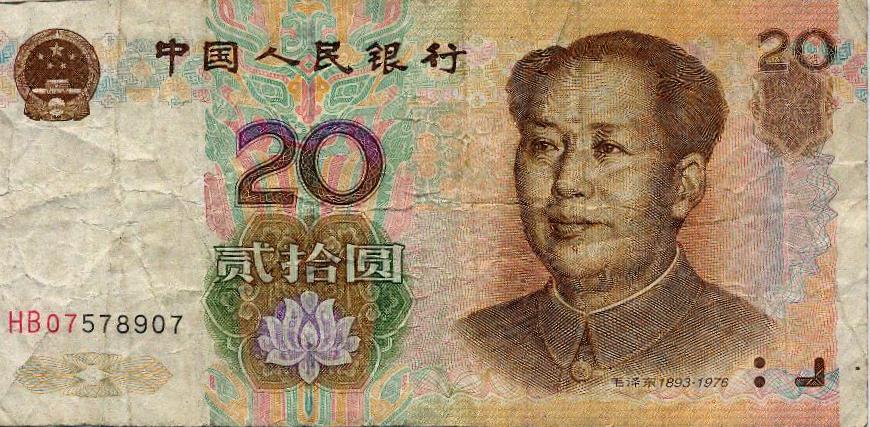 The lesson I would take is this.
Initially, people believed that the yuan had been manipulated (or in better word, controlled) at a very cheap level. So they invested in yuan. Then it has been so apparent to everyone that the smooth uptrend was due to control. So having witnessed the evidence of control twice, one should have envisioned that the same control could be against one's favor as well.
Apr
1
I Hate to Say it, But… from Gary Phillips
April 1, 2014 | 4 Comments
I hate to say it, but i don't see that much difference between yesterday's human-driven liquidity providers (floor traders) and the machine-driven liquidity providers of today. Except that as a local in the pit, I often possessed exogenous information, yet to be incorporated in the market. Predatory algorithms must rely on their endogenous actions to trigger the desired outcome.
Of course, in my own version of strategic sequential trading, I would often hit bids and lift offers, in search of stops, only not quite as fast or unemotionally. Yet all of this was easily rationalized as our due privilege for the risk incurred while providing liquidity. Ceteris paribas, we did this for the same reason a dog licks his balls… because we could.
Perhaps, if Goldman wasn't Obama's largest campaign contributor, and SEC officials didn't have a quid pro quo for job placement in place with the private sector b&ds and law firms, and the exchanges hadn't gone for-profit, we might not be discussing this topic.
Apr
1
The Book of the Day, from Victor Niederhoffer
April 1, 2014 | 1 Comment
In honor of the President of the Old Speculators Club. "The Duck Hunter's Book" by Lamar Underwood
Remembrances of the good old duck hunter's days by Gene Hill: your good wife downstairs in the kitchen making oatmeal and maybe a buttermilk biscuit or two to tamp the whole thing down. Along about half pas three, with the second cup of coffee in yur hand you'd be out on the porch semilling the wind like an eger hound. Your wife sees the timeless excitement in your face and takes pleasure in the fact there's still a lot of boy that's living in the man she married years ago. I hope she'll be the one to hear my horse's hooves striking sparts from the frrozen road and come out say hellow when I stop to pick you up– with a hot cup and maybe a biscuit or two.
Apr
1
The Missouri Loophole, from Carder Dimitroff
April 1, 2014 | Leave a Comment
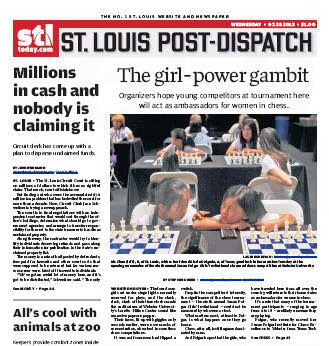 The Missouri loophole is positioned to spread like a virus to other states.
The issue is about interstate transmission lines. It is positioned as a battle between state and federal regulators. The utility believes interstate commerce is in the domain of the Federal Energy Regulatory Commission (FERC). The state believes it is in the domain of the state's Public Service Commission (PSC). Kansas City Power & Light now seeks clarification from the Supreme Court of the United States.
According to the St. Louis Post Dispatch, "The case is also considered an important test of federal authority over energy policy. It hinges in part on the doctrine that interstate transmission rates approved by a federal agency are considered just and reasonable, the Star reported. Another issue is the U.S. Constitution's supremacy clause, which allows the federal government to trump state authority."
I thought this was a settled matter. Apparently, [many] others disagree.
If this matter goes forward, a SCOTUS decision would impact Entergy (ETR) and ITC Holdings (ITC). It would also impact American Electric Power (AEP), FirstEnergy (FE) and any other company owning t-line assets.
I believe this issue could creep into natural gas.
For more, see the newspaper's article here.
« go back —Archives
- October 2026
- September 2026
- August 2026
- July 2026
- June 2026
- May 2026
- April 2026
- March 2026
- February 2026
- January 2026
- December 2025
- November 2025
- October 2025
- September 2025
- August 2025
- July 2025
- June 2025
- May 2025
- April 2025
- March 2025
- February 2025
- January 2025
- December 2024
- November 2024
- October 2024
- September 2024
- August 2024
- July 2024
- June 2024
- May 2024
- April 2024
- March 2024
- February 2024
- January 2024
- December 2023
- November 2023
- October 2023
- September 2023
- August 2023
- July 2023
- June 2023
- May 2023
- April 2023
- March 2023
- February 2023
- January 2023
- December 2022
- November 2022
- October 2022
- September 2022
- August 2022
- July 2022
- June 2022
- May 2022
- April 2022
- March 2022
- February 2022
- January 2022
- December 2021
- November 2021
- October 2021
- September 2021
- August 2021
- July 2021
- June 2021
- May 2021
- April 2021
- March 2021
- February 2021
- January 2021
- December 2020
- November 2020
- October 2020
- September 2020
- August 2020
- July 2020
- June 2020
- May 2020
- April 2020
- March 2020
- February 2020
- January 2020
- December 2019
- November 2019
- October 2019
- September 2019
- August 2019
- July 2019
- June 2019
- May 2019
- April 2019
- March 2019
- February 2019
- January 2019
- December 2018
- November 2018
- October 2018
- September 2018
- August 2018
- July 2018
- June 2018
- May 2018
- April 2018
- March 2018
- February 2018
- January 2018
- December 2017
- November 2017
- October 2017
- September 2017
- August 2017
- July 2017
- June 2017
- May 2017
- April 2017
- March 2017
- February 2017
- January 2017
- December 2016
- November 2016
- October 2016
- September 2016
- August 2016
- July 2016
- June 2016
- May 2016
- April 2016
- March 2016
- February 2016
- January 2016
- December 2015
- November 2015
- October 2015
- September 2015
- August 2015
- July 2015
- June 2015
- May 2015
- April 2015
- March 2015
- February 2015
- January 2015
- December 2014
- November 2014
- October 2014
- September 2014
- August 2014
- July 2014
- June 2014
- May 2014
- April 2014
- March 2014
- February 2014
- January 2014
- December 2013
- November 2013
- October 2013
- September 2013
- August 2013
- July 2013
- June 2013
- May 2013
- April 2013
- March 2013
- February 2013
- January 2013
- December 2012
- November 2012
- October 2012
- September 2012
- August 2012
- July 2012
- June 2012
- May 2012
- April 2012
- March 2012
- February 2012
- January 2012
- December 2011
- November 2011
- October 2011
- September 2011
- August 2011
- July 2011
- June 2011
- May 2011
- April 2011
- March 2011
- February 2011
- January 2011
- December 2010
- November 2010
- October 2010
- September 2010
- August 2010
- July 2010
- June 2010
- May 2010
- April 2010
- March 2010
- February 2010
- January 2010
- December 2009
- November 2009
- October 2009
- September 2009
- August 2009
- July 2009
- June 2009
- May 2009
- April 2009
- March 2009
- February 2009
- January 2009
- December 2008
- November 2008
- October 2008
- September 2008
- August 2008
- July 2008
- June 2008
- May 2008
- April 2008
- March 2008
- February 2008
- January 2008
- December 2007
- November 2007
- October 2007
- September 2007
- August 2007
- July 2007
- June 2007
- May 2007
- April 2007
- March 2007
- February 2007
- January 2007
- December 2006
- November 2006
- October 2006
- September 2006
- August 2006
- Older Archives
Resources & Links
- The Letters Prize
- Pre-2007 Victor Niederhoffer Posts
- Vic’s NYC Junto
- Reading List
- Programming in 60 Seconds
- The Objectivist Center
- Foundation for Economic Education
- Tigerchess
- Dick Sears' G.T. Index
- Pre-2007 Daily Speculations
- Laurel & Vics' Worldly Investor Articles
