Sep
2
Governments and Markets, from Victor Niederhoffer
September 2, 2012 | Leave a Comment
 One of the great regularities that I have observed from a long and not uneventful career in trading is that whatever governments want, the governments get. If they want stock prices to rise before an election, or oil prices to decrease or commodity prices to decrease they get it. They have so many trillions to work with, so many entities that can be called on to increase the perks and power of the governmental entities. There's the EU, the IMF, the central banks, the what have you. It always amazed me that the palindrome was able to overcome the Old Lady on the pound. All HM Government had to do was tell the private banks to charge 200% interest to the palindrome on the leverage. In those days, presumably the private banks were more independent, but now their very survival, profitability, and existence is dependent on the good will of the governments with the direct investments, the bailouts, the purchase of bad assets, the cost of borrowing reserves, the fines, the regulations that permit their existence unless they agree to further the "Idea". The whole thing must be quantified. And a subset of governmental market reactions must be found that are susceptible to predictions based on specific times, and events. (I think).
Art Cooper comments:
I agree that that is correct, what governments want, governments get, but that's merely the first stage. The second stage is that those groups/powers which have the greatest influence on government get what THEY want from government in those matters which are most important to them — that's who government serves. If Traveler's Insurance wants the repeal of Glass-Steagall so that, post-merger, they can continue all operations in a new Citigroup, then Glass-Steagall will be repealed. Special-purpose legislation seems the primary purpose of contemporary government.
T.K Marks writes:
I've often pondered what you said about the palindrome myself. My only conclusion was that he had to know that his position interests were favorably aligned with enough sovereign interests to pull it off. Or else Greenspan and his monetary brethren the world over would be very wary of the precedence of one private concern successfully staring down a central bank to the point of capitulation. And then basically reveling in the adulation.
Gary Rogan writes:
And that's an example of "knowing what's going on in the world" and making money from it. He seemingly makes these highly complex "let's reason it out" calculations and bets on them. Not long ago Victor related a story about Palindrome wanting him to bet on something using his reasoning and Victor retorting that he had to do what his numbers were telling him, or something like that.
The few times I listened to him drone on about globalization or how Europe will or will not solve its problems he sounded half-insane, but it evidently still works for him. Of course he now has a lot of influence, so there are self-fulfilling prophecies possibly at work.
Sep
2
A Propos of Recent Discussions of News and Price, from Victor Niederhoffer
September 2, 2012 | Leave a Comment
A propos of recent discussions, one can usually tell the gist of the news by the reaction in markets. For example, from Israel open to close [example chart below], one hypothesizes that a Fed official said something bad, and Spain is dickering concerning austerity. Usually during the day there are spikes in prices and one can usually guess what the news is from these spikes. Regrettably I have never been able to quantify whether these spikes, like 1/2% in one minute tend to reverse or continue. It would seem to depend on when it happens, and the evolutionary shift that what the inventor of the "finnigan" (the tendency for a mistake on the screen to turn out in actuality worse in real life), cited as a natural outgrowth of machine readable news .

Sep
2
French Markets and French Politics, from Bruno Ombreux
September 2, 2012 | 1 Comment
 My friend was telling me the other day that he thought it was likely France would try to nationalize its banks soon enough because "[a] previous Socialist government tried (and did, which is a big reason France became an economic basket case) and Hollande certainly suggested he might do the same if elected".
My view is that France will *not* try to nationalize its banks. The last socialist government (1997-2002) did not nationalize anything. In fact, the last socialist government privatized more companies than any other government in the history of France. Hollande never suggested he would nationalize banks. What Hollande campaigned for is a separation of investment banking / trading from traditional commercial banking / deposit activities. This would be a French version of the Glass-Steagall act. There is nothing socialist in Glass-Steagall. The conservative British government is going to do the same in the UK. What remains to be seen is if Hollande will implement this reform. Because the powerful banking lobby is fighting it tooth and nail.
As far as the impact of French politics on the markets is concerned, my opinion is that they have zero impact. France is too small a country to matter economically. And 90% of the regulations are originated in the EU, that is in Bruxelles, not Paris. So you can do like me, ignore French politics except for fun.
Sep
2
Rakesh Jhunjhunwala, from Richard Owen
September 2, 2012 | Leave a Comment
 Rakesh turned a regular man's PA into $1bn+ on the Sensex. He is known as the Indian Warren Buffett. However, he is more of a stock operator than an investor and will gear up when he thinks the chips are ripe to bet. He claims to "leverage to the hilt, when tailwinds are favorable"
But his rules for leverage are: –Ability to service interest cost and principal repayment –Dividend enough to repay interest, establishment costs –Principal not to exceed more than 10% of portfolio value –Liquid Assets to be 5x of leverage
Debt Principal <10% of Gross Assets does not seem to match to "the hilt". Can anyone reinterpret? Are there unusual rules for Indian brokerage borrowings?
One other interesting thing to think about w.r.t. Rakesh is the nature of "core bets". The high teens inception CAGR of the SENSEX helps a lot. If one had done the following (top three lines courtesy RJ) then a lot of heavy lifting and vig paying could have been avoided:
1970s GOLD 30% CAGR
1980s NIKKEI 21% CAGR
1990s NASDAQ 26% CAGR
2000s SENSEX 15% CAGR
2010s ?
Obviously figuring this out on a forward basis is the issue. But the short side is automatically there for you in the historic data (I am implicitly saying the SENSEX is a short?). But is this, combined with out-taking of canes at appropriate junctures, the way to bliss?
Sep
2
Berkeley Bargaining, from T.K Marks
September 2, 2012 | Leave a Comment
 I live immediately down the street from the Cal football stadium. Little more than a touchdown run away, actually.
So I'm sitting out by the sidewalk as I type this, amidst much hoopla. Taking in the scene, drinking my morning coffee. The season kicks off in less than an hour, Cal playing Nevada, and the neighboring frat and sorority houses are exploding with beer and BBQ activities. Today's game holds extra significance as the newly-renovated Cal stadium opens up after the team had to play last year across the Bay in SF.
So as the parade of fans flow towards the stadium I see two guys who appear educated in ways other than academics making their ways through the crowd. One's holding a sign which reads, "I need tickets."
As they walk past me I ask, What are tickets going at?
The guy with the "I need tickets" sign says, 40.
40, I say, noncommittally sipping from my mug of coffee.
Then the sign guy immediately says he'll pay 50. Rather enthusiastically, actually.
So I tell the guy, I'm a buyer. Which I don't think came as a complete shock because the sign guy's sidekick quickly let me know that he's got some for 200.
So basically what I was dealing with here was a couple of sidewalk ticket entrepreneurs making a two-sided market, 50 bid, at 200. Which was rather clever as the cardinal rule of pit trading was the counter-intuitive notion of bidding when already long, which they obviously were. I guess that precept extends past the pits. All the world's a trading floor.
Whatever the case, I told them that I would think about it for a while and they shuffled away. About twenty seconds later the guy with the $200 offer comes back and informs me that he's now suddenly willing to sell at 50.
At this point I had to laugh as I told him that I presumed that his partner had pulled his 50 dollar bid or else you guys are making a flat market in football tickets while standing outside a stadium. That's a curious business model, I added.
"Do you want one or not???"
20 dollar bid.
"Twenty dollars???"
Yeah, was all I said. He didn't say anything as he handed me the ticket; and me, his money.
The game starts shortly. The football one. The other game just ended.
Sep
2
Thought of the Day, from Jim Sogi
September 2, 2012 | Leave a Comment
I think politics can be quantified via game theory, a la Bruce Buena de Mesquita. But even simpler is Chair's idea that the data incorporates all the politics. Nothing new under the sun. Just stick with the facts, Ma'am.
Sep
2
Traits of a 3rd World Boom Town, from Bo Keely
September 2, 2012 | Leave a Comment
 I don’t know enough about finance to comment on bears and bulls without making a fool of myself, however as a mobile and keen observer and with the help of the top expat businessmen of Iquitos, Peru will describe the characteristics of a boom in a jungle town.
Iquitos is the largest city in the Peruvian rainforest with a population of 500,000 and is landlocked by jungle with only water and air entries. It is the capital of Loreto region located on the Amazon River. The level of the river varies with snowmelt from the Andes to the west by 15 or 20 vertical feet annually. This year was the highest water in forty years at 30 feet above the low mark, which cancelled my plan to write a guidebook of the local hikes and instead wait out the water fall as a bystander studying the local conditions. The high level water mark of four months ago is above the door handles a hundred yards toward the river from where I type, and the residents paddled canoes in and out their front doors and slept with their belongings on the kitchen tables. Now they can walk to town.
As you probably know, nearly all of the developed world has been printing currency at a furious pace. This has increased demand for gold, a store of value that can't be printed at will by politicians. Peru was first described by Antonio Raimondi in the 1860´s as ´A bum sitting on a bench of gold´. There it sat in the world market until the past few years. A recent shift in government rules to attract foreign investors has opened the gold pits to outside companies and on their tide the country floats with an annual 7% economic gain since I left three years ago.
Today the city's economy is based on government (civil and the military), service industries including ayahuasca and excursion tourism, oil and gas exploitation, lumber extraction and fishing. Most of the goods and services are readily available, cyber cafes abound, and ATMs are easy to access. Peru as of 2011, according to Wikipedia and other news stories, is an emerging, market oriented economy characterized by a high level of foreign trade.
One expat speculator offers a contrasting view from the textbook description of Peru´s economy. He claims and trades on the country second and third Top Three exports, two of which are illegal. In order:
1. Cocaine
2. Illicit gold.
3. Legal gold
It is also common knowledge that these are the Top Three. Another expat who was the first gringo offered the job as town mayor claims that new national laws weigh heavily to favor foreign investors, and China, Japan, Europe, USA and other companies are pouring millions into the country. It is commonly said, as ever, that the lion´s share of the investments goes into the Peru government and company officials´ pockets, and for these reasons an expat investor either must be connected or on his toes.
The cost of living in Iquitos is 1950´s America. Soda is $.16 and a glass of fresh squeezed orange juice $.35. Meals run $1.50 for breakfast or lunch and $2 for supper. While Wal-Mart USA sets nationwide prices sizzling for choice beef the Peruvian hamburger with everything goes for $.80. A 24-oz protein fruit shake costs $1 and a dozen donut holes 30cents. Restaurants are ten times busier. A family internet on every corner at $.60/hour and expats track their bank accounts online and use ATM cards to dispense dollars or Soles from a half-dozen banks. My picture post card hotel with a swimming pool, fruit trees and I could walk out the door into Jurassic Park, used to cost the same, $3.50/day, to send the card to USA. I took a path for fifteen minutes through the jungle to the only golf course in the Amazon with piranhas in the water traps that the groundskeeper feeds on weekends. Two months ago I moved to an apartment above an internet that would go for $1000 per month in LA or NYC but here is $70 including utilities. Starting a new test Life of Riley in the Amazon is a money saving endeavor few can afford to pass up.
You would bring a first world wallet to a third world economy. The minimum wage has risen to $280/months times 16, which means that additional monthly bonuses are provided by the employer at Christmas, New Years, one vacation, and in the case of services for tips. In fact, only about 70% of Iquitos full time workers receive the extra months´ benefit because it´s located so far from the Lima regulation. Actually temporary and full-time workers from street cleaners to store clerks make $8/day for their usual ten hour a day six day work week. There are far more available jobs. A mechanic will work on your car for $1/hour or an electrician wire the house for $1.25/hour. I pay a 15% self-imposed gratuity to any Peruvian who serves well because my American dollar buying power is about 10x for housing, 3x for food, and 8x for services. A 3-wheel Moto-taxi ride for ten minutes cross town costs $.70 or a bus ride thirty minutes to the edge of town for $.40. The first ever female Moto-car driver is on the road in a pony tail rubbing elbows with the competition.
The evidence of good times is everywhere. Thousands of dirt piles drift the streets that for a year are methodically being dug up for a new sewage system. About one in every twenty houses is under some sort of renovation with homeowners tacking new thatches or tin on the roofs, painting walls, and installing patricians within for a new baby boom. The hardware and lumber yards bustle, and front yard industries such as ´dollar´ stores, internets and grills prosper because there´s more money to buy things. The ability to make change for a transaction is a hint of a firm economy, however an inability to make change is always a tipoff of a poor economy. Three years ago one was obligated to pay exact change for the Moto-taxi, meals and everything else, or expect a fifteen minute delay while the receiver went door to door searching for change.
Beauty parlors and spas are cropping between fallow soccer fields as the children flock to the internets for games in a new computer rage. The kids like their American counterparts would rather give up their TV´s and dinner than part with their computers. While the number of personal computers is at least 100x, TV´s have only quadrupled. TV´s don´t add and computers show movies, play music and games. The viewing themes have altered dramatically where cartoons once played on half the TV´s watched even by adults, who now view videos and sit-coms. The four-screen theater is seating five times the audience at elevated $2.50 tickets. American movies and music deliver themes of freedom, innocence, and power that appeal to the new computer generation. The new music that has supplanted Michael Jackson and Christmas carols all year long is soothing soft rock, classical, and I am floored to hear opera in some neighborhoods.
There are surprisingly few cell phones, and virtually no one smokes. In four months I have seen one Peruvian light up a cigarette, so there are no butts to study the length to gauge the economy. However, many of the laborers, some middle class, and a few professionals, along with a strong ayahuasca tourism industry, swallow a couple ounces ayahuasca regularly as a tonic in the same way that Americans get monthly vitamin shots.
The burgeoning middle class gives rise to a number of signs of good economic times. The first streaked hair, more eyeliner, and 10x as many ladies getting their nails painted in new salons. More eye glasses and early risers stride with purpose to appointments with more calculating eyes. At churches there is greater evangelistic clap and sing, furniture and appliance stores brim with goods and buyers, the first sold home septic tanks in history, and there´s a baby boom with public breast feeding and all bouncing down the street on the family motor scooters. Toy stores are proliferate. Radio Shack opened three years ago and one year ago moved to a larger store. There are three times as many satellite dishes, little refrigerators in the kitchens, beds instead of floor mats, and a new block long high school of glass that must be the most beautiful in the world.
I have never seen a more obvious indicator of fat times than the obesity in Iquitos. Three years ago there was hardly an ounce of flab on any one of 500,000 citizens. All about the city was only one fat person, an obese attorney who paid for two seats on buses. Today 40% of the population is overweight, and another 10% obese. No one is trim. The closer to city center you go, the more gain per body. Standing in crowded buses used to mean getting banged about by cement bodies, but now it´s like bouncing off hot sponges. The girls are no longer the prettiest in the world. The waitresses have love handles and the gas pump girls who used to be Miss Peru´s are plump and seem to smell like petro. The tarp bordello at $1.25 a throw on a grassy meadow next to the Yacht Club with tripled members has been torn up for a motocross track. Down the block in the streets of Iquitos the girls have turned the other cheek and must be chased for dates, but not far since the ratio is about 3:1.
The crimeless downtown streets that for years were patrolled by armed lady officers fresh off the cover of Cosmopolitan magazine have been replaced by about 500 beefy patrolmen for every corner who twiddle their trigger fingers all day but are quick to smile. The government must store its excess wealth somewhere and apparently what better place than a standing army.
Nocturnal city sweepers brush the streets the cleanest in the world. One I asked if it was hard work raised her shirt to wipe a sweaty face and show ample breasts, dropped it and spat in the gutter, replied ´Not at all´, and swept on. A new fleet of garbage trucks cruises neighborhoods weekly as all shriek ´Garbage´ and rush theirs to the curb. The military also has new vehicles and uniforms. You may still go to the suburb where I saw an eight-foot anaconda swim down a flooded street, and later a lost black-and-red false coral snake at a bus stop slid over my boot.? A man was burning plastic bottles on the end of a stick letting the hot plastic drip onto biting red ants to embalm and seal the cracks around his house.
One of the best signals of economic flux is the traffic. There are three times as many cars for a total of maybe one hundred in the entire city. However, the number of 125cc motorcycles is x20 of the popular Asian manufacturers like Honda, Yamaha and Suzuki at a cost of $700, or for a 250cc $1100. At least six motorcycle sales lots have popped up in converted warehouses. This has slightly reduced the number of quaint 3-wheel 125cc surrey Moto-karos that are two wheel trailer frames welded to the hacked front end of a 125cc motorcycle. Thousands jiggle down the avenues. The Easy Rider dream for many teen males arriving from the outlying jungle penniless to town is to rent one for $10 per day to transport, sleep and squirrel his daily fares for years in order to buy his own Moto-karo taxi for $2000 that will ensure a marriage and family.
Traffic has the right of way, and stand on a curb and get clipped. Jaywalking is the rule even in thick traffic, but is executed opposite the US style and more like a child, old man or duck. You must cross the road trustingly with the head down, taking a steady course and without peeking up as the traffic weaves around you.
A driver´s license is required to operate a vehicle, and here´s what Peruvians and gringos alike face at the local version of Department of Motor Vehicles. Two expats went to stand in the first of two days of long lines. Then there are four parts to the test: A physical exam which requires a small bribe $3 to pass, a rote written test, and then an oral interview with the director in which my friend was required to explain the steering system of a car, how the brakes work, and finally what to do if stalled late at night on a remote highway. He made it to the fourth stage, a driving test in which he asked the examiner if he wanted to drive to a ceviche restaurant, picked up the bill and passed with flying colors. He got a license, but his American friend failed and was forced into a short cut of going directly to the director and paying $100 on the spot for the license.
Corrupt or not, one month ago in affirmation of the progress Copa Airline flew the inaugural flight into Iquitos making it an international airport. The new immigration is privately contracted by the government. A five-star hotel will transform Iquitos into a hotspot jungle resort. Of the 100+ visited countries I´ve visited around the world looking for Shangri-la this is the only town I return to regularly.
It´s all about gold in Peru and many other places. Ever since I was a child gold as a coin or flake from the family rock collection was given as a gift and we´d be told, ´Put it aside.´ In the past months in Portugal, Italy and other countries suffering from economic crisis, buying gold off desperate citizens is become a strong industry. People are being forced to sell their gold teeth in order to eat. This explains the good times in Peru, and why Iquitos in particular is smiling.
Sep
2
Refis, from David Lilienfeld
September 2, 2012 | Leave a Comment
 We did our refi at 3.5%. I keep hearing about a renaissance in the US housing market, with Toll claiming it has pricing power. Yet mortgage rates continue to drop. This makes no sense to me. If the market for homes is coming back, shouldn't mortgage demand be increasing –leading to higher rates, not lower ones?
Phil McDonnell writes:
If mortgage demand is increasing and that is the only variable that has changed then mortgage rates should be rising. But that is not the only variable that has changed over the last couple of years.Helicopter Ben has been flooding the market with easy money via QEn. that is the dominant factor.
Steve Ellison writes:
In Foreclosure City where I live, sales activity is very brisk at prices 60% off 2006 levels. Homes that are priced appropriately are selling very quickly, and inventory is very low since a new state law went into effect that required lenders to prove they actually held the mortgage before foreclosing.
Sep
2
Murray, from Victor Niederhoffer
September 2, 2012 | 2 Comments
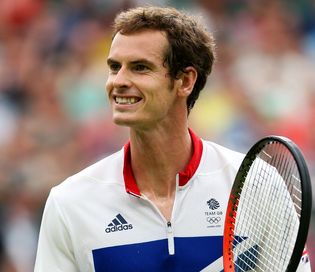 More important than insider trading, I saw a game or two of Murray's match. It's a revelation. He's improved so much from Wimbledon. He fights for every stroke, moves in at the slightest opportunity, has good mobility, and serves aces at will. It's still loathsome and boring to watch the game as it's all serve on the flushing surface, even more so than Wimbledon. One is also reminded of all the bad sports that I've seen play there and win like Agassi, Mac, and Connors. I watched my first big tennis at Forest Hills in 1950 and it was very beautiful to see Hoad and Laver play an all court game, and to me the game has deteriorated steadily since. But I wouldn't be surprised to see Murray win the thing and I take back all the terrible things I've said about him.
Archives
- October 2026
- September 2026
- August 2026
- July 2026
- June 2026
- May 2026
- April 2026
- March 2026
- February 2026
- January 2026
- December 2025
- November 2025
- October 2025
- September 2025
- August 2025
- July 2025
- June 2025
- May 2025
- April 2025
- March 2025
- February 2025
- January 2025
- December 2024
- November 2024
- October 2024
- September 2024
- August 2024
- July 2024
- June 2024
- May 2024
- April 2024
- March 2024
- February 2024
- January 2024
- December 2023
- November 2023
- October 2023
- September 2023
- August 2023
- July 2023
- June 2023
- May 2023
- April 2023
- March 2023
- February 2023
- January 2023
- December 2022
- November 2022
- October 2022
- September 2022
- August 2022
- July 2022
- June 2022
- May 2022
- April 2022
- March 2022
- February 2022
- January 2022
- December 2021
- November 2021
- October 2021
- September 2021
- August 2021
- July 2021
- June 2021
- May 2021
- April 2021
- March 2021
- February 2021
- January 2021
- December 2020
- November 2020
- October 2020
- September 2020
- August 2020
- July 2020
- June 2020
- May 2020
- April 2020
- March 2020
- February 2020
- January 2020
- December 2019
- November 2019
- October 2019
- September 2019
- August 2019
- July 2019
- June 2019
- May 2019
- April 2019
- March 2019
- February 2019
- January 2019
- December 2018
- November 2018
- October 2018
- September 2018
- August 2018
- July 2018
- June 2018
- May 2018
- April 2018
- March 2018
- February 2018
- January 2018
- December 2017
- November 2017
- October 2017
- September 2017
- August 2017
- July 2017
- June 2017
- May 2017
- April 2017
- March 2017
- February 2017
- January 2017
- December 2016
- November 2016
- October 2016
- September 2016
- August 2016
- July 2016
- June 2016
- May 2016
- April 2016
- March 2016
- February 2016
- January 2016
- December 2015
- November 2015
- October 2015
- September 2015
- August 2015
- July 2015
- June 2015
- May 2015
- April 2015
- March 2015
- February 2015
- January 2015
- December 2014
- November 2014
- October 2014
- September 2014
- August 2014
- July 2014
- June 2014
- May 2014
- April 2014
- March 2014
- February 2014
- January 2014
- December 2013
- November 2013
- October 2013
- September 2013
- August 2013
- July 2013
- June 2013
- May 2013
- April 2013
- March 2013
- February 2013
- January 2013
- December 2012
- November 2012
- October 2012
- September 2012
- August 2012
- July 2012
- June 2012
- May 2012
- April 2012
- March 2012
- February 2012
- January 2012
- December 2011
- November 2011
- October 2011
- September 2011
- August 2011
- July 2011
- June 2011
- May 2011
- April 2011
- March 2011
- February 2011
- January 2011
- December 2010
- November 2010
- October 2010
- September 2010
- August 2010
- July 2010
- June 2010
- May 2010
- April 2010
- March 2010
- February 2010
- January 2010
- December 2009
- November 2009
- October 2009
- September 2009
- August 2009
- July 2009
- June 2009
- May 2009
- April 2009
- March 2009
- February 2009
- January 2009
- December 2008
- November 2008
- October 2008
- September 2008
- August 2008
- July 2008
- June 2008
- May 2008
- April 2008
- March 2008
- February 2008
- January 2008
- December 2007
- November 2007
- October 2007
- September 2007
- August 2007
- July 2007
- June 2007
- May 2007
- April 2007
- March 2007
- February 2007
- January 2007
- December 2006
- November 2006
- October 2006
- September 2006
- August 2006
- Older Archives
Resources & Links
- The Letters Prize
- Pre-2007 Victor Niederhoffer Posts
- Vic’s NYC Junto
- Reading List
- Programming in 60 Seconds
- The Objectivist Center
- Foundation for Economic Education
- Tigerchess
- Dick Sears' G.T. Index
- Pre-2007 Daily Speculations
- Laurel & Vics' Worldly Investor Articles
