Sep
11
Judo, from Steve Leslie
September 11, 2006 |
The beauty of Judo is that it is a very subtle sport yet a very lethal one. In fact Judo means "gentle way" in Japanese. One soon finds out that there is not much gentle about it. It is still a martial art.
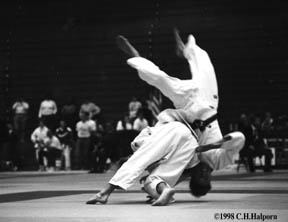
Judo is an isolated sport, often a lonely one. It is just you and your opponent and the battleground is the center of a mat in full view of the audience. There are no teammates, nobody blocking for you, and nobody hitting behind you. And no excuses. Plus, you are always in direct contact with your opponent. There is literally no let up and no time outs. It is combat at the highest level. Balance, strength and explosiveness are critical skills. And you have to be constantly aware of your opponent because one misstep one false move can instantly end a match.
Judo emphasizes fighting (randori) as its main form of training. Half the combat time is spent fighting on the ground, called ne-waza and the other half standing up, called tachi-waza. Actual fighting, albeit within safety rules, is considered to be much more effective than only practicing techniques, since fighting full-strength develops the muscles and cardio-vascular system on the physical side of things, and it develops strategy and reaction time on the mental side of things.
Judo's balance between both the standing and ground phases of combat gives judoka the ability to take down opponents who are standing up and then pin and submit them on the ground. A Judoka can also force an opponent to submit through a chokehold or a joint manipulation such as an arm bar. Thus multidimensional skills are essential to develop to becoming an accomplished judoka.
The skills in being a successful Judo champion and a successful speculator are very similar. Both require a great deal of discipline, awareness, and specific mastery of skills and techniques. Plus strategy and attention to detail are prime requisites for success. In addition accountability is paramount as there is none to blame for failure than oneself. In the end it is the combat, the battle, that determines the ultimate victor. There is no statistical bias no French judge who grades the combatant lower through political favoritism. The contest is decided on the mat. And the results are final. The vanquished accepts this and validates it through a final acknowledgment of bowing to an opponent who has bested him in the arena.
Bruno Ombreux offers some similarities between Judo and speculation:
Hard work. All the skills you mentioned can only be developed through hard work and practice. Provided weights and technical levels are not too far apart, the judoka who trains 4 times a week will beat hands-down the one who trains only twice.
Successful speculation is hard work.
Bruises. Pain in a full-contact martial art as judo, goes beyond muscle ache normally associated with sport practice. Shiai - the competitive form of randori - is very intense. First degree burns on the neck, resulting from judogi friction, are common. (judoki is the outfit worn by judoka). Passing out from strangulation happens too. Broken members also. My personal souvenirs from judo are a broken nose and a permanently paralyzed big toe.
Speculation is a source of bruises in the form of losses. One has to pay his dues.
Specialization. Every judoka has a "special". This is a throw that he excels at, often because his morphology is well suited to this particular move. For instance, morote-seoi-nage, a shoulder throw, is said to be favored by smaller players, because it is easier for them to get inside and under the opponent gravity center. The judoka trains his "special" more than any other move. He is going to use it a lot in competition. The idea is to excel at one thing rather than be average at many.
This analogy with speculation needs not be explained after Chair's post on Specialization and the Division of Labor.
Focus on the wrong the methods. For years, proponents of strikes-based martial arts like karate or kick boxing, proclaimed their superiority over wrestling styles, like judo, "a mere sport for schoolchildren". This changed with the introduction of "Mixed Martial Arts" fights. Evidence surfaced that in real-life, unlike in kung-fu movies, one-on-one fights with no limiting rules most often end on the ground after the exchange of a few blows, a grapple and a throw. The most efficient fighting style was Brazilian ju-jitsu, because of its emphasis on ground combat. But judoka and wrestlers also performed very satisfactorily.
In speculation, people focus on the wrong methods, as explained again, by the Chair in the first-half of Practical Speculation. Then reality kicks in.

Impossible mastery. It is impossible to master judo. It is an endless study. That is what the "do" in ju-do stands for. It is a "way". An endless voyage whose final destination is never reached.
This one is easy. Speculation too is a "do". An endless study in which perfection is unattainable, and the best one can hope for is improvement.
Principles and tradition. The other side of judo beside combat, kata, is a codified series of moves, almost like classical ballets. The first kata focus on basic throws, on mechanics. The last kata, which are learnt by very few people, focus on entirely different things.
Itsutsu no-kata, taught to 6th dan black belts, features only 5 throws which are supposed to contain the essence of judo. Those throws do not even have a name, yet they embody the principles of judo. They are simple, fluid, beautiful.
Koshiki no kata, taught to 7th dan, is an ancient kata from the Kito-ruy school of ju-jitsu, which was attended by Jigoro Kano. It is a throwback to medieval Japan's fields of battle, a series of throws designed for combat in samurai armor. Ideally, this kata should be performed in such armors.
Who knows what Jigoro Kano meant by the inclusion of these two final kata in his curriculum? It is perhaps that, in the end, one should focus on first principles and a study of tradition.
That is not too different from the site, focusing on principles is learning how to fish, reading old books is integrating ancient wisdom.
Education. I could go on and on drawing other parallels between the site and martial art education. Teaching by showing. Use of arcane yet limpid language, "when the yellow bird sings, the sun sets on the jade mountain, little Grasshopper". err…. Too many Hong-Kong movies. Haiku and people taking their shoes off before entering the dojo…
But that's not about judo anymore and I must trade the last half hour.
Comments
Archives
- October 2026
- September 2026
- August 2026
- July 2026
- June 2026
- May 2026
- April 2026
- March 2026
- February 2026
- January 2026
- December 2025
- November 2025
- October 2025
- September 2025
- August 2025
- July 2025
- June 2025
- May 2025
- April 2025
- March 2025
- February 2025
- January 2025
- December 2024
- November 2024
- October 2024
- September 2024
- August 2024
- July 2024
- June 2024
- May 2024
- April 2024
- March 2024
- February 2024
- January 2024
- December 2023
- November 2023
- October 2023
- September 2023
- August 2023
- July 2023
- June 2023
- May 2023
- April 2023
- March 2023
- February 2023
- January 2023
- December 2022
- November 2022
- October 2022
- September 2022
- August 2022
- July 2022
- June 2022
- May 2022
- April 2022
- March 2022
- February 2022
- January 2022
- December 2021
- November 2021
- October 2021
- September 2021
- August 2021
- July 2021
- June 2021
- May 2021
- April 2021
- March 2021
- February 2021
- January 2021
- December 2020
- November 2020
- October 2020
- September 2020
- August 2020
- July 2020
- June 2020
- May 2020
- April 2020
- March 2020
- February 2020
- January 2020
- December 2019
- November 2019
- October 2019
- September 2019
- August 2019
- July 2019
- June 2019
- May 2019
- April 2019
- March 2019
- February 2019
- January 2019
- December 2018
- November 2018
- October 2018
- September 2018
- August 2018
- July 2018
- June 2018
- May 2018
- April 2018
- March 2018
- February 2018
- January 2018
- December 2017
- November 2017
- October 2017
- September 2017
- August 2017
- July 2017
- June 2017
- May 2017
- April 2017
- March 2017
- February 2017
- January 2017
- December 2016
- November 2016
- October 2016
- September 2016
- August 2016
- July 2016
- June 2016
- May 2016
- April 2016
- March 2016
- February 2016
- January 2016
- December 2015
- November 2015
- October 2015
- September 2015
- August 2015
- July 2015
- June 2015
- May 2015
- April 2015
- March 2015
- February 2015
- January 2015
- December 2014
- November 2014
- October 2014
- September 2014
- August 2014
- July 2014
- June 2014
- May 2014
- April 2014
- March 2014
- February 2014
- January 2014
- December 2013
- November 2013
- October 2013
- September 2013
- August 2013
- July 2013
- June 2013
- May 2013
- April 2013
- March 2013
- February 2013
- January 2013
- December 2012
- November 2012
- October 2012
- September 2012
- August 2012
- July 2012
- June 2012
- May 2012
- April 2012
- March 2012
- February 2012
- January 2012
- December 2011
- November 2011
- October 2011
- September 2011
- August 2011
- July 2011
- June 2011
- May 2011
- April 2011
- March 2011
- February 2011
- January 2011
- December 2010
- November 2010
- October 2010
- September 2010
- August 2010
- July 2010
- June 2010
- May 2010
- April 2010
- March 2010
- February 2010
- January 2010
- December 2009
- November 2009
- October 2009
- September 2009
- August 2009
- July 2009
- June 2009
- May 2009
- April 2009
- March 2009
- February 2009
- January 2009
- December 2008
- November 2008
- October 2008
- September 2008
- August 2008
- July 2008
- June 2008
- May 2008
- April 2008
- March 2008
- February 2008
- January 2008
- December 2007
- November 2007
- October 2007
- September 2007
- August 2007
- July 2007
- June 2007
- May 2007
- April 2007
- March 2007
- February 2007
- January 2007
- December 2006
- November 2006
- October 2006
- September 2006
- August 2006
- Older Archives
Resources & Links
- The Letters Prize
- Pre-2007 Victor Niederhoffer Posts
- Vic’s NYC Junto
- Reading List
- Programming in 60 Seconds
- The Objectivist Center
- Foundation for Economic Education
- Tigerchess
- Dick Sears' G.T. Index
- Pre-2007 Daily Speculations
- Laurel & Vics' Worldly Investor Articles
