Jun
6
NYC Junto, from Victor Niederhoffer
June 6, 2012 | 1 Comment
The next Junto meeting will be held on Thursday June 7, 2012 at the General Society of Mechanics Library, 20 West 44th Street NY NY, and will feature Gene Epstein as the main speaker. He is an editor at Barron's and a former economist for the New York Stock Exchange. All our readers are invited. Meeting opens at 7:00pm, main speaker at 7:30pm.
Alex Castaldo adds:
Here is Gene Epstein's presentation [41 page Powerpoint file].
Jun
5
The Aura of Legitimacy, from Victor Niederhoffer
June 5, 2012 | 2 Comments
 I recently visited a Dr. and when I got there, the nurse asked me to fill out a computer questionnaire that took 1 hour to fill out. After I filled it out, I was asked to sign a statement that said such things as "you will not be paid for filling out this questionnaire, the contents might be used by commercial factors, there are unlimited people in the survey" and a hundred other things that gave it a false aura of legitimacy.
I am wondering to what extent the false aura of legitimacy pervades our field. The classic example is the elections in a marxist or democratic regime, or the government institution that's there ostensibly to protect you from harming yourself but is really a gate for preventing competition from small and new entrants into the field. The committees in the markets to maintain order and proper pricing that are really arenas for the members to mark the positions in their favor, and force out the non-members through margin changes and rule changes comes to mind. The rules against competition in all fields, the licensing requirements, and for example the ethics tests that one must pass in certain fields. How pervasive is this and what is the relevance to our field?
Sam Marx writes:
I agree that the urge not to compete in a fair open market if one is able to set up a monopoly or obtain an advantage is there, and it's a part of human nature. I believe that it cannot be eliminated entirely but there are some changes that would help. I also believe that lying and cheating obtained a large impetus and some begrudging approval when the graduated income tax became constitutional. Therefore, a recommendation I would make is to do away with the graduated income tax and have a flat income tax or replace the income tax with a sales tax. I don't expect to see any of this in my lifetime however.
Bill Rafter writes:
Sham credentials. There exist a variety of market-oriented groups whose stated purpose is to identify the truly worthy. However all they really do is confer the aura of legitimacy on those in need of same, while providing income for the executives at group headquarters and hoodwinking the public. The group is frequently a "non-profit", adding more prestige. The legitimacy is conferred by letting the novice fork over not-insubstantial funds, taking a few tests and eventually getting the rights to put letters after his or her name, provided he stays a dues-paying member of the group. The orientation of the group can be fundamental, technical, quantitative, retirement planning or risk aversion.
My personal observation is that some market-oriented groups are worthy, and those which do not offer the paid initials are the best.
Jun
5
Oxytocin, from Victor Niederhoffer
June 5, 2012 | 1 Comment
 Paul Zak has authored a series of papers showing that oxytocin, a hormone released when you're hugging can make people more generous. He can inject people with it, and make them more generous, and find that those with more oxytocin are more generous. He finds that hugging releases oxytocins and encourages hugging in the work place, and follows this practice in the day and fray. The studies seem to be very biased and inconclusive. What is your view of this chicanery or unusual ant like behavior?
Kim Zussman writes:
Volatility is a collective hug.
Daniel Grossman writes:
It probably generates more of that hormone if you have sex with everyone you want to be generous with.
Laurel Kenner writes:
When the Chair and I visited NYU to give a presentation several years ago, the president approached. He started to give Vic a bear hug. Vic stopped him. "You don't need to bother — I've lost all my money." The president looked him over carefully and then said, "I'll hug you anyway."
We later learned that such presidential hugs are often distributed to potential donors to NYU. It is of course immeasurable how much this technique has contributed to the rapid expansion of NYU's campus under his reign, and the question of whether oxytocin is involved is one for the biochemists. I merely note the president's name — Sexton — and speculate in innocent wonderment whether particularly well-endowed dowagers come in for particularly vivacious oxytocin production.
The Chair further speculates that since he had in fact not at that time lost all his money, that oxytocin may have predictive qualities.
Leo Jia adds:
It has been widely debated that the Chinese rich are not generous at all. One strong evidence is that the philanthropic dinner meeting with the Chinese rich hosted by Gates and Buffett received little response. So, the very tradition that Chinese don't hug plays a big role. It was a pity that Gates and Buffett didn't give them big hugs at the meeting.
Jun
4
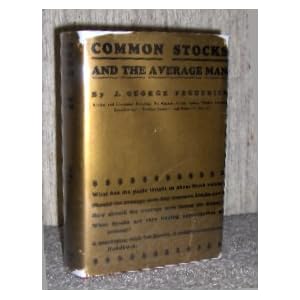 An interesting list of favored stocks as of year end 1928 appears in Common Stocks and the Average Man by George Frederick, 1930.
Allis-Chalmers , American Can , Atlantic Refining , Fleishmann Co , General Motors , Liggett and Myers B , Montgomery Ward , Paramount , Famous Lasky , US Steel , Woolworth .
These were recommended for buy and hold, and the kind for George Baker, who made more in one day than all the gold miners in history, with his method of buying good stocks and holding them and living on interest. It is interesting to note, that as far as I can see, almost all of them went bankrupt or close to the same in the next 90 years.
The book by Frederick and the comparable one by Ralph Badger, a professor at Brown, (Badger on Investment Principles and Practices, 950 pages), although not 100 years old are both highly recommended as being much better and much more helpful than the average treatise of today, or 30 years ago, especially those like Graham and Dodd.
Steve Ellison adds:
From the same era, I reviewed The Art of Speculation by Philip Carret on the dailyspec a few years ago. At the time I wrote the review, the phenomenon of "stocks carrying themselves" had not occurred in nearly 50 years, but that bullish condition did occur beginning in late 2008 and has been in effect ever since, as evidenced by the backwardation in S&P 500 futures. As Mr. Carret wrote, "Borrowed money is the lifeblood of speculation."
Jim Sogi writes:
I remember as a young kid my savings account at Seaman's Saving Bank paid 5%. I had a ceramic savings container for coins that was a merchant seaman in whites of the era. I vaguely recall that my stocks also normally yielded about a 5% dividend. My father's advice at the time was to use your rear not your head, and sit on the stocks. That must have been in the late 50's.
Funny thing is now, again, dividends seem almost attractive with SP yielding over 2%. Some utilities are yielding 4.5% and don't seem to have the volatility of bonds nor industrials.
Gary Rogan adds:
It seems like the SP yield is way below its historical norms, so while
it has been rising it has a long way to go to make it all that
attractive.
Of course given what "they" have done to the fixed yields they are
pretty attractive but sooner or later as we all can feel the fixed
yields will not stay low or negative even in Denmark and Switzerland
forever. If they find a way to leave the dividend taxes alone, no doubt
sooner or later the yields will come back to historical averages, so I
don't think SP is attractive on that basis. I do firmly believe in
sitting on stocks for a long time. The point that was recently made
about all the old favorites having gone BK has a counterpoint: if you
diversify enough into high yield stocks, a small but noticeable
percentage of them will be bought out every year and that combined with
the stream of dividends will overcome the BK factor over the years.
As far as the bank savings accounts are concerned, I remember fondly how the banks and s & l's were engaged in a rhetorical war over, was it, 1/8th of a percent mandated difference? "You could spend that 1/8th of a point crossing town" was what one commercial said. It's pretty crazy how they "deregulated" the banks but left this one innocuous little Fed behind the scenes and now all savings yields are 0 and all the banks of note are TBTF. To me the moral of the story has always been: if you have FDIC in place all "deregulation" is a joke, but somehow the joke isn't funny to those guys and they don't like talking about moral hazards. You don't even get toasters these days.
Jun
4
Gold Mining Stocks vs. Gold, from Steve Ellison
June 4, 2012 | Leave a Comment

A friend told me recently that gold mining stocks had been declining much more sharply than the price of gold. He therefore thought the stocks were undervalued.
Attached is a graph of the ratio of GDX (the gold mining ETF) to GLD (the physical gold ETF) with a 50-day moving average and Bollinger bands.
Here are the changes in the ratio in the next 50 days after the ratio of GDX to GLD fell below the lower Bollinger band. There have been only 15 non-overlapping occurrences since both ETFs began trading.
Next 50 days
GDX GLD GDX/GLD Ratio GDX GLD
Date Adj Close Adj Clos Ratio change change change
1/18/2007 35.92 62.26 0.5769 1.4% 7.0% 5.6%
8/15/2007 35.42 66.13 0.5356 13.2% 30.2% 15.0%
11/19/2007 44.16 77.24 0.5717 -4.9% 10.0% 15.7%
2/6/2008 46.34 88.95 0.5210 3.2% 5.1% 1.9%
4/24/2008 43.78 87.22 0.5019 -0.2% 4.4% 4.6%
7/24/2008 43.48 91.33 0.4761 -27.0% -34.0% -9.6%
10/3/2008 28.70 82.59 0.3475 4.4% 4.5% 0.0%
3/2/2009 30.72 90.93 0.3378 25.6% 25.3% -0.3%
1/21/2010 43.33 107.37 0.4036 3.8% 7.2% 3.3%
10/19/2010 54.01 130.11 0.4151 6.7% 12.4% 5.3%
1/6/2011 56.58 133.83 0.4228 -1.7% 2.2% 4.0%
5/2/2011 59.95 150.41 0.3986 -3.8% -1.4% 2.5%
8/5/2011 55.26 161.75 0.3416 1.6% 2.1% 0.5%
12/19/2011 51.02 154.87 0.3294 0.0% 7.4% 7.4%
3/14/2012 50.12 159.57 0.3141 -6.2% -11.0% -5.1%
Avg 1.1% 4.8% 3.4%
Std. dev 11.1% 14.6% 6.5%
N 15 15 15
t 0.38 1.05 0.24
Jun
4
Computer Screen Luxuries, from Vince Fulco
June 4, 2012 | Leave a Comment
 Have you heard of Synergy? It is an open source app that allows use of one keyboard & mouse to move across multiple machines
Leo Jia writes:
Synergy is great. I have been using it across two of my Linux laptops. Very convenient.
The other two nice little open source software I would share are Redshift and Calise. Both are great help to the eyes.
Redshift automatically adjusts screen color temperature according to one's geographical location and time of day.
Calise automatically adjusts screen brightness according to ambient brightness that is obtained from the camera on the computer. This is only needed if one's computer screen doesn't have light sensor.
Jun
4
SAT Day, from a Parent
June 4, 2012 | 1 Comment
 For those with high school age children, you know Saturday was the SAT and SAT Subject (aka SAT II/Achievement) Test day. For those without high school age children, the pressure and anxiety is unfathomable. Unless you have an Olympic Gold Medal or are daughter of the President, if you don't score above the 95th percentile, you can probably forget about admission to a top school. And, even if you score in the top 96th percentile, it simply means your application will be read more carefully.
I was responsible for driving our daughter to a neighboring town's high school where the tests were being offered. I looked at Google maps before departing and planned my route. I left about 5 minutes of spare time because the morning was foggy and the roads were wet. The journey proceeded without incident, except that in one of those Murphy's Law moments, the road that Google maps said was supposed to be there — was not there at all. (The test location was the Horace Greeley High School in Chappaqua, NY. It's ranked among the top high schools in the country, and the town counts Bill and Hillary Clinton as residents. We're slightly envious of Chappaqua's high school, but we're not envious of their property taxes.
As we drove in circles around Chappaqua looking for the High School, we didn't see Bill Clinton at the local breakfast joint. But anyone watching the us, would have seen my face color grow increasingly red. And the color of my daughter's face grew increasingly pale. I eventually pulled over and plugged the destination into my SAT/NAV … and it directed me to take the Saw Mill Parkway North. This seemed highly improbable; but at this point, who was I to argue? The clock was ticking! The roads were very wet, so driving aggressively was not an option either… At the same time as my daughter was saying, "Dad, this isn't good," she was calling my wife at home asking her to Wiki the "new deal" the "fair deal" and the "square deal" — as she dealt with a presidential brain freeze.
Ultimately, the SAT/NAV was right and we arrived with time to spare. As my daughter departed the car, she said, "Dad, you had one job. And you screwed it up." Ouch. Seventeen years of hard work as a dad. All destroyed in an instant by Google! The reality is that I didn't screw it up. Google screwed it up. And when I pick her up, I'm going to explain to her that Google's incorrect location was clearly the work of "Flexions" trying to keep her out of Harvard — because that would have resulted in the student body's politics moving somewhat to the right. We'll see if she buys that explanation — and my paternal credentials can be restored….
Jun
4
More on Chinese Online Retailing, from Leo Jia
June 4, 2012 | Leave a Comment
The rumors says that the Chinese online retailing giant 360buy will be IPO'ed in NY this September.
One other thing that makes online shopping very attractive to Chinese is the overall product quality concerns and the lack of a product rating like the Consumer Report in the country. It's a trust issue. Online shopping, however, gives shoppers a way to see the sales ranking as well as other shoppers' ratings and comments about any product. These are very important, and make online shops a revolution away from the brick-mortar shops.
Jun
4
Popped Corn, from Rocky Humbert
June 4, 2012 | 2 Comments
 While most traders were transfixed by the stock, bond and gold markets Friday morning, Mr. Corn had a most peculiar move. The pit opened unchanged around 555 at 10am and traded up to 580 over the next two hours. All of this happened in the July contract, while the back contracts hardly moved. Mr. Corn then changed his mind and retraced the entire move and is closing down a few pennies or so on the day. So it had a 5% rally and a 5% decline … all in the front month. I can't remember the last time I saw Mr. Corn behave like this. Efficient markets? I think not. One hopes the Florida Surfer rode this wave gracefully.
Jun
4
Quote of the Day, from Victor Niederhoffer
June 4, 2012 | 1 Comment
 Quote of the day.
"The weak job report confirms that the US is vulnerable to a European situation that is going from bad to worse" said Mohamed El-Erian, CEO of Pacific Investment. Query. How did they let him out of Harvard with all these self serving, self interested ideas and talking of book.
Gary Rogan writes:
It's an interesting statement in that it's mostly true, or could be, but it distorts the cause and effect and shifts the blame. The weak job report confirms that erratic, Marxist/radical and pro-flexionic policies destroy economies, but as a side effect they do also make economies more vulnerable to external shocks. As to whether it's more important that the US is vulnerable to the European slowdown or the European economies are vulnerable to the insatiable appetite of the US for consuming all available lending capacity in the world (while of course killing themselves at the same time), that's an open question.
Vince Fulco writes:
Perhaps while job tsar, Immelt, found boll weevils in the domestic silos.
Jun
4
Glory, from Kim Zussman
June 4, 2012 | Leave a Comment
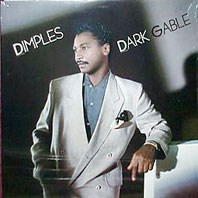 Glory
Glory
By Dark Gable
How much glory
Should a glory seeker seek
If a glory seeker
Seeks to seek glory
Thank you. Thank you very much.
Jun
4
The Business of Trading, from George Coyle
June 4, 2012 | 3 Comments
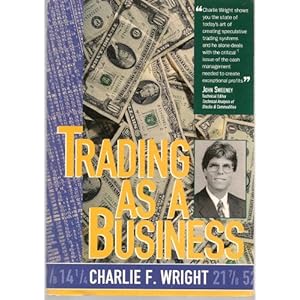 I'm reading Trading as a Business by Charlie Wright. Pretty good book profiling the evolution from discretionary trader to systematic trader. One of those books where I found myself laughing at having been down the paths. More trend following oriented but I think it is a pretty good synopsis of the systematic world and he covers some bases that added value in terms of elements to consider in one's trading (or at least mine). Decent set of checklists.
Do systematically inclined speculators recommend similar books (besides Victor Niederhoffer's and Larry Williams books).
Also, Tradestation seems to do most anything a trader would want in terms of trend following testing. I have never used it though.
Thoughts?
George Parkanyi writes:
The only flaw I find with systems is that they immediately stop working as soon as you try to use them. I think people need to do more research on fading systems.
Christopher Tucker writes:
Where's the "like" button on the Speclist?
Steve Ellison adds:
Yes, even systems I developed myself stop working when I try to use them because of data mining bias. Even if there legitimately is an edge, some component of the good backtesting performance is better-than-average luck.
Leo Jia writes:
The word "enlightened discretionary" is very appealing. The reason for it, I guess, is because of the word "enlightened" more than the word "discretionary". Everyone hopes to be enlightened in someway. Being enlightened seems to be a spiritual consummation. But I guess that is not the first and real reason why people are after being enlightened. The real reason is that it is mystic and mostly unattainable. This coincides with a human nature of always craving for what they don't have, which is among the reasons why most people are persistently unhappy.
I feel preferring discretion to system is quite illogical. Aren't whatever rules one uses as a discretion by nature a system? It perhaps is not explicitly sketched out, but it by all means is a system of rules that resides in one's head. Couldn't that be phrased and then programmed? I agree some are not very easy. But are they really impossible?
Gary Phillips writes:
I've been doing this long enough to instinctively know what works and what doesn't. I only need to look at my P&L for empirical confirmation. If in doubt I just try to see the market for what it is and not what it appears to be. One needs to understand market structure, liquidity, and price action and develop a framework for analyzing the market, somewhere between bottom-up & top-down lies the sweet spot. This allows you to see the market in the proper context and provides you with a compass, which will keep you from feeling lost and will show you the way.
Craig Mee writes:
Aren't ?
Hi Leo, you probably could say "whatever rules one uses as a discretion by nature is a system", but a system may not have the ability to load up once the move kicks (obviously it can be programmed) but at times the opportunity may appear intuitive, and a trader can do that on relatively short notice, whilst keeping initial risk limited.
Interesting, Gary, the issue with systems seems to be at times data mining against price action and structure which gives strength of understanding. The HFT may work on massive turnover, low commissions and effectively front running, and unless you have those edges then it appears difficult to succeed from a data mining basis (and relatively scary trading something that you don't effectively understand from a logical point of view). However classifying a markets structure, and working off 3-4 premises no more, (as I believe more would allow any edge to be diluted across a range of options), and the ability to leverage once on a move, appears to be something you can work with. This is purely from a hands on execution basis, no doubt the pure programmers can weigh in.
I remember speaking to a guy who professionally programs for others… (admittedly a lot of retail), and we were talking about what are the laws in place for him to not front run me after developing a system I gave him…and he was like "mate, to be honest (probably insinuating "dont flatter yourself") 97% don't make a dime." That was certainly probably expected I suppose, but to hear it in technicolour was confronting and I was surprised he said as much.
Gary Phillips writes:
I really don't believe that discretionary trading today, is any harder than it used to be. The emotional aspects, and risk management, have essentially remained the same. Methodology is different, because algorithmic driven HFTrading has forced intra-day traders to change from momentum chasers to mean reversion traders. And as you stated, there are countless global/macro concerns as a result of the financial crisis and continued global easing. So, it does demand a broader universe of knowledge, and revamped techniques and benchmarks, but it still boils down to identifying what is truly driving price and how it is being driven.
I guess this is what gives you the elusive *edge*. But, as we used to say the *edge* can sometimes be the *ledge.* That being said, trading doesn't have to be about being right or wrong the market, or predicting where the market is headed in the next moment, hour, day or week. Trading can be nothing more than a probabilistic exercise, and a trade nothing more than a statistical data point - the next event in a series of events governed by the statistical random distribution of results.
Kim Zussman writes:
"Trading can be nothing more than a probabilistic exercise, and a trade nothing more than a statistical data point - the next event in a series of events governed by the statistical random distribution of results."
One would suggest that trading is a waste of time if your historical or expected mean are random.
Jun
1
One Would, from Victor Niederhoffer
June 1, 2012 | 1 Comment
 One would hypothesize that the euro seems symbolic of the stability of the entire EC. The world has an idea in its grip. That the purpose of life is to give to the needy, and take from the producers and wealthy. For this idea to fail, would involve the loss of many jobs in the EC, I think. All over the world, flexions, politicians and do-gooders will take whatever money they need and give it to the EC to keep those jobs and the symbol of those jobs in high spirits and prosperity. This is how, I believe, Nock would analyze the situation. And I believe it is sensible. However, I don't know anything about macro factors of any kind, and my views are just those of a devotee of Nock, and a believer in the flagitiousness of flexions.
Gary Rogan writes:
That was a very interesting statement "the euro seems symbolic of the stability of the entire EC." The question to me always has been this: besides the symbolism, why does the stability of the EC matter so much to the euro? I can understand Greek and Spanish depositors bailing out of their banks and moving into dollars of Swiss franks or whatever, in addition to euro-based deposits in Germany and elsewhere, yes that depresses the euro and it's a clear practical effect. But in and of itself, why does Greece being a part of euro matter so much? Who really cares about where Greece is or what currency it uses? Even if you can't hold this house of cards together, if the whole system disintegrates, these euros at some point will be exchanged for new German marks and french franks.
Is the fear that everyone, especially non-local citizens will take a big haircut on the deal because the governments will find a way to screw them (and their citizens to some degree as well)? I do also understand that the French and German banks wind up taking in the shorts on their PIGS loans, this will hit the euro if they have to provide a ton of liquidity, but I still fail to understand why the stability of the euro zone is so important.
To me this all speaks to the ephemeral nature of modern money where it doesn't really mean anything at all and it's all a confidence game based on the sequentially building chain of loans, starting with government obligation turned into money for no good reason other than some history. The euro projects value right now is really only to the German so they can push their products on the starving underachievers without them having any ability to depreciate their currency, but when the damn thing falls apart, you sill have all the European countries still in existence, so what's such a big deal about the stability of the zone?
Jun
1
Article of the Day, from Pitt T. Maner III
June 1, 2012 | 1 Comment
 Here is a great article about the "Father of Plate Tectonics", Alfred Wegener, who 100 years ago began publishing his ideas about continental drift. His theories met stiff resistance from leading American geologists and paleontologists for decades and were not to gain acceptance until the 1960s.
'But Wegener was not timid about disciplinary boundaries, or much else. He was an Arctic explorer and a record-setting balloonist, and when his scientific mentor and future father-in-law advised him to be cautious in his theorizing, Wegener replied, "Why should we hesitate to toss the old views overboard?"'
From "When Continental Drift Was Considered Pseudo Science"
Jun
1
Thoughts on Online Retail Markets, from Leo Jia
June 1, 2012 | 2 Comments
 China will soon become the largest online retail market in the world.
China had 119 million online shoppers, with total online sales value rising 53.7 percent year-on-year to 782.56 billion yuan at the end of 2011.
Quoted from capitalvue
I believe the key for this big change is the ease of payment now widely adopted by many online retailers in the recent years. Most retailers had used complicated online payment systems that gave shoppers a big headache and deterred most shoppers in the past. Now what is very welcome is payment upon delivery (Amazon seems to be vital in first developing a large coverage nationwide). With this payment system, one can pay with either cash or credit card to the courier (most go by motorcycles and carry a mobile-phone capable credit card device). Most retailers void shipping charges if the purchase is above 40 yuan. The delivery is fast, too - around big cities it takes about two days.
Reportedly, the largest retailers are: tmall.com, 360buy.com, and amazon.cn. Tmall is the largest and basically a remake from the old house-of-small-retailers taobao.com. In my opinion, it still carries some of the old headache and credibility issues to shoppers. Amazon is a distant 3rd. Although it is very shopper-friendly, it doesn't have the variety of goods as big as the others. To me it is a shame that it doesn't try to leverage its overseas strength to bring in more imported goods. Being the second, 360buy seems to be doing very well in balancing user-friendliness, variety and credibility.
I am a keen online shopper in recent years and do that whenever possible. I believe this trend should cause serious damage to the businesses of brick-mortar retailers a few years down the road.
« go back —Archives
- October 2026
- September 2026
- August 2026
- July 2026
- June 2026
- May 2026
- April 2026
- March 2026
- February 2026
- January 2026
- December 2025
- November 2025
- October 2025
- September 2025
- August 2025
- July 2025
- June 2025
- May 2025
- April 2025
- March 2025
- February 2025
- January 2025
- December 2024
- November 2024
- October 2024
- September 2024
- August 2024
- July 2024
- June 2024
- May 2024
- April 2024
- March 2024
- February 2024
- January 2024
- December 2023
- November 2023
- October 2023
- September 2023
- August 2023
- July 2023
- June 2023
- May 2023
- April 2023
- March 2023
- February 2023
- January 2023
- December 2022
- November 2022
- October 2022
- September 2022
- August 2022
- July 2022
- June 2022
- May 2022
- April 2022
- March 2022
- February 2022
- January 2022
- December 2021
- November 2021
- October 2021
- September 2021
- August 2021
- July 2021
- June 2021
- May 2021
- April 2021
- March 2021
- February 2021
- January 2021
- December 2020
- November 2020
- October 2020
- September 2020
- August 2020
- July 2020
- June 2020
- May 2020
- April 2020
- March 2020
- February 2020
- January 2020
- December 2019
- November 2019
- October 2019
- September 2019
- August 2019
- July 2019
- June 2019
- May 2019
- April 2019
- March 2019
- February 2019
- January 2019
- December 2018
- November 2018
- October 2018
- September 2018
- August 2018
- July 2018
- June 2018
- May 2018
- April 2018
- March 2018
- February 2018
- January 2018
- December 2017
- November 2017
- October 2017
- September 2017
- August 2017
- July 2017
- June 2017
- May 2017
- April 2017
- March 2017
- February 2017
- January 2017
- December 2016
- November 2016
- October 2016
- September 2016
- August 2016
- July 2016
- June 2016
- May 2016
- April 2016
- March 2016
- February 2016
- January 2016
- December 2015
- November 2015
- October 2015
- September 2015
- August 2015
- July 2015
- June 2015
- May 2015
- April 2015
- March 2015
- February 2015
- January 2015
- December 2014
- November 2014
- October 2014
- September 2014
- August 2014
- July 2014
- June 2014
- May 2014
- April 2014
- March 2014
- February 2014
- January 2014
- December 2013
- November 2013
- October 2013
- September 2013
- August 2013
- July 2013
- June 2013
- May 2013
- April 2013
- March 2013
- February 2013
- January 2013
- December 2012
- November 2012
- October 2012
- September 2012
- August 2012
- July 2012
- June 2012
- May 2012
- April 2012
- March 2012
- February 2012
- January 2012
- December 2011
- November 2011
- October 2011
- September 2011
- August 2011
- July 2011
- June 2011
- May 2011
- April 2011
- March 2011
- February 2011
- January 2011
- December 2010
- November 2010
- October 2010
- September 2010
- August 2010
- July 2010
- June 2010
- May 2010
- April 2010
- March 2010
- February 2010
- January 2010
- December 2009
- November 2009
- October 2009
- September 2009
- August 2009
- July 2009
- June 2009
- May 2009
- April 2009
- March 2009
- February 2009
- January 2009
- December 2008
- November 2008
- October 2008
- September 2008
- August 2008
- July 2008
- June 2008
- May 2008
- April 2008
- March 2008
- February 2008
- January 2008
- December 2007
- November 2007
- October 2007
- September 2007
- August 2007
- July 2007
- June 2007
- May 2007
- April 2007
- March 2007
- February 2007
- January 2007
- December 2006
- November 2006
- October 2006
- September 2006
- August 2006
- Older Archives
Resources & Links
- The Letters Prize
- Pre-2007 Victor Niederhoffer Posts
- Vic’s NYC Junto
- Reading List
- Programming in 60 Seconds
- The Objectivist Center
- Foundation for Economic Education
- Tigerchess
- Dick Sears' G.T. Index
- Pre-2007 Daily Speculations
- Laurel & Vics' Worldly Investor Articles
