Jan
3
Cowen on Income Differences, from Don Boudreaux
January 3, 2011 | 1 Comment
Friends,
My GMU and Mercatus Center colleague Tyler Cowen has this must-read essay in the January-February 2011 issue of The American Interest on income inequality:
 Here's a sample paragraph:
In terms of immediate political stability, there is less to the income inequality issue than meets the eye. Most analyses of income inequality neglect two major points. First, the inequality of personal well-being is sharply down over the past hundred years and perhaps over the past twenty years as well. Bill Gates is much, much richer than I am, yet it is not obvious that he is much happier if, indeed, he is happier at all. I have access to penicillin, air travel, good cheap food, the Internet and virtually all of the technical innovations that Gates does. Like the vast majority of Americans, I have access to some important new pharmaceuticals, such as statins to protect against heart disease. To be sure, Gates receives the very best care from the world's top doctors, but our health outcomes are in the same ballpark. I don't have a private jet or take luxury vacations, and—I think it is fair to say—my house is much smaller than his. I can't meet with the world's elite on demand. Still, by broad historical standards, what I share with Bill Gates is far more significant than what I don't share with him.
Jan
3
P/E forecasting, from Steve Ellison
January 3, 2011 | 2 Comments
You can get as-reported earnings for the S&P 500 from 1988 on at Standard & Poor's website.
Using 12-month trailing earnings for each year's September quarter (the last that would be known by Dec. 31) to calculate an E/P ratio for the S&P 500 as of Dec. 31, I get a somewhat positive correlation of trailing E/P to year-ahead returns with t=1.10, R sq=0.057, p=0.29, and N=22.
Larry Williams writes:
My model for the DOW suggests a 12.25% growth for the year, slightly above the long term average growth.
For the S&P, I get 10.6 % barely above the long term average.
Bruno Ombreux writes:
There are two things I don't like in P/E or E/P studies.
1) Your regression is in the form:
-1 + P(t)/P(t-1) = f[P(t-n)/E(t-n)] + e we have the same variable on both sides, and even if it is lagged I am not sure standard regression is OK to handle this type of formula. Just to give you an idea, multiplying both sides by P(t-1), it is actually P(t) = P(t-1) + P(t-1)* f[P(t-n)/E(t-n)] + P(t-1)*e
This is certainly amenable to study, but not with the standard regression toolbox.
2) Price is more volatile than earnings. There is a subtle bias introduced by the fact that over the estimation sample, high P/E will be naturally followed by lower P/E, and vice-versa. This is a bit like regression to the mean but more subtle. This can lead to spurious mean-reversion.
Phil McDonnell adds:
The issue is not really the dependent variable. It is using the Shiller variable with its serial correlation. One way to use the Shiller variable would be to take every tenth month. That might work but you would have one tenth the data. You still might have the Holbrook Working flaw because of the averaging. The averaging also leads to the Slutsky-Yule effect which creates spurious sinusoidal artifacts in the adjusted variable when no such sinusoidal effect is actually present in the original data..
Jan
3
For Any Late Handicappers, from Steve Ellison
January 3, 2011 | Leave a Comment
Here are racing-style past performance charts of recent 2-month market performances.
If one believed past results had any influence on future results, silver and agricultural commodities would look like superstars, bonds and currencies would look ho-hum, and natural gas would look like a filly running during mating season with one awful race after another.
Cotton 1/2 mo 1 mo 1 1/2 mo 2mo 2 mo change
Nov-Dec 1 9 2 2 21.6%
Sep-Oct 3 2 3 2 38.6%
Jul-Aug 13 8 4 3 10.3%
Gold 1/2 mo 1 mo 1 1/2 mo 2mo 2 mo change
Nov-Dec 6 3 7 8 5.7%
Sep-Oct 10 9 8 8 3.6%
Jul-Aug 12 13 10 10 -2.3%
Silver 1/2 mo 1 mo 1 1/2 mo 2mo 2 mo change
Nov-Dec 2 1 1 1 27.1%
Sep-Oct 5 4 4 4 20.6%
Jul-Aug 10 12 12 5 1.2%
Soybeans 1/2 mo 1 mo 1 1/2 mo 2mo 2 mo change
Nov-Dec 3 4 5 3 14.4%
Sep-Oct 7 5 5 5 15.7%
Jul-Aug 1 2 3 4 9.3%
Euro 1/2 mo 1 mo 1 1/2 mo 2mo 2 mo change
Nov-Dec 10 12 12 12 -2.5%
Sep-Oct 8 8 7 7 4.7%
Jul-Aug 5 5 7 6 1.0%
British Pound 1/2 mo 1 mo 1 1/2 mo 2mo 2 mo change
Nov-Dec 7 10 11 11 -1.5%
Sep-Oct 9 10 10 10 -0.3%
Jul-Aug 6 6 6 8 0.2%
Sugar 1/2 mo 1 mo 1 1/2 mo 2mo 2 mo change
Nov-Dec 13 11 4 5 11.5%
Sep-Oct 1 1 1 1 43.8%
Jul-Aug 3 1 1 1 20.2%
Corn 1/2 mo 1 mo 1 1/2 mo 2mo 2 mo change
Nov-Dec 11 13 10 7 6.9%
Sep-Oct 2 3 2 3 26.4%
Jul-Aug 2 3 2 2 14.9%
Crude oil 1/2 mo 1 mo 1 1/2 mo 2mo 2 mo change
Nov-Dec 4 2 3 4 11.7%
Sep-Oct 6 7 9 9 3.5%
Jul-Aug 7 9 11 12 -8.3%
S&P 500 1/2 mo 1 mo 1 1/2 mo 2mo 2 mo change
Nov-Dec 5 5 6 6 7.9%
Sep-Oct 4 6 6 6 7.9%
Jul-Aug 3 4 5 9 0.2%
Natural gas 1/2 mo 1 mo 1 1/2 mo 2mo 2 mo change
Nov-Dec 12 8 9 9 4.2%
Sep-Oct 13 13 13 13 -14.2%
Jul-Aug 9 7 13 13 -21.2%
10-year T notes 1/2 mo 1 mo 1 1/2 mo 2mo 2 mo change
Nov-Dec 9 7 13 13 -3.0%
Sep-Oct 12 11 11 11 -4.1%
Jul-Aug 8 10 8 7 0.9%
U.S. Dollar 1/2 mo 1 mo 1 1/2 mo 2mo 2 mo change
Nov-Dec 8 6 8 10 1.1%
Sep-Oct 11 12 12 12 -4.6%
Jul-Aug 11 11 9 10 -2.3%
Jan
3
Happy Birthday, from Jeff Watson
January 3, 2011 | Leave a Comment
I never seem to get it on time, and missed it by two days, but I would like to wish a Happy Birthday to every thoroughbred race horse in the Northern hemisphere. I especially would like to wish Seans Silverdancer and Point Your Finger an extra happy birthday and a good year to come in 2011.
Jan
2
True Grit and the Best Western Novel, from Victor Niederhoffer
January 2, 2011 | 6 Comments
 There is something about True Grit that is truly loathsome. Each of the 3 main characters is deeply flawed. Marshall Rooster Cogburn is a drunk and dead beat who speaks unintelligibly. Texas Ranger LaBoeuf is a show off, loser, and a chauvinist. The girl is sharp tongued, litigious, and naive (no wonder she didn't get married). It all fits in with the idea that has the world in its grip, that the purpose of life is to keep oneself small by sacrifice. There is no chemistry or romance between any of the characters except for Pepper the Quixotian leader of the outlaws, who as could be predicted was the only man good in his every day business of being a outlaw. No wonder this Western follows the code of the west breaking, denigrating Brokeback Mountain and no wonder that Louis L'Amour's novels have sold more than all western authors combined since the beginning of time, and that they dare not make one of them or an Atlas Shrugged, in favor of this disrespectful Portis trash that violates all the rules of good mystery by having one hair breadth, extraordinary, lucky escape after another, and stereotyped snake bite scene (a la Larry Mcmurtry) release the tension.
P.S I have never written about a subject not directly related to the multivariate analysis of time series that Mr. Jovanovich has not corrected and amplified on where I was astray. And I must admit that I didn't realize that the Western Novel was yet another of his expertises. Okay, I want to know from him if he agrees with me, on this one point that Monte Walsh is the greatest western novel, (if the chapter where the accountant comes to reduce the pay of the hands that took vengeance on the trainmen doesn't make you cry, I'll eat that hat the accountant wore that was so tempting to Hat, Cal and Monte), and the best business novel of all time.
Stefan Jovanovich replies:
Grub street used to honor the basic code for reviewers: read the book first, then slander the author. We should do the same. Portis' book is like neither of the movies; the John Wayne version comes much closer in spirit, but it is still far, far too "nice". The actual novel is a memoir written by a tough-spirited, one-armed spinster Presbyterian capitalist remembering the one man whom she loved and how they avenged the murder of her father when she was– by other people's standards– "still a girl". Blaming authors for what Hollywood makes of their books is like blaming men for the conduct of their ex-wives after they finish paying the alimony; all the authors can be held accountable for is the size of the check they cash.
I am old enough to have lived near (but definitely not in) Beverly Hills when Louis L'Amour still gave readings at the library. He was a great and good man, and– yes– Monte Walsh is the classic. As is often the case, my anger is misdirected; what infuriates me about this latest version of True Grit is what is says about the Coen brothers' decline and fall. The novel will survive their abomination of it; hell, it will probably be reread again. But for the Coen brothers, what hope is there now? Intolerable Cruelty is the best and funniest film ever about Hollywood and lawyers and now the guys who made it can only do splatter trash.
P.S. Eddy just called. She thinks our only hope is to pray that South Park's explanation once again holds true and blame it all on Matt Damon and his friend.
Dylan Distasio writes:
At the risk of raising some hackles, I'd make the argument the McCarthy's "Blood Meridian or the Evening Redness in the West" is one of the greatest Western novels in that genre and one of the best I've read from 20th century authors in general.
J.T Holley writes:
If you like Blood Meridian then go read Suttree. IMHO, it is an existential masterpiece. Cornelius being a man of the "made, trust-fund baby, life of given not earned goes to be a fisherman in TN. Though the content could be considered as a rebellious misguided stab at the establishment, I found it a read that was of self-introspect, self-realization, self-reliance while battling vices with choice by going to the extreme to find such. Once again not oft mentioned amongst Cormac's works, I feel it is one of my favorite reads to crack open and read again. I'm a Southerner so the read is much suited to me, so some of the "in between the lines" stuff might not be appreciated.
Jim Wildman writes:
My personal favorites in the Western genre.
"The Virginian" (Wister) if for no other reason than "Smile when you call me that"…and the baby swap prank.
"A Man Called Noon" (L'Amour) always makes me think about how I define who I am.
In "The Last of His Breed" Mr L'Amour applies similar themes from his Westerns to modern times. For my taste, the book is a bit long, but in fairness, it takes a while to walk across Siberia. And it has a great last line.
Trader Craft comments:
Another great classic of the West is Thomas Bergman's "Little Big Man". Much better than the Dustin Hoffman movie.
Scott Brooks writes:
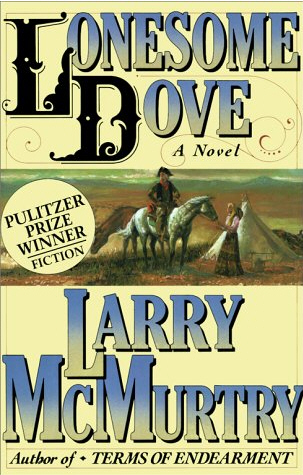 As one who doesn't read a lot of westerns, (and I'm sure the purist will scoff at me) I have to say that Larry McMurtry's, "Lonesome Dove" is my favorite of that genre.
Good guys and bad guys. Multiple story lines all intertwined. Sudden and unforgiving death. Fortunes made and fortunes lost. Adventures piled on top of adventures. Good choices and bad choices. Friendships that are strong, but that don't override honor. Human foibles that override honor to do what is perceived as the "right thing". False friendship's that never were except to be used as seen fit by the "user".
Story of youth and aging and lesson's learned, lessons shared and lesson's taught. Love found, love spurned, and love lost. The superficial wannabes intermingled with the intellectual drivers. The high self esteem and low self esteem of characters revealed for the world to see.
Characters that arrive unexpectedly and stay and others that depart just as unexpectedly. Ego's that clash and feelings that are hurt. Life and time wasted on loves that can never be.
High risk adventures fraught with deadly consequences. People that love risk, taking more and more risk because the downside never happens to them…until it does.
Their are cowboy versions of "Eddie Willer's" (hard working and reliable) tying their horses to the wagon's of cowboy versions of "John Galt" (hard working reliable, but intellectually superior)…..but in a much more realistic sense….i.e. there's no mythical "static electricity generator" or "nearly infallible hero's"….just really smart people who make more good decisions than bad decisions…but who make bad decision…sometimes with catastrophic consequences.
I could go on and on, but something has just struck me as I write this general description of "Lonesome Dove"…..am I describing a Western Novel, or the modern day "Spec List".
Jack Tierney writes:
The Chair's mention of L'Amour reminds me that I've neglected to comment on the man's autobiography, "The Education of a Wandering Man". Unpublished during his life, the manuscript was found in his desk only later. The author of the Introduction speculates that L'Amour purposely put off publication fearing charges of braggadocio.
After reading the book, it's a possibility. For many years he kept a written record of the books he had read– the selections are so diverse and numerous that it's impossible to pigeon-hole his preferences or determine how he found the time.
Because of finances, he left home at early and, Hoffer-like, rode the rails in search of employment. He also shipped out for as many foreign ports as he could find, baby-sat an abandoned mine for three months in the middle of nowhere without any human contact, and took up small-town prize-fighting when he really needed money and the locals really needed a fight.
But no matter where he was or how broke, he always had books. If there's any drawback in his story it's the realization that one could have read much, much more if he hadn't been sidelined by trivialities.
Pitt T. Maner III writes:
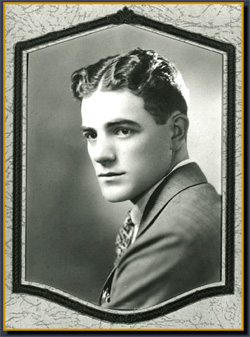 It looks from L'Amour's autobiography that, from the years from 1930 to 1937 in particular, he tried to read approximately 100 books and plays each year. They were not what you would think a man writing Westerns would be reading.
Not a bad New Year's resolution if one has the time. It takes discipline too.
A quick perusal indicates he liked to read several books by one author or playwright that he liked within each year. Certain themes or genres captured his attention. Perhaps he was buying books in bulk or series from bookstores.
In 1930, for instance, he read many of the plays of Eugene O'Neill. In 1931 he read Flaubert. Shakespeare and Detective stories were popular with L'Amour in
1932. It looks like works by H.G. Wells and Conrad were favorites. L'Amour's lists are interesting because there are many books included that are not commonly read these days.
For instance "Trader Horn" by A.A. Horn and Ethelreda Lewis was a book made into a movie with filming done in Africa under extremely difficult conditions (they don't make movies like the used to).
The world was less explored and a bit more mysterious just 80 years ago.
The best writers often do a tremendous amount of critical reading and know a little bit about a vast array of subjects— even things that would be considered controversial today.
Jan
2
Spur the Economy, from Alan Millhone
January 2, 2011 | Leave a Comment
 The president says the most important thing is to "spur" the economy in 2011. I wonder how much more being spurred we can stand! BHO now says he is willing to work with Congress– he now has little choice. I have lost all faith in any of them. They have no conception nor compassion for the average citizen.
The new health care will not address eye care nor dental. You have to be a government employee to benefit in those never discussed areas of health care.
Regards,
Alan
Jan
2
Year Ends, from Ken Drees
January 2, 2011 | Leave a Comment
Noting that the market was heading strongly down prior to the start of the new year in January 2008 and then back to back down hard into January of 2009. Sentiment was shattered, then there was a recovery year long market into January 2010 and a replay of good performance into 2011 January. So the previous 4 years are like pages in a book, a lobagola on a higher time frame perhaps.
So now the market must move into its own future once more– no pattern to reverse:
1450 S&P is the harolded number–why not 1500 —year 2000, 2007 high water marks round? Or is the 2 year party over and the bullishness of back to back years 24 months (only 8 down months) to be reversed? Noting that the last three Jans have been down months, it would seem that if a reverse year is in the offing that a bullish first month of 2011 be served up to get the old saws sharpened.
Party on?!
« go back —Archives
- October 2026
- September 2026
- August 2026
- July 2026
- June 2026
- May 2026
- April 2026
- March 2026
- February 2026
- January 2026
- December 2025
- November 2025
- October 2025
- September 2025
- August 2025
- July 2025
- June 2025
- May 2025
- April 2025
- March 2025
- February 2025
- January 2025
- December 2024
- November 2024
- October 2024
- September 2024
- August 2024
- July 2024
- June 2024
- May 2024
- April 2024
- March 2024
- February 2024
- January 2024
- December 2023
- November 2023
- October 2023
- September 2023
- August 2023
- July 2023
- June 2023
- May 2023
- April 2023
- March 2023
- February 2023
- January 2023
- December 2022
- November 2022
- October 2022
- September 2022
- August 2022
- July 2022
- June 2022
- May 2022
- April 2022
- March 2022
- February 2022
- January 2022
- December 2021
- November 2021
- October 2021
- September 2021
- August 2021
- July 2021
- June 2021
- May 2021
- April 2021
- March 2021
- February 2021
- January 2021
- December 2020
- November 2020
- October 2020
- September 2020
- August 2020
- July 2020
- June 2020
- May 2020
- April 2020
- March 2020
- February 2020
- January 2020
- December 2019
- November 2019
- October 2019
- September 2019
- August 2019
- July 2019
- June 2019
- May 2019
- April 2019
- March 2019
- February 2019
- January 2019
- December 2018
- November 2018
- October 2018
- September 2018
- August 2018
- July 2018
- June 2018
- May 2018
- April 2018
- March 2018
- February 2018
- January 2018
- December 2017
- November 2017
- October 2017
- September 2017
- August 2017
- July 2017
- June 2017
- May 2017
- April 2017
- March 2017
- February 2017
- January 2017
- December 2016
- November 2016
- October 2016
- September 2016
- August 2016
- July 2016
- June 2016
- May 2016
- April 2016
- March 2016
- February 2016
- January 2016
- December 2015
- November 2015
- October 2015
- September 2015
- August 2015
- July 2015
- June 2015
- May 2015
- April 2015
- March 2015
- February 2015
- January 2015
- December 2014
- November 2014
- October 2014
- September 2014
- August 2014
- July 2014
- June 2014
- May 2014
- April 2014
- March 2014
- February 2014
- January 2014
- December 2013
- November 2013
- October 2013
- September 2013
- August 2013
- July 2013
- June 2013
- May 2013
- April 2013
- March 2013
- February 2013
- January 2013
- December 2012
- November 2012
- October 2012
- September 2012
- August 2012
- July 2012
- June 2012
- May 2012
- April 2012
- March 2012
- February 2012
- January 2012
- December 2011
- November 2011
- October 2011
- September 2011
- August 2011
- July 2011
- June 2011
- May 2011
- April 2011
- March 2011
- February 2011
- January 2011
- December 2010
- November 2010
- October 2010
- September 2010
- August 2010
- July 2010
- June 2010
- May 2010
- April 2010
- March 2010
- February 2010
- January 2010
- December 2009
- November 2009
- October 2009
- September 2009
- August 2009
- July 2009
- June 2009
- May 2009
- April 2009
- March 2009
- February 2009
- January 2009
- December 2008
- November 2008
- October 2008
- September 2008
- August 2008
- July 2008
- June 2008
- May 2008
- April 2008
- March 2008
- February 2008
- January 2008
- December 2007
- November 2007
- October 2007
- September 2007
- August 2007
- July 2007
- June 2007
- May 2007
- April 2007
- March 2007
- February 2007
- January 2007
- December 2006
- November 2006
- October 2006
- September 2006
- August 2006
- Older Archives
Resources & Links
- The Letters Prize
- Pre-2007 Victor Niederhoffer Posts
- Vic’s NYC Junto
- Reading List
- Programming in 60 Seconds
- The Objectivist Center
- Foundation for Economic Education
- Tigerchess
- Dick Sears' G.T. Index
- Pre-2007 Daily Speculations
- Laurel & Vics' Worldly Investor Articles
