Apr
3
Power Law Study, from George Zachar
April 3, 2007 | 1 Comment
 A new theory shows how wealth, in different forms, can stick to some but not to others. The findings have implications ranging from the design of the Internet to economics.
Real-world data — whether distributions of wealth, size of earthquakes or number of connections on a computer network — often follow power-law distributions rather than the familiar bell-shaped curve. In a power-law distribution, large events are reasonably common compared to smaller events.
Networks often show power laws. They can be caused by the "rich get richer" effect, also known as "preferential attachment," where nodes gain new connections in proportion to how many they already have. That means some nodes end up with many more connections than others. The phenomenon is well known, but had been assumed to be just a fundamental property of networks.
They could make tradeoffs between the network distance between nodes and the number of connections between them. By tweaking the conditions, they could make preferential attachment — a power-law distribution of the number of connections — stronger or weaker.
These tradeoffs in networks are an underlying principle behind preferential attachment, D'Souza said. The general framework could be extended to all kinds of different networks, in biology, engineering, computer science or social sciences.
From Vincent Andres:
All those people are more or less working on the same theme recently brought to our attention by Rich Bubb (March 5, 2007). This topic resonated strongly with some of my own previous work, so I did a little survey. Here are some links on those topics.
- Laboratoire de Physique Théorique et Modeles Statistiques
- Where Are the Exemplars?
- Review Pour La Science
Among many interesting papers, there is a nice one from M. Mezard and another nice one from JP Bouchaud.
I would be surprised if such algorithms had no application in markets.
Apr
2
Nintendo Stock Trading Game, from George Zachar
April 2, 2007 | Leave a Comment
 Nintendo DS teaches you all about Stock trading. The game starts with a protagonist explaining the basics of money markets, after which you start trading and building a portfolio. Obviously, the goal of the game is to accumulate max profits. There is also a v/s mode where you can play against a friend with the aim of earning profit while causing maximum damage to your foe.
Apr
2
Bridge to Nowhere, from Yishen Kuik
April 2, 2007 | 4 Comments
 This past weekend, the NYT reported that bids had come in to replace the aging Willis Avenue Bridge, which spans 304 ft between Manhattan and the Bronx. It was built in three years and nine months, completed in 1901 at the cost of $2.5 mil. Adjusted for CPI, this is $59 mil in 2005 dollars.
By comparison, the Brooklyn Bridge spans 1600 ft, cost $15 mil to build in 1883 or $300 mil in 2005 dollars. Today, 106 years later, with the advent of modern technology, we can replace the puny Willis bridge in an estimated five years at $600 mil, assuming no cost or time over-runs, based on bid submissions.
If we oversimplify things by assuming material and all labor costs have increased with CPI - giving no credit to a century of progress in building technology and advancements in material extraction and fabrication, then, $600 - $59 = $541 mil is the burden created by the choices we have made as a society in adopting regulations, studies, legal requirements, constituency approvals, bureaucratic overhead, etc.
It seems remarkable that these costs should be almost 10 times that of purchasing the skilled and unskilled man hours and the materials to fabricate the bridge, and that we should take 33% more time to get the job done. And these are best-case figures assuming no overruns.
The moral of the fable seems clear — by embracing a model which allows many different constituents to have a say in investment into public infrastructure, New York City and possibly the rest of the country have greatly retarded its ability to create and renew physical infrastructure. This is very clear in NYC where we contend with decrepit and aging infrastructure while cities in Asia maintain constant renewal of public works.
In a previously disastrous experiment, liberals thought they could achieve affordable housing at no cost by legislating rent control, only to watch landlords allow buildings to fall into neglect from lack of economic incentive. Perhaps a similarly misguided belief today that we can save the trees, the fish, and the environment at no cost by legislating all projects to obtain numerous constituent approvals will have similar consequences - leaving us with a stock of aging infrastructure by excessively raising the costs of getting them replaced.
Stefan Jovanovich writes:
I reviewed the Census Bureau's calculations of the changes over the time periods 2000 to 2006, in the number of people who report themselves as non-immigrant residents in a metropolitan area. To my amateur view it is a change in the demographic patterns from the "white flight" of the last decades of the 20th century. The "flight" now is by all groups of "native" Americans. San Francisco, for example, has seen its black population drop from nearly 20% 2 decades ago to 8%. Riverside, which has been one of the fastest growing exurban counties in Southern California over the same period, has seen much of its growth come from African-American emigrants from Compton and Watts.
Bridge addendum from Yishen Kuik:
Vietnam $42mm Thuan Phuoc Bridge is a cable-stayed bridge that crosses the lower Han River at Da Nang, Vietnam. The four-lane bridge, completed in 2005 has a main span is
405 meters. The four-lane bridge is 1.85 km long and
18 meters wide.
Sweden & Norway $185mm The 704m Svinesund Bridge is a compression arch suspended-deck bridge crossing Ide fjord at Svinesund, and joining Sweden and Norway. 4 lanes, longest span 247 m (810 ft).
China $700mm The Runyang Bridge is a large bridge complex that crosses the Yangtze River. It is part of the Beijing-Shanghai Expressway. South bridge main span of 1,490 metres (4,888 ft). Upon its completion in 2005 it became the third largest suspension bridge in the world and the largest in China. The width of the deck is 39.2 metres (129 ft), accommodating 6 traffic lanes and a narrow walkway at each outside edge for maintenance.
Slovakia $172mm The 854 m Apollo Bridge spans the Danube at 231 m. The Apollo Bridge became the only European project named one of five finalists for the 2006 Outstanding Civil Engineering Achievement Award (OPAL Award) by the American Society of Civil Engineers.
Scotland $40mm The Clyde Arc is a road bridge spanning the River Clyde. Dual two-lane carriageway, two cycle/footpaths (total width 140 m) in west central Scotland, 96m span.
Thailand $70mm The Second ThaiLao Friendship Bridge over the Mekong connects Mukdahan Province in Thailand with Savannakhet in Laos. The Friendship Bridge is 1600 meters long and 12 meters wide, with two traffic lanes.
If anyone can explain what exactly is in the 90m span Willis Bridge that makes it good value at $600mm+, I would be all ears. At that price, I would expect the bridge attendants to serve us coffee as we approach the ramparts.
Apr
2
Stock or Not? from Nick White
April 2, 2007 | Leave a Comment
 Ned Humbert would like to make you aware of a fascinating challenge. Who's right? Dow or Fama?
Pick which graph comes from a random number generator and which one is a real stock price path. It is almost as fun as the real thing, like Rorschach ink blots for traders! The running stats are quite interesting, too, despite the obvious flaws in this kind of thing.
Apr
2
 The following is excerpted from an article in The New Scientist.
Part of a human heart has been grown from stem cells for the first time, a UK research team has announced. The small discs of tissue could represent the first step towards building a whole heart from stem cells.
Animal trials are planned for later this year and, if successful, replacement tissue could be used in transplants for people suffering from heart disease within three years, they said.
"Like everything published ahead of time, it's hard to work out exactly what they've done," said Stephen Minger, a stem cell scientist at King's College London in the UK. Yacoub told the newspaper that similar valves could be fitted in patients within five years, but it would take at least 10 years to build an entire heart.
Apr
2
200 DMA Breached in India, from Sushil Kedia
April 2, 2007 | 3 Comments
 The flagship contract of Nifty Index Futures closed below the 200 DMA today. So many people were talking about it on the TV, on phones, and elsewhere, as if a strike on the markets similar to what came by in the movie Independence Day from aliens is around the corner.
Also, Nifty Futures has witnessed five whipsaws of the 200 DMA since mid 2003, each witnessing a breach of 3-5% followed by a giant return of the bull. So, one could not resist telling curious clients that today's breach is the first alert for polishing the cane and keeping it ready for a walk by late tomorrow.
Also, in the movie Independence Day the collective crisis facing the globe forced all political philosophies across the globe to rally their resources and belief behind Air Force One. The tool of collective crisis in building teams and solving insurmountable problems has such close parallels with days such as today when you almost take the cane out, but resist the desire to hobble to the big building for a day or two.
Apr
2
Lobagola: After 700% Rises, from Sushil Kedia
April 2, 2007 | Leave a Comment
 After 700% rises when big reputed hedge funds get in such stocks as Atlanta Ltd., a mind-numbing real estate success story until not ago, Lobagolas are but natural. What are the investment ideas other than real estate plays where there is yet undiscounted inherent collateral global damage?
Examples as these clearly illustrate that illustrious long short players worldwide need to develop first strong local competencies to discern between the coming herd of the elephants and the hidden elephant trenches.
Apr
2
Steady as She Goes, from Victor Niederhoffer
April 2, 2007 | Leave a Comment
One has to hand it to the market mistress in that Friday was totally disruptive, going below the low of the week at 1418.5 and above the high of the week at 1440 and ending just unchanged.
One could write a book about that one day in the life of the market. The last chapter would be, "It Ended Unchanged." There are so many reasons that the mistress loves it when the market is unchanged, but most of them have to do with homeostasis. When the market moves too much from close to close it causes disruption. Institutions must be adjusted; some floor traders and their ilk, who reverse every excess, might actually lose for a day. Moreover, the ideas that have the world in their grip, i.e., agrarian reform, and return to nature, envy, and egalitarianism, might suffer a temporary upheaval.

Of course all this must be quantified with respect to Friday, March 30, 2007, moves of this nature, and what that portends for the future. The market mistress can't do the same thing too often or else the public might not do the wrong thing as much as is necessary to absorb the expenses of the massive infrastructure.
Ken Smith writes:
Ordinarily I am not a news watcher. I ignore headlines. But this past week I did notice the Bloomberg page, the subheads where the sez and talking heads reveal their market engineering.
Every day during the period Vic mentions the news there were different warnings and different sez's. One day there were positive scams and the next day negative scams. One only needs to understand every sez is a scam and the mystery of why in one day the world is upside down is solved.
Victor Niederhoffer adds:
Indeed, one notes that a Friday high and Friday low, both at extremes for the week, has happened only seven times since 1999. The last happened on April 7, 2006, with the last five occurrences being relatively non-predicitive but with very high standard deviations of future change relative to the norm.
Robert Ray adds:
There are moments when one feels free from one's own identification with human limitations and inadequacies. At such moments one imagines that one stands on some spot of a small planet, gazing in amazement at the cold yet profoundly moving beauty of the eternal, the unfathomable; life and death flow into one, and there is neither evolution nor destiny; only Being. — Albert Einstein
Victor Niederhoffer replies:
A beautiful quote. Einstein felt the same way about the mysteries of blindfolded checker and chess play. Brings to mind Pillsbury's playing 20 games of checkers and 20 of chess simultaneously, with his back to the boards, while engaging in a game of ping pong and carrying on repartee with the spectators.
Apr
2
Bedtime for Weathermen, from Kim Zussman
April 2, 2007 | Leave a Comment
 There once was a primitive man in a farming village who didn't like manual labor, but wanted to get paid to tell farmers when the rainy season was at hand. Everyone already knew from the ancients about the length of shadows cast by sticks when the sun was high over-head. The villagers made a standard stick and marked shadows so they could look for the time between the longest and shortest. But the shadow forecast could be weeks off, and sometimes months.
One thing the weatherman noticed is that before it rained it got darker outside. Since he didn't like the outdoors (and liked to help the harem with the cooking), he decided to automate his system by staying indoors and having a messenger tell him every time it got darker outside.
Unfortunately it got dark every day, and sometimes it clouded up but didn't rain at all. Checking his records over time, only a small fraction of outer darkenings were correlated with imminent rain. He undertook a serious study so he could use experience and knowledge of nature to help: The weatherman learned that if it got dark AND the humidity increases, the odds of rain were much higher than for either condition alone. When he discovered how to measure air pressure (using a closed glass tube inverted into a tub of water) and the air pressure drops, he learned to make an even better forecast.
Adding understanding and experience greatly improved his forecast accuracy, still he often got it wrong. However he didn't have to be 100%; only do it better than others who might claim his job.
The farmers in his area had different levels of success. Those able to more accurately time the planting of crops did much better in certain years, and many farmers diligently monitored them for signs of when to plant. Year after year there were fantastic successes and dismal failures, but over a lifetime success didn't seem to correlate with efforts to precisely time planting.
Despite the obvious discrepancy the farmers were often afraid not to pay the weatherman, who eventually became the richest in the whole village and could afford the biggest harem.
Apr
2
A Simple Knot, from Jim Sogi
April 2, 2007 | Leave a Comment
 On a sailboat there are dozens of lines, but not a single rope. You've got your mainsheet, anchor rode, jib halyard, downhauls, uphauls, outhauls, and reef lines. They are all attached by simple knots. In fact the simplest knots are the best. They hold best and they are undone quickly and easily, which is very important to be able to release a line at the appropriate moment. Some knots are so simple, it is a matter of merely crossing two lines over each other and applying the appropriate pressure to be able to hold upwards of a five ton vessel with one hand.
I had a few landlubbers on my boat the other day. They tied a line to a fitting and it looked like a rat's nest, a tangle jumble of lines, impossible to undo, with questionable holding power. Their model, more is better, is flawed. A simple square knot or bowline cannot be beat for simplicity, ease of release, and reliable holding. Trading has the same needs: simple models and a simple position that can easily be unwound in a jam but that will hold well in a storm.
The problem of pattern recognition is quite fascinating and similar to the problems of knot classification and application. A jumble of indicators all crisscrossing this way and that is often not the best. In creating predictive models, statistically speaking, simplicity is best to avoid the problem of curve fitting the past, and reducing predictive power.
Humans are quite good at recognizing patterns, even ones that don't exist. Humans can recognize faces, even in disguise, remember a loved one's perfume, the smell of a certain flower, read hand written scribbles, spot fake antiques, recognize dangerous driving conditions, and spot good opportunities in financial markets. Now, machines can do almost none. Why? There is obviously a learning process, and a judging process. B.D. Ripley, in Pattern Recognition and Neural Networks, discusses these problems. He is careful to distinguish that the term neural networks is not an attempt to recreate a human brain in the box. Rather it is the process of creating statistical models to recognize and rate pattern recognition algorithms in terms of the their predictive power outside the learning set.
On a sailboat there are dozens of lines, but not a single rope. You've got your mainsheet, anchor rode, jib halyard, downhauls, uphauls, outhauls, and reef lines. They are all attached by simple knots. In fact the simplest knots are the best. They hold best and they are undone quickly and easily, which is very important to be able to release a line at the appropriate moment. Some knots are so simple, it is a matter of merely crossing two lines over each other and applying the appropriate pressure to be able to hold upwards of a five ton vessel with one hand.
I had a few landlubbers on my boat the other day. They tied a line to a fitting and it looked like a rat's nest, a tangle jumble of lines, impossible to undo, with questionable holding power. Their model, more is better, is flawed. A simple square knot or bowline cannot be beat for simplicity, ease of release, and reliable holding. Trading has the same needs: simple models and a simple position that can easily be unwound in a jam but that will hold well in a storm.
The problem of pattern recognition is quite fascinating and similar to the problems of knot classification and application. A jumble of indicators all crisscrossing this way and that is often not the best. In creating predictive models, statistically speaking, simplicity is best to avoid the problem of curve fitting the past, and reducing predictive power.
Humans are quite good at recognizing patterns, even ones that don't exist. Humans can recognize faces, even in disguise, remember a loved one's perfume, the smell of a certain flower, read hand written scribbles, spot fake antiques, recognize dangerous driving conditions, and spot good opportunities in financial markets. Now, machines can do almost none. Why? There is obviously a learning process, and a judging process. B.D. Ripley, in Pattern Recognition and Neural Networks, discusses these problems. He is careful to distinguish that the term neural networks is not an attempt to recreate a human brain in the box. Rather it is the process of creating statistical models to recognize and rate pattern recognition algorithms in terms of the their predictive power outside the learning set.
The Bayesian models figure prominently in many pattern recognition texts such as Ripley's, but also in Bishop's, Pattern Recognition and Machine Learning.
One of the issues is the use of parametric and non-parametric models. Often it seems that the data do not fit a normal model easily, and a non-parametric model may give better prediction. Ripley states the following,
"The normal distribution is a convenient abstraction, but all careful studies show that real distributions do not quite follow a normal distribution but have slightly heavier tails. In addition we should consider the possibility of outliers, that is examples which do not belong to the class under consideration….If the distributions are non-normal, then we need to take into consideration that the tails will be longer, and assuming a t distribution will be more appropriate."
A continuing issue is how to combine normal densities with outliers, like 2/27, to arrive at robust estimators. The traditional statistical approach to model selection includes the iterative process of backward selection by eliminating features until the best remains, or forward selection by starting with none and adding one at a time.
One method of arriving at a non-parametric model is through the use of Monte Carlo with replacement to ascertain the parameters of the learning set. Ripley finds that it may give superior predictions over a parametric model. Before computers, the difficulty of computing non-parametric models must have been insurmountable. But with fast computers why is greater use not made of non-parametric models?
We recently had some discussion on creating some rule of thumb benchmarks for easy computation based on non-parametric models created through Monte Carlo methods. This is an example of how recent market activity might be modeled simply.
A way to incorporate cycles might be with a rolling testing learning period to give estimators and in a Bayesian framework use those estimators going forward. That way the distribution parameters will morph to reflect the current regimes rather than be stuck with a fixed system. The Bayesian Information Criteria, which penalize size severely, might be used to determine a good leaning set/lookback size.
From Pitt T. Maner III:
With respect to pattern recognition, this reminds me of the thief knot used by sailors in days past.
Isn't it amazing, too, how easy it is for random lines to get tangled or knotted up and not break and yet how compounded simple knots done with willful intent can come unraveled in the blink of an eye and fail their purpose. It's one topological mystery.
Apr
1
The Rise and Rise, from Nigel Davies
April 1, 2007 | Leave a Comment
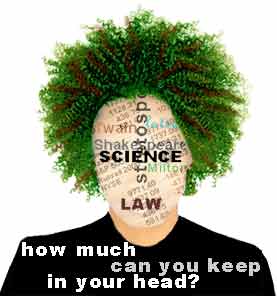 Visiting the Financial Times site today a pop up poll appeared asking me whether I thought a preemptive nuclear strike against Iran was a good idea. I decided to mull it over whilst I finished my pizza and meanwhile recalled the Peter Cook film, The Rise and Rise of Michael Rimmer.
This 1970 movie fairly accurately predicted the rise of a new style of prime minister (Tony Blair for example). In fact Rimmer became absolute dictator of the UK. The ploy he used to gain absolute power was to give people a choice on everything. They could vote on all the major issues of the day by pushing a button. Eventually they got so tired of this that everyone was happy just to let Rimmer take care of it.
In the case of these online polls I wonder if the movie was equally predictive, the danger not being that people will hand over their democratic rights, but rather they will vote the way they think they should on matters of such importance, and this in turn will influence ever more populist politicians.
There also seems to be an interesting paradox at work here. Increasing the amount of information and choice may actually reduce thinking and cause a greater reliance on memes and heuristics. There seems to be a clear application to trading here: information overload.
Apr
1
“Meet the Robinsons,” A Movie Review from J T Holley
April 1, 2007 | Leave a Comment
 OK, Disney pulled off another great movie. This time it was a non-Pixar that has libertarian tones, individualism, splashes of scientific method, Good = Positive thinking vs. Bad = Negative thinking, Galton type counting, and the wonderful lesson of trial and error involving frequent failing to get to the good/right. There are plugs for Einstein and Edison as well.
An orphan named Lewis is the epitome of rejection in that he has failed miserably in school with tons of inventions and gadgets that he creates. He also has been rejected 123 times by families that have interviewed to take him home as a son. Through all of this rejection, though, a little boy becomes 12 and realizes that life is about "choices." Choices are the freedom that unchains oneself from any environment that a person thinks is bad or unbearable.
A touch of existential "thrownness" is apparent. So is seeking out both the beginning of one's life and life's future, and pulling it into the here and now to be able to move forward. This is the bottom line lesson that even my son and daughter at age six and seven took away. Of course my son loved the dinosaur part as well and my daughter the dancing singing frogs.
I would recommend this movie to anyone that has kids. I don't think we have a Finding Nemo type blockbuster on our hands but it is a good quality movie with a fantastic spirited theme that doesn't often make it to the screen. It is one of those films that you can leave the theatre and immediately discuss the main points with the children as an icebreaker in parenting.
Apr
1
Note Taking by Movie Assassins, from Nigel Davies
April 1, 2007 | Leave a Comment
I couldn’t help but notice a striking similarity between the note taking of assassins from two different moves, Harlen Maguire (Road to Perdition) and Elle Driver (Kill Bill). They liked to get their facts straight. Winston Wolf (Pulp Fiction) was similar, but he was a ‘problem solver’ rather than an assassin.
Taking notes during the post mortems of my chess games is something I learned from International Master Danny Kopec. No matter how smart you think you are, important lines get forgotten if you don’t write them down immediately after the game. And there was a time when I kept a diary too.
Of course these excellent habits are difficult to keep up over a long period of time, there tends to be a gradual erosion of the habits that got us there when comfort sets in. And this is the beginning of the end.
« go back —Archives
- October 2026
- September 2026
- August 2026
- July 2026
- June 2026
- May 2026
- April 2026
- March 2026
- February 2026
- January 2026
- December 2025
- November 2025
- October 2025
- September 2025
- August 2025
- July 2025
- June 2025
- May 2025
- April 2025
- March 2025
- February 2025
- January 2025
- December 2024
- November 2024
- October 2024
- September 2024
- August 2024
- July 2024
- June 2024
- May 2024
- April 2024
- March 2024
- February 2024
- January 2024
- December 2023
- November 2023
- October 2023
- September 2023
- August 2023
- July 2023
- June 2023
- May 2023
- April 2023
- March 2023
- February 2023
- January 2023
- December 2022
- November 2022
- October 2022
- September 2022
- August 2022
- July 2022
- June 2022
- May 2022
- April 2022
- March 2022
- February 2022
- January 2022
- December 2021
- November 2021
- October 2021
- September 2021
- August 2021
- July 2021
- June 2021
- May 2021
- April 2021
- March 2021
- February 2021
- January 2021
- December 2020
- November 2020
- October 2020
- September 2020
- August 2020
- July 2020
- June 2020
- May 2020
- April 2020
- March 2020
- February 2020
- January 2020
- December 2019
- November 2019
- October 2019
- September 2019
- August 2019
- July 2019
- June 2019
- May 2019
- April 2019
- March 2019
- February 2019
- January 2019
- December 2018
- November 2018
- October 2018
- September 2018
- August 2018
- July 2018
- June 2018
- May 2018
- April 2018
- March 2018
- February 2018
- January 2018
- December 2017
- November 2017
- October 2017
- September 2017
- August 2017
- July 2017
- June 2017
- May 2017
- April 2017
- March 2017
- February 2017
- January 2017
- December 2016
- November 2016
- October 2016
- September 2016
- August 2016
- July 2016
- June 2016
- May 2016
- April 2016
- March 2016
- February 2016
- January 2016
- December 2015
- November 2015
- October 2015
- September 2015
- August 2015
- July 2015
- June 2015
- May 2015
- April 2015
- March 2015
- February 2015
- January 2015
- December 2014
- November 2014
- October 2014
- September 2014
- August 2014
- July 2014
- June 2014
- May 2014
- April 2014
- March 2014
- February 2014
- January 2014
- December 2013
- November 2013
- October 2013
- September 2013
- August 2013
- July 2013
- June 2013
- May 2013
- April 2013
- March 2013
- February 2013
- January 2013
- December 2012
- November 2012
- October 2012
- September 2012
- August 2012
- July 2012
- June 2012
- May 2012
- April 2012
- March 2012
- February 2012
- January 2012
- December 2011
- November 2011
- October 2011
- September 2011
- August 2011
- July 2011
- June 2011
- May 2011
- April 2011
- March 2011
- February 2011
- January 2011
- December 2010
- November 2010
- October 2010
- September 2010
- August 2010
- July 2010
- June 2010
- May 2010
- April 2010
- March 2010
- February 2010
- January 2010
- December 2009
- November 2009
- October 2009
- September 2009
- August 2009
- July 2009
- June 2009
- May 2009
- April 2009
- March 2009
- February 2009
- January 2009
- December 2008
- November 2008
- October 2008
- September 2008
- August 2008
- July 2008
- June 2008
- May 2008
- April 2008
- March 2008
- February 2008
- January 2008
- December 2007
- November 2007
- October 2007
- September 2007
- August 2007
- July 2007
- June 2007
- May 2007
- April 2007
- March 2007
- February 2007
- January 2007
- December 2006
- November 2006
- October 2006
- September 2006
- August 2006
- Older Archives
Resources & Links
- The Letters Prize
- Pre-2007 Victor Niederhoffer Posts
- Vic’s NYC Junto
- Reading List
- Programming in 60 Seconds
- The Objectivist Center
- Foundation for Economic Education
- Tigerchess
- Dick Sears' G.T. Index
- Pre-2007 Daily Speculations
- Laurel & Vics' Worldly Investor Articles
