|
|
|
|
 |
Daily Speculations The Web Site of Victor Niederhoffer & Laurel Kenner Dedicated to the scientific method, free markets, deflating ballyhoo, creating value, and laughter; a forum for us to use our meager abilities to make the world of specinvestments a better place. |
Write to us at:
 (address is not clickable)
January 2005 Posts
(Jan. 1-15)
1/15/05
Landing on Saturn's Moon, by
Kim Zussman
Huygens' successful landing on Saturn's moon titan is a triumph of human engineering and cooperation (between NASA/JPL and European Space Agency). This frozen world with temperature -292F will be analyzed as data returns. There is evidence of liquid-phase matter (most likely hydrocarbon) oceans and carved canyons as well as ice-land masses. The mission cost less than a NY taxi at about $1.50/mile and there was no traffic; however, the trip was about 2.2 billion miles.
1/14/05
Dubai: The
Roaring Emirates, by Ryan Carlson
1/14/05
Guaranteed Losers, by
Victor Niederhoffer, with comment by Mr. E.,
Andrew Moe, Bruno and J.T.
1/14/05
The Misery/Mediocrity Meme, by Janice
1/14/05
Dick Sears:
Weekly Commentary:
Not Singin' in the Rain.
1/13/05
Higher
Agitation, by Kim Zussman
1/13/05
'I Know
It's Not Real, But...' by Karamvir Singh Bisht
01/13/05
Ask The
Senator, a continuing series
Q: Where can I get really good shrimp?
A: Farm-raised shrimp taste like Styrofoam cups. There is just no comparison
to the real deal. If you have not had freshly caught natural shrimp you have
not yet had shrimp. I've been having jmharder24<at>hotmail<dot>com send me
fresh shrimp and stone crab claws, the best I have ever had, at very
reasonable prices, $7- $8 a pound for claws.
Send queries for the Senator to senator<at>dailyspeculations<dot>com
1/13/05
Father Random, Part
II, by Victor Niederhoffer
1/13/05
That Four-Letter Word, by
Hany Saad
1/12/05
The Vendée Globe,
by Jeff Beckwith
1/12/05
Bronstein -- One Cool GM, by Nigel Davies. An eyewitness account of the
great chess grandmaster.
1/12/05
Quote of the Day, Offered in Honor of
Intel by Victor Niederhoffer
"Through the exercise of superior native wits or the accident of
extraordinary luck, speculators flourish marvelously for a time: but only, as a rule,
to lose their heads and their balance at last, and go down - often through a
single disastrous transaction -faster than they went up. There are exceptions.
Some flourish to the end, dying- generally youn jclass class class="small- or retiring with estates
unbroken. But they are the exception. Wall Street is a place where a few fortunes
are made and a great many are lost. The stories of its magnificent triumphs and
of its equally magnificent wrecks, read like tales from the Arabian Nights;
some of them like passages from Dante's Inferno. Wall Street has had its
suicides"....
from "The Art of Investing" by a New York Broker, 1888.
["An investment manual with chapters on government and municipal bonds, railroad and mining stocks, and speculation on the New York, Philadelphia, Boston and Baltimore exchanges. Authored by a broker who 'prefers to avoid the suspicion of using this publication as an advertisement of his business.'" -ed.]
1/12/05
Kim Zussman responds:
I often wonder about this, considering that most of investment industry
do not live on trading profits. Why is it better
to build the plumbing than drink the water?
Perhaps human nature leads naturally to ruin. It's better to become a
millionaire if you used to be poor than if once a billionaire. So in
the same way that a gambler well ahead can't walk away from the table,
instead of saying "enough" we dream of compounding our stake ever
higher. At some point it's not even about money, but the status of
mastering a daring challenge where almost all fail. Intellectual
adrenaline junkies.
Academics would proclaim that the greater the profits the more risk
was taken. So when we have been very profitable it tells us either we
have recently taken large risk or were lucky. If we leverage a trade that wins
55% of the time with a fortunate winning streak, we might be induced to leverage
further. After all, a billionaire is better than a millionaire. Perhaps the
black swan is we.
1/12/05
James Lackey adds:
Well, for those of us that do scrape by a living by speculation, today is just another trading day. It is a day where many have lost hope. It is a day where some just can't cope with another loss. Yet, at the end of the year, will it be one of those five or 10 days of the year, that if missed retrospectively, you did not profit on the year?
1/12/05
The Current Account Deficit: Nobody Asked Me, But...
by Victor Niederhoffer
1/12/05
The Art of Book Buying,
by
Pamela Van Giessen
1/12/05
Howl, by George Zachar
Reading the
WSJ front page puff piece on Eric
Mindich (a talented fellow by all accounts) I literally felt transported.
I saw myself as an old man in a rocking chair reading histories of "the day"
where fair haired boys turned away piles of chips, so great was the fever to
place capital in their hands.
I eavesdropped on cocktail parties where men measured themselves by how much
money they had managed to place with the fair haired boys.
I saw B-team deal pushers culling their databases for firms to tart up and
pitch.
I saw skinny young men in Izod shirts hunched over their computers at business
schools, scheming to get a resume in front of the fair haired boy.
I saw the future business historian smile when reviewing the database of Federal
Reserve minutes, as his eyes hit the December 2004 passage "policy accommodation
had generated a significant degree of liquidity that might be contributing to
signs of potentially excessive risk-taking in financial markets."
What a wonderful article.
1/11/05
Indian Elephants, by
James Sogi
IFN, the India Fund, is down 16% from 31.25 on 12/28/04 to 26.26 today. The May '04 panic resulted in a 31% drop followed by a recovery to new highs. A wise and aged Brahmin might surmise at some point that the Indian market will recover from the effects of the tsunami. India seems to be consolidating its regional power in this time of trouble.
Dr Zussman comments: Interestingly, the illiquid Indonesia Fund (IF) is up in the same period. If IF went up on the prospects of international aid, rebuilding, and new infrastructure for Sumatra, why wouldn't India? The month after 1995 Kobe Japan quake Nikkei was down. However it is difficult to suggest causality unless there are a large number of disasters with correlated drops.
1/11/05
Ready, Aim, Fire, by
J T.
Threes in life and trading.
1/11/05
Hero, A Movie Review with Market Insights by
James Sogi
A story set in ancient China about a failed assassination attempt told from several viewpoints. Each person who tells the story has different reasons for deception, different motivations and different political agendas, versions vary widely. This explain why news does not have a predictable effect on the markets. Read more>>>
1/11/05
Courage, by
Ken Smith
The following is excerpted from Wyckoff's Stock Market
Technique, published 1933.
A great deal of talent is lost in the world for want of a
little courage. Every day sends to their graves obscure men
whom timidity prevented from making a first effort; who, if
they could have been induced to begin, would in all
probability have gone great lengths in the career of fame. The
fact, is that to do anything in the world worth doing, we must
not stand back shivering and thinking of the cold and danger,
but jump in and scramble through as well as we can. It will
not do to be perpetually calculating risks and adjusting nice
changes; it did very well before the Flood, when a man would
consult his finds upon an intended publication for a hundred
and fifty years, and live to see his success afterwards; but
at present, a man waits, and doubts, and consults his brother,
and his particular friends, till one day he finds he is
sixty-five years old and that he has lost so much time in
consulting others that he has no more time to follow their
advice.
1/10/05
Unobtrusive Measures:
The Story of the Yale Endowment Fund, by Victor
Niederhoffer
01/09/05
Gloom, Doom and Record Books, by Victor Niederhoffer.
When the bears are having an orgy over bad news, the Chair
peruses the daily price records he has kept for 45
years.
 01/10/05
Word from the Bluenatic Fringe: Laurel Kenner comments on the Left's call to end
consumer spending on corporate products.
01/09/05
Definitive Doom and
Gloom: A Classic from the Newport Beach Crowd, forwarded by
George Zachar
01/09/05
The Life Aquatic, by
Dan Grossman
Saved from Bill Murray's
Lost in Translation by Vic,
Mystified by the over-praised
Sideways,
I tonight enjoyed tremendously Murray's redemption in The Life
Aquatic with Steve Zizzou. Funny, original, fine cast, won't
even attempt to summarize the story but it's an eyeful.
01/09/05
Luau, by
Jim Sogi.
Fascinating account from the Surfer Spec on preparations for
the traditional Hawaiian barbecue.

01/09/05
four Scholarly Reviews by Dr. Castaldo
1.
"Variance Risk Premia" by Peter Carr, Liuren Wu;
2.
Cross-Industry Momentum by Lior Menzly, Oguzhan Ozbas;
3.
Stock
Returns, Aggregate Earnings Surprises, and Behavioral Finance, by Jonathan
Lewellen, S.P. Kothari, Jerold B. Warner.
4.
The Cross-Section of Volatility and Expected Returns, by
Andrew Ang, Robert Hodrick, Yuhang Xing, Xiaoyan Zhang
01/09/05
What do you believe is
true even though you cannot prove it? by
Andrew Moe
01/08/05
Slicing the Pie, by James Morin
This explains in detail how
the CME is increasing the maximum order size on contracts for the ES and NQ
E-minis from 400 to 1500. Any thoughts as to how this will affect trading?
The Assistant Webmaster responds: `A blonde ordered a pizza and the clerk asked
her how many pieces she wanted it sliced into, six or eight? "Six", she said, "I
could never eat eight".'.. Our Zen lesson for the day..
And more Zen from J. T.: When I took economics in college the professor drew a
circle on the board and asked "How big would you cut your piece?" When he asked
me to come up first, I walked up and colored in the whole thing. He replied, "I
didn't ask you to color, J.T., I wanted you to cut your section out." I
replied, "It's the whole thing." He asked. "What about your classmates?," I
said, "I can eat a whole one; there will be someone to make more." He replied,
"Good answer."
01/07/05
Kona Gold, by
Jim Sogi
I do know Kona coffee... and grow, pick, process and roast my
own from our farm. The big rains earlier caused all the flowers to set at the
beginning of the season and ripen for one early pick and fewer in the late
season. But the beans are big and the price is back up after the fake Kona
coffee scam a few years back did wonders to publicize pure Kona coffee. The
Molokai coffee doesn't have the same quality due to the climate differences,
like wines, and the knowledge of the farmers, processors and roasters.. If you
can find it, get sun dried Kona green beans and roast it just before grinding
and brewing. A real treat. Its a specialty market though and I don't believe it
affects the world market. However, hundred of new acres are being planted; by
gentlemen farmers who fly in on private jets. There were 52 private jets lined
up on the tarmac, including 727's and private 707's this New Year's.
Mr E adds: I actually buy KONA gold coffee at BJs
Warehouse.. small beans with incredible aroma.. and I usually
drink four cups at
a time in a huge mug with freshly self-ground coffee and super hot spring
water.. had one tonight.
Vietnam destroyed the coffee business when they figured a
way to chemically treat low-grade to taste like arabica..
And Yishen Kuik points out: My father used to work in the coffee business. Cheap
robusta tastes terrible, a far cry from arabica but there are techniques to
steam off most of the foul flavor. Apparently mixed with other beans they can
provide interesting taste notes (not to mention lower COGS). Here is the part
related to deception: Some believe the flavored coffee market was developed to
sell the large quantities of cheap robusta produced by
Vietnam.
01/07/05
Adventures in Retailing Part III: Manhattan Bookstores, by
Ross Miller
There was a time when going into a bookstore gave me a thrill. I would go out of
my way to visit them. One by one, however, my favorite bookstores have either
gone out of business or were co-opted by the mainstream.
My earliest bookstore expeditions were as a high-school student in the 1960s.
Although downtown Elizabeth, New Jersey still had something to offer the
bibliophile--an independent bookstore, the book sections of the big department
stores, and two substantial used bookstores (none of these have survived to the
present, nor have replacements for them appeared)--Manhattan ( The City ) was
where the real books were.
Read More.
And See Responses from Zussman, Van Giessen and Burke!
01/07/05
Specs
and Academics, by George Zachar
Fed Gov. Bernanke offered this observation on skill acquisition today:
"...Current [economic] analysis is not taught in graduate school, probably for
good reason; it seems more amenable to on-the-job training...."
Parallels to trading abound, and it seems to me he's making a case for getting
specs to serve on the FOMC instead of academics.
01/07/05
A Case of Hubris?
Pictures from the 2004 CMKX Shareholders Party.
Ice sculptures, Elvis impersonators, live band and a car give
away. Not bad for a company which is at .0001 bid and .0002 ask.
01/07/05
See Jack Tierney's Review of "State of Fear"
01/06/05
Mastery, by Jim
Sogi
I had a chance to go meet with my daughter Kim's Hula Kumu (Instructor) and
watched as she demonstrated some of the moves in preparation for Kim's birthday
luau, where there will be a hula show. The whole hula troop offered to help with
the luau. Ulalia has been practicing and teaching hula for over 40 years.
Watching her mastery of the art, her economy of motion and smoothness, despite
her age, brought tears to the eyes. She is a true master of her art arising from
a lifetime of dedication.
On the way home we stopped of at the shop of my neighbor and friend, master
craftsman and artist Tai Lake, to pick up
some pumpkins for the imu. Looking at his high-tech shop filled with glowing
works of art made me wonder at his mastery of the art as well as be amazed at
all the different tools and skills need developed over a lifetime and his unique
supply of rare hardwoods harvested from the mountains of Hawaii. He also is a
master craftsman, recognized in Chicago at the national master woodworking
shows, in American Express Magazine, and in the megahomes on the Kohala coast.
But what a different world, filled with objects, tools, and dust.
I am privileged to meet with and be friends with the masters in the art and
science of speculation here, and wonder at the wisdom earned over a lifetime in
the markets. I realize the thrill I get from learning some bits of wisdom from
each master is a true love of learning and knowledge, and that is why I consider
myself a philosopher.
Laurel notes: Jim's note about economy of motion and smoothness brings to mind the transfixing spur-of-the-moment hula performance by Kim Sogi and her mother at last year's Spec Party, with Jim on ukelele and vocals. One bows deeply to the teacher and respectfully wishes Happy Birthday to the student.
The Assistant Webmaster adds: ``If people knew how hard I have had to work to gain my mastery, it wouldn't seem wonderful at all.'' -- Michelangelo
01/06/05
Youth is a State of Mind, by
Tom Ryan
In a biography of General Douglas MacArthur, it was noted
that for many years he had the following essay framed and hung up wherever his
office went. He quoted the entire passage in a speech in 1955 on his 75th
birthday. A good one to reread, now that the media are full of predictions of
lower stock prices because of forecasts for 2005 GNP, rising trade
deficits, employment, what ten Wall Street economists thought Greenspan meant,
and other economic ruminations which have a substantial random component:
"Youth is not a time of life, it is a state of mind. It is not a matter of rosy
cheeks, red lips, and supple knees. It is a temper of the will; a quality of the
imagination, a vigor of the emotions, it is a freshness of the deep springs of
life. youth means a temperamental predominance of courage over timidity, of the
appetite for adventure over a life of ease. This can exist in a man of 50 as
much as a boy of 20. Nobody grows old by merely living a number of years, people
grow old by deserting their ideals. Years may wrinkle the skin but to give up
enthusiasm wrinkles the soul, worry, doubt, distrust, fear and despair - these
are the long long years that bow the head and turn the growing spirit back to
dust. Whether 70 or 16, there is in every being's heart a love of wonder, the
spirit of sweet amazement at the stars, the undaunted challenge of events, the
unfailing appetite for what comes next, and the joy taken in the game of life.
You are as young as your faith, as old as your doubt, as young as your self
confidence, as old as your fear, as young as your hope, as old as your despair.
In the central place of your heart there is a wireless station. So long as it
receives messages of beauty, hope, cheer, grandeur, courage, and power from the
earth, from fellow men, and from the infinite - so long are you young. When the
wires are all down and the central places of your heart are covered with the
snows of pessimism and the ice of cynicism, then you are grown old indeed!"
Samuel Ullman, written in the middle of the Depression, 1934.
01/06/05
Horsepower and Hemlines, by
George Zachar
The annual pre-auto show puff piece
in this morning's Journal
says 2005's car marketing theme will center on horsepower.
Even family four-doors and trucks are getting the treatment. BMW will
unveil its 10-cylinder, 507-horsepower M5 sedan at the Detroit show
Monday and plans to use the same engine in
next year's M6, a hopped-up
version of its 645i coupe. The Dodge and Chrysler divisions of
DaimlerChrysler AG are expected to use the show to roll out four new
models, including a station wagon, with engines that generate more than
400 horsepower. It is unveiling a concept car, the Firepower, a
425-horsepower two-seater that a company official described as a
possible rival to the Chevrolet Corvette in a year or so.
With changing culture cycles making the hemline indicator a thing
of the past, should we now be be tallying horsepower stats?
01/06/05
Mr. E adds:
At year end, I took advantage of GM and bought a new 2004 Ranier with an 8 cylinder with all bells and whistles at 12,000 off list with GM taking the hit. They were loaded up with horsepower vehicles, but no one was buying. I'm surprised they think people have a need for speed.
01/06/05
James Lackey notes:
All under 200 horsepower. base V-6 or 4
banger.
units sold base price
1 Ford F-Series 432,969
$19,920
2 Chevrolet Silverado 322,907
$19,485
3 Dodge Ram pickup 223,609 $20,365
4 Toyota Camry 213,625
$19,560
5 Honda Accord 192,106
$16,390
Yet your post shows how electronic fuel injection and
new technologies can make the most beautiful car ever
made, 1967 Big block Corvette 427 cubic inch-435HP
car, would make 550 HP today and pass emissions laws.
In 1972 new emission laws killed cubic inch engines
and horsepower. It took 25 years of new tech of fuel
injection, computers, lower costs of mass production
to over come one new Washington law 30 years ago.
The euros are running diesels with out the black smoke
and idle rattle or knock that all diesels used to
make. They run, get this 17,000 PSI of fuel pressure
to achieve a cleaner or more efficient cylinder burn.
My old Corvette ran 9 PSI. The fuelie on my 2000 HP
race car only ran 50 pounds. New tech like pneumatic
valves on F-1 cars is still to come to make that old
internal combustion engine more efficient..
01/05/05
Vinesh Jha adds:
We can proxy it by grabbing data from the
UC Davis study
on car
sales
and
relating it to S&P returns. The correlations between car sales trends
and contemporaneous and subsequent US market returns are as follows
(annual data from 1975 to 2001)
Correlation to:
This year SPX next year SPX
% sales small cars 0.18 0.23
% sales large cars (0.24) (0.10)
% sales SUVs (0.01) (0.10)
% sales domestic 0.21 0.16
So it looks like lots of small car sales are good for the market for
this year and next, and lots of SUV sales have negative long term impact
but no impact this year. And more domestic sales as a % of total car
sales are generally better.
I won't share the frighteningly low T stats on this. =)
01/06/05
Meaning in a Speculator's Life, by
James Lackey
An example is a
LETTER from a SELF MADE MERCHANT TO
his SON, LORIMAR, "You been in the packing business long enough to know it
only takes 30 seconds for a bull to lose his hide; if you believe me when I tell
you they can skin a bear just as quick on 'Change you won't have a Board of
Trade Indian using your pelt for a rug during the long winter months." "Because
you are the son of a pork packer you might think you know a little more than the
next fellow about paper pork. There is nothing in it. The poorest men on earth
are the relations of millionaires. When I sell futures on 'Change there on hogs
traveling to dry salt at the rate of one a second and if the market goes up on
me I've got solid meat to deliver, but if you lose the only part of the hog all
you can deliver is the squeal." pp 193-94
Many men venture into the world of speculation
without the business acumen to succeed. We find a
niche, seemingly prosper for a short time before
disaster of loss ruins our incentive to continue. Yet
the business of speculation that is taught by any a
business book is not absolute speculation, but to
hedge for a respectable business. It is to provide a
so called, economic good.
*Read More!
01/05/05
Sighting!
Vic studying the Universal Law of Gravitation in his copy of Newton's Principia at 1:00 pm.
01/05/05
4 Days Down, by Kim Zussman
01/05/05
Listening to the Market, by
Gibbons Burke
When I was at Quote.com
we gave away a freebie application (with source code, I think,
to encourage our API developers) called TradeTones, written by
Michael Phillips, which worked with the
QCharts internet real-time
feed (QFeed) which would let you pick a MIDI instrument and
the notes that would be played whenever there was a trade in a
particular symbol. There were three different events you could
select different notes to be played: trade at the current ask
price, trade at the bid price, and a trade in-between. It was
quite useful for walking away from the screen and being able
to follow the action from afar. You could launch multiple
instances of the application and have it play a different
instrument for each symbol. I can't believe these guys are
getting $12K for Accentus.
You can still
get TradeTones for free.
01/05/05
The Stock Market Level in Historical Perspective,
by Peter Gardiner
When Alan Greenspan, chairman of the Federal Reserve Board in
Washington, used the term irrational exuberance to describe the behavior of
stock market investors in an otherwise staid speech on December 5, 1996, the
world fixated on those words. Stock markets dropped precipitously. In Japan, the
Nikkei index dropped 3.2%; in Hong Kong, the Hang Seng dropped 2.9%; and in
Germany, the DAX dropped 4%. In London, the FT-SE 100 index was down 4% at one
point during the day, and in the United States, the Dow Jones Industrial Average
was down 2.3% near the beginning of trading. The words irrational exuberance
quickly became Greenspan's most famous quote <p>a catch phrase for everyone who
follows the market, yadda yadda.
SPX     Open   Close
12/4/96 748.28 745.10
12/5/96 745.10 744.38
12/6/96 744.38 739.60, Low = 726.89
12/9/96 739.60 749.73
Note that Dec S&P EPS was $36; '05 Est = 73.50, or +104%, vs SPX +60% till today
01/04/05
In Honor of Frank Cross, by Victor Niederhoffer
My first partner, even six months before Dan first played a significant role,
some 40 years ago, was an erudite recluse who was extremely creative in
working with numbers. Our main tool in those days was the S&P Security
Price Index Record. And many a happy midnight we found ourselves testing and
patterning, sometimes aided with a Friden mechanical calculator we rented for
$40
a month and sometimes, starting in 1966, when some computer output with volume and
price was particularly suggestive and we couldn't wait for the answer, with
hand calculations at the 7094
at University of Chicago. It was out of such sessions that we first discovered
that each day or week and hour of day, the market had a
different multivariate effect.
Inspired by the down first day of the year, yesterday I took out the Security
Price Index Record and made a little hand study of what happens after the
first day of the month is down. Regrettably, I took the study back only to 1932,
as the record switches to the Dow before then, and I didn't wish to tussle with the
promiscuous hypotheses of certain former colleagues prone to fight with
Falstaffian characters.
I found something like the following. In 72 years, 30 first days of the year were
down. Buying on such first days and holding until there was a profit or
closing at the end of month if there wasn't, a la the
Senator, using closing prices only,
led to profits in 28 years out of 30. The average profit of the 30 was 1/3%
with losses in 1957 and 1977, about 6% each year.
The results seem about in accord with a 1 in 10 shot by chance as there is a
profit immediately by chance in 1/2 of cases the next day and 1/8 of cases two
days later if the first day is a decline and the next day a profit, etc.
An interesting byproduct: the S&P Index in 1932 was about 8; in 1940, 12;
in 1950, 16; in 1960, 60; in 1970, 73; in 1980, 106; in 1990, 360;
and in 2000, 1400.
Very Dimsonesque.
P.S.. The chance that the first day of the month will be the maximum of 22 is
approximately 17% using a formula derived from Feller, (22 choose (22/2))/(2^22).
01/03/05
Sell the Skyscraper Meme, by Steve Wisdom
Liberty to Build 'Comcast Center' in Philadelphia
"Comcast Center will be a 1.2 million square
foot, 57-story office tower ideally situated atop the major commuter rail
station at 17th Street and JFK Boulevard in Center City Philadelphia. The $435
million project will rise 975 feet, and will redefine the Philadelphia skyline.
The project will also feature a half-acre public plaza, and a dramatic new
entrance to Suburban Station."
01/03/05
Cane Sighting
Strangely, a man hobbling on a racquet and cane was seen again heading east at Trinity Church at 10:50 a.m.
01/03/05
Time and Deformation, by Dr. Brett Steenbarger
Driving
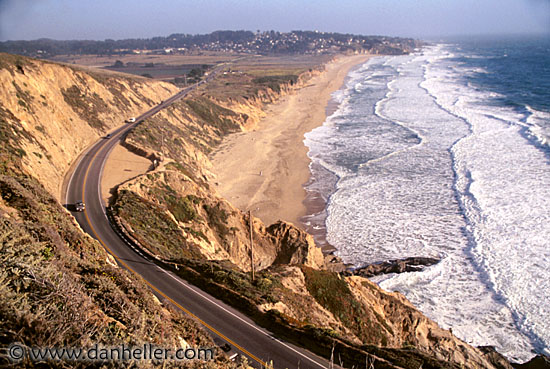
along California's Route 1, connecting San Francisco and L.A., is
conducive to uplifting speculation and, indeed, recently prompted me to reflect
upon the market-related lessons I have learned in the past year. Perhaps the
greatest lesson concerns the role of time as a market variable and, in
particular, how deformations of time <p>resulting from both market and personal
activity <p>impact trading behavior.
*Keep reading!
01/03/05
The How and Why of Investment Decisions, by Steve B.
Have you ever wondered why you often change your mind
about how you feel about an investment? Feelings start
when you are about to purchase a security, the
attachment becomes stronger after the purchase, and
then over time you come to have mixed feelings, and
finally you become pessimistic and sell the security
to find better opportunity elsewhere?
*For full story
click here.
01/03/05
See Buyback Performance as of Year End 2004
01/03/05
Swordfishing and Trading, by Yishen Kuik
Listening to Linda Greenlaw, a swordfish captain on swordfishing: Greenlaw had last radio contact with the Andrea Gail in "the Perfect Storm".
Fishing boats plan trips in sync with full moons. Opportunity for biggest
hauls are concentrated around a quarter moon and the full moon so during
these periods crew turnaround quickly and only spend 2 days at port after 30
days at sea, leading naturally to a lot of drinking and craziness when on
shore leave.
Outfitting a sword fishing boat is $40,000 (groceries, fuel etc) for 30 days
of fishing (1999)
Gross takings less expenses (nets, tackle etc) gives the net. 50% of the net
is retained by the owner and the remaining 50% is divided by captain and
crew. The captain might have 1.5 or 2 shares to the crew's 1 share.
Boats today use a lot of technology to gauge weather, but the best indicator
of weather : radio the nearest boat (usually 200 to 400 miles away) to get a
read on the wind speed, wind direction, cloud cover. If in a storm and the
nearest boat reports clear weather, a captain might stay the course.
As a captain, you need a good crew to get a good haul and a good ship can be
useful in getting a good crew. Captains hook up with owners to get ships.
Where warm water and cold water meet in the ocean, this is a usually a good
spot to fish. Color (green/blue) of ocean can help identify temperature.
Captains do not wish to fish the last fish. When things are going well, captains
get nervous if things are going too well. Older hands still circulate sea
superstition. No bananas on boat. Women are Jonahs. No pork on board because
pigs can't swim. Worse storm experienced was when owner convinced her to keep
hauling in an area where a storm was close by. 100 knot winds ripped out a lot
of equipment. Captains have to balance risks of storms against haul potential.
Fishing is a way of life. Quite a few good analogies to trading it seems.
01/03/05
James Sogi on Fishing:
"Understanding what species of fish lies
in the water is a primary. You must also know what
they typically eat and where they lurk in the waters." James Tar
In Kona we fish for big game fish, and several exceeding 1,000 pounds
are landed each year. One method is using live bait. We fish for the
bait on the grounds where flocks of birds circle and the ocean boils as
10-30 pound fish churn the water. *Read full story!
01/03/05
Cristina de Sobrino on Fishing:
Have you ever read The River Why? by David Duncan? It's got trout fishing and vision quests. I could never find a copy -- last published 25 years ago and hard to come by -- but they just came out with a 25 year re-release and it's suddenly available/accessible again.
01/03/05
Fishing with Mr. E:
As the owner of a
38 ft twin turbo diesel Pursuit, Sport Fisherman,
with a tuna tower, I can tell you that women aren't a problem unless
they get seasick; they are fantastic fishermen.
Thanks to the turbos and 600 gallons of diesel, we can crank 35 knots
and can outrun most major storms where wind and tide aren't against
each other, and we have a hull that's a foot thick solid fiberglass
which can weather very heavy seas; and the engine room is waterproof, if
you can turn them off fast enough should you get overturned.
I fish 100 miles offshore in the deep Hudson and Baltimore Canyons and
literally at the edge of the Continental Shelf. The real danger is
that storms that develop there can force up huge waves suddenly as
currents run up against 1000-2000 feet of granite rock, and roll up.
By the way, the same is true in Hawaii where the smoothest rock you
have ever seen develops on the sea side of the volcano
Kilauea. The
rock is pitch black and it gets polished by constant waves which can
be very dangerous even to large boats.
The difference with sport fishermen is that we fish when we want to,
while commercial fleets don't have a choice. I can tell you that I have many
radios including one that has a 16,000
mile single sideband range and multiple antennas and long range radar
of 100 miles. The Northstar systems cointegrate GPS, automatic
plotting, automatic steering, and surface and deep fish finding and
are integrated digitally with downriggers that will automatically
adjust 400 ft below the surface to the level fish are swimming at.
Fishing is high tech from navigation, propulsion, electricity
generation, radar and GPS to communication under normal and storm
conditions.
To make it easy for the Coast Guard copters who regularly monitor
boats on the Continental Shelf we have our official number in 1 ft
letters on the 6 ft fiberglass sun cover over the tuna tower.
Finally, you need a survival pod made by the same people who made silk
parachutes in World War II. The fiberglass pod unleashes when the
boat goes down and floats to the surface with an ocean anchor attached
and has food, water and a radio and can be zippered closed and will not
flounder in 100 ft seas.. hopefully.
01/03/05
Analysis of Short-Selling, by Big Al
Looking for put/call and short-interest data, I found this interesting
article:
Aggregate Short Interest and Market Valuations by Lamont and Stein.
There's a nice figure at the end showing how both short-interest and the
put/call ratio troughed around the spring of 2000 and then peaked around the
summer of 2002. (Makes me ask: Are people who run hedge funds only just as
smart as everybody else? Who does most of the shorting and put buying,
anyway?)
Lamont's site at the YSOB has other interesting
articles, including a couple on the mispricing of stocks under short-sale
constraints. In "Go Down Fighting" he examines tactics used by companies
against short-sellers and finds that when companies fight against
short-sellers, their stocks become mispriced on the "over" side and later
decline disproportionately.
Stein's site at Harvard also lists
some interesting papers, including one titled, "Thy Neighbor's Portfolio",
where he and co-authors determine that fund managers are significantly
positively influenced in their purchasing decisions by the purchases of
other fund managers in their city.
01/03/05
Where Are They Now? George Zachar
No reference to the Kobe earthquake's market impact is complete without noting that the resulting divergent moves in Japanese stocks and bonds wrong-footed Nick Leeson, and destroyed the once venerable house of Barings.
01/03/05
Tim Hewson adds:
Proving the contrary nature of the Irish mind set and turning of blind eyes to past peccadillos, Specs might be interested to know Irish breakfast television has employed Leeson as a "financial analyst and tipster."
01/03/05
Weightlifting, by
Allen Gillespie
In lifting weights for maximum strength gain, it is wise to use a spotter. The
presence of a spotter allows one to work out to one's max (the maximum number of
lifts before exhaustion). Upon exhaustion, the spotter helps to lift the weight
to prevent injury, but only after allowing you to struggle.
I suspect in the market there is a similar propensity for one final failing push
shortly after a max or min, and that these might make for good trade entries in
the opposite direction.
01/03/05
Dgard expounds on Weightlifting:
This is a post I have been working on for some time, but the recent
message from Allen has spurred me to complete it. A theme on the List
is to "Write what you know". In this regard the subject is well within
my field of knowledge. Those on the List who know me have only seen a
shadow of my former self. I was an amateur bodybuilder, and in my prime
weighed 225 with single digit body fat percentage. Does this illustrate
knowledge? Not in itself, but I have trained several champion
bodybuilders and Olympic medalists. I hope relating the Markets to
Weightlifting will impart some new perspective on the Markets, and maybe
impart a new appreciation for the importance of exercise for one's
longevity.
*Keep Reading!
01/03/05
More on Weightlifting and Markets from Krizik, Cohn and Dgard
01/02/05
Eureka!, by
Dr Charles Pennington
In line with one of my many New Year's resolutions, I retired my 15 year old
Hoover vacuum cleaner and bought a brand new Eureka
The Boss for all of $52. It was the cheapest model at Wal-Mart, but it
looked pretty good and it was lighter than the others.
The Hoover worked well for the first 10 years or so, but my vacuuming had a
reckless style, picking up not only the dust and lint but also bits of paper,
dental floss, and tins of tuna, and it doesn't work well any more. They're too
cheap to try to repair; you just buy a new one.
What great progress in vacuum cleaners! Here are the major new features on my
Eureka (and on pretty much all the new ones):
1) It's bagless. Air's sucked through a filter, leaving the dirt to be collected
in a transparent cup that's easy to empty. You get a great feeling of
satisfaction seeing the dirt that you've picked up.
2) The add-ons ride around with you. With the old Hoover there were all these
attachments that you had to store in the closet somewhere, giving you another
piece of inventory to track and possibly to lose when you move. With the new
Eureka (and most all the other new ones, I think), there are attachment slots
for all the add-ons, so they just ride around on the vacuum cleaner when you're
not using them.
My only complaint is that the on-off switch should be on the pistol-grip at the
top, and it's not.
I don't know where they do the engineering for things like vacuum cleaners, but
I have to believe that computer aided design has made it much, much easier.
The cost of living at a constant standard of living seems to just keep on
plummeting over the years, relative to wages and salaries. The two exceptions
that I see are that the cost of housing seems to be taking a bigger chunk of
people's paychecks, and I'm pretty sure that the cost of college education is
too, although arguably in both cases what you're buying has also improved.
Mr E adds: Electrolux has my vote for longevity and air cleaning quality. They were made in the USA in Massachusetts until last year when the plant was moved to Mexico.
01/02/05
Thoughts, by Leonard Kreicas
"The
survival of viruses depends on the survival of susceptible hosts. In fact,
there is no evolutionary advantage for the pathogen to cause the end of its host
too rapidly. Therefore, the vertebrate and viruses have co-evolved complementary
facets to maintain a delicate balance between life and death. A virus should not
be overtly cytolytic and must regulate its lytic potential. This type of virus
will be able to persist into the host because it does not kill the host cell too
rapidly or produce excessive damage. Furthermore, viruses try to avoid detection
and elimination by the host immune system. Therefore, the outcome of many viral
infections is immune containment rather than complete eradication of infection.
The consequence of this immune containment is the development of persistent
viral infections that last as long as the host lives."
Is the aim total victory, because that would be destroying the source of
enrichment? Or do the markets play the contestants to maintain a source of
income without destroying the host?
Historically the 5's have been good years for the market. I look for the market
to appreciate in nominal dollars but depreciate in real value. I like INTC
because dual- and multi-processor computers will supplant single-processor ones.
01/02/05
4 Colors, by James Sogi
I heard a report on NPR on the four color problem was recently solved by computers. Some time ago a map maker discovered that using only 4 different colors will allow a different color for every country possible on a map. It took years to solve the problem mathematically, but finally a computer solved the problem. The issue was that only a computer could check the solution. This reminded me of Chair telling us last year that E said that last year was pink. I wonder if various stock regimes have different colors and whether there really only might be 4 possible colors needed to map the market and whether it requires a computer to solve the problem.
01/02/05
Excellence, by GM Nigel Davies
I've known very few people who have excelled in more than one field. What are
the reasons? Very often successful people have come to me for chess lessons, yet
their expectations usually have little to do with reality. It's as if they've
forgotten what it took for them to get where they are in their specialty. Others
have adapted themselves to whatever they've tried.
Here are a few characteristics I think are important:
a) Passion rather than just interest
b) Persistence when quick success fails to appear
c) Courage in the face of adversity
d) Confidence that they'll get there in the end
e) Judgment that is unaffected by their ego, whether or not the latter is large
The Assistant Webmaster adds: Of course, Grandmaster knows Simen Agdestein, a world-class
footballer, striker for Norway's national team, and later a professional, who in
his spare time.. became a chess GM, in the world top 20, and
beat Anatoly Karpov.
Arguing from the orthogonality of football and chess, Agdestein may be the
greatest all-around sportsman in history.
01/02/05
GM Nigel Davies: Earthquakes and the Dow
See this list of the the 10 deadliest earthquakes of the 20th century with Dow closing prices. I only have Dow data back to 1930 but I can't say the US market has seemed particularly phased.
01/02/05
Earthquakes, by Philip J. McDonnell
01/01/05
The Aviator, by
Victor Niederhoffer.
The Chairman writes that the great idea of the Martin Scorcese film, whether the director, writer and actors know it or not, is the struggle of an innovator, of technologists, of entrepreneurs to create and sell better products in the face of restrictions, disbelief that our society places on the road to greatness, and the destructive forces that are unleashed on such individuals.
01/01/05
Lessons
from the U.S. Army Survival Manual, reviewed by
Wil Kenney.
This book was originally commissioned by the Army to train its Special Forces in
survival tactics. You will learn how to apply First Aid, procure water, hunt,
gather, build a fire, build a shelter,
TIE KNOTS, and many
other useful skills.
1/2/05
George Zachar on Suckers
I just finished "Amarillo Slim in a World Full of Fat People", the famous gambler's memoir recommended by a list member, and he makes the same points as Mr. E, in nearly the same way.
One must have the highest level of self-awareness, and choose a trajectory that is consistent with one's personal abilities, and not "play another man's game".
Slim's central thesis, which he repeats over and over in different, often hilarious ways, is that SUCKERS BEAT THEMSELVES.
12/31/04
Thoughts on the Tsunami