|
The Collab
Write to us at:
|
 (address is not clickable)
11/29/2005
Ten Remarks About Prague
- Beauty. Prague is a medieval city of clock towers and spires along the River Moldau (Vltava nowadays), a gift for New World types seeking their roots.
- Humanism. In the 1300s, Charles IV went to Paris for the best university education the world had to offer. He came home speaking five languages, brought master architects from Paris and laid out hundreds of acres in an farsighted city plan that endures today. He brought scholars and thinkers and founded a major university. In 1968, the revolt against Communism began here.
- Intellectuals. Kafka and Freud among the most famous. Freud left early for Vienna; that was where the resources were. Kafka went there later in life, only to die of tuberculosis at age 41.
- The Golem. A cabalist in the Prague ghetto made a living servant out of clay, the stories go; The Golem is the name of a fascinating literary masterpiece by Meyerink.
- The eradication of the German language. German merchants were key economic players as far back as the 13th century, encouraged by Charles IV. As power shifted to Austria and its emperors became insufferable, no language but German was tolerated. In 1938, Germany again seized power, under Hitler. Today, not a trace of German remains, whether on street signs, in theaters or in bookstores. No Russian, either.
- The survival of the Czech language. Centuries of repression might have permanently crushed creativity in Czech, but the Czechs are remarkably determined. The National Theater, a real beauty, was built in the late 1800s with private funds and devoted from the beginning to Czech productions. Local people turn out in formal clothing for a Dvorak opera (subtitles in English). Doors are barred after the curtain rises. Czech writers, like Czech musicians, are prolific; the windows of Prague's many bookstores are full of books in Czech. It is a Slavic language, a relative of Russian, and completely impenetrable to the speaker of English or Latin-derived languages.
- Souvenir shops. Prague has at least an unrelieved mile of them, all filled with cheap "traditional" Czech glassware, marionettes, and garnet and amber jewelry -- all of exactly the same design and no doubt the same provenance. The guidebooks of five years ago still speak of elegant shops in the beautiful old arcades of Old Town. Those days are no more.
- Catholic statuary. Baroque saints and Christs and popes and Virgins are everywhere -- on balconies, on bridges, in the squares. Even John Hus, burned at the stake in the 1400s for challenging the church structure, has a statue (but it's Art Nouveau).
- The Cafe Slavia. In contrast to the "better", (i.e., expensive), restaurants, you can try this Art Deco cafe across from the National Theater, order plenty of good food and still barely manage to spend $20. Both locals and tourists frequent the place. The service is agreeable, and the pianist is much better than the painful C-players of American pop at the fancier joints.
- The Museum of Communism. Shares quarters in a casino upstairs from the McDonald's in Old Town. A video of the police attacking peaceful protesters in 1989, the last gasp of the Communist regime, brings tears to the eyes. At the end, there is an exhibit on Mikhail Gorbachev that memorializes his speech saying he would not use violence against reformers. I recall anew the man's greatness and place in history (and let us not forget Reagan).
Astronomical Clock, Prague Old Town

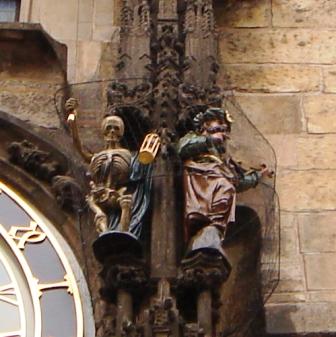
Death and the Turk on the Astronomical Clock, Prague
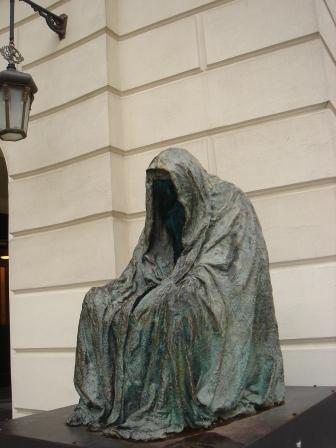
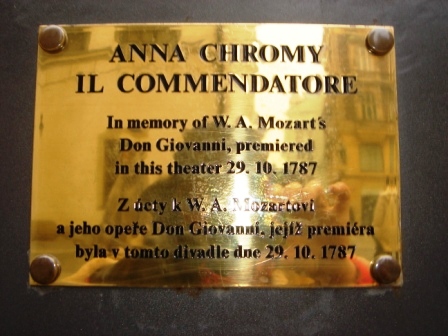
Mozart Memorial at theatre where Don Giovanni was first performed, with the composer conducting
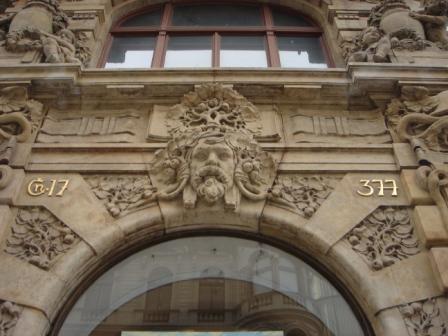
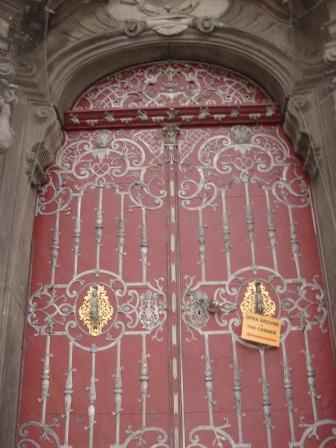
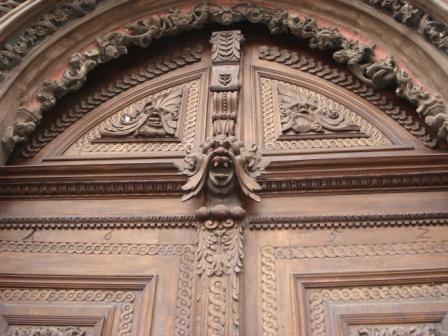
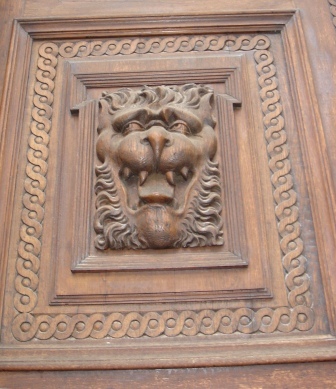
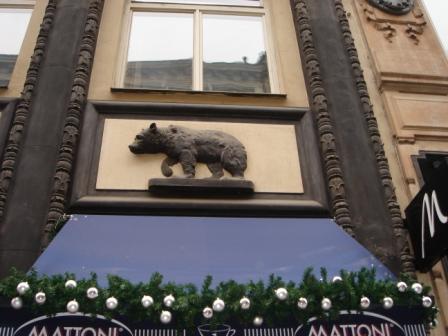
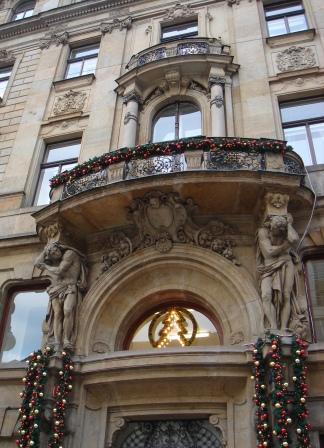
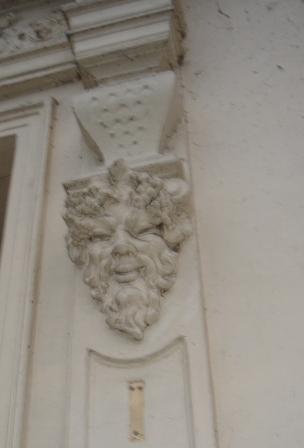
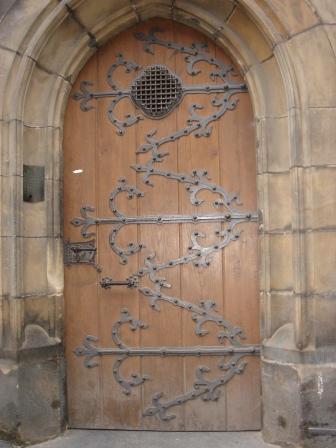
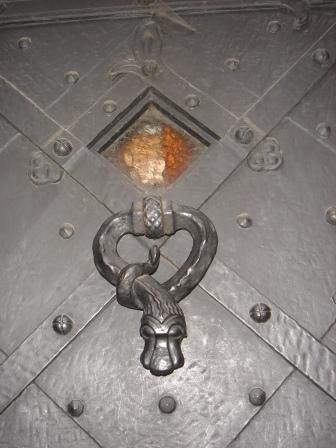
Prague Entryways
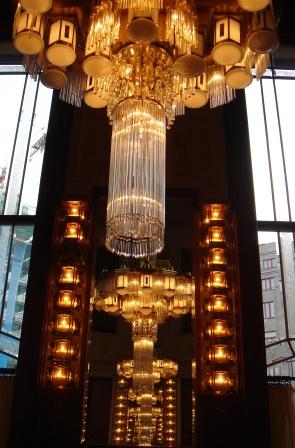
Chandelier reflections in Vienna cafe
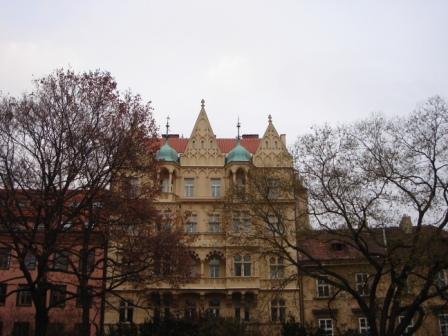
Palace on the River Vltava
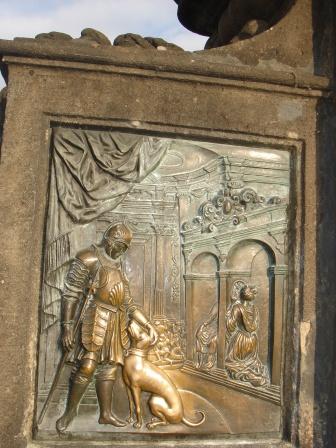
A Knight and His Dog, Charles Bridge
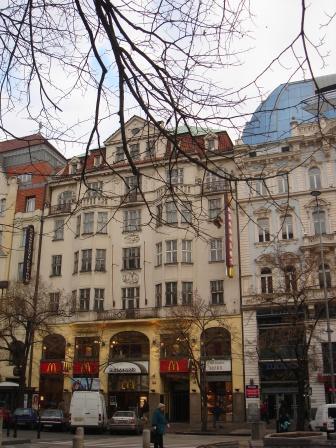
McDonald's in Wenceslas Square, scene of the 1989 clash between demonstrators and police. The Museum of Communism is located on the floor above another McDonald's nearby.
Cathedral, Prague
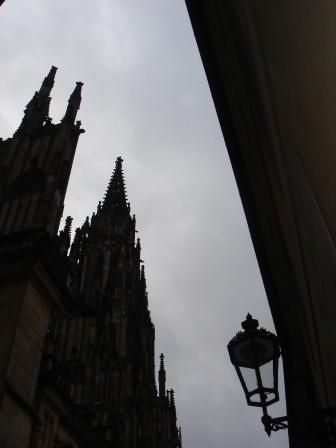
Cathedral Doors
Sign at Shop in Alchemist's Lane, Prague Castle

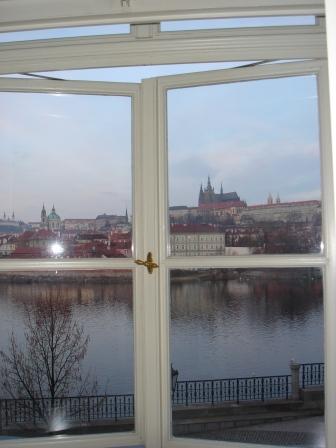
View from the Collaborator's Window
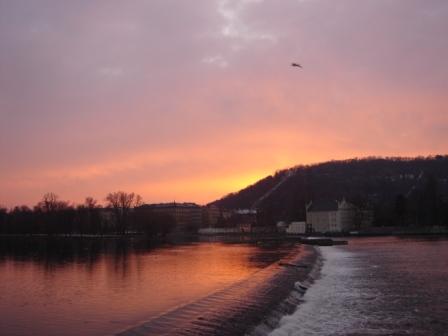
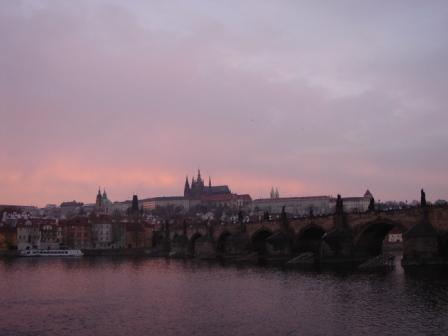
Sunset over the Vltava
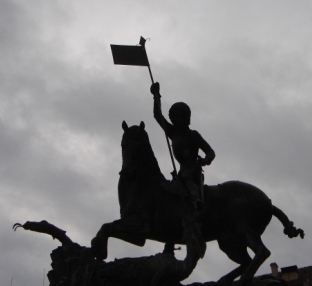
St. George and the Dragon, Prague Castle
Bird flies